Breville vs De’Longhi Nespresso Essenza Mini
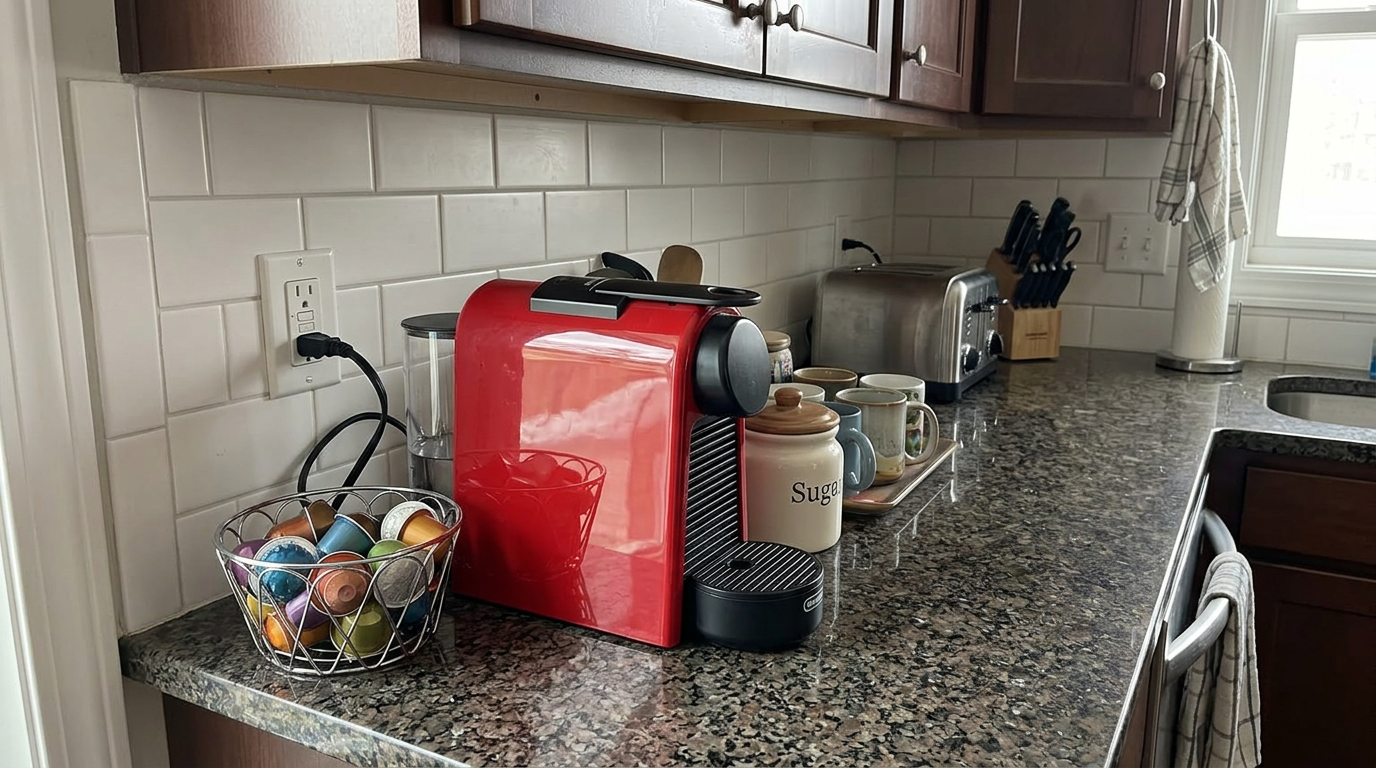
The Nespresso Essenza Mini is sold in two versions: the Breville Nespresso Essenza Mini and the De’Longhi Nespresso Essenza Mini. Same capsules, same two buttons, same tiny size, but a different body. I used a black Breville and a red De’Longhi for four weeks each to find out whether the badge on the front makes any difference.
We choose products independently. We may earn a commission when you buy through our links. Affiliate policy
Jargon helpNew to espresso? Tap any dotted term to see what it means.
In this comparison
The coffee is the same. In blind tastings with the same capsules, I could not tell the two apart. Buy the De’Longhi Nespresso Essenza Mini if you want the steadier machine and brighter colors; its wider, sloped base stayed put when I pushed the lever down. Buy the Breville Nespresso Essenza Mini if every inch of counter matters, or you prefer a plain, upright look; it is the slimmest espresso machine I have tested.
The two machines
Specs checked November 24, 2026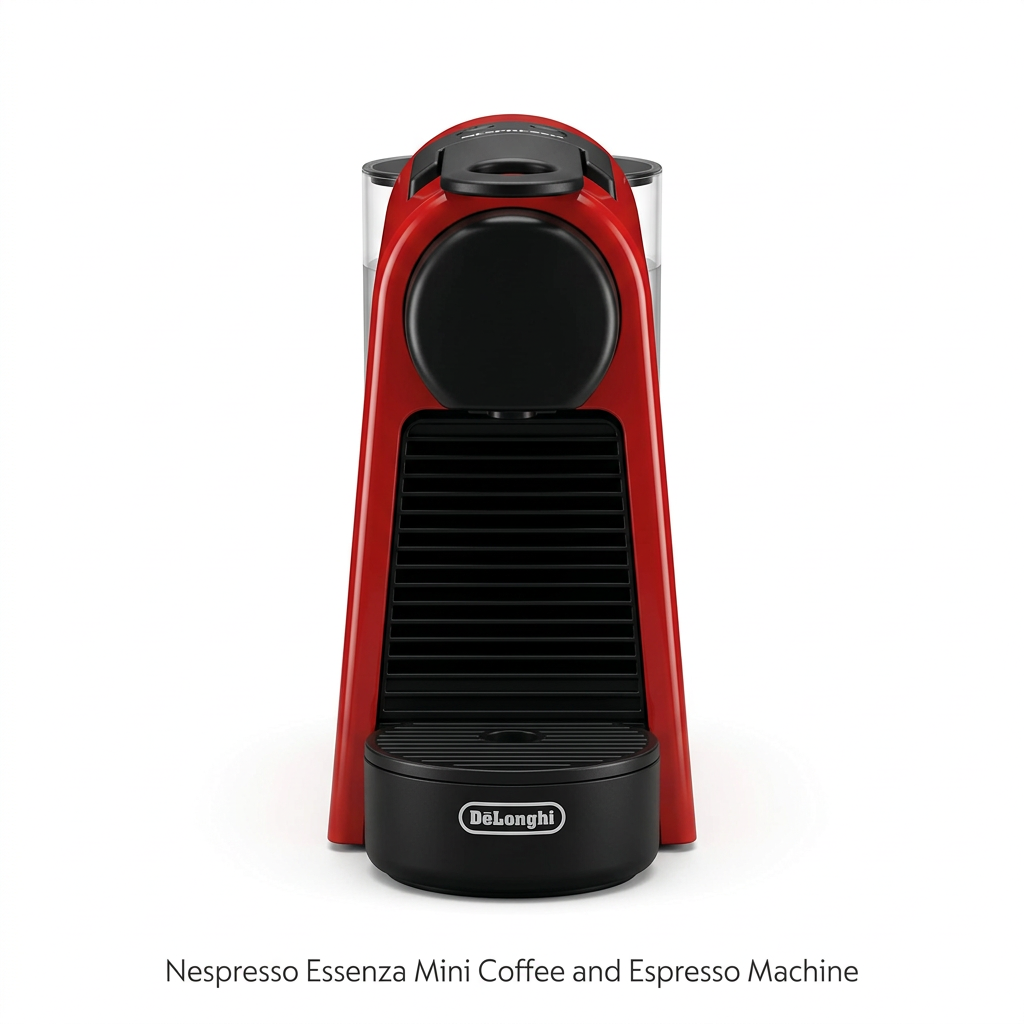
A sloped, slightly wider body in brighter colors, with the same 19-bar pump, two programmable buttons, 20-ounce tank and 25-second heat-up.
Check price on Amazon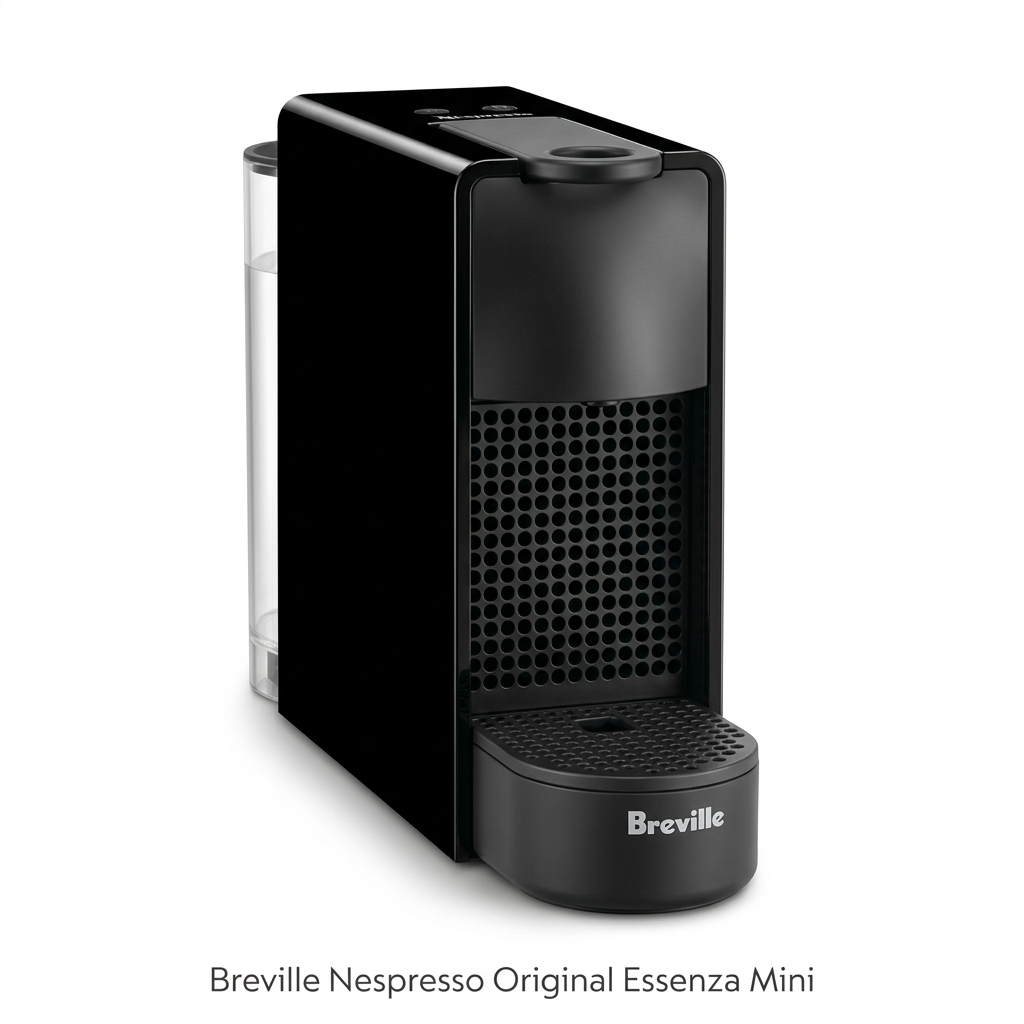
A tall, flat-sided body only about 3.3 inches wide, with identical brewing hardware and the same Nespresso Original capsules.
Find Out the Price TodayBreville vs De’Longhi Essenza Mini at a glance
- Both are the same Nespresso Original machine inside, with the same pump, heater, buttons and capsules.
- In twelve blind tastings with the same capsules, I guessed right only half the time, exactly what chance would predict.
- The real differences are shape, width, stability and color choice.
- Choose by your counter and your taste in looks, then spend the rest of your thinking on capsules.
Head to head
The better result in each row is marked, based on my four weeks with each machine and the manufacturer specs.
This is the closest matchup in the whole series. Most rows are ties, because the parts that make the coffee are the same. The differences are all on the outside.
| Spec | Breville | De’Longhi |
|---|---|---|
| Espressosame capsules, blind | Identical | Identical |
| Heat-up | About 25 to 30 s | About 25 to 30 s |
| Pump | 19 bar | 19 bar |
| Width | About 3.3 in ✓ Best | About 4.3 in |
| Stabilitypushing the lever | Can slide or tip back | Stays put ✓ Best |
| Color choice | Muted, mostly dark | Brighter, including red and white ✓ Best |
| Look | Tall, upright box | Soft, sloped profile |
| Water tank | About 20 oz | About 20 oz |
| Programmable buttons | 2 | 2 |
| Milk frother | None | None |
| Rows won | 1 | 2 |
So the tally is tiny, and that is the point. Whichever one you buy, you get the same espresso. Pick on width, stability and style.
Is It On Sale? Check NowBreville vs De’Longhi Essenza Mini pros and cons
De’Longhi Nespresso Essenza Mini
- Wider, sloped base stays put when you close the lever
- Brighter color choices
- Same fast, consistent espresso
- About an inch wider than the Breville
- No milk frother
- Small tank and capsule bin
Breville Nespresso Essenza Mini
- Slimmest espresso machine I have tested
- Plain, upright look that disappears on a counter
- Same fast, consistent espresso
- Light and narrow, so I steadied it with one hand
- Fewer bright color options
- No milk frother
Who should buy which machine?
- Kitchens with about 4.5 inches to spare
- People who want a color that stands out
- Anyone who wants a steadier machine
- The tightest gaps, shelves and desks
- A minimal, dark look
- People who move the machine around often
Same machine, two badges
Nespresso does not make its own machines. It designs them and licenses production to appliance makers, which is why you see the same model with a Breville or a De’Longhi badge.
Both versions of the Essenza Mini use the Nespresso Original✕Nespresso Original (OriginalLine)Nespresso’s first capsule system: small, cone-shaped aluminum capsules for espresso and lungo, brewed with high pump pressure. Not compatible with Vertuo capsules. capsule system, a 19-bar pump, a heater that is ready in about 25 to 30 seconds, and two programmable buttons.
The brewing unit, the capsule chamber and the lever work the same way. The water tank holds the same 20 ounces. Nespresso’s own guidance treats them as the same machine.
What differs is the shell. The Breville version is a tall, flat-sided block. The De’Longhi version has a softer, slightly pyramid-shaped body that is wider at the base.
| Part | Breville | De’Longhi |
|---|---|---|
| Capsule system | Nespresso Original | Nespresso Original |
| Pump | 19 bar | 19 bar |
| Buttons | Espresso and lungo | Espresso and lungo |
| Brewing temperature | Factory set | Factory set |
| Body shape | Upright, flat sides | Sloped, wider base |
Our tip: Do not pay more for one badge than the other; the espresso inside is the same.
Design, size and colors
Side by side, the two look like cousins rather than twins. The Breville is about 3.3 inches wide, 8 inches tall and 13 inches deep. It is narrower than any espresso machine I have used.
The De’Longhi is about 4.3 inches wide at its base, about 8.1 inches tall and about 12.8 inches deep. Its sides slope in toward the top, so it looks smaller than the numbers suggest.
Both weigh about 5 pounds, light enough to lift with one hand and put in a cupboard.
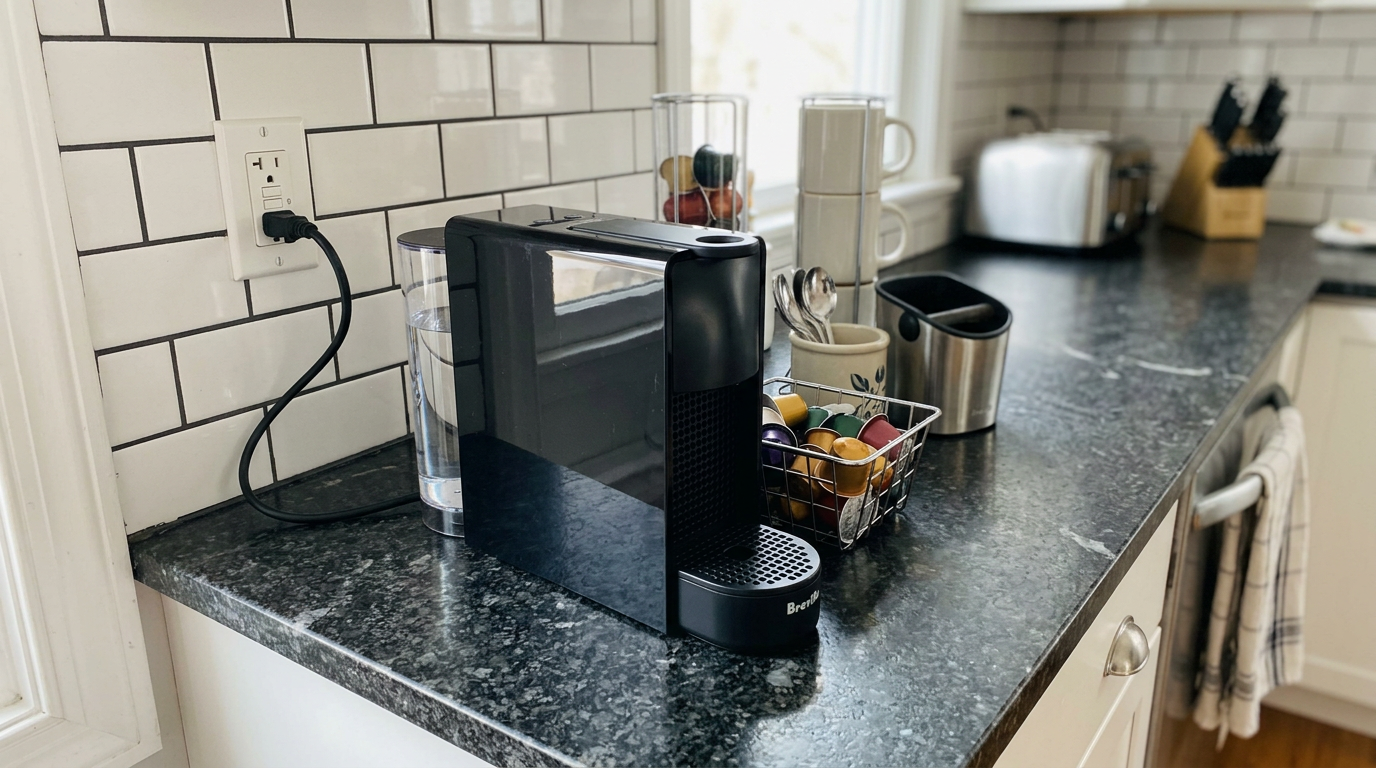
The black Breville is plain and upright, and almost disappears against dark counters.
Stability
This was the difference I noticed every single day. Closing the lever takes a firm push down. On the narrow Breville, that push sometimes rocked the machine back or slid it on my smooth counter, so I steadied it with my other hand.
The De’Longhi’s wider, sloped base stayed put. My partner, who used both, noticed it within a day and preferred the De’Longhi for that alone.
Colors
My Breville test unit was black, and the De’Longhi was a bright red. The De’Longhi is generally offered in more cheerful colors, while the Breville leans toward dark, muted finishes. Check the current color list before you buy, because it changes.
Setup and first coffee
Setup took about five minutes on each. I rinsed and filled the tank, clipped it onto the back, and ran water through the machine without a capsule to flush it.
Then I lifted the lever, dropped in a capsule, closed it and pressed the espresso button. About 30 seconds later, I had a hot espresso with a golden crema✕CremaThe light-brown foam on top of an espresso, made of oils and gas pushed out of the coffee under pressure. on both machines.
Both came with a small starter selection of capsules, which was a useful way to find out what I liked before buying full sleeves.
| Setup step | Breville | De’Longhi |
|---|---|---|
| Time to first coffee | About 5 minutes | About 5 minutes |
| Flush | Water-only cycle | Water-only cycle |
| Tank | Lifts off the back | Lifts off the back |
| Manual needed after day one | No | No |
Our tip: Run one water-only cycle each morning to warm the machine and your cup before the first capsule.
Buttons and brewing
Making a coffee is the same on both. Tap either button to start the heat-up, wait for the lights to stop blinking, lift the lever, drop in a capsule, close the lever and press espresso or lungo✕LungoA “long” espresso: the same amount of coffee with about twice as much water, giving a bigger, milder and slightly more bitter cup..
The machine pierces the capsule, pumps hot water through it and stops by itself. Lifting the lever drops the used capsule into the bin underneath.
Both buttons can be reprogrammed. I held the espresso button down and released it a little early to make a shorter, richer espresso, on both machines.
| Step | What I did | How long |
|---|---|---|
| 1. Heat | Tap a button, wait for solid lights | About 25 to 30 s |
| 2. Load | Lift the lever, drop in a capsule | A few seconds |
| 3. Close | Push the lever down firmly | A second |
| 4. Brew | Press espresso or lungo | About 25 s or 45 s |
| 5. Eject | Lift the lever | Instant |
Both switch themselves off after about nine minutes of inactivity by default, and the time can be extended. I never noticed a difference in the controls between the two.
If you have ever used any Nespresso Original machine, you already know how to use both of these.
See Today’s PriceEspresso quality
This is the question most people ask, so I tested it carefully. Over four weeks, I ran twelve blind tastings with my partner switching the cups, using the same capsules, the same pre-warmed cups and the same button settings.
I guessed which machine had made the espresso six times out of twelve. That is exactly what you would expect from flipping a coin.
With a medium-intensity capsule, both made a smooth, sweet, caramel-toned espresso with a fine crema. Strong capsules were bolder and more bitter on both. Mild ones were softer on both.
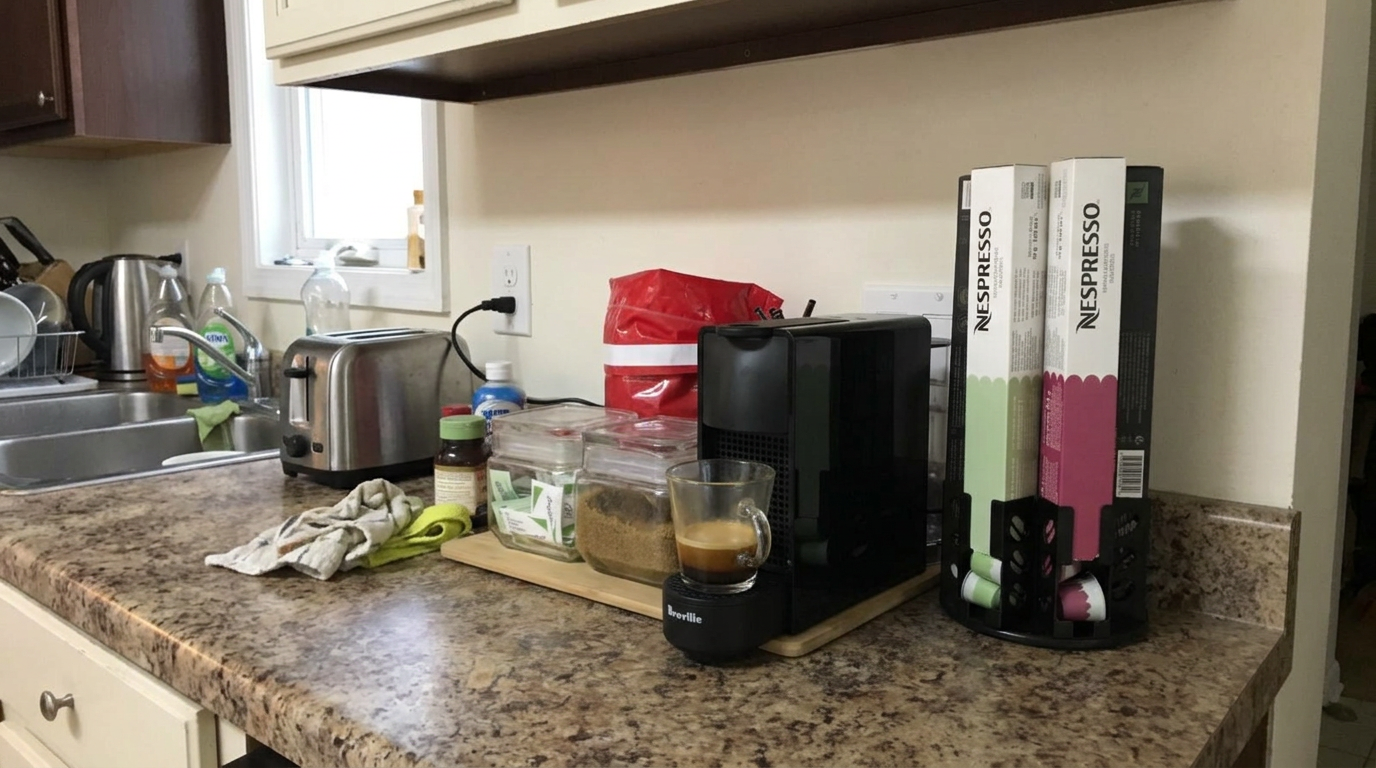
Brewing into a glass on the Breville. The crema looked the same from both machines.
Espresso by capsule, average of both machines
My flavor ratings out of 10 with pre-warmed cups. Scores on the two machines were within 0.1 of each other.
In my single reviews, the two machines got different espresso sub-scores. That came from the capsules I happened to test, not the machines. Side by side with the same capsule, the difference disappeared.
On both, the espresso came out warm rather than piping hot. A water-only cycle into the cup first made a clear difference.
| What you taste or see | Likely cause | First fix on both |
|---|---|---|
| Lukewarm espresso | Cold cup and machine | Water-only cycle into the cup first |
| Thin, watery | Espresso capsule on the lungo button | Use the espresso button |
| Bitter, harsh | Strong capsule stretched too long | Shorter espresso |
| No coffee comes out | Lever not fully closed | Push it all the way down |
| Slow, weak flow | Scale build-up | Descale |
Choosing capsules
On both machines, the capsule is the only recipe choice you have. There is no grind, dose or temperature setting.
Nespresso rates its capsules on an intensity scale✕Intensity scaleNespresso’s rating of how strong and roasty a capsule tastes, based on roast level and body. It does not measure caffeine.. Medium-intensity capsules on the espresso button were my favorites on both machines.
Because both are Original machines, compatible capsules from many coffee brands fit, as do refillable steel capsules. That choice is identical on the Breville and the De’Longhi.
| Capsule style | Intensity | What I tasted | Best use |
|---|---|---|---|
| Mild, light roast | About 4 to 6 | Bright, gentle, a little fruity | Espresso, black |
| Balanced, medium roast | About 6 to 8 | Smooth, caramel, sweet | Everyday espresso |
| Strong, dark roast | About 9 to 11 | Bold, roasty, bitter-sweet | With milk |
| Very strong | 12 and up | Intense, smoky | Short espresso with milk |
| Lungo capsules | Varies | Made for the large button | Bigger black coffee |
Refillable capsules
I tried a refillable steel capsule on both. With a fine grind and the capsule filled level to the rim, it made a decent espresso. With a medium grind, it was weak and watery.
It worked the same on both machines, and on both it took away most of the convenience.
Our tip: Start with a medium-intensity capsule on the espresso button, then branch out once you know what you like.
If you want to understand how roast changes flavor, my guide to coffee roast levels explains it.
Original vs Vertuo: check before you buy
Nespresso has two capsule systems, and they are not interchangeable. Both versions of the Essenza Mini are Original machines, so they take Original capsules only.
Vertuo machines use larger, dome-shaped capsules with a barcode on the rim and spin the capsule to brew. They can make big mugs of coffee as well as espresso. The Essenza Mini cannot.
The upside of Original is choice. Many coffee brands make compatible capsules, and refillable steel capsules are easy to find. That gives you more control over flavor and running cost than Vertuo does.
| Feature | Original (both Essenza Minis) | Vertuo |
|---|---|---|
| Capsule shape | Small, cone-shaped | Larger dome with barcode |
| Drink sizes | Espresso and lungo | Espresso up to large mugs |
| Brewing | 19-bar pump pressure | Spinning extraction |
| Third-party capsules | Widely available | Limited |
| Best for | Espresso drinkers | Big-cup and espresso drinkers |
If you mostly drink large black coffees, a Vertuo machine will suit you better than either Essenza Mini, whichever badge it wears.
Cups and drink sizes
Both machines make small drinks only. The espresso button gives about 1.35 ounces, and the lungo button about 3.7 ounces.
Espresso cups and small glasses fit on the drip tray of both. On both, the cup support folds away for a taller glass. Standard mugs were a squeeze, and travel mugs did not fit at all.
For a bigger black coffee, I brewed an espresso and added hot water from the kettle. It tasted smoother than a lungo, on both.
| Cup | Breville | De’Longhi |
|---|---|---|
| Espresso cup | Yes | Yes |
| Small glass | Yes, tray folded | Yes, tray folded |
| Standard mug | Barely | Barely |
| Travel mug | No | No |
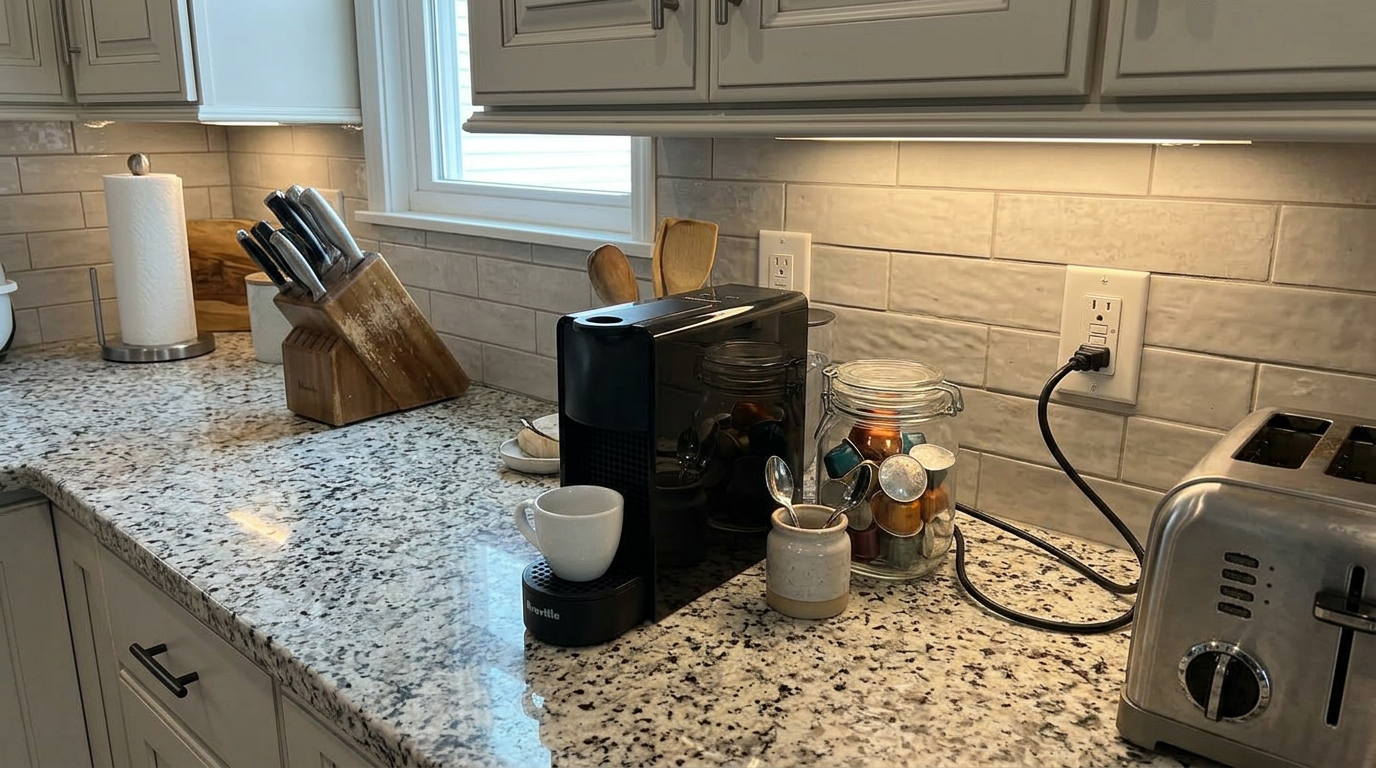
A white espresso cup is the right size for either machine.
Milk drinks: bring your own frother
Neither version has a steam wand or a milk frother. For lattes and cappuccinos, you need a separate frother on both.
Both are also sold in bundles with Nespresso’s Aeroccino✕AeroccinoNespresso’s small electric milk frother. It heats and froths milk in a jug at the press of a button. frother. If you know you want milk drinks, a bundle saves you a second purchase.
I used a separate electric frother with both machines. It made airy, decent foam, but it was one more thing to fill, rinse and find space for.
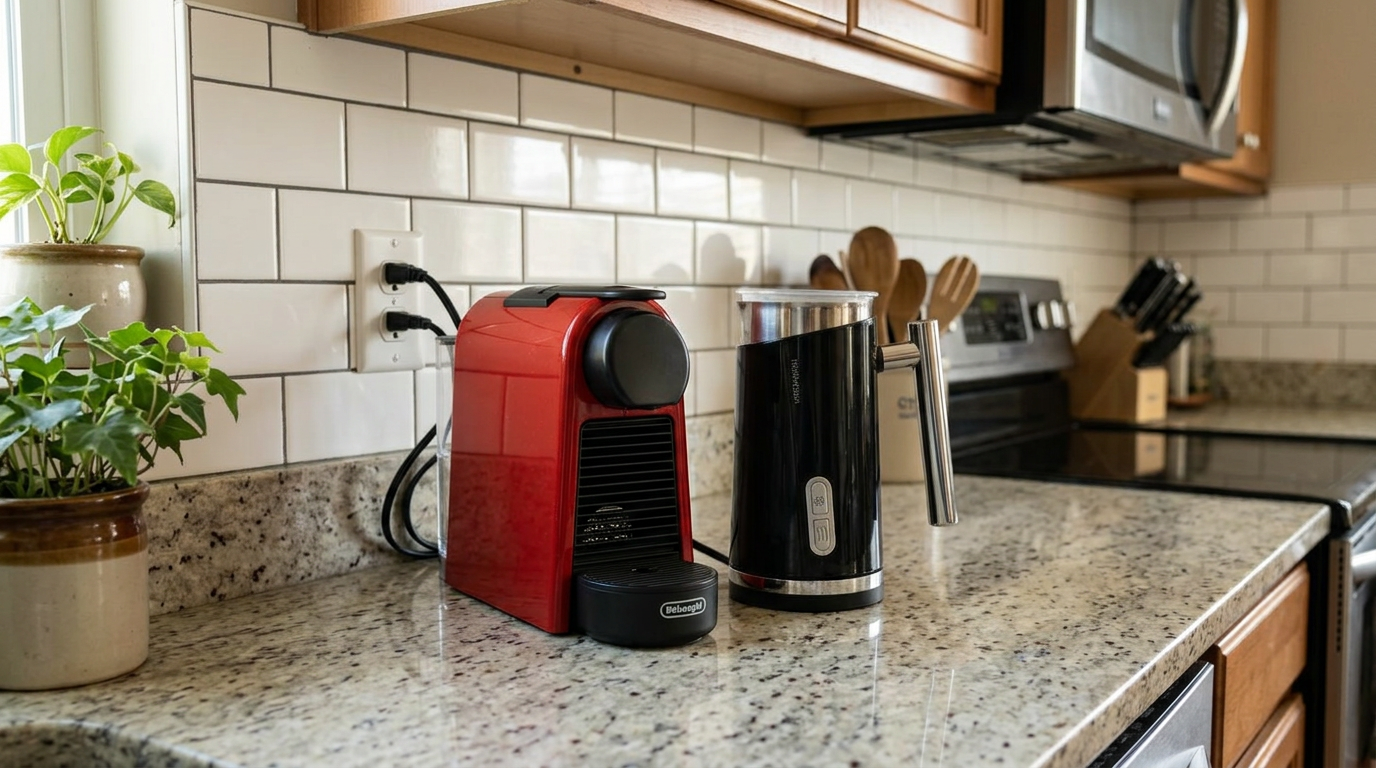
The red De’Longhi with a separate frother: the setup I used for lattes on both machines.
Milk drinks with a separate frother
My ratings out of 10, the same on both machines. Mild capsules get lost under milk.
A single espresso is a small amount of coffee, so for a latte I used two capsules or one very strong one.
If you want milk at one touch without a second appliance, neither Essenza Mini is the right machine.
Our tip: For a latte, brew two espresso capsules rather than one lungo; the drink tastes stronger and less bitter.
Heat-up and speed
Both heated up in about 25 to 30 seconds from cold in my kitchen. The lights blink while heating and stay solid when ready.
An espresso took about 25 seconds to brew, and a lungo about 45 seconds. From switching on to drinking took about a minute on both.
There was no cool-down between capsules on either machine. I could eject, load and brew again straight away.
Switch-on to first sip
My timings, including heat-up and a water-only warming cycle.
Water tank, capsule bin and drip tray
The tank holds about 20 ounces on both and lifts off the back for filling at the sink. Nespresso rates it for about 20 espressos.
With two or three espressos a day plus warming cycles, I refilled both every one to two days. With lungos or guests, I refilled daily.
The used-capsule bin holds about six capsules on paper. In practice, I emptied it after four or five on both, because a full bin can block the next capsule.
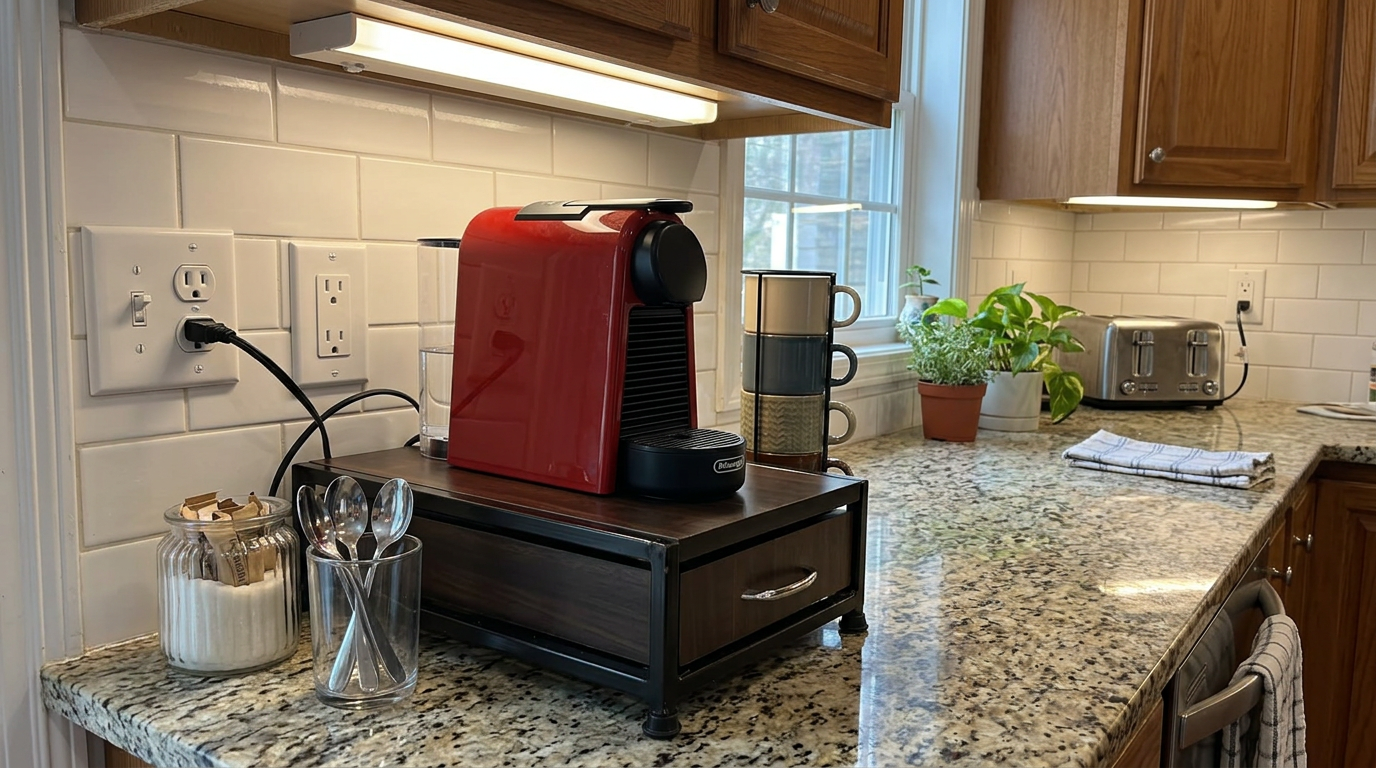
A capsule drawer under the De’Longhi kept spare capsules close and raised the machine a little.
Our tip: Empty the capsule bin every morning, even if it is not full; it avoids a jam halfway through a busy day.
Cleaning and descaling
Both are the easiest machines to keep clean that I have tested. There are no grounds, no portafilter and no milk parts.
Daily, I emptied the capsule bin and drip tray and refreshed the water. Weekly, I rinsed the bin, tray and tank and wiped the capsule slot.
Descaling✕DescalingRunning an acid solution through the machine to remove mineral scale from the heater and pipes. Skipping it leads to slower, cooler, weaker coffee. follows the same steps on both, using a descaling solution and a button sequence from the manual. Every two to three months is a sensible rhythm, more often with hard water.
| When | Task | Same on both? |
|---|---|---|
| Daily | Empty bin and drip tray, fresh water | Yes |
| Weekly | Rinse bin, tray and tank, wipe the slot | Yes |
| When flow slows | Descale | Yes |
| Every few months | Descale anyway | Yes |
My daily hands-on cleaning time
My estimates, not counting descaling.
Noise
Both have the same pump, and both make the same short, buzzing hum during brewing. It is noticeable in a quiet kitchen early in the morning, but it lasts less than half a minute.
The light Breville vibrated slightly more on my smooth counter. The silicone mat I mentioned earlier fixed that too.
How loud each felt, my ranking
Relative loudness from side-by-side use.
Running cost and recycling
The two cost about the same to run, because they use the same capsules. I will not quote prices, because they change by variety, retailer and quantity, but the pattern is the same on both.
Relative cost per espresso
From my own shopping during the test.
If you drink one or two coffees a day, capsules are easy to justify against café visits. At four or five a day, the running cost adds up on either machine.
Capsules are aluminum, which can be recycled, but small pods are not accepted in every curbside program. Nespresso runs a return program, and I collected used capsules in a bag and sent them back.
Our tip: Check the price of your favorite capsules before choosing a machine; that is your real running cost.
Small extras worth having
A few small things made both machines nicer to live with, and they work the same with either badge.
A thin silicone mat stopped the Breville sliding and caught drips under both. A capsule drawer or dispenser kept sleeves tidy, and raising the De’Longhi on one made small glasses easier to fit.
A separate milk frother is essential if anyone in your house drinks lattes. A small descaling kit and a bag for used capsules complete the set.
| Extra | Why it helped | Breville | De’Longhi |
|---|---|---|---|
| Silicone mat | Stops sliding, catches drips | Essential | Nice to have |
| Milk frother | Lattes and cappuccinos | Essential for milk | Essential for milk |
| Capsule drawer | Tidy storage, small lift | Useful | Useful |
| Descaling kit | Keeps flow and heat up | Every few months | Every few months |
| Recycling bag | Collects used capsules | Useful | Useful |
Should you skip both?
Be honest about how you drink coffee. If you enjoy adjusting grind, dose and milk, either Essenza Mini will feel limiting within a week, and a compact semi-automatic machine is a better fit.
If you drink four or five coffees a day, the capsule cost adds up, and a machine that uses beans will be cheaper over time.
But if you want a hot, consistent espresso in a minute with almost no cleaning, both are excellent, and the only real decision is the shape.
Our tip: Buy the bundle with a frother if anyone in your home drinks milk drinks; it is simpler than adding one later.
Where each fits best
The tiny size is the reason to buy either one, so I tried both in a few different spots.
Tiny kitchens. The Breville fit in a 3.5-inch gap between my kettle and the wall. The De’Longhi needed about an inch more.
Offices. I took both to the office for a day. Colleagues used them without instructions, and the De’Longhi was the one they preferred, because it did not slide when they closed the lever in a hurry.
Shelves and desks. Both fit under wall cabinets with plenty of room for the lever. The Breville’s flat sides made it easier to tuck into a bookshelf.
Second machine. If you already own a semi-automatic espresso machine, either makes a good backup for rushed weekdays.
| Setting | Breville | De’Longhi |
|---|---|---|
| Very narrow gap | Excellent | Good |
| Shared office | Good | Excellent |
| Bookshelf or desk | Excellent | Very good |
| Colorful kitchen | Fair | Excellent |
| Dorm or studio | Excellent | Excellent |
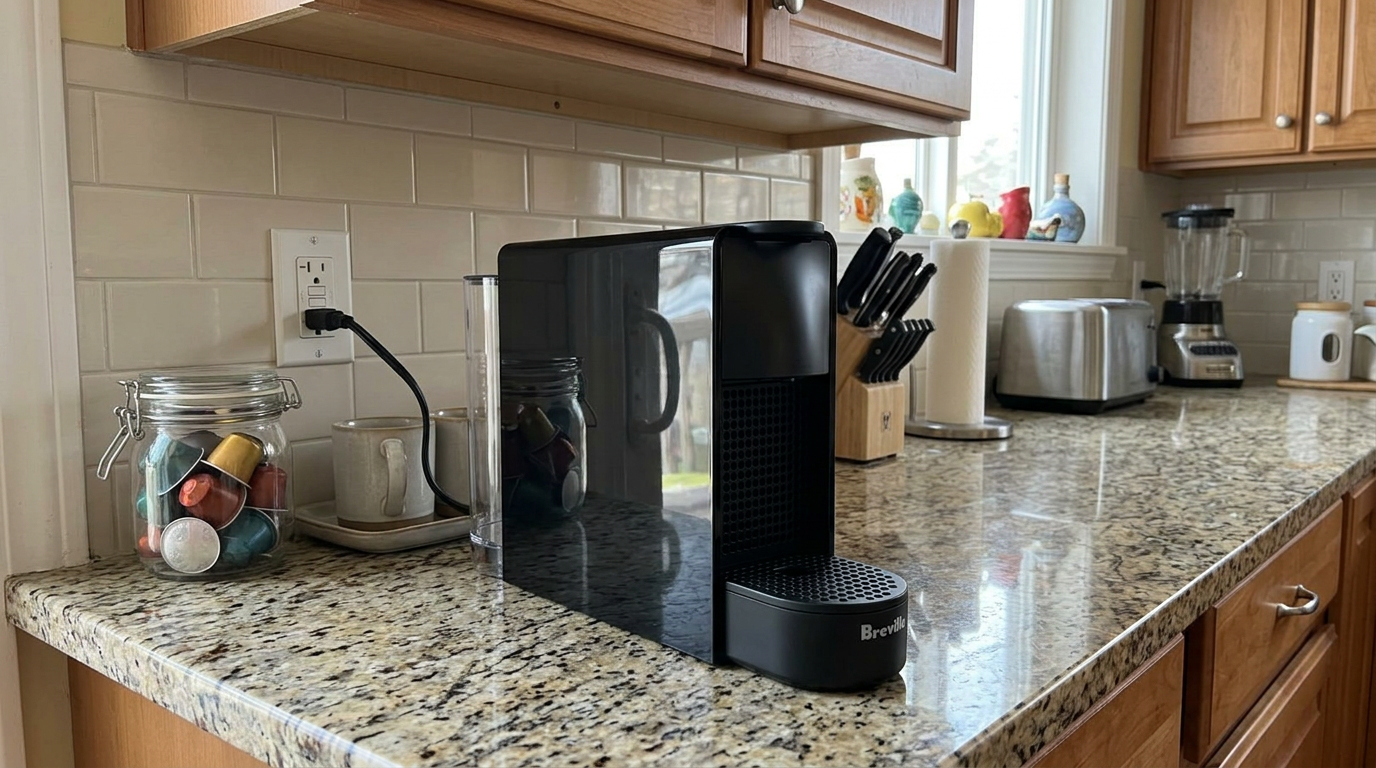
The Breville beside a jar of capsules. Its flat sides let it sit flush against other appliances.
Serving guests
For guests, both machines are quick, as long as you keep up with the bin and the tank.
Four espressos took me about four minutes on either machine. I refilled the tank first and emptied the bin halfway through.
Four lattes with a separate frother took about ten minutes, because the frother made one jug at a time.
Four drinks, start to finish
Including emptying the bin and topping up the tank.
Mistakes to avoid
The Essenza Mini is hard to get wrong, but I still made a few mistakes on both.
Running an espresso capsule on the lungo button. The result was thin and bitter. Use lungo capsules for the big button.
Leaving a used capsule in the chamber. It dripped into the next cup. Eject right after brewing.
Not closing the lever fully. Nothing came out. Push it all the way down; on the Breville, hold the machine steady while you do.
Buying Vertuo capsules. They do not fit either version. Both take Original capsules only.
| Problem | Fix |
|---|---|
| Machine slides when closing the lever | Steady it, or use a silicone mat |
| Lukewarm espresso | Water-only cycle into the cup first |
| Capsule will not drop | Empty the bin |
| Water on the counter | Seat the tank firmly |
| Slower, weaker flow | Descale |
A typical morning on each
My weekday routine was an espresso for me and a latte for my partner.
On both machines, I tapped a button as I walked into the kitchen, filled the frother, ran a water-only cycle into my cup, then brewed my espresso and two capsules for the latte.
Both drinks took about three minutes on either machine, including emptying the bin. The only difference was the hand I kept on the Breville while closing the lever.
| Step | Breville | De’Longhi |
|---|---|---|
| Heat-up | About 25 to 30 s | About 25 to 30 s |
| Warm the cup | About 15 s | About 15 s |
| Espresso | About 25 s | About 25 s |
| Two capsules for a latte | About 50 s | About 50 s |
| Empty the bin | A few seconds | A few seconds |
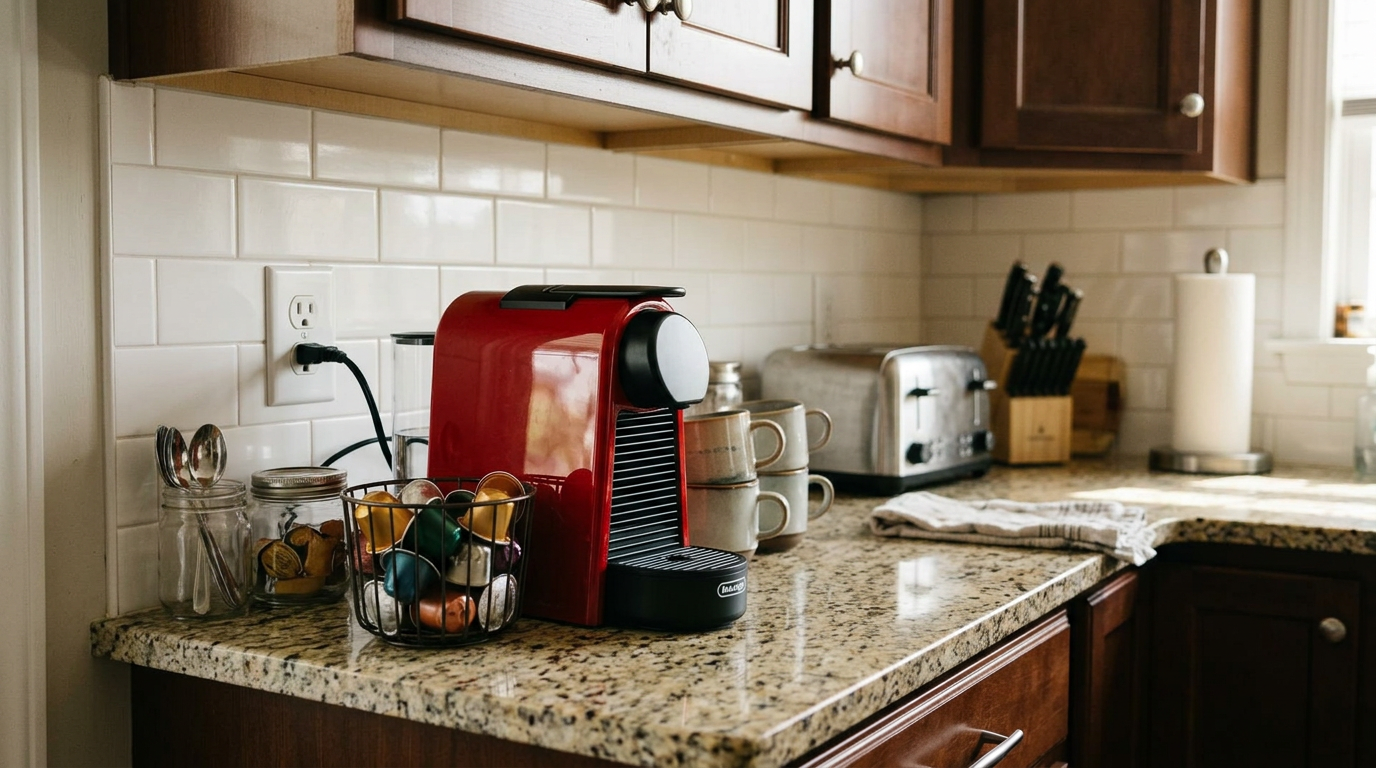
The De’Longhi ready for a weekday round, capsules within reach.
The drinks I made most
These are the drinks I settled on by the end of four weeks. Every one of them tasted the same on the Breville and the De’Longhi, so the recipes work on either.
The pattern was simple: keep espresso capsules on the espresso button, use two capsules when milk is involved, and add hot water from a kettle rather than stretching a lungo.
| Drink | Capsules | How I made it | Notes |
|---|---|---|---|
| Espresso | 1 medium intensity | Espresso button, shortened slightly | Sweet, caramel |
| Americano | 1 espresso capsule | Espresso, then hot water from a kettle | Smoother than a lungo |
| Lungo | 1 lungo capsule | Lungo button | Use lungo capsules only |
| Cappuccino | 1 strong capsule | Frothed milk, lots of foam | Strong capsules cut through |
| Latte | 2 espresso capsules | Espresso button twice, steamed milk | Better than one lungo |
| Iced latte | 2 strong capsules | Brewed over ice, cold milk | No frother needed |
If you are new to these drinks, my guide to cappuccino vs latte vs flat white explains how they differ, and Americano vs long black covers the hot-water drinks.
Four weeks with each: my diary notes
These are the notes I kept as each machine settled into my routine.
De’Longhi Nespresso Essenza Mini
Week 1: Worked through the starter capsules. Medium-intensity on the espresso button was the clear favorite.
Week 2: Reprogrammed the espresso button a little shorter. Started warming cups with a water-only cycle.
Week 3: Office day. Nobody needed instructions, and the machine never moved when people closed the lever.
Week 4: First descale. Flow was already fine, but it is a good habit.
Breville Nespresso Essenza Mini
Week 1: Loved how it slid into the gap by the kettle. Noticed it rocking when I closed the lever.
Week 2: Added a silicone mat underneath. No more sliding or rattle.
Week 3: Blind tastings against the De’Longhi. I guessed right only half the time.
Week 4: Tried a refillable capsule. Fine with a fine grind, but I went back to factory capsules for busy mornings.
Real-life scenarios
These are the situations where one version fit better in my four weeks.
About 3.3 inches wide.
Stays put when people close the lever in a hurry.
More cheerful color options.
Flat sides tuck in neatly.
Narrow and easy to grip.
Neither has milk built in.
My scorecard
These are my scores out of 10 from four weeks of side-by-side use.
De’Longhi Nespresso Essenza Mini
Breville Nespresso Essenza Mini
Overall, I rate the De’Longhi Nespresso Essenza Mini 7.8 and the Breville Nespresso Essenza Mini 7.7. The gap comes from stability, not coffee.
Find Out the Price TodayWhich one is right for you?
4 quick questionsWhich one should you buy?
For most people, the De’Longhi Nespresso Essenza Mini. The coffee is identical, and its wider, sloped base made it the steadier, more relaxed machine to use every day.
For the tightest spaces, the Breville Nespresso Essenza Mini. For the full detail, read my De’Longhi Essenza Mini review and Breville Essenza Mini review, or my Essenza Mini vs CitiZ comparison if you want a bigger Nespresso.
- You have about 4.5 inches of width
- You want a brighter color
- Several people will use it
- You need the narrowest machine
- You want milk built in
- You want big mugs of coffee
- Your gap is barely 3.5 inches
- You like a plain, dark look
- You move it in and out of a cupboard
- Your counter is very smooth and you hate mats
- You want bright colors
- You want milk built in
My pick for most people is the De’Longhi Nespresso Essenza Mini. It makes exactly the same espresso as the Breville, and its wider, sloped base stayed put every time I closed the lever.
The Breville Nespresso Essenza Mini is the better choice when every inch counts, or when you want a plain, upright machine that blends in.
Whichever you choose, warm your cup first, use the espresso button for espresso capsules, and empty the bin every morning.
Breville vs De’Longhi Essenza Mini specifications
From manufacturer specifications and my own testing.
| Breville Essenza Mini | De’Longhi Essenza Mini | |
|---|---|---|
| Type | Capsule espresso machine | Capsule espresso machine |
| Capsules | Nespresso Original | Nespresso Original |
| Pump | 19 bar | 19 bar |
| Heat-up | About 25 to 30 s | About 25 to 30 s |
| Buttons | Espresso and lungo, programmable | Espresso and lungo, programmable |
| Cup sizes | About 1.35 oz and 3.7 oz | About 1.35 oz and 3.7 oz |
| Water tank | About 20 oz | About 20 oz |
| Capsule bin | About 6 capsules | About 6 capsules |
| Auto off | Yes, adjustable | Yes, adjustable |
| Milk frother | No, bundles available | No, bundles available |
| Dimensions (W x D x H) | About 3.3 x 13 x 8 in | About 4.3 x 12.8 x 8.1 in |
| Weight | About 5 lb | About 5 lb |
| Shape | Upright, flat sides | Sloped, wider base |
How I tested and compared them
Michael Reynolds here. I used each machine as my everyday espresso maker for four weeks, with the same capsules, the same cups and the same frother, and kept detailed notes throughout.
I ran twelve blind tastings with the same capsules and pre-warmed cups, timed heat-up and brewing, measured both machines and tried them in a tiny kitchen gap, on a bookshelf and in an office.
- Espresso: flavor, crema, temperature and consistency.
- Design: footprint, stability and finish.
- Workflow: heat-up, brewing and daily routine.
- Ownership: cleaning, noise, capsules and running cost.
Breville vs De’Longhi Essenza Mini FAQ
What is the difference between the Breville and De’Longhi Essenza Mini?
Only the body. Both use the same Nespresso Original capsules, a 19-bar pump, two programmable buttons and a 20-ounce tank. The Breville is a tall, flat-sided machine about 3.3 inches wide. The De’Longhi has a sloped body about 4.3 inches wide at the base and is offered in brighter colors.
Does one make better espresso?
No. In twelve blind tastings with the same capsules, I guessed which machine made the espresso only half the time, exactly what chance would predict.
Which one is more stable?
The De’Longhi. Its wider, sloped base stayed put when I pushed the lever down. The narrow Breville sometimes slid or rocked on my smooth counter, which a silicone mat fixed.
Do they use the same capsules?
Yes. Both take Nespresso Original capsules, compatible third-party capsules and refillable Original capsules. Neither takes Vertuo capsules.
Do they have a milk frother?
No. You need a separate frother for lattes and cappuccinos. Both are sold in bundles with Nespresso’s Aeroccino frother.
How fast do they heat up?
Both were ready in about 25 to 30 seconds from cold.
How big is the water tank?
About 20 ounces on both, enough for about 15 espressos with warming cycles.
Can I make a big mug of coffee?
Not really. The lungo button makes about 3.7 ounces. For a bigger cup, brew an espresso and top it up with hot water.
How often do I need to descale?
Every two to three months on both, more often with hard water.
Which one is better for an office?
The De’Longhi, because it stays put when people close the lever in a hurry. The coffee is the same.

- Our hands-on De’Longhi Nespresso Essenza Mini review
- Our hands-on Breville Nespresso Essenza Mini review
- Manufacturer specifications and owner documentation
- General capsule espresso and descaling guidance