Zojirushi NS-TSC10 vs Cosori 10-Cup Rice Cooker
Zojirushi or Cosori comes down to what you want from a rice cooker. The Zojirushi NS-TSC10 is a compact 5.5-cup Micom✕MicomShort for microcomputer. A chip adjusts heat and timing through soaking, cooking, steaming and resting stages. cooker built around one job: perfect rice, with eight menu settings, a delay timer and a gentle keep warm. The Cosori 10-Cup Rice Cooker is a family-size fuzzy logic✕Fuzzy logicA control method that reads temperature and moisture during cooking and adjusts the heat, rather than following one fixed program. multi-cooker with 18 functions, including three oatmeal settings, sauté, steam and slow cook, and a PFAS-free ceramic pot. I used each as my main rice cooker for four weeks.
We choose products independently. We may earn a commission when you buy through our links. Affiliate policy
Jargon helpNew to rice cookers? Tap any dotted term to see what it means.
In this comparison
If rice quality matters most, buy the Zojirushi NS-TSC10. It made the best rice in my tests, with long-grain white rice scoring 9.4 and brown rice 9.2, and it is compact and easy to store. Buy the Cosori 10-Cup Rice Cooker if you cook for a big family or want oatmeal and one-pot meals: it holds almost twice as much, adds sauté and slow cook, and its parts are dishwasher safe.
The two rice cookers
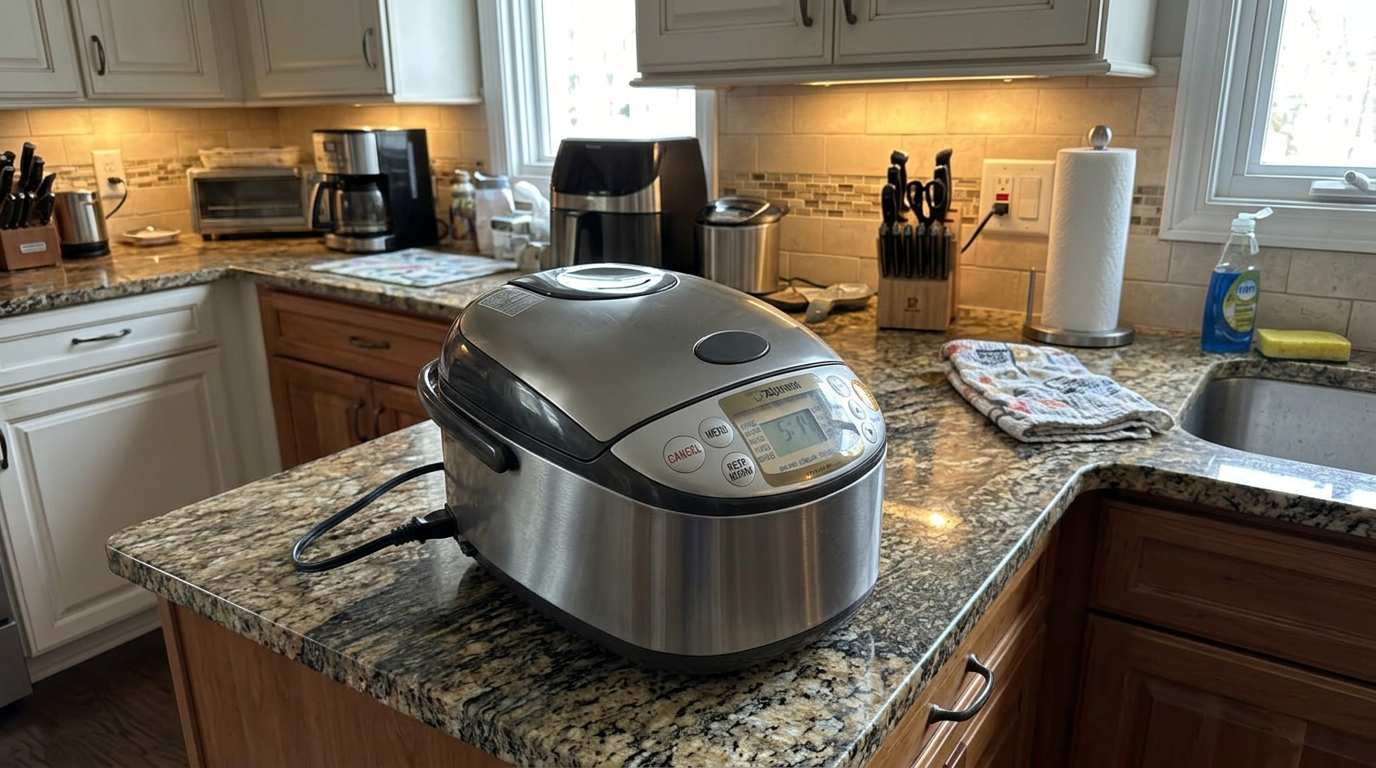
Specs checked November 26, 2026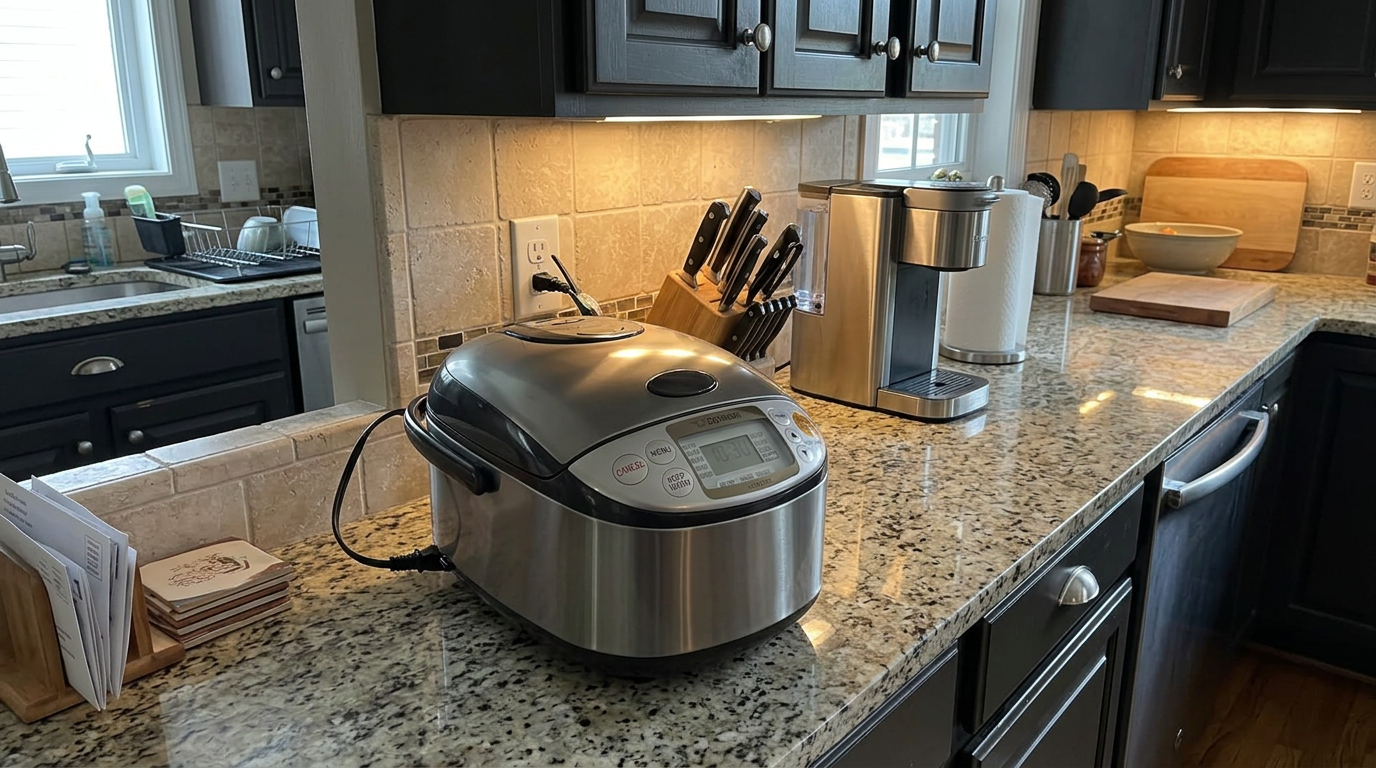
5.5-cup Micom rice cooker with eight menu settings, a two-setting delay timer, automatic keep warm, a steam tray, a handle and a retractable cord.
Check price on Amazon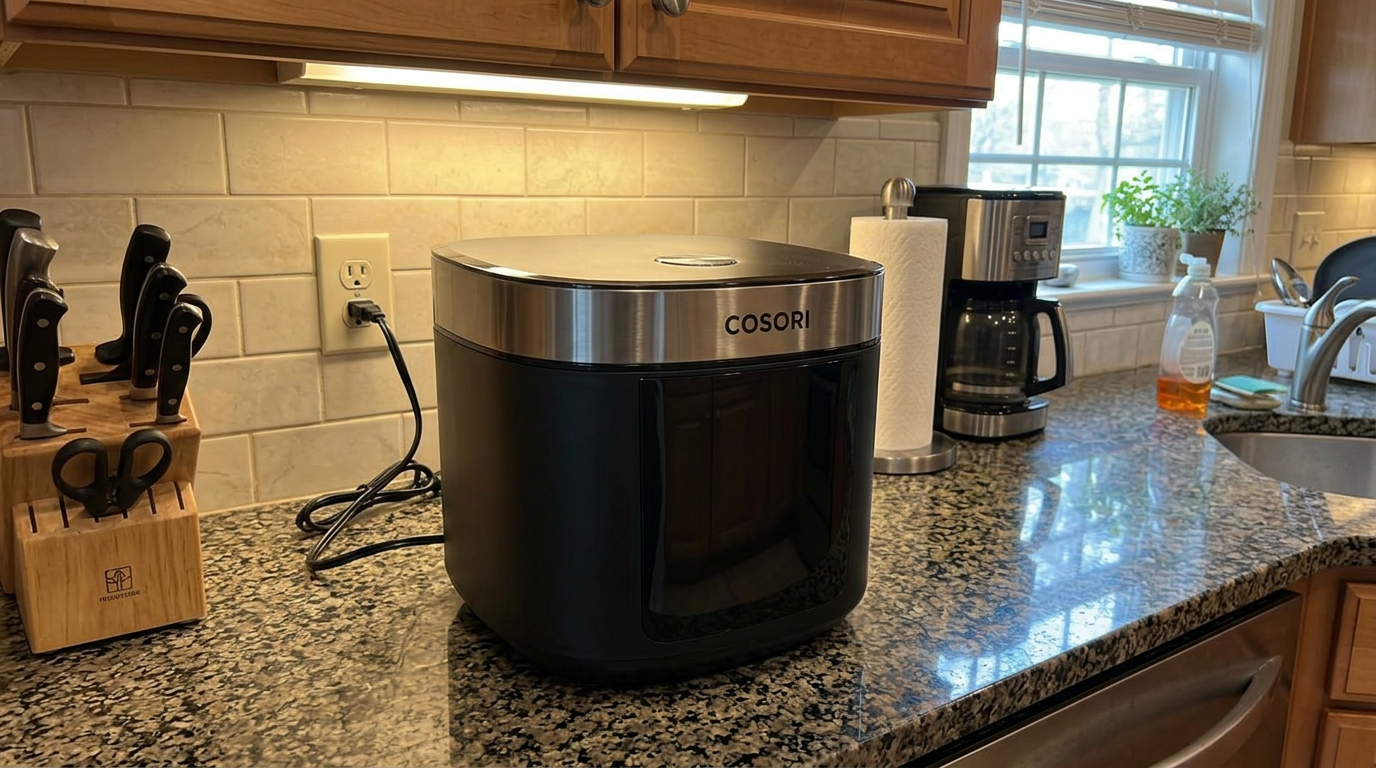
10-cup fuzzy logic multi-cooker with 18 functions, three oatmeal settings, sauté, steam, slow cook, a PFAS-free ceramic pot and 24-hour keep warm and timer.
See Today’s PriceZojirushi vs Cosori at a glance
- The Zojirushi made better white and brown rice.
- The Cosori holds 10 cups to the Zojirushi’s 5.5.
- The Cosori adds oatmeal settings, sauté and slow cook.
- Cosori parts go in the dishwasher; Zojirushi parts are hand wash only.
Head to head
The best result in each row is marked, based on my four weeks with each rice cooker.
The Zojirushi wins on rice and size; the Cosori wins on capacity, functions and convenience.
| Spec | Zojirushi NS-TSC10 | Cosori 10-Cup |
|---|---|---|
| Overall score | 8.7 ✓ Best | 8.4 |
| Long-grain white rice | 9.4 ✓ Best | 9.0 |
| Brown rice | 9.2 ✓ Best | 8.4 |
| Sushi rice | Glossy, tender; not scored | 8.8 |
| Breakfast | Rice porridge, 9.0 | Steel-cut oatmeal, 9.0 |
| Capacity | 5.5 cups uncooked | 10 cups uncooked ✓ Best |
| Extra functions | Steam, cake | Sauté, steam, slow cook, 3 oatmeal ✓ Best |
| Timer | 2 memory settings | Up to 24 hours ✓ Best |
| Dishwasher | Hand wash only | Pot, lid, cap, basket ✓ Best |
| Size | About 10 x 14 x 8.5 in, 7 lb ✓ Best | About 12.3 x 10.6 x 9.2 in, 9.3 lb |
| Rows won | 4 | 4 |
If rice is the point, the Zojirushi’s rows are the ones that matter. If you want a family cooker that also does breakfast and one-pot meals, the Cosori’s do.
Is It On Sale? Check NowZojirushi vs Cosori pros and cons
Zojirushi NS-TSC10
- Fluffy, evenly cooked rice every time
- Delay timer and gentle keep warm
- Compact with handle and retractable cord
- Regular white rice takes about an hour
- Removable parts are hand wash only
- Steaming and cake settings are basic
Cosori 10-Cup Rice Cooker
- Fluffy white rice with no scorched bottom
- 18 functions, including three oatmeal settings and sauté
- 24-hour keep warm and 24-hour delay timer
- Cycles take longer than you might expect
- Ceramic coating needs gentle care
- Lid and steam vent get very hot
Who should buy which rice cooker?
- Households that eat rice most days
- Set-and-forget cooks
- Small kitchens
- Families of three to five or more
- Oatmeal lovers
- One-pot cooks
Zojirushi vs Cosori: how they differ
The Zojirushi NS-TSC10 is a rice specialist. A small computer chip runs each cycle through soaking, heating, cooking, steaming and resting. Its eight settings are white/sushi, quick, mixed, porridge, sweet, brown, cake and steam. The nonstick inner pan has separate water lines for white, brown, sweet and porridge, and the box includes a steam tray, a rice cup✕Rice cupThe measuring cup that comes with a rice cooker. It holds about 180 ml, less than a standard US cup, and the pot markings assume you use it. and a serving spatula. It runs at 610 watts.
The Cosori 10-Cup is a family multi-cooker. Its fuzzy logic reads temperature and moisture and manages soaking, heating, boiling, simmering, steaming and keeping warm. Its 18 functions cover rice types and textures, three oatmeal settings, three other grains, sauté, steam, slow cook and quick rice. The 5-quart ceramic-coated pot is PFAS-free, and the box adds a stainless steamer basket, a measuring cup, a paddle, a ladle and a recipe book. It runs at 1,000 watts.
| Inside | Zojirushi NS-TSC10 | Cosori 10-Cup |
|---|---|---|
| Control | Micom | Fuzzy logic |
| Capacity | 5.5 cups uncooked, about 10 cooked | 10 cups uncooked, 5-quart pot |
| Settings | 8 | 18 |
| Pot | Nonstick, hand wash | Ceramic, PFAS-free, dishwasher safe |
| Power | 610 W | 1,000 W |
| Keep warm | Automatic | Up to 24 hours |
| Delay timer | 2 memory settings | Up to 24 hours |
So the choice is focus or flexibility: the best rice in a small cooker, or very good rice plus breakfast and one-pot meals in a big one.
Design, size and storage
The Zojirushi NS-TSC10 is compact and tidy, with a brushed stainless body, a clear LCD panel and a fold-down carrying handle. It measures about 10 by 14 by 8.5 inches and weighs about 7 pounds, small enough for a corner of the counter or a pantry shelf. The retractable cord was a small detail I came to love: pull it out, press a button and it disappears. The control panel has Menu, Timer, Start and Cancel buttons, and you can choose a melody or a beep at the end.
The Cosori 10-Cup has a clean black and stainless look with a guided touch display on the front. It measures about 12.3 by 10.6 by 9.2 inches and weighs about 9.3 pounds, which is less space than I expected for a 10-cup cooker. The display walks you through function, rice type and texture, and shows remaining time, delay time and how long food has been on keep warm. Everything felt solid, and the latch stayed firm.
| Design | Zojirushi NS-TSC10 | Cosori 10-Cup |
|---|---|---|
| Size | About 10 x 14 x 8.5 in | About 12.3 x 10.6 x 9.2 in |
| Weight | About 7 lb | About 9.3 lb |
| Controls | LCD with Menu, Timer, Start, Cancel | Guided touch display |
| Handle | Fold-down | Not covered in my review |
| Cord | Retractable | Not covered in my review |
| End signal | Melody or beep | Short signal |
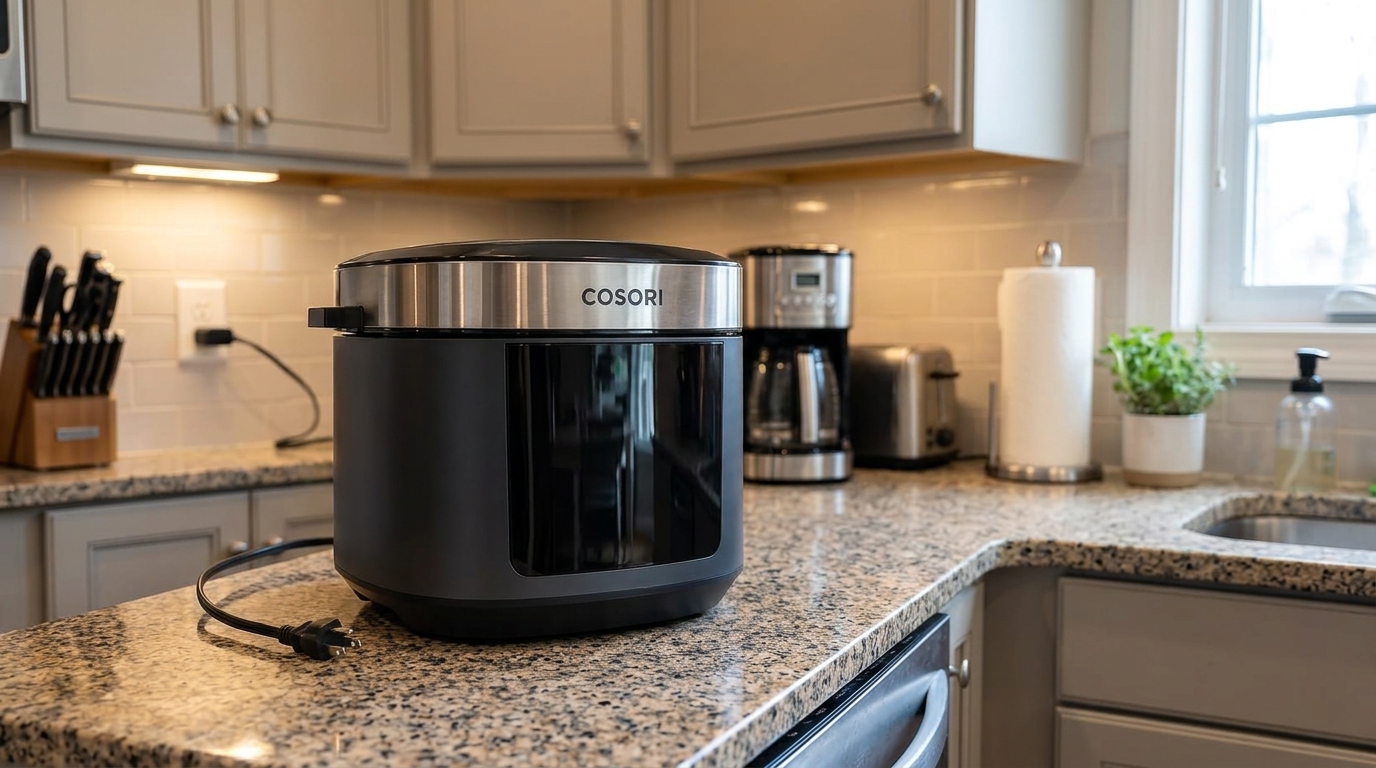
The Cosori takes up less space than you would expect for 10 cups.
Long-grain white rice
The Zojirushi NS-TSC10 made the best white rice I have cooked at home. Two cups of long-grain rice, rinsed until the water ran almost clear, with water to the “2” line on White, took about an hour. The rice was moist and evenly cooked from top to bottom, and after a gentle fluff the grains were light and mostly separate, with no hard bits or scorched layer. I scored it 9.4. My first batch was a little sticky on top because I only rinsed once; rinsing four times fixed it.
The Cosori 10-Cup also made excellent white rice. Two cups of long-grain rice, soaked briefly, with water to the two-cup mark, a pinch of salt and a little oil, on white rice, long grain, regular texture. The display first estimated about 50 minutes, but it finished earlier and switched to keep warm. The rice was fluffy and evenly cooked, with separate grains and no burned layer. I scored it 9.0. It also lets you pick a firmer or softer texture, which I used for fried rice and soup bowls.
| White rice | Zojirushi NS-TSC10 | Cosori 10-Cup |
|---|---|---|
| Test | 2 cups long-grain, White | 2 cups long-grain, regular texture |
| Time | About 60 min | Estimated 50, finished earlier |
| Result | Fluffy, mostly separate, no scorching | Fluffy, separate, no scorching |
| Texture options | Water line, a few mm either way | Firmer or softer setting |
| Score | 9.4 | 9.0 |
White rice
My scores from each single review
Our tip: Rinse until the water is nearly clear.
Brown, sushi and other rice
Brown rice was the Zojirushi NS-TSC10’s other standout. The Brown setting runs a longer, gentler cook for the bran, and my brown rice came out tender with a pleasant chew, with no split or mushy grains, a 9.2. Short-grain rice, rinsed well and soaked for 30 minutes, came out glossy, tender and slightly sticky for sushi; seasoning it in a wide bowl rather than the pan kept the grains intact. Sweet rice was glossy and cohesive for mango sticky rice, a 9.2, and jasmine was soft and fragrant. Basmati needed slightly less water than the white line.
The Cosori 10-Cup’s brown rice was tender with a gentle chew, an 8.4, and a mixed batch of white and brown cooked evenly. For sushi rice, four cups of short-grain rice on the short-grain setting rested five minutes, then took eight tablespoons of rice vinegar, six of sugar and two teaspoons of salt. It was glossy, slightly sticky and held together well for rolls, an 8.8. Rinsed quinoa came out fluffy and separate.
| Other rice | Zojirushi NS-TSC10 | Cosori 10-Cup |
|---|---|---|
| Brown rice | Tender, slight chew, 9.2 | Tender, gentle chew, 8.4 |
| Sushi rice | Glossy, tender; not scored | Glossy, holds together, 8.8 |
| Sweet rice | Glossy and cohesive, 9.2 | Not tested |
| Mixed rice | Stock and vegetables, 8.8 | Not tested |
| Quinoa | Not tested | Fluffy, separate |
Brown rice
My scores from each single review
Short-grain rice is stickier because it has more amylopectin✕AmylopectinA starch that makes rice grains cling together. Short-grain rice has more of it than long-grain rice., which is why it suits sushi and long-grain rice cooks up separate.
Jasmine, basmati and other grains
The Zojirushi NS-TSC10 handled aromatic rice well on its White setting. Jasmine came out soft, fragrant and lightly clingy, exactly as it should. Basmati needed a small adjustment: slightly less water than the white line and a thorough rinse gave long, separate grains with a lovely fragrance. Long-grain American rice was fluffy and separate at the standard line.
The Cosori 10-Cup cooked jasmine and long-grain rice on its long-grain white setting, with a texture choice of firmer, regular or softer. It also has three grain settings, and rinsed quinoa came out fluffy with separate grains that I used for salads and bowls all week. A pilaf, made by sautéing onion and garlic, adding rice and broth and switching to white rice, was one of the easiest side dishes I made.
| Grain | Zojirushi NS-TSC10 | Cosori 10-Cup |
|---|---|---|
| Jasmine | White, soft and fragrant | Long-grain white, fluffy |
| Basmati | Slightly less water, long separate grains | Not tested |
| Quinoa | Not tested | Grains setting, fluffy, separate |
| Pilaf | Mixed setting with stock | Sauté, then white rice |
Both reward the same habit: rinse well, use the supplied cup and adjust the water by a few millimeters to taste.
Breakfast: porridge and oatmeal
The Cosori 10-Cup is the breakfast machine. It has three oatmeal settings, steel-cut, rolled and quick, because each oat needs a different time and amount of liquid. One cup of steel-cut oats, two cups of water, one of milk and two tablespoons of brown sugar came out creamy at first and firmed up nicely after five minutes, cooked through but with a little bite. A pinch of salt balanced the sweetness. I scored it 9.0. Reheated the next morning with a stir halfway, it was still creamy and not mushy, an 8.6, and by day three it was a little thicker.
The Zojirushi NS-TSC10 has no oatmeal settings, but its Porridge setting makes soft, creamy rice porridge. I used the porridge water line and a little ginger, and topped it with scallions, a soft egg and sesame oil. It was smooth and comforting, a 9.0.
| Breakfast | Zojirushi NS-TSC10 | Cosori 10-Cup |
|---|---|---|
| Rice porridge | Porridge setting, 9.0 | Not tested |
| Steel-cut oatmeal | No oatmeal setting | Creamy with bite, 9.0 |
| Rolled and quick oats | No | Yes, soft and quick |
| Reheated next day | Not tested | Still creamy, 8.6 |
| Delayed breakfast | Timer memory for breakfast | Plain oats and water only |
Steaming, sauté, slow cook and cake
The Cosori 10-Cup does much more than rice. Sauté softened onions and garlic directly in the pot for a simple pilaf and browned small pieces of chicken before slow cooking, though it does not get as hot as a skillet. The stainless steamer basket steamed broccoli, carrots and dumplings evenly, and on one night it steamed vegetables over cooking rice, an 8.4. A chicken and vegetable stew on slow cook came out tender and full of flavor, a 7.8, but it is a simple slow cooker without detailed temperature options.
The Zojirushi NS-TSC10’s extras are basic. Its steam tray sits above the pan and worked for small portions of broccoli, carrots and frozen dumplings, but it is best for side dishes. The cake setting made a simple cheesecake that was moist and evenly cooked with a pale top, a 7.8. The Mixed setting cooked chicken stock rice with peas and carrots evenly, with nothing sticking.
| Extras | Zojirushi NS-TSC10 | Cosori 10-Cup |
|---|---|---|
| Steaming | Small tray, side dishes | Stainless basket, 8.4 |
| Sauté | No | Yes |
| Slow cook | No | Yes, stew 7.8 |
| Cake | Cheesecake, 7.8 | No |
| One-pot meals | Mixed rice | Pilaf, stew, rice and vegetables |
If you want one appliance for rice, breakfast and simple one-pot dinners, the Cosori is the clear choice.
Speed, timers and keep warm
Neither is fast. The Zojirushi NS-TSC10’s regular white rice takes about an hour, and brown rice longer. Its Quick setting skips some soaking and finishes faster, with rice that was good but slightly firmer, an 8.2; I used it for weeknight stir-fries. The delay timer works by finish time: press Timer, set when you want to eat and press Start. It has two memory settings, which I used for breakfast and dinner. Keep warm held rice moist for several hours, though the bottom firmed up after many hours.
The Cosori 10-Cup’s cycles also take time, because it soaks, heats and rests the rice. Its quick rice function was a little firmer and less fluffy, but fine under a curry. Its delay timer and keep warm both run up to 24 hours, and the display counts how long food has been warming, which helped when family members ate at different times. For food safety, I did not delay recipes with milk or meat.
| Time | Zojirushi NS-TSC10 | Cosori 10-Cup |
|---|---|---|
| Regular white rice | About 60 min | Estimated 50, finished earlier |
| Quick rice | Slightly firmer, 8.2 | A little firmer |
| Delay timer | By finish time, 2 memories | Up to 24 hours |
| Keep warm | Several hours, moist | Up to 24 hours, with counter |
| Speed score | 6.8 | 7.2 |
Speed
Speed scores from each single review
Capacity and household size
The Zojirushi NS-TSC10 holds up to 5.5 cups of uncooked rice, about 10 cups cooked. For my family of four, two to three cups was plenty for dinner and leftovers, and it cooked a single cup just as well. It suits couples and small families; for larger families or frequent entertaining, a bigger version of this model may be worth a look.
The Cosori 10-Cup holds up to 10 cups of uncooked rice in its 5-quart pot. Two to three cups covered dinner for four with lunches left over, and four cups fed six to eight. It handles small batches too, but singles cooking a cup at a time may find it more than they need. Stay below the maximum marks, especially for oatmeal, which foams.
| Uncooked rice | Zojirushi NS-TSC10 | Cosori 10-Cup |
|---|---|---|
| 1 cup | About 2 cups cooked, 1 to 2 people | Larger than needed |
| 2 cups | About 4 cups, 3 to 4 people | About 4 to 5 cups, 3 to 4 people |
| 3 cups | About 6 cups, 4 to 6 people | About 6 to 7 cups, 4 to 6 people |
| Maximum | 5.5 cups, a gathering | 10 cups, a large batch |
Maximum uncooked rice
From each single review
Cleaning and care
The Cosori 10-Cup is easier to clean. Rice and oatmeal released easily from its ceramic pot, which wiped clean in seconds. The inner pot, inner lid, steam cap and steamer basket are all dishwasher safe, though I usually hand-washed the pot with a soft sponge to protect the coating. Washing the inner lid and steam cap every few uses, especially after oatmeal, kept it smelling fresh.
The Zojirushi NS-TSC10 takes a couple of minutes by hand. Its nonstick pan washes easily with a soft sponge, and the inner lid detaches. Zojirushi recommends hand washing removable parts, so I avoided the dishwasher. After washing, I let the inner lid dry completely before clicking it back, and dried the outside of the pan before putting it in.
| Cleaning | Zojirushi NS-TSC10 | Cosori 10-Cup |
|---|---|---|
| Pot coating | Nonstick | Ceramic, PFAS-free |
| Dishwasher | Hand wash only | Pot, lid, cap, basket |
| Inner lid | Detaches; dry before refitting | Detaches with steam cap |
| Avoid | Metal utensils, abrasive pads | Metal utensils, abrasive scrubbers |
| After 4 weeks | Pan unmarked | Coating like new |
Leftovers, reheating and meal prep
The Zojirushi NS-TSC10’s rice made great leftovers. I chilled dinner rice in a covered container and used it the next day for fried rice; chilled rice is firmer and drier than fresh, so it stir-fries without turning mushy. Reheated with a splash of water and a cover, stirring halfway, it came back soft and fluffy, better than my old stovetop rice because the grains were evenly cooked to begin with. On Sundays I cooked a batch of brown rice and a batch of white back to back, cooled them quickly and portioned them for weekday grain bowls.
The Cosori 10-Cup is a natural meal-prep cooker because of its size. A big batch of steel-cut oatmeal covered several breakfasts: I let it cool, portioned it into airtight containers and loosened each with a splash of milk before reheating in two 30-second bursts. Its firmer rice texture setting was handy for planned fried rice, and leftovers from a three- or four-cup batch covered lunches for the family.
| Leftovers | Zojirushi NS-TSC10 | Cosori 10-Cup |
|---|---|---|
| Fried rice | Chilled rice, excellent | Firmer texture setting helps |
| Reheating rice | Splash of water, covered | Not covered in my review |
| Reheating oatmeal | No oatmeal setting | Splash of milk, 2 x 30 s, 8.6 |
| Sunday prep | White and brown back to back | Oatmeal and big rice batches |
For food safety with either, I refrigerated rice within two hours and reheated it until steaming hot throughout, only once.
Why either beats a pot on the stove
Before these tests, I cooked most rice in a saucepan, watching for boil-overs, turning the heat down at the right moment and hoping the bottom did not scorch. The Zojirushi NS-TSC10 removed all of that: I measured, rinsed, filled to the line and walked away, and the rice was better and more consistent than my stovetop rice on its best day. In four weeks it never scorched once.
The Cosori 10-Cup did the same for a larger family and added breakfast. Home-cooked rice and oatmeal became easy, everyday food rather than something we planned around, and the stove stayed free for the rest of dinner. Its sauté function even replaced a skillet for pilaf.
| Task | Stovetop pot | Zojirushi NS-TSC10 | Cosori 10-Cup |
|---|---|---|---|
| Watching the pot | Yes | No | No |
| Adjusting heat | Yes | Automatic | Automatic |
| Scorched bottom | Sometimes | Never in my tests | Never in my tests |
| Ready on schedule | No | Delay timer | 24-hour delay timer |
| Keeping warm | Cools quickly | Automatic | Up to 24 hours |
Long-term ownership
After my test, the Zojirushi NS-TSC10 showed no wear at all. Its nonstick pan was unmarked because I only used the supplied spatula and a soft sponge, and the water lines were still crisp and clear. Replacement parts, including the inner pan, inner lid and steam tray, are available for this model, which suggests it is built to last.
The Cosori 10-Cup also still looked like new. The ceramic coating showed no scratches or stains, the lid opened and closed smoothly, the latch stayed firm and the touch display responded reliably. The coated cooking surface is the main wear point, and gentle tools and soft sponges are the best way to protect it.
| Ownership | Zojirushi NS-TSC10 | Cosori 10-Cup |
|---|---|---|
| After four weeks | No wear | Like new |
| Main wear point | Nonstick pan | Ceramic coating |
| Replacement parts | Pan, lid and steam tray available | Not covered in my review |
| Best care | Supplied spatula, soft sponge | Wooden or supplied tools, soft sponge |
Measuring rice and water
On both, good rice starts with the supplied cup. The Zojirushi NS-TSC10’s cup holds about 180 ml, not a standard US cup, and its pan has separate lines for white, brown, sweet and porridge. When I used a standard cup, the rice came out firm; slightly too much water made it softer. Keeping to the line, with the pan flat, gave me consistent results.
The Cosori 10-Cup’s pot has clear marks, and its manual lists a ratio for every grain. Its cup is also smaller than a standard US cup. After rinsing, I set the pot on a flat counter and filled to the matching mark, adding a little extra for softer rice or staying just under for firmer.
| Measuring | Zojirushi NS-TSC10 | Cosori 10-Cup |
|---|---|---|
| Supplied cup | About 180 ml | Smaller than a US cup |
| Pot markings | White, brown, sweet, porridge | Marks per grain, plus manual ratios |
| Texture control | Water a few mm either way | Texture setting or water |
| Most common mistake | Using a standard US cup | Using a kitchen measuring cup |
Steam, noise and safety
The Zojirushi NS-TSC10 is almost silent while cooking, with only a gentle hiss of steam from the vent, and its outside stayed easy to handle. The fold-down handle made it simple to move from counter to pantry with one hand.
The Cosori 10-Cup is quiet too, with gentle bubbling and steam near the end. Its lid and steam vent get very hot, so I placed it on a heat-resistant counter with the vent pointing away from cabinets; when steam reached a cabinet, moving the cooker forward fixed it. The outer body stayed comfortable to touch. There was a faint new-appliance smell on the first cycle that disappeared quickly.
| Safety | Zojirushi NS-TSC10 | Cosori 10-Cup |
|---|---|---|
| Noise | Gentle hiss | Gentle bubbling |
| Hot parts | Steam vent | Lid and steam vent, very hot |
| Placement tip | Not covered in my review | Vent away from cabinets |
| First-use smell | Not covered in my review | Faint, gone quickly |
What daily use looked like
By the second week the Zojirushi NS-TSC10 ran almost daily: white rice with curries and stir-fries, brown rice for grain bowls, porridge for two breakfasts and sticky rice for a weekend dessert. The timer changed my routine most, because loading rice and water in the morning meant one less job in the evening rush. On Sundays I cooked white and brown rice back to back for weekday lunches, and chilled leftovers made excellent fried rice.
The Cosori 10-Cup settled in just as quickly. Steel-cut oatmeal on Sunday covered several breakfasts, rice on the delay timer was ready when we got home, and weekends brought sushi rice and slow-cooked stews. Taco rice bowls became a weeknight favorite. Because keep warm held food and showed how long, nobody had to eat at exactly the same time.
| Household | Zojirushi NS-TSC10 | Cosori 10-Cup |
|---|---|---|
| Singles and couples | Excellent | Larger than needed |
| Family of four | Very good | Excellent |
| Family of five or more | Fair, 5.5 cups | Excellent, 10 cups |
| Oatmeal lovers | No oatmeal setting | Excellent |
| Small kitchens | Excellent, compact | Good |
| Rice perfectionists | Excellent | Very good |
The two fit different rhythms. The Zojirushi rewarded a little planning: start it an hour ahead or use the timer, and the rice was always the best part of the meal. The Cosori rewarded batch cooking: one big pot of rice or oatmeal on the weekend, then keep warm and leftovers carried the family through busy days. Neither needed any attention once started, and both left the stove free.
If your household eats rice with most dinners but rarely in huge quantities, the Zojirushi’s size and quality fit best. If you feed five or more, or want breakfast from the same machine, the Cosori fits better.
Problems I ran into
| Problem | Which cooker | Cause | Fix |
|---|---|---|---|
| Slightly sticky rice | Both | Not rinsed enough | Rinse until nearly clear |
| Firm rice | Zojirushi | Used a standard US cup | Use the supplied rice cup |
| Rice ready too late | Zojirushi | Hour-long cycle | Use the timer or Quick |
| Bottom slightly firm | Zojirushi | Hours on keep warm | Serve sooner |
| Oatmeal too thin at first | Cosori | Needs to rest | Wait five minutes |
| Steam on the cabinet | Cosori | Vent too close | Move it forward |
| Residue in the vent | Cosori | Starchy foam | Wash the steam cap |
Every problem I hit had a simple fix, and none of them came back once I changed the habit.
Which is better value?
The Zojirushi NS-TSC10 is worth it if rice is a regular part of your meals. It makes consistently fluffy, evenly cooked rice, handles brown, sweet and porridge beautifully and adds a useful timer and keep warm. The trade-offs are the hour-long white rice cycle, hand-wash-only parts and basic steaming and cake settings.
The Cosori 10-Cup is worth it for families who want versatility. It makes fluffy rice, great steel-cut oatmeal and sushi rice, and adds sauté, steaming and slow cooking with a 24-hour keep warm and timer. The trade-offs are longer cycles than a stovetop pot and a coating that needs gentle care.
Ask three questions: how many people do you cook for, do you want oatmeal and one-pot meals, and how much do small differences in rice quality matter to you?
What I would change on each
On the Zojirushi NS-TSC10, a faster regular white rice cycle and dishwasher-safe parts would make it easier to live with, and a larger steam tray would make the steaming setting more useful.
On the Cosori 10-Cup, shorter cycles would help on busy nights, and a tougher coating would mean less worry about utensils.
Neither wish list changes my recommendation: the Zojirushi for rice, the Cosori for a family kitchen.
My scorecard
These are my category scores out of 10 from my single reviews.
Zojirushi NS-TSC10
Zojirushi NS-TSC10 category scores.
Cosori 10-Cup Rice Cooker
Cosori 10-Cup category scores.
Overall, I rate the Zojirushi NS-TSC10 8.7 and the Cosori 10-Cup Rice Cooker 8.4. The Zojirushi makes better rice; the Cosori does more and cooks more.
Check price on AmazonWhich one is right for you?
4 quick questionsWhich one should you buy?
For the best rice in a compact cooker, the Zojirushi NS-TSC10: Micom control, eight settings, a handle and a retractable cord.
For big families and one-pot cooking, the Cosori 10-Cup Rice Cooker: 10 cups, 18 functions, three oatmeal settings and dishwasher-safe parts.
For the full detail, read my reviews of the Zojirushi NS-TSC10 and the Cosori 10-Cup Rice Cooker.
- Rice quality matters most
- You cook for one to four
- You want brown and sweet rice done right
- You need rice in under 30 minutes
- You cook for a big family
- You want oatmeal and one-pot meals
- You want dishwasher-safe parts
- You cook a cup at a time
My pick for rice is the Zojirushi NS-TSC10. Its long-grain white rice scored 9.4 and brown rice 9.2, it never scorched, and it is compact and easy to store. Regular white rice takes about an hour.
Choose the Cosori 10-Cup Rice Cooker if you cook for a big family or want breakfast and one-pot meals. Its white rice was still excellent at 9.0, its steel-cut oatmeal scored 9.0, and its pot holds almost twice as much.
Whichever you choose, rinse the rice well and use the supplied cup.
Zojirushi vs Cosori specifications
From manufacturer specifications and my own testing.
| Zojirushi NS-TSC10 | Cosori 10-Cup Rice Cooker | |
|---|---|---|
| Type | Micom rice cooker and warmer | Fuzzy logic multi-functional rice cooker |
| Capacity | 5.5 cups uncooked | 10 cups uncooked, 5-quart pot |
| Settings | White/sushi, quick, mixed, porridge, sweet, brown, cake, steam | 18, including 3 oatmeal, 3 grains, sauté, steam, slow cook |
| Power | 610 W | 1,000 W |
| Delay timer | 2 memory settings | Up to 24 hours |
| Keep warm | Automatic | Up to 24 hours |
| Pot | Nonstick | Ceramic, PFAS-free |
| Dishwasher-safe | No, hand wash | Pot, lid, cap, basket |
| Size | About 10 x 14 x 8.5 in | About 12.3 x 10.6 x 9.2 in |
| Weight | About 7 lb | About 9.3 lb |
| Included | Steam tray, cup, spatula | Steamer basket, cup, paddle, ladle |
How I tested and compared them
Emily Carter here. I used each as my main rice cooker for four weeks, timing cycles, judging texture and cleaning every part after use.
On the Zojirushi, I tested long- and short-grain white rice in different amounts, brown, sweet, mixed, porridge and quick rice, plus cake and steam, and used the timer and keep warm daily. On the Cosori, I cooked long-grain, sushi and brown rice and quinoa, made steel-cut and rolled oatmeal and used sauté, steam, slow cook, keep warm and the timer. Where only one review covers something, I mark it as not tested or not covered rather than guess.
- Rice quality: fluffiness, evenness and scorching
- Versatility: settings and one-pot cooking
- Ease of use: display, timer and keep warm
- Ownership: size, speed and cleaning
Zojirushi vs Cosori FAQ
Is Zojirushi better than Cosori?
For rice quality, yes. I rate the Zojirushi NS-TSC10 8.7 and the Cosori 10-cup 8.4. The Cosori is bigger and more versatile.
Which makes better white rice?
The Zojirushi, 9.4 to the Cosori’s 9.0. Both were fluffy with no scorching.
Can the Zojirushi make oatmeal?
It has no oatmeal setting, but its Porridge setting makes creamy rice porridge. The Cosori has three oatmeal settings.
How long does the Zojirushi take for white rice?
About an hour on the regular setting. Quick is faster but slightly firmer.
Which holds more?
The Cosori, with up to 10 cups uncooked. The Zojirushi holds 5.5.
Are the parts dishwasher safe?
The Cosori’s pot, lid, cap and basket are. Zojirushi recommends hand washing.
Does the Cosori have a delay timer?
Yes, up to 24 hours. The Zojirushi has a timer with two memory settings.
Which is better for sushi rice?
Both made glossy, slightly sticky sushi rice. I scored the Cosori’s 8.8; the Zojirushi’s was not scored, but it was glossy and tender and held together well in rolls.