Philips 4300 vs De’Longhi Dinamica Plus: feature by feature
These two meet in the middle of the market and solve the same problem in different ways. The Philips 4300 keeps things clear and simple: eight drinks on the front, real volumes on its display, two profiles and a LatteGo jug with no tubes. The De’Longhi Dinamica Plus goes further with a 3.5-inch touchscreen, 16 drinks including iced coffee, a thermal milk carafe with three foam levels, three profiles and an app. I used both every day for four weeks each to find out which features you will actually use.
We choose products independently. We may earn a commission through links on this page; your price stays the same. Affiliate policy
Jargon helpNew to espresso? Tap any dotted term to see what it means.
In this comparison
For most households who drink milk drinks, buy the De’Longhi Dinamica Plus. Once I shortened its default volumes, it made the denser espresso, its thermal carafe poured some of the best automatic foam I have tested, and three profiles plus iced coffee cover a whole family. Buy the Philips 4300 if you want the simplest machine to learn and clean: its display shows real volumes, two profiles suit a couple, and its LatteGo jug has no tubes to scrub. Just make the milk rinse a habit, because it won’t remind you.
The two machines
Specs checked November 14, 2026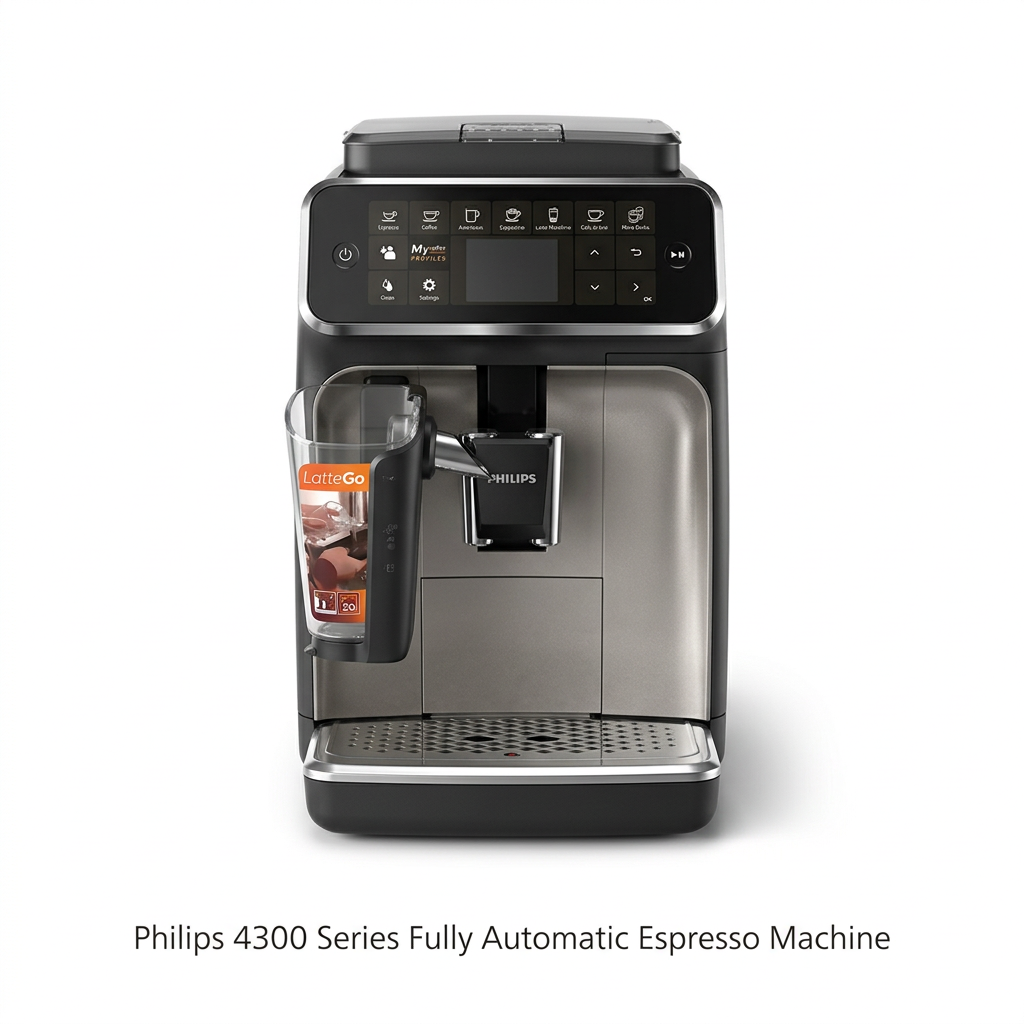
Eight one-touch drinks, a color display that shows real volumes, two profiles plus guest and the three-part LatteGo jug with no tubes.
Check price on Amazon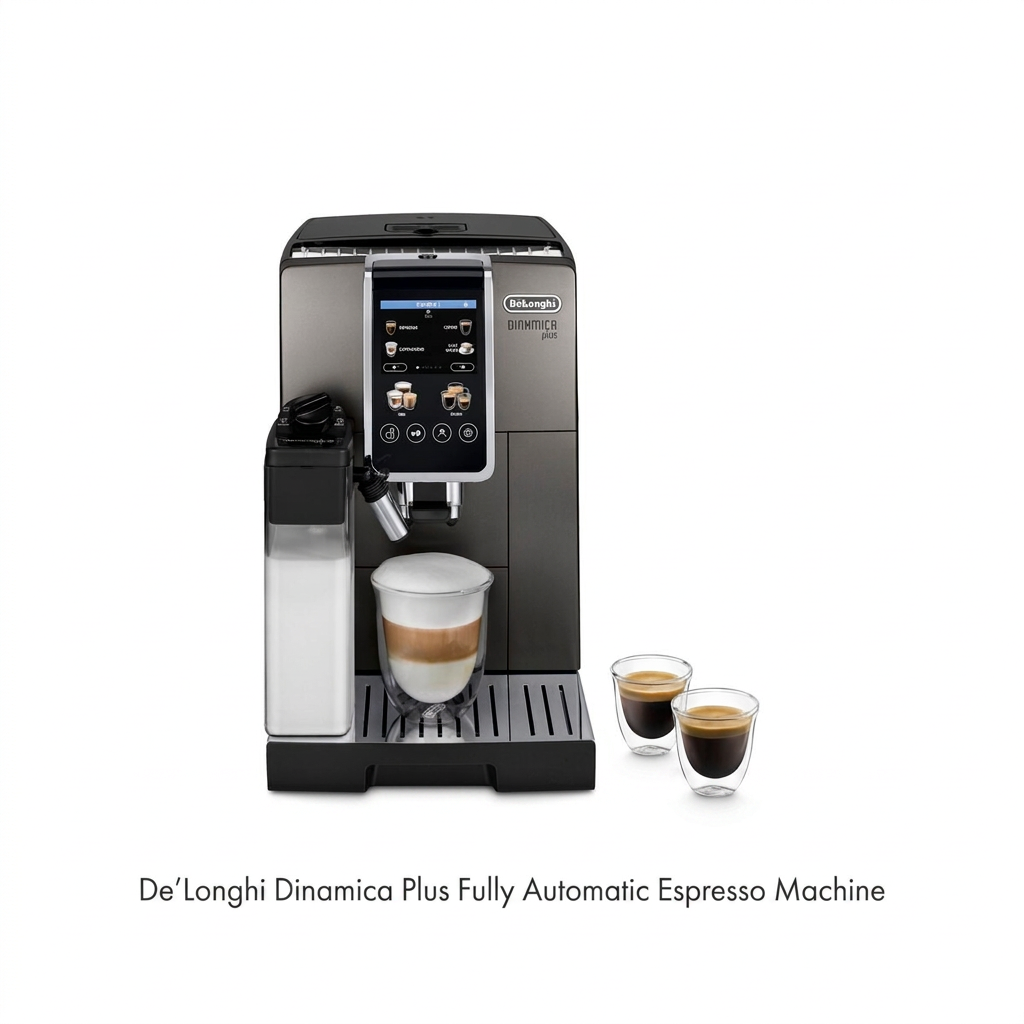
A 3.5-inch touchscreen, 16 hot and iced drinks, a thermal LatteCrema carafe with three foam levels, three profiles plus guest and an app.
Reveal Today’s DealPhilips 4300 vs De’Longhi Dinamica Plus at a glance
- Buy the Dinamica Plus if several people share the machine and milk drinks are a daily habit.
- Buy the 4300 if you want a clear, easy first automatic for two people and the quickest milk cleanup.
- The Dinamica Plus makes the stronger espresso; the 4300’s extra shot works on black coffees only.
- The Dinamica Plus’s app is a setup tool, not a remote control, because it runs on Bluetooth.
Head to head
The better result in each row is marked, based on my testing and the manufacturer specs. Rows where the two machines are effectively equal have no winner.
The tally is not my verdict. Some rows matter far more than others, and which ones matter depends on who uses the machine.
| Spec | Philips 4300 | De’Longhi Dinamica Plus |
|---|---|---|
| Espressomy tasting, tuned | Smooth, pleasantly rich | Dense, syrupy, chocolatey ✓ Best |
| Strongest dose | 5 aroma levels | Extra Strong, about 15 g ✓ Best |
| One-touch drinks | 8 | 16, including iced ✓ Best |
| Iced coffee | By hand | Over Ice drink ✓ Best |
| Milk system | LatteGo, 3 parts, no tubes | Thermal LatteCrema carafe |
| Milk foammy tasting | Thick, consistent | Dense, glossy, 3 levels ✓ Best |
| Milk cleanup | Rinse, no tubes, dishwasher-safe ✓ Best | Clean cycle plus daily lid wash |
| Milk-rinse reminder | No | Yes, prompts after each drink ✓ Best |
| Display | Color, shows real volumes | 3.5-inch color touchscreen |
| Profiles | 2 plus guest | 3 plus guest ✓ Best |
| App | No | Coffee Link, Bluetooth ✓ Best |
| Brew unit access | Side door, easy ✓ Best | Behind the water tank |
| Footprint (W × D × H) | 9.6 × 17 × 14.6 in | 9.3 × 17.3 × 14.2 in |
| Rows won | 2 | 8 |
Philips 4300 vs De’Longhi Dinamica Plus pros and cons
Philips 4300
- Eight drinks on the front panel, easy to explore
- Display shows real volumes; two profiles plus guest
- LatteGo jug cleans fast with no tubes
- Extra shot is not available for milk drinks
- Milk drinks take almost three minutes with cleanup
- No clear prompt to rinse the milk system
De’Longhi Dinamica Plus
- Dense, syrupy espresso once volumes are shortened
- Thermal carafe makes rich, stable foam at three levels
- Three profiles, iced coffee and a clear touchscreen
- Bluetooth app is slow and only works nearby
- Brew unit sits behind the water tank
- Carafe needs a clean cycle and daily wash
Who should buy which machine?
- First-time automatic owners
- Couples who each want a saved drink
- People who want the quickest milk cleanup
- Families with different tastes
- Daily cappuccino and flat white drinkers
- Iced coffee fans
Design, size and build
On the counter, these two take up almost exactly the same space. Both are a little under 10 inches wide, about 17 inches deep and just over 14 inches tall.
The Philips 4300 has a silver-painted front and a stainless steel drip tray. The body is mostly plastic, but nothing creaked or rattled in four weeks.
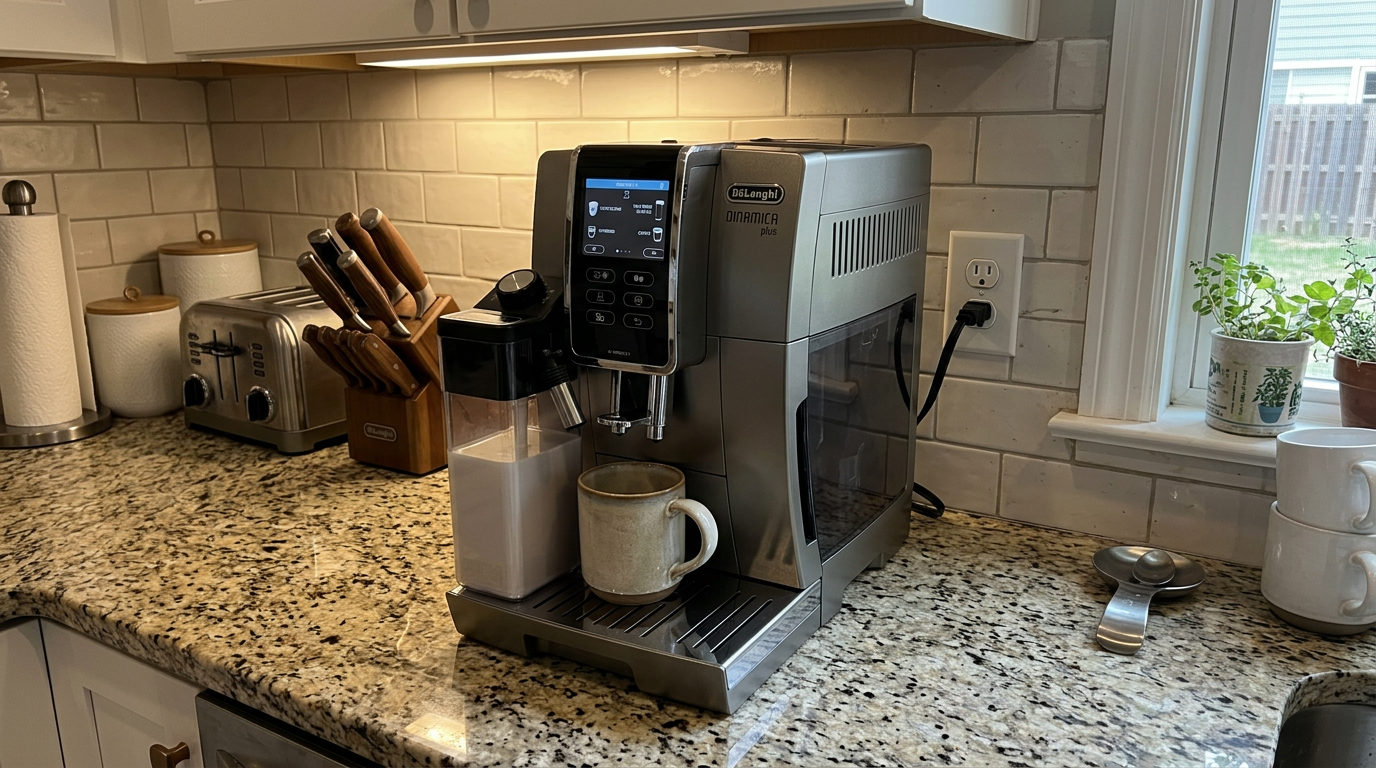
The De’Longhi Dinamica Plus came in a titanium finish with a heavy brushed stainless drip tray cover. That cover didn’t warp, scratch or rattle all month, and it is the most premium-feeling part of either machine.
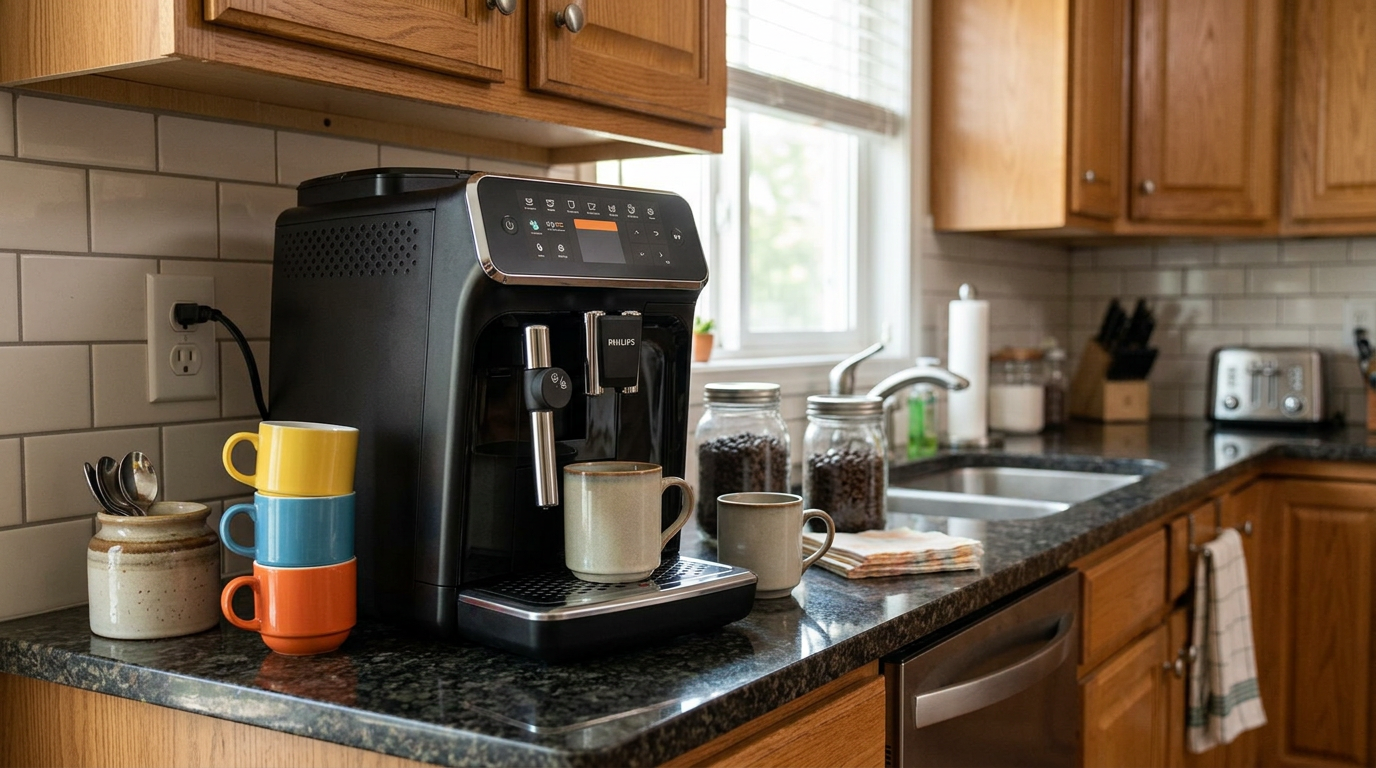
The 4300’s silver front and stainless drip tray look smarter than Philips’ entry models.
Both load from the front. The water tanks slide out without moving the machine, and both drip trays and grounds drawers come out the front too.
The milk systems change the footprint slightly. The LatteGo jug clips onto the front of the 4300, while the Dinamica Plus’s thermal carafe plugs in on the front left.
Height under your cabinets
Both fit under standard 18-inch wall cabinets, but slide forward to fill the bean hopper.
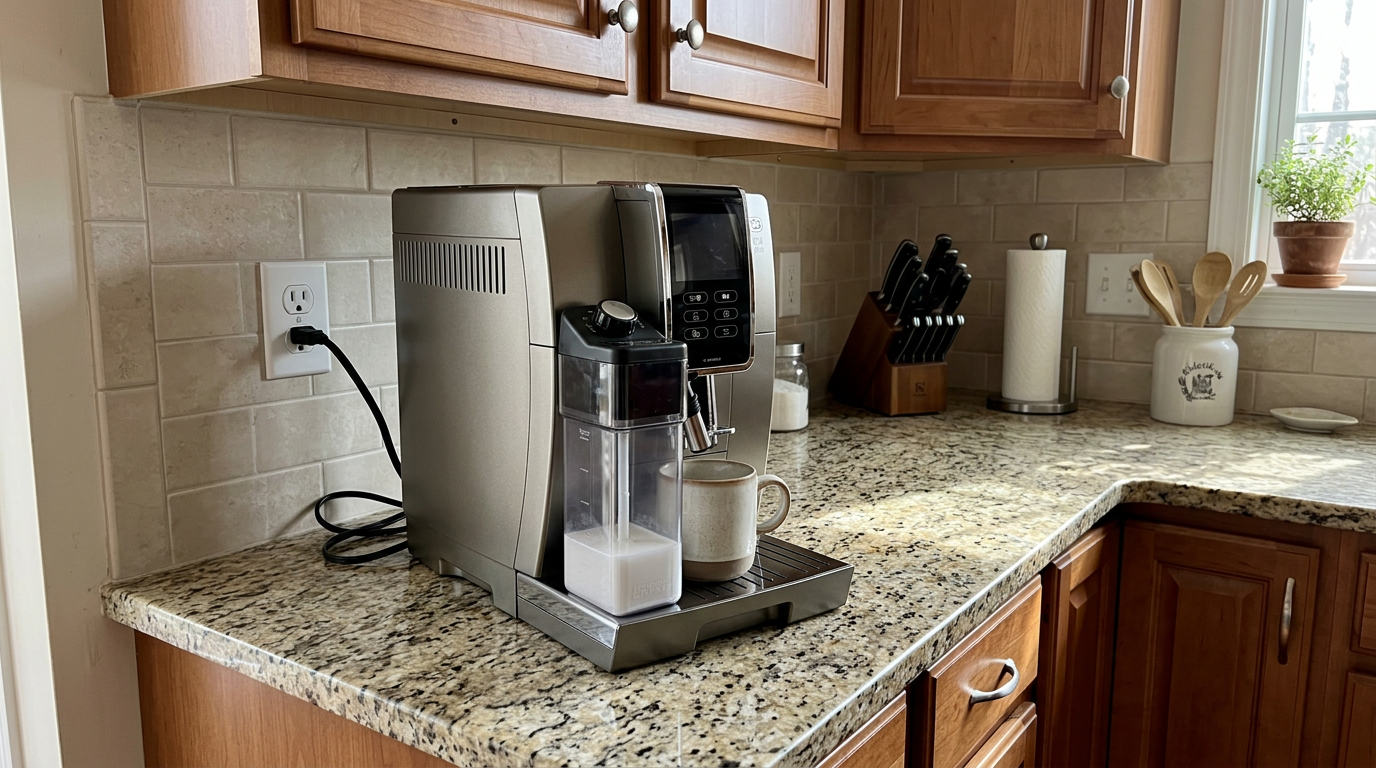
The Dinamica Plus’s heavy stainless drip tray cover felt the most solid part of either machine.
Our tip: Put a cup under the spouts every time you switch either machine on, because both run a warm rinse through the coffee outlets.
Setup and the first week
Setup is guided on screen on both, and the Philips 4300’s was the easiest Philips setup I have done. The display walked me through filling the tank, adding beans, fitting the AquaClean filter and setting water hardness, then the machine primed and rinsed itself.
The De’Longhi Dinamica Plus was similar. I chose a language, set water hardness on its four-level scale with the test strip, fitted the filter and let it rinse its circuits.
On both, the first few drinks were weaker while the grinder bedded in. I didn’t judge anything until about the fifth cup.
| Setup step | Philips 4300 | De’Longhi Dinamica Plus |
|---|---|---|
| Guided setup | On the color display | On the touchscreen |
| Water hardness | Strip, entered on screen | Strip, 4-level scale |
| Profiles to set up | 2 plus guest | 3 plus guest |
| App pairing | None | Bluetooth, optional |
| First change I made | Grind 2 steps finer | Extra Strong, grind 3, shorter volume |
The biggest difference in week one was how much tuning each needed. The 4300 was good almost straight away, while the Dinamica Plus went from ordinary to excellent once I shortened its default volumes.
We had a latte macchiato from the 4300 about twenty minutes after opening the box, and by the first evening we had each saved a profile and tried every drink.
Our tip: Switch on the eco auto-off on both machines during setup, so they don’t sit hot all morning after your first coffee.
Display, profiles and the app
The Philips 4300’s control panel is its biggest strength. All eight drinks have their own button, and when you press one, the display shows strength, coffee volume and milk volume right away.
Better still, it shows real volumes in milliliters rather than abstract bars. I knew I was getting a 40 ml espresso, which made drinks easy to repeat exactly.
The De’Longhi Dinamica Plus uses a bright 3.5-inch color touchscreen with a picture for each drink. Its Smart One Touch feature moved my four most-used drinks to the first screen within a week.
Profiles
The 4300 has two profiles plus a guest. The Dinamica Plus has three plus a guest. Each saves its own version of every drink on both machines.
For a couple, two profiles is enough. For a family, the third profile on the Dinamica Plus makes a real difference.
The Dinamica Plus app
The Dinamica Plus pairs with the Coffee Link app. The icon looks like Wi-Fi, but the connection is Bluetooth, so you need to be in or near the kitchen.
The app is where deeper settings live: grind time, water volume and pre-infusion length for each drink. I used it heavily in week one, then barely opened it.
| Feature | Philips 4300 | De’Longhi Dinamica Plus |
|---|---|---|
| Display | Color, shows real volumes | 3.5-inch color touchscreen |
| Drink buttons | 8 direct buttons | Pictures, scroll pages |
| Profiles | 2 plus guest | 3 plus guest |
| Learns your favorites | No | Smart One Touch |
| App | No | Coffee Link, Bluetooth |
| Temperature | 3 levels | Adjustable |
| Usage statistics | No | Yes, drink counter |
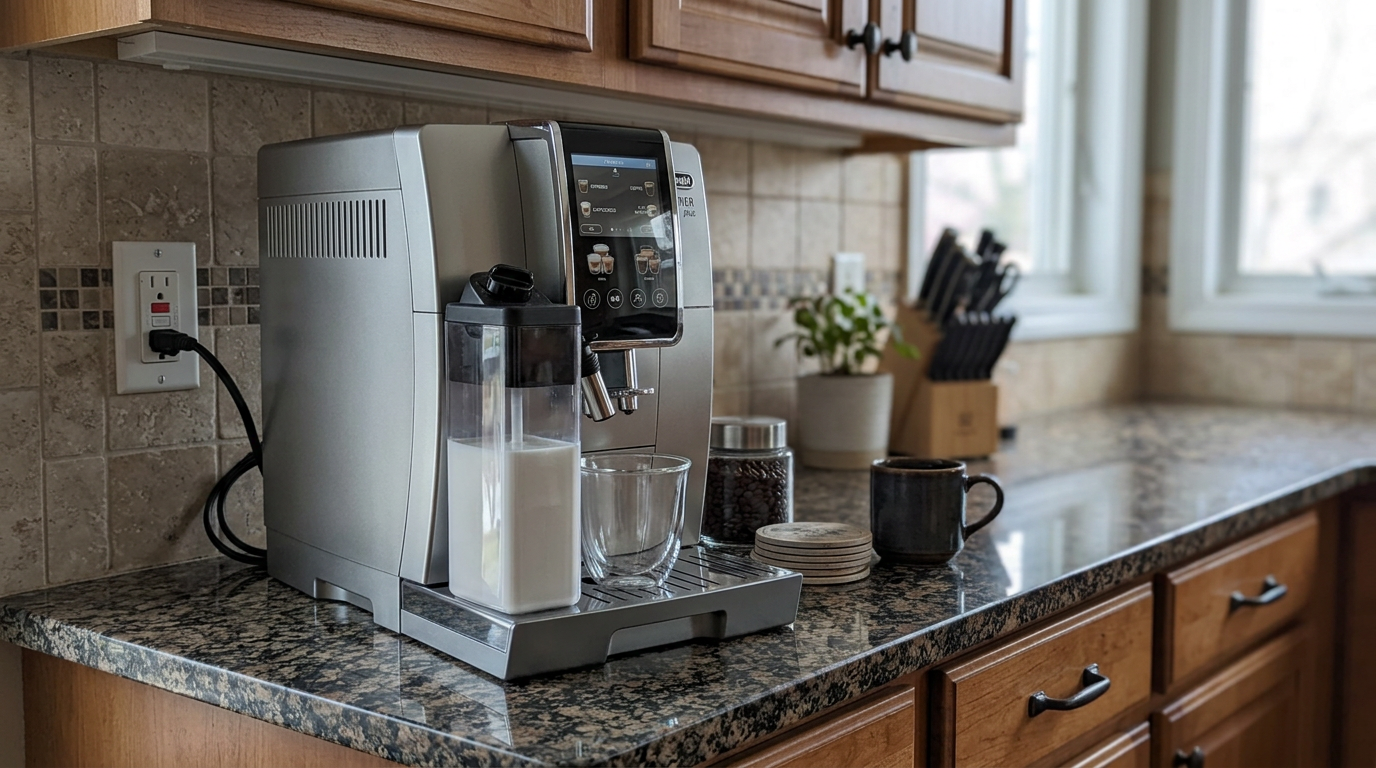
The Dinamica Plus’s touchscreen learns your favorite drinks and moves them to the front.
Our tip: Set up every profile on day one on either machine, before anyone gets used to changing the shared default drinks.
Grinder and dose
The Philips 4300 grinds with 100% ceramic flat burrs and 12 settings, which Philips rates for about 20,000 cups. It has five aroma strength levels.
The De’Longhi Dinamica Plus grinds with steel conical burrs✕Conical burrsTwo cone-shaped grinding parts, one inside the other. Beans are crushed between them, and the gap between the burrs sets how fine the coffee is. and 13 settings. Its strength setting controls how long the grinder runs, and at Extra Strong the dry puck weighed about 15 grams.
On the 4300, I ended up two steps finer than the default for espresso and ristretto, and one step coarser for caffè crema.
On the Dinamica Plus, I moved from the middle of the range to setting 3 over a couple of days. The pucks came out dry and firm instead of wet and crumbly, a good sign of a proper extraction.
How my Dinamica Plus espresso improved in week one
Rated out of 10. One change per day.
| Grinder detail | Philips 4300 | De’Longhi Dinamica Plus |
|---|---|---|
| Burrs | Ceramic, flat | Steel, conical |
| Settings | 12 | 13 |
| Strength | 5 aroma levels | Up to Extra Strong, about 15 g |
| Extra shot | Black coffees only | Doppio+ double dose |
| Bean hopper | 9.7 oz | About 10 oz |
| Pre-ground chute | Yes | Yes |
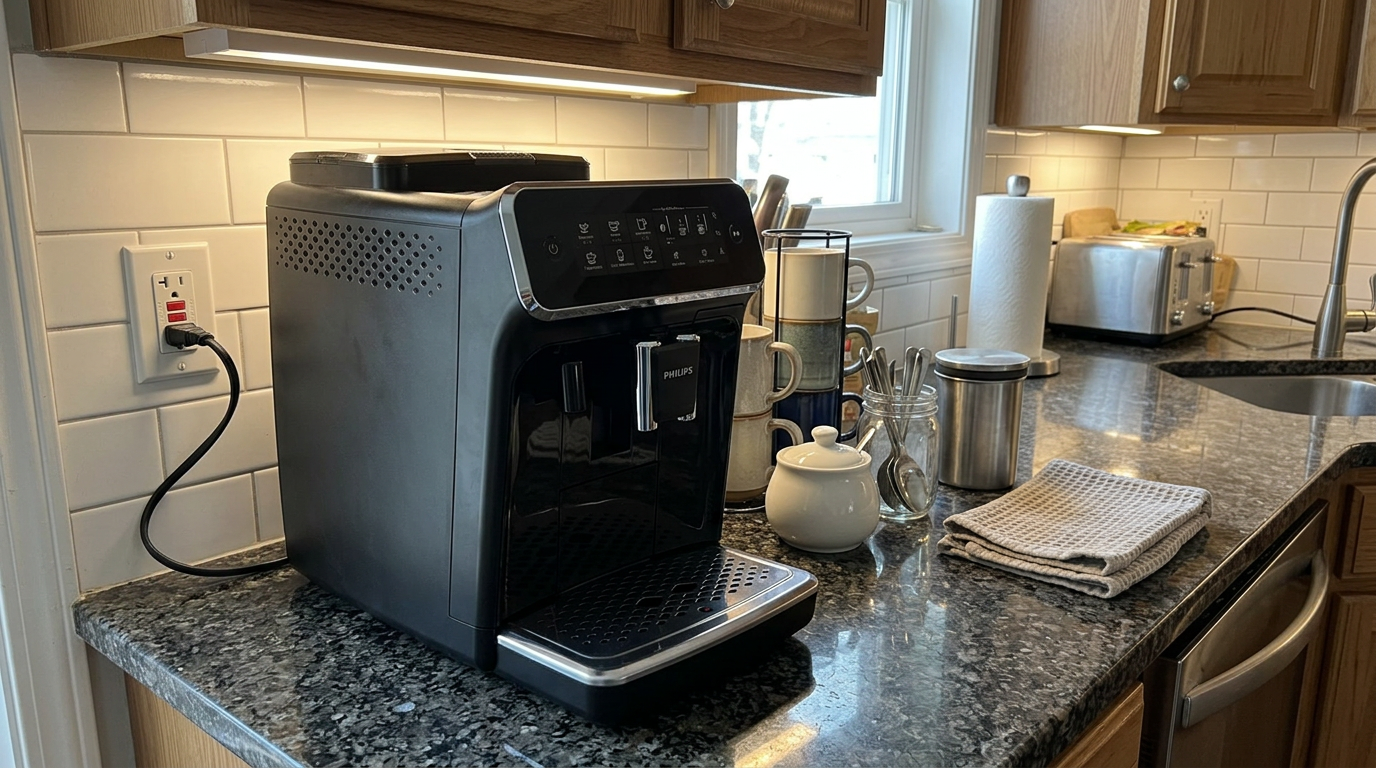
I set the 4300 two steps finer than default for its best espresso.
Our tip: Turn the grind knob only while the grinder is running on either machine, one click at a time, and judge the result two drinks later.
Espresso quality
This is where the Dinamica Plus pulled ahead, but only after I tuned it.
Straight from the factory, its espresso was long and a bit weak. I set the strength to Extra Strong, the grinder to 3 and cut the espresso to about 0.7 fluid ounces, roughly a 1:3 brew ratio✕Brew ratioThe weight of coffee grounds compared with the weight of liquid espresso in the cup. A 1:2 ratio means 15 g of coffee makes about 30 g of espresso..
After that, the crema✕CremaThe golden, foamy layer on top of a fresh espresso. It forms when pressure pushes oils and gases out of the coffee. was thick and hazelnut-colored and lasted for minutes. The body was heavy, with rich chocolate notes and low acidity.
On the Philips 4300, the strongest setting with a small volume made a smooth, pleasantly rich espresso. The ristretto button gave a shorter, more concentrated shot that suited my taste better.
Neither matched the Dinamica Plus’s thick body, but both were a clear step up from Philips’ entry models.
My espresso ratings
My scores out of 10 for body, crema and flavor.
| What you taste | Likely cause | First fix on either machine |
|---|---|---|
| Sour, thin | Under-extraction✕Under-extractionWhen water does not pull enough flavor out of the coffee. The shot tastes sour, thin and watery. or long volume | Grind finer, raise strength, shorten volume |
| Bitter, harsh | Over-extraction | Grind one step coarser |
| Wet, sloppy pucks | Grind too coarse | Grind finer, strongest dose |
| Lukewarm first drink | Cold pipes and cup | Run hot water into the cup first |
Milk drinks
The two milk systems take opposite approaches, and this is the decision that matters most for daily latte drinkers.
The Philips 4300 uses the LatteGo✕LatteGoPhilips’ milk jug with no tubes. Steam and air spin the milk in a small chamber inside the jug, and the foam pours straight into your cup. jug. You fill it with cold milk, clip it on and choose cappuccino, latte macchiato or café au lait. Steam spins the milk in the jug’s chamber and pours foam straight into the cup.
The De’Longhi Dinamica Plus uses a double-walled stainless steel LatteCrema✕LatteCremaDe’Longhi’s automatic milk system. A tube draws cold milk into the carafe lid, where steam and air mix with it in a small chamber before it pours into your cup. carafe. A tube draws cold milk up into the lid, and a dial on top sets how much air goes in.
How the foam turned out
The 4300’s cappuccino had a thick, creamy cap, and its latte macchiato poured in clean layers. The foam is automatic and consistent, but there is no way to change its texture.
The Dinamica Plus gave me three textures. On the right-hand setting, foam was dense, glossy and stable; on the left, the milk was smooth and silky, close to real microfoam, which made a genuinely good flat white.
My ratings out of 10 for texture, stability and flexibility.
The thermal carafe is a quiet advantage. I made six cappuccinos in a row for a family breakfast, and the milk was still cold and the sixth drink as dense as the first.
The 4300 can’t add its extra shot to milk drinks. For a stronger cappuccino, I raised the strength to the top level and lowered the milk volume, or brewed a ristretto into the cup first.
| Milk detail | Philips 4300 | De’Longhi Dinamica Plus |
|---|---|---|
| System | LatteGo, 3 parts, no tubes | Thermal carafe with pickup tube |
| Foam control | None | Dial with 3 levels |
| Milk drinks at one touch | 3 | 7 |
| Keeps milk cold on the counter | No | Yes, double-walled steel |
| Extra shot in milk drinks | No | Doppio+ base |
| Reminder to rinse | No | Yes, after every milk drink |
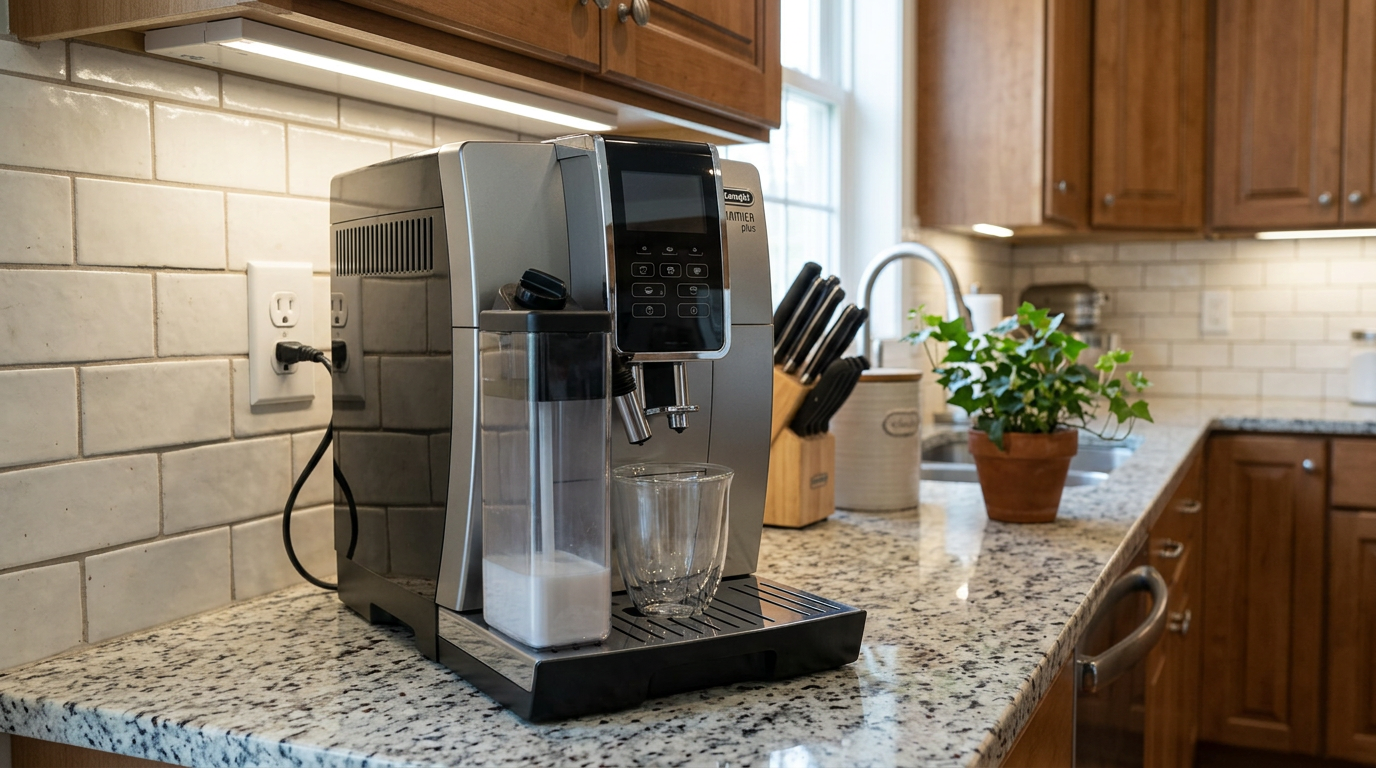
The thermal carafe kept milk cold through a whole round of drinks.
Our tip: Keep milk at fridge temperature, around 39°F, on both machines, because warm milk makes big bubbles that collapse fast.
Long coffee, Americano and iced drinks
On the Philips 4300, the coffee button makes a long, mellow cup with a light crema, and the Americano adds hot water to an espresso. Its extra shot works on black coffees, and an Americano with the extra shot became my afternoon favorite.
The De’Longhi Dinamica Plus has two ways to make a bigger black coffee. Its Coffee button brews through one dose for a tall crema head, while its Long drink grinds and brews twice, ejecting the first puck before the second.
That two-dose Long tasted like a mild, clean filter coffee with low bitterness, because each puck only gives up part of the water.
My ratings out of 10 for flavor and balance in a mug.
Iced coffee
The Dinamica Plus has an Over Ice drink that brews a concentrated coffee at a lower temperature for a full glass of ice. It held its flavor far better than hot espresso poured over ice.
The 4300 has no iced button. I brewed a ristretto, let it cool for a minute and poured it over ice with cold milk, which worked well enough.
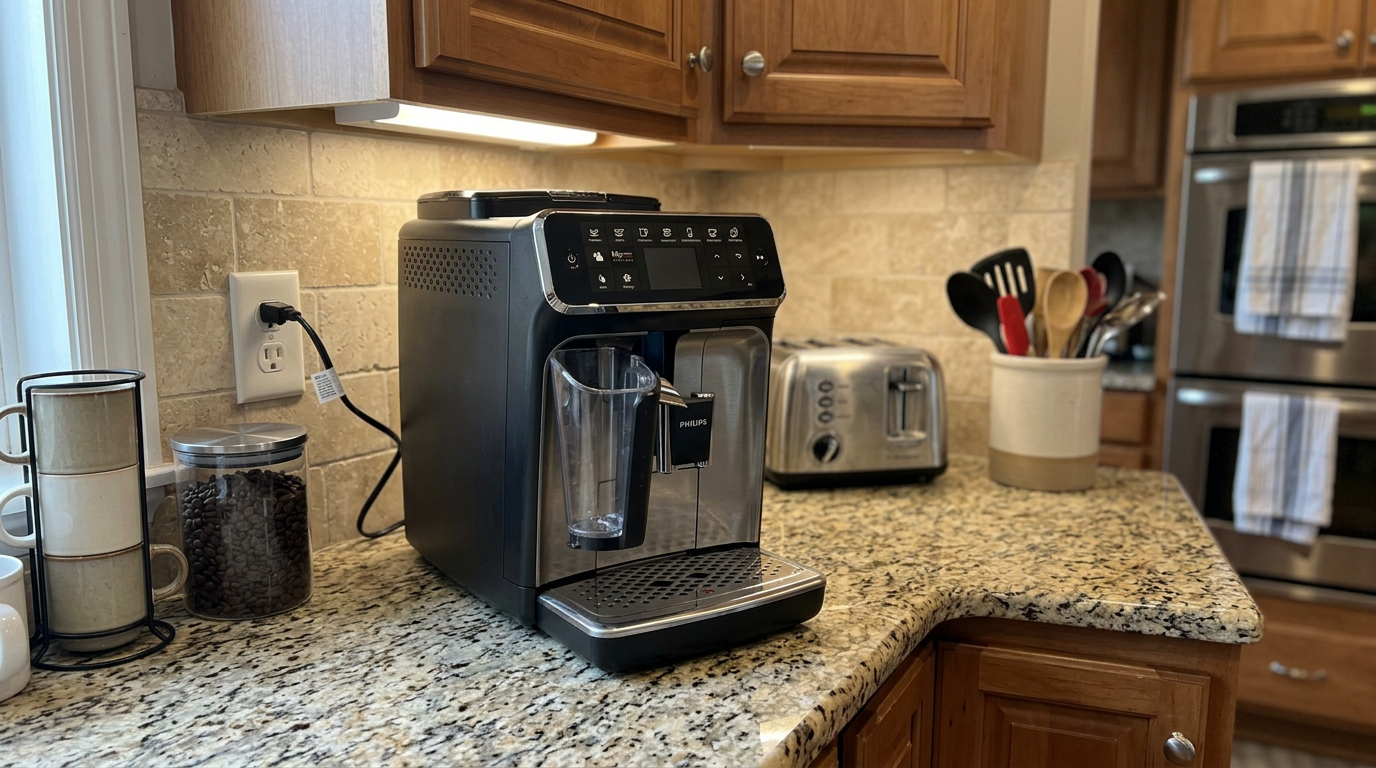
An Americano with the extra shot was the 4300’s best long drink.
Our tip: Fill the glass all the way with ice before starting an iced drink on either machine, so the coffee chills instantly instead of melting the ice.
Cleaning and upkeep
The Philips 4300’s LatteGo jug comes apart into three pieces with no tubes or hidden channels, and they are dishwasher-safe. It is the easier milk system to clean.
But the 4300 doesn’t clearly prompt you to rinse the milk system after a milk drink. You go through a few menu steps yourself, and in the first week we forgot it twice.
The De’Longhi Dinamica Plus prompts you after every milk drink to turn the carafe dial to Clean. It flushes the milk path with hot water and steam in about 15 seconds, and then the carafe goes in the fridge. Each evening, I washed the lid parts by hand.
My daily hands-on cleaning time
My estimate of hands-on time per day.
Both have a removable brew unit✕Brew unitThe part that compresses the ground coffee, holds it while water passes through and then ejects the used puck. you rinse under warm water. The 4300’s comes out from a side door. The Dinamica Plus’s sits behind the water tank, so you switch the machine fully off, take the tank out and open a small door.
| When | Philips 4300 | De’Longhi Dinamica Plus |
|---|---|---|
| After milk drinks | Milk rinse from the menu | Clean cycle when prompted |
| Daily | Wash LatteGo, empty tray | Wash carafe lid parts, empty tray |
| Weekly | Rinse brew group | Rinse brew unit, no soap |
| Every few months | Grease the brew group | Grease the brew unit rails |
| When prompted | Guided descale, about 30 min | Descale or change the filter |
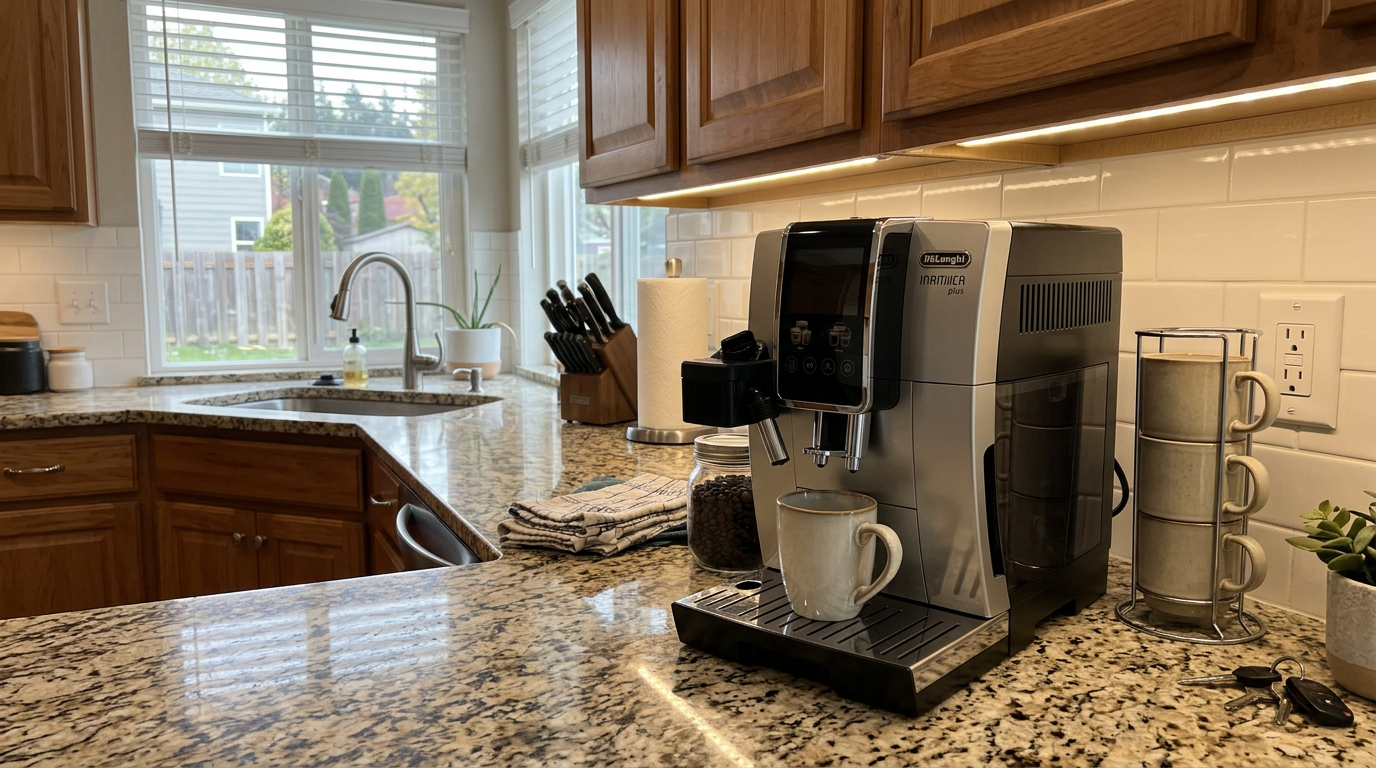
The Dinamica Plus prompts a carafe clean after every milk drink.
Speed and noise
From switching on, the 4300 made a black coffee in about 1 minute 56 seconds. A cappuccino took about 2 minutes 57 seconds including fitting the jug, the rinse and putting the jug back in the fridge.
The Dinamica Plus ran a 30-second rinse on start-up, then made an espresso in well under a minute and a cappuccino in about a minute and a half, including the clean cycle.
Measured with a stopwatch.
Noise was similar: a short, firm grinder burst on both and a steady hiss while frothing. Neither woke anyone in my apartment.
Water, beans and supplies
The 4300’s 61-ounce tank lasted about two days for two of us, and so did the Dinamica Plus’s 60-ounce tank. Both use a water filter, and Philips says the AquaClean filter, replaced when prompted, can stretch descaling to 5,000 cups.
Drinks per full tank
Rough maths allowing for rinses. Your numbers depend on cup size.
| Bean type | Philips 4300 | De’Longhi Dinamica Plus |
|---|---|---|
| Medium-dark blend | Best ristretto and milk drinks | Thick crema, grind 3 |
| Medium roast | Best caffè crema | Brighter, grind 3–4 |
| Light roast | Can be sour | Grind 2–3, short volume |
| Oily or flavored | Avoid | Avoid |
Medium to medium-dark beans suited both grinders best.
Our tip: Choose barista versions of plant milks for both machines, because the added protein and fat make the foam far more stable.
Real-life scenarios
Specs only go so far. These are the situations where one machine clearly pulled ahead during my testing.
About a minute and a half each, and the thermal carafe kept the milk cold to the last drink.
Eight drinks on the front, real volumes on the display and two saved profiles. We were exploring the menu in twenty minutes.
The carafe’s left-hand setting made smooth, almost-microfoam milk. The 4300 has no flat white button.
Three LatteGo parts, no tubes, straight into the dishwasher.
The Over Ice drink brews for a full glass of ice and stays strong.
The 4300’s extra shot on an Americano tasted fuller and cleaner than its long coffee.
For families and milk drinkers, the Dinamica Plus earned its place.
My scorecard
These are my own scores out of 10. The first four come from my single reviews of each machine, and I added drink range and milk flexibility because they decide this matchup.
Philips 4300
De’Longhi Dinamica Plus
Overall, I rate the Philips 4300 8.3 and the Dinamica Plus 8.6. The 4300 is the easier first machine; the Dinamica Plus makes the better coffee and milk once it is set up.
See How Much You’ll SaveWhich one is right for you?
4 quick questionsWhich one should you buy?
It comes down to one question: is this a simple machine for two, or a café for the whole house?
For two people who want something easy, the 4300 is hard to beat. For a family that drinks milk drinks every day, the Dinamica Plus is worth the extra setup. For the wider picture beyond this matchup, see my guide to the best Philips espresso machines.
If you’re weighing options, my Philips 3200 vs Dinamica Plus comparison covers the cheaper LatteGo model, and Magnifica Evo vs Dinamica Plus shows the simpler De’Longhi.
For couples and first-time owners, the 4300 is the easy choice.
- Two people share the machine
- You want real volumes on screen
- You want the quickest milk cleanup
- It’s your first automatic
- You want a stronger cappuccino at one touch
- You drink iced coffee
- Three or more people share it
- Several people share the machine
- You drink milk drinks daily
- You want iced coffee and flat whites
- You like to fine-tune drinks
- You want zero daily carafe cleaning
- You expect remote brewing from anywhere
- You drink one espresso a day
For most households, my pick is the De’Longhi Dinamica Plus. Once its volumes are shortened, it makes dense, syrupy espresso, its thermal carafe pours some of the best automatic foam I have tested, and three profiles plus iced coffee cover a whole family.
The Philips 4300 is the smarter buy for a couple or a first-time owner. Its display shows exactly what you’re getting, two profiles keep things simple and its LatteGo jug is the quickest milk system to clean.
Whichever you choose, use cold milk, shorten the default volumes and make the milk rinse a habit. Both machines reward that care with years of good coffee.
Philips 4300 vs De’Longhi Dinamica Plus specifications
From manufacturer specifications and my own testing.
| Philips 4300 | De’Longhi Dinamica Plus | |
|---|---|---|
| Model | 4300 Series, EP4347 | Dinamica Plus Connected |
| Type | Fully automatic with LatteGo | Fully automatic with LatteCrema |
| One-touch drinks | 8 | 16, including iced |
| Pump | 15 bar | 19 bar |
| Heating | Thermoblock | Thermoblock |
| Grinder | Ceramic, 12 settings | Steel conical, 13 settings |
| Strength | 5 aroma levels | Up to Extra Strong, about 15 g |
| Extra shot | Black drinks only | Doppio+ |
| Display | Color, shows volumes | 3.5-inch color touchscreen |
| Profiles | 2 plus guest | 3 plus guest |
| App | No | Coffee Link, Bluetooth |
| Milk system | LatteGo, 3 parts | Thermal carafe, 3 foam levels |
| Water tank | 61 fl oz | About 60 fl oz |
| Bean hopper | 9.7 oz | About 10 oz |
| Power | 1,500 W | About 1,450 W |
| Dimensions (W × D × H) | 9.6 × 17 × 14.6 in | 9.3 × 17.3 × 14.2 in |
| Weight | About 17.6 lb | About 21 lb |
How I tested and compared them
I used each machine as my everyday coffee maker for four weeks, making every drink on both menus, from ristretto and caffè crema to Cappuccino Mix, flat whites and iced coffee.
I timed black coffee and cappuccinos, tuned grind, strength and volume, built profiles, used the Coffee Link app for setup, foamed whole, semi-skimmed and oat milk and ran a full guided descale on the 4300.
Michael Reynolds and a second HouseholdMe tester each used their own profile on both machines and wrote the notes together, then compared them with the manufacturers’ specifications and owner documentation.
- Coffee: dose, crema, body and consistency.
- Milk: foam texture, temperature and flexibility.
- Workflow: display, profiles, app and speed.
- Ownership: cleaning, reminders, water care and footprint.
Philips 4300 vs De’Longhi Dinamica Plus FAQ
Is the De’Longhi Dinamica Plus better than the Philips 4300?
For milk drinks and households with different tastes, yes. It makes denser espresso once tuned, foam at three levels, iced coffee and has three profiles. The Philips 4300 is simpler, easier to learn and quicker to clean.
Which makes better espresso?
The Dinamica Plus, after tuning. At Extra Strong, grind 3 and about 0.7 fl oz, it was dense and syrupy. The 4300’s ristretto was smooth and pleasantly rich but lighter in body.
Which milk system is easier to clean?
The Philips LatteGo. It has three parts and no tubes and is dishwasher-safe. The Dinamica Plus carafe runs a clean cycle after each drink and needs its lid parts washed daily.
Does the Philips 4300 remind you to rinse the milk system?
Not clearly. You start the rinse from the menu yourself. The Dinamica Plus prompts you after every milk drink.
Can I add an extra shot to a cappuccino?
Not on the 4300, where the extra shot works on black coffees only. The Dinamica Plus’s Doppio+ gives a stronger double base.
Do they make iced coffee?
The Dinamica Plus has an Over Ice drink. On the 4300, I brewed a ristretto, cooled it and poured it over ice.
Does the Dinamica Plus app work away from home?
No. It uses Bluetooth, so you need to be nearby. I used it for setup and deeper settings, not daily brewing.
How many profiles do they have?
The Philips 4300 has two plus a guest. The Dinamica Plus has three plus a guest.
Are they the same size?
Almost. Both are just under 10 inches wide, about 17 inches deep and just over 14 inches tall.
Which is better for a first-time owner?
The Philips 4300. Its eight front buttons and real volumes on the display made it the easiest automatic I’ve learned.

- Our hands-on Philips 4300 Series review
- Our hands-on De’Longhi Dinamica Plus review
- Philips and De’Longhi product specifications and owner documentation
- Coffee standards, Specialty Coffee Association
- General espresso brewing and maintenance guidance