Ninja vs De'Longhi vs Philips Espresso Machines
To compare the three brands fairly, we put one fully automatic bean-to-cup machine from each head to head: the Ninja AutoBarista, the De'Longhi Rivelia and the Philips 3200 Series. We used each one daily for four weeks to find out what each brand does best.
We choose products independently. We may earn a commission when you buy through our links. Affiliate policy
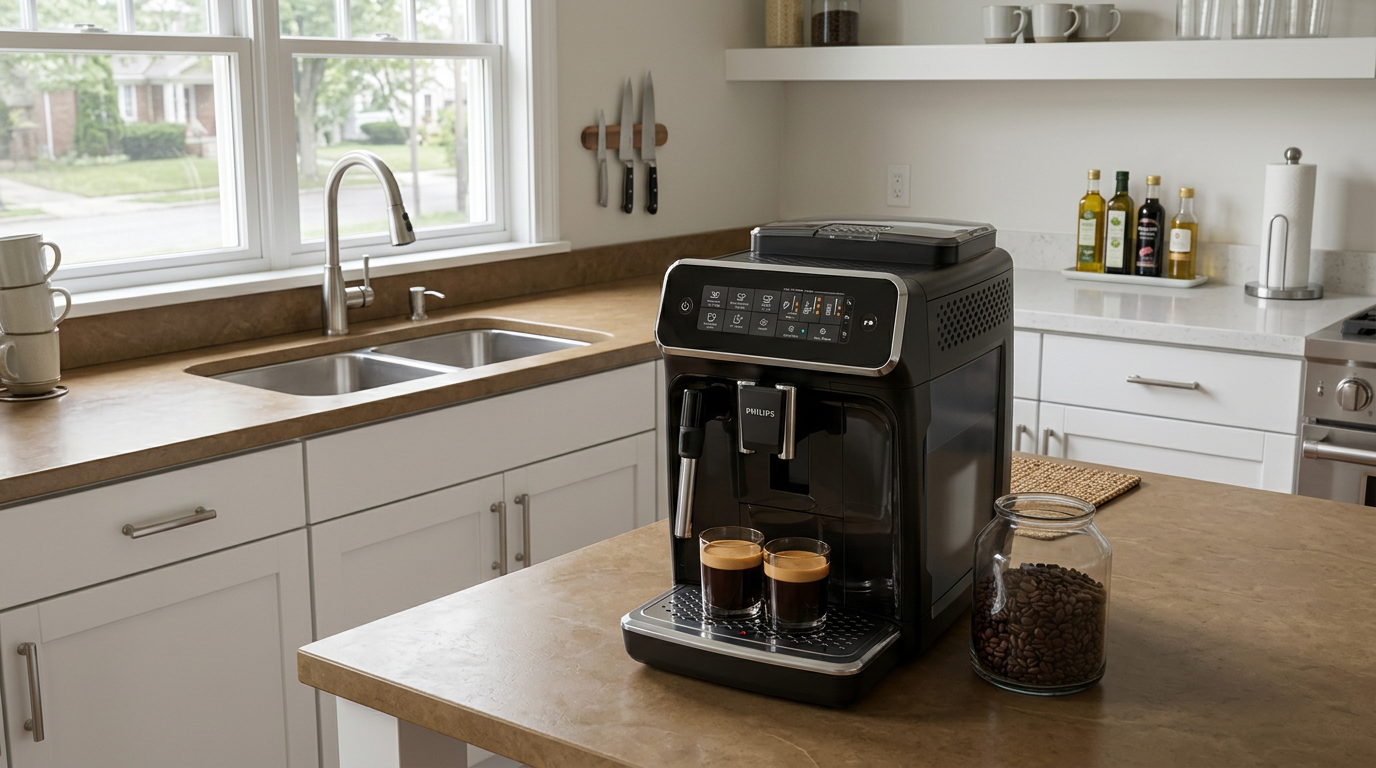
Jargon helpNew to bean-to-cup machines? Tap any dotted term to see what it means.
In this comparison
For most households, De'Longhi's De'Longhi Rivelia is the one to buy. It was the easiest to live with, made good milk drinks at one touch and handles regular and decaf with two hoppers. Choose Ninja's Ninja AutoBarista if you want the strongest espresso plus real drip coffee, cold brew and cold foam from one machine. Choose Philips' Philips 3200 Series if you prefer mild coffee and want the simplest milk system to clean in the lightest, most compact body.
The three machines
Specs checked November 25, 2026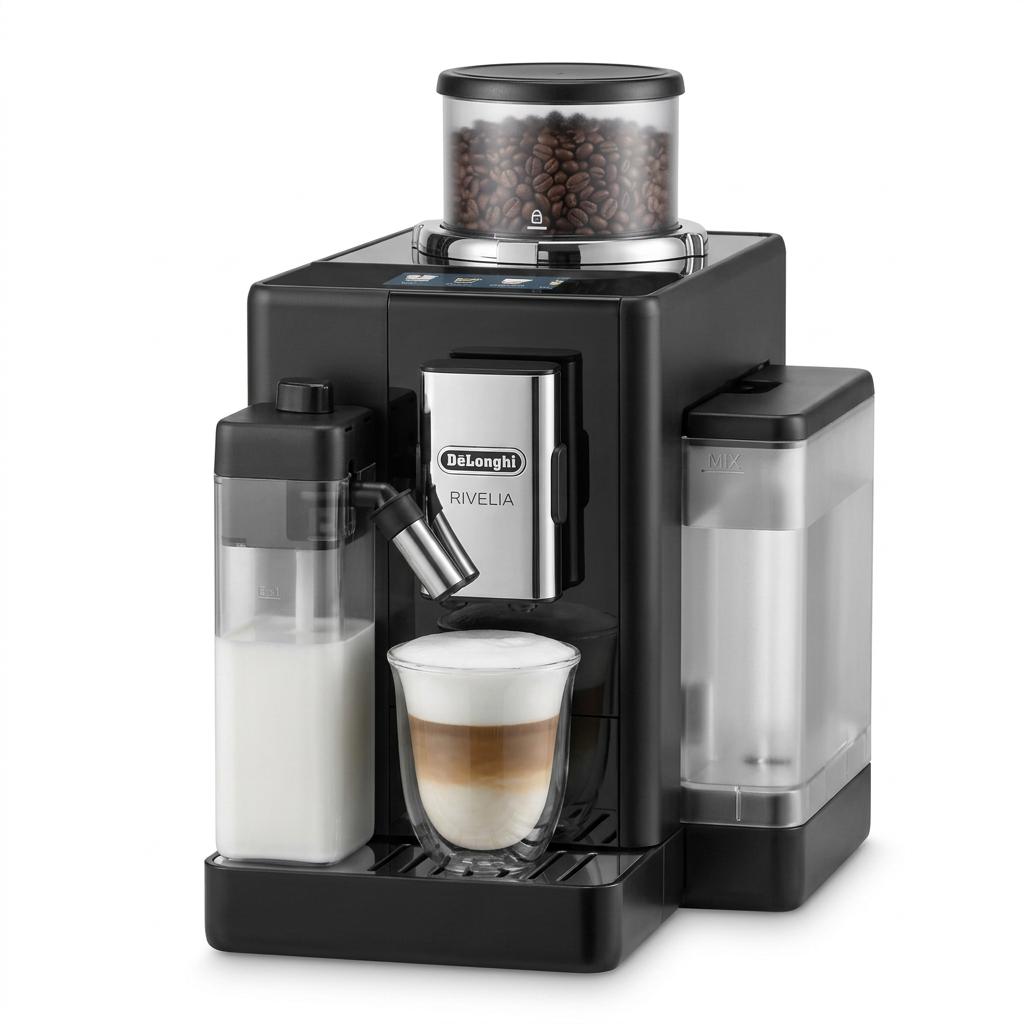
De'Longhi's pick: two swappable bean hoppers, a roughly 15 g dose, a hot LatteCrema carafe, 18 recipes and four profiles.
Check price on Amazon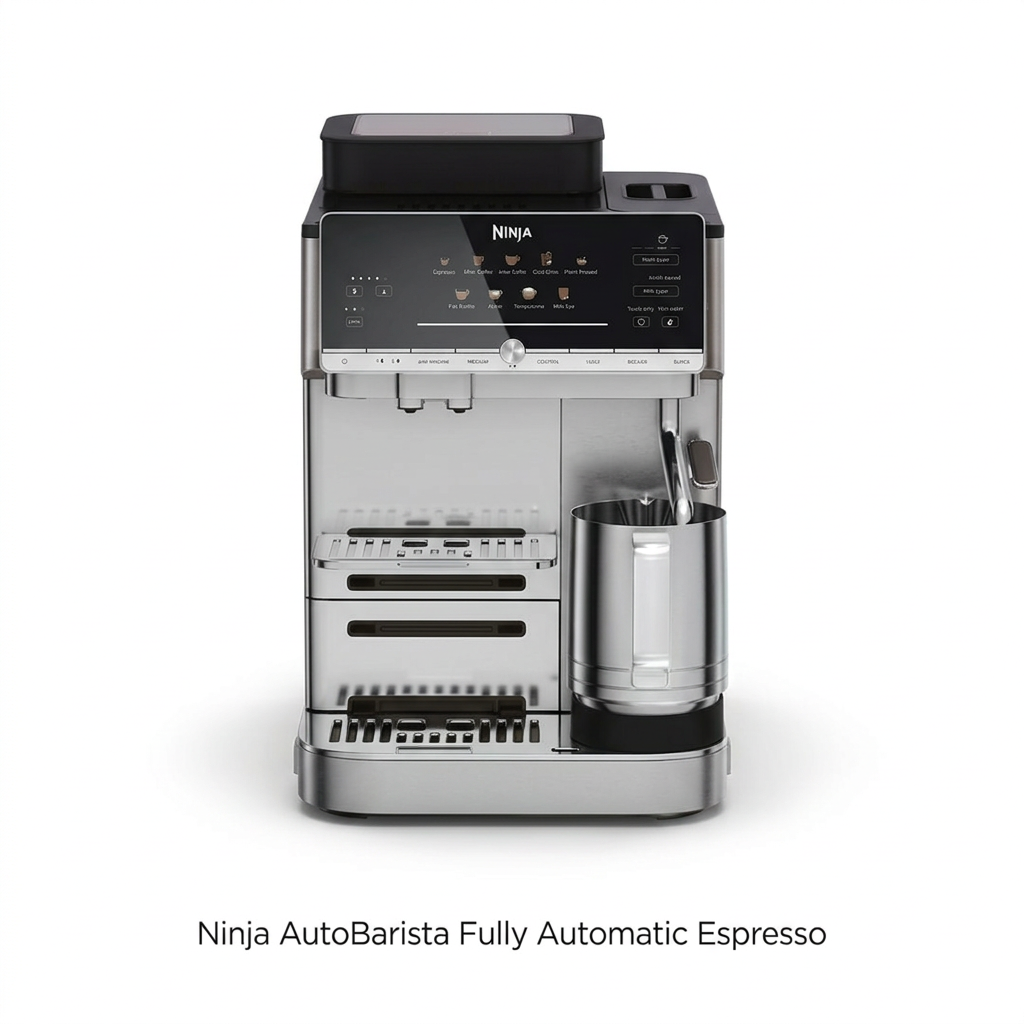
Ninja's pick: Grind IQ, weighed single, double and triple doses, real drip coffee, cold brew and a whisking frother with cold foam.
See Today’s Price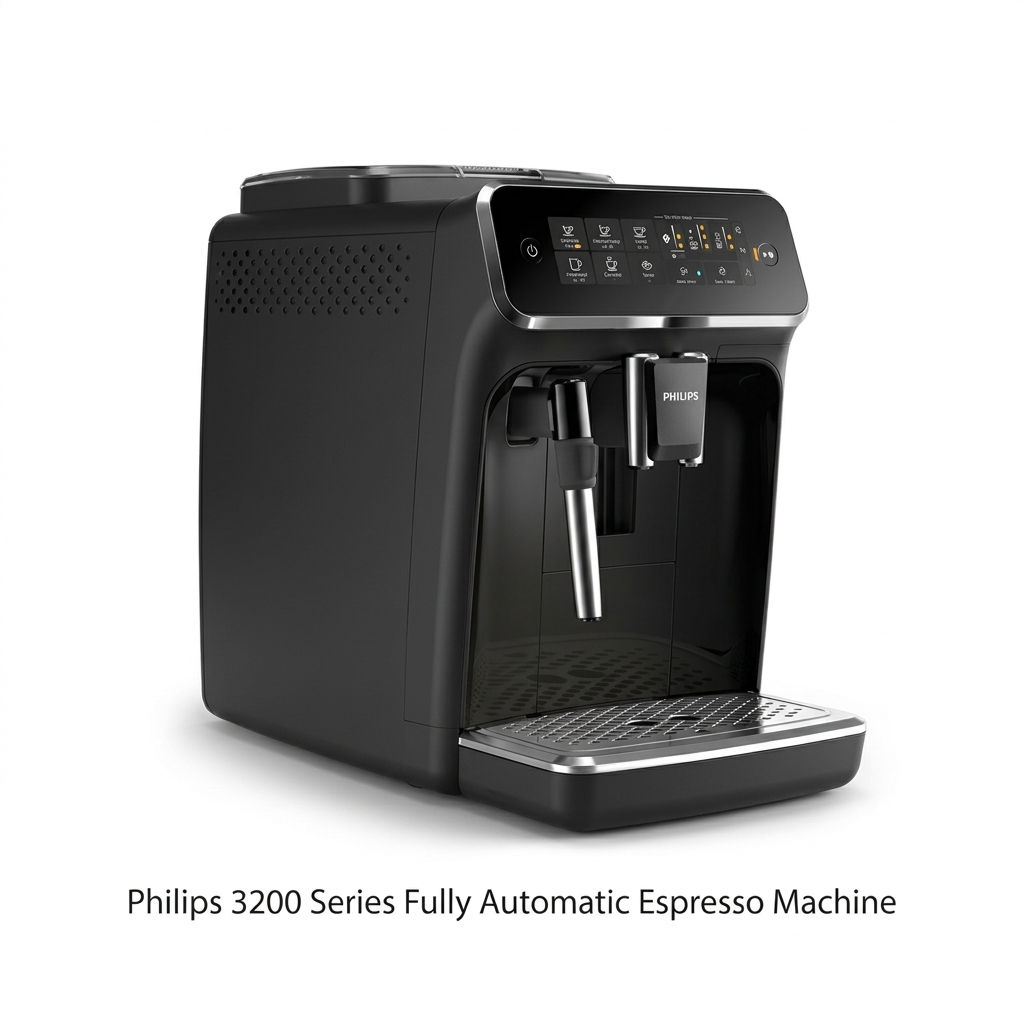
Philips' pick: five one-touch drinks, a two-part tubeless LatteGo milk jug, a ceramic grinder and an AquaClean water filter.
Reveal Today’s DealNinja vs De'Longhi vs Philips at a glance
- De'Longhi is the best all-rounder, with two hoppers and four profiles.
- Ninja makes the strongest espresso and adds drip coffee and cold drinks.
- Philips is the lightest, simplest to clean and makes the mildest coffee.
- Only the Ninja makes cold foam; only the De'Longhi takes two beans.
Head to head
We scored the three machines across the same fourteen rows, using the notes Alex and I kept during four weeks with each.
The Ninja AutoBarista wins on espresso and its extra brew styles. The De'Longhi Rivelia wins on ease, milk and flexibility with beans, and the Philips 3200 Series wins on cleaning, size and weight.
| Spec | Ninja AutoBarista | De'Longhi Rivelia | Philips 3200 |
|---|---|---|---|
| Espresso score | 8.8 ✓ Best | 8.3 | 7.2 |
| Coffee dose | Weighed, single to triple ✓ Best | Up to about 15 g | About 8 g |
| Drip coffee | Real filter-style mode ✓ Best | Coffee crema | Long coffee |
| Cold brew and cold foam | Both ✓ Best | No | No |
| Milk score | 8.2 | 8.5 ✓ Best | 7.8 |
| Milk system | Whisking wand and jug | LatteCrema carafe | LatteGo, two parts ✓ Best |
| Bean hoppers | One | Two, swappable ✓ Best | One |
| Profiles | Two | Four ✓ Best | None |
| Ease of use | 8.5 | 9.1 ✓ Best | 8.8 |
| Cleaning | 8.2 | 8.2 | 8.5 ✓ Best |
| Width | 10.7 in | 9.6 in | 9.7 in |
| Weight | 36–40 lb | 21.4 lb | 17.6 lb ✓ Best |
| Water tank | About 70 oz ✓ Best | 47 oz | About 61 oz |
| Overall score | 8.4 | 8.5 ✓ Best | 8.0 |
| Rows won | 5 | 5 | 3 |
The Ninja and De'Longhi tie on rows won, and their overall scores are only 0.1 apart. The difference is what you drink: strong espresso and drip coffee point to Ninja, while one-touch milk drinks for a whole family point to De'Longhi.
Is It On Sale? Check NowPros and cons
Ninja AutoBarista
- Strongest espresso, with weighed doses up to a triple
- Real drip coffee, cold brew and cold foam
- Grind IQ dials in new beans for you
- Only one bean hopper
- Deep and heavy, at 36 to 40 pounds
- Settings menu uses codes
De'Longhi Rivelia
- Easiest to use, with four profiles
- Two bean hoppers that swap in seconds
- One-touch lattes from the LatteCrema carafe
- Each swap wastes or mixes about 10 g of beans
- Top-mounted screen is hard to see from below
- No cold foam or drip-style coffee
Philips 3200 Series
- Two-part LatteGo jug with no tubes
- Lightest and among the most compact
- AquaClean filter cuts descaling
- Mild espresso from an 8 g dose
- Foam is creamy but not café-smooth
- Small drip tray needs daily emptying
Who should buy which machine?
- Strong espresso and milk drinks
- Homes that also drink drip coffee
- Iced coffee and cold brew fans
- Families with different drinks
- Homes with a decaf drinker
- Anyone who wants the least effort
- People who prefer mild coffee
- Anyone who hates cleaning milk systems
- Smaller counters and lighter lifting
Three brands, three ideas
Each brand builds its automatic machines around a different idea, and these three models show it clearly.
Ninja chases espresso strength and versatility. The Ninja AutoBarista weighs every dose, calibrates its own grind with Grind IQ✕Grind IQNinja’s self-calibration. The machine pulls test shots, watches how they flow and adjusts the grind until the shot lands in range, then saves the setting for your beans., and adds drip coffee and cold brew to the menu.
De'Longhi focuses on everyday ease for families. The De'Longhi Rivelia has profiles for each person, a milk carafe that goes in the fridge and two hoppers for regular and decaf.
Philips puts simple cleaning first. The Philips 3200 Series's LatteGo jug has no tubes at all, and its small dose makes gentle, easy-drinking coffee.
| Ninja AutoBarista | De'Longhi Rivelia | Philips 3200 | |
|---|---|---|---|
| Brand focus | Strength and versatility | Ease and flexibility | Simple cleaning |
| Grinder | Grind IQ, 50 settings | Steel conical, 13 settings | Ceramic, 12 settings |
| Dose | Weighed, single to triple | Up to about 15 g | About 8 g |
| Milk | Whisking wand, 4 presets | LatteCrema carafe | LatteGo jug |
| Extras | Drip, cold brew, cold foam | Two hoppers, four profiles | AquaClean filter |
| One-touch drinks | 10 | 18 | 5 plus hot water |
None of these is better in every way. Each brand made sensible trade-offs, and the right one depends on which trade-off you can live with.
It's worth saying what these models are not. We didn't pick each brand's most expensive machine or its cheapest. We picked a popular fully automatic model from each that a typical household would realistically shortlist.
If you like one brand's approach but not this exact model, the brand's other machines usually follow the same thinking: Ninja leans on weighed doses and extra brew styles, De'Longhi on family-friendly controls, and Philips on simple milk systems.
Design and counter space
The Philips 3200 Series is the lightest and among the most compact, at about 9.7 inches wide and 17.6 pounds. It's mostly plastic, with a stainless drip tray cover.
The De'Longhi Rivelia is the narrowest, at about 9.6 inches, with rounded corners and a side tank that tops up from above. At 21.4 pounds, it has no handles, so we hugged it to move it.
The Ninja AutoBarista is the big one: about 10.7 inches wide, nearly 18 inches deep and 36 to 40 pounds, in brushed steel that looks like a manual machine. Its back gets warm, so leave a gap behind it.
Weight
Lighter machines are easier to slide out for cleaning underneath.
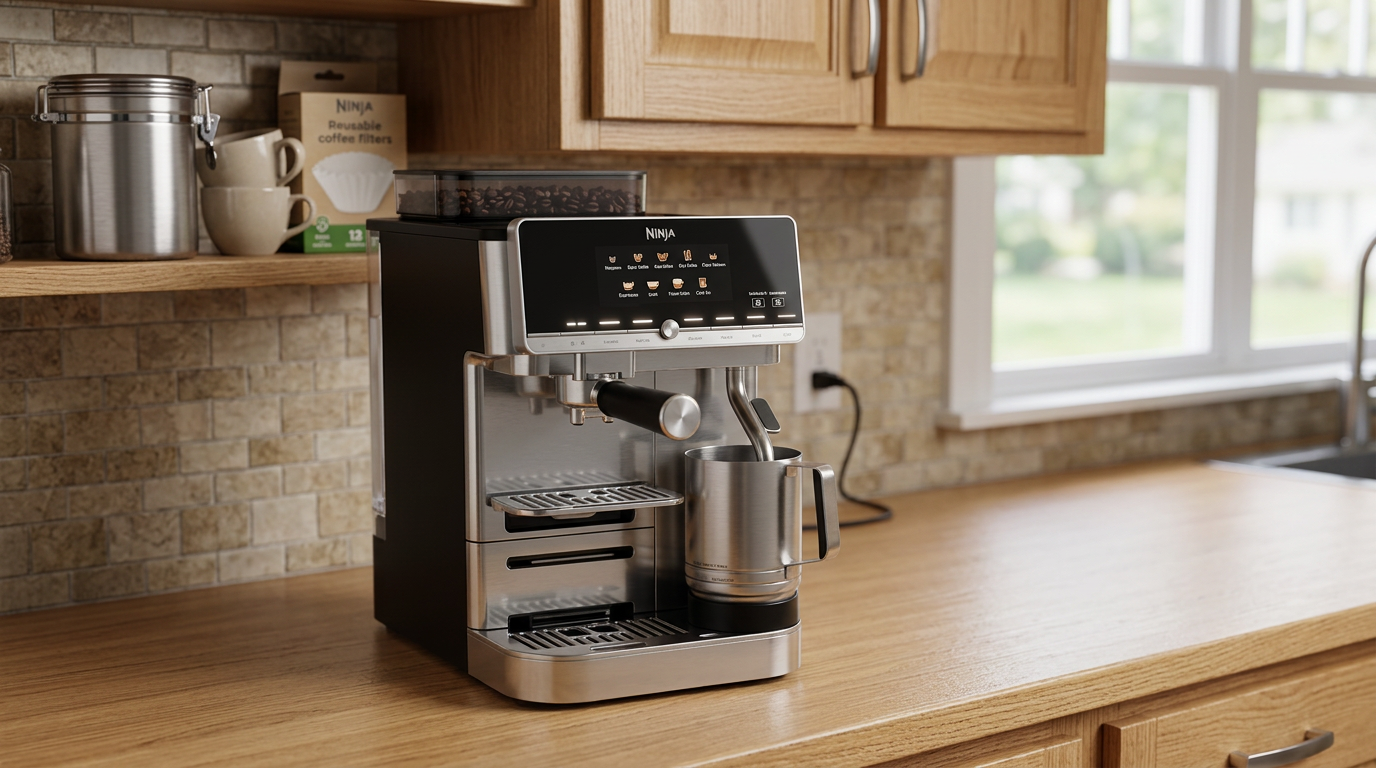
The AutoBarista looks like a manual machine but works at one touch.
Our tip: Measure depth before buying any of these; all three are about 17 to 18 inches deep.
Looks matter too, because these machines live on the counter every day. The Ninja looked the most like a café machine, the De'Longhi the most modern and rounded, and the Philips the most understated, with a glossy black front that showed fingerprints less than we expected.
Setup
All three took about 15 minutes to set up: rinse the tank, set the water hardness with a test strip, fit the water filter, add beans and pour away the first few drinks.
The Ninja AutoBarista then runs Grind IQ, pulling several test shots to find the right grind. It uses a fair few beans, so don't judge it until calibration is done.
The De'Longhi Rivelia offers Bean Adapt, which suggests a grind for your beans, and the Philips 3200 Series relies on its defaults, which we later adjusted.
| Step | Ninja AutoBarista | De'Longhi Rivelia | Philips 3200 |
|---|---|---|---|
| Water filter | Included | Included | AquaClean, included |
| Bean setup | Grind IQ, automatic | Bean Adapt wizard | Manual grind knob |
| Drinks to pour away | Grind IQ test shots | 2 or 3 | 3 or 4 |
| Time | About 15 min plus calibration | About 15 min | About 15 min |
One small difference: the Ninja's calibration uses noticeably more beans on day one than the other two. Have a full bag ready, and don't buy your most expensive coffee for the first week on any of them.
Controls and profiles
The De'Longhi Rivelia has the friendliest interface: a 3.5-inch color screen with separate coffee and milk menus, four profiles and Coffee Routines, which learned our habits within a week. Its screen lies flat on top, though, so children couldn't read it.
The Ninja AutoBarista has two profiles you save by holding a drink button, and it shows the weight and time of each shot as it brews. Its settings menu uses numbered codes, which meant reaching for the manual.
The Philips 3200 Series has simple touch icons for five drinks, with strength, length and temperature adjustable for each. There are no profiles, so the household shares one setting per drink.
| Feature | Ninja AutoBarista | De'Longhi Rivelia | Philips 3200 |
|---|---|---|---|
| Display | Display with shot weight and time | 3.5-inch color, flat on top | Touch icons |
| Profiles | 2 | 4 | None |
| Learns your habits | No | Yes | No |
| Settings menu | Numbered codes | Clear menus | Button combinations |
| Two cups at once | No | Double-cup option | Espresso and coffee |
In practice, the De'Longhi was the machine our guests could use on their own without asking. The Philips came close, because five icons are hard to get wrong. The Ninja's main drinks were easy too, but its settings were the only ones we had to look up.
Grinders and doses
The biggest technical difference between these brands is how much coffee goes into each drink. We stopped each machine after grinding and weighed the dose.
The Ninja AutoBarista weighs every dose to the gram and offers single, double and triple shots. Its double gave about 36 grams in about 30 seconds every day of the week, even with the hopper nearly empty.
The De'Longhi Rivelia doses up to about 15 grams at its strongest setting, generous for a bean-to-cup machine. The Philips 3200 Series uses only about 8 grams, which is why its espresso is closer to a lungo✕LungoA long espresso made by running more water through the same amount of coffee. It is milder and less concentrated than a standard shot..
Coffee per shot, measured
A bigger dose means a fuller, stronger espresso.
Espresso flavor
The Ninja AutoBarista made the best espresso of the three, scoring 8.8. Its double had a thick hazelnut crema✕CremaThe golden foam on top of an espresso, made of coffee oils and gas released during brewing., a syrupy body and flavors of dark chocolate and caramel, and the pucks came out firm and dry.
The De'Longhi Rivelia was intense and chocolate-forward at 8.3, with cocoa and toasted nuts and a full body from its 15-gram dose.
The Philips 3200 Series was smooth, mild and pleasant, with gentle caramel and nut notes and very little bitterness. If you find café espresso too intense, you may prefer it; if you want a punchy shot, you'll find it thin.
Espresso, our ratings out of 10
Same medium-dark beans, strongest settings on each machine.
Find Out the Price TodayMilk changes the picture a little. In a cappuccino, the Ninja's bigger dose still came through clearly, while the Philips' milder shot needed the strongest aroma setting so the coffee wasn't lost under the foam. The De'Longhi sat comfortably in between.
Black coffee and drip
Only the Ninja AutoBarista makes real drip-style coffee. It switches to a coarser grind and a different brewing process, and our 12-ounce mug came out at about 170°F, tasting like a clean, medium-bodied filter coffee.
The De'Longhi Rivelia's coffee crema is a longer espresso-style drink with a crema top, smooth and hot. The Philips 3200 Series's coffee button makes a mellow, round long drink that was one of the most pleasant cups for people who don't like strong coffee.
| Drink | Ninja AutoBarista | De'Longhi Rivelia | Philips 3200 |
|---|---|---|---|
| Big mug | Drip, clean, about 170°F | Coffee crema | Coffee, mellow |
| Americano | Bold, crema on top | Hot water from spout | Very gentle |
| Decaf | Pre-ground chute | Second hopper | Pre-ground chute |
| Hot water for tea | Yes | Yes | Yes |
Our tip: For a stronger mug on the Philips, brew two espressos into it and top up with hot water instead of using the largest coffee size.
For households where one person wants espresso and another wants a mug of filter coffee, the Ninja's drip mode is the feature that can replace a second appliance. On the other two, a big mug is always an espresso-based drink, which suits some people better than others.
Milk drinks
The De'Longhi Rivelia made the best milk drinks overall. Its LatteCrema✕LatteCrema carafeDe’Longhi’s automatic milk jug. It clips onto the machine, froths and heats the milk and pours it into the cup, then goes back in the fridge. carafe froths and pours at one touch, at 140 to 149°F, with smooth, stable foam, and it goes back in the fridge between drinks.
The Ninja AutoBarista froths milk in a jug with a whisking wand and four presets: steamed milk, thin froth, thick froth and cold foam. The whisk keeps stirring while the espresso finishes, so the foam never separated, though the jug's spout isn't made for latte art.
The Philips 3200 Series's LatteGo✕LatteGo jugPhilips’ two-part milk container. Steam draws milk into a small chamber, mixes in air and pours foam into the cup. There are no tubes, so it rinses clean in seconds. jug made creamy, fairly fine foam and neat latte macchiato layers. It isn't café-smooth microfoam, but it was the easiest milk system to clean that we've tested.
Milk drinks, our ratings out of 10
Foam, temperature and ease, from the single reviews.
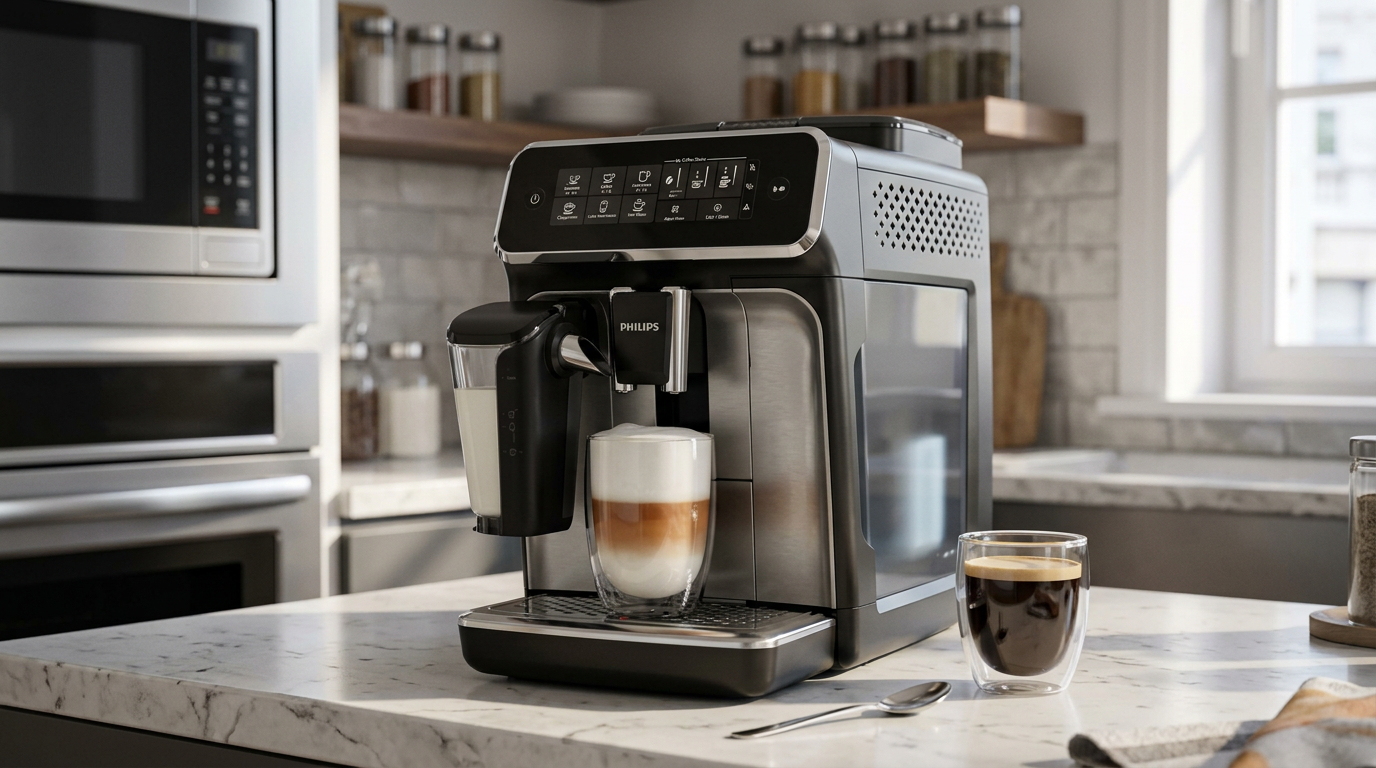
A one-touch latte macchiato from the Philips, in neat layers.
| Milk | Ninja AutoBarista | De'Longhi Rivelia | Philips 3200 |
|---|---|---|---|
| Whole milk | Thick froth, 8.5 | Smooth, stable | Creamiest foam |
| 2% milk | Thin froth, 8.4 | Good | Good |
| Barista oat | Plant setting, 8.1 | Held foam well | Best non-dairy |
| Milk temperature | About 145–151°F | 140–149°F | Comfortably hot |
Our tip: Use whichever milk system you have straight from the fridge; cold milk made the best foam on all three.
The three milk systems also differ in how they fit into a routine. The De'Longhi carafe and the Philips jug both store milk in the fridge between drinks. The Ninja's open jug is better filled fresh for each drink and rinsed straight away, so the whisk doesn't get sticky.
Iced drinks and cold brew
The Ninja AutoBarista is the clear winner for cold drinks. It has dedicated cold brew, cold-pressed and over-ice settings, plus a cold foam preset that sits on an iced drink like a soft cap.
Its cold brew was smooth and low in bitterness, and cold-pressed coffee was bright and clean, great black over ice.
The De'Longhi Rivelia's iced icons brew hot coffee onto ice you add, and it can't make cold foam. The Philips 3200 Series has no iced setting at all; two strong espressos cooled for a minute and poured over ice and cold milk made a decent iced latte.
| Drink | Ninja AutoBarista | De'Longhi Rivelia | Philips 3200 |
|---|---|---|---|
| Cold brew | Yes, smooth | No | No |
| Iced coffee | Over-ice setting | Hot coffee over ice | By hand |
| Cold foam | Yes | No | No |
| Iced latte | Double over ice, cold foam | Add cold milk by hand | Two espressos, ice, milk |
If iced drinks are only an occasional summer treat, any of the three will do with a glass packed with ice. If you drink them most afternoons, the Ninja's cold foam and cold brew are the features you'll use most.
Speed and noise
The Philips 3200 Series made a cappuccino in a little over a minute, the quickest of the three. The Ninja AutoBarista took about a minute for a double espresso and two for a cappuccino, because it weighs, grinds and compacts in stages.
The De'Longhi Rivelia was the quietest, at 66 to 68 dB for about 10 seconds of grinding. The Ninja peaked at 70 to 72 dB while grinding, and the Philips' grinder was a short, fairly loud burst.
Grinding noise, approximate
The De’Longhi and Ninja were measured; the Philips is our impression side by side.
For a family morning, all three were quick enough. The Philips and De'Longhi can each make two black coffees at once, which helped when everyone wanted coffee at the same time.
Water tanks played a part too. The Ninja's 70-ounce tank lasted two people about two days, the Philips' tank about a day and a half with three or four drinks each morning, and the De'Longhi's 47-ounce tank was easiest to top up because it fills from above without lifting it out.
Cleaning and care
The Philips 3200 Series was the easiest to keep clean. Its two LatteGo parts rinse under the tap in about ten seconds and go in the dishwasher daily, and its brew group slides out for a weekly rinse.
The Ninja AutoBarista's wand purges itself after frothing, the side panel comes off without tools, and a brush with a pick for the wand holes comes in the box. The De'Longhi Rivelia prompts a carafe clean after every milk drink, and the carafe needs taking apart weekly.
All three need their grounds drawers emptied every day or two. The Philips' small drip tray needed emptying daily.
| Task | Ninja AutoBarista | De'Longhi Rivelia | Philips 3200 |
|---|---|---|---|
| After milk | Automatic purge, wipe wand | Carafe clean cycle | Rinse LatteGo |
| Daily | Wash jug, empty tray and bin | Empty pucks and tray | LatteGo in dishwasher, empty tray |
| Weekly | Rinse brew group, grinder purge | Wash carafe, rinse brew unit | Rinse brew group |
| Every few months | Descale when prompted | Descale when prompted | Grease brew group, replace filter |
Hands-on cleaning per day with milk drinks, our estimate
Black coffee only cuts each to about 1.5 to 2 minutes.
Running costs are similar in kind across all three: replacement water filters, descaler and, on the Ninja and De'Longhi, the occasional milk cleaning solution. The Philips' AquaClean filter can delay descaling for a long time, but you'll be buying filters instead.
Build and reliability
The Ninja AutoBarista felt the most substantial, in brushed steel with a tool-free brew group and a light behind the spout so you can watch the shot. The De'Longhi Rivelia felt refined, apart from a lightweight plastic hot water spout.
The Philips 3200 Series is mostly plastic, with no rattles or loose parts after four weeks. Its LatteGo parts clip together firmly, but the smaller piece can pop loose if you don't seat it properly. None of the three leaked or failed.
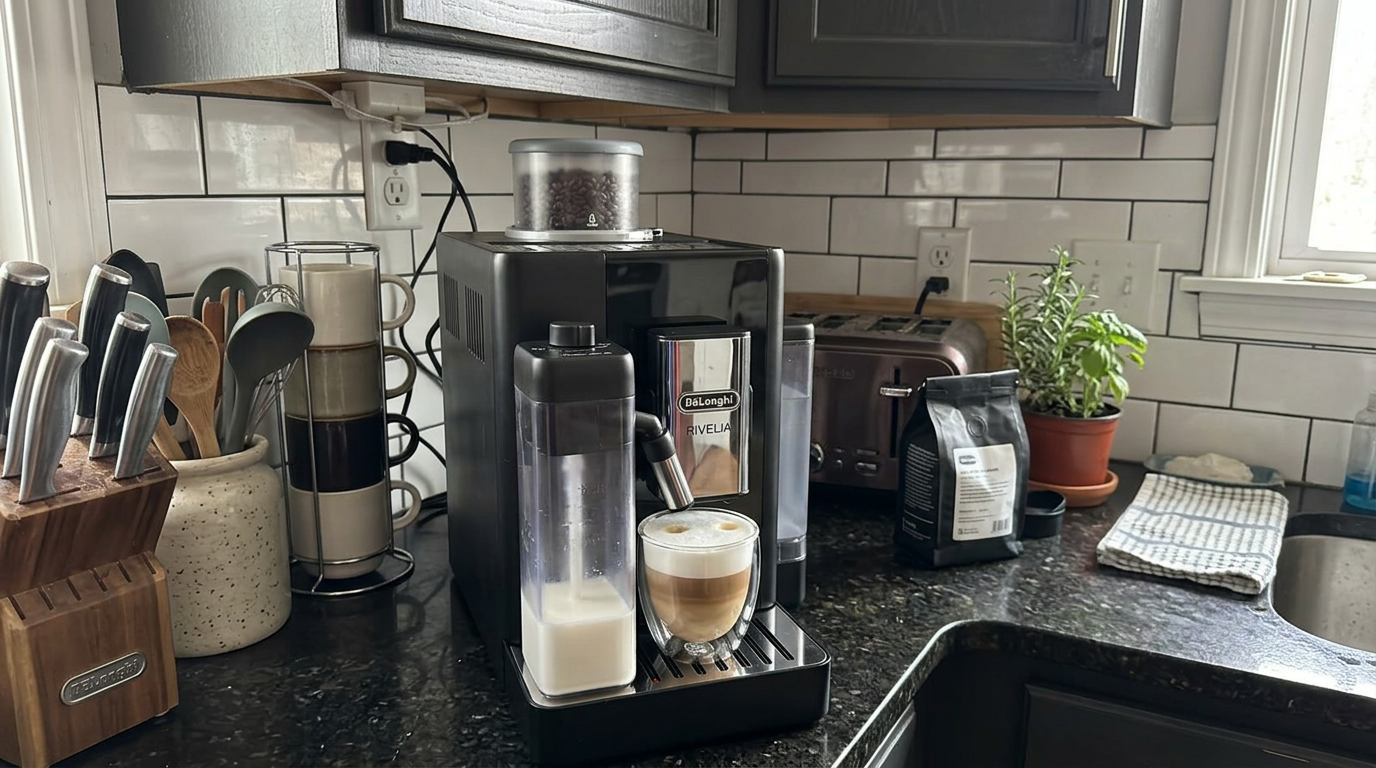
The Rivelia making a one-touch latte macchiato.
Over the long term, all three brands use removable brew groups you can rinse yourself, which is the single most important design choice for keeping a bean-to-cup machine tasting fresh. Grease the brew group when the manual says, and none of them should give you trouble.
Small details that matter
The Ninja AutoBarista shows each shot's weight and time as it brews, a nice way to learn what a good espresso looks like. Its XL milk jug holds enough for two large lattes.
The De'Longhi Rivelia's hoppers twist off in about three seconds, with a shutter that keeps the beans in. Each swap leaves about 10 grams in the grinder to discard or mix into the next drink.
The Philips 3200 Series comes with a storage lid for the LatteGo jug, so leftover milk can go straight into the fridge. Its AquaClean filter can stretch descaling out to as many as 5,000 cups.
Our tip: Seat the Philips LatteGo parts carefully every time; a loose piece leaks and makes poor foam.
Who should skip each
Skip the Ninja AutoBarista if your counter is shallow or your cabinets are low, or if you switch between regular and decaf every day. It's deep, heavy and has a single hopper.
Skip the De'Longhi Rivelia if you want drip-style coffee, cold brew or cold foam, or if a child or seated user needs to read the screen.
Skip the Philips 3200 Series if you love strong, syrupy espresso. Its 8-gram dose makes gentle coffee that no setting can turn into a punchy shot.
All three are bean-to-cup✕Bean-to-cup machineA fully automatic espresso machine that grinds, doses, tamps, brews and ejects the used puck by itself. You choose a drink and it does the rest. machines, so none suits someone who wants to learn latte art or control every step by hand.
If you're torn between two of them, think about the drink you make most often, then the person in your house who is least patient with machines. The right choice is usually the one that suits both.
Mistakes to avoid
Each machine had one habit that held it back. On the Ninja, judging it before Grind IQ finished; on the De'Longhi, mixing roasts in the two hoppers; on the Philips, expecting café-strength espresso on default settings.
On all three, rinse the removable brew group✕Brew groupThe part inside a bean-to-cup machine that tamps the coffee, holds it while water passes through and ejects the used puck. It slides out for rinsing. under the tap weekly, with water only and no soap.
| Mistake | Machine | Better habit |
|---|---|---|
| Judging it before Grind IQ finishes | Ninja AutoBarista | Let calibration complete |
| Using the single dose | Ninja AutoBarista | Make the double your default |
| Pairing a light and a dark roast | De’Longhi Rivelia | Similar roasts in both hoppers |
| Skipping the carafe clean | De’Longhi Rivelia | Run it after every milk drink |
| Leaving default strength | Philips 3200 | Strongest aroma, smaller volume |
| Letting the drip tray overflow | Philips 3200 | Empty it daily |
| Using oily beans | All three | Medium or medium-dark, dry beans |
Our tip: Turn a grind dial only while the grinder is running, one step at a time, and judge the second drink after a change.
A typical morning on each
An espresso, a cappuccino and a big mug for three people looked like this on each machine.
| Drink | Ninja AutoBarista | De'Longhi Rivelia | Philips 3200 |
|---|---|---|---|
| Espresso | Double at five beans, 1 min | Intensity 5, tap a profile | Strongest, smallest cup |
| Cappuccino | Thick froth preset, 2 min | Tap a profile, carafe does it | One touch, LatteGo |
| Big mug | Drip coffee, 12 oz | Coffee crema | Coffee button |
| Clean-up | Wipe wand, wash jug | Carafe clean, fridge | Rinse LatteGo |
| Total | About 6 min | About 4 min | About 4 min |
Our tip: Make black coffees first and milk drinks last, so the milk is fresh and hot when you pour it.
Four weeks with each: our notes
Michael Reynolds here. Alex van Gog and I used each machine as our everyday coffee maker for four weeks and wrote our notes together.
Ninja AutoBarista
Week one was Grind IQ, and we learned the single dose is too small to show what the machine can do. In week two the double at five beans became our default.
In week three drip coffee replaced our drip maker, and cold brew with cold foam became the afternoon drink. Week four was profiles, milk presets and a weekly brew group rinse.
De'Longhi Rivelia
Bean Adapt got us close to the right grind in week one, and by week two the regular and decaf hoppers were a daily habit.
In week three we learned to pair similar roasts, and by week four Coffee Routines had our usual drinks waiting on the first screen.
Philips 3200 Series
We left everything on defaults in week one, and the latte macchiato was an instant favorite. In week two, two steps finer with the strongest aroma made the espresso rounder, though still mild.
By week three the LatteGo rinse was a habit, and the first brew group rinse washed out surprising residue. In week four nothing broke, rattled or leaked.
Real-life scenarios
Here's how we'd match each brand's machine to a few common households.
Weighed doses up to a triple and the most body.
Two hoppers make switching a three-second job.
LatteGo rinses clean in seconds.
A real filter-style mode replaced our drip maker.
Four profiles and 18 recipes.
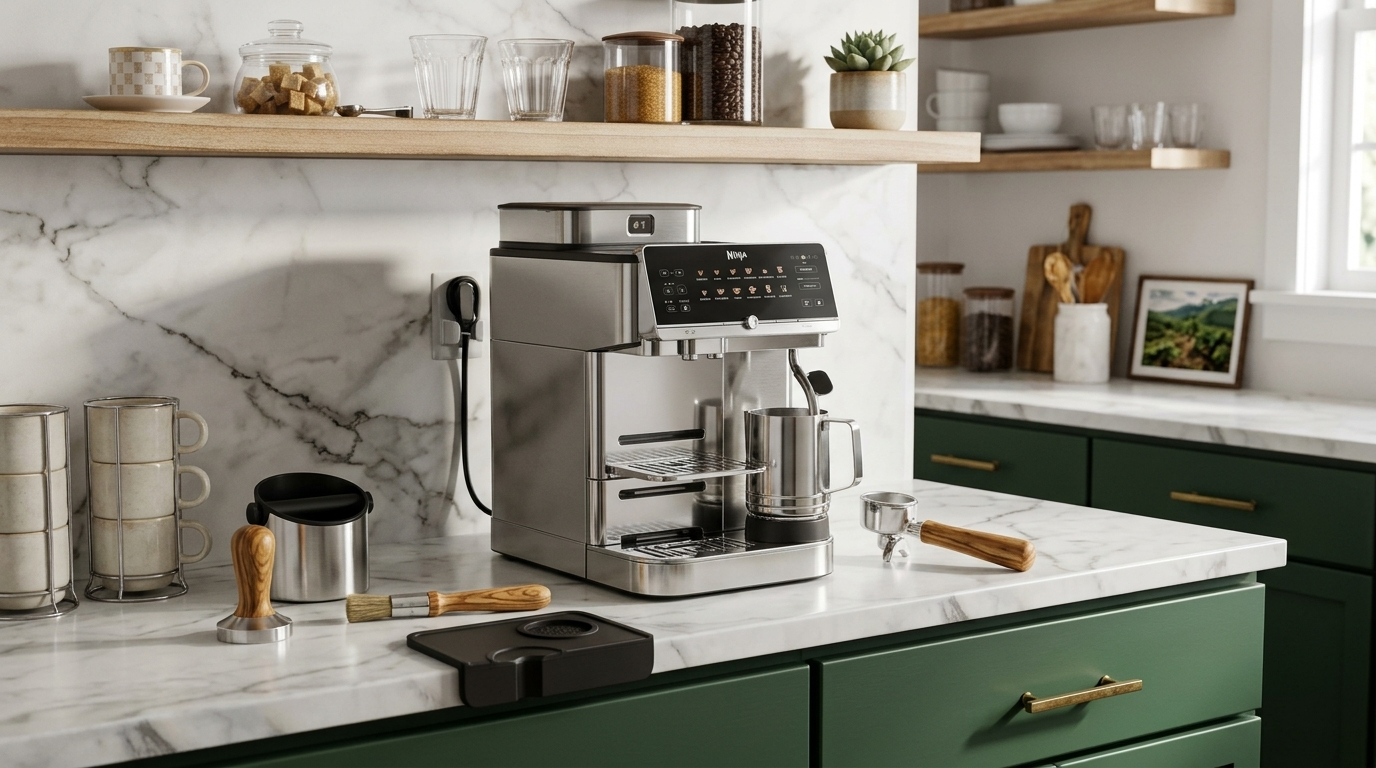
The AutoBarista froths milk while the espresso brews.
My scorecard
These are my scores out of 10 from the single reviews.
De'Longhi Rivelia, 8.5
Ninja AutoBarista, 8.4
Philips 3200 Series, 8.0
The De'Longhi Rivelia has no weak category, the Ninja AutoBarista leads on espresso, and the Philips 3200 Series leads on cleaning but loses points on espresso strength.
See Today’s PriceWhich one is right for you?
4 quick questionsWhich one should you buy?
For most households, I'd buy De'Longhi's De'Longhi Rivelia. It was the easiest to live with, made good one-touch milk drinks and full-bodied espresso, and its two hoppers solve the decaf problem neatly.
Buy Ninja's Ninja AutoBarista if strong espresso is your daily drink, or if someone at home wants drip coffee or cold brew. Just measure your counter first.
Buy Philips' Philips 3200 Series if you prefer mild coffee and hate cleaning milk systems. It's the lightest and simplest of the three.
- You want one-touch lattes
- Someone drinks decaf
- You want a profile for each person
- You want drip coffee or cold brew
- You mix light and dark roasts daily
- You love full-bodied espresso
- You also drink drip coffee
- You want cold brew and cold foam
- Your counter is shallow
- You switch to decaf every day
- You prefer mild coffee
- You hate cleaning milk tubes
- You want a light machine
- You want strong, syrupy espresso
- You want latte art
Our pick for most households is De'Longhi's De'Longhi Rivelia. It's the easiest of the three, makes good milk drinks at one touch, has four profiles and handles regular and decaf with two swappable hoppers.
Choose Ninja's Ninja AutoBarista for the strongest espresso plus drip coffee and cold brew, or Philips' Philips 3200 Series for mild coffee and the simplest milk cleaning.
Whichever brand you choose, use fresh medium or medium-dark beans, rinse the brew group weekly and clean milk parts straight after use.
Ninja vs De'Longhi vs Philips specifications
From manufacturer specifications and our own testing.
| Ninja AutoBarista (AE1001) | De'Longhi Rivelia | Philips 3200 Series (EP3241) | |
|---|---|---|---|
| Type | Bean-to-cup, hands-free frothing | Bean-to-cup | Bean-to-cup, LatteGo |
| Grinder | Grind IQ, 50 settings | Steel conical, 13 settings | Ceramic, 12 settings |
| Dose | Weighed, single to triple | Up to about 15 g, measured | About 8 g, measured |
| Pressure | Around 9 bar at the coffee | 19 bar | 15 bar |
| Bean hopper | About 8.8 oz | Two, 8.8 oz each | About 9.7 oz |
| Milk | Whisking wand, 4 presets, cold foam | Hot LatteCrema carafe | LatteGo jug |
| One-touch drinks | 10 | 18 | 5 plus hot water |
| Drip and cold brew | Yes | No | No |
| Profiles | 2 | 4 | None |
| Water tank | About 70 oz | 47 oz | About 61 oz |
| Dimensions (W × D × H) | 10.7 × 17.8 × 15.8 in | 9.6 × 16.9 × 15.2 in | 9.7 × 17 × 14.6 in |
| Weight | 36–40 lb | 21.4 lb | 17.6 lb |
| Our score | 8.4 | 8.5 | 8.0 |
How we tested and compared them
Michael Reynolds here. Alex van Gog and I used each machine as our everyday coffee maker for four weeks, making espresso, Americanos, long coffees, cappuccinos, lattes, latte macchiatos and iced drinks, and we kept shared notes throughout.
To compare brands fairly, we chose one fully automatic bean-to-cup machine from each. We weighed doses, measured milk and coffee temperatures, logged noise and tasted all three side by side with the same beans.
- Coffee: espresso, long drinks, drip and cold brew.
- Milk: foam, temperature and cleaning.
- Workflow: controls, profiles, hoppers and the daily routine.
- Ownership: cleaning, noise, size and maintenance.
You can read more about our process on our how we test page.
Ninja vs De'Longhi vs Philips FAQ
Which brand is best: Ninja, De'Longhi or Philips?
For most households, De'Longhi, with the Rivelia. Ninja's AutoBarista is best for strong espresso and drip coffee, and Philips' 3200 Series for mild coffee and easy cleaning.
Which machines did you compare?
The Ninja AutoBarista, the De'Longhi Rivelia and the Philips 3200 Series, one fully automatic bean-to-cup machine from each brand.
Which makes the strongest espresso?
The Ninja AutoBarista, with weighed doses up to a triple. The Philips 3200 uses about 8 grams, so its espresso is mild.
Which makes the best milk drinks?
The De'Longhi Rivelia, with its one-touch LatteCrema carafe.
Which is easiest to clean?
The Philips 3200 Series. Its two-part LatteGo jug has no tubes and rinses clean in seconds.
Which one makes drip coffee and cold brew?
Only the Ninja AutoBarista.
Which one makes cold foam?
Only the Ninja AutoBarista.
Can I use two different beans?
On the De'Longhi Rivelia, yes, with two swappable hoppers. The Ninja and Philips use a pre-ground chute for decaf.
Which is the lightest?
The Philips 3200, at about 17.6 pounds. The Ninja AutoBarista weighs 36 to 40 pounds.
Which has user profiles?
The Rivelia has four, the AutoBarista two and the Philips 3200 none.
Which is the quietest?
The De'Longhi Rivelia, at 66 to 68 dB while grinding.
Do these machines make latte art?
Not really. All three froth milk automatically; for latte art, a manual steam wand works better.

- Our hands-on Ninja AutoBarista review
- Our hands-on De'Longhi Rivelia review
- Our hands-on Philips 3200 Series review
- Ninja, De'Longhi and Philips manufacturer specifications and user manuals