How Caffeine Affects the Brain: Adenosine, Alertness, Tolerance and Withdrawal Explained
Caffeine doesn't give you energy. It hides the signal that tells you you're tired. Here is what actually happens in your brain after a cup of coffee, why the effect fades the more you drink, what withdrawal is and how much caffeine is sensible.
We choose products independently. When you buy through links on HouseholdMe we may earn a commission, at no extra cost to you. Affiliate policy

Caffeine makes you feel awake by blocking adenosine, a chemical that builds up in your brain while you're awake and makes you sleepy. Caffeine fits into adenosine's receptors without switching them on, so the "time to rest" signal gets muffled. That can sharpen attention, reaction time and mood, especially when you're tired. But it doesn't create energy or replace sleep. Drink it every day and your brain adds more adenosine receptors, so you need more for the same effect, and you feel worse without it. For most healthy adults, up to about 400 mg a day is considered safe.
Why I wrote this
I drink coffee every day, and I've tested more espresso machines than I can count. But for years I didn't really know what the caffeine was doing once it was inside me.
I just knew that the first cup of the morning switched my brain on, the third cup made my hands a bit shaky, and skipping coffee on a lazy Sunday gave me a dull headache by lunchtime.
So I went looking for the actual mechanism. It turns out the story is surprisingly elegant, and once you understand it, a lot of everyday coffee experiences start to make sense.
This article walks through how caffeine works in the brain, what it does well, where it falls short, and how to use it without letting it run your life. I'm not a doctor, so for anything about your own health, please talk to one.
What caffeine actually is
Caffeine is a natural, bitter-tasting compound made by a number of plants, probably as a defense against insects. We get it mostly from coffee, tea, energy drinks, soft drinks, chocolate and caffeinated supplements.

Chemically, it belongs to a family called methylxanthines. These compounds stimulate the central nervous system, which is your brain and spinal cord.
The central nervous system runs almost everything: movement, memory, attention, emotions, alertness and how you process what you see, hear and feel.
Because caffeine changes brain activity, and with it how you feel, think and behave, it's classed as a psychoactive substance. It's simply the most widely used one in the world, and the one most of us take with breakfast.
What people notice after caffeine
- More alertness and wakefulness
- Better attention and concentration
- Less feeling of tiredness
- More motivation and a sense of energy
- Faster reaction times
- A temporary lift in mood
- Easier focus on demanding mental work
Here's the important twist, and it runs through this whole article. Caffeine doesn't give you energy the way food does. It changes chemical signals in your brain so that you feel more awake and less tired.
How brain cells talk to each other
To see how caffeine works, you need a quick picture of a neuron, the nerve cell that carries information through your nervous system.
- Cell bodyThe central part with the nucleus. It keeps the cell alive and processes incoming signals.
- DendritesShort, branching arms that receive signals from other neurons. One neuron can have thousands of branches, connecting it to many others.
- AxonA long fiber that carries electrical signals away from the cell body.
- Axon terminalsThe branching ends of the axon, where the neuron passes messages on.
- Synaptic end bulbsTiny structures at the tips that release chemical messengers called neurotransmitters.
Neurons communicate with a mix of electricity and chemistry. A signal travels down the axon as an electrical impulse. At the end, chemical messengers are released into the tiny gap between two cells, called the synapse.
Those messengers attach to receptors on the next cell and change what it does. Some messengers excite the next cell. Others calm it down.
One of the calming messengers that matters most for tiredness is adenosine. And adenosine is exactly where caffeine does its work.
Adenosine: your brain's built-in tiredness signal
Adenosine is found throughout the body. It helps regulate brain activity, blood flow and how cells use energy.
In the brain, adenosine acts as a brake. When it binds to adenosine receptors on neurons, it generally slows them down and nudges you toward sleep.
A useful way to picture it is a lock and key. The receptor is a lock built into the cell's outer membrane. Adenosine is the key that fits it. When the right key turns, the cell responds.
When adenosine fits into its receptors in the brain, several things tend to happen:
- Neurons become less active
- Arousal and alertness drop
- You feel more tired
- The pressure to sleep grows
- Some stimulating brain pathways quiet down
Adenosine slowly builds up during the hours you're awake. The longer your brain stays busy, the more adenosine signaling there is, and the sleepier you feel by evening. Scientists often call this "sleep pressure."
The link between ATP and adenosine
Adenosine is also part of a much more famous molecule: adenosine triphosphate, or ATP. ATP is often called the energy currency of cells.
ATP powers muscle contractions, nerve signals, chemical reactions and the basic upkeep of every cell. Cells spend it constantly, breaking it down as they work.
Neurons are especially hungry. Keeping their electrical activity going and talking to thousands of neighbors takes a lot of energy.
As ATP is used up, adenosine-related compounds are part of the leftovers of that metabolism. So adenosine signaling in the brain is tied to how hard your brain has been working and how long you've been awake.
The more adenosine is around to hit its receptors, the stronger the feeling of fatigue. It's a neat feedback system: a busy, energy-spending brain produces the very signal that tells it to rest.
Sleep resets the system. During sleep, the body restores its energy balance, clears sleep pressure and does maintenance work that keeps the brain functioning well.
That's why there's no shortcut around sleep. Caffeine can hide the feeling of tiredness for a while, but it can't do the restorative work that sleep does.
How caffeine blocks adenosine
Caffeine works mainly as an adenosine receptor antagonist. An antagonist is something that sits in a receptor and stops the normal messenger from doing its job.
Caffeine's shape is similar enough to adenosine that it can slip into adenosine receptors. But unlike adenosine, it doesn't switch them on.
Back to the lock and key:
- Adenosine is the real keyIt fits the receptor and turns it, slowing the neuron down.
- Caffeine is a look-alike keyIt's close enough in shape to go into the lock.
- The look-alike doesn't turnWith caffeine in the lock, adenosine can't get in.
- The brake is weakenedAdenosine's calming, sleep-promoting effect is reduced, so you feel more alert.
So caffeine doesn't push your brain into a higher gear on its own. It takes your foot partly off the brake.
With adenosine's brake weakened, other stimulating systems in the brain, including those involving dopamine and noradrenaline, can run a little more freely. That's part of why caffeine can also lift mood and motivation.
That last line explains the classic afternoon crash. Adenosine keeps accumulating while caffeine is blocking its receptors. When the caffeine wears off, all that adenosine can suddenly reach its receptors, and the tiredness you postponed arrives at once.
From cup to brain: the caffeine timeline
After you drink coffee, caffeine is absorbed through your stomach and small intestine into your bloodstream, which carries it around the body.
Caffeine is small and fat-soluble enough to cross the blood-brain barrier, the protective filter that keeps many substances out of brain tissue. Once in the brain, it binds to adenosine receptors.
| Time after drinking | What's typically happening |
|---|---|
| 0–15 minutes | Absorption starts; some people already feel a lift |
| 30–60 minutes | Blood levels peak for most people; alertness is strongest |
| 3–7 hours | Half the caffeine has been cleared (about 5 hours on average) |
| 10+ hours | A quarter or more can still be in your system |
The half-life varies a lot from person to person. Genetics, smoking, pregnancy, some medications and liver health all change how quickly caffeine is broken down.
That's why one person can drink an espresso after dinner and sleep fine, while another lies awake after a 2 pm cup.
Our tip: If you have trouble sleeping, count back about 8 to 10 hours from bedtime and make that your last coffee. For a 11 pm bedtime, that means nothing caffeinated after early afternoon.
What caffeine can do for your mind
Research has linked caffeine to improvements in several kinds of mental performance. These are the ones that come up most often:
- Attention. Caffeine can make it easier to concentrate and keep your attention on one task.
- Memory. Some aspects of memory performance can improve after caffeine.
- Reasoning. Some studies show better reasoning and mental processing.
- Reaction time. People tend to respond faster to what they see and hear.
- Orientation. It supports alertness and awareness of your surroundings.
- Visual-spatial reasoning. Some tasks involving space and visual processing can improve.
- Mood. Caffeine can temporarily lift mood and reduce mental fatigue.
The catch is that these effects are usually strongest when you're already tired, short on sleep or jet-lagged.
If you slept badly, the difference coffee makes can be dramatic. If you're well rested, the boost is much smaller, and some studies suggest regular users are partly just reversing their own mild withdrawal.
So caffeine doesn't improve every part of thinking for every person. How much it helps depends on your sleep, your genes, your body, how much caffeine you usually have and how sensitive you are to stimulants.
Our tip: Save your strongest coffee for the moments that need it, like a long drive or a tough morning after a bad night. That's when caffeine's benefits are biggest.
Why caffeine isn't real energy
This point is easy to forget, so it's worth saying plainly: caffeine doesn't give your body ATP.
ATP is produced by your cells from the food you eat, through metabolism. Caffeine doesn't replace ATP, refill your energy stores or undo the effects of a bad night's sleep.
What it changes is how your nervous system responds to fatigue signals. You can feel energetic, motivated and sharp while your body is still physically tired.
That's why a big coffee can feel like a fresh tank of fuel when it's really more like turning down the volume on the fuel warning light.
Caffeine is a useful tool, but it isn't a substitute for decent food, enough water, recovery or sleep.
How much caffeine is safe?
The amount you need to notice an effect varies hugely. Some people feel a small cup of tea. Others drink three espressos and feel normal.
The figure you'll see most often is that up to 400 milligrams of caffeine a day is considered safe for most healthy adults. That's roughly four cups of brewed coffee.
Think of 400 mg as a ceiling, not a target. Plenty of people feel unwanted effects at much lower doses. Some people notice changes in alertness from as little as about 30 milligrams, while regular coffee drinkers often need much more.
| Drink | Typical caffeine |
|---|---|
| Brewed coffee, 8 oz | about 80–100 mg |
| Single espresso, 1 oz | about 60–75 mg |
| Double espresso / most lattes | about 120–150 mg |
| Instant coffee, 8 oz | about 60–80 mg |
| Decaf coffee, 8 oz | about 2–7 mg |
| Black tea, 8 oz | about 40–50 mg |
| Green tea, 8 oz | about 25–35 mg |
| Cola, 12 oz can | about 30–40 mg |
| Energy drink, 8 oz | about 80 mg (large cans much more) |
| Dark chocolate, 1 oz | about 12–25 mg |
These are typical ranges. Real coffee varies a lot with the beans, the dose, the brew method and the cup size. A large café filter coffee can easily contain 250 to 300 mg on its own.
What changes how you react to caffeine
- Genetics. Gene differences affect how fast you break caffeine down and how strongly your nervous system responds.
- Body and health. Metabolism, liver function, pregnancy and medications all play a role.
- Habits. Regular use builds tolerance.
- Sleep. Sleep-deprived people notice bigger effects.
- Personal sensitivity. Some people simply feel stimulants more strongly.
People who rarely have caffeine are usually the most sensitive. A small amount can make them alert, and a large amount can make them nervous, restless or uncomfortably wired.
Why caffeine hits some people harder than others
Anyone who has shared an office knows the pattern. One colleague drinks espresso at 4 pm and sleeps like a baby. Another has one cup at 10 am and feels jittery until lunch.
A big part of that difference is genetic. Most caffeine is broken down in the liver by an enzyme called CYP1A2. Small variations in the gene that makes it split people roughly into faster and slower caffeine metabolizers.
Fast metabolizers clear caffeine quickly. They often feel a shorter, cleaner effect and can drink coffee later in the day with less impact on sleep.
Slow metabolizers keep caffeine in their blood for much longer. The same cup lasts longer and can feel stronger, and an afternoon coffee is more likely to show up as a restless night.
A second set of genetic differences affects the adenosine receptors themselves. Some people's receptors respond more strongly when caffeine blocks them, which can make them more prone to caffeine-related anxiety and sleep problems even at low doses.
Other things shift the speed too:
- Smoking speeds up caffeine breakdown, which is why smokers often drink a lot of coffee.
- Pregnancy slows it down a lot, especially later in pregnancy.
- Some medications, including certain antibiotics, antidepressants and oral contraceptives, can slow caffeine clearance.
- Liver health affects how quickly caffeine is processed.
- Age matters: children and older adults may be more sensitive.
You don't need a genetic test to know which camp you're in. Your own experience is a good guide. If a midday coffee keeps you up, you're probably a slow metabolizer or very sensitive, and an earlier cut-off is the simplest fix.
Coffee, tea and energy drinks: does the source matter?
Caffeine is the same molecule whether it comes from coffee, tea, a soda or a pill. Your adenosine receptors can't tell the difference.
But the drink around the caffeine can change how it feels.
Tea contains less caffeine per cup and also contains L-theanine, an amino acid that many people find takes the edge off caffeine's jitteriness. That's one reason tea drinkers often describe a calmer, steadier kind of alertness.
Coffee delivers more caffeine, faster, along with hundreds of other compounds, including antioxidants. Much of the research linking moderate coffee drinking to health benefits is about coffee as a whole, not caffeine alone.
Energy drinks often pack a lot of caffeine into a can that's easy to drink quickly, sometimes with large amounts of sugar and other stimulants. Large cans can contain 200 to 300 mg, which is most of a day's sensible total in a few minutes.
Caffeine pills and powders are the riskiest form, because it's easy to take far too much. Pure caffeine powder in particular has caused serious harm, because a spoonful can contain a dangerous dose.
Our tip: If coffee makes you anxious but you still want a lift, try switching your second cup to tea or a half-caff blend. You keep the ritual with roughly half the caffeine.
Caffeine tolerance and upregulation
If you drink coffee every day, you've probably noticed that it doesn't hit like it used to. That's tolerance: your body adapts, so the same dose has a smaller effect.

With caffeine, a key part of that adaptation is called upregulation, which means the brain makes more receptors for a signal.
When caffeine keeps blocking adenosine receptors day after day, the brain responds by building more of them. More receptors means more places for adenosine to land.
So the amount of caffeine that used to block enough receptors to wake you up no longer covers them all. You start needing a second cup to feel what one cup used to do.
That's why someone who felt buzzing after a single coffee as a student can end up drinking four a day and feeling roughly normal. Tolerance can also develop to some of caffeine's physical side effects, though how much varies.
Signs you're having too much caffeine
Because tolerance creeps up slowly, it's easy to drift into drinking more than suits you without noticing. These are the signs I watch for in myself:
- You need coffee just to feel normal, not to feel good
- Your hands are shaky or your heart feels fast after your usual amount
- You feel anxious or on edge in the late morning
- You fall asleep fine but wake up at 3 am and can't drift off again
- You get a headache if your first coffee is an hour late
- You've quietly gone from two cups to four without deciding to
None of these are dangerous on their own, but together they suggest that caffeine is costing you more than it gives. Cutting back by a cup, or moving your last cup earlier, often fixes most of them within a couple of weeks.
Very high doses are a different matter. Symptoms such as vomiting, chest pain, a very fast or irregular heartbeat, confusion or severe agitation after a lot of caffeine, especially from energy drinks, pills or powders, need urgent medical attention.
Effects on your heart and blood pressure
Caffeine doesn't stay in your brain. It circulates through your whole body and affects several organs, including your heart and blood vessels.
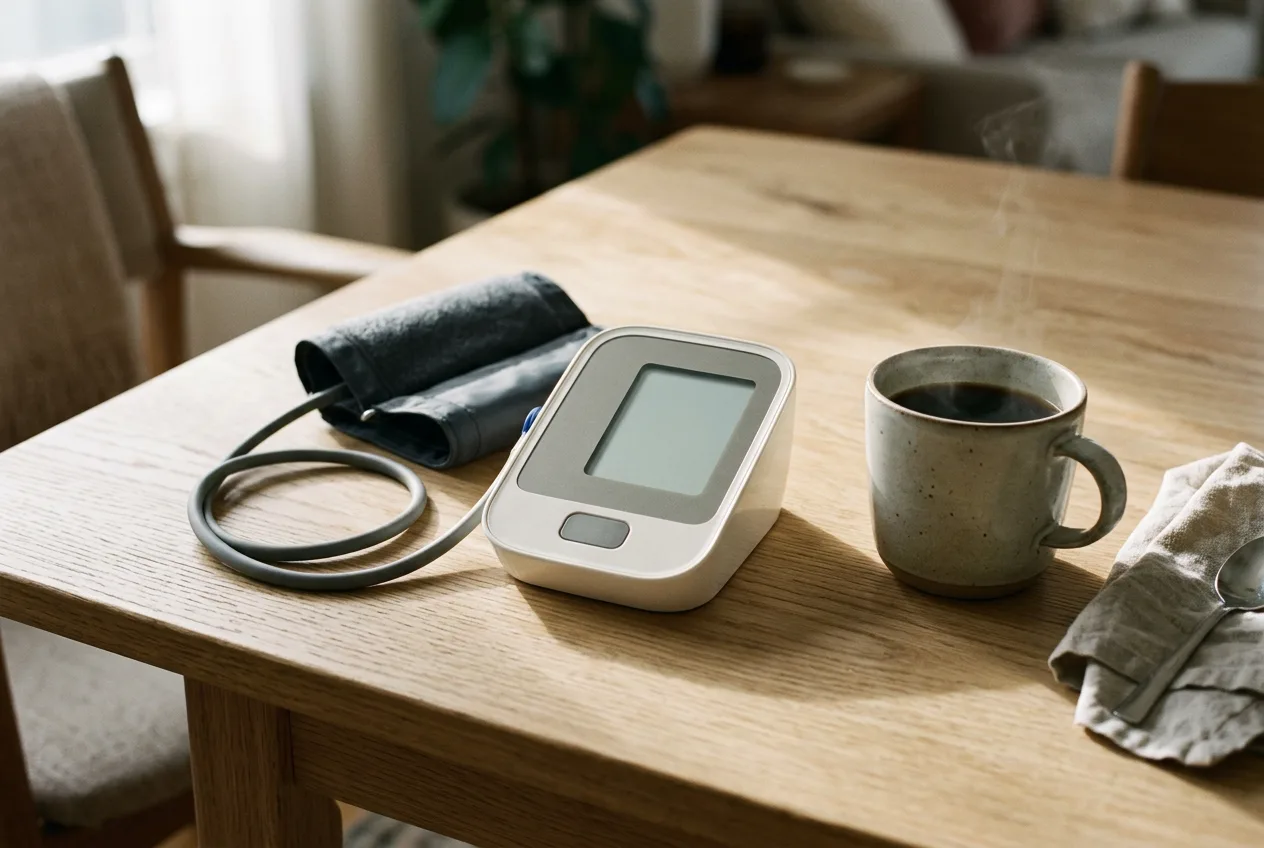
Blood pressure is written as two numbers, like 120/80. The top number, systolic pressure, is the pressure in your arteries when your heart beats. The bottom number, diastolic pressure, is the pressure when your heart relaxes between beats.
In some people, caffeine can temporarily raise systolic blood pressure by up to around 10 points. Someone who normally reads 120 might briefly read closer to 130 after a strong coffee.
The effect depends on how sensitive you are and how much caffeine you usually have. Regular drinkers often see a smaller rise than occasional ones.
Caffeine can also stimulate the heart's electrical conduction system, the network that sets your heart's rhythm. In sensitive people, that can show up as:
- A faster heart rate
- Being more aware of your heartbeat
- A stronger-feeling heartbeat
- Palpitations
Most people only notice this after a lot of caffeine. Very sensitive people may feel it after a single cup. If you have a heart condition or high blood pressure, ask your doctor how much caffeine is right for you.
Effects on your kidneys and why coffee makes you pee
Your kidneys filter your blood, balance fluids and salts, and remove waste as urine. The outer layer of each kidney, the renal cortex, holds many of the tiny filters where urine starts to form.
Caffeine can increase blood flow through the kidneys and change how much fluid and sodium they filter. In some situations that means more urine, and more trips to the bathroom.

That's why caffeine is called a mild diuretic, a substance that increases urine production.
The effect varies from person to person, and regular coffee drinkers tend to become partly tolerant to it.
Importantly, moderate coffee drinking doesn't dehydrate healthy adults. The water in the coffee more than makes up for the extra urine. A cup of coffee counts toward your daily fluids. I covered this in more detail in my article on whether coffee dehydrates you.
Other side effects of caffeine
Caffeine has real benefits, but too much of it, or a sensitive nervous system, brings some familiar downsides:
| Side effect | What it feels like |
|---|---|
| Jitteriness | Shaky hands, restlessness, feeling "wired" |
| Anxiety | Nervousness, racing thoughts, unease |
| Agitation | Irritability, impatience |
| Faster heart rate | Noticeable or pounding heartbeat |
| Higher blood pressure | Usually temporary, often not felt |
| Frequent urination | More bathroom trips |
| Poor sleep | Trouble falling asleep, lighter or broken sleep |
These effects are usually strongest in people who rarely have caffeine, or who have a lot at once.
Sensitivity is very personal. An amount that feels perfect for me might leave someone else anxious and shaky.
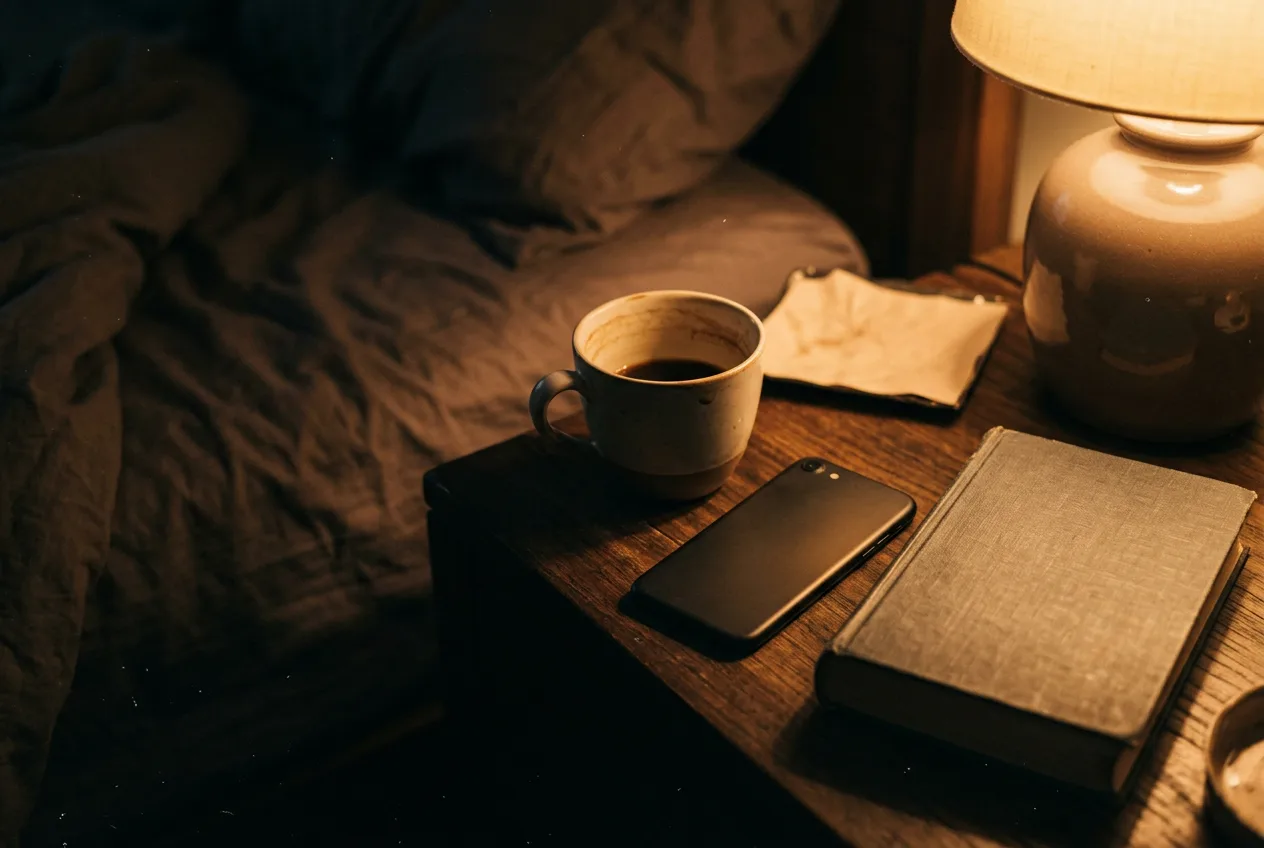
Timing matters as much as dose. Because caffeine stays active for hours, an afternoon coffee can disturb your sleep even when you no longer feel stimulated by bedtime.
Caffeine can make it harder to fall asleep and can reduce deep sleep, so you wake up less refreshed and reach for more coffee. That loop is one of the most common caffeine traps there is.
Tolerance softens some side effects, not all
Regular coffee drinkers usually see smaller jumps in blood pressure and heart rate than people who rarely have caffeine. The diuretic effect also tends to fade with habit.
But tolerance doesn't erase every risk. Habitual drinkers can still get sleep problems, heart effects and anxiety, especially with large amounts.
And tolerance isn't a health benefit in itself. It means your body has adapted to caffeine being there, and you may now depend on it to feel normal.
Caffeine withdrawal
If you drink caffeine regularly and suddenly stop, you'll probably feel it. Your nervous system has adjusted to caffeine being around every day.
Remember the extra adenosine receptors your brain built? When the caffeine disappears, adenosine can reach all of them with nothing in the way. The result is a wave of tiredness that's often stronger than normal.
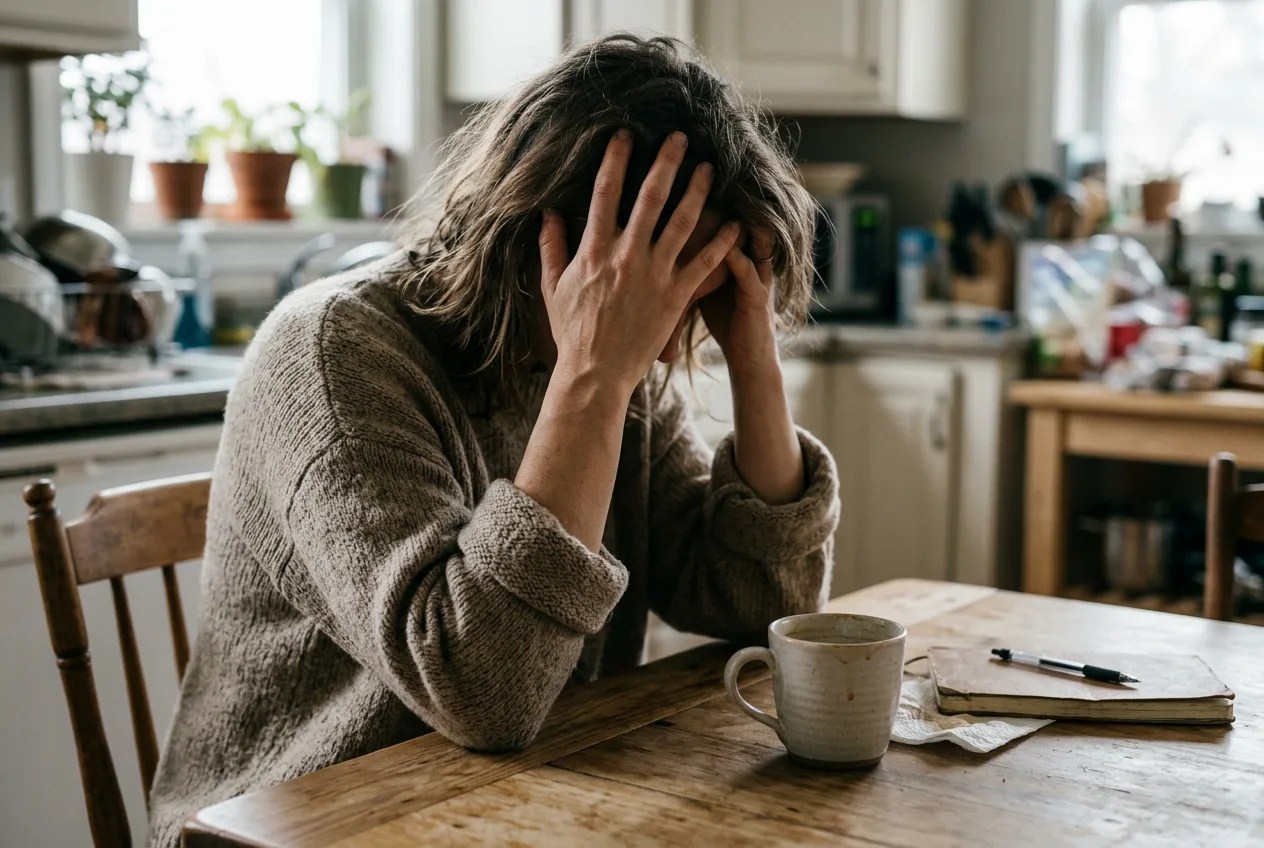
Common withdrawal symptoms
- Headaches, often the most recognizable sign
- Fatigue and sleepiness
- Poor concentration and mental fog
- Irritability and low mood
- Low energy and motivation
- Difficulty staying focused
Withdrawal headaches are partly linked to changes in blood vessels in the head as the body adjusts to caffeine's absence. Symptoms usually start within a day of stopping, peak in the first couple of days and fade over roughly a week.
They can genuinely get in the way of work and daily life, especially if you've been a heavy drinker for a long time.
The fix is simple: cut down gradually instead of stopping overnight. Tapering gives your brain time to adjust its receptors, and most people find it much more comfortable.
- Know your starting pointAdd up your usual daily caffeine from coffee, tea, soda and energy drinks.
- Cut about a quarter at a timeDrop one cup, or swap one for a half-caff, and hold that level for several days.
- Use decaf as a stand-inKeeping the ritual of a warm cup helps a lot. Decaf has only a few milligrams of caffeine.
- Protect your sleepBetter sleep reduces the tiredness that makes you want more caffeine.
Is caffeine addictive?
Caffeine can cause physical dependence, tolerance and withdrawal. That explains why so many people feel they need coffee every morning to function.
But caffeine dependence isn't really comparable to addiction to powerful stimulants such as nicotine, amphetamines or cocaine. Withdrawal is milder, and caffeine doesn't usually drive the harmful, compulsive behavior those drugs can.
Some people do develop a strong habit. Others drink coffee now and then with no sign of dependence at all.
It helps to separate four ideas that often get blurred together:
Most coffee drinkers have the first three to some degree. Very few have the fourth. If you want to cut back, you can almost always do it by lowering your intake slowly.
Caffeine and long-term brain health
Some research has found that regular caffeine drinkers have a lower risk of certain neurological diseases. The two studied most are Parkinson's disease and Alzheimer's disease.

Parkinson's disease involves the loss of dopamine-producing neurons in parts of the brain, which affects movement, coordination and other functions.
Alzheimer's disease is a progressive condition that changes brain structure and function, especially memory and thinking.
Researchers have looked at whether caffeine's effect on adenosine receptors and other pathways might protect the brain in some way.
But these findings need care. An association between drinking caffeine and a lower risk doesn't prove that caffeine prevents these diseases. People who drink coffee may differ in many other ways.
Brain health depends on genes, age, exercise, diet, sleep and overall health. Caffeine shouldn't be seen as a treatment or a prevention plan for Parkinson's or Alzheimer's.
Caffeine and headaches: cause and cure
Caffeine has a strange double relationship with headaches. It can trigger them, and it can help relieve them.
Caffeine is added to some over-the-counter headache medicines because it can make certain painkillers work better.
But regular caffeine use can also set up a cycle. When your levels drop, for example if you sleep in and miss your usual coffee, a withdrawal headache can follow. Then the next coffee seems to "cure" it.
So caffeine can relieve a headache while its absence causes headaches in people who depend on it. Which side you're on depends on your habits, how sensitive you are and what's actually causing the headache. If you get frequent headaches, it's worth talking to a doctor.
Drinking caffeine only occasionally
Not everyone drinks coffee every day. Some people save caffeine for once or twice a week, when they know they'll need extra focus.
That might be a long workday, an exam, a big assignment or anything that needs sustained attention.
Occasional use helps limit tolerance, so the caffeine keeps working well when you do have it. The trade-off is that occasional users are more sensitive, so a strong coffee can bring more jitters or a worse night's sleep. Dose and timing matter even more if you don't drink it often.
Caffeine and exercise performance
Caffeine is one of the most studied substances in sports science. Many athletes take it before training or competition.

It can make exercise feel easier and help people stay alert. Reported benefits include:
- Lower perceived effort, so hard work feels less hard
- More mental alertness
- Better concentration during sport
- Being able to keep going longer in prolonged exercise
- Possible improvements in endurance performance
How much it helps depends on the person, the sport, the dose and the timing. It doesn't replace good training, food, hydration or recovery.
Too much caffeine can backfire with anxiety, an upset stomach, a racing heart and bad sleep. And since sleep is when your body recovers, caffeine that wrecks your night can undo the benefit it gave you that afternoon.
How I use caffeine day to day
Learning how caffeine works changed my coffee habits a little. Nothing dramatic, but enough that I sleep better and still enjoy my coffee.
- A real coffee in the morningI have a double espresso or a flat white within an hour or two of waking. It's my most useful cup of the day.
- One more before early afternoonIf I need a second, I have it before about 1 pm, so most of it is cleared by bedtime.
- Decaf after thatWhen I'm testing machines in the afternoon, I use decaf beans so I can taste without wrecking my sleep.
- An occasional breakEvery few months I taper down for a week to reset my tolerance. Coffee tastes and works better afterwards.
So is caffeine good or bad?
Neither, on its own. It depends on how much you have, how often, how sensitive you are and your overall health.
For many people, moderate caffeine improves alertness, attention, reaction time and the feeling of energy. For others, especially stimulant-sensitive people, it brings anxiety, jitters, palpitations or bad sleep.
- Amount: more caffeine means more chance of side effects.
- Frequency: daily use builds tolerance and dependence.
- Timing: late caffeine disrupts sleep.
- Sensitivity: people react very differently to the same dose.
- Sleep: caffeine can't replace it.
- Health: medical conditions and medications change how caffeine affects you.
For most healthy adults, about 400 mg a day is the usual upper guideline, but lower is better if you notice side effects. Pregnant people are generally advised to stay at or below 200 mg a day, and people with certain medical conditions should get personal advice from a doctor.
Caffeine isn't essential for good health. Plenty of people never touch it and do just fine. The key is to understand what it does inside you, not just how it makes you feel: it blocks adenosine, hides tiredness and raises alertness, but it doesn't create energy or replace sleep.
Find the amount and the timing that give you the benefits without the jitters, the dependence or the bad nights, and coffee becomes a pleasure rather than a crutch.
Frequently asked questions
How does caffeine affect the brain?
It blocks adenosine receptors. Adenosine builds up while you're awake and makes you sleepy, so blocking it makes you feel more alert and less tired.
How long does caffeine take to work?
Many people feel it within 15 to 45 minutes, and blood levels usually peak within about an hour.
How long does caffeine stay in your system?
Its half-life is roughly 3 to 7 hours in adults, about 5 on average, so a meaningful amount can still be there 8 to 10 hours later.
Why does coffee stop working for me?
Daily caffeine makes your brain build extra adenosine receptors, so the same dose blocks a smaller share of them. That's tolerance.
How long does caffeine withdrawal last?
Symptoms usually start within a day, peak in the first one to two days and fade over about a week. Tapering slowly makes it easier.
Does caffeine give you energy?
No. It doesn't provide ATP or calories. It hides the feeling of tiredness by blocking adenosine signals.
Is 400 mg of caffeine a day too much?
It's the common upper limit for healthy adults, not a target. Many people feel better on less, and pregnant people are usually advised to stay at or below 200 mg.
Can caffeine cause anxiety?
Yes, especially in sensitive people or at high doses. It can cause nervousness, restlessness and a racing heart.

- Michael Reynolds, notes from daily coffee drinking and machine testing
- Caffeine, Wikipedia
- Adenosine receptor, Wikipedia
- Spilling the Beans: How Much Caffeine Is Too Much?, US Food and Drug Administration
- Caffeine, MedlinePlus, US National Library of Medicine
- Caffeine: How much is too much?, Mayo Clinic
Related guides
Caffeine myths debunked Coffee and sleep How much coffee is too much?Written by Michael Reynolds. Last updated November 20, 2026.