Gaggia Cadorna Prestige vs Magenta Prestige: which one-touch Gaggia?
Both are Italian one-touch machines with a milk carafe, real two-grind double shots and a clever habit of changing the order of milk and espresso for each drink. Then they split: the Gaggia Cadorna Prestige adds four user profiles, a front-loading tank and drawer, and twice as many grind steps, while the Gaggia Magenta Prestige fits the same coffee into a body under 9 inches wide. I lived with each for four weeks to find out which one belongs in your kitchen.
We choose products independently. We may earn a commission through links on this page; your price stays the same. Affiliate policy
Jargon helpNew to espresso? Tap any dotted term to see what it means.
In this comparison
If more than one person drinks coffee in your house, buy the Gaggia Cadorna Prestige. Its four profiles save everyone’s drinks, the front-loading tank and puck drawer make it easy to live with under low cabinets, and its 10 grind steps let you fine-tune each bag. If it’s mostly you, or counter space is tight, the Gaggia Magenta Prestige makes the same rich espresso and coffee-forward flat white in a body 1.4 inches narrower, with a bigger puck drawer and fewer things to set up.
The two machines
Specs checked November 14, 2026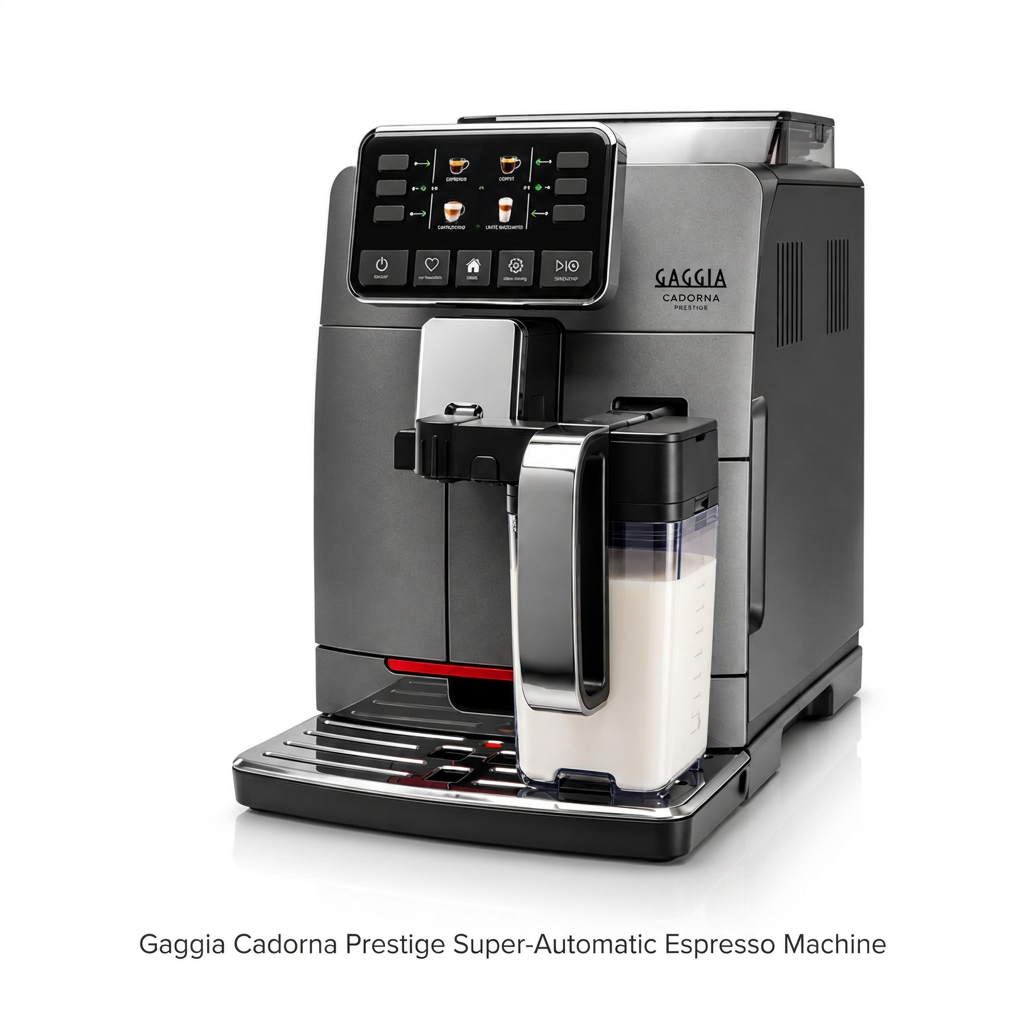
Four color-coded profiles, 14 one-touch drinks, 10 grind steps, a front-loading tank and drawer, and an espresso-first flat white.
Check price on Amazon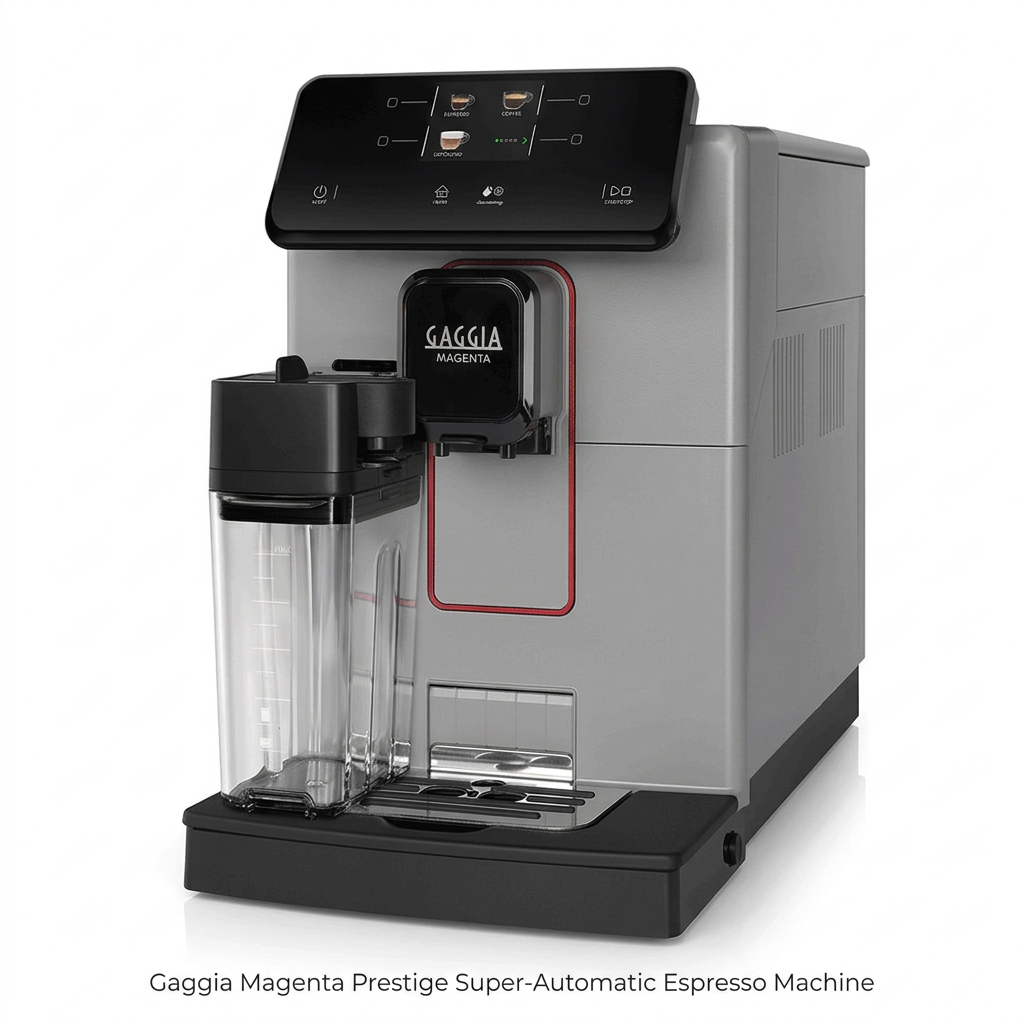
11 one-touch drinks plus hot water, true two-grind doubles and a smart milk-first or espresso-first order, in a body 8.8 inches wide.
See Today’s PriceGaggia Cadorna Prestige vs Magenta Prestige at a glance
- Buy the Cadorna if two to four people share the machine and each wants their own drink.
- Buy the Magenta if space is tight and one or two people drink the same few drinks.
- Both make true two-grind doubles and build each milk drink in the right order.
- Neither carafe pours latte art, and both need a quick clean after every milk drink.
Head to head
The better result in each row is marked, based on my testing and Gaggia’s specs. Rows where they are equal have no winner.
Keep in mind that the tally is not my verdict. Profiles matter enormously to a family and not at all to a single coffee drinker.
| Spec | Gaggia Cadorna Prestige | Gaggia Magenta Prestige |
|---|---|---|
| User profiles | Four, color-coded ✓ Best | None |
| One-touch drinks | 14 ✓ Best | 11, plus hot water |
| Grind steps | 10 ✓ Best | 5 |
| Max dose per grind | About 0.4 oz (11.3 g) | About 0.41 oz (11.5 g) |
| True double shots | Yes, two grinds | Yes, two grinds |
| Smart milk orderespresso-first or milk-first | Yes | Yes |
| Water tank | About 51 oz, front-loading ✓ Best | About 60 oz, top door |
| Puck drawer | About 10 | About 15 ✓ Best |
| Bean hopper | About 10.6 oz ✓ Best | About 8.8 oz |
| Width | About 10.2 in | About 8.8 in ✓ Best |
| Height for lids | Only hopper opens on top ✓ Best | About 17.25 in to open lids |
| Cup clearance | About 6 in ✓ Best | About 5.75 in |
| Carafe size | About 20 oz ✓ Best | About 16.9 oz |
| Rows won | 8 | 2 |
Gaggia Cadorna Prestige vs Magenta Prestige pros and cons
Gaggia Cadorna Prestige
- Four color-coded profiles for a shared household
- Espresso-first flat white with a true two-grind double
- Front-loading tank and drawer, easy under cabinets
- Puck drawer holds only about 10 pucks
- Grind changes are fiddly and must be made while grinding
- Carafe needs a quick clean after every milk drink
Gaggia Magenta Prestige
- One-touch cappuccinos, flat whites and cortados that taste right
- Smart prep order: espresso-first or milk-first by drink
- True two-grind doubles in a body under 9 inches wide
- Carafe needs a quick clean after every milk drink
- No user profiles for different tastes
- Top lids need tall clearance to open
Who should buy which machine?
- Households of two to four with different drinks
- Kitchens with low wall cabinets
- Coffee lovers who fine-tune each bag
- Narrow counters and small apartments
- Couples who drink the same few drinks
- People who hate emptying the puck drawer
Design, size and build
These two share a family look, with a color touch display, a matte finish and a milk carafe that clicks onto the front. The difference is in how you reach things.
The Gaggia Magenta Prestige is just 8.8 inches wide, about 14 inches tall and 17.1 inches deep. Its water tank and bean hopper both open from the top.
The Gaggia Cadorna Prestige is wider at about 10.2 inches, 15 inches tall and 17.3 inches deep, and weighs around 20.5 pounds. Only its bean hopper opens on top, because the water tank and puck drawer pull out from the front.
Width on the counter
The Magenta is about 1.4 inches narrower.
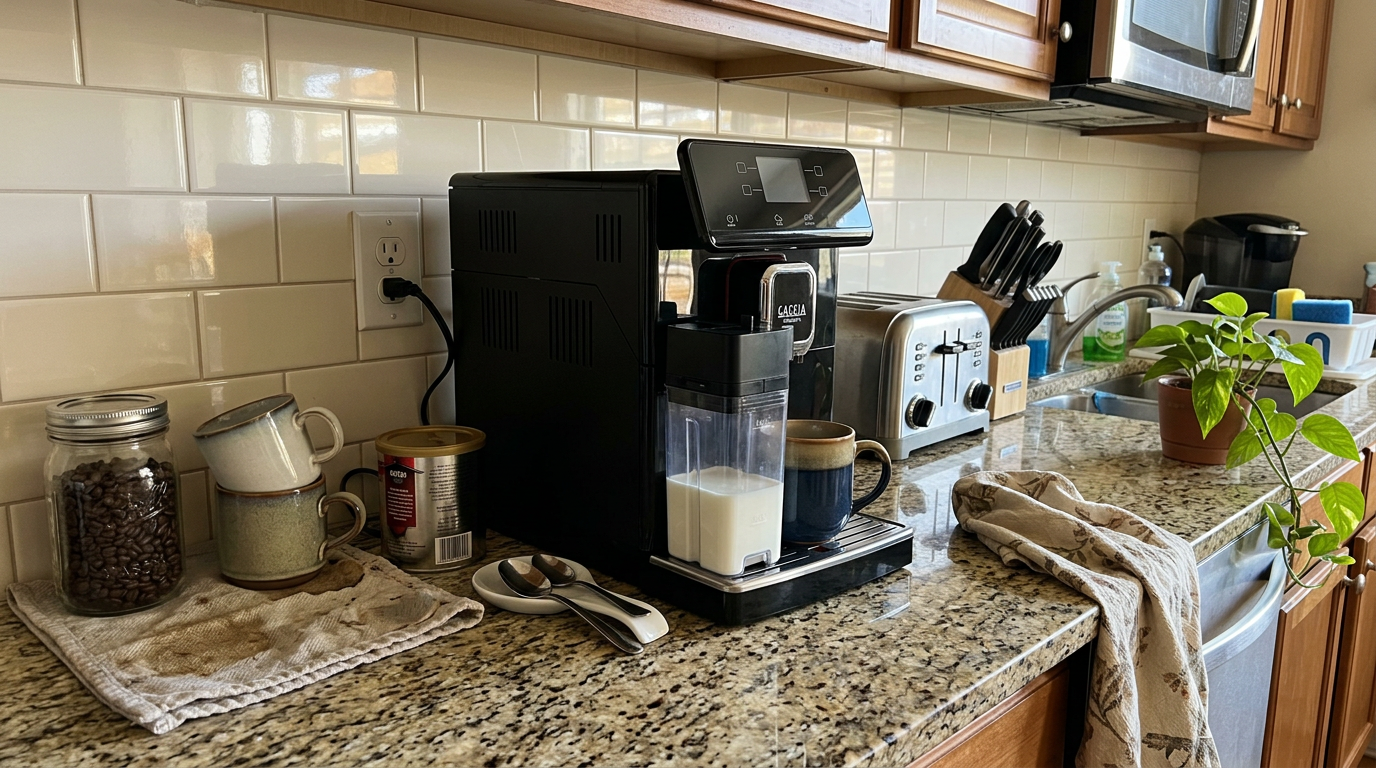
Under standard wall cabinets, which sit about 18 inches above the counter, that front access made a real difference. With the Magenta I had to slide the machine forward to open the water door, so most days I lifted the tank out and filled it at the sink.
With the Cadorna I never moved it. The tank slides out of the front like a drawer, and there was still room above to open the bean lid.
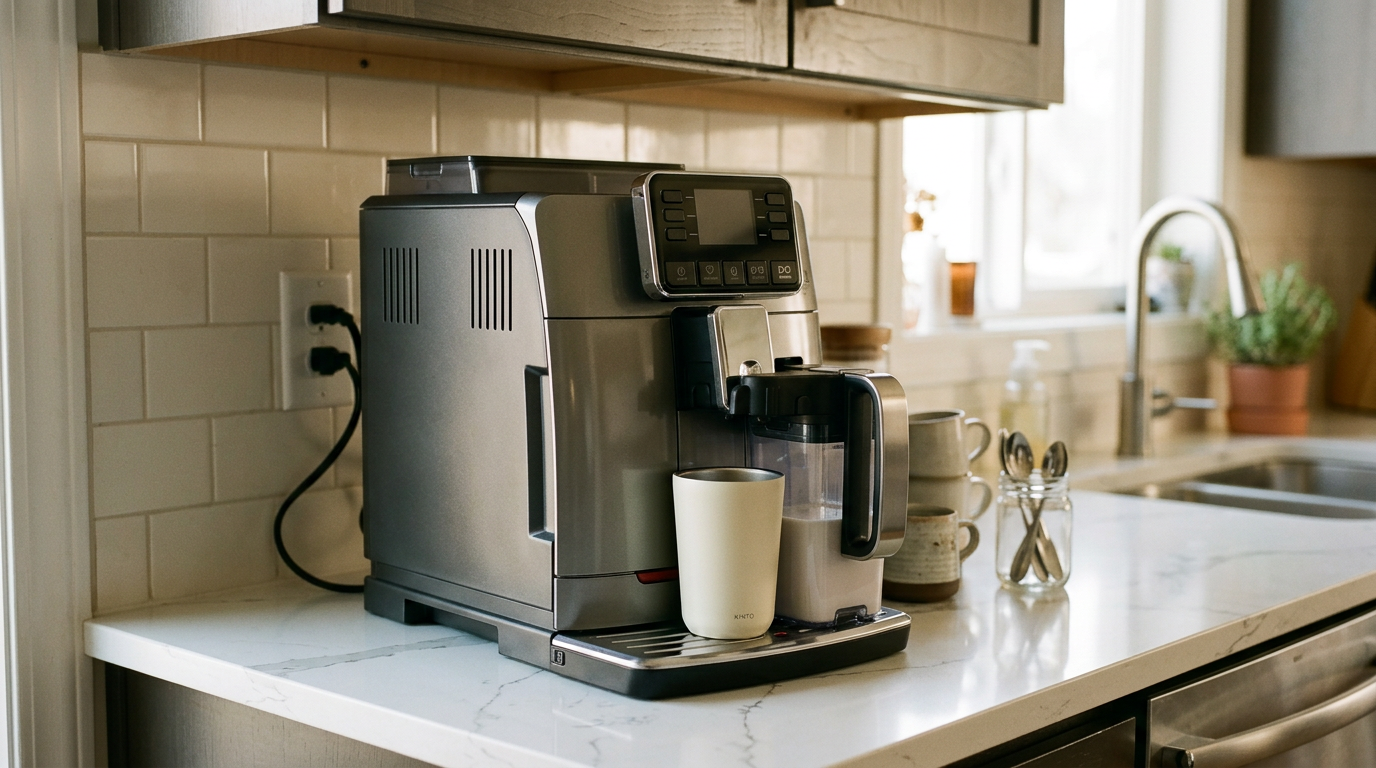
The Cadorna’s tank and puck drawer pull out from the front, so it can stay under low cabinets.
Both have a drip tray with a float that pops up when it is getting full, and both trays slide out from the front. I emptied them once a day, usually while the machine ran its switch-off rinse.
Build quality is close. Both feel solid for plastic-bodied machines, with no rattles or flex after a month of daily use.
Our tip: Measure from your counter to the underside of your cabinets before buying the Magenta, because its top lids need about 17.25 inches to open fully.
Setup and the first week
Setup follows the same pattern on both. You test your water hardness with the strip, enter it on screen, fit the water filter and let the machine prime and rinse.
From opening the box to the first drink took about 20 minutes on each. The Cadorna took a few minutes longer because I set up three profiles.
The first few espressos on both tasted thin. The grinder and brew group need a dozen or so cycles to settle, so I didn’t judge either until the second day.
By the end of week one I had a clear routine on each. Strength 4, a 1-ounce espresso and grind step 2 on the Magenta; strength 4 and a slightly finer middle step on the Cadorna.
| Setup step | Cadorna Prestige | Magenta Prestige |
|---|---|---|
| Water hardness test | Strip, entered on screen | Strip, entered on screen |
| Filter | Fits in the front tank | Fits in the top tank |
| Profiles | Four to set up | None |
| Standby | 15 min to 3 h | Adjustable |
| Time to first drink | About 20 min | About 20 min |
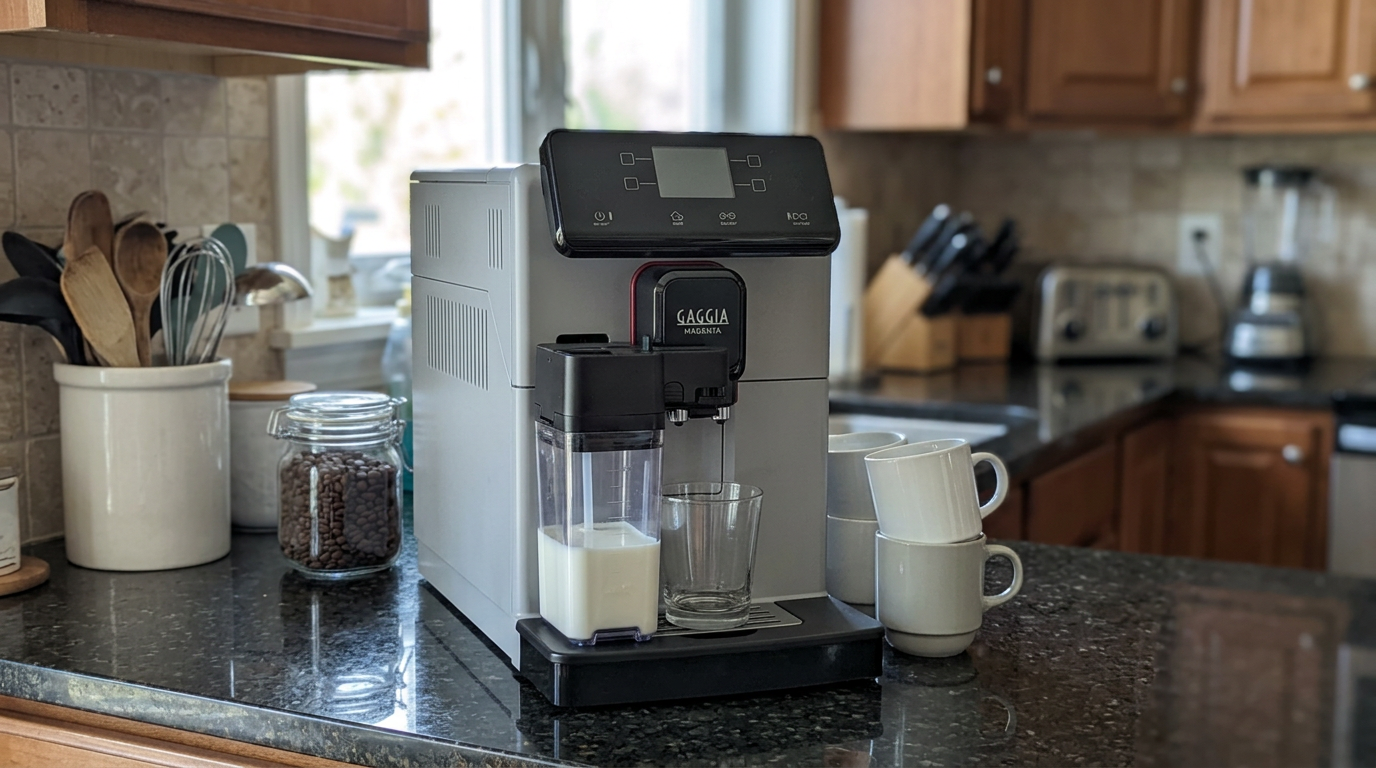
Setup is the same simple routine on both: test strip, filter, rinse.
One small trap caught me on both machines. Turning the grind knob while the grinder was stopped made it feel stiff, and the manual is clear that you should only adjust it mid-grind.
Our tip: Make your first dozen drinks before you judge either Gaggia, because the brew group needs a few cycles to bed in and early shots run thin.
Screen, controls and profiles
Both use a color touch display with drink icons. Tap a drink, adjust strength or size if you want, and press start.
The Gaggia Cadorna Prestige adds four color-coded user profiles. Each person picks their color, and their saved drinks come up with their own strength, volume and milk amount.
In a house of three, that ended the daily habit of adjusting the machine back after someone else used it. My flat white stayed my flat white.
The Gaggia Magenta Prestige has no profiles. You can change a drink and save it, but everyone shares the same saved version, so it suits one or two people with similar tastes.
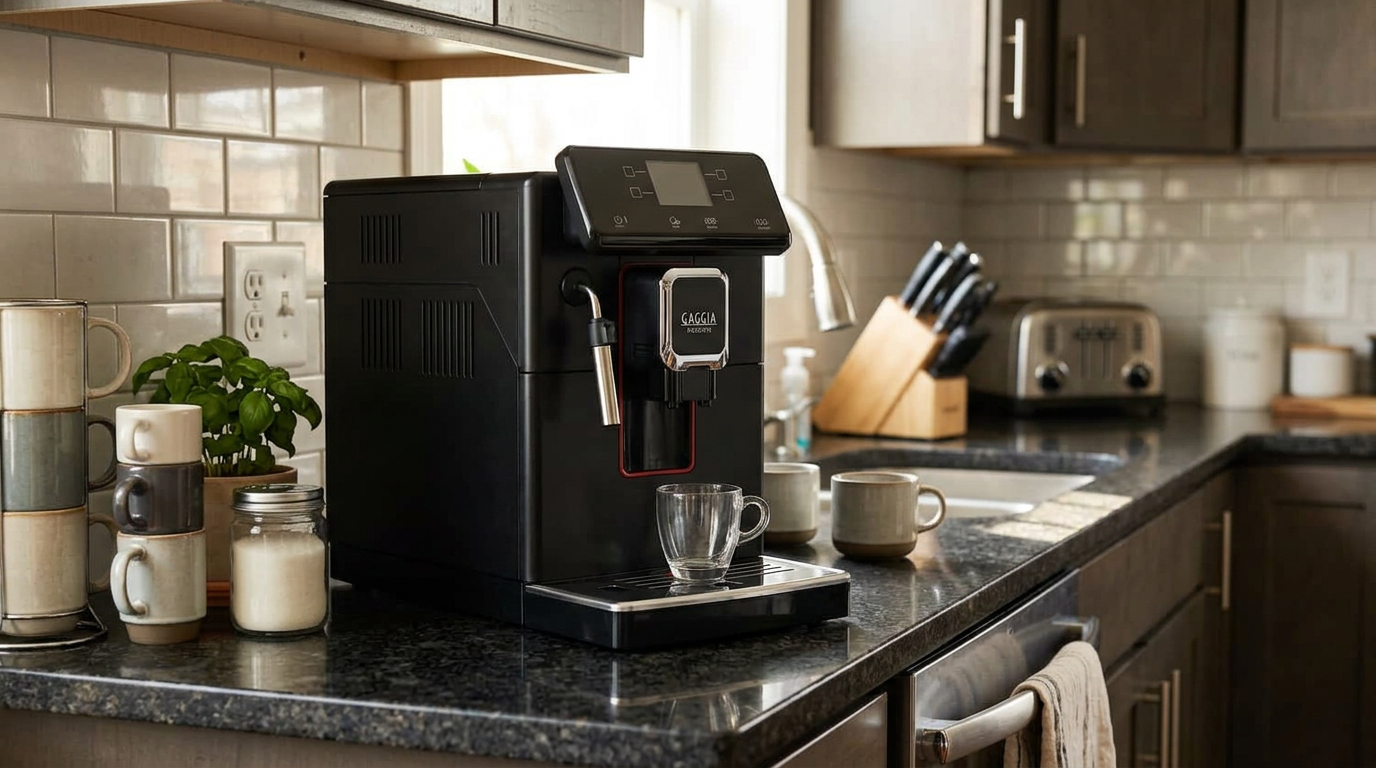
The Magenta’s touch display is clear and simple, but there are no profiles.
| Control detail | Cadorna Prestige | Magenta Prestige |
|---|---|---|
| Display | Color touch display | Color touch display |
| User profiles | Four, color-coded | None |
| One-touch drinks | 14 | 11, plus hot water |
| Save custom drinks | Per profile | Shared |
| Standby setting | 15 min to 3 h | Adjustable |
Our tip: Give every coffee drinker their own color on the Cadorna on day one, because saving everyone’s drinks on one profile means constant re-adjusting.
Grinder and dose
Both use ceramic flat burrs and Gaggia’s Optiaroma✕OptiaromaGaggia’s strength setting. Each level changes how much coffee the machine grinds per drink. strength system. The dose ranges are almost identical, but the grind adjustment is not.
The Gaggia Cadorna Prestige has 10 grind steps, twice as many as the Magenta. That made it easier to fine-tune between a dark blend and a lighter single origin.
The Gaggia Magenta Prestige has five steps, from 1, the finest, to 5, the coarsest, on a knob inside the hopper. With a medium-dark blend, step 2 gave me the best balance of body and sweetness.
On the Cadorna, Optiaroma doses from about 0.23 ounces up to about 0.4 ounces of coffee per grind cycle. On the Magenta, the top level reaches about 0.41 ounces, or 11.5 grams.
Why does the number of grind steps matter? Each bag of beans flows a little differently, and a finer grind slows the water down so it pulls more flavor out. More steps give you smaller jumps between too fast and too slow.
On the Magenta, moving from step 2 to step 1 was sometimes too big a jump with a light roast, and the shot went from sour to slightly harsh. On the Cadorna, I could land in between.
Coffee per grind cycle at top strength
Both are generous doses for a compact one-touch machine.
Both make true double shots with two separate grind cycles. That matters, because many automatics stretch one dose with extra water and call it a double.
On the Cadorna, a double uses between about 0.46 and 0.8 ounces of coffee depending on strength. On the Magenta, the top setting reaches about 0.82 ounces, close to a triple.
| Grinder detail | Cadorna Prestige | Magenta Prestige |
|---|---|---|
| Burrs | Ceramic | Ceramic |
| Grind steps | 10 | 5 |
| Strength levels | 5 | 5 |
| Dose per grind | About 0.23–0.4 oz | Up to about 0.41 oz |
| Two-grind double | Yes | Yes |
| Bean hopper | About 10.6 oz | About 8.8 oz |
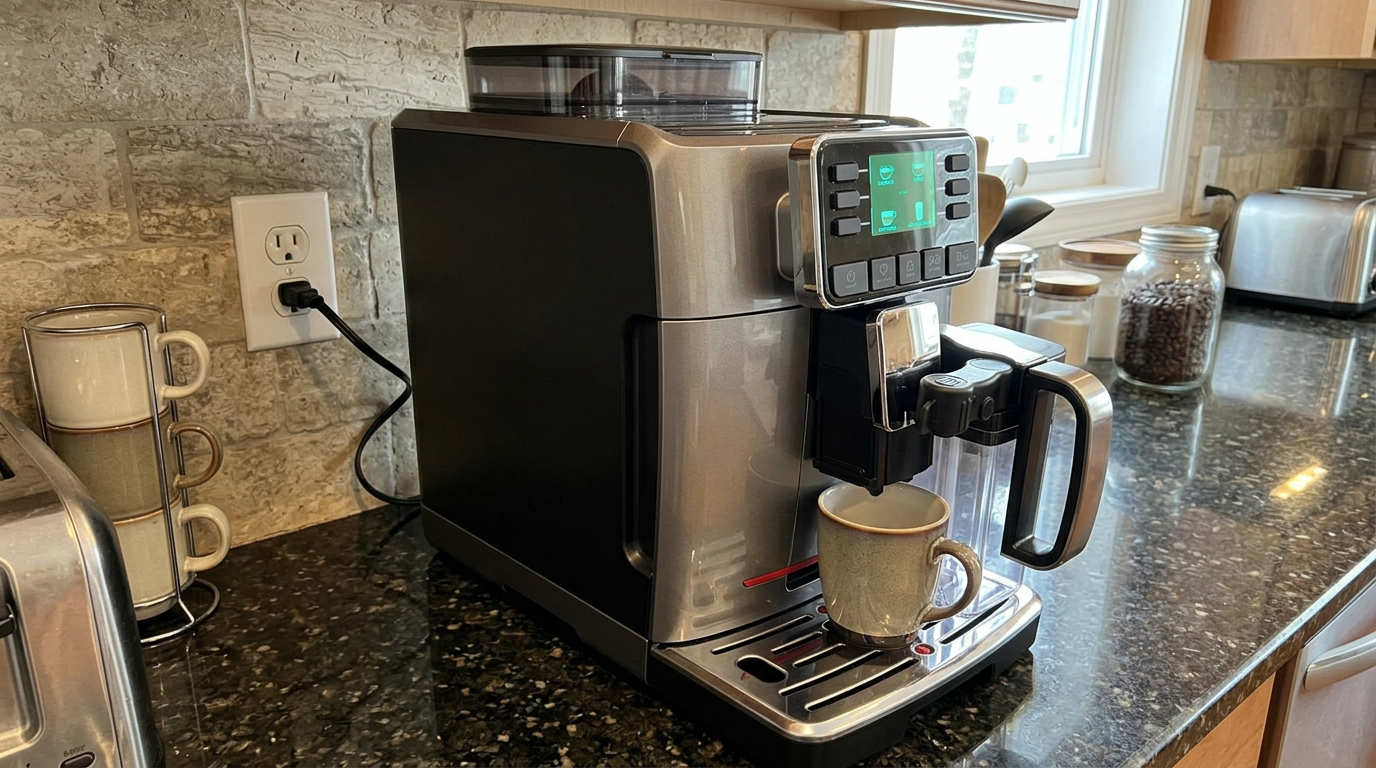
The Cadorna’s 10 grind steps made it easier to tune each new bag.
Our tip: Only turn the grind knob while the grinder is running on either Gaggia, because turning it with the burrs stopped can jam beans and strain the motor.
Espresso quality
With the same medium-dark blend, these two pulled very similar espresso. That makes sense, because the brew group and boiler are closely related.
At strength level 4, my 1-ounce espressos on the Cadorna came out with dense, tan crema✕CremaThe golden, foamy layer on top of a fresh espresso. It forms when pressure pushes oils and gases out of the coffee. and a full, chocolatey body. The quick-heating boiler was ready in under 60 seconds.
On the Magenta at strength 3, my 1-ounce shots ran in about 25 seconds, with a thick crema and a sweet finish. Raising strength rather than volume was the key to a fuller cup.
The pump on both is rated at 15 bar, but the coffee itself extracts in roughly the 9 to 12 bar range once the puck builds resistance. That is right in the espresso zone.
Too much water through a small dose is what makes many automatic coffees taste flat and bitter. Both Gaggias avoid it on their two-cup drinks by grinding twice.
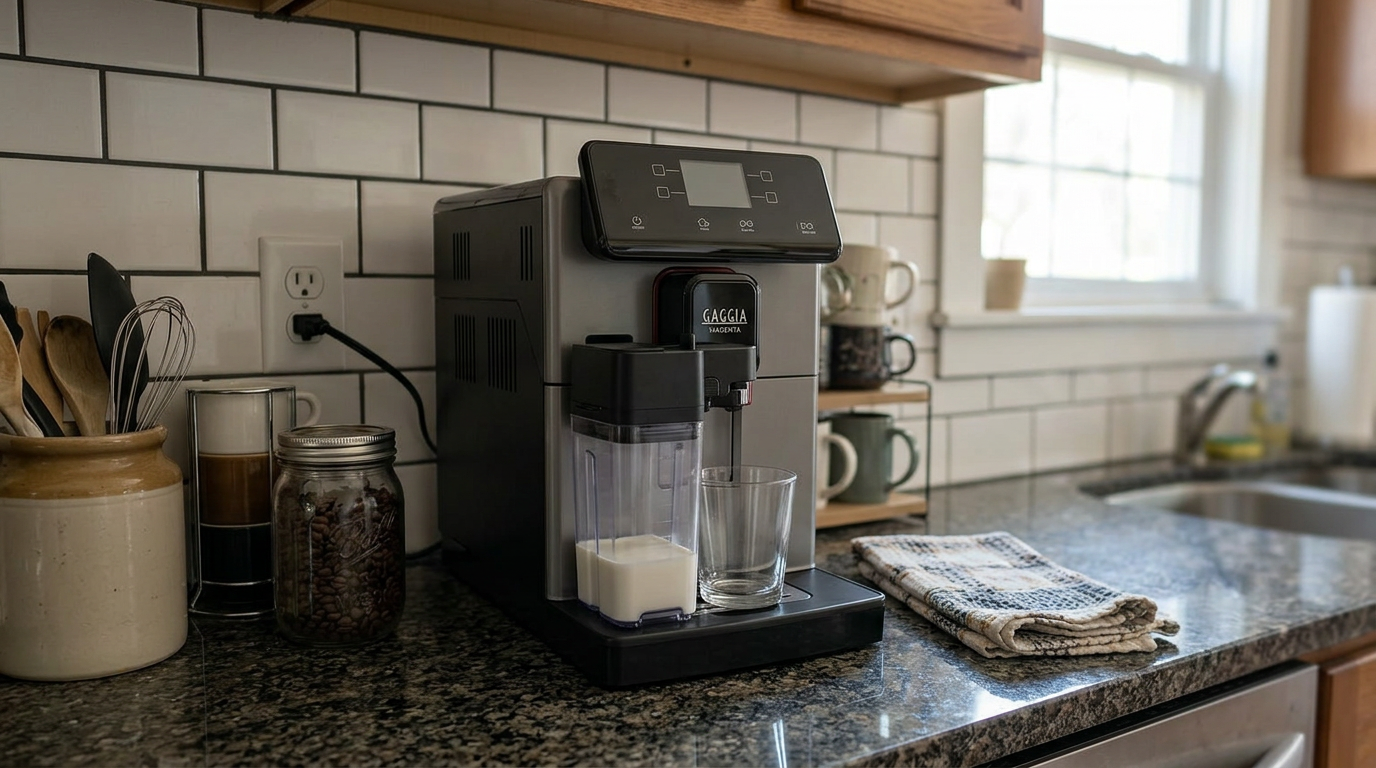
The Magenta’s espresso was sweet and full with a medium-dark blend at strength 3.
My espresso ratings
My scores out of 10 for body, crema, flavor and consistency.
The Cadorna edged ahead only because its extra grind steps let me get a little closer with lighter roasts. With a medium-dark blend, I could not tell them apart in a blind test.
| What you taste | Likely cause | First fix |
|---|---|---|
| Watery, pale crema | Grind too coarse or stale beans | Two steps finer, higher strength |
| Bitter, harsh | Too much water | Shorter volume |
| Sour with light roasts | Grind not fine enough | Finest step, strength 4–5 |
| Thin flat white | Single-grind settings | Use the two-grind double |
Milk drinks
Both use a carafe that clicks onto the front and froths automatically. Both also do something most one-touch machines don’t: they change the order of milk and espresso depending on the drink.
For a cappuccino or latte macchiato, milk goes in first and espresso second, so you get those layers. For a flat white✕Flat whiteA short milk coffee with a double shot and a thin layer of silky microfoam. Stronger and less foamy than a cappuccino. or cortado✕CortadoA small drink of espresso cut with roughly the same amount of warm milk, with very little foam., espresso goes in first, which makes the drink taste coffee-forward rather than milky.
The Gaggia Cadorna Prestige builds its flat white on a real two-grind double. It was the best one-touch flat white I made all month.
The Gaggia Magenta Prestige uses the same smart order and makes a very similar flat white. Its carafe holds about 16.9 ounces, enough for four or five cappuccinos.
The Cadorna’s carafe holds about 20 ounces, which covered a morning of drinks for three people. Its milk came out at about 155°F, hot enough for a satisfying latte but below the point where milk tastes cooked.
I also tried both with oat and almond milk. Barista-style oat foamed well on both, close to 2% dairy, while almond made a thinner, bubblier foam that collapsed within a minute.
Temperature stayed consistent through the month on both. If you like a very hot latte, pre-warm the glass with hot water, because a cold glass costs you several degrees by the first sip.
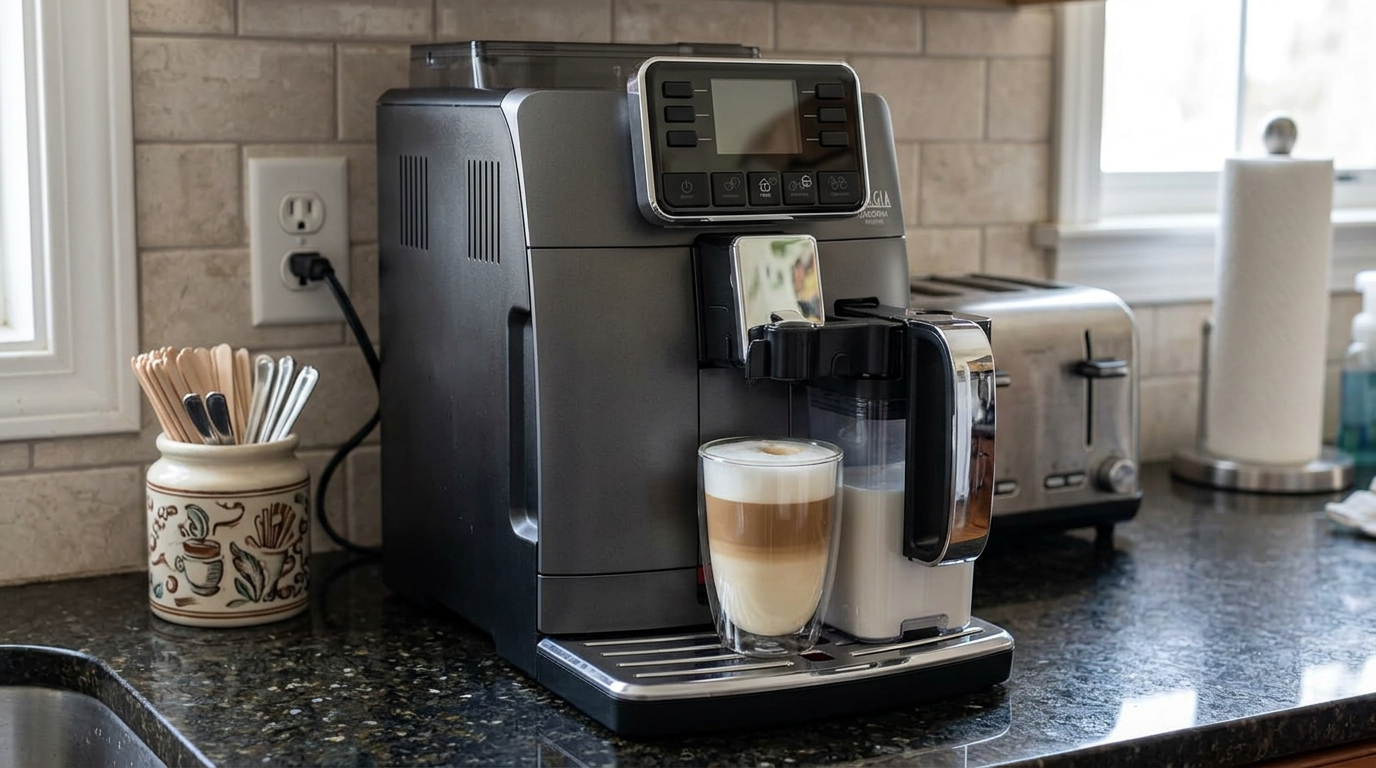
Milk first for cappuccinos, espresso first for flat whites: both Gaggias get the order right.
| Milk drink | Cadorna Prestige | Magenta Prestige |
|---|---|---|
| Cappuccino | Milk first | Milk first |
| Latte macchiato | Milk first | Milk first |
| Flat white | Espresso first, two-grind double | Espresso first |
| Cortado | Espresso first | Espresso first |
| Milk only | Yes | Yes |
| Carafe size | About 20 oz | About 16.9 oz |
How each milk foamed, my scores
Very similar on both machines. Neither foam pours latte art.
Neither carafe makes foam fine enough for latte art. If that matters to you, you need a machine with a steam wand.
The drink menu: 14 vs 11
The Gaggia Cadorna Prestige lists 14 one-touch beverages, all set to traditional Italian volumes out of the box. The Gaggia Magenta Prestige has 11 one-touch drinks plus hot water.
In practice the core menu is the same: espresso, coffee, cappuccino, latte macchiato, flat white, cortado and hot water. The Cadorna adds a few more variations, which is more useful with four profiles.
One-touch drinks
Counted from each machine’s menu.
Single drinks on the Cadorna go up to about 8 ounces, and the two-cup button doubles that to around 16 ounces with two full grind cycles. That is a proper mug of coffee rather than a watered-down one.
The Magenta’s spout gives about 5.75 inches of room, enough for a travel mug. The Cadorna’s spout slides up to about 6 inches, which fit every travel mug I own.
Both machines fit a travel mug under the spout.
Is It On Sale? Check NowCleaning and upkeep
Both have a removable brew group that you rinse under warm water, and both need the carafe cleaned after milk drinks.
Quick Clean on the carafe took about 20 seconds. Every day or two, I took the carafe head apart and washed it to clear dried milk from the small parts.
The biggest daily difference was the puck drawer. The Cadorna’s holds about 10 pucks, and flat whites and two-cup drinks use two pucks each, so I emptied it every day.
The Magenta’s drawer holds about 15 pucks, which stretched to every other day for two of us. It was the more frequent chore on the Cadorna and the one thing I’d change.
Drinks before the drawer is full
Two-grind doubles use two pucks each.
| When | Cadorna Prestige | Magenta Prestige |
|---|---|---|
| After milk | Quick Clean | Quick Clean |
| Every 1–2 days | Wash the carafe head | Wash the carafe head |
| Daily | Empty the 10-puck drawer | Empty about every 15 drinks |
| Weekly | Rinse the brew group | Rinse the brew group |
| Monthly | Grease the brew group | Grease the brew group rails |
| When prompted | Descaling✕DescalingRunning a mild acid through the machine to dissolve the mineral scale that hard water leaves in the heater and pipes. or change the filter | Descale or change the filter |
My daily hands-on cleaning time
My estimate of hands-on time per day, not counting automatic rinses.
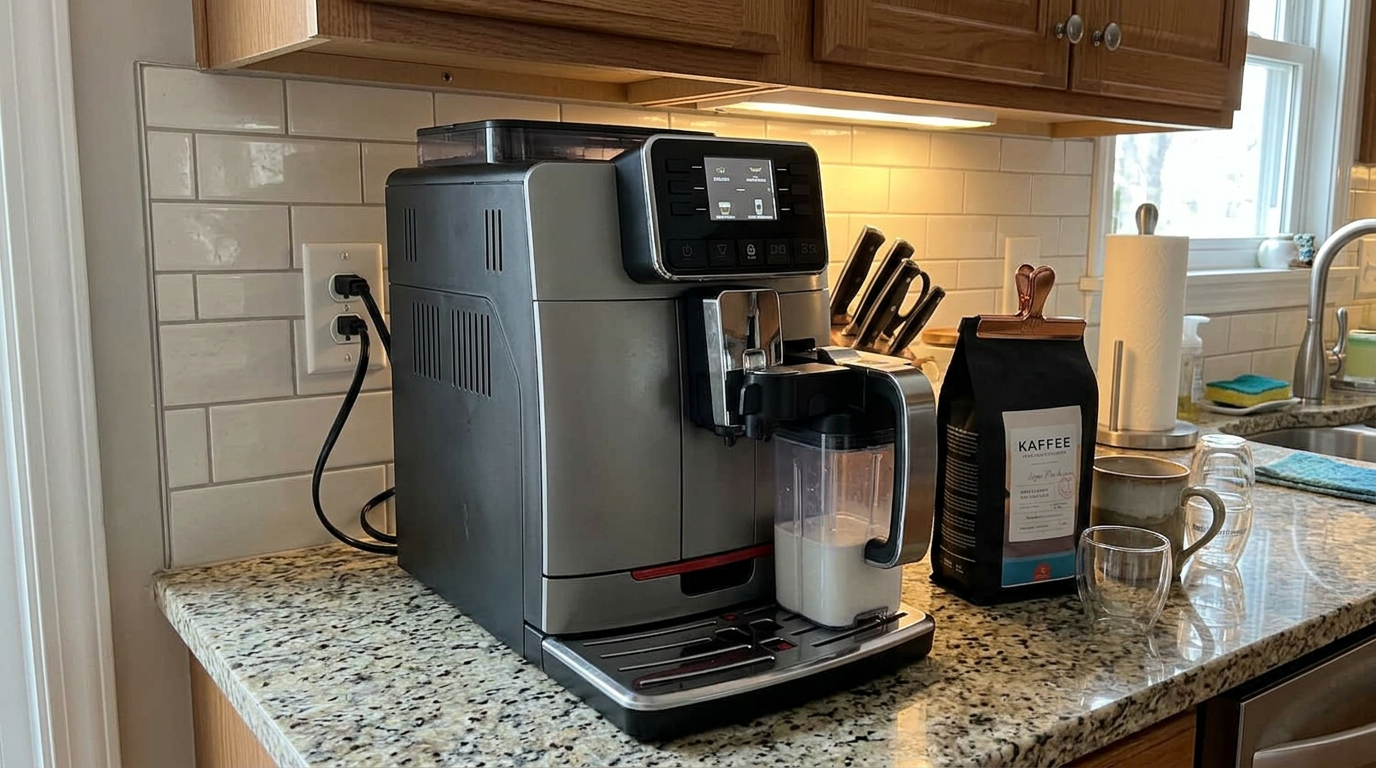
The Cadorna’s front drawer is easy to reach, but it fills after about 10 pucks.
Our tip: Empty the puck drawer with the power on and wait 5 to 10 seconds, because emptying it with the machine off can trigger false drawer-full warnings.
Noise and speed
Both are typical of compact Italian super-automatics. The ceramic grinders make a short, mid-pitched whirr, and the brew group gives a soft clunk as it presses and ejects the puck.
I couldn’t pick a clear winner on noise. Neither woke anyone in my house, and both were quieter than the kettle.
Speed was close too. Both were ready in under a minute from cold, and a cappuccino took about a minute and a half from pressing the icon to picking up the cup.
| Task | Cadorna Prestige | Magenta Prestige |
|---|---|---|
| Heat-up from cold | Under 60 s | Under 60 s |
| Single espresso | About 30–40 s | About 30–40 s |
| Two-grind double | Two grind cycles | Two grind cycles |
| Cappuccino | About 1.5 min | About 1.5 min |
| Quick Clean | About 20 s | About 20 s |
Where time adds up is the two-grind double. It is slower than a single-grind double, but the fuller taste is worth the extra 20 seconds every time.
A two-grind double takes a little longer, but it is the reason both Gaggias taste strong.
Water, beans and long-term ownership
The Cadorna’s 51-ounce tank lasted about two days for three of us. The Magenta’s 60-ounce tank lasted about three days for two.
Looked after properly, these Gaggia machines commonly reach 15,000 to 20,000 brew cycles. At 10 cups a day, that is about 3,650 cups a year, so you are looking at many years of use.
My daily routine on each
On the Cadorna, mornings went like this: switch on, wait under a minute, tap my blue profile and press Flat White. My partner tapped green for a cappuccino, and the carafe went back in the fridge after a 20-second Quick Clean.
On the Magenta, the routine was the same minus the profiles. I made my flat white, then changed the strength back down for my partner’s cappuccino, which got old by the end of the first week.
Evenings were simpler on both. One espresso, a rinse on switch-off and the tray emptied before bed.
| Bean type | Espresso | Milk drinks |
|---|---|---|
| Medium-dark blend | Excellent, dense crema | Excellent, chocolatey |
| Medium roast | Very good, brighter | Good, lighter |
| Light roast | Finest step, strength 4–5 | Can taste sharp |
| Very dark, oily | Not recommended | Not recommended |
Both use a pre-ground bypass doser✕Pre-ground chuteA small funnel that lets you add one scoop of ground coffee, such as decaf, without emptying the bean hopper. for decaf. Select bypass on screen first, then add one level scoop, or loose grounds can clog the chute.
Never use soap on the brew group. Warm water only, because detergent strips the grease and leaves residue that taints the coffee.
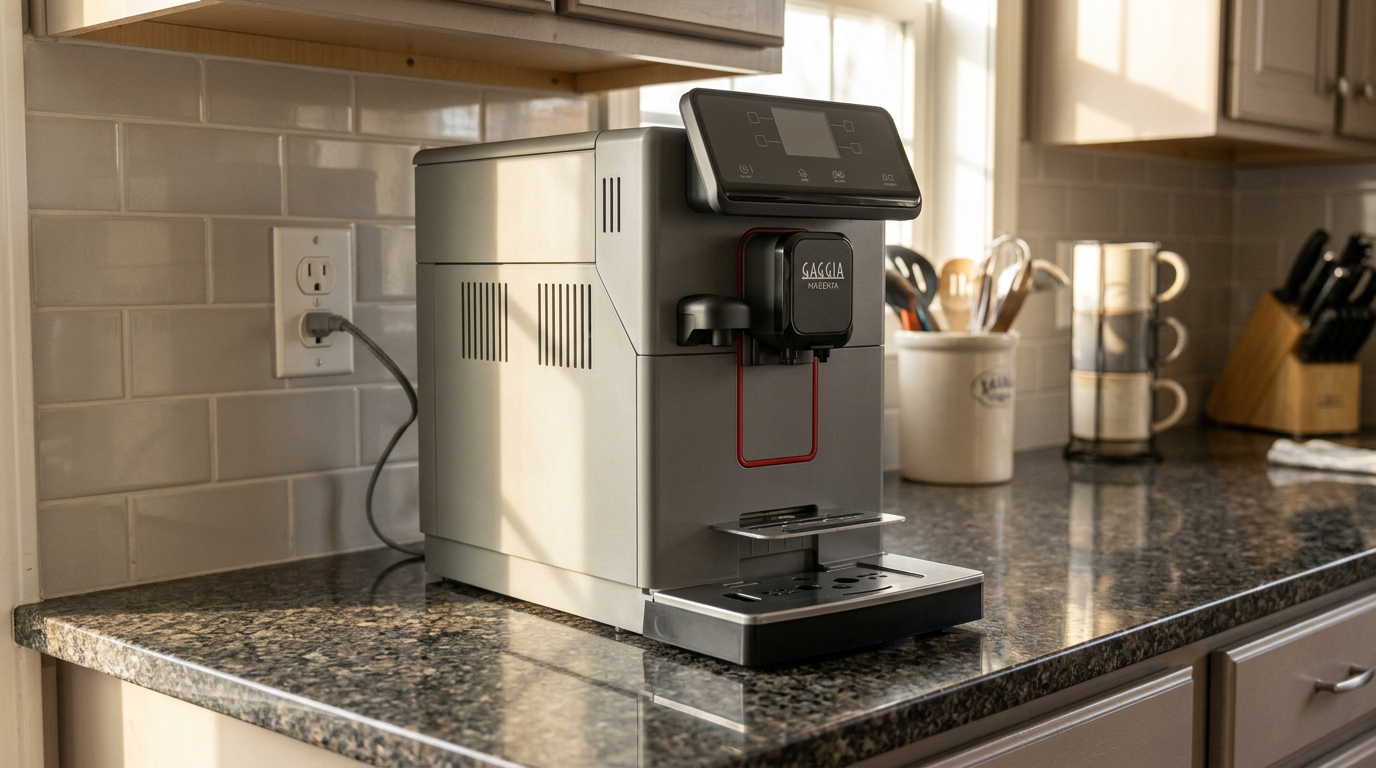
Fit the water filter and both machines need descaling far less often.
Our tip: Grease the brew group rails once a month on either Gaggia, because a dry brew group moves stiffly and wears faster.
Mistakes to avoid on either Gaggia
Both Gaggias are easy to live with, but a handful of habits held them back during my test. These are the ones worth avoiding from day one.
| Mistake | What happens | Better habit |
|---|---|---|
| Turning the grind knob with the grinder stopped | Beans jam between the burrs | Adjust only while it grinds |
| Raising volume for a stronger drink | Thin, bitter coffee | Raise strength instead |
| Skipping Quick Clean | Dried milk blocks the carafe | Run it after every milk drink |
| Leaving the carafe on the counter | Warm milk foams poorly | Store it in the fridge |
| Overfilling the bypass chute | Loose grounds jam the brew group | One level scoop only |
| Washing the brew group with soap | Strips the grease, leaves residue | Warm water only |
The one I made most often was raising the volume. A bigger cup feels like a stronger cup, but on any automatic it means more water through the same coffee.
The second was leaving the carafe out after breakfast. By mid-morning the milk was warm, and the next cappuccino had big, loose bubbles that collapsed within a minute.
On the Cadorna specifically, give each person their own color. Sharing one profile undoes the main reason to buy it.
A few small habits keep both Gaggias making their best drinks.
Our tip: Use fridge-cold milk at 40°F or colder on both machines, because it always foamed better than milk that had warmed up on the counter.
Real-life scenarios
Specs only go so far. These are the situations where one machine clearly pulled ahead during my testing.
Each person tapped their color and got their own drink. On the Magenta, someone was always re-adjusting the strength.
At 8.8 inches wide, the Magenta fit where the Cadorna simply would not.
Front-loading tank and drawer meant I never slid the Cadorna forward. The Magenta needed moving to open its water door.
Each flat white uses two pucks, and the Magenta’s 15-puck drawer lasted twice as long between emptyings.
Ten grind steps gave me the room to get both tasting right. Five steps on the Magenta felt coarse-grained.
No profiles to set up and a simple menu. The Magenta was ready to enjoy in minutes.
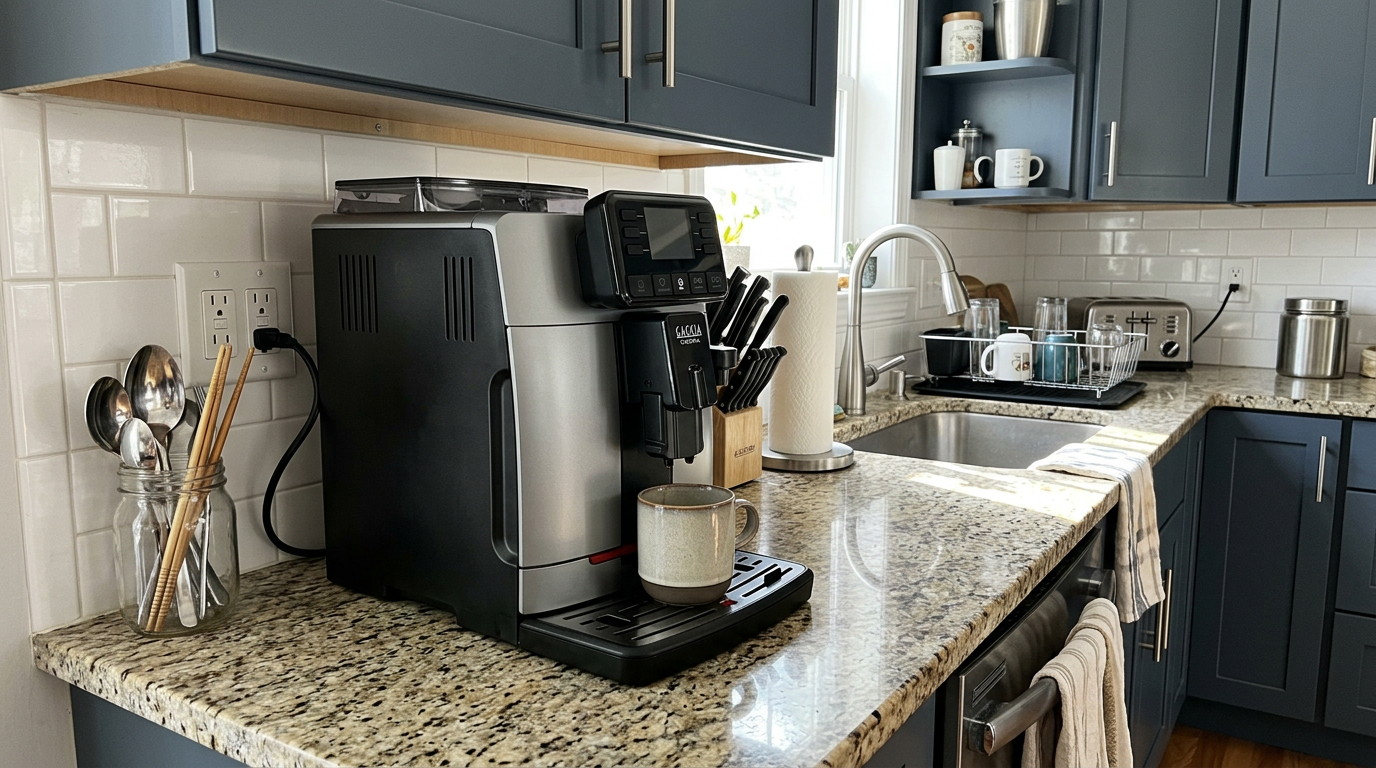
In a busy family kitchen, the Cadorna’s profiles kept everyone’s drink one tap away.
My scorecard
These are my own scores out of 10 after four weeks with each machine. I added household features and footprint because those two rows decide this matchup.
Gaggia Cadorna Prestige
Gaggia Magenta Prestige
Overall, I rate the Cadorna Prestige 8.5 and the Magenta Prestige 8.4. The coffee is close to identical. The Cadorna is the better machine to share, and the Magenta is the better machine to squeeze in.
See How Much You’ll SaveWhich one is right for you?
4 quick questionsWhich one should you buy?
It comes down to one question: how many people share the machine? Answer that honestly and the choice makes itself. For the wider picture beyond this matchup, see my guide to the best Gaggia super-automatic espresso machines.
If you want a steam wand instead of a carafe, see my Gaggia Magenta Plus review. For the full detail on each machine, read my Cadorna Prestige review and Magenta Prestige review.
For a couple in a small kitchen, the Magenta does everything the Cadorna does except profiles.
- Two to four people share the machine
- Your wall cabinets are low
- You fine-tune grind for each bag
- You want the biggest carafe
- Counter width is under 10 inches
- You hate emptying a small puck drawer
- You want latte art
- Your counter is narrow
- One or two people drink similar drinks
- You want fewer drawer emptyings
- You want a simple setup
- Several people want saved drinks
- Your cabinets are low
- You switch between very different roasts
For most households with more than one coffee drinker, my pick is the Gaggia Cadorna Prestige. Four profiles, front-loading water and drawer, 10 grind steps and a true two-grind flat white make it the easier Gaggia to share and to live with under cabinets.
The Gaggia Magenta Prestige is the smarter buy for one or two people or a narrow counter. It makes the same rich espresso and right-order milk drinks in a body 1.4 inches slimmer, and its bigger drawer means fewer chores.
Whichever you choose, keep the carafe in the fridge, run Quick Clean after every milk drink and rinse the brew group weekly. Both reward a little care with years of good coffee.
Gaggia Cadorna Prestige vs Magenta Prestige specifications
From manufacturer specifications and my own testing.
| Gaggia Cadorna Prestige | Gaggia Magenta Prestige | |
|---|---|---|
| Type | Super-automatic with carafe | Super-automatic with carafe |
| One-touch drinks | 14 | 11, plus hot water |
| User profiles | 4 | None |
| Display | Color touch display | Color touch display |
| Grinder | Ceramic, 10 steps | Ceramic, 5 steps |
| Strength | Optiaroma, 5 levels | Optiaroma, 5 levels |
| Dose per grind | About 0.23–0.4 oz | Up to about 0.41 oz |
| Heating | Quick-heating boiler, under 60 s | Quick-heating boiler |
| Pump | 15 bar | 15 bar |
| Carafe | About 20 oz | About 16.9 oz |
| Water tank | About 51 oz, front | About 60 oz, top door |
| Bean hopper | About 10.6 oz | About 8.8 oz |
| Puck drawer | About 10 | About 15 |
| Cup clearance | About 6 in | About 5.75 in |
| Dimensions (W x D x H) | 10.2 x 17.3 x 15 in | 8.8 x 17.1 x 14 in |
| Weight | About 20.5 lb | Slightly less |
How I tested and compared them
I used each machine as my everyday coffee maker for four weeks, making espresso, coffee, cappuccinos, latte macchiatos, flat whites, cortados and hot water.
I weighed doses and shots, timed extractions, measured milk temperature with a probe thermometer, foamed whole, 2%, skim, oat and almond milk, and counted pucks and tank refills.
I ran every cleaning routine, set up profiles on the Cadorna, and compared my notes with Gaggia’s specifications and owner documentation.
- Coffee: dose, crema, body and consistency.
- Milk: foam texture, temperature and drink order.
- Workflow: profiles, menus and tank access.
- Ownership: cleaning, puck drawer, water care and footprint.
Gaggia Cadorna Prestige vs Magenta Prestige FAQ
What is the difference between the Gaggia Cadorna Prestige and Magenta Prestige?
The Cadorna adds four user profiles, 14 drinks instead of 11, 10 grind steps instead of five and a front-loading tank and puck drawer. The Magenta is about 1.4 inches narrower and holds more pucks.
Which makes better espresso?
They are nearly identical with a medium-dark blend. The Cadorna’s extra grind steps made it slightly easier to dial in lighter roasts.
Do both make a real double shot?
Yes. Both grind twice for a double, rather than stretching one dose with more water.
Can either make latte art?
No. Both use an automatic carafe that makes good foam for cappuccinos and flat whites but not latte art.
Which is better under low kitchen cabinets?
The Cadorna Prestige. Its water tank and puck drawer pull out from the front, and only the bean hopper opens on top. The Magenta needs about 17.25 inches to open its lids fully.
How many pucks does each drawer hold?
About 10 on the Cadorna and about 15 on the Magenta. Flat whites and two-cup drinks use two pucks each.
What milk temperature does the Cadorna make?
I measured about 155°F, hot enough for a satisfying latte without tasting cooked.
Can I use pre-ground decaf?
Yes, both have a bypass chute. Select bypass on screen first, then add one level scoop.
How long do Gaggia super-automatics last?
With regular cleaning, lubrication and descaling, Gaggia owners commonly report 15,000 to 20,000 brew cycles.
Should I buy the Magenta Plus instead?
Only if you want a steam wand rather than a one-touch carafe. The Plus uses the same slim body with a manual wand.

- Our hands-on Gaggia Cadorna Prestige review
- Our hands-on Gaggia Magenta Prestige review
- Gaggia product specifications and owner documentation
- Effect of milk processing and steam frothing conditions on microfoam formation, University of Camerino
- A living lexicon for brewed coffee, University of Oregon