Gaggia Brera vs Naviglio Milk: which budget Gaggia should you buy?
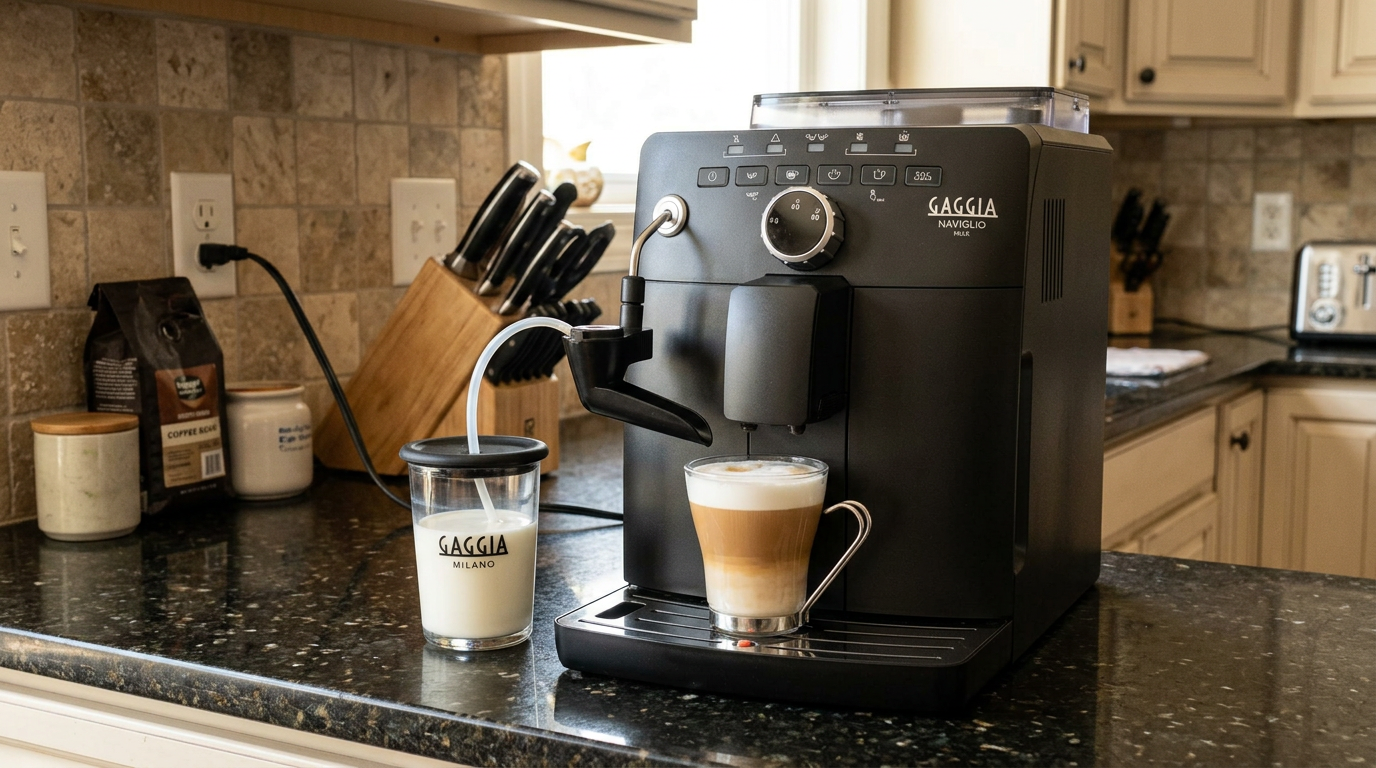
Two of Gaggia’s simplest bean-to-cup machines, split by one feature. The Gaggia Naviglio Milk makes a cappuccino at one touch from almost any milk container, while the Gaggia Brera keeps things simple with true double shots and an easy Pannarello wand. I used both every day for four weeks to find out which one suits your routine.
We choose products independently. We may earn a commission through links on this page; your price stays the same. Affiliate policy
Jargon helpNew to espresso? Tap any dotted term to see what it means.
In this comparison
If a cappuccino is your daily drink, buy the Gaggia Naviglio Milk. Its Cap in Cup✕Cap in CupGaggia’s one-touch milk system. A tube draws milk from any container, steam froths it and the machine pours foam and espresso into your cup. system makes a cappuccino at one touch from almost any milk container, and it converts to a Pannarello✕Pannarello wandA steam wand with a sleeve that pulls in air automatically, so beginners get thick foam without technique. when you want more control. If you mostly drink espresso and want the simplest, most compact Gaggia, the Gaggia Brera is the better buy: its true double shots are excellent, it fits a slightly taller cup and there’s no milk line to rinse after every drink.
The two machines
Specs checked November 14, 2026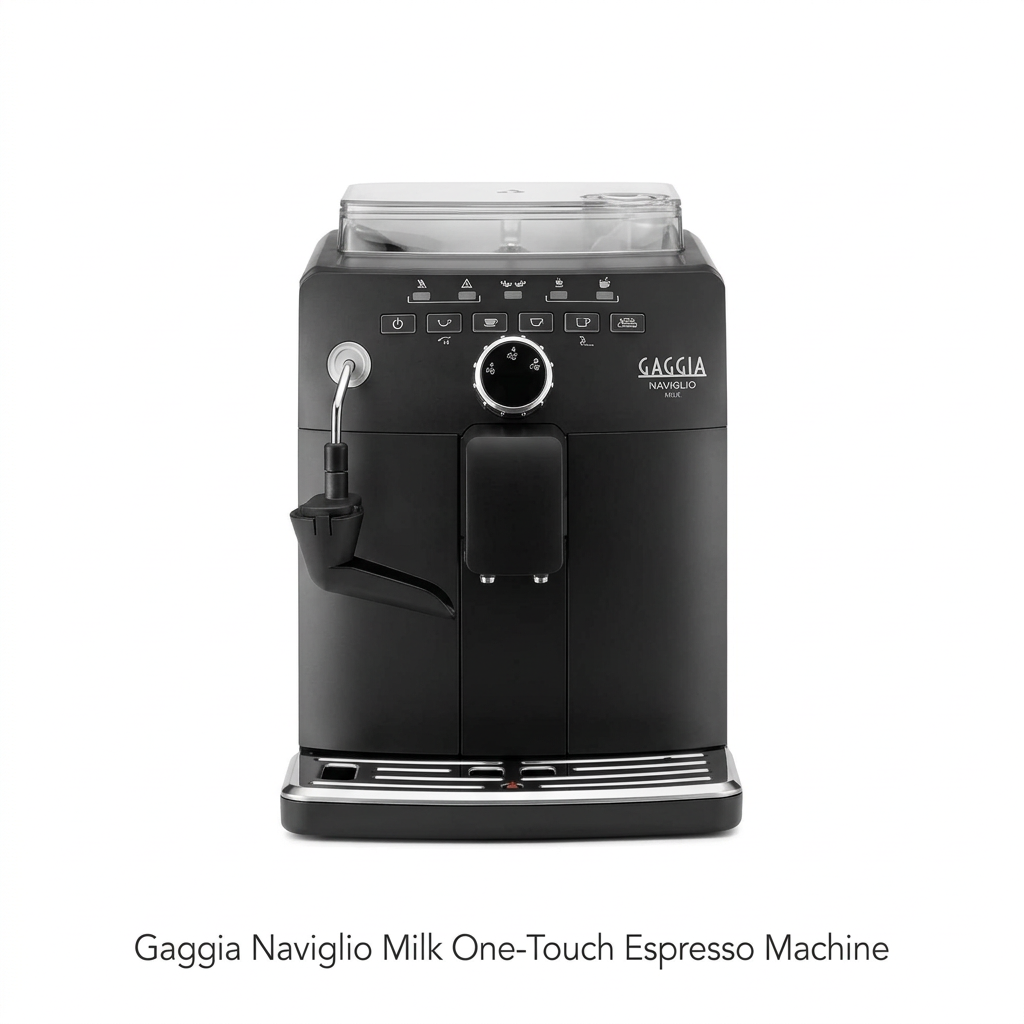
One-touch Cap in Cup cappuccino from any milk container, a Pannarello option, a 51-ounce tank and simple programming.
Check price on Amazon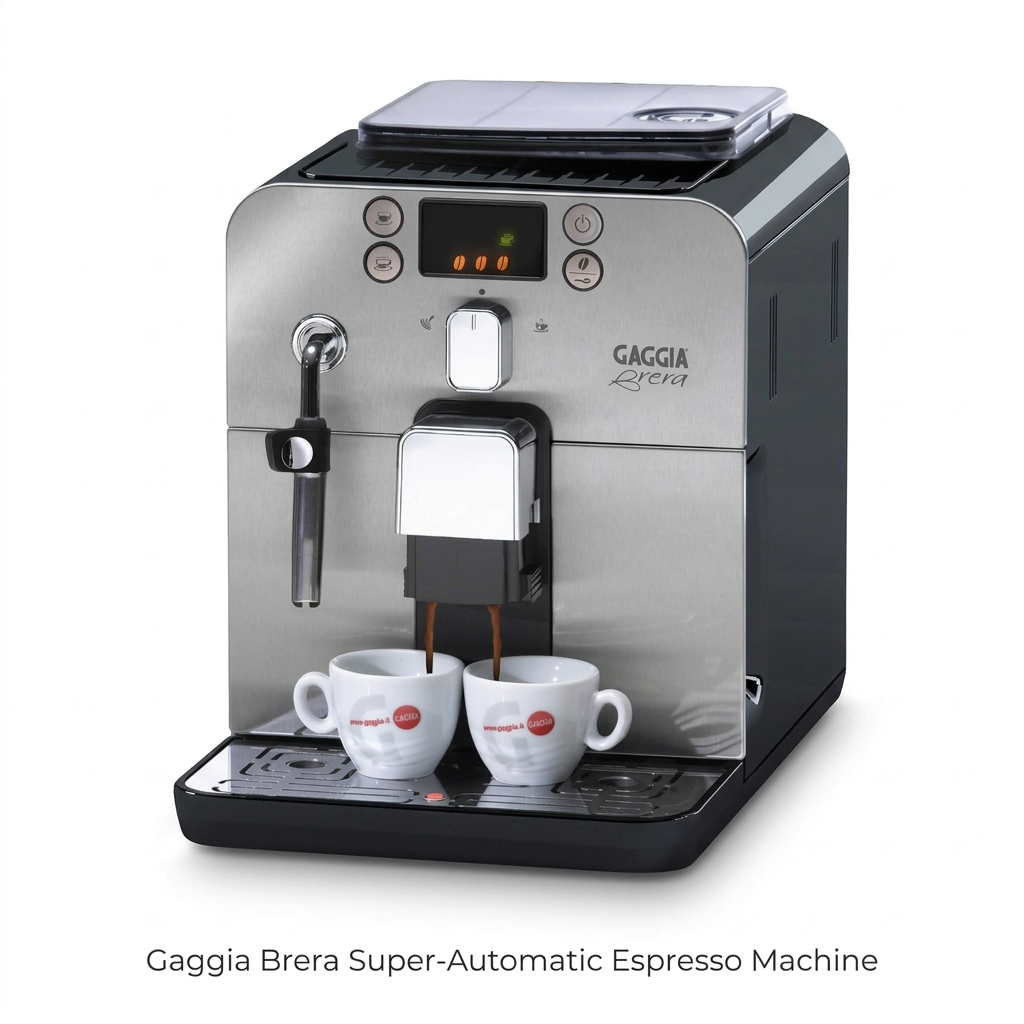
Gaggia’s simplest machine: true double shots, buttons and a dial, a front-loading tank and an easy Pannarello wand.
Reveal Today’s DealGaggia Brera vs Naviglio Milk at a glance
- Buy the Naviglio Milk if you drink cappuccinos daily and want them at one touch.
- Buy the Brera if you mostly drink espresso and want the simplest machine to clean.
- Both share Gaggia’s style of grinder and brew group, so espresso is close.
- Both have a Pannarello wand; only the Naviglio also has Cap in Cup.
Head to head
The better result in each row is marked, based on my four weeks with each machine and Gaggia’s specs. Rows where they are even have no winner.
These two are very close in size and price class, so the milk system decides most buyers.
| Spec | Naviglio Milk | Brera |
|---|---|---|
| Espressomy scores | 8.1 | 8.2 ✓ Best |
| Milk drinksmy scores | 7.7 ✓ Best | 6.8 |
| Ease of usemy scores | 7.9 | 7.9 |
| Cleaningmy scores | 7.1 | 7.6 ✓ Best |
| One-touch cappuccino | Yes, Cap in Cup ✓ Best | No |
| Manual milk | Pannarello option | Pannarello |
| Milk from any container | Yes ✓ Best | Pitcher only |
| Water tank | About 51 oz, front ✓ Best | About 40 oz, front |
| Bean hopper | About 10.6 oz ✓ Best | About 8.8 oz |
| Grounds drawer | About 10 pucks ✓ Best | About 8 pucks |
| Cup clearance | About 4.3 in | About 4.7 in ✓ Best |
| Height | About 13.4 in | About 12.4 in ✓ Best |
| Milk cleanup | Rinse line after each drink | Rinse sleeve ✓ Best |
| Rows won | 6 | 5 |
Gaggia Brera vs Naviglio Milk pros and cons
Gaggia Naviglio Milk
- One-touch cappuccino from almost any milk container
- Converts to a Pannarello wand for hands-on milk
- Simple, step-by-step volume programming
- Milk line needs rinsing after every cappuccino
- Short menu: espresso, cappuccino, milk and hot water
- Low cup clearance for tall mugs
Gaggia Brera
- Espresso quality close to pricier Gaggia machines
- Real double shot that doubles the coffee, not just the water
- Compact, simple and front-loading water tank
- No one-touch milk drinks
- Pannarello foam is thick; finer milk takes technique
- Small 8-puck drawer and only five grind settings
Who should buy which machine?
- Daily cappuccino drinkers
- People who want one-touch and manual milk
- Two-person homes with simple routines
- Espresso drinkers who rarely add milk
- Anyone who wants the least cleaning
- Kitchens with very low wall cabinets
Design, size and build
Side by side, these two look like close cousins, and they are about the same size.
The Gaggia Brera measures about 10 inches wide, 12.4 inches tall and 17.5 inches deep, and weighs around 18 pounds. The Gaggia Naviglio Milk is about 10 inches wide, 13.4 inches tall and 17.3 inches deep, at about 20 pounds.
Both have simple buttons, both load water from the front, and both sat easily under my wall cabinets.
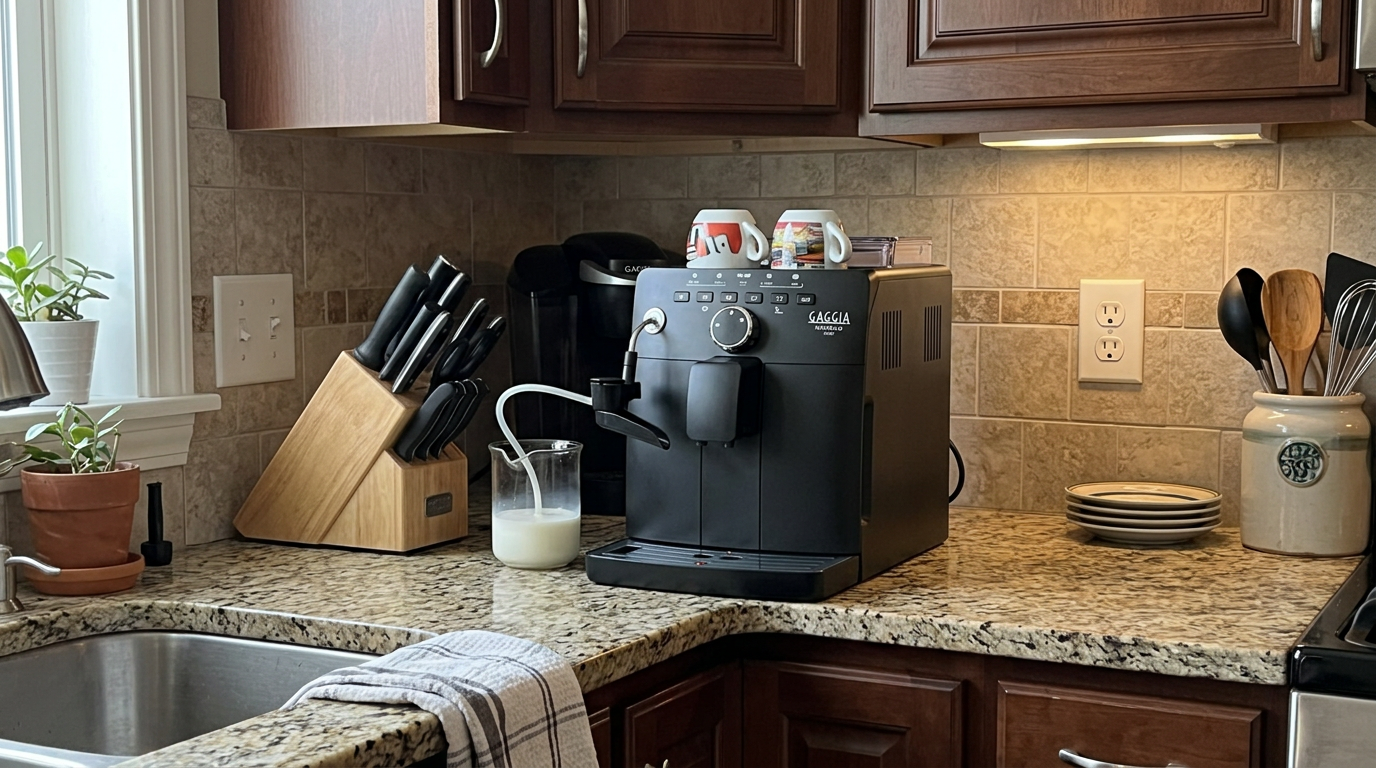
The Naviglio Milk adds a one-touch milk system to a compact Gaggia body.
The Naviglio’s drip tray holds about 18 ounces, and its puck drawer about 10 pucks. Both slide out from the front, so neither machine needs moving to empty.
Cup clearance under the spout
Measured at the highest spout position. Check your favorite mug before buying.
Cup clearance is the one size number that matters every day. Neither fits a tall travel mug, and the Naviglio is a little lower still, so I used lower, wider cups for big drinks.
Build quality is similar, mostly plastic with metal-look trim. The Naviglio’s bigger tank and hopper made it a little more practical for daily cappuccinos.
Our tip: Measure your favorite mug before buying either machine, because anything taller than about 4.3 to 4.7 inches won’t fit under the spout.
Setup and the first week
Both took a few minutes to set up: fill the tank and hopper, prime the water circuit, set the water hardness and rinse.
On the Naviglio, I also set up the Cap in Cup✕Cap in CupGaggia’s one-touch milk system. A tube draws milk from any container, steam froths it and the machine pours foam into your cup. system. You clip the milk module onto the steam outlet, drop the tube into a milk container and program the cappuccino: how much milk, how much espresso. Its step-by-step volume programming was simple.
On the Brera, I set the espresso to about 1 ounce and the long coffee to about 4 ounces by holding the buttons.
Both include a water hardness strip in the box. I set my medium water on both, which affects how often they ask for descaling.
| Setup step | Gaggia Naviglio Milk | Gaggia Brera |
|---|---|---|
| Water hardness | Set in the menu | Set in the menu |
| Milk system | Fit Cap in Cup or Pannarello | Pannarello only |
| Program volumes | Espresso, cappuccino milk and coffee | Espresso and long coffee |
| Learning curve | A day for Cap in Cup | Five minutes |
Controls and programming
Both use physical buttons rather than a touchscreen, and both are easy to understand within minutes.
The Brera has buttons for espresso and long coffee, a strength selector shown as beans, a steam button, a hot water option and a dial. Pressing espresso twice makes a true double.
The Naviglio swaps the long coffee focus for a cappuccino button and adds milk programming. You hold the button, let the milk run to the amount you want, then let the espresso run, and it saves both.
| Control | Gaggia Naviglio Milk | Gaggia Brera |
|---|---|---|
| Espresso | Button, programmable | Button, press twice for a double |
| Cappuccino | One touch, programmable milk and coffee | No |
| Long coffee | By programming | Button |
| Strength | Selector | Beans selector |
| Hot water and steam | Yes | Yes |
I found the Naviglio’s step-by-step programming the more satisfying of the two. Once I saved a 7-ounce cappuccino, it was identical every morning.
The Brera’s simplicity was its own reward. With only a few buttons, nobody in my house ever pressed the wrong one.
Grinder and dose
Both use ceramic burrs✕Ceramic burrsGrinding discs made of ceramic instead of steel. They stay cooler under load and keep their edge for a very long time. with five settings and the same style of brew group, so the espresso foundations are very close.
The Brera’s strength selector sets the dose: about 0.25 ounces for one bean, 0.32 for two and 0.39 for three. Pressing espresso twice grinds twice for a true double of up to about 0.78 ounces.
On the Naviglio, I kept the strength at its highest level and the espresso short, at about 1 ounce, for every milk drink.
The bigger hopper on the Naviglio, about 10.6 ounces, holds roughly a standard bag. The Brera’s 8.8-ounce hopper has an airtight, UV-blocking lid that kept beans fresh between refills.
| Grind setting | What it tasted like on both |
|---|---|
| Setting 1, finest | Slow, intense |
| Setting 2 | Rich, syrupy, my pick |
| Setting 3, factory | Balanced |
| Setting 4 | Lighter, faster |
| Setting 5, coarsest | Thin, quick |
Five steps is not a lot of control. On both machines, I treated grind as a once-per-bag decision and used strength and volume for day-to-day changes.
Our tip: Only turn the grind dial while the grinder is running on either machine, because turning it with the burrs stopped can jam beans.
Espresso quality
With the same medium-dark blend at grind setting 2, the espresso from these two was very close.
The Brera’s 1-ounce shots had a thick, hazelnut-colored crema✕CremaThe golden, foamy layer on a fresh espresso. It forms when pressure pushes oils and gases out of the coffee. and a round body. Its true double stood up to milk well, and I scored it 8.2.
The Naviglio made clean, sweet shots that scored 8.1. On high strength at 1 ounce, its espresso was bold and coffee-forward; stretched to 2 ounces, it turned bigger but slightly bitter.
Naviglio espresso by setting
For milk drinks, the Brera’s true double was the stronger base. At two beans, it uses about 0.63 ounces of coffee, twice the single dose, so a cappuccino tasted like coffee rather than warm milk. On the Naviglio, the highest strength and a short 1-ounce shot did the same job.
My tasting notes with the same 4 oz of milk in each cup.
My espresso ratings
My scores out of 10 for body, crema, flavor and consistency.
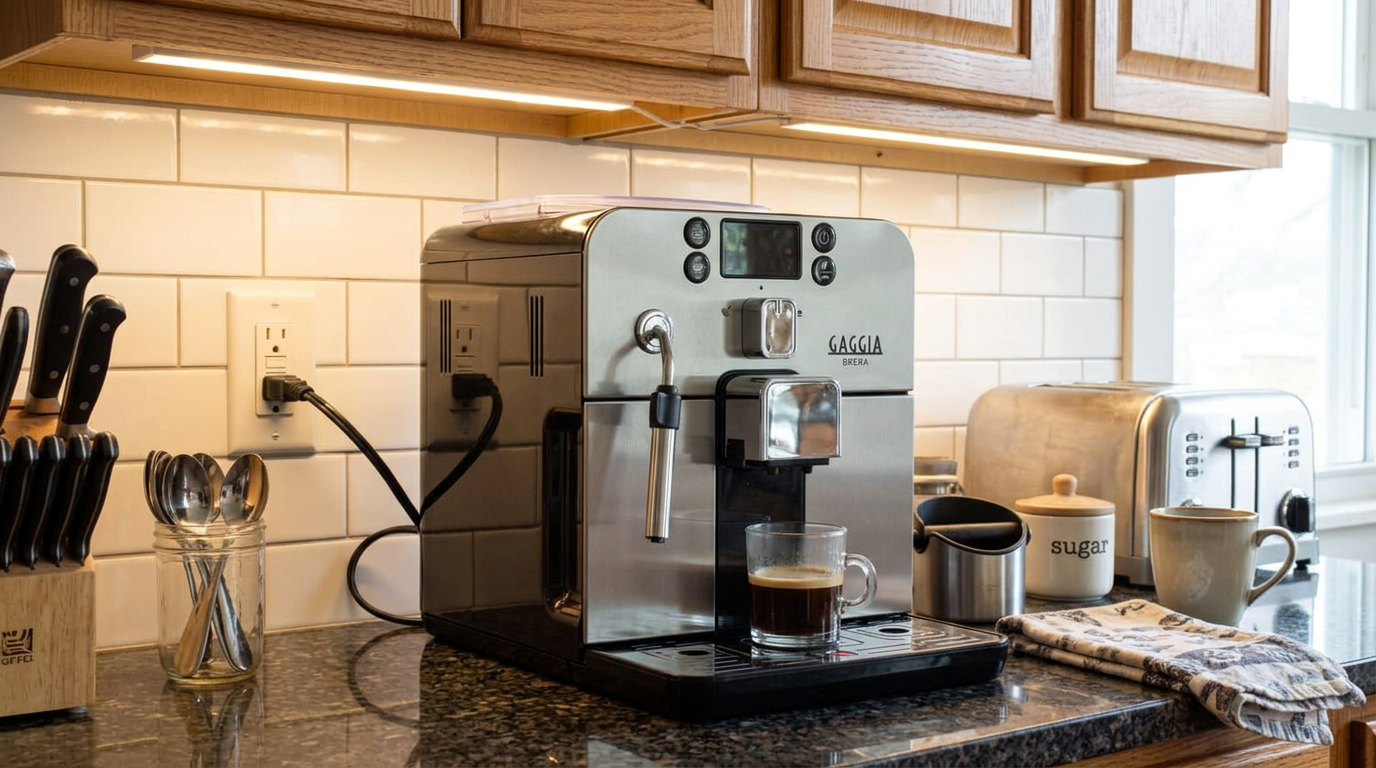
The Brera’s true double makes a strong base for milk drinks.
See Today’s PriceMilk drinks
This is the reason to choose between them.
The Naviglio’s Cap in Cup✕Cap in CupGaggia’s one-touch milk system. A tube draws milk from any container, steam froths it and the machine pours foam into your cup. system draws milk from almost any container through a tube, froths it with steam and pours a classic cappuccino at one touch. The steam phase hisses for about 30 seconds per cappuccino, and the foam was thick and classic.
When I wanted more control, I swapped the Cap in Cup module for its Pannarello✕Pannarello wandA steam wand with a sleeve that pulls in air automatically, so beginners get thick foam without technique.. That’s the Naviglio’s flexibility: one-touch on busy mornings, hands-on at the weekend.
The Brera only has the Pannarello. It makes thick cappuccino foam with no technique, and removing its sleeve gives smoother flat white milk with practice.
Foam scores by milk
Milk temperature was pleasant on both. I kept fridge-cold milk in the container for Cap in Cup and steamed by hand to about 140°F on the Pannarello, where milk tastes sweetest.
My scores out of 10 for texture and stability.
For manual foaming on either machine, pitcher size mattered more than I expected. For one 6- to 8-ounce cappuccino, a 10- to 12-ounce pitcher was right; an 8-ounce pitcher overflowed and a 20-ounce one was too deep for one drink.
Pitcher size for one cappuccino
Based on 6 oz of cold milk for a 6–8 oz cappuccino.
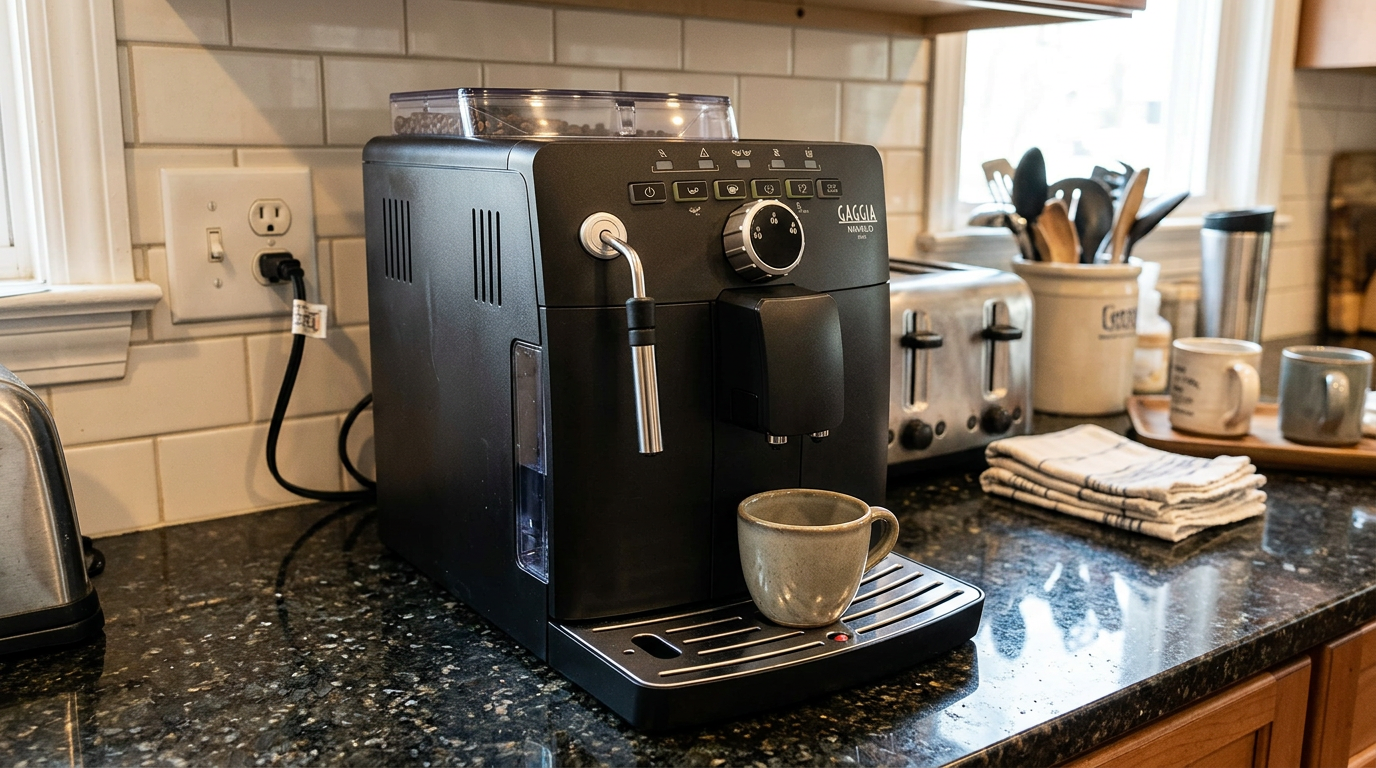
The Cap in Cup system draws milk from almost any container.
Neither has one-touch lattes or flat whites. On the Naviglio, I made lattes by programming a longer milk pour, but the foam stayed thick.
Our tip: Use 6 ounces of cold milk in a 10- to 12-ounce pitcher for one cappuccino on either machine, because milk expands a lot as you add air.
Living with Cap in Cup
One-touch milk sounds like pure convenience, so it’s worth explaining what it’s like after a month.
The good part is real. You drop the tube into a carton, a jug or a container from the fridge, press cappuccino and walk away. The foam was classic and thick, and the milk never had to leave the fridge for long.
The trade-off is the rinse. After each cappuccino session, the line needs hot water run through it, and the module needs a proper wash regularly. Skip it, and dried milk takes far longer to clean.
By week three, the rinse had become as automatic as rinsing a cup. If you’re the kind of person who rinses a cup straight away, Cap in Cup will suit you. If dishes wait until evening in your house, the Brera’s simpler Pannarello may be the better fit.
Time spent on milk each morning, two cappuccinos
Including cleanup, from my week-three routine.
Americano and black coffee
Neither machine has an Americano✕AmericanoEspresso topped up with hot water. Done properly, the water is added after the shot instead of being pushed through the coffee. program. On both, I pulled a shot and added hot water by hand, which worked well.
On the Naviglio, an 8-ounce Americano used about one-seventh of the tank, so a full 51-ounce tank made about seven. On the Brera, I used a true double plus hot water, which tasted fuller.
Both long coffee buttons push more water through the grounds, which tastes thinner in a big mug, and both are limited by low cup clearance.
If black coffee in a big mug is your main drink, neither of these is ideal. Both top out under 5 inches of cup clearance and both lack an Americano program, which is why I’d point mug drinkers toward the Gaggia Magenta Plus instead.
| Black coffee | Gaggia Naviglio Milk | Gaggia Brera |
|---|---|---|
| Espresso | Clean and sweet | Fuller, true double |
| Americano | By hand, espresso plus water | By hand, double plus water |
| Long coffee | Thinner in big mugs | Thinner in big mugs |
| Tallest cup | About 4.3 in | About 4.7 in |
Our tip: For an Americano on either Gaggia, pull a strong 1-ounce shot and add hot water after, because the long coffee button tastes thin.
Hot water and tea
Both dispense hot water for tea and Americanos through the steam outlet. On the Naviglio, I removed the Cap in Cup module first so the water didn’t pick up any milk.
The water was hot enough for black and herbal tea when I warmed the mug first. For green tea, I let it sit for a minute before steeping.
| Tea type | Ideal water | Both Gaggias |
|---|---|---|
| Green tea | 158–176°F | Let it cool a minute |
| Herbal tea | 194–212°F | Good |
| Black tea | 203–212°F | Good, warm the mug |
A typical morning on each
For two cappuccinos, the Naviglio was the easier morning. I pressed cappuccino, it frothed and poured, I pressed again for the second, then rinsed the milk line.
On the Brera, I pulled a double, pressed steam, waited for the light and foamed milk in a pitcher with the Pannarello, then did it again. It took longer and I stood at the machine the whole time.
For espresso only, the Brera was quicker, with no milk line to rinse.
| Morning | Gaggia Naviglio Milk | Gaggia Brera |
|---|---|---|
| Cappuccino | One touch, plus a line rinse | Double, then Pannarello foam |
| Two cappuccinos | About 5 min, hands mostly free | About 6 min, hands-on |
| Espresso | One touch | One touch, true double |
| Cleanup | Rinse milk line | Rinse Pannarello sleeve |
Hands-on time for two cappuccinos
Time I spent actively at the machine, from my week-three routine.
Cleaning and upkeep
This is the Naviglio’s trade-off. Its Cap in Cup milk line needs rinsing after every cappuccino session, and the module and tube need a proper wash regularly. It scored 7.1 for cleaning.
The Brera only has a Pannarello sleeve to rinse, and scored 7.6. Its small 8-puck drawer was its most frequent chore.
Both have a removable brew group that you rinse under the tap weekly and lubricate monthly.
Cleaning scores
Descaling comes up on both when the machine asks. With moderately hard water and no filter, plan for every few months, and use Gaggia’s descaler or a mild citric acid descaler made for espresso machines.
My scores out of 10 from my single reviews.
| When | Gaggia Naviglio Milk | Gaggia Brera |
|---|---|---|
| After milk | Rinse Cap in Cup line | Rinse Pannarello sleeve |
| Daily | Empty tray and drawer | Empty tray, drawer often |
| Weekly | Wash milk module, rinse brew group | Rinse brew group |
| Monthly | Lubricate brew group | Lubricate brew group |
| When prompted | Descale | Descale |
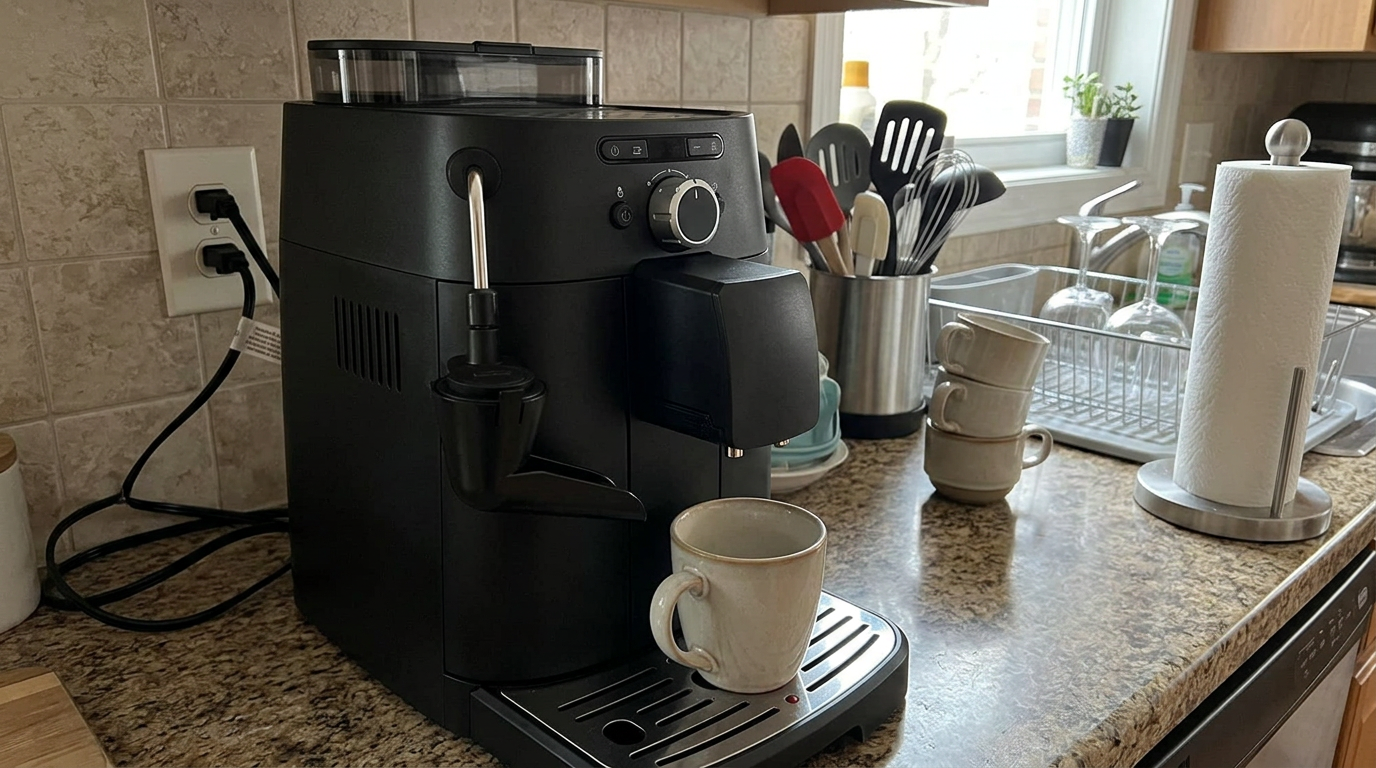
Rinse the Naviglio’s milk line after every cappuccino session.
Noise and speed
Both are fairly quiet for bean-to-cup machines. Their ceramic grinders make a lower, softer sound than many steel grinders.
The loudest moment on the Naviglio was the 30-second steam phase of each cappuccino, a steady hiss. On the Brera, steaming with the Pannarello sounded about the same, but I controlled how long it ran.
Both heat quickly from a cold start. The Naviglio’s single quick-heating boiler switched from coffee to steam in a short wait, and so did the Brera.
In an open-plan home, neither machine woke anyone at 6:30 a.m. The Naviglio’s steam phase is the one sound you’ll notice, because it runs for about 30 seconds without you.
Water, beans and supplies
The Naviglio’s 51-ounce tank lasted about two days for two cappuccino drinkers, counting rinse water. The Brera’s 40-ounce tank lasted about the same for two people, with fewer rinses.
The Naviglio’s hopper holds about 10.6 ounces, roughly a standard bag; the Brera’s about 8.8 ounces in an airtight container with a UV-blocking lid.
Drinks per full tank
Fill both tanks with fresh, cold water every day. A water filter in the tank is worth using if your water is moderately hard, because both machines use a boiler for steam and scale builds up over time.
Rough maths allowing for rinse water.
Both have a bypass chute✕Bypass chuteA small opening for pre-ground coffee, so you can make one drink with decaf without emptying the bean hopper. for pre-ground coffee such as decaf. Use about one level scoop, roughly 0.25 to 0.28 ounces, so it never overflows.
Medium-dark blends worked best on both. Avoid oily beans, which clog ceramic grinders over time.
Our tip: Keep a small bag of pre-ground decaf next to either machine and use the bypass chute, because changing beans in the hopper wastes coffee.
Is the Naviglio Milk worth the step up?
The Naviglio costs more than the Brera, so it’s worth being precise about what you get for it.
You gain one-touch cappuccino from almost any container, the choice of Cap in Cup or Pannarello, a bigger water tank, a bigger hopper and a bigger grounds drawer. Those last three alone made daily life a little easier.
You give up a little cup clearance, about 4.3 inches instead of 4.7, and you gain a milk line to rinse after every cappuccino session. The espresso is essentially the same.
| What changes | Naviglio Milk vs Brera |
|---|---|
| One-touch cappuccino | Gained |
| Manual Pannarello | Kept |
| Water tank | About 51 oz vs 40 oz |
| Bean hopper | About 10.6 oz vs 8.8 oz |
| Grounds drawer | About 10 vs 8 pucks |
| Cup clearance | About 4.3 in vs 4.7 in |
| Daily cleaning | A milk line rinse added |
My rule of thumb: if you’d make a cappuccino at least five days a week, the Naviglio pays you back in time every morning. If it’s a weekend treat, the Brera is the smarter buy.
Four weeks with each, week by week
These were my notes as each machine settled into the routine.
| Week | Gaggia Naviglio Milk | Gaggia Brera |
|---|---|---|
| Week 1 | Programming a 7-ounce cappuccino | Understood it in five minutes |
| Week 2 | One-touch cappuccinos every morning | Doubles for every cappuccino |
| Week 3 | Rinsing the milk line by habit | Emptying the drawer often |
| Week 4 | Pannarello at weekends | Simple and reliable |
The Naviglio settled into a two-cappuccino morning routine by week two. Once rinsing the milk line became a habit, Cap in Cup felt effortless.
The Brera was the simpler machine from day one. For an espresso drinker, it never asked for anything beyond emptying the drawer.
By the end of the month, the deciding factor was clear. On mornings when I made two cappuccinos, I reached for the Naviglio every time. On mornings when I only wanted an espresso, the Brera was quicker and left nothing to clean.
Neither machine had a single fault or error message during testing, and both brew groups came out clean and smooth at every weekly rinse.
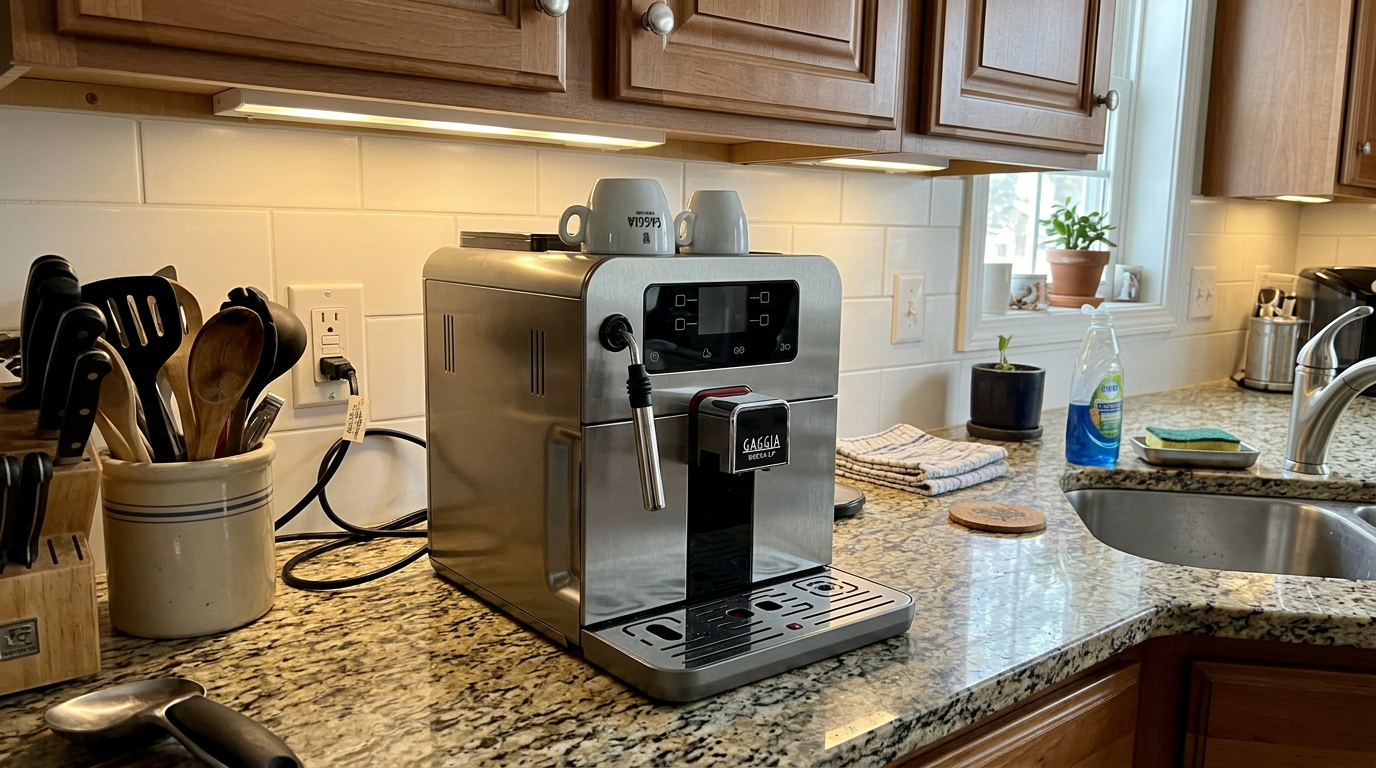
The Brera stayed simple and reliable all month.
Three households, three picks
After a month with each, I could picture exactly who each machine suits.
The daily cappuccino couple: Naviglio Milk
Two people who drink a cappuccino each morning and want it at one touch. The Naviglio’s Cap in Cup system, bigger tank and 10-puck drawer made it the easier machine for this routine.
The espresso purist: Brera
Someone who drinks espresso or an Americano and only occasionally foams milk. The Brera’s true doubles, simple controls and minimal cleaning suit this drinker perfectly.
The weekend hobbyist
Someone who wants one-touch cappuccinos on weekdays and likes to foam by hand at the weekend. The Naviglio’s swappable Pannarello makes it the more flexible pick.
If you’re still unsure, think about who makes the coffee. If one person makes drinks for two, the Naviglio’s one-touch cappuccino saves that person real time. If each person makes their own espresso, the Brera’s simplicity wins.
Common mistakes to avoid
These habits cost me the most flavor and cleaning time on both Gaggias.
| Mistake | What happens | Fix |
|---|---|---|
| Skipping the Naviglio line rinse | Milk dries in the tube | Rinse after every session |
| Long espresso in a cappuccino | Bitter, thin drink | Keep it short, about 1 oz |
| Low strength for milk drinks | Milky, thin cup | Use the highest strength |
| Tall mugs | Mug doesn’t fit | Cups under 4.3 to 4.7 in |
| Overfilling the bypass chute | Spills and clogs | One level scoop |
The most common mistake I made on the Naviglio was the first one. On busy mornings, I left the milk line until later, and dried milk took far longer to clean than a 20-second rinse would have.
What I’d change on each one
On the Naviglio Milk, I’d add a latte button and an automatic milk line rinse. Its menu is short, and the rinse is the one chore that makes Cap in Cup less effortless than it looks.
On the Brera, I’d raise the spout and enlarge the grounds drawer. At about 4.7 inches and 8 pucks, both limits showed up every week.
Neither change would make or break the machine, and both are easy to work around once you know about them.
Our tip: Program a slightly longer milk pour on the Naviglio if you want a latte-style drink, because there’s no dedicated latte button.
Real-life scenarios
These are the moments where one machine clearly pulled ahead in my kitchen.
Each scenario below is one I repeated several times during the month, so the winner is the machine that handled it best on most days, not just once.
One touch each, and I packed lunches while it frothed.
The true double was fuller and there was no milk line to rinse.
Cap in Cup drew milk from almost any container.
About 4.7 inches of clearance versus about 4.3.
Both have a Pannarello; the Naviglio adds one-touch for weekdays.
Just a quick rinse of the Pannarello sleeve.
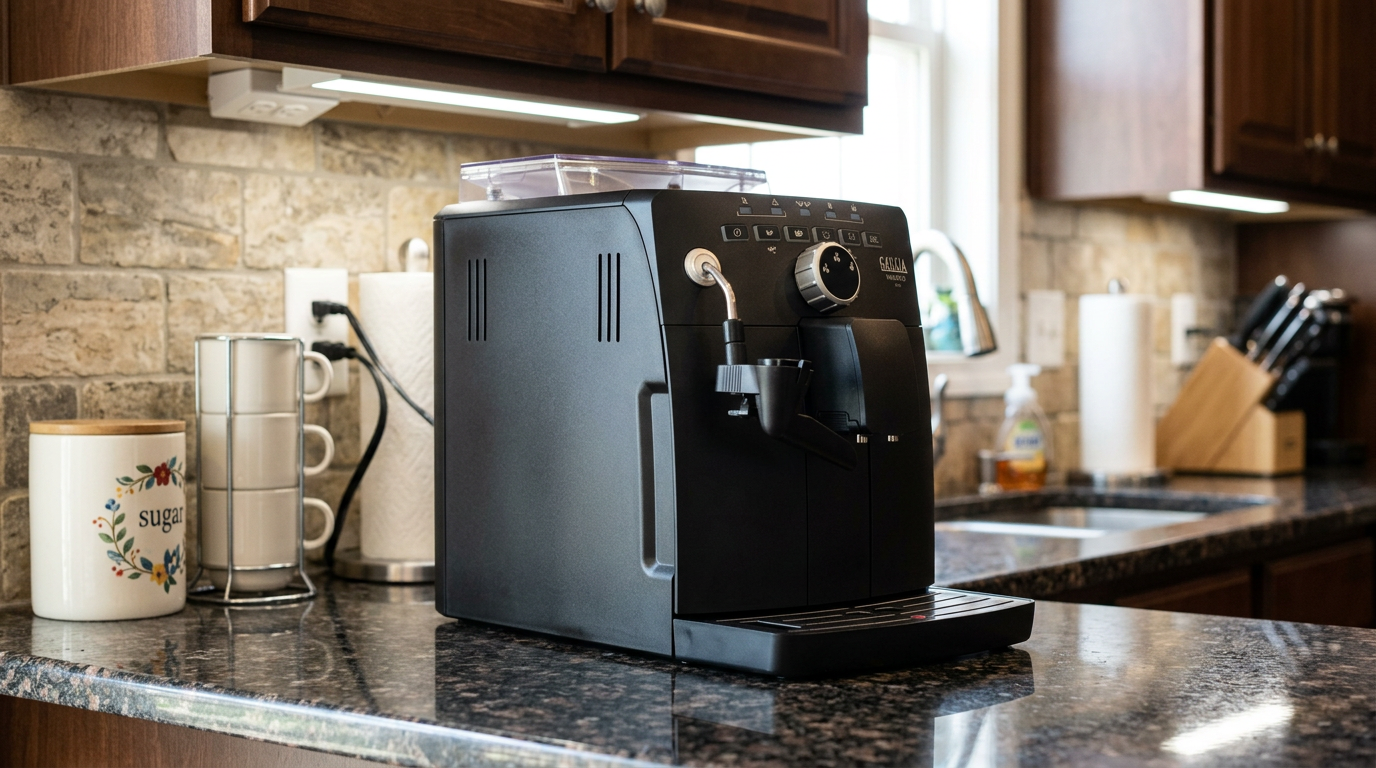
For daily cappuccino drinkers, the Naviglio was the easier machine.
My scorecard
These are my scores out of 10 from my single reviews of each machine.
Gaggia Naviglio Milk
Overall: 7.7
Gaggia Brera
Overall: 7.6
The scores are almost tied. The Naviglio’s one-touch milk lifts its milk score; the Brera wins back points on espresso and cleaning.
See How Much You’ll SaveWhich one is right for you?
4 quick questionsWhich one should you buy?
It comes down to how often you drink cappuccino. If it’s every day, the Naviglio Milk’s one-touch system is worth its extra rinse. If it’s once in a while, the Brera’s simplicity and true doubles make it the better machine. Still weighing other options? I rank every model I’ve tested in my guide to the best Gaggia super-automatic espresso machines.
For a Gaggia with a proper steam wand and a one-touch Americano, see my Gaggia Brera vs Magenta Plus comparison.
- You drink cappuccinos every day
- You want one-touch and manual milk
- You want a bigger tank and drawer
- You hate rinsing milk lines
- You want lattes and flat whites at one touch
- You use mugs over 4.3 inches
- You mostly drink espresso
- You want the least cleaning
- You want true double shots
- You want one-touch cappuccino
- You make many milk drinks
- You use tall mugs
For daily cappuccino drinkers, my pick is the Gaggia Naviglio Milk. Its Cap in Cup system makes a classic cappuccino at one touch from almost any milk container, and it converts to a Pannarello when you want more control.
The Gaggia Brera is the better buy if you mostly drink espresso. Its true double shots are excellent, its controls are the simplest of any Gaggia and there’s no milk line to rinse.
Whichever you choose, keep the espresso short for milk drinks, use cold milk and look after the brew group.
Gaggia Brera vs Naviglio Milk specifications
From manufacturer specifications and my own testing.
| Gaggia Naviglio Milk | Gaggia Brera | |
|---|---|---|
| Type | Super-automatic | Super-automatic |
| Pump | 15 bar | 15 bar |
| Heating | Single quick-heating boiler | Rapid steam |
| Grinder | Ceramic, 5 settings | Ceramic, 5 settings |
| Drinks | Espresso, cappuccino, milk, hot water | Espresso, long coffee, hot water, steam |
| Milk | Cap in Cup or Pannarello | Pannarello |
| Water tank | About 51 oz (1.5 L), front | About 40 oz, front |
| Bean hopper | About 10.6 oz | About 8.8 oz |
| Grounds drawer | About 10 pucks | About 8 pucks |
| Drip tray | About 18 oz | Small |
| Cup clearance | About 4.3 in | About 4.7 in |
| Size (W x D x H) | About 10 x 17.3 x 13.4 in | About 10 x 17.5 x 12.4 in |
| Weight | About 20 lb | About 18 lb |
How I tested and compared them
I used each machine as my everyday coffee maker for four weeks, making espresso, doubles, Americanos and cappuccinos, with one-touch and manual milk on the Naviglio.
I weighed doses, foamed whole, 2%, skim, oat and almond milk, tried 8-, 12- and 20-ounce pitchers, and timed the rinse and cleaning routines.
I compared my notes with Gaggia’s specifications, owner documentation and published test data.
- Coffee: dose, crema, body and consistency.
- Milk: Cap in Cup foam, Pannarello control and temperature.
- Workflow: buttons, programming and cup clearance.
- Ownership: rinsing, cleaning, capacity and footprint.
Gaggia Brera vs Naviglio Milk FAQ
What is the main difference between the Gaggia Brera and Naviglio Milk?
The milk system. The Naviglio Milk has Cap in Cup for one-touch cappuccino plus a Pannarello option; the Brera has only a Pannarello wand.
Which makes better espresso?
They’re very close. The Brera scored 8.2 and the Naviglio 8.1 in my testing; the Brera’s true double was slightly fuller.
Can the Naviglio make lattes at one touch?
Not with a dedicated button. It makes a one-touch cappuccino, and you can program a longer milk pour for a latte-style drink.
Which is easier to clean?
The Brera, because there’s no milk line to rinse after every drink.
How tall a cup fits?
About 4.3 inches under the Naviglio Milk and about 4.7 inches under the Brera.
Can the Naviglio use milk from the carton?
Yes. Cap in Cup draws milk from almost any container through its tube.
How big are the water tanks?
About 51 ounces on the Naviglio Milk and about 40 ounces on the Brera.
Do both have a bypass for pre-ground coffee?
Yes. Use about one level scoop, roughly 0.25 to 0.28 ounces.
Which is better for beginners?
Both are simple. The Naviglio is easier for cappuccinos; the Brera is easier for espresso and cleaning.
Which is quieter?
They sounded similar. Both use ceramic grinders, and steaming is the loudest part on each.

- Our hands-on Gaggia Naviglio Milk review
- Our hands-on Gaggia Brera review
- Gaggia product specifications and owner documentation
- General espresso brewing and maintenance guidance