CASABREWS Ultra vs Breville Bambino
Two compact espresso machines without grinders, built for different kinds of coffee drinker. The CASABREWS Ultra brings a 58 mm portafilter, four PID temperatures and a shot timer, while the Breville Bambino counters with a 3-second heat-up, instant steam and a body barely wider than a toaster. I used both every day for four weeks to find out which one suits you.
We choose products independently. We may earn a commission through links on this page; your price stays the same. Affiliate policy
Jargon helpNew to espresso? Tap any dotted term to see what it means.
In this comparison
Buy the Breville Bambino if you want the easier all-rounder. It is ready in about 3 seconds, steams straight after the shot with no wait, makes latte-art milk once you learn the wand, and it is only about 7.7 inches wide. Buy the CASABREWS Ultra if straight espresso and Americanos are your thing and you like control: a 58 mm portafilter, four PID brew temperatures, a built-in shot timer and a huge 74 ounce tank, with the trade-off of slower, weaker steaming.
The two machines
Specs checked November 24, 2026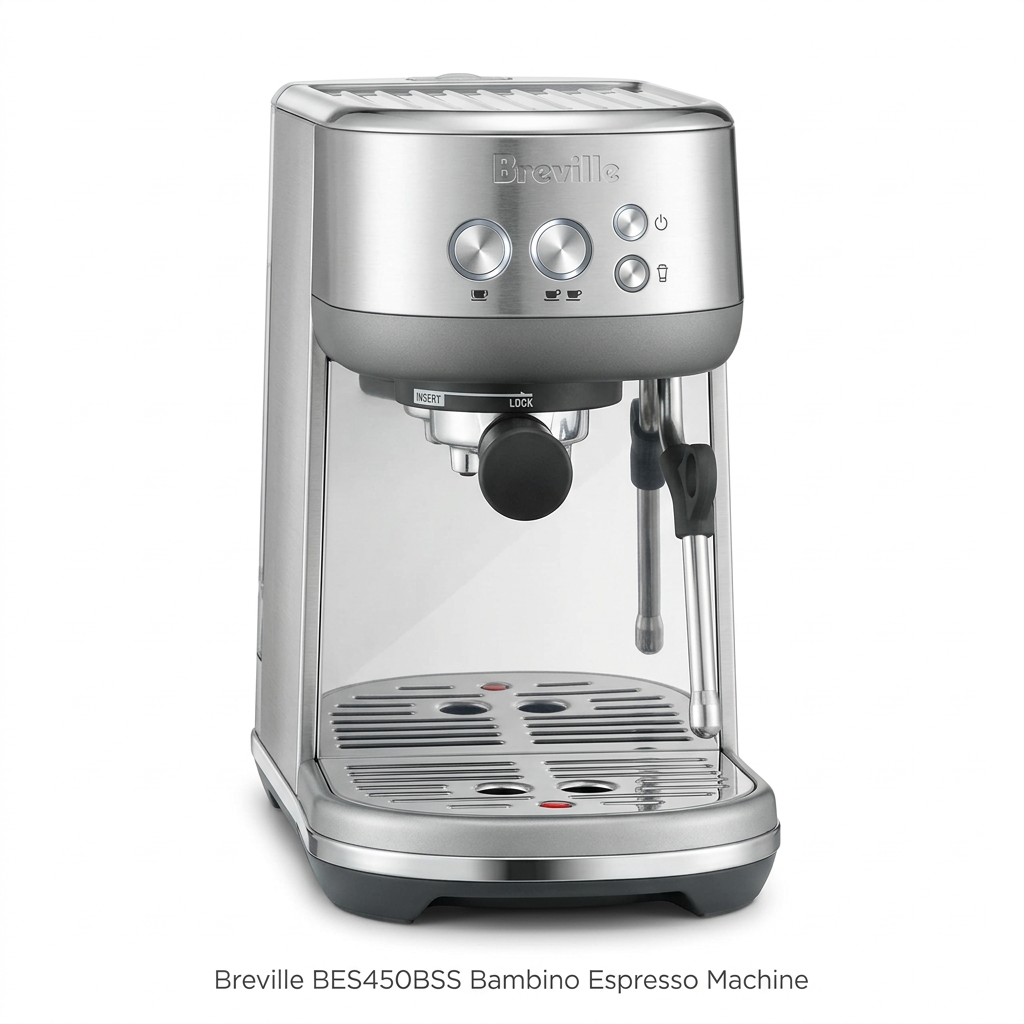
Three-second heat-up, PID and pre-infusion, a fast manual steam wand and a body barely wider than a toaster.
Check price on Amazon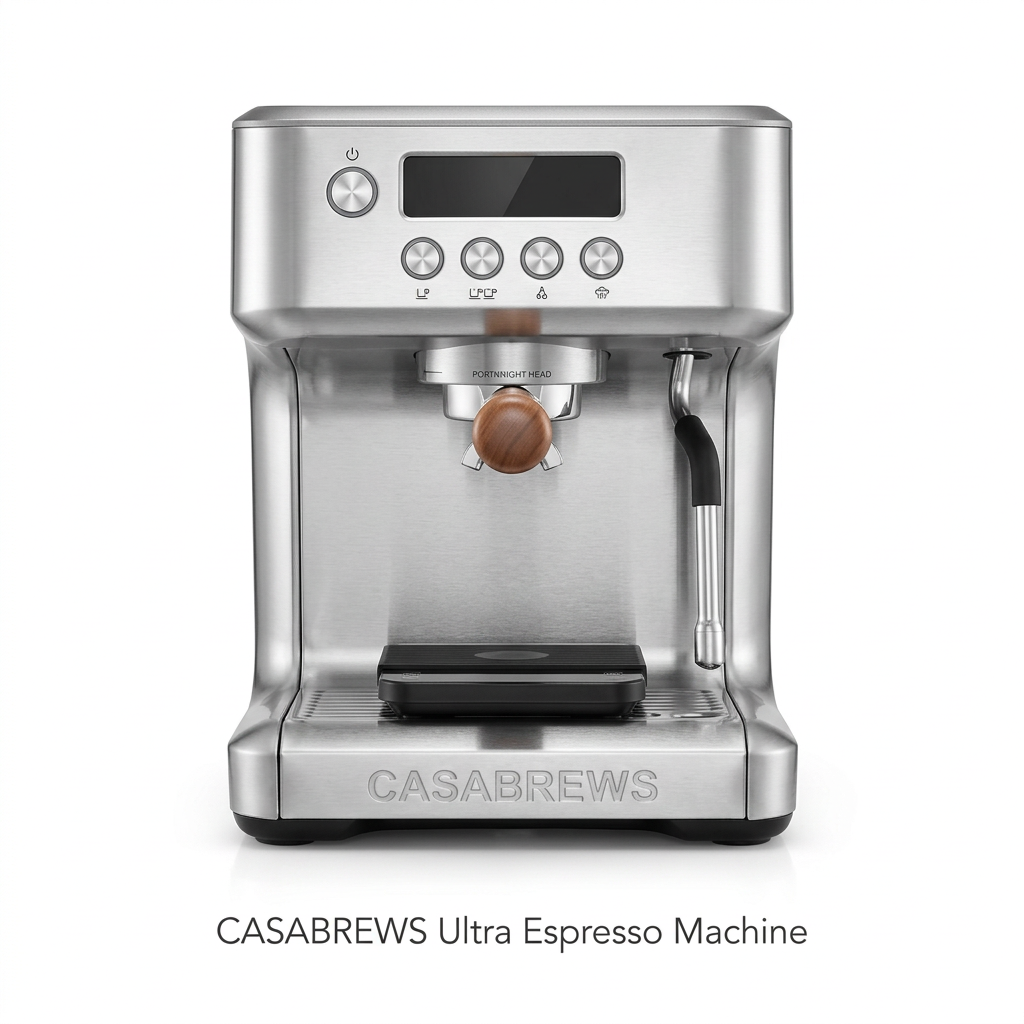
58 mm portafilter, four PID temperatures, a shot timer, four baskets and a 74 oz tank in a stainless body.
Reveal Today’s DealCASABREWS Ultra vs Breville Bambino at a glance
- Both are compact semi-automatic machines without a grinder, and both reward a good burr grinder.
- The Bambino is faster, smaller and much better at milk, thanks to its ThermoJet heater.
- The Ultra gives you more control and a commercial-size 58 mm portafilter, which suits espresso tinkerers.
- For most people, the Bambino is the better buy; for black coffee lovers who like to dial in, the Ultra is great fun.
Head to head
The better result in each row is marked, based on four weeks with each machine and the manufacturer specs. Rows where they are level have no winner.
The tally is close: the Bambino wins on speed, size and milk, while the Ultra wins on control, capacity and build.
| Spec | Bambino | CASABREWS Ultra |
|---|---|---|
| Espressomy tasting, same beans and grinder | Rich, balanced, very consistent | Rich, syrupy, tunable by temperature |
| Heat-up | About 3 s ✓ Best | About 1 min |
| Brew to steam | A few seconds ✓ Best | 25 to 30 s wait |
| Milk texture | Glossy microfoam once learned ✓ Best | Dense, but a narrow window |
| Temperature control | PID, fixed | PID, 4 settings ✓ Best |
| Shot timer | No | Yes, on the LCD ✓ Best |
| Portafilter | 54 mm, light | 58 mm, heavy stainless ✓ Best |
| Water tank | About 47 oz | About 74 oz ✓ Best |
| Width | About 7.7 in ✓ Best | About 10.3 in |
| Milk pitcher in the box | Yes ✓ Best | No |
| Pump noise | Short buzz | Quieter hum ✓ Best |
| Rows won | 5 | 5 |
CASABREWS Ultra vs Breville Bambino pros and cons
Breville Bambino
- Ready to brew in about 3 seconds
- Steam is ready seconds after the shot
- Tiny footprint, about 7.7 inches wide
- Short steam wand takes practice
- Light plastic tamper and portafilter
- Small cup clearance, mugs don’t fit
CASABREWS Ultra
- 58 mm portafilter fits standard café accessories
- PID with four temperatures and a shot timer
- Huge 74 oz tank and a quiet pump
- Modest steam power
- Wait to switch between brewing and steaming
- No milk pitcher, basic plastic tamper
Who should buy which machine?
- Flat white and latte drinkers
- Small kitchens and apartments
- Beginners who want quick results
- Espresso and Americano drinkers
- Tinkerers who like to dial in
- People who want 58 mm accessories
Same idea, different priorities
On paper, these two are close cousins.
Both are semi-automatic✕Semi-automatic espresso machineA machine where you grind, dose and tamp the coffee into a portafilter yourself, and the machine controls the water, pressure and shot. machines with a manual steam wand and no grinder. Both come with single-wall and pressurized baskets, and both use PID temperature control.
Where they differ is in what they optimize for. The Breville Bambino is built around speed and size. The CASABREWS Ultra is built around control and café-standard hardware.
| Priority | Breville Bambino | CASABREWS Ultra |
|---|---|---|
| Speed | 3 s heat-up, instant steam | About 1 min heat-up, wait to steam |
| Size | Very small | Mid-size |
| Control | Volumetric buttons | 4 temperatures, shot timer, programmable time |
| Hardware | 54 mm, light parts | 58 mm, stainless, heavier |
| Milk | The stronger of the two | Its weak spot |
If you think of espresso as the main event, the Ultra makes a strong case. If milk drinks are part of most mornings, the Bambino is the easier machine to live with.
Our tip: Decide whether you drink milk on most days before choosing, because that one question settles this comparison for most people.
Design, size and build
The Bambino is tiny: about 7.7 inches wide, 12.6 deep and 12.2 tall, and about 11 pounds. It took up less room than my toaster.
The CASABREWS Ultra is wider and heavier: about 10.3 inches wide, 12.2 deep and 13 tall, and about 13.5 pounds. With brushed stainless panels, angled edges and a small LCD, it looks like a machine from a much higher price bracket.
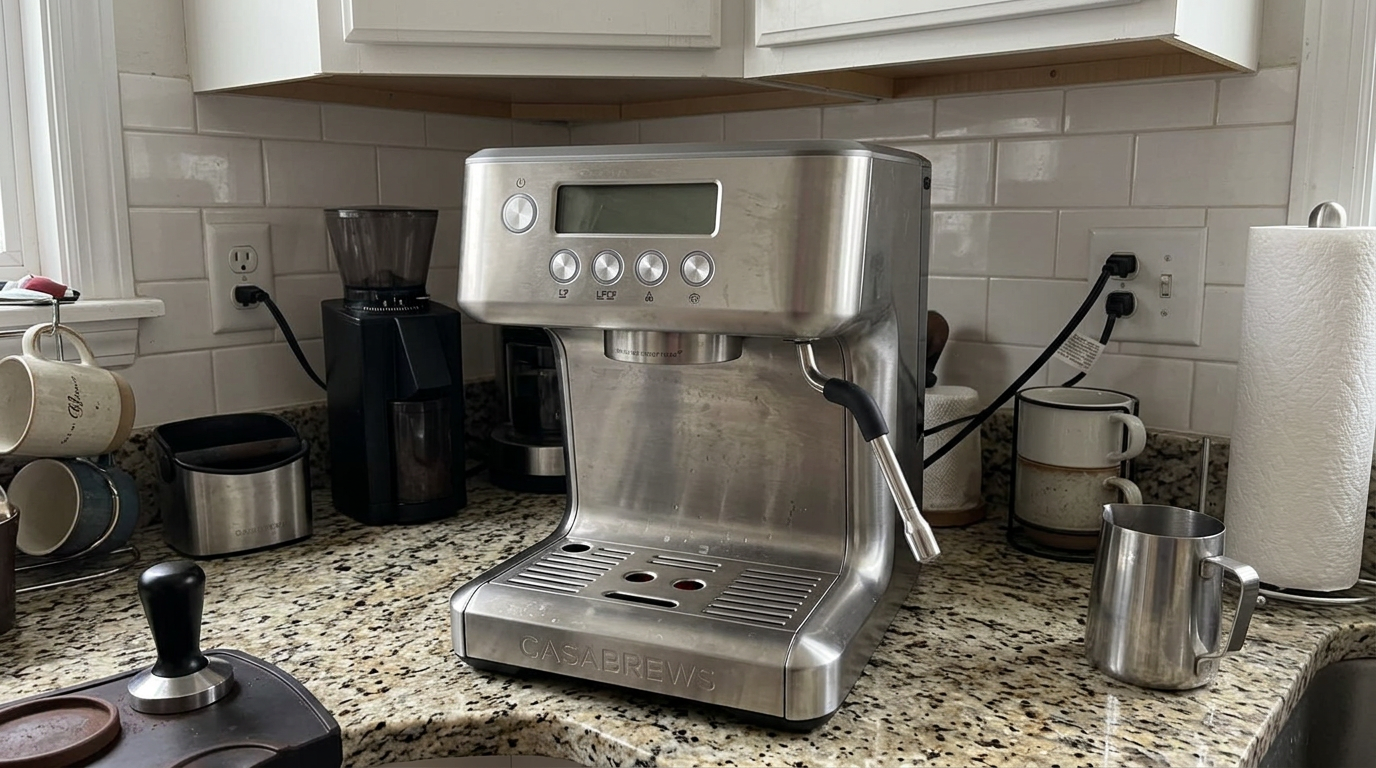
The Ultra’s stainless body and LCD look far more expensive than they are.
Build quality
The Ultra feels the sturdier of the two. Its panels don’t flex, its 58 mm portafilter is heavy, and the machine stays put when you lock in.
The Bambino has a brushed stainless front and feels solid, but its portafilter is light with noticeable plastic, and its tamper feels like an afterthought.
Both come with plastic tampers, and I swapped both for metal ones within a week.
Width on the counter
Machine width alone. Add your grinder beside either one.
Our tip: Leave the Ultra’s espresso cups on its flat top tray while it warms up, because they’ll be warm by the time you brew and keep the shot hotter.
Setup and first shots
Setup took about 10 minutes on each: rinse the parts, fill the tank, run water through the group and the wand, and pull a couple of blank shots.
On the Bambino, the lights stopped flashing a few seconds after I pressed power. My first shot with fresh, fine beans was dark and syrupy.
On the Ultra, warm-up took about a minute. My first shot ran fast and sour; two grind steps finer, it ran 28 seconds on the built-in timer and tasted sweet and rounded.
| Setup step | Breville Bambino | CASABREWS Ultra |
|---|---|---|
| Time to first drink | About 10 min | About 10 min |
| Heat-up | About 3 s | About 1 min |
| In the box | Jug, tamper, cleaning tool, descaler | Four baskets, tamper, spoon, cleaning tool |
| Missing | Metal tamper | Milk pitcher, metal tamper |
| Shots to dial in | 2 to 3 | 2 to 3 |
Controls, timer and temperature
The Bambino has four backlit buttons: one cup, two cups, steam and hot water. No screen, no menu. I didn’t need the manual after day one.
The Ultra has the same four functions plus power, and an LCD that counts the seconds during each shot. Long presses program shot time and change temperature, so keep the manual handy for the first week.
The Ultra’s four brew temperatures, 194, 198, 201 and 205°F, made a real difference. Dark roasts at 194°F were smooth and chocolatey; light roasts at 205°F were sweeter and less sour.
The Bambino holds one steady temperature with PID✕PID temperature controlA digital controller that keeps the brewing water at a steady temperature, so back-to-back shots taste the same. control. It was consistent, but you adjust the taste with grind alone.
How temperature changed a dark roast on the Ultra
My flavor ratings out of 10, same dose, grind and shot time.
| Control | Breville Bambino | CASABREWS Ultra |
|---|---|---|
| Shot buttons | 1 and 2 cup, volumetric | 1 and 2 cup, by time |
| Programming | Hold to set volume | Long press to set time |
| Temperature | Fixed, PID | 194, 198, 201 or 205°F |
| Shot timer | No | Yes, on the LCD |
| Auto off | Yes | Yes |
Our tip: On the Ultra, start at 201°F, then go hotter for light roasts and cooler for dark ones, changing only one setting at a time.
Baskets, dose and tamping
Neither machine has a grinder, and both reward a good one.
The Bambino’s 54 mm portafilter takes about 18 grams in the double basket. The Ultra’s 58 mm portafilter worked best with 17 to 18 grams.
Both come with single-wall baskets for fresh beans and pressurized baskets for pre-ground coffee. The Ultra includes four baskets, single and double of each type.
| Basket | Breville Bambino | CASABREWS Ultra |
|---|---|---|
| Single-wall double | Best flavor, my daily choice | Best flavor, my daily choice |
| Single-wall single | Trickier | Trickier |
| Pressurized double | Good with pre-ground | Bold but flat |
| Size | 54 mm | 58 mm café standard |
The 58 mm size is the Ultra’s quiet advantage. It is the standard in cafés, so funnels, distribution tools, tampers and baskets are easy to find.
The 54 mm size on the Bambino is also common, so upgrades are easy there too, just a smaller range.
Espresso quality
With the same medium-dark blend and the same grinder, both machines made excellent espresso.
The Bambino’s doubles, 18 grams in and about 36 out in 28 seconds, were rich and balanced, with chocolate, caramel and a gentle fruitiness. Low-pressure pre-infusion✕Pre-infusionA short, gentle soak of the coffee at low pressure before full pressure starts. It helps water flow evenly through the puck. made it forgiving of small tamping errors.
The Ultra’s doubles, 18 in and 36 out after about five seconds of pre-infusion, were rich and syrupy, with caramel sweetness and a long finish. Its crema was thick and hazelnut-colored and held for over a minute.
My espresso ratings, single-wall double, dialed in
My flavor ratings out of 10, same beans and grinder.
The Bambino was slightly more consistent shot to shot. The Ultra gave me more ways to tune the taste, which made light and dark roasts easier to get right.
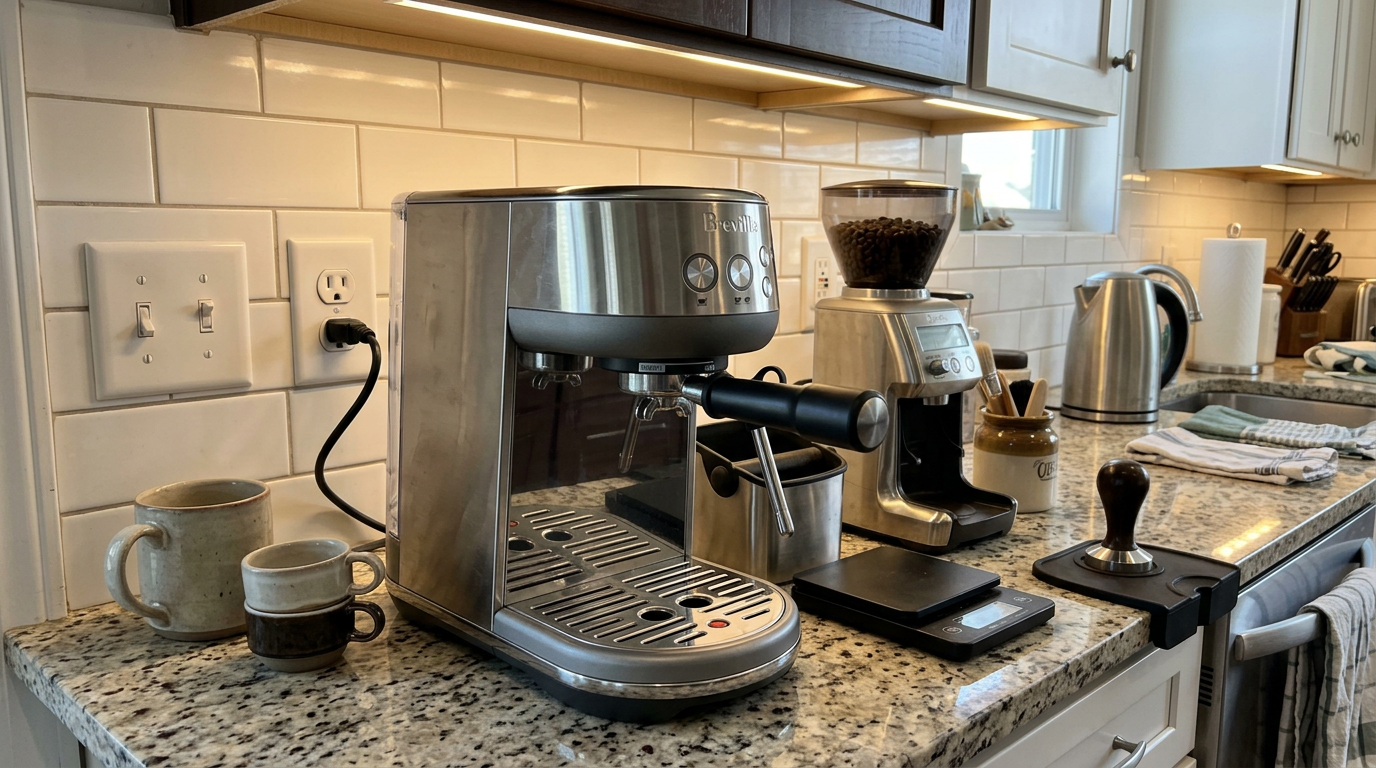
Both machines need a capable burr grinder for their best shots.
| What you taste | Likely cause | First fix on both |
|---|---|---|
| Sour, thin, fast | Grind too coarse | Grind finer; on the Ultra, also go hotter |
| Bitter, harsh | Grind too fine | Grind coarser; on the Ultra, also go cooler |
| Sour and bitter together | Uneven puck | Stir the grounds, tamp level |
| Very bubbly crema | Beans roasted days ago | Let beans rest a week |
Dialing in and programming shots
Dialing in means changing one thing at a time until the shot tastes right.
The Ultra made this the easiest of any budget machine I’ve used. Its shot timer counted every second, and I could program the double to about 33 seconds, five of pre-infusion plus a 28-second shot.
On the Bambino, I put a small scale under the cup, held the two-cup button to start, and released it at 36 grams. Then I saved that volume.
My first morning dialing in on the Ultra
Shot time with a new bag of medium roast. Attempt three was the keeper.
| Programming | Breville Bambino | CASABREWS Ultra |
|---|---|---|
| Saves | Volume | Time |
| How | Hold the button, release at your volume | Long press, start, stop |
| Changes with beans | Less, volume is fixed | More, time ignores grind changes |
| Best habit | Program once, check by taste | Scale under the cup, stop early if needed |
Our tip: Brew to weight with a scale for the first week on either machine, then program the button once your recipe tastes right.
Americanos and hot water
Both send hot water through the steam wand, and both make good Americanos.
The Ultra’s sweet, rounded shots made Americanos one of my favorite drinks on that machine. Its hot water flow is slow, but the 74 ounce tank means you never think about running out.
The Bambino’s hot water button works the same way. Its smaller cup clearance, about 4 inches, means you brew into a small cup and pour into your mug.
Black coffee, my ratings
My ratings out of 10, same beans and grinder.
Milk frothing
This is where the Bambino pulls clearly ahead, and the main reason I pick it overall.
Breville Bambino: fast, short wand
The Bambino’s ThermoJet heater has steam ready a few seconds after the shot, so the espresso is still fresh when the milk goes in.
The wand is short and the steam button is on or off, so the jug angle is your only control. My first week was bubbly; by week three, the milk was glossy enough for simple hearts.
CASABREWS Ultra: modest single-hole wand
The Ultra uses one thermoblock for everything. After pressing steam, I waited 25 to 30 seconds for the wand, and switching back to brew mode took another 30 to 40 seconds while it vented into the drip tray.
Its single-hole tip is easy to control but not powerful. With a small 12 ounce pitcher a third full, I got a whirlpool after about ten seconds and finished in 50 to 60 seconds. With a bigger jug, it struggled.
Milk texture by week three
My ratings out of 10 for texture and stability.
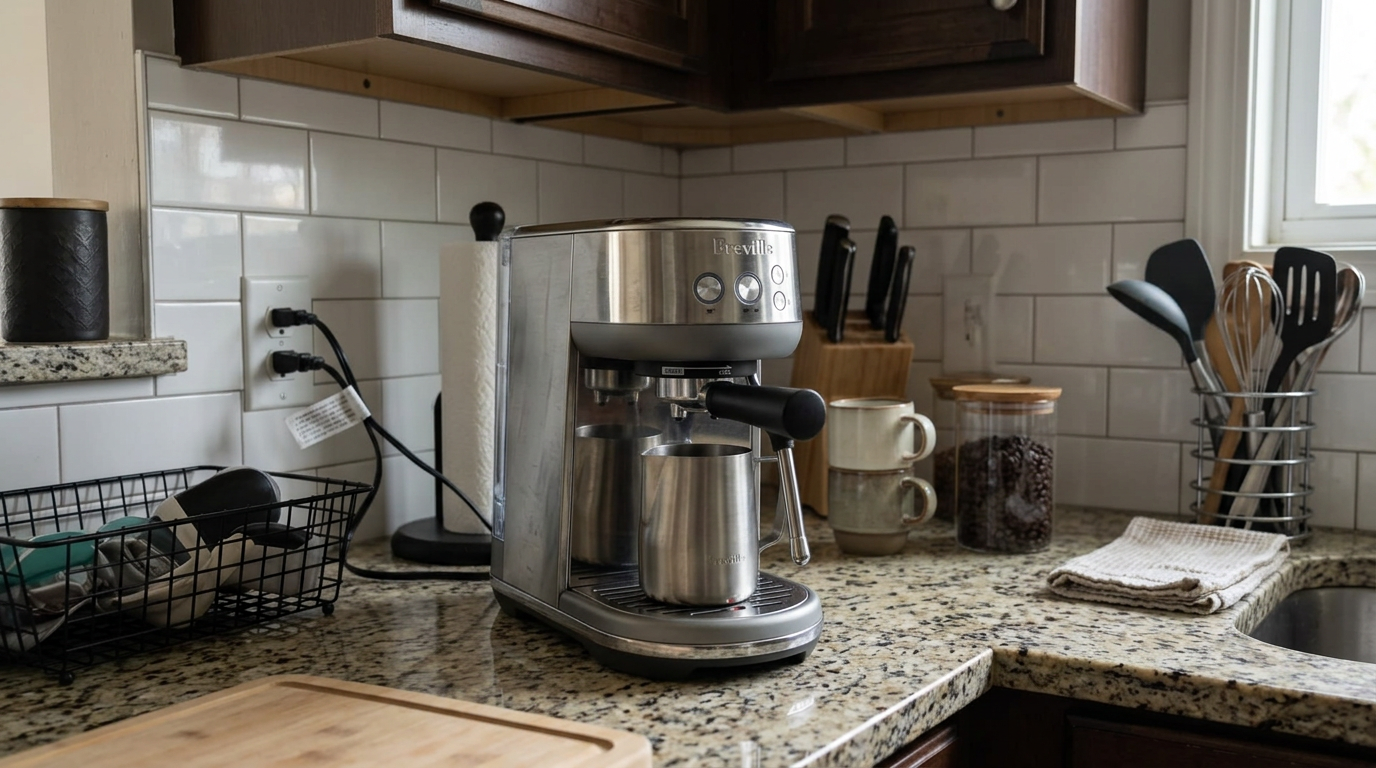
The Bambino’s steam is ready a few seconds after the shot.
| Milk detail | Breville Bambino | CASABREWS Ultra |
|---|---|---|
| Wait after the shot | A few seconds | 25 to 30 s |
| Wand | Short, on or off | Single-hole tip, knob |
| Best jug | Included jug | Small 12 oz, not included |
| Microfoam | Yes, once learned | Yes, narrow window |
| Two lattes back to back | About 6 min | About 9 min |
Our tip: Choose a flat white or cortado on the Ultra, because they need less milk and its modest steam copes easily.
Heat-up and speed
Speed is the Bambino’s superpower.
It is ready in about 3 seconds from cold and steams straight after the shot. I switched it on as I reached for the beans, and it was ready before I’d finished grinding.
The Ultra warms up in about a minute, which is still quick, but the wait to steam and back adds up for milk drinks.
Time to two lattes back to back, from switching on
My average, including grinding, steaming and a quick wipe.
For espresso and Americanos, the difference barely matters. For four lattes for guests, it took me about 12 minutes on the Bambino and about 16 on the Ultra.
Cleaning and upkeep
Both are easy to clean, with no milk system to strip down.
On both, I wiped and purged the wand after every milk drink, rinsed the portafilter and basket, and emptied the drip tray daily.
The Ultra’s drip tray filled faster, because it vents steam and water when switching back to brew mode. Its stainless panels wiped clean with a soft cloth.
| When | Breville Bambino | CASABREWS Ultra |
|---|---|---|
| After steaming | Wipe and purge the wand | Wipe and purge the wand |
| Daily | Rinse portafilter, empty tray | Rinse portafilter, empty tray |
| Every few days | Refresh tank water | Refresh tank water |
| Weekly | Wipe group head and gasket | Brush group head and gasket |
| Every few months | Descale | Descale |
My daily hands-on cleaning time, with milk
Estimated hands-on time per day.
Our tip: Wipe the steam wand with a damp cloth the moment you finish steaming on either machine, because milk dries fast on hot steel.
Noise
The Ultra surprised me here: its pump is a lower, softer hum than most budget machines, and I could talk over it easily.
The Bambino’s pump gives a short mechanical buzz during the shot. Neither is loud, and neither has a built-in grinder, so your grinder will be the loudest thing on the counter.
How loud each moment felt, my ranking
Relative loudness from side-by-side use.
Tank, beans and long-term care
The Ultra’s 74 ounce tank is huge for a home machine. Making four or five drinks a day, I refilled it every two or three days.
The Bambino’s 47 ounce tank is generous for its size, and I topped it up roughly daily.
Double espressos per tank, rough maths
Allowing for purges. Real numbers depend on cup sizes.
Both machines show bean freshness clearly with the single-wall baskets. Beans roasted one to three weeks earlier and ground just before brewing were best on both.
The Ultra’s temperature control made it the better of the two for light roasts at 205°F and dark roasts at 194°F.
| Bean type | Breville Bambino | CASABREWS Ultra |
|---|---|---|
| Medium-dark blend | Chocolatey, thick crema | Rich at 198 to 201°F |
| Medium roast | Sweeter, grind finer | Balanced at 201°F |
| Light roast | Bright when dialed in | Sweeter at 205°F |
| Dark roast | Can turn bitter | Smooth at 194°F |
| Pre-ground | Dual-wall basket | Pressurized basket |
Our tip: Let freshly roasted beans rest for about a week before brewing on either machine, because the shots become calmer and more even.
Mistakes to avoid on both
Four weeks with each taught me a handful of habits.
Using pre-ground coffee in single-wall baskets. It gave fast, sour shots on both. Use the pressurized baskets.
Steaming a big jug on the Ultra. Its modest steam can’t spin it.
Angling the Bambino’s short wand. Tilt the jug instead.
Changing grind and temperature together on the Ultra. You can’t tell which change helped.
| Problem | Fix |
|---|---|
| Sour shots from pre-ground | Pressurized basket |
| Stiff, bubbly foam on the Ultra | Small pitcher, hold it still |
| Big bubbles on the Bambino | Tilt the jug, stretch only a few seconds |
| Ultra drip tray overflows | Empty it daily |
| Mug doesn’t fit the Bambino | Brew into a small cup, then pour |
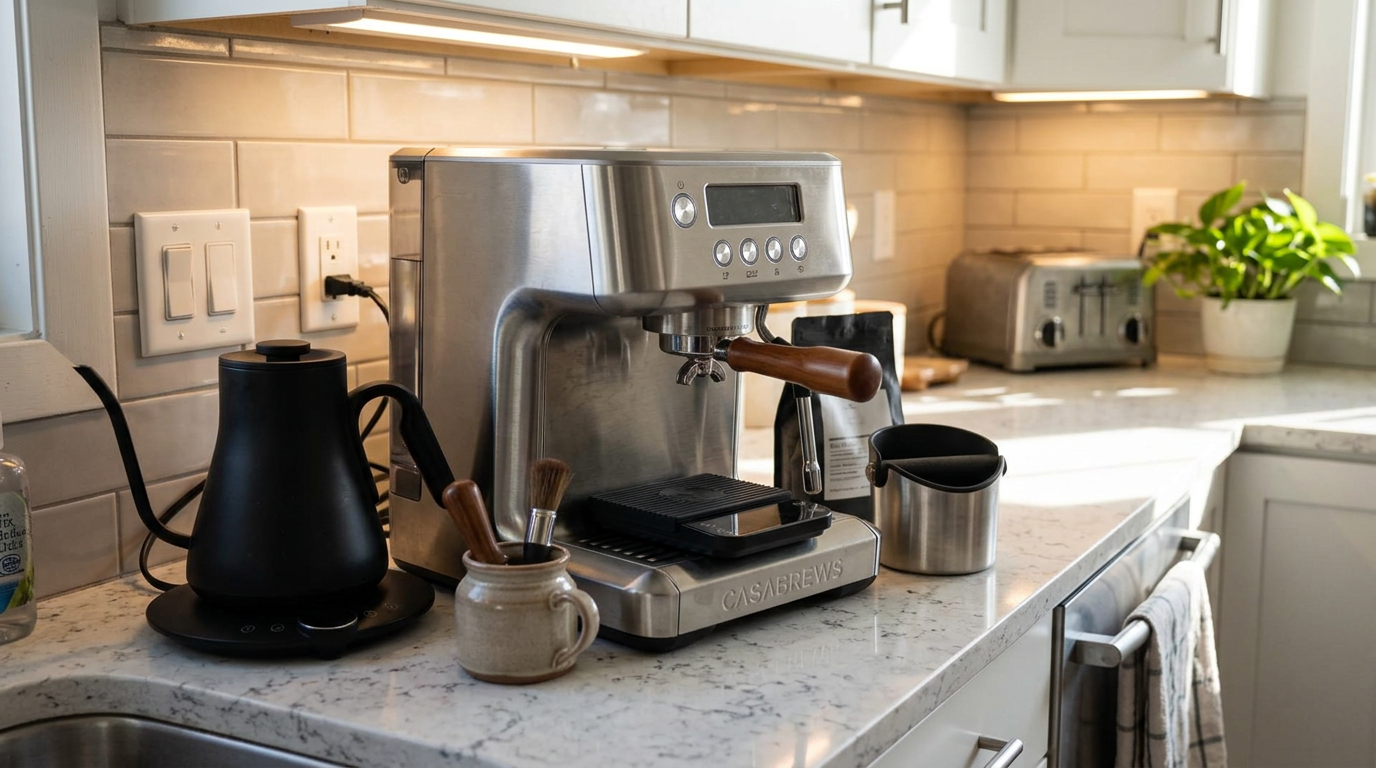
A scale under the cup is what makes the Ultra’s timer and PID worth having.
A typical morning on each
In week three, I made the same two drinks each morning: a double espresso for me and a flat white for my partner.
On the Bambino, I switched it on as I started grinding, pulled the double, steamed straight away and poured. Both drinks took about four minutes, including a wipe.
On the Ultra, I switched it on, ground while it warmed, pulled my programmed double, then pressed steam and waited before steaming a small jug. Both drinks took about five and a half minutes.
| Step | Breville Bambino | CASABREWS Ultra |
|---|---|---|
| Warm-up | About 3 s | About 1 min, while grinding |
| Double espresso | About 35 s | About 35 s |
| Switch to steam | A few seconds | 25 to 30 s |
| Steam a small jug | About 45 s | 50 to 60 s |
| Total, two drinks | About 4 min | About 5.5 min |
Our tip: For guests on either machine, pull all the shots first, then steam one jug for every two drinks.
Extras worth adding and how to decide
Both machines need the same short list of extras.
A burr grinder that can go fine enough for espresso is essential for both. A small scale, a metal tamper and a needle tool came next.
The Ultra also needs a milk pitcher, because none comes in the box.
| Extra | Breville Bambino | CASABREWS Ultra |
|---|---|---|
| Espresso burr grinder | Essential | Essential |
| Small scale | Very useful | Very useful |
| Metal tamper | 54 mm | 58 mm |
| Milk pitcher | Included | Buy a 12 oz one |
| Dosing funnel | Optional | Easy to find in 58 mm |
Still torn between the two?
Ask yourself one question: how many of your drinks have milk in them?
If most do, buy the Breville Bambino. It steams instantly, makes better milk and fits almost anywhere.
If you mostly drink espresso or Americanos and you like to experiment, buy the CASABREWS Ultra. Its timer, four temperatures and 58 mm portafilter make dialing in genuinely enjoyable.
Then check your counter. The Bambino is about 2.6 inches narrower, which matters once a grinder sits beside it.
Either way, both make real espresso, and both reward a good grinder more than anything else you can buy.
Is either the right first espresso machine?
Both are popular first steps up from pods, and both are good at that job, as long as you budget for a grinder.
The Bambino is the gentler start. Four buttons, no menus and steam that’s ready instantly mean you can focus on two things: the grind and the milk.
The Ultra is the better teacher for espresso itself. The timer shows you exactly what a grind change did, and the temperature settings show you how roast and heat interact. Many owners say it was the first machine that let them make espresso they’d drink straight.
| Coming from | Breville Bambino | CASABREWS Ultra |
|---|---|---|
| Pods | Fresher coffee, quick milk drinks | Fresher coffee, more to learn |
| A cheap pressurized machine | Better shots, faster steam | Better shots, much more control |
| Café lattes every day | The easier swap | Milk takes patience |
If you have never steamed milk before, expect a week of bubbly lattes on either machine. The Bambino gets you through that week faster, because you’re not waiting between the shot and the steam.
If you mostly drink your coffee black, the Ultra’s learning curve is the fun part rather than a chore.
Our tip: Give either machine a full week before judging it, because the first few days are spent finding your grind and your steaming angle.
Build quality and long-term ownership
Over four weeks of daily use, neither machine had a fault, and temperature and pressure stayed consistent on both.
The Ultra’s stainless body and heavy portafilter feel more substantial. The Bambino’s brushed front is solid, but its portafilter is light, with more plastic than I’d like.
Both use common portafilter sizes, so baskets, tampers and portafilters are easy to upgrade over time. The 58 mm size gives the Ultra the wider choice.
Running costs are low on both: descaler, the occasional gasket and fresh beans. The biggest long-term cost for either is the grinder you pair it with, so it’s worth buying a good one once.
Four weeks with each: our diary notes
These are the notes Michael and a second HouseholdMe tester kept as each machine settled into our routine.
Breville Bambino
Week 1: Dialed in the grinder and swapped to a metal tamper. Milk was bubbly.
Week 2: Started tilting the jug and got a whirlpool most mornings.
Week 3: Poured the first decent hearts; flat whites became the daily drink.
Week 4: Four lattes for guests in about 12 minutes.
CASABREWS Ultra
Week 1: Learned the long-press menus and found the grind in three shots.
Week 2: Explored all four temperatures with light, medium and dark roasts.
Week 3: Switched to a small pitcher and held it still; the milk improved quickly.
Week 4: Americanos and espresso every day, flat whites when we had time.
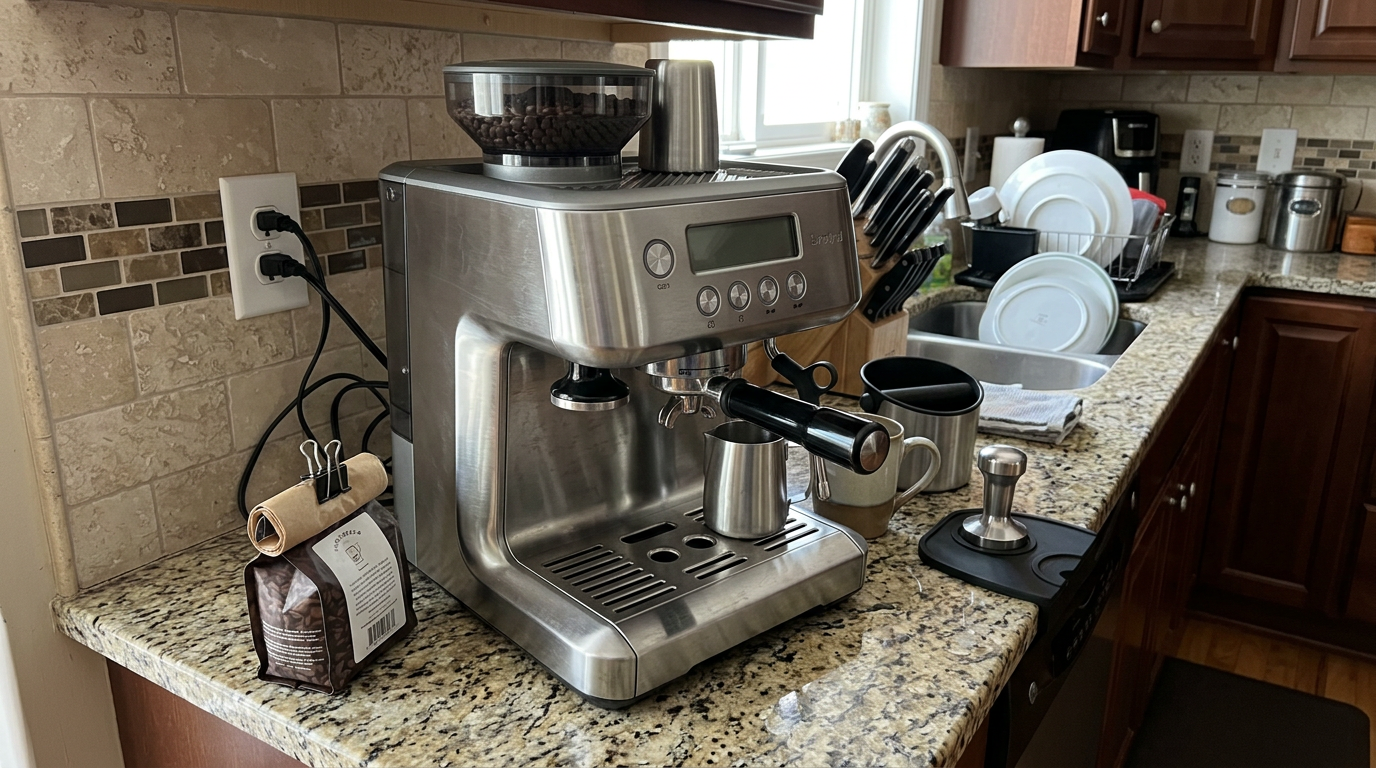
The Ultra’s big flat top is handy for cups and small accessories.
Real-life scenarios
These are the situations where one machine clearly pulled ahead.
Steam ready seconds after the shot.
Four temperatures make light and dark roasts easier.
About 7.7 inches wide.
Shot timer on the screen, no phone stopwatch.
About 12 minutes, against about 16.
A 74 ounce tank.
My scorecard
These are our scores out of 10 from the single reviews of each machine, plus control because it matters in this matchup.
Breville Bambino
CASABREWS Ultra
Control covers temperature settings, the shot timer and 58 mm accessories.
Overall, I rate the Bambino 8.2 and the Ultra 7.8 in this comparison. For espresso and Americano drinkers who enjoy tinkering, the gap closes completely.
See How Much You’ll SaveWhich one is right for you?
4 quick questionsWhich one should you buy?
For most people, the Breville Bambino. It is faster, smaller and much better for milk drinks, and its espresso is just as good. For more options, see my Breville Bambino vs Bambino Plus comparison, which covers the version with automatic milk.
The CASABREWS Ultra is the better buy if espresso and Americanos are your main drinks and you enjoy dialing in. If you’re weighing other CASABREWS models, my CASABREWS CM5418 vs Breville Bambino comparison covers the slimmer CASABREWS.
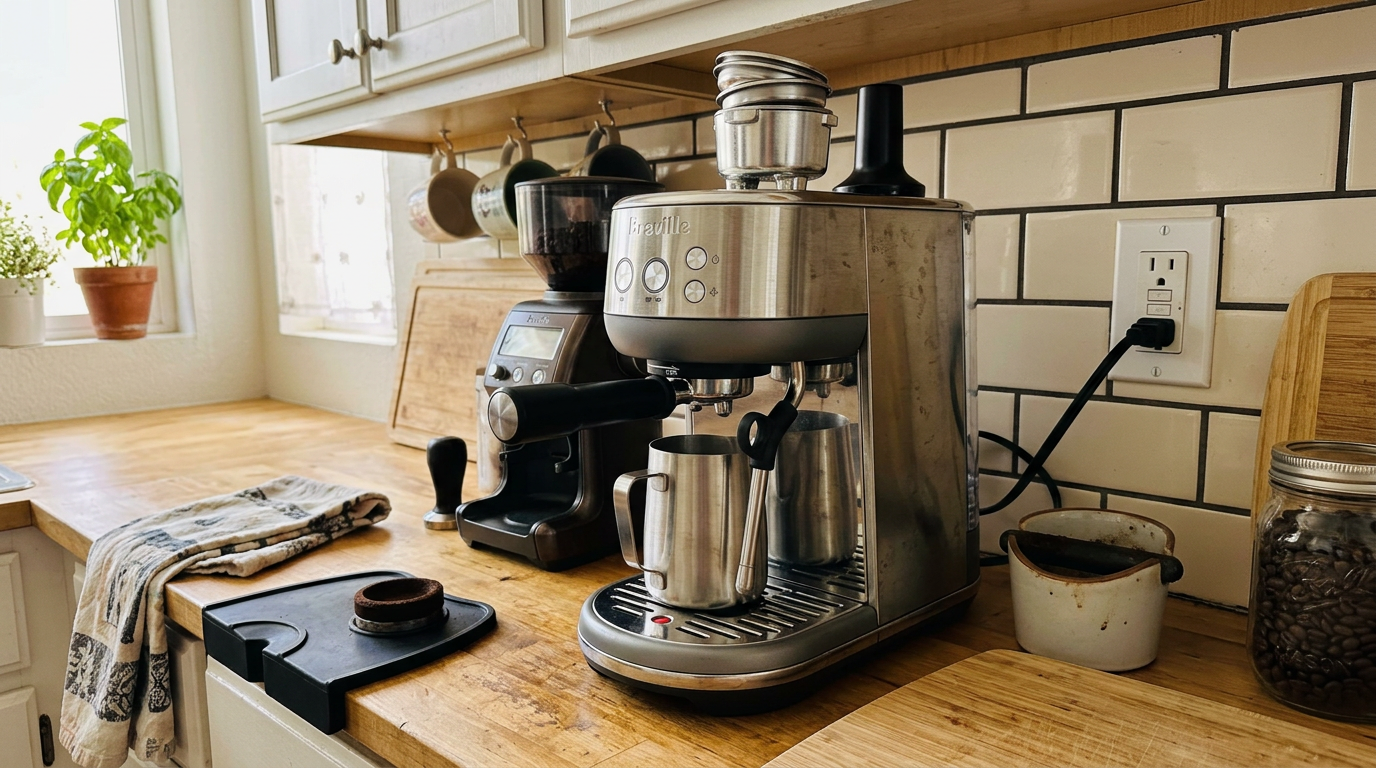
The Bambino is the easier, faster all-rounder of the two.
- You drink flat whites and lattes
- Counter space is tight
- You want coffee in seconds
- You want to learn latte art
- You want to tweak brew temperature
- You want a shot timer
- You want a heavy, café-size portafilter
- You drink espresso and Americanos
- You like dialing in with a timer
- You want 58 mm accessories
- You make lattes back to back
- Space is very tight
- You want a pitcher in the box
My pick is the Breville Bambino. It is ready in about 3 seconds, steams straight after the shot, makes latte-art milk once you learn its short wand and pulls rich, balanced espresso, all in a body about 7.7 inches wide.
The CASABREWS Ultra is the better choice if straight espresso and Americanos come first. Its 58 mm portafilter, four PID temperatures, shot timer and 74 ounce tank make it one of the most capable machines for learning real espresso. Just expect slower, weaker steaming.
Whichever you choose, pair it with a good burr grinder and a metal tamper, and weigh your shots for the first week.
CASABREWS Ultra vs Breville Bambino specifications
From manufacturer specifications and our own testing.
| Breville Bambino | CASABREWS Ultra | |
|---|---|---|
| Model | BES450BSS | Ultra |
| Type | Semi-automatic, manual steam wand | Semi-automatic, manual steam wand |
| Heating | ThermoJet, about 3 s | 1,350 W thermoblock, about 1 min |
| Temperature control | PID, fixed | PID, 194 to 205°F in 4 steps |
| Pump | 15 bar, 9 bar extraction | 20 bar |
| Pre-infusion | Low pressure, automatic | About 5 s, automatic |
| Portafilter | 54 mm, about 18 g | 58 mm stainless, 17 to 18 g |
| Baskets | 1 and 2 cup, single and dual wall | 1 and 2 cup, single-wall and pressurized |
| Shot timer | No | Yes, LCD |
| Shot programming | By volume | By time |
| Milk | Manual steam wand | Manual steam wand, single-hole tip |
| Hot water | Yes | Yes |
| Water tank | About 47 oz | About 74 oz |
| Cup clearance | About 4 in | Small cups and mugs |
| Power | 1,560 W | 1,350 W |
| Dimensions (W x D x H) | 7.7 x 12.6 x 12.2 in | 10.3 x 12.2 x 13 in |
| Weight | About 11 lb | About 13.5 lb |
| Included | Jug, tamper, cleaning tool, descaler | 4 baskets, tamper, spoon, cleaning tool |
How I tested and compared them
Michael Reynolds here. Each machine was our everyday coffee maker for four weeks, making espresso, Americanos, flat whites, lattes, cappuccinos and iced drinks. Michael and a second HouseholdMe tester shared each machine and wrote the notes together.
We used the same burr grinder and beans on both, weighed doses and yields, compared single-wall and pressurized baskets, tried all four temperatures on the Ultra and timed heat-up, the switch to steam and full drinks.
We steamed whole, 2% and barista oat milk every day, followed every cleaning routine and compared our notes with Breville’s and CASABREWS’ specifications and manuals.
- Coffee: dose, yield, crema, body and consistency.
- Milk: microfoam, steam speed and learning curve.
- Workflow: heat-up, controls, timer and programming.
- Ownership: tank, cleaning, noise and footprint.
CASABREWS Ultra vs Breville Bambino FAQ
What is the difference between the CASABREWS Ultra and the Breville Bambino?
The Bambino is smaller, heats up in about 3 seconds and steams straight after the shot. The Ultra has a 58 mm portafilter, four PID brew temperatures, a shot timer and a much bigger tank, but it waits 25 to 30 seconds before it can steam.
Which makes better espresso?
Both make excellent espresso with a good grinder. The Bambino was slightly more consistent; the Ultra gave more ways to tune the taste with its four temperatures.
Which is better for lattes?
The Bambino. Its steam is ready seconds after the shot and makes glossy microfoam once you learn the wand. The Ultra’s modest steam works best with small jugs.
Do I need a grinder?
For the best shots, yes, with either machine. Both include pressurized baskets that work with pre-ground coffee.
What size portafilters do they use?
The Bambino uses 54 mm and the CASABREWS Ultra uses the café-standard 58 mm.
Does the CASABREWS Ultra come with a milk pitcher?
No. Buy a small 12 ounce pitcher, which also suits its modest steam. The Bambino includes a jug.
Which heats up faster?
The Bambino, in about 3 seconds. The Ultra took about a minute.
Which has the bigger water tank?
The CASABREWS Ultra, at about 74 ounces, against about 47 ounces on the Bambino.
Which is smaller?
The Bambino, at about 7.7 inches wide. The Ultra is about 10.3 inches wide.
Which is quieter?
The Ultra’s pump is a softer hum. The Bambino gives a short buzz during the shot.

- Our hands-on CASABREWS Ultra review
- Our hands-on Breville Bambino review
- Breville and CASABREWS product specifications and manuals
- General espresso brewing and milk frothing guidance