Bosch 300 vs 500 vs 800 Series espresso machines compared
undefined
We choose products independently. We may earn a commission through links on this page; your price stays the same. Affiliate policy
Jargon helpNew to espresso? Tap any dotted term to see what it means.
In this comparison
If you want the best Bosch, buy the Bosch 800 Series. It made the best espresso of the three, its 5-inch touchscreen and 24 drinks make it the easiest to share, and it can even brew a small pot of coffee. The Bosch 500 Series is the sensible middle: nine drinks, a proper milk hose with automatic cleaning, a big 64 oz tank and four strength levels including a double shot. The Bosch 300 Series is the simple, compact choice for one or two people who mostly drink espresso and coffee, with a basic in-cup frother for the occasional cappuccino.
The three machines
Specs checked November 14, 2026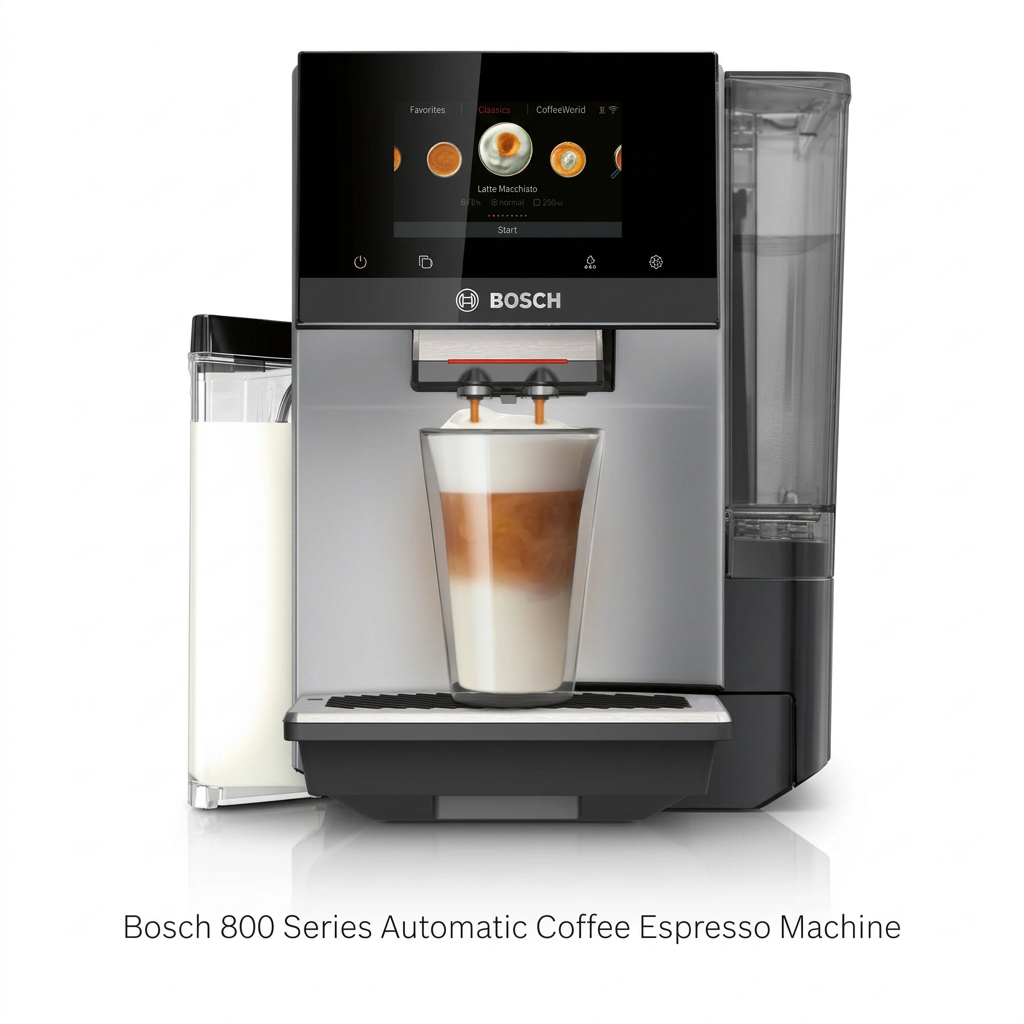
24 drinks on the machine and more in the app, a 5-inch color touchscreen, 30 saved favorites, a coffee pot function and an 81 oz tank.
Check price on Amazon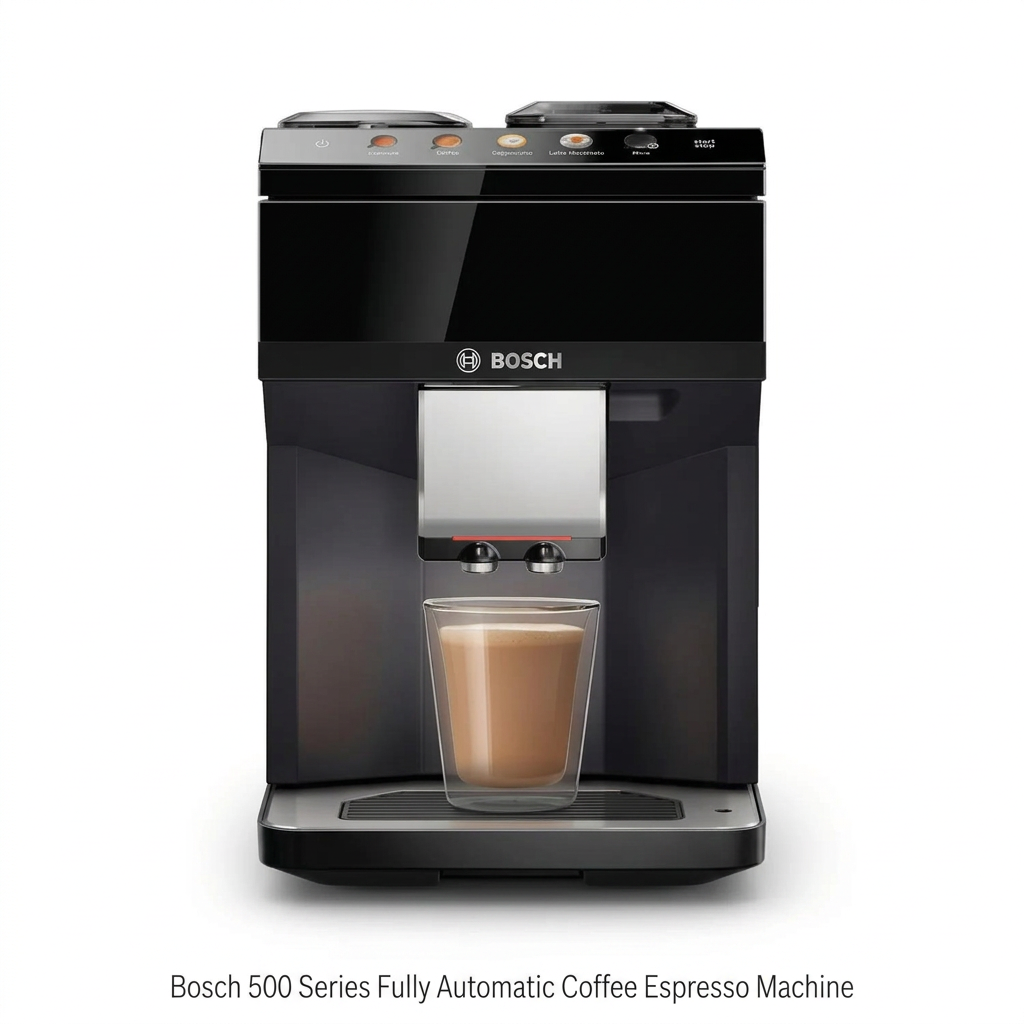
Nine one-touch drinks, four strength levels including Double Shot, four sizes, a milk hose with AutoMilk Clean and a 64 oz tank.
Reveal Today’s Deal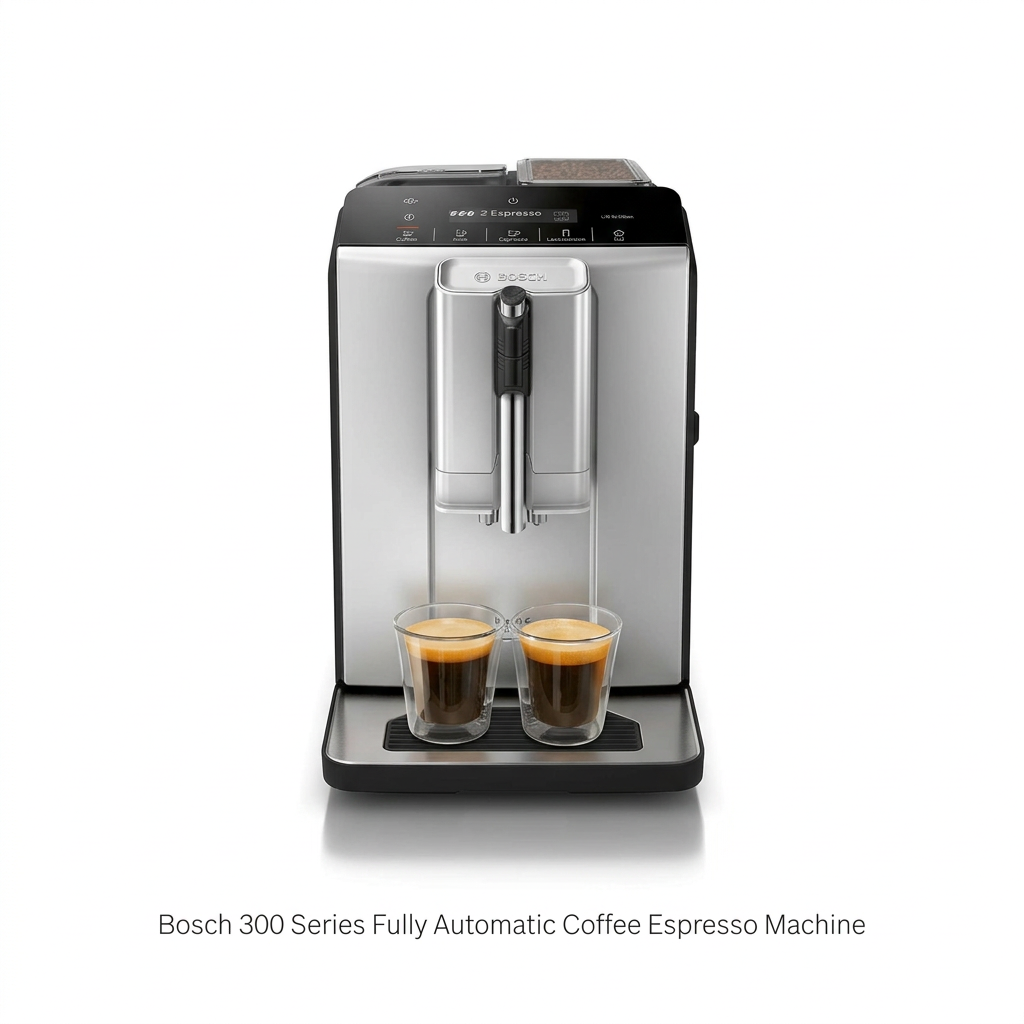
Five drinks, a light and compact body, a clip-on in-cup frother and simple one-touch controls.
See Today’s PriceBosch 300 vs 500 vs 800 at a glance
- All three are fully automatic with ceramic grinders, removable brew units and Bosch’s Calc’n Clean program.
- The 500 adds a milk hose, more drinks, a pre-ground chute and a much bigger tank over the 300.
- The 800 adds a touchscreen, app control, favorites, a coffee pot function and the best espresso.
- Pick by how many people drink coffee in your home and how many different drinks they want.
Head to head
The better result in each row is marked, based on four weeks with each machine and the manufacturer specs. Rows where they are equal have no winner.
The tally is not my verdict. A bigger menu matters a lot to a family and very little to someone who drinks the same espresso every day.
| Spec | Bosch 300 | Bosch 500 | Bosch 800 |
|---|---|---|---|
| Espressomy tasting, same beans | Pleasant, a bit light | Balanced, fuller | Fullest and smoothest ✓ Best |
| One-touch drinks | 5 | 9 | 24, more in the app ✓ Best |
| Milk system | Clip-on in-cup frother | Hose with AutoMilk Clean | Attached milk container ✓ Best |
| Controls | Simple buttons | Buttons with display | 5-inch color touchscreen ✓ Best |
| Saved favorites | No | No | Up to 30 ✓ Best |
| App | No | No | Home Connect ✓ Best |
| Strength options | Set with the bean button | Mild to Double Shot | Adjustable per drink |
| Pre-ground chute | No | Yes | Yes |
| Coffee pot function | No | No | About 25 oz ✓ Best |
| Water tank | 45 oz, rear | 64 oz | 81 oz ✓ Best |
| Weight | About 14.7 lb ✓ Best | About 15.2 lb | About 22 lb |
| Width | 9.75 in ✓ Best | 10.4 in | 13.9 in |
| Rows won | 2 | 0 | 8 |
Pros and cons
Bosch 800 Series
- Best espresso of the three, with a 19-bar pump
- 24 drinks, a 5-inch touchscreen and 30 favorites
- Coffee pot function and a huge 81 oz tank
- Much wider and heavier than the other two
- Milk container takes the most cleaning
- App is useful but not essential
Bosch 500 Series
- Nine drinks with four strengths and four sizes
- Milk hose with AutoMilk Clean
- Big 64 oz tank and a pre-ground chute
- No touchscreen or saved favorites
- Milk drinks were good but not the hottest
- Display is small and basic
Bosch 300 Series
- Light, compact and simple to use
- Quick one-touch espresso and coffee
- In-cup frother is dishwasher-safe
- Small 45 oz tank at the rear
- Only five drinks and basic milk foam
- No pre-ground chute
Who should buy which machine?
- Families with many different favorite drinks
- Anyone who wants a smart, app-connected machine
- People who also brew coffee for guests
- Couples who want milk drinks at one touch
- Strong coffee fans who like a double shot
- Kitchens with average counter space
- Singles and small households
- Espresso and coffee drinkers who rarely use milk
- Small apartments and tight counters
How Bosch’s range works
Bosch sells its VeroCafe machines in the US as the 300, 500 and 800 Series, the same naming it uses for dishwashers and ovens. Higher number, more features.
All three are fully automatic✕Fully automatic (bean-to-cup)A machine that grinds, doses, tamps, brews and ejects the used coffee on its own. You press a button and it does the whole job inside the machine. machines. They grind with ceramic discs, brew through a removable brew unit and use Bosch’s Calc’n Clean program for descaling and cleaning in one go.
What changes as you climb is the milk system, the number of drinks, the size of the water tank and how smart the controls are.
| Series | Milk system | Drinks | Controls | Tank |
|---|---|---|---|---|
| 300 | Clip-on in-cup frother | 5 | Simple buttons | 45 oz |
| 500 | Hose with AutoMilk Clean | 9 | Buttons with display | 64 oz |
| 800 | Attached milk container | 24, more in the app | 5-inch touchscreen, app | 81 oz |
The biggest single jump is from the 300 to the 500, because the tank grows by 19 ounces, the milk system gets much better and you gain a pre-ground chute. The jump from the 500 to the 800 is about comfort, choice and a better espresso.
Our tip: Think about how many people will use the machine on a busy morning, because tank size and saved favorites matter more than the drink count once three or more people share it.
Design, size and build
The 300 and 500 are slim, light machines. The 300 is about 9.75 inches wide and 14.7 lb, and the 500 is about 10.4 inches wide and 15.2 lb.
The 800 is a different size class. At about 13.9 inches wide, 18.4 inches deep and 22 lb, it needs a proper spot on the counter, though its stainless and silver finish looks the most premium.
All three are under about 15 inches tall, so they slide under standard wall cabinets.
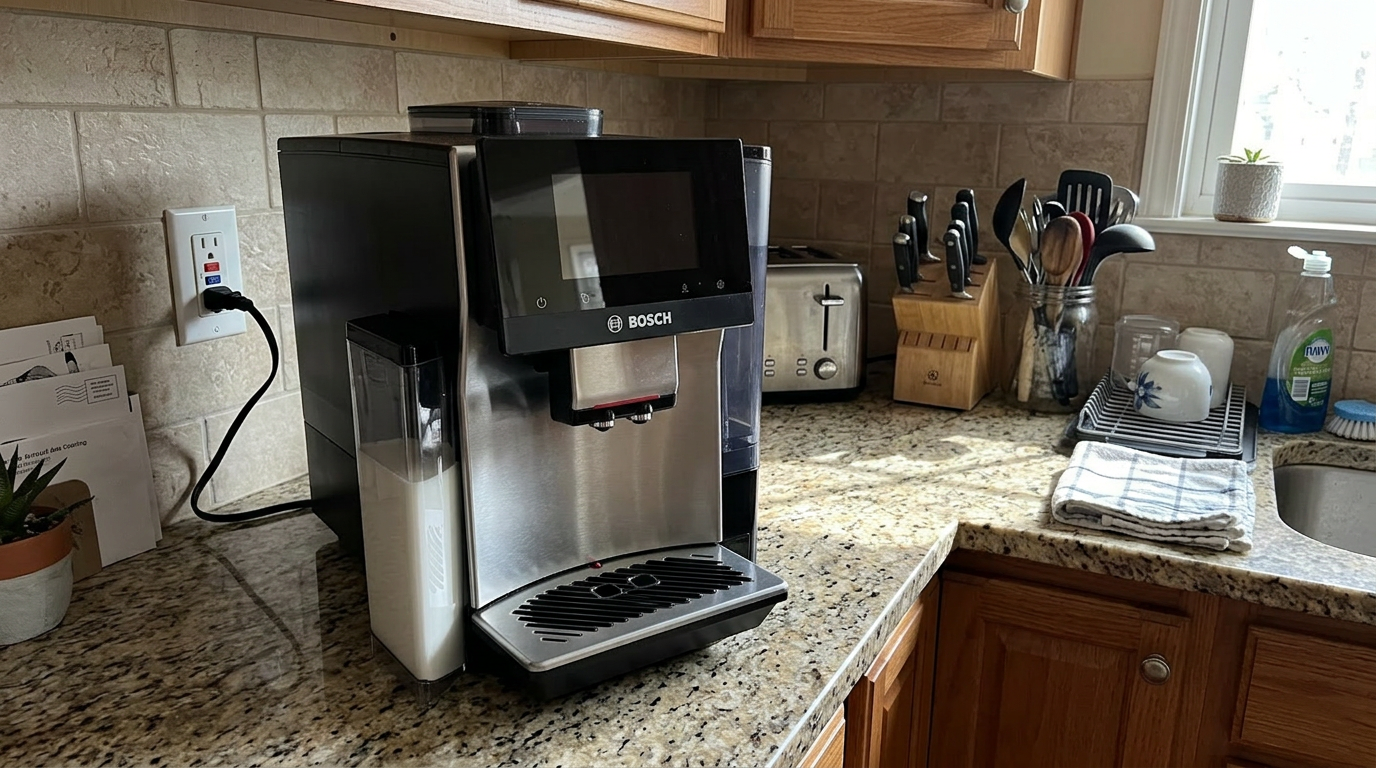
The 800 Series is much wider than its siblings, but it looks the most premium on the counter.
Width on the counter
The 800 needs about 4 inches more width than the 300.
The 300’s rear water tank was the one design choice I disliked. Under cabinets, I had to slide the machine forward to lift the tank out every couple of days.
Our tip: Put the Bosch 300 where you can reach behind it easily, because its water tank lifts out from the back.
Controls, screen and app
The 300 keeps things simple. A row of buttons for each drink, a bean button for strength and a two-cup button. Nobody in my house needed instructions.
The 500 adds a small display and more options. You choose strength from Mild, Regular, Strong and Double Shot, and size from Small to Extra Large, before pressing the drink.
The 800 is the smart one. Its 5-inch color touchscreen shows every drink as a picture, lets you save up to 30 favorites and connects to the Home Connect app for remote start and even more drinks.
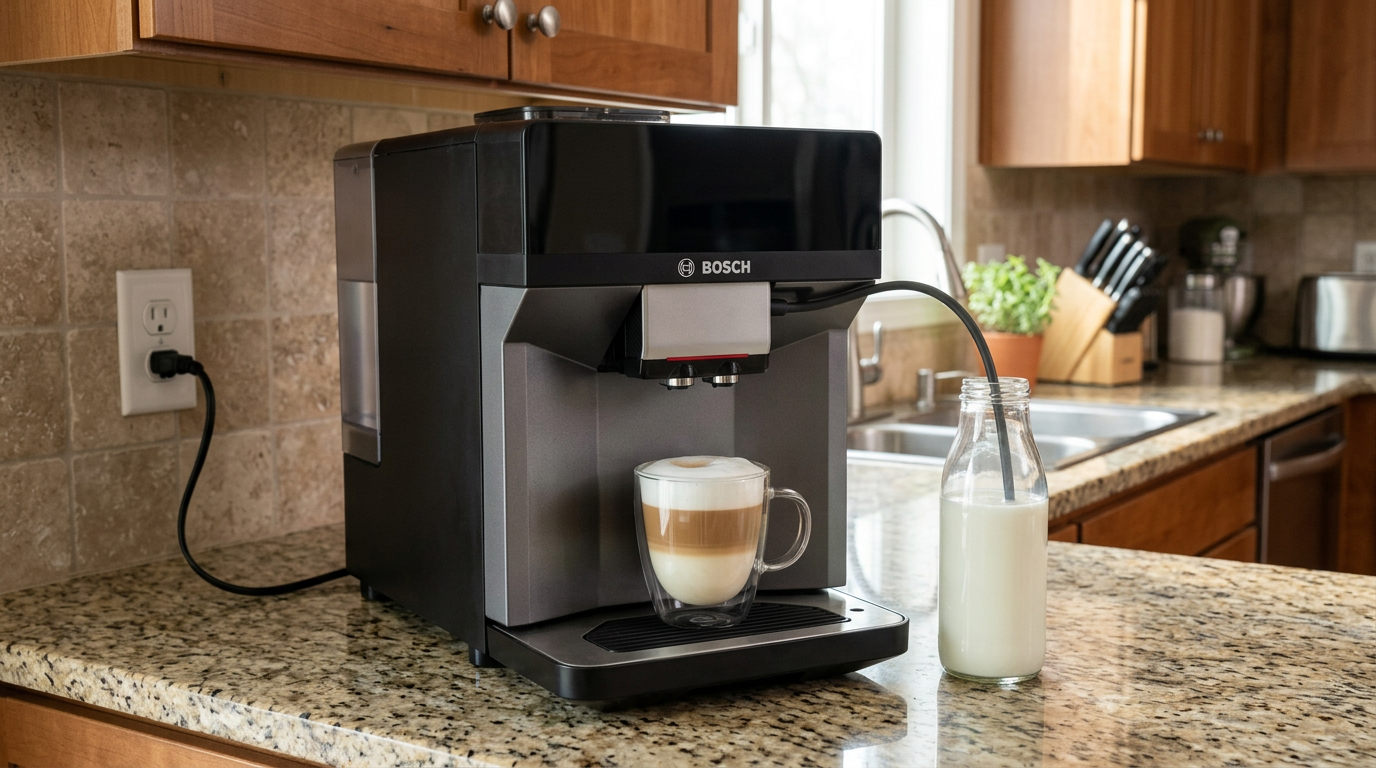
The 500’s strength and size buttons make it easy to fine-tune every drink.
| Feature | Bosch 300 | Bosch 500 | Bosch 800 |
|---|---|---|---|
| Controls | Buttons | Buttons with display | 5-inch touchscreen |
| Strength | Bean button | 4 levels including Double Shot | Adjustable per drink |
| Sizes | Basic | 4 sizes | Adjustable per drink |
| Favorites | No | No | Up to 30 |
| App | No | No | Home Connect |
| Cup lighting | No | No | Yes |
Our tip: Save each person’s favorite drink on the 800 in the first week, because favorites are what make its big menu fast to use.
The drink menu: 5 vs 9 vs 24
The 300 makes espresso, coffee, cappuccino, latte macchiato and milk foam. That covers a black coffee drinker and the occasional cappuccino.
The 500 adds an americano✕AmericanoEspresso topped up with hot water. Because the water is added afterwards instead of being pushed through the coffee, it keeps more sweetness and less bitterness., a latte, a flat white-style drink, hot milk and hot water, for nine drinks in all, and every one can be made two at a time.
The 800 has 24 drinks on the machine and more through the app, from ristretto to caffè latte, plus a coffee pot function that brews about 25 ounces for guests.
One-touch drinks
Counted on the machine. The 800 offers more drinks through the app.
| Drink | Bosch 300 | Bosch 500 | Bosch 800 |
|---|---|---|---|
| Espresso and coffee | Yes | Yes | Yes |
| Americano | No | Yes | Yes |
| Cappuccino | Yes | Yes | Yes |
| Latte macchiato | Yes | Yes | Yes |
| Hot milk | Milk foam only | Yes | Yes |
| Two cups at once | Yes | Every drink | Yes |
| Coffee pot | No | No | About 25 oz |
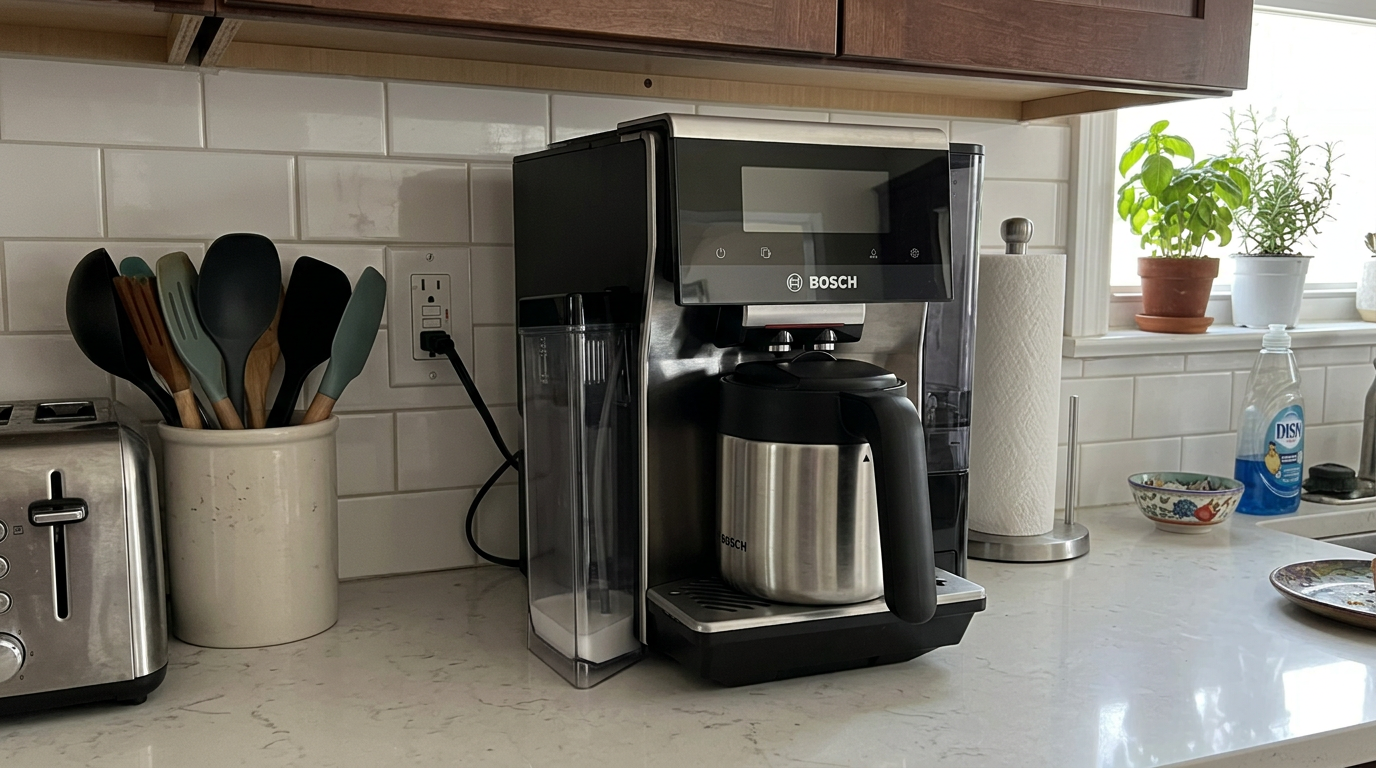
The 800 Series can brew a small pot of coffee as well as 24 one-touch drinks.
Find Out the Price TodayGrinder and strength
All three grind with ceramic discs✕Ceramic grinding discsGrinding plates made of ceramic instead of steel. They stay cooler, run quieter and keep a sharp edge for many years., which run quietly and should last for years.
The 300 offers only a few fineness steps and sets strength with its bean button. The 500 has six grind settings and four strengths. Its Double Shot setting grinds and brews twice for one drink, which made a noticeably stronger coffee.
The 800’s grinder is insulated, which made it the quietest of the three, and strength can be adjusted for every drink.
| Grinder detail | Bosch 300 | Bosch 500 | Bosch 800 |
|---|---|---|---|
| Grinder | Ceramic discs | Ceramic discs | Insulated ceramic discs |
| Settings | A few steps | 6 | Adjustable |
| Strongest option | Bean button | Double Shot | Strong plus double |
| Bean hopper | About 9 oz | About 9.5 oz | About 11 oz |
| Pre-ground chute | No | Yes | Yes |
Our tip: Turn the grind adjuster only while the grinder is running on all three, so beans never get trapped between the discs.
Espresso quality
I used the same medium-dark blend in all three, on the finest grind and the strongest setting each machine offered.
The 800 pulled the best espresso: smooth, with a fuller body, a lasting crema✕CremaThe golden, foamy layer on top of a fresh espresso. It forms when pressure pushes oils and gases out of the coffee. and a chocolatey finish. Its 19-bar pump rating and better grinder showed in the cup.
The 500’s espresso was balanced and pleasant, a clear step above the 300. The 300’s shot tasted fine but light, with a thinner crema that faded faster.
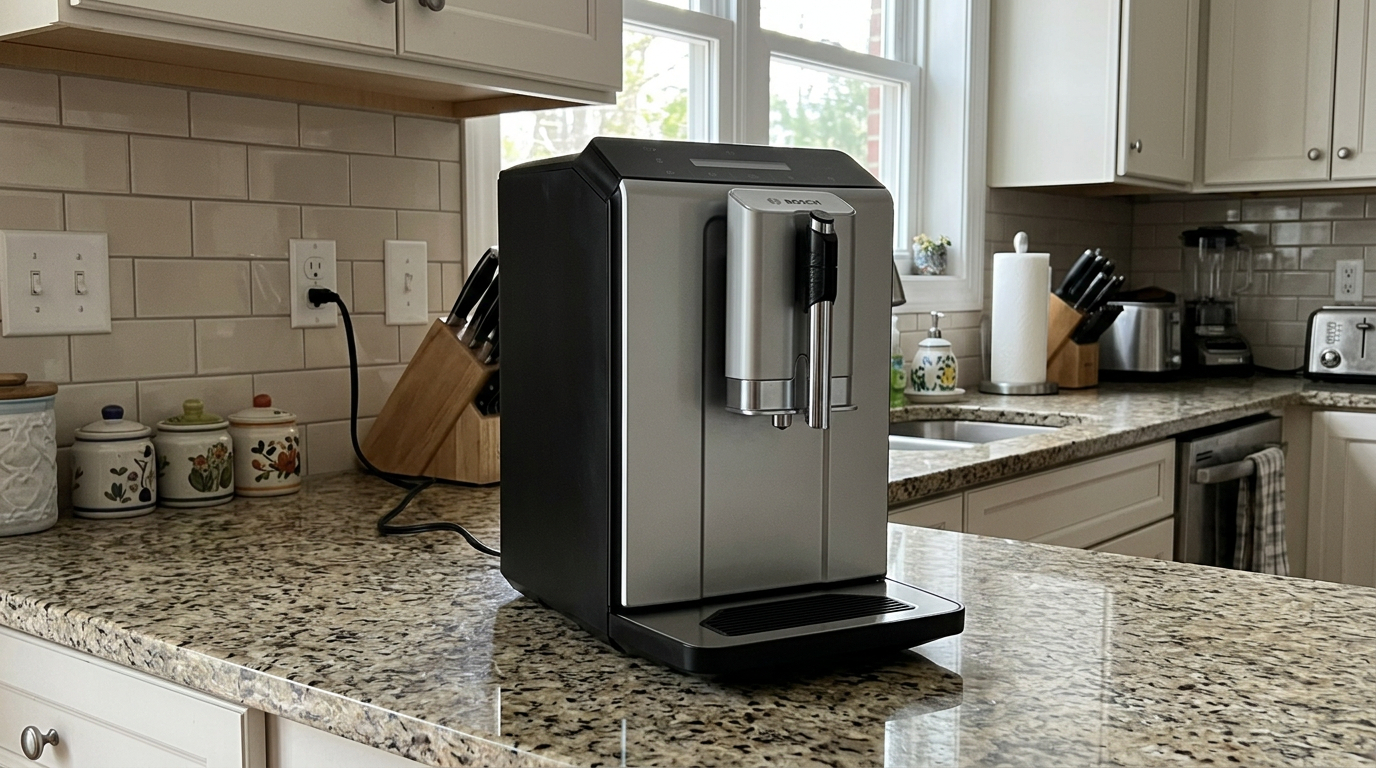
The 300’s espresso is pleasant but light; it shines more in a cup of coffee.
My espresso ratings
My scores out of 10 for body, crema, flavor and consistency.
None of these is an espresso specialist’s machine. They are built for convenience, and they all made a good everyday shot once I found the finest grind that did not choke✕ChokingWhen the grind is so fine that water can barely pass through the coffee. The machine drips slowly and the shot tastes bitter. the brew unit.
| What you taste | Likely cause | First fix on all three |
|---|---|---|
| Sour, thin, watery | Under-extracted✕Under-extractionWhen water does not pull enough flavor out of the coffee. The shot tastes sour, thin and watery. | Grind finer or raise strength |
| Bitter, harsh, drying | Over-extraction | Grind coarser |
| Pale crema that fades fast | Stale beans | Use beans within a few weeks of roasting |
| Lukewarm shot | Cold cup | Warm the cup first |
Coffee, americano and pots
Bosch machines are at their best with a cup of coffee, and this is where all three did well.
The 300’s coffee was smooth and easy-drinking, and it became my default drink on it. The 500’s americano was the best black coffee of my test at its price level, especially with Double Shot.
The 800’s coffee pot function was a real treat when friends came over. It brewed about 25 ounces in several cycles, so I did not have to press the button again and again.
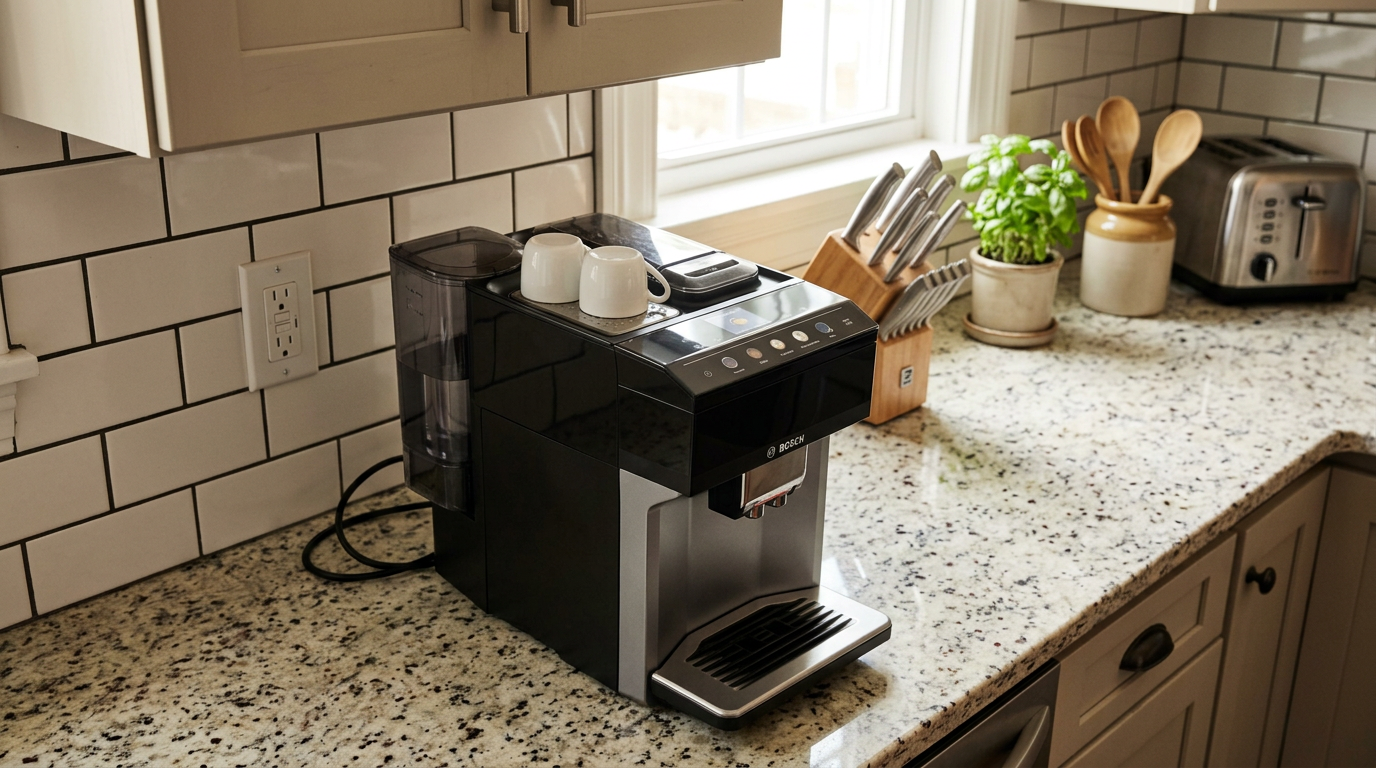
The 500’s americano with Double Shot was my favorite mug in the middle of the range.
Our tip: Brew big mugs as an americano rather than a long coffee on every Bosch, because adding water after the espresso keeps the coffee sweeter.
Milk drinks
The milk systems are the clearest dividing line in this range.
Bosch 300: in-cup frother
The 300 uses a clip-on frother that draws milk through a short tube and froths it straight into your cup. It is simple and dishwasher-safe, but the foam was looser and the drinks a little cooler than on the other two.
Bosch 500: milk hose with AutoMilk Clean
The 500 draws milk from a carton or jug through a flexible hose. The foam was finer and more consistent, and after each milk drink the machine runs AutoMilk Clean, which flushes the system with steam.
Bosch 800: attached milk container
The 800 has its own milk container that clicks onto the machine. The foam was dense and smooth, and having the milk in a dedicated container made the whole routine tidier.
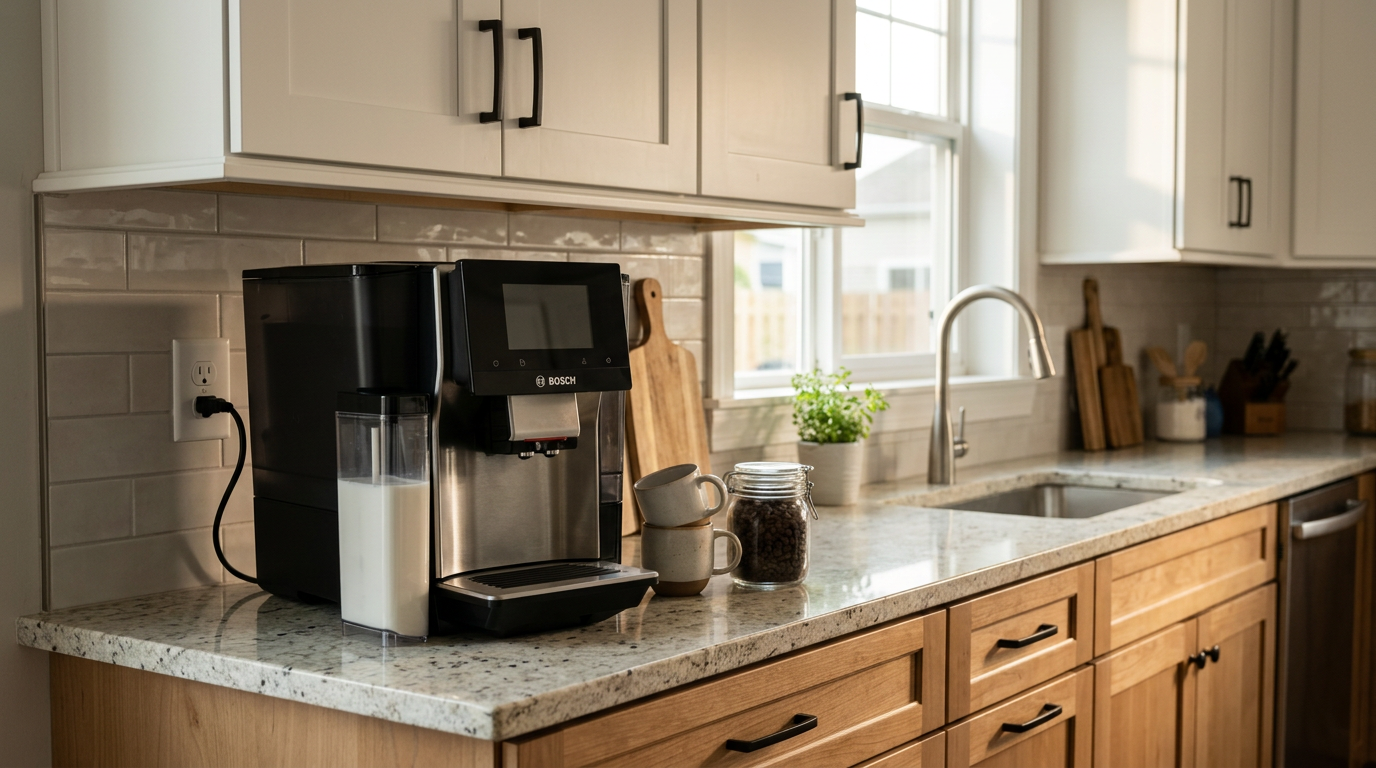
The 800’s attached milk container made the tidiest, most consistent milk drinks.
Milk foam, my ratings
My scores out of 10 for texture, temperature and ease.
| Milk feature | Bosch 300 | Bosch 500 | Bosch 800 |
|---|---|---|---|
| System | Clip-on in-cup frother | Hose | Attached container |
| Auto clean | No, rinse by hand | AutoMilk Clean | Automatic rinse |
| Hot milk only | Milk foam | Yes | Yes |
| Dishwasher-safe parts | Frother | Some parts | Container parts |
| Foam quality | Fair | Good | Best |
Our tip: Use cold whole milk or a barista-style oat milk on all three, because both foamed much better than skim in my testing.
Cleaning and upkeep
All three have a removable brew unit✕Brew unitThe part inside a super-automatic that compresses the ground coffee, holds it while water passes through and then ejects the used puck., which I rinsed under the tap once a week. On the 300 it comes out from the front; on the 500 and 800, from a side door.
All three use Bosch’s Calc’n Clean program, which combines descaling✕DescalingRunning a mild acid through the machine to dissolve the mineral scale that hard water leaves behind in the heater and pipes. and cleaning in one cycle when the machine asks for it.
The milk side is where daily time goes. The 300’s frother needs rinsing by hand, the 500 cleans its hose automatically, and the 800’s container needs washing every day you use milk.
My daily hands-on cleaning time
With two milk drinks a day, not counting automatic rinses.
| When | Bosch 300 | Bosch 500 | Bosch 800 |
|---|---|---|---|
| After milk drinks | Rinse the frother | AutoMilk Clean runs itself | Automatic rinse |
| Daily | Empty tray and grounds | Empty tray and grounds | Empty tray, wash container |
| Weekly | Rinse the brew unit | Rinse the brew unit | Rinse the brew unit |
| When prompted | Calc’n Clean | Calc’n Clean | Calc’n Clean |
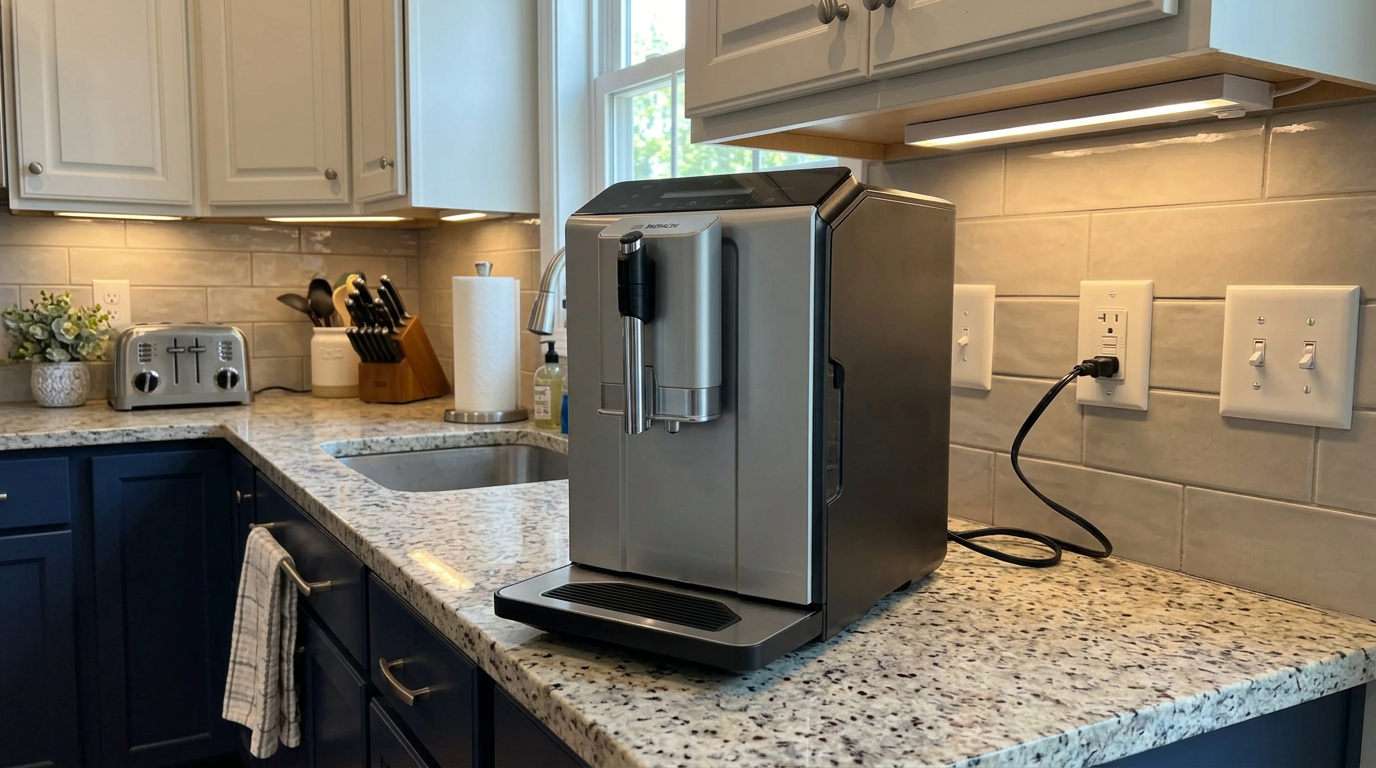
The 300’s brew unit comes out from the front, which made the weekly rinse easy.
Our tip: Rinse each brew unit under cool water and let it air-dry fully before you slide it back in, so no moisture gets trapped inside.
Noise
Ceramic grinders are usually quieter than steel, and all three were fairly calm machines.
The 800 was the quietest thanks to its insulated grinder. The 300 and 500 made a short, moderate grind followed by a soft whir from the brew unit.
How loud each felt, my ranking
Relative loudness from side-by-side use. Shorter bars are quieter.
What all three share, and where the money goes
Before you decide, it helps to know what you get no matter which Bosch you buy. That way you can see exactly what each step up adds.
Every machine in this range grinds fresh beans with ceramic discs, has a removable brew unit you can rinse, makes two drinks at once and uses the same Calc’n Clean routine. All three were quick to heat up and ready for the first drink in well under a minute.
They also share the same personality. These are calm, practical machines designed by an appliance brand, with clear buttons, sensible menus and no fussy rituals. Nobody in my house ever asked me how to use one.
So the step from the 300 to the 500 is mostly about milk and water. You trade the clip-on frother for a hose that cleans itself, and you get 19 more ounces in the tank, which means far fewer refills.
The step from the 500 to the 800 is about choice, comfort and coffee quality. The touchscreen and favorites make a big menu fast to use, the app adds remote start, and the stronger pump and insulated grinder made a noticeably better espresso.
If you are torn between two models, ask yourself which of those things you would notice every single morning. For me, a bigger tank and self-cleaning milk were daily wins. The app was a nice extra that I used a few times a week.
| You get on every Bosch | 300 | 500 | 800 |
|---|---|---|---|
| Ceramic grinder | Yes | Yes | Yes |
| Removable brew unit | Yes, front | Yes, side | Yes, side |
| Two drinks at once | Yes | Yes | Yes |
| Calc’n Clean | Yes | Yes | Yes |
| One-touch cappuccino | Yes | Yes | Yes |
| Self-cleaning milk system | No | Yes | Yes |
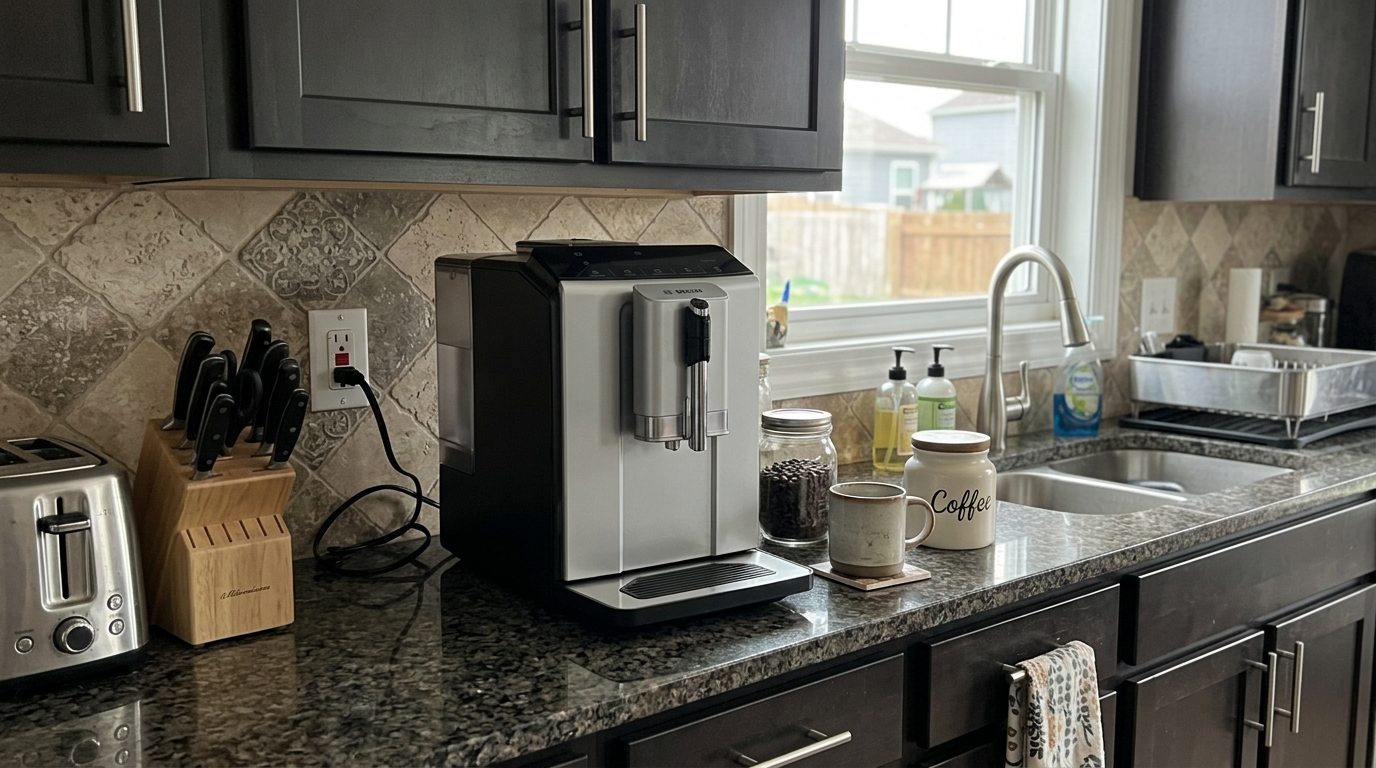
Even the 300 makes a one-touch cappuccino, so milk is possible at every step of the range.
If you already know you want the most automation, you might also look at the Bosch 800 Series straight away rather than stepping up later. Upgrading from a 300 to an 800 a year down the line is the most common regret I hear about in this range.
One more point in favor of all three: Bosch kept the daily routine almost identical across the range. Empty the drip tray and grounds container, wipe the spouts, rinse the brew unit once a week. If you move up a model later, there is nothing new to learn.
The same goes for supplies. Water filters and cleaning tablets work across the range, so you are not locked into anything special by picking one model over another.
That consistency is also why I would not overthink reliability between the three. They share the same core design, so the right choice really comes down to milk, tank size and how many people you are making coffee for.
Our tip: Write down your three most-made drinks before choosing, and check that each one is a one-touch drink on the model you pick.
Water, beans and long-term care
Tank size turned out to matter more than I expected. With two coffee drinkers, I refilled the 300’s 45 oz tank almost daily, the 500’s every second day and the 800’s about twice a week.
All three like fresh medium and medium-dark beans. Very oily dark roasts can stick in the grinder and chute, so I would avoid them on any of these.
Use a water filter if your water is moderately hard. It keeps scale away from the heater and pushes the Calc’n Clean prompt further out.
Drinks per full water tank, rough maths
Allowing for rinse water. Your numbers depend on cup size.
| Bean type | Bosch 300 | Bosch 500 | Bosch 800 |
|---|---|---|---|
| Medium blend | Best all-rounder | Best all-rounder | Best all-rounder |
| Medium-dark | Fuller espresso | Great with Double Shot | Best espresso |
| Light roast | Thin | Bright, use Double Shot | Good |
| Very oily beans | Avoid | Avoid | Avoid |
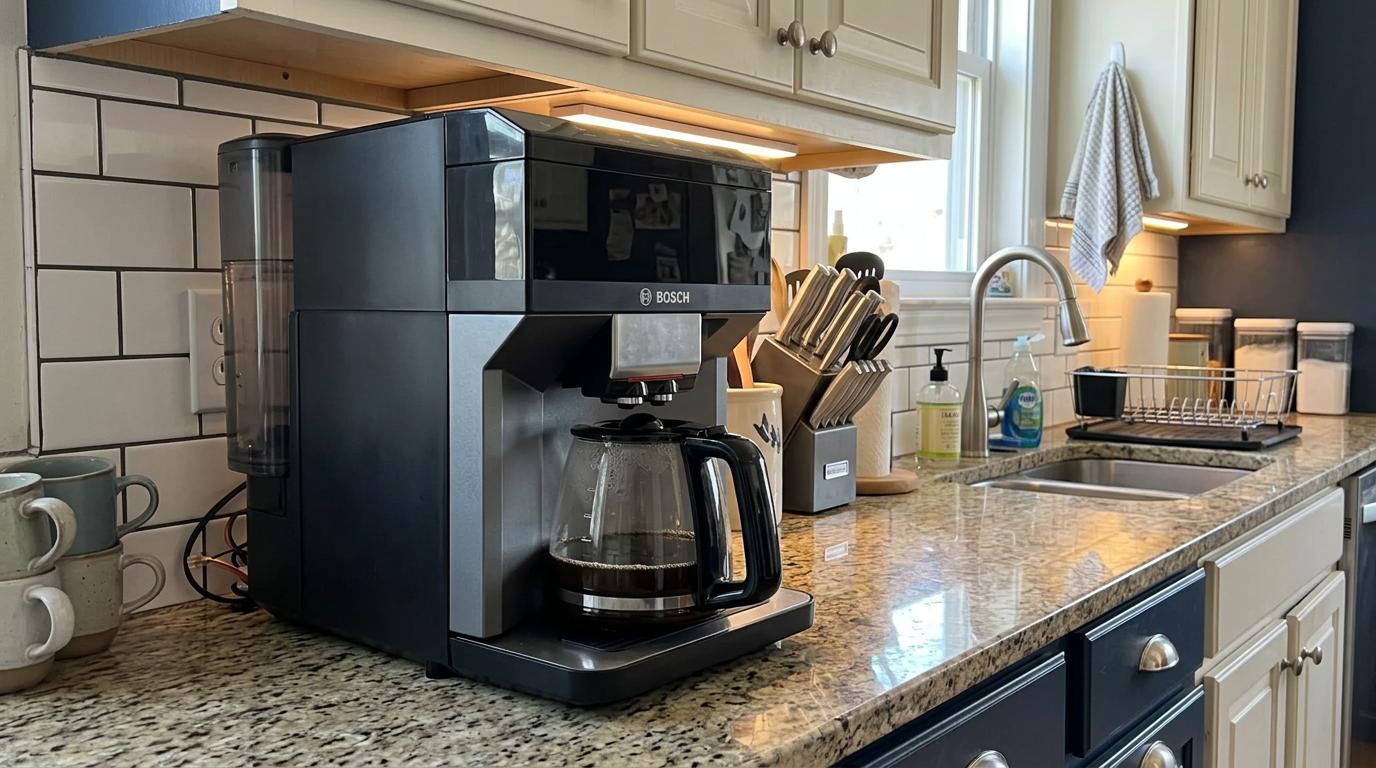
The 500’s 64 oz tank was a big step up from the 300 in daily life.
Our tip: Fill the tank with fresh, cold water every morning rather than topping up old water, because it makes a cleaner-tasting cup on every machine.
Four weeks with each: my diary notes
These are the notes I kept as each Bosch settled into my real routine.
Bosch 300 Series
Week 1: Set up in minutes and nobody needed help. Coffee on the strong setting became the default.
Week 2: The rear tank started to annoy me under the cabinets.
Week 3: Cappuccinos were fine for weekends, but I stopped making them on weekdays.
Week 4: For one person who drinks black coffee, it was simple and pleasant.
Bosch 500 Series
Week 1: I discovered Double Shot and never went back for big mugs.
Week 2: AutoMilk Clean meant I never thought about the hose.
Week 3: Making two lattes at once saved real time on weekend mornings.
Week 4: It felt like the best everyday balance of the three.
Bosch 800 Series
Week 1: Saving favorites for everyone took ten minutes and paid off every day after.
Week 2: I used the coffee pot function for a family brunch, and it saved a dozen button presses.
Week 3: The app’s remote start was handy on cold mornings.
Week 4: It was the one the whole household wanted to keep.
By the end of the month, the 800 was the Bosch my household wanted to keep.
Real-life scenarios
These are the situations where one Bosch clearly pulled ahead during my testing.
Light, compact and quick, with a smooth strong coffee at one touch.
A real milk hose with automatic cleaning and two drinks at once.
Up to 30 favorites and 24 drinks on the touchscreen.
The coffee pot function brewed about 25 ounces without babysitting.
Double Shot made a full-bodied 10-ounce coffee.
The narrowest and lightest of the three.
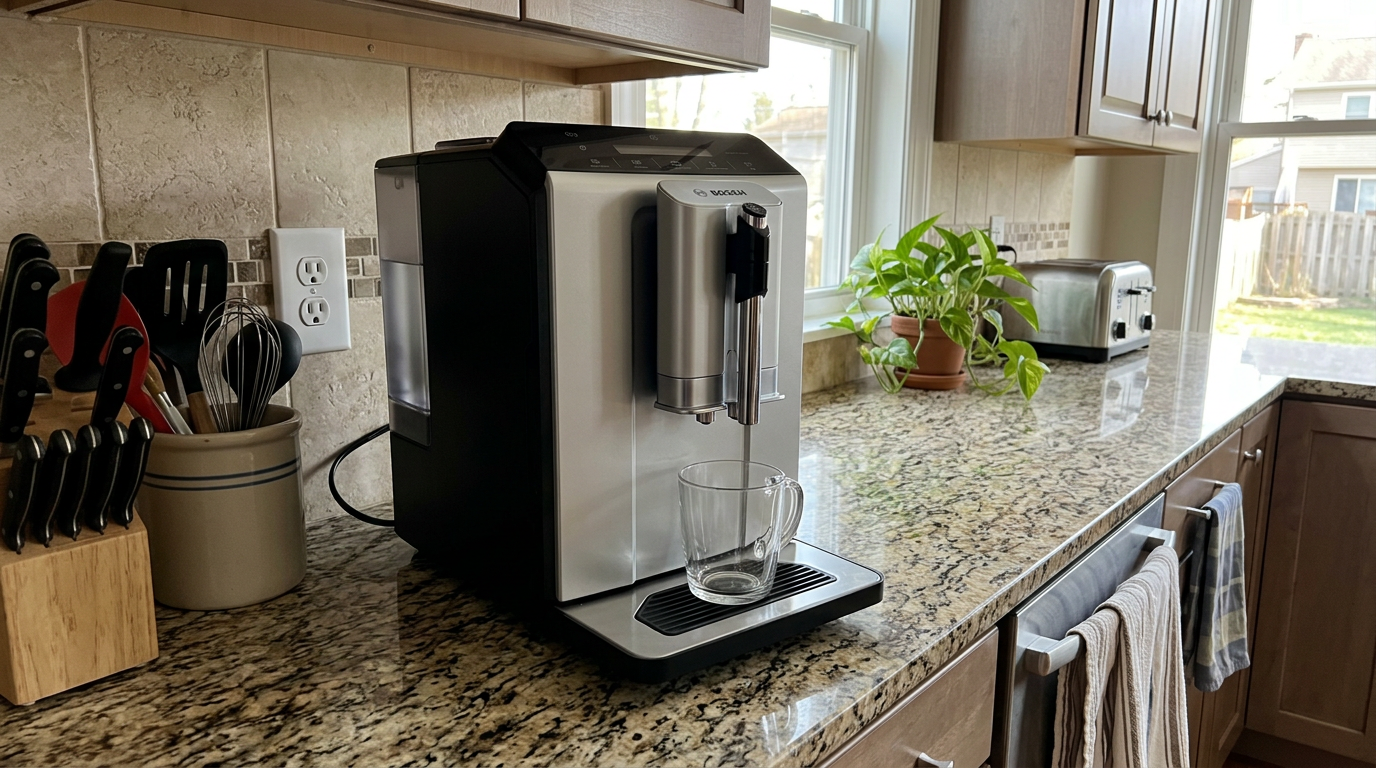
For a small kitchen and black coffee, the 300 is the simplest Bosch.
My scorecard
These are my own scores out of 10, from my single reviews of each machine, plus drink range because it decides this ladder.
Bosch 800 Series
Bosch 500 Series
Bosch 300 Series
Overall, I rate the 800 Series 8.5, the 500 Series 8.0 and the 300 Series 7.7. Each step up buys a better milk system, more drinks and a bigger tank.
See How Much You’ll SaveWhich one is right for you?
4 quick questionsWhich one should you buy?
If you live alone and mostly drink black coffee, the 300 is enough. If you drink milk drinks most days, start at the 500. If several people share the machine or you want the best espresso, go straight to the 800. If none of these is quite right for you, my guide to the best Bosch espresso machines covers the rest of the range I’ve tested.
For more on the individual machines, read my Bosch 300 Series review, Bosch 500 Series review and Bosch 800 Series review.
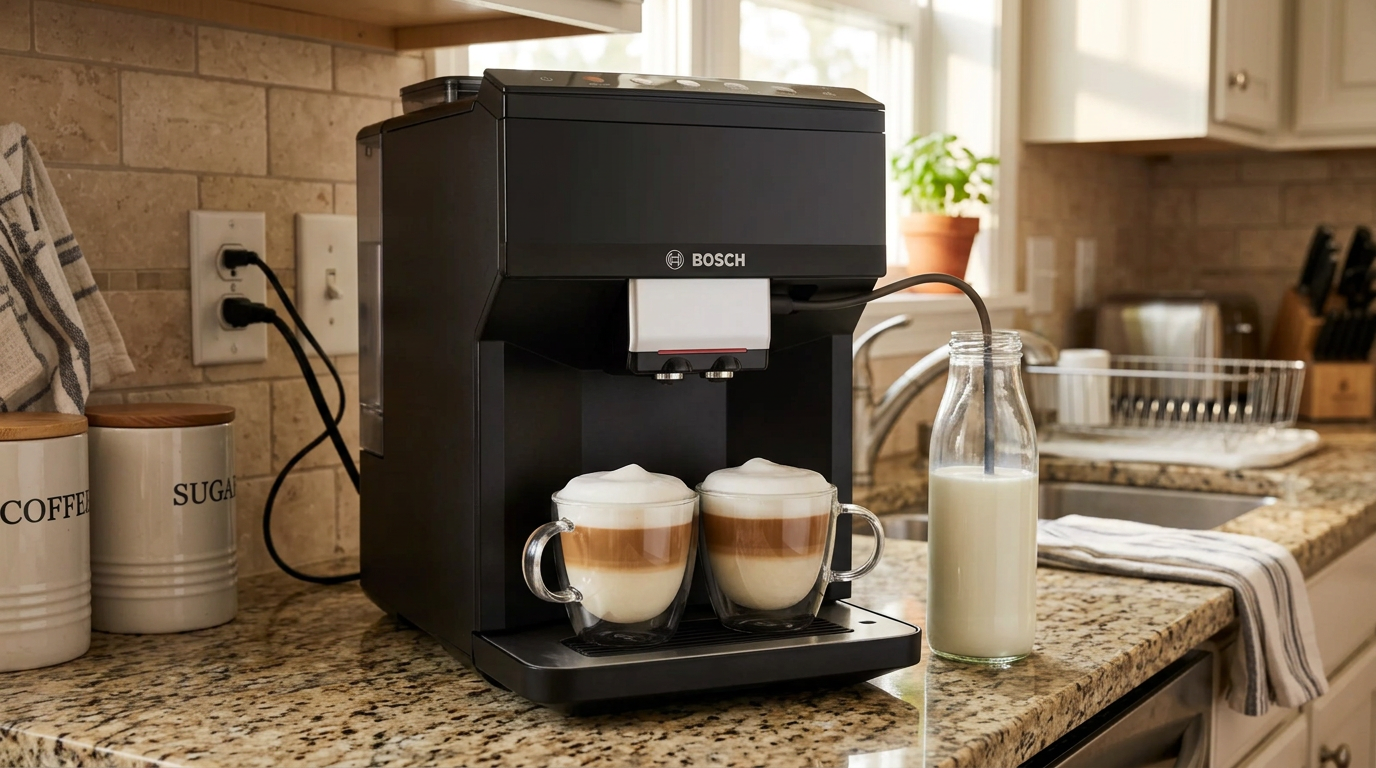
For most couples, the 500 is the sweet spot of the Bosch range.
- Several people share the machine
- You want the best espresso
- You want favorites and app control
- You brew coffee for guests
- Your counter is narrow
- You want the least cleaning
- You only drink espresso
- You drink milk drinks most days
- You like strong big mugs
- You want a bigger tank than the 300
- You want a touchscreen
- You want saved favorites
- You want an app
- You live alone or with one other person
- You mostly drink espresso and coffee
- You have very little counter space
- You drink milk drinks daily
- You want a pre-ground chute
- You hate refilling water
For most homes, my pick is the Bosch 800 Series. It made the best espresso of the three, its touchscreen and 30 favorites make it easy for a whole family, and its big tank and coffee pot function make it the most practical for busy mornings and guests.
If you do not need the extras, the Bosch 500 Series is the sensible middle, with a real milk hose, Double Shot and a 64 oz tank. The Bosch 300 Series suits one or two black coffee drinkers who want something small and simple.
Whichever you choose, rinse the brew unit weekly, run Calc’n Clean when asked and use fresh beans.
Specifications compared
From manufacturer specifications and my own testing.
| Bosch 300 Series | Bosch 500 Series | Bosch 800 Series | |
|---|---|---|---|
| Model | TIU20307 | TPU40109 | TQU60307 |
| Drinks | 5 | 9 | 24, up to 36 via the app |
| Pump pressure | 15 bar | 15 bar | 19 bar |
| Heating | Thermoblock | Thermoblock | Thermoblock |
| Grinder | Ceramic discs | Ceramic discs, 6 settings | Insulated ceramic discs |
| Milk system | Clip-on in-cup frother | Hose, AutoMilk Clean | Attached milk container |
| Display | Buttons | Buttons with display | 5-inch color touchscreen |
| Favorites | No | No | Up to 30 |
| App | No | No | Home Connect |
| Coffee pot | No | No | About 25 oz |
| Pre-ground chute | No | Yes | Yes |
| Bean hopper | About 9 oz | About 9.5 oz | About 11 oz |
| Water tank | 45 oz, rear | 64 oz | 81 oz |
| Cup clearance | About 5 in | About 5.5 in | About 5.5 in |
| Dimensions (W x H x D) | 9.75 x 14.88 x 16.5 in | 10.4 x 14.75 x 16.6 in | 13.9 x 15 x 18.4 in |
| Weight | About 14.7 lb | About 15.2 lb | About 22 lb |
How I tested and compared them
Michael Reynolds here. I used each Bosch as my everyday coffee maker for four weeks, making espresso, coffee, americanos, cappuccinos, latte macchiatos and, on the 800, pots of coffee for guests.
I weighed doses, measured milk and coffee temperatures with a probe thermometer, tried every strength level and foamed whole, semi-skimmed and oat milk on each milk system.
I rinsed every brew unit weekly, ran Calc’n Clean when prompted, and compared my notes with Bosch’s specifications and owner documentation.
- Coffee: strength, crema, body and consistency.
- Milk: foam texture, temperature and drink range.
- Workflow: controls, favorites, app and daily routine.
- Ownership: noise, cleaning, tank size and footprint.
Bosch 300 vs 500 vs 800 Series FAQ
What is the difference between the Bosch 300, 500 and 800 Series?
The milk system, drink count, controls and tank size. The 300 has 5 drinks, an in-cup frother and a 45 oz tank. The 500 has 9 drinks, a milk hose with AutoMilk Clean and a 64 oz tank. The 800 has 24 drinks, a 5-inch touchscreen, app control, favorites and an 81 oz tank.
Is the Bosch 800 Series worth it over the 500?
If several people share the machine or you want the best espresso, yes. It made better espresso in my testing and saves up to 30 favorites. For a couple, the 500 covers most needs.
Is the Bosch 500 worth it over the 300?
For most people, yes. It adds a much better milk system, four more drinks, a pre-ground chute and a 64 oz tank instead of 45 oz.
Which Bosch makes the best espresso?
The 800 Series, with a fuller body and smoother finish. The 500 was a clear step above the 300.
Do Bosch espresso machines have a removable brew unit?
Yes, all three. I rinsed each under the tap once a week.
Which Bosch has an app?
Only the 800 Series, through Home Connect. It adds remote start and more drinks.
Can the Bosch 300 make a latte?
It makes cappuccino and latte macchiato with its clip-on in-cup frother. The foam was looser than on the 500 and 800.
Which Bosch is the smallest?
The 300 Series, at about 9.75 inches wide and 14.7 lb. The 800 is about 13.9 inches wide and 22 lb.
Can the Bosch 800 make a pot of coffee?
Yes. Its coffee pot function brews about 25 ounces in several cycles.
What is Calc’n Clean?
Bosch’s combined descaling and cleaning program. All three machines ask for it when needed and run it in one cycle.

- Our hands-on Bosch 300 Series review
- Our hands-on Bosch 500 Series review
- Our hands-on Bosch 800 Series review
- Bosch product specifications and owner documentation