Best Espresso Machines for a Small Office (5-20 People)
An office espresso machine has a different job from a home one: dozens of cups a day, people who never read the manual and nobody who wants to clean it. I put nine machines through four weeks each in a shared workspace with a team of 5 to 20 people. For most small offices, I recommend the Jura X10: rated for about 100 cups a day, a 5-liter tank, two cappuccinos at once and lockable recipes so every cup stays consistent.

Michael Reynolds
Buying Guide
9 models · 5 picks
4 weeks per machine
I choose products independently, based on hands-on testing. We may earn a commission through links on this page; your price stays the same. Affiliate policy
Jargon helpNew to espresso machines? Tap any dotted term to see what it means.
In this guide
The short answer
- Best for most small offices: the Jura X10. Rated for about 100 cups a day, a 5-liter tank and two cappuccinos in under a minute.
- Best for teams of 5 to 10: the Jura W8. A 30-cup daily rating, a big tank and one-touch milk drinks in a smaller body.
- Best for coffee-loving teams: the Jura GIGA 10. Two grinders, 35 drinks and cold extraction.
- Best value for small teams: the Philips 5500. 20 hot and iced drinks and the easiest milk cleaning.
- Best for iced drinks: the De’Longhi Eletta Explore. Cold brew, cold foam and over 50 recipes.
Our picks at a glance
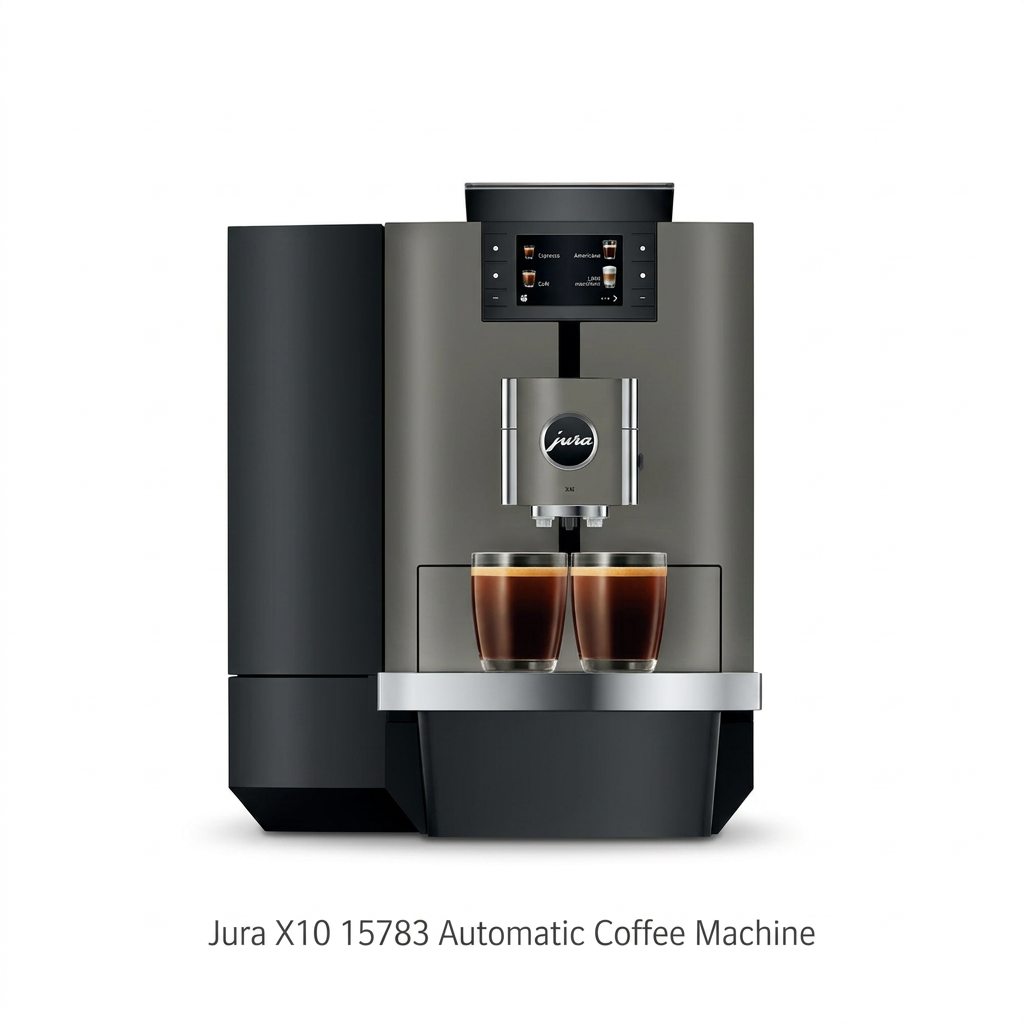
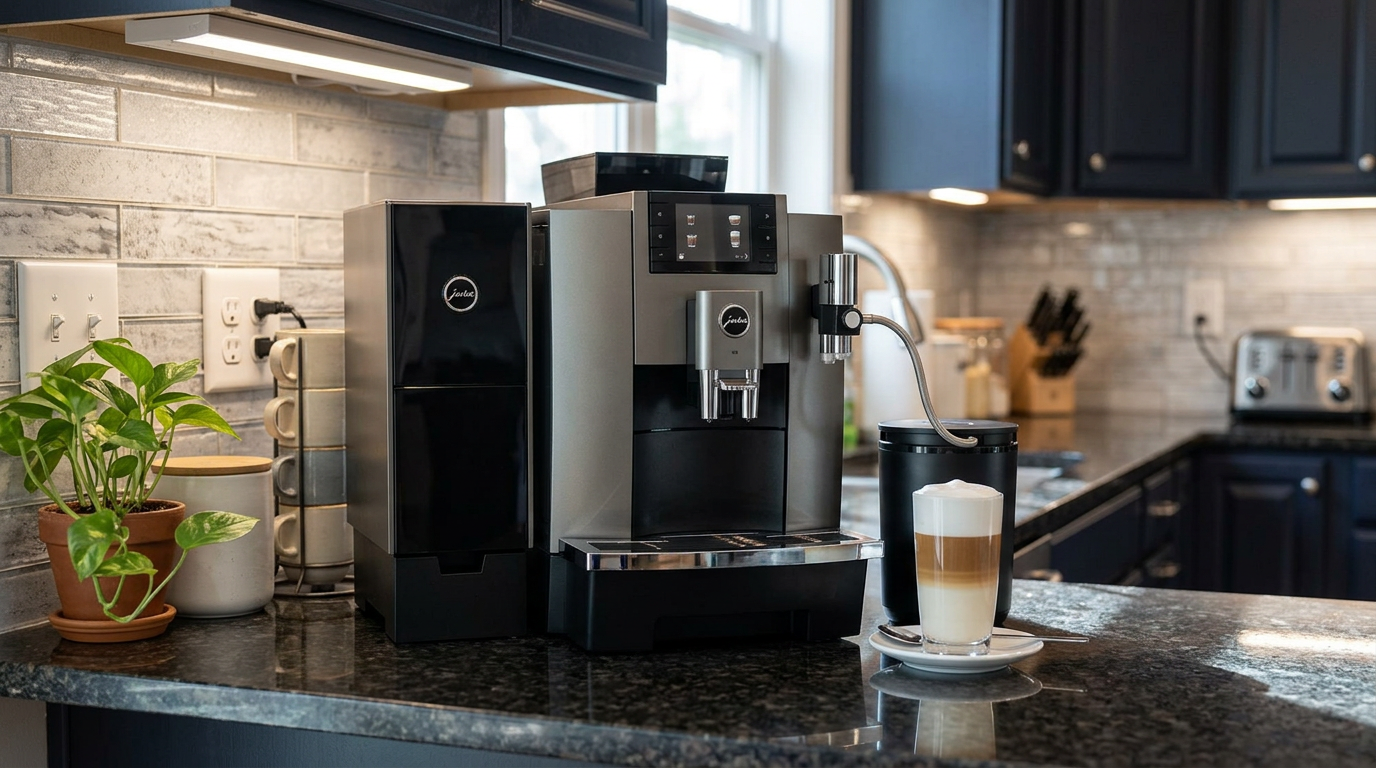
Jura X10
Rated for about 100 cups a day, with a 5-liter tank, two cappuccinos at once and lockable recipes and hopper.
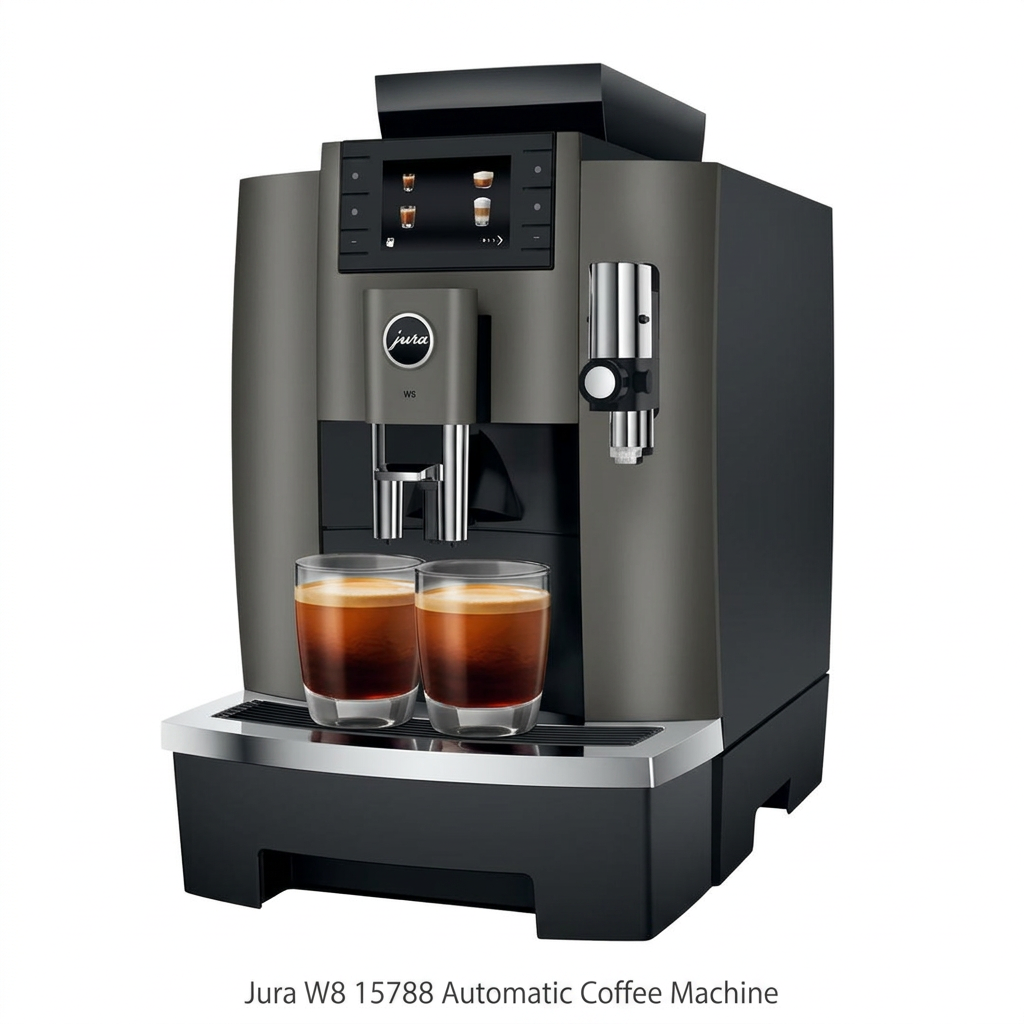
Jura W8
A 30-cup daily rating, a large tank and one-touch milk drinks in a sturdy, smaller body.
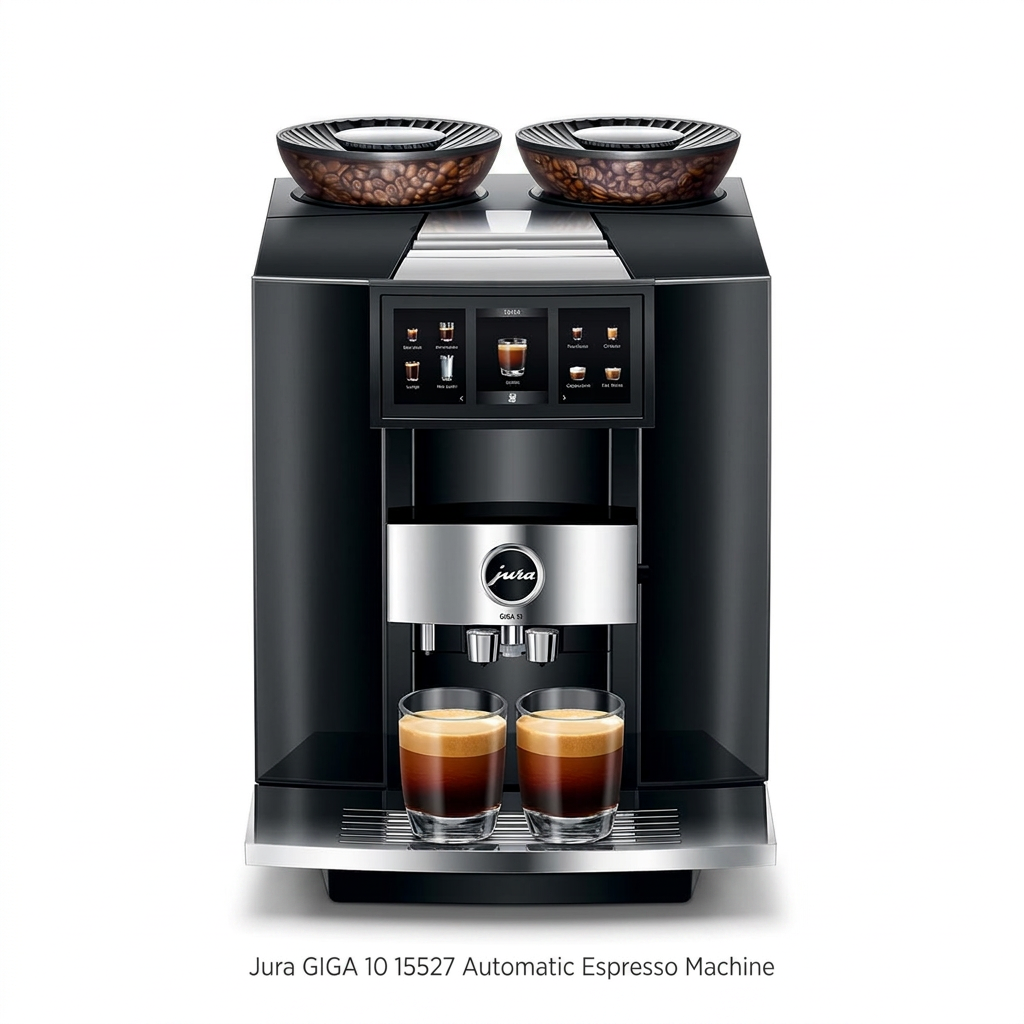
Jura GIGA 10
Two grinders to switch or blend beans, 35 drinks, cold extraction and separate milk and foam control.
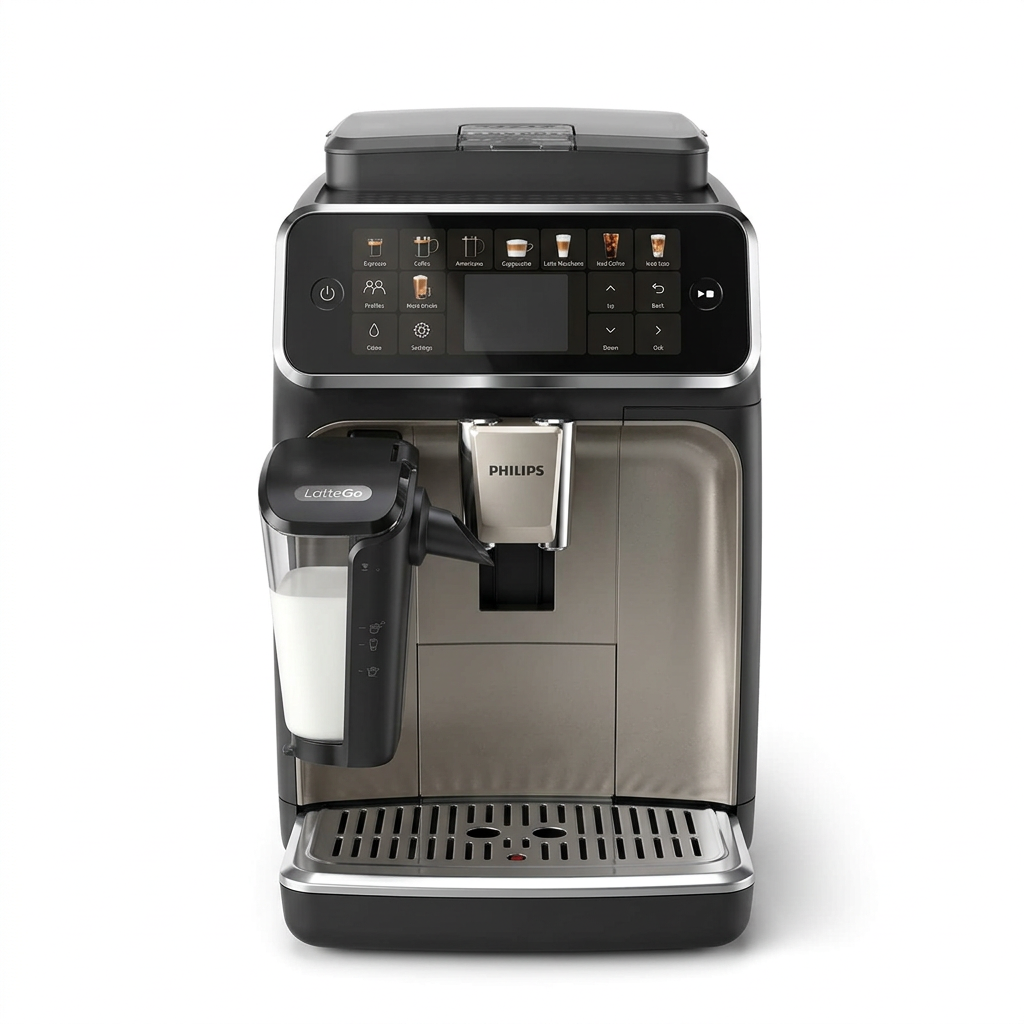
Philips 5500 Series
20 hot and iced drinks, profiles and a LatteGo milk jug that rinses clean in seconds.
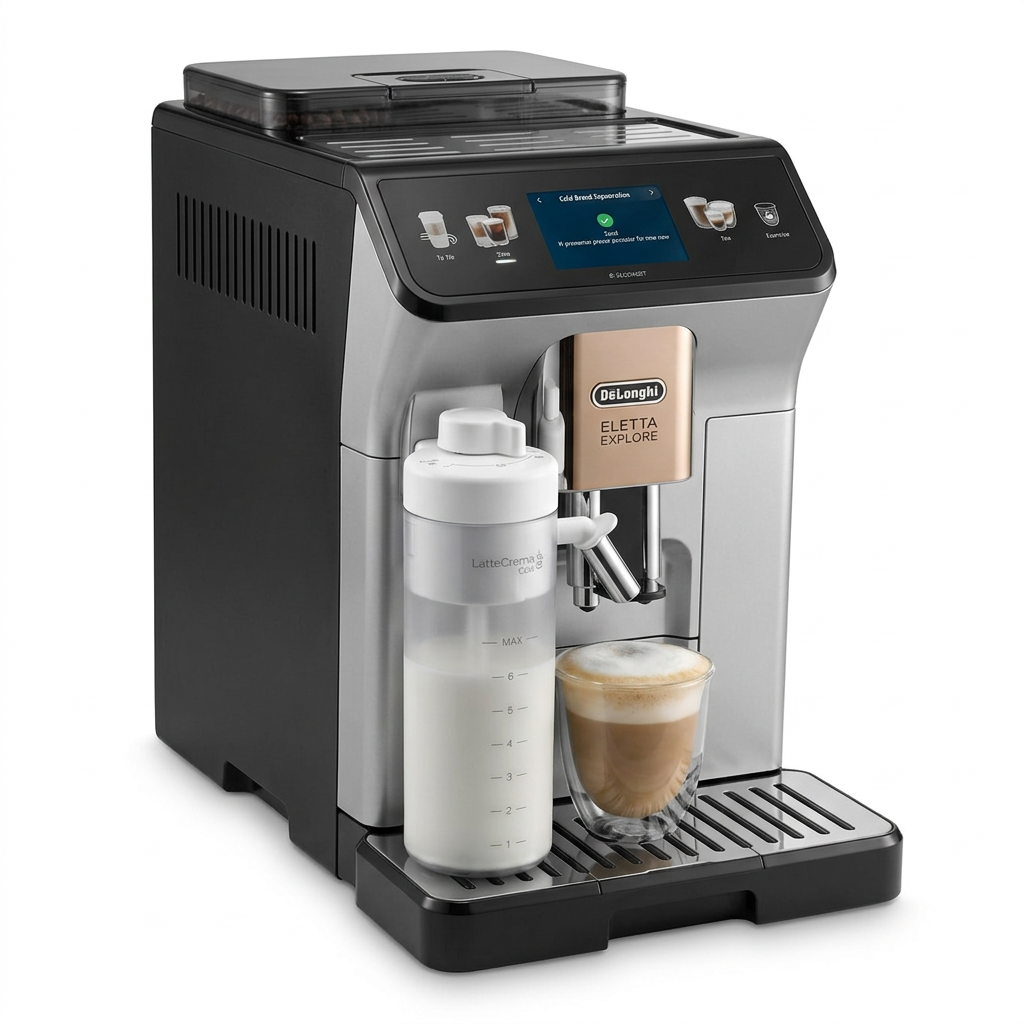
De'Longhi Eletta Explore
Real cold brew, cold foam, hot milk drinks and more than 50 recipes from a quiet machine.
Prices change often. Click through to see the current price on Amazon.
Compare the best espresso machines for a small office
Scores come from four weeks of shared use with each machine. Specifications come from manufacturer documentation and my own measurements. "Not listed" means I couldn’t confirm the figure.
| 5 models compared | Best overall | Best for 5–10 | Coffee lovers | Best value | Iced drinks |
|---|---|---|---|---|---|
| My test scores | |||||
| Overall score | 8.7 | 8.5 | 8.9 | 8.5 | 8.6 |
| Espresso | 8.8 | 8.7 | 9.2 | 8.2 | 8.4 |
| Milk drinks | 8.8 | 8.6 | 9.1 | 8.8 | 9.1 |
| Ease of use | 8.8 | 8.3 | 8.6 | 9.3 | 8.4 |
| Office features | |||||
| Rated cups per day | ~100 | ~30 | Not listed | Not listed | Not listed |
| Water tank | 5 L | ~3 L | 2.6 L | 1.8 L | Not listed |
| Two milk drinks at once | ✓ | Not listed | ✓ | ✕ | ✕ |
| Lockable settings | ✓ | Not listed | Not listed | ✕ | ✕ |
| Bean hoppers | 1, lockable | 1 | 2 | 1 | 1 |
| Drinks | |||||
| Cold drinks | Hot and cold | ✕ | Cold extraction | Iced, brewed hot | Cold brew and cold foam |
| Display | Touchscreen | 2-in color display | 6.7-in touchscreen | Color display | Color touchscreen |
| Milk cleaning | Automatic rinse | Automatic rinse | Automatic rinse | 10-second jug rinse | Carafe rinse |
| Best for | Offices of 10 to 20 people who want self-service café drinks. | Teams of 5 to 10 who want reliable milk drinks. | Small teams that care deeply about coffee. | Teams of about five who want easy cleaning. | Teams that drink iced coffee all year. |
My test scores at a glance
Every machine was scored on espresso, milk drinks, ease of use and cleaning, with extra weight on how it coped with real office traffic.
The GIGA 10 scored highest for coffee, but the X10 is my top pick for most offices. It’s built for heavy self-service use, with a huge tank, a high duty rating and lockable settings that keep 20 people from fighting over strength.
For very small teams, the Philips 5500 is a smarter buy than any of the Jura machines. It’s the easiest to use, the easiest to clean and plenty for about five people.
Editorial scores from four weeks of daily use per machine.
| Best in each category | Winner | Score |
|---|---|---|
| Espresso | Jura GIGA 10 | 9.2 |
| Milk drinks | Jura GIGA 10 and Eletta Explore (tie) | 9.1 |
| Ease of use | Philips 5500 | 9.3 |
| Capacity | Jura X10 | ~100 cups a day |
| Smallest footprint for teams | Jura W8 | 30 cups a day |
Our tip: Match the machine’s duty rating to your real daily cups, because an overworked home machine wears out fast.
How I tested
I’m a former line cook with an SCA certificate in barista skills, and I’ve tested kitchen appliances for HouseholdMe since 2018. For this guide, I put nine machines in a shared workspace for four weeks each, used by a rotating team of 5 to 20 people.
I counted drinks per day, refills and bin empties, timed the morning queue, measured milk temperature and tracked every error message and cleaning prompt. I also asked users to rate each machine on how easy it was to use without instructions.
Every machine got the same beans, the same milk and the same cleaning rota, so the differences came from the machines, not from how they were looked after.
What an office espresso machine needs
A home espresso machine might make six drinks a day. An office machine for 10 people can make 30 to 40, often in a rush at 9 a.m.
That changes what matters. Capacity, speed and simplicity count for more than a fancy drink menu.
How many cups will you really make?
Most office workers drink two or three coffees during the workday. A 2025 national coffee survey found the average American coffee drinker has about three cups a day.
| Team size | Typical cups a day | Look for a machine rated for |
|---|---|---|
| 5 people | 10–15 | At least 20 cups a day |
| 10 people | 20–30 | At least 30 cups a day |
| 15 people | 30–45 | At least 50 cups a day |
| 20 people | 40–60 | At least 80 cups a day |
Averages from four weeks of real use.
The duty rating✕Duty ratingthe number of cups a day a manufacturer designs a machine to handle reliably. Going far above it wears parts faster.
Every machine has a design limit. Running a home machine at office volumes wears grinders, pumps and brew units out far sooner.
The Jura X10 is rated for about 100 cups a day and the W8 for about 30. Home machines are typically built for far fewer.
What else matters in an office
Big tanks and grounds bins mean fewer interruptions. A consistent conical burr grinder✕Conical burr grindertwo cone-shaped grinding rings, one inside the other, that crush beans to an even size. Even grounds extract evenly, so the cup tastes less bitter and less sour. and automatic dosing keep every cup the same, no matter who presses the button. Simple, clear controls mean fewer “how do I make a latte?” questions.
lockable recipes✕Lockable recipesa setting that stops users changing drink settings. In an office, it keeps every cup consistent and stops someone accidentally making the espresso twice as strong for everyone. stop one person changing the strength for everyone. And automatic milk cleaning means nobody has to remember.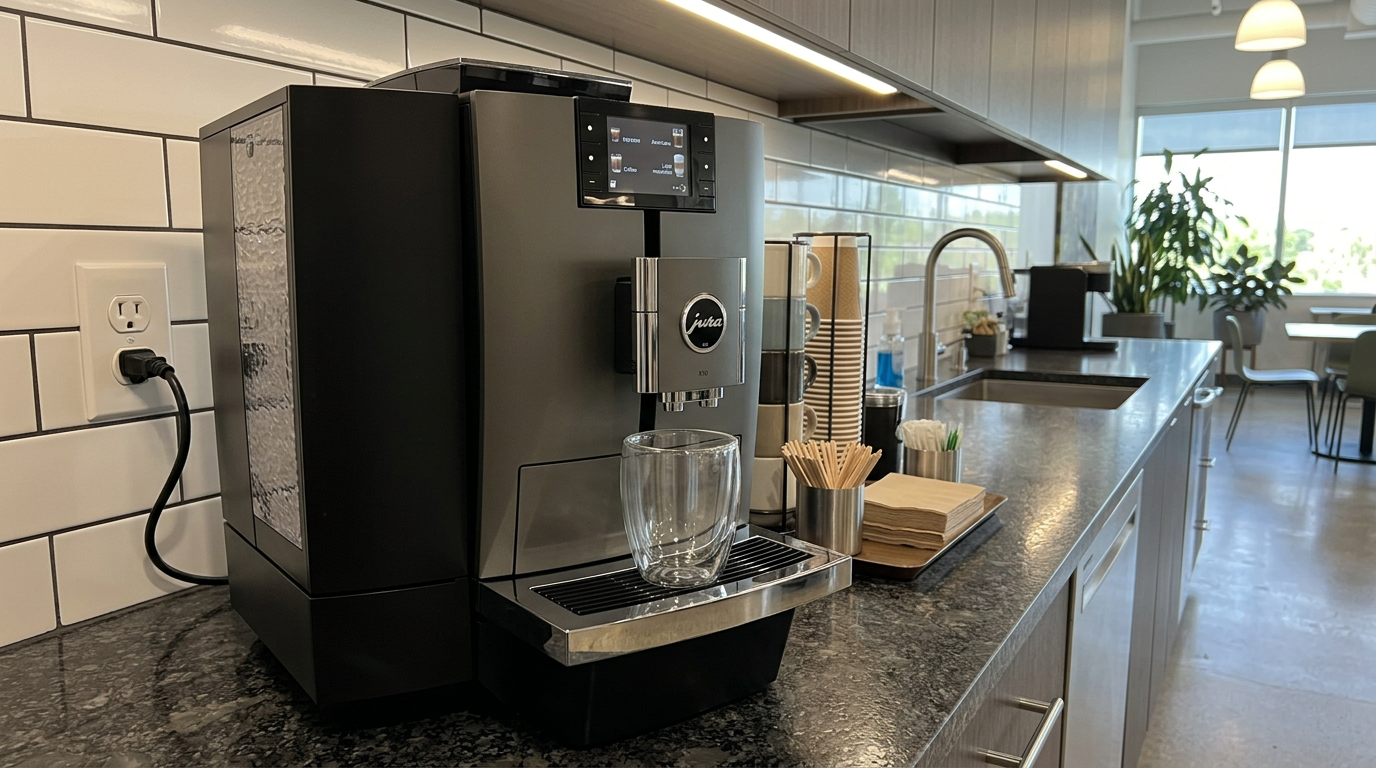
Office machines need big tanks and simple controls.
Why offices are upgrading their coffee
Good coffee has become a reason to come into the office. The same survey found 71% of daily coffee drinkers make all their coffee at home, so a disappointing office brew is easy to notice.
Our picks in depth
1. Jura X10
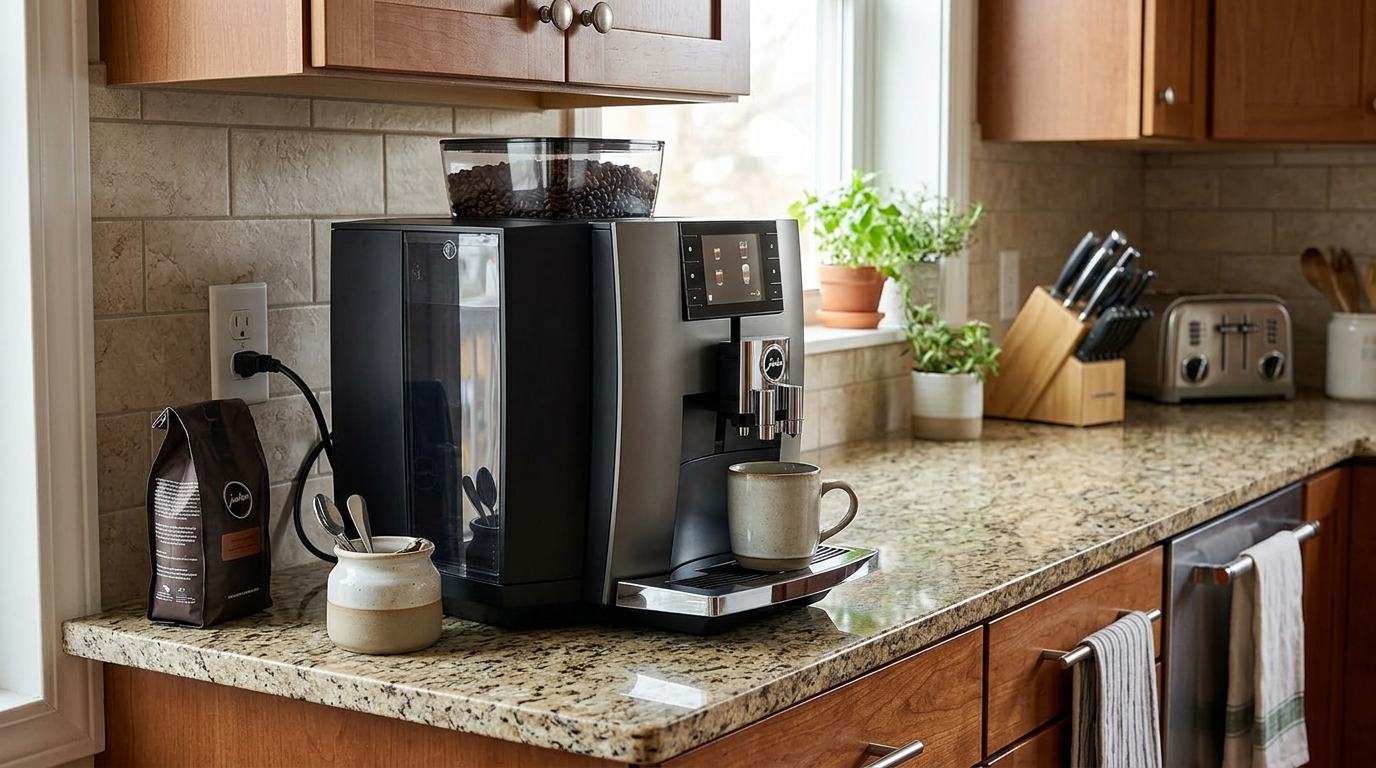
The Jura X10 is a self-service workhorse for offices, lounges and small cafés. It’s rated for about 100 cups a day and makes hot and cold coffee, two cappuccinos at once and layered milk drinks from a 5-liter tank.
Its recipes and bean hopper can be locked, so drinks stay consistent. It’s overkill for a home kitchen.
Built for a queue
In my 20-person test, the X10 made around 58 drinks a day. Two cappuccinos took under a minute, so the 9 a.m. queue moved fast.
The 5-liter tank needed refilling about once a day at that pace. The grounds bin was emptied once or twice a day.
Lockable recipes and hopper
You can lock drink settings and the bean hopper. That stopped anyone changing the default strength, and it kept the beans we chose in the machine.
Hot and cold drinks
The X10 makes cold coffee as well as hot. On summer afternoons, cold drinks were a quarter of everything it made.
Espresso and milk
Espresso scored 8.8, with a thick crema. Milk drinks, at 8.8, were fine and hot, and layered latte macchiatos looked like café drinks.
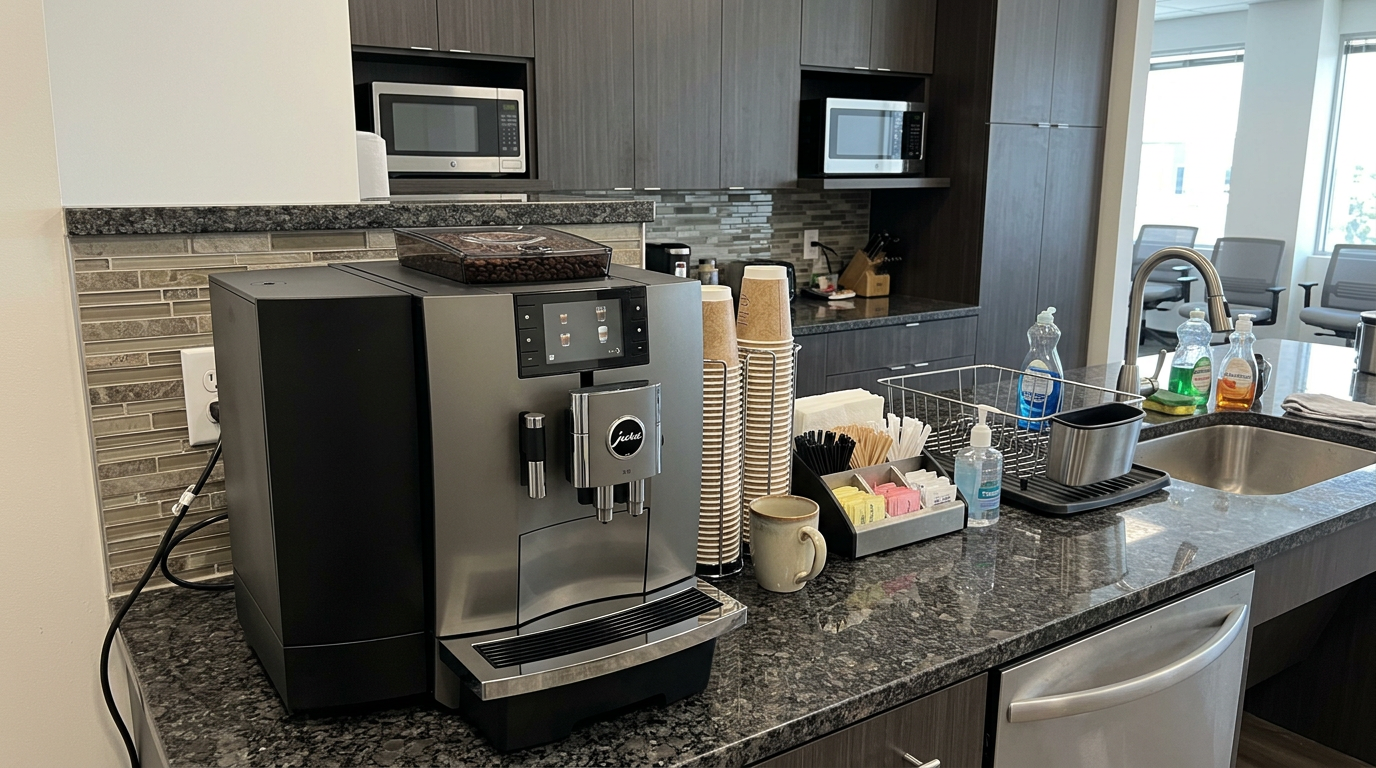
The X10 makes two cappuccinos at once in under a minute.
Easy for anyone
The touchscreen shows large drink pictures. Visitors made drinks without asking anyone.
Ten strength levels
The X10 adjusts the dose✕Dosethe weight of ground coffee used for one brew. A classic double shot uses roughly 14 to 18 grams. across ten strength levels. I set the office default to level seven, strong enough for espresso drinkers but smooth in milk.
Daily routine
At 8:30 a.m., the first person filled the tank and checked the beans. At 5:30 p.m., the last person ran the milk clean and emptied the bin. That was it.
Who it suits best
The X10 suits offices of 10 to 20 people, lounges and shared workspaces.
What to know before you buy
It’s large and a serious outlay. For fewer than 10 people, the W8 is plenty.
For a small office that wants café drinks without a barista, the Jura X10 is my pick.
- Rated for about 100 cups a day
- 5-liter tank
- Two cappuccinos at once
- Lockable recipes and hopper
- Large footprint
- Big outlay
- Overkill for small teams
- Offices of 10 to 20
- Shared workspaces
- Client lounges
- Teams under 10
- Home kitchens
- Tight budgets
Choose this if you need a self-service machine for a busy office. Read my full Jura X10 review.
2. Jura W8
The Jura W8 is built for small offices and busy homes, with a large water tank, a 30-cup daily rating and one-touch milk drinks.
It’s sturdy and consistent. Its small screen and menus take learning, and the milk system needs someone to look after it.
Right-sized for small teams
In my 12-person test, the W8 made around 31 drinks a day, right at its rating. The 3-liter tank lasted about a day.
Consistent drinks
Espresso scored 8.7, and every cup tasted the same through the busiest mornings. Milk drinks scored 8.6.
Our tip: Put a small card next to the W8 showing the three drink buttons, because the small screen confuses first-time users.
The milk system
Milk is drawn from a container through a tube. The machine rinses it after each drink, but someone needs to run the daily clean.
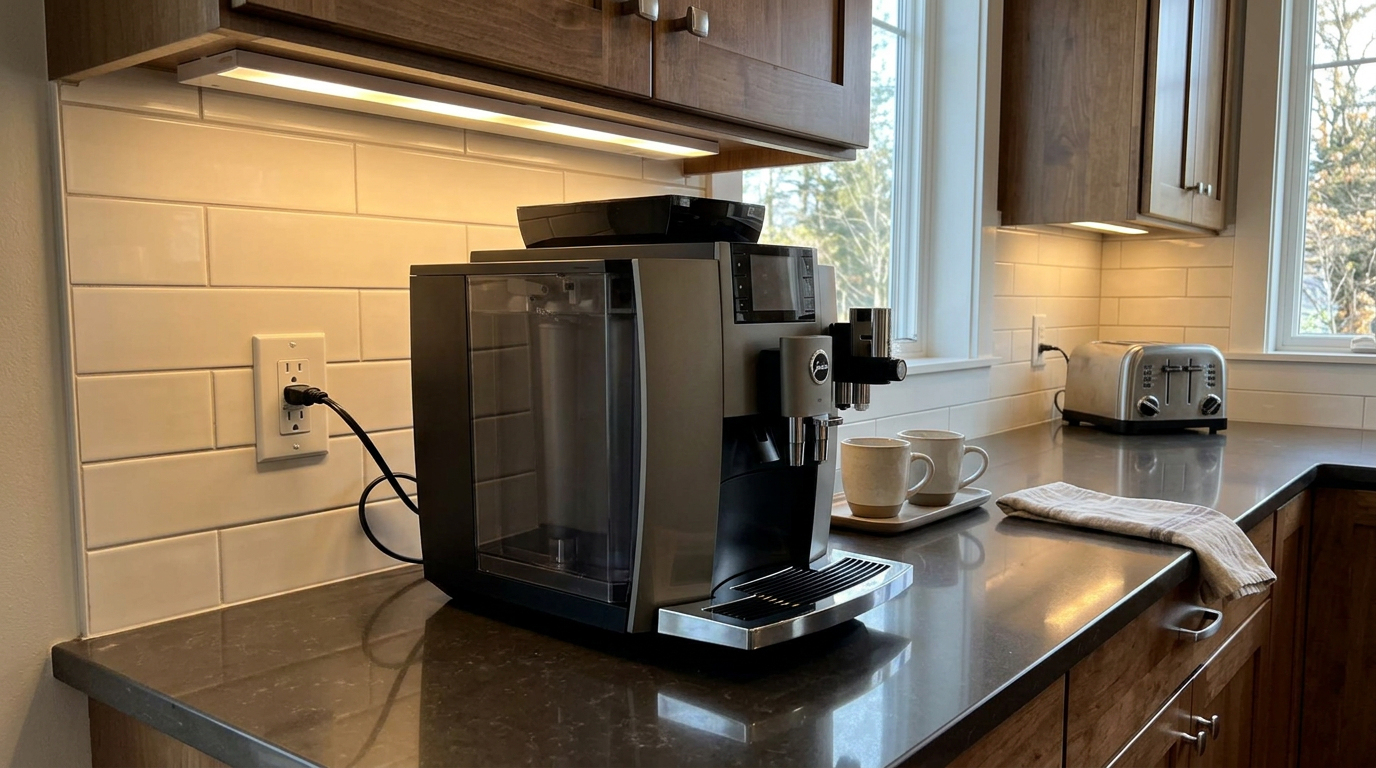
The W8 is rated for about 30 cups a day.
Milk quality
The W8’s microfoam✕Microfoammilk foam with bubbles so small you can’t see them. It feels silky, pours smoothly and blends into the espresso. was dense and hot, and cappuccinos held their shape on the walk back to a desk.
A week in the studio
Twelve people averaged about 31 drinks a day. The machine never complained, and the only interruption was a refill around lunchtime.
Espresso
A short pre-infusion✕Pre-infusiona short soak of the coffee puck with low-pressure water before full pressure arrives. It helps water flow evenly through the coffee. soaked each puck before full pressure, and espresso stayed consistent from the first cup of the day to the thirtieth.
Who it suits best
The W8 suits teams of 5 to 10 people, or a very busy household.
What to know before you buy
The small screen takes learning. Assign someone to the daily milk clean.
For a smaller team, the Jura W8 is the right size.
- 30-cup daily rating
- Large 3-liter tank
- Consistent drinks
- Sturdy build
- Small screen
- Menus take learning
- Milk needs daily care
- Teams of 5 to 10
- Busy households
- Small studios
- Offices over 15
- People who want big touchscreens
- Teams without a cleaning routine
Choose this if your team is 5 to 10 people and wants reliable milk drinks. Read my full Jura W8 review.
3. Jura GIGA 10
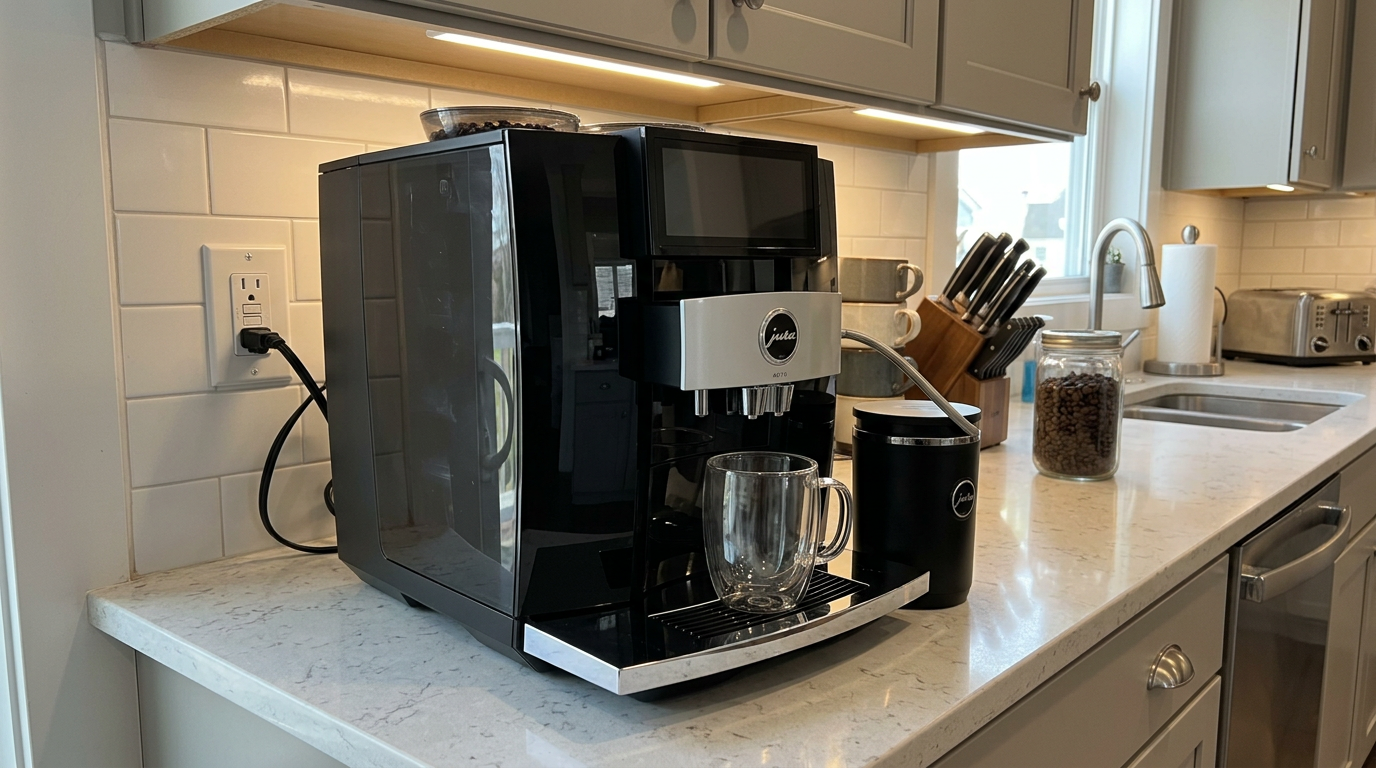
The Jura GIGA 10 is a two-grinder flagship that lets you switch or blend beans for every drink. It makes cold extraction coffee and fine-tunes milk, foam and temperature separately.
It made the best coffee of any office machine I tested. It’s big, heavy and only worth it if your team will use its range.
Two grinders
One grinder held an espresso blend, the other a lighter roast. Each drink could use either bean, or a blend of both.
My team loved choosing beans by drink. It turned the coffee machine into a talking point.
Best espresso and milk
Espresso scored 9.2 and milk 9.1, the best in this guide. Cold extraction made smooth iced coffee in minutes.
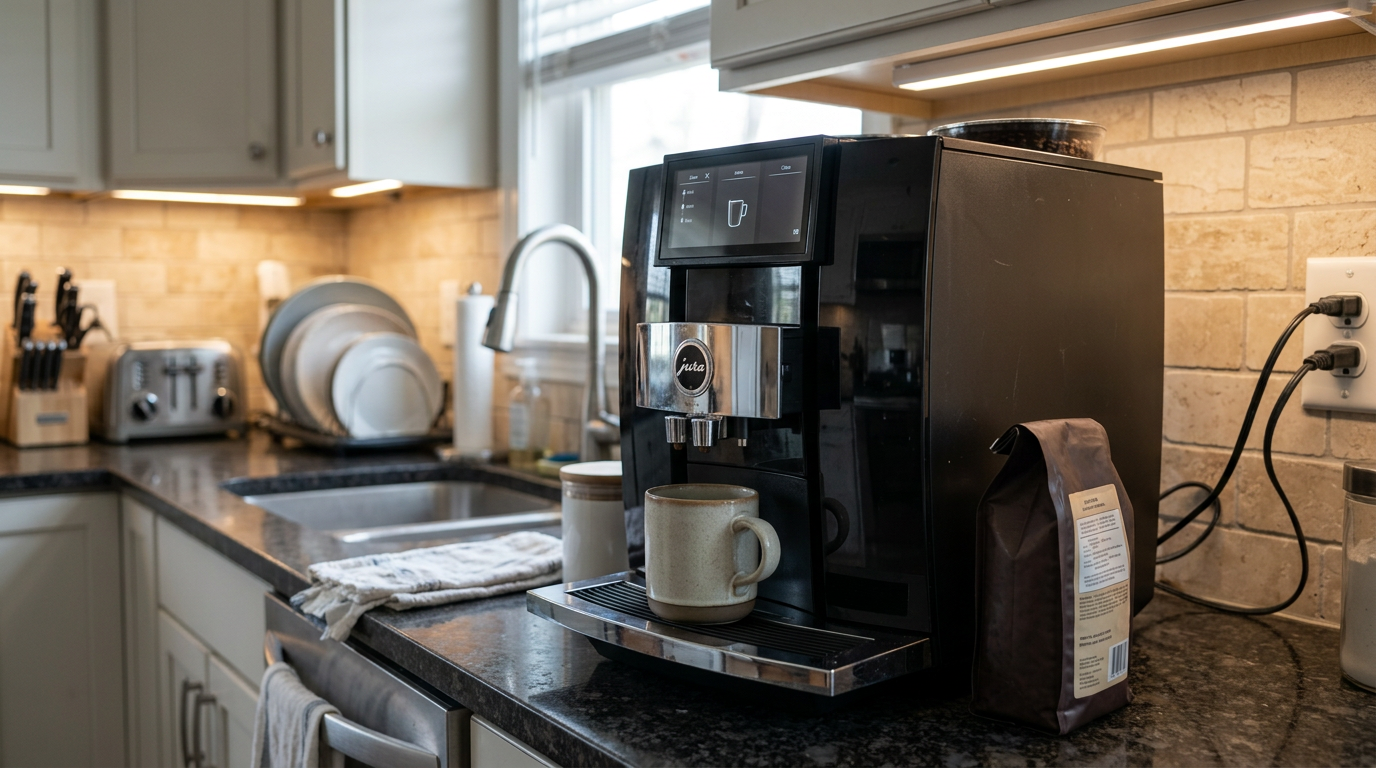
Two grinders let each drink use a different bean.
Cold extraction
The GIGA 10’s cold extraction✕Cold extractionbrewing coffee with room-temperature water at low pressure over a few minutes. It gives a smooth, low-bitterness iced coffee without waiting overnight. made smooth iced coffee in minutes. On summer afternoons, it was the most popular drink on the menu.
Two drinks at once
Two cappuccinos took under three minutes, so a small team never queued for long.
Who it suits best
The GIGA 10 suits small teams of coffee enthusiasts, design studios and offices that host clients.
What to know before you buy
It isn’t rated for the volume of the X10. It’s large, heavy and a premium outlay.
For the best coffee in a small office, the Jura GIGA 10 is spectacular.
- Best espresso and milk in this guide
- Two grinders
- Cold extraction
- Large touchscreen
- Premium outlay
- Large and heavy
- Not built for 20-person volumes
- Coffee-loving teams
- Client-facing offices
- Teams that want decaf on tap
- Large, busy offices
- Tight budgets
- Small counters
Choose this if your small team cares deeply about coffee quality. Read my full Jura GIGA 10 review.
4. Philips 5500 Series
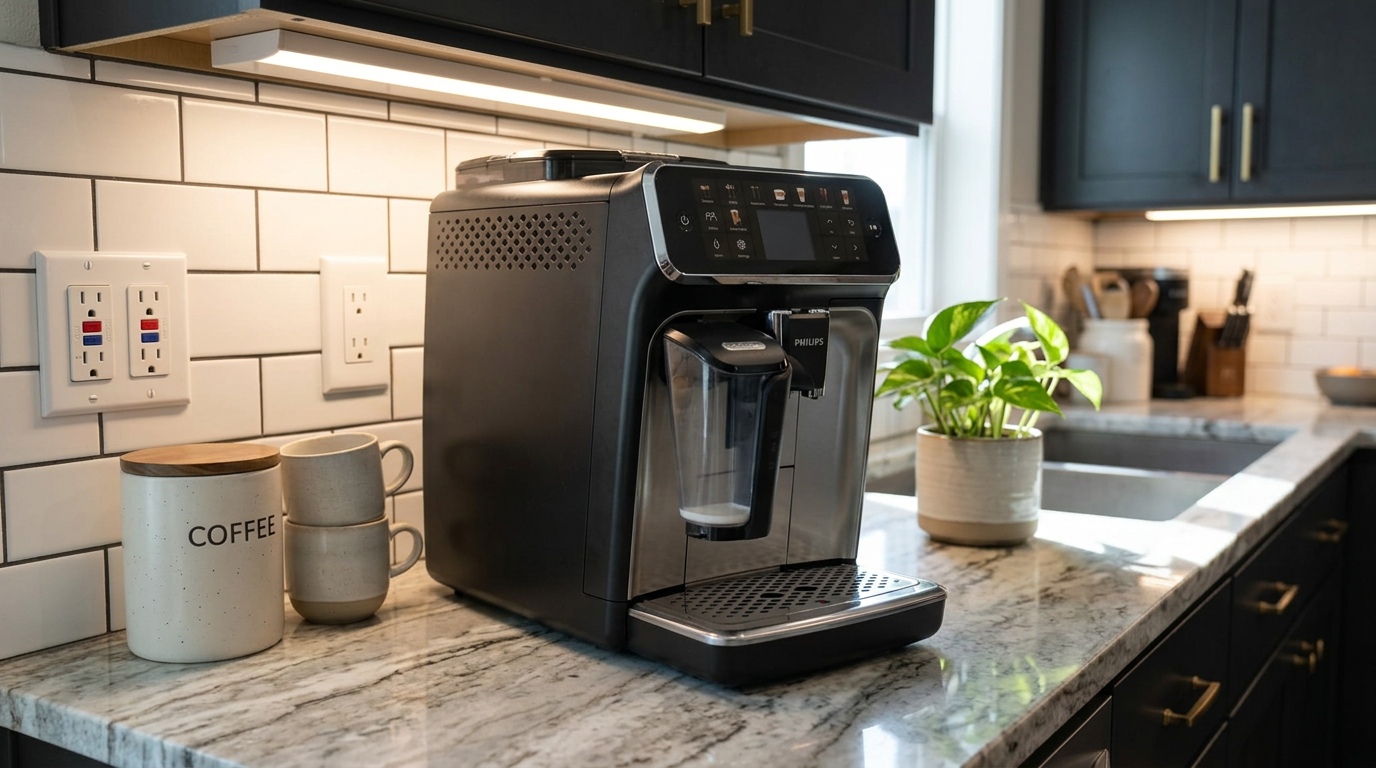
The Philips 5500 is the best-value machine for a small team of about five. It makes 20 hot and iced drinks and its LatteGo milk jug rinses clean in seconds.
It’s quiet and easy for anyone to use. The espresso is lighter than a café shot, and it’s not built for big office volumes.
Easy for everyone
The color display is the clearest I tested. Every user made their drink without help on day one.
Easy milk cleaning
LatteGo has no tubes. Whoever made the last milk drink rinsed it in ten seconds.
Our tip: Keep a second LatteGo jug in the office fridge, so a clean one is always ready.
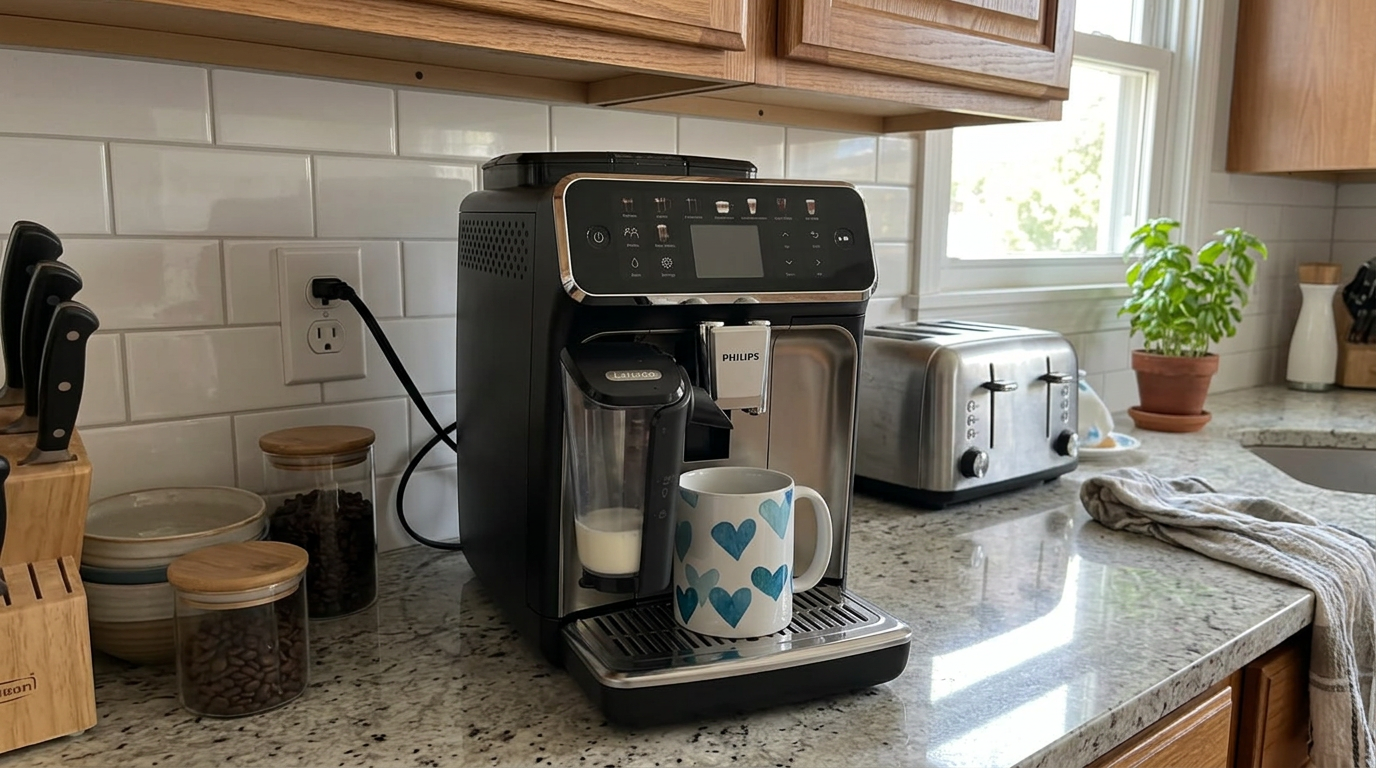
The 5500’s display was the easiest for first-time users.
Iced drinks
The 5500 makes iced drinks by brewing hot coffee to pour over ice. They were refreshing, though not as smooth as true cold brew.
Profiles
Profiles let regular users save their favorite drinks. Visitors used the guest mode.
Who it suits best
The 5500 suits teams of about five with modest daily volumes.
What to know before you buy
The 1.8-liter tank needs refilling a couple of times a day in an office. It isn’t rated for heavy use.
For a small team on a budget, the Philips 5500 is the best value.
- Easiest controls
- Tubeless milk jug
- 20 hot and iced drinks
- Quiet
- Small tank for an office
- Lighter espresso
- Not built for heavy use
- Teams of about five
- Budget-minded offices
- Teams with no cleaning rota
- Offices over 10
- Heavy daily use
- Espresso purists
Choose this if your team is small and you want the easiest machine to share. Read my full Philips 5500 Series review.
5. De'Longhi Eletta Explore
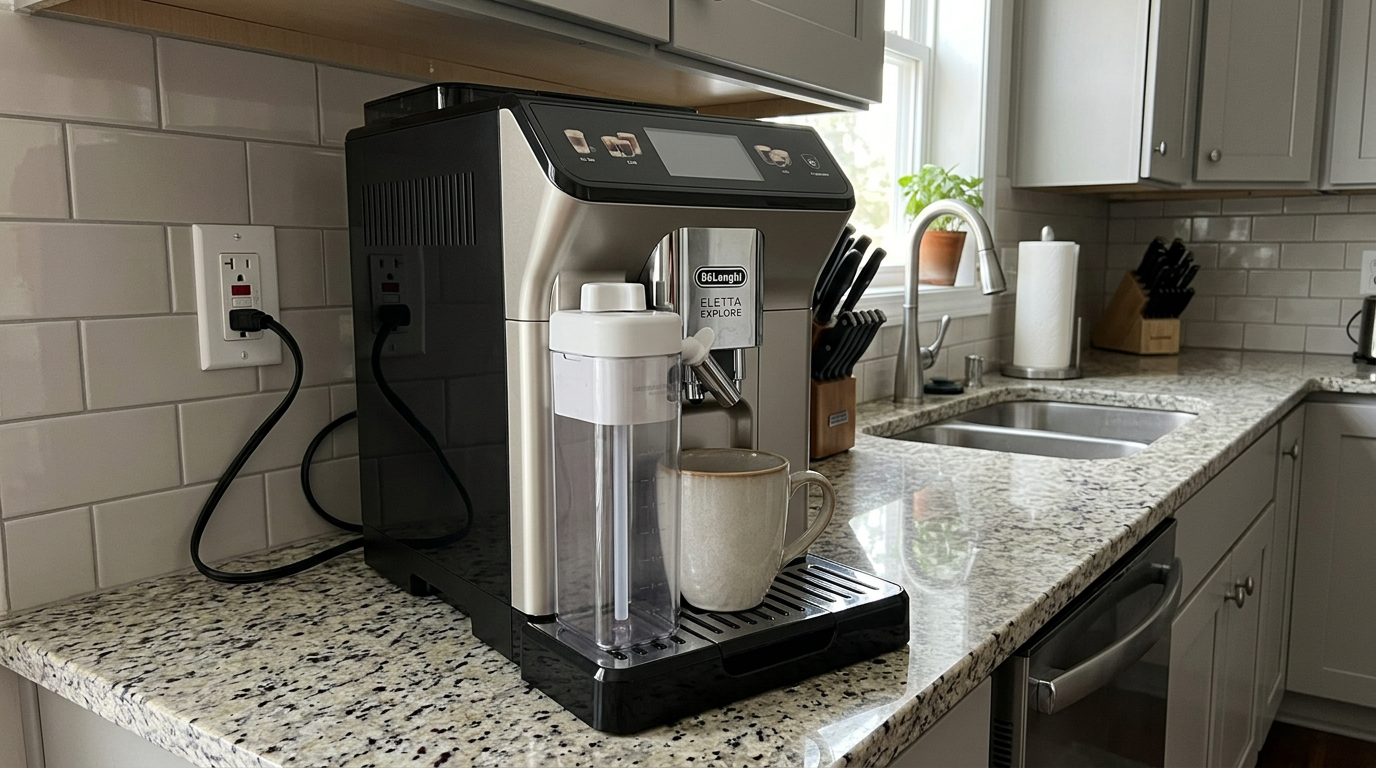
The De’Longhi Eletta Explore is the best office machine for iced drinks. It makes real cold brew, cold foam and over 50 hot and cold recipes.
It’s quiet and generous with coffee. The two milk carafes need regular hand cleaning.
Iced drinks all year
My team made iced lattes with cold foam well into autumn. Cold brew was smooth and ready in minutes.
Quiet
The grinder stayed under 65 decibels, quiet enough for an open-plan office.
Our tip: Add the cold carafe to the end-of-day cleaning rota, because cold milk residue is easy to forget.
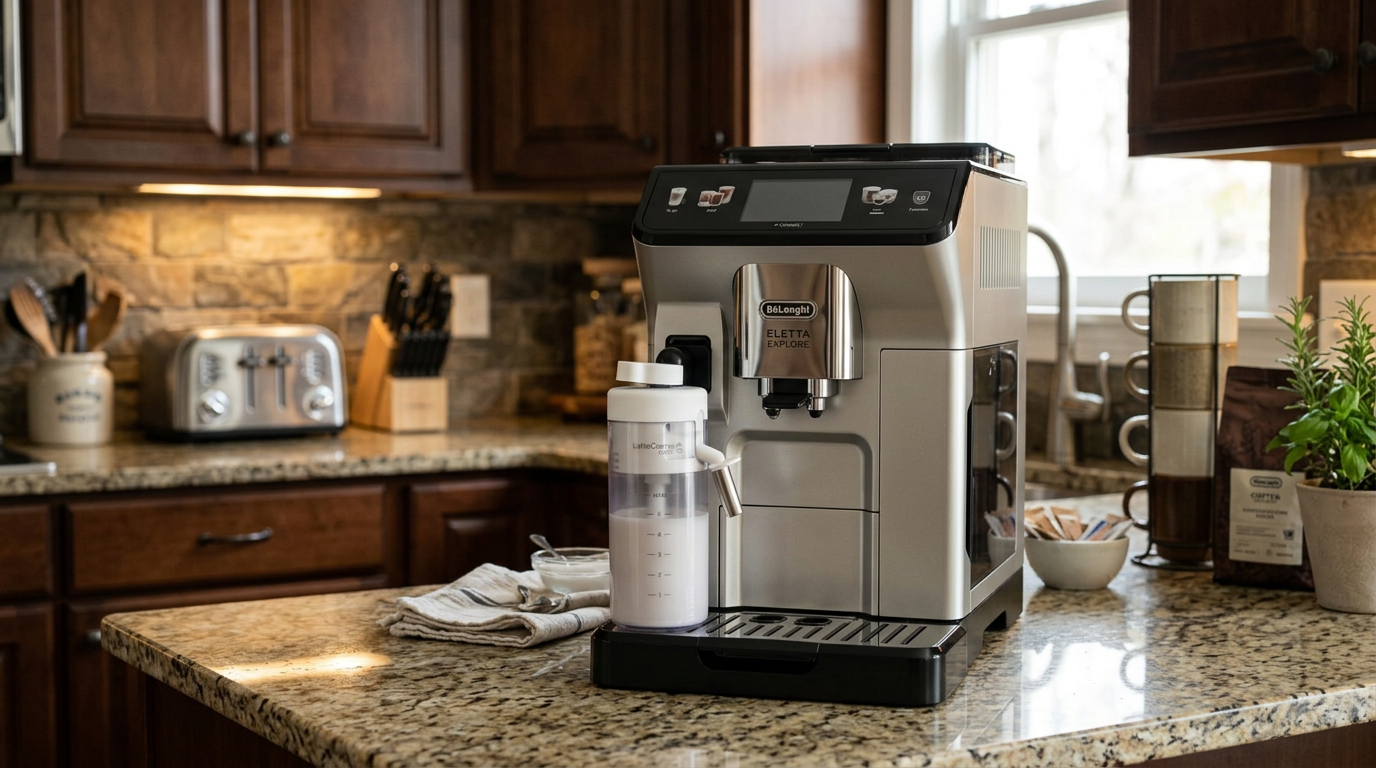
The Eletta made the best iced drinks in this guide.
Hot drinks too
Cappuccinos and flat whites from the hot carafe were excellent, with a milk score of 9.1. The Eletta isn’t just a summer machine.
Who it suits best
The Eletta suits teams of about five to eight who drink iced coffee often.
What to know before you buy
Two carafes need daily washing. It isn’t built for very high volumes.
For iced drinks in a small office, the Eletta Explore is the one.
- Real cold brew and cold foam
- Over 50 recipes
- Very quiet
- Excellent milk
- Two carafes to wash
- Not built for high volume
- Slow app
- Iced coffee teams
- Open-plan offices
- Teams of 5 to 8
- Large offices
- Teams without a cleaning rota
- Espresso purists
Choose this if your team drinks iced coffee as often as hot. Read my full De'Longhi Eletta Explore review.
My test data: queues, refills and capacity
These are the numbers I recorded in a real shared workspace. They’re the ones that decide whether a machine keeps a team happy.
The 9 a.m. queue
I timed how long it took to serve five cappuccinos in a row, from the first press to the fifth cup.
Time to serve five cappuccinos back to back.
Refills per day
| Machine | Team size in test | Drinks a day | Tank refills a day | Bin empties a day |
|---|---|---|---|---|
| Jura X10 | 20 | ~58 | ~1 | 1–2 |
| Jura W8 | 12 | ~31 | ~1 | ~1 |
| Jura GIGA 10 | 8 | ~22 | ~1 | ~1 |
| Eletta Explore | 6 | ~16 | ~1 | ~1 |
| Philips 5500 | 5 | ~14 | ~2 | ~1 |
Ease of use, rated by the team
I asked every user to rate each machine on how easy it was to use without instructions.
Average of team ratings over four weeks.
Our tip: Put the machine where people can queue without blocking a doorway, because the morning rush is real.
What people actually drank
Across all machines over the test period.
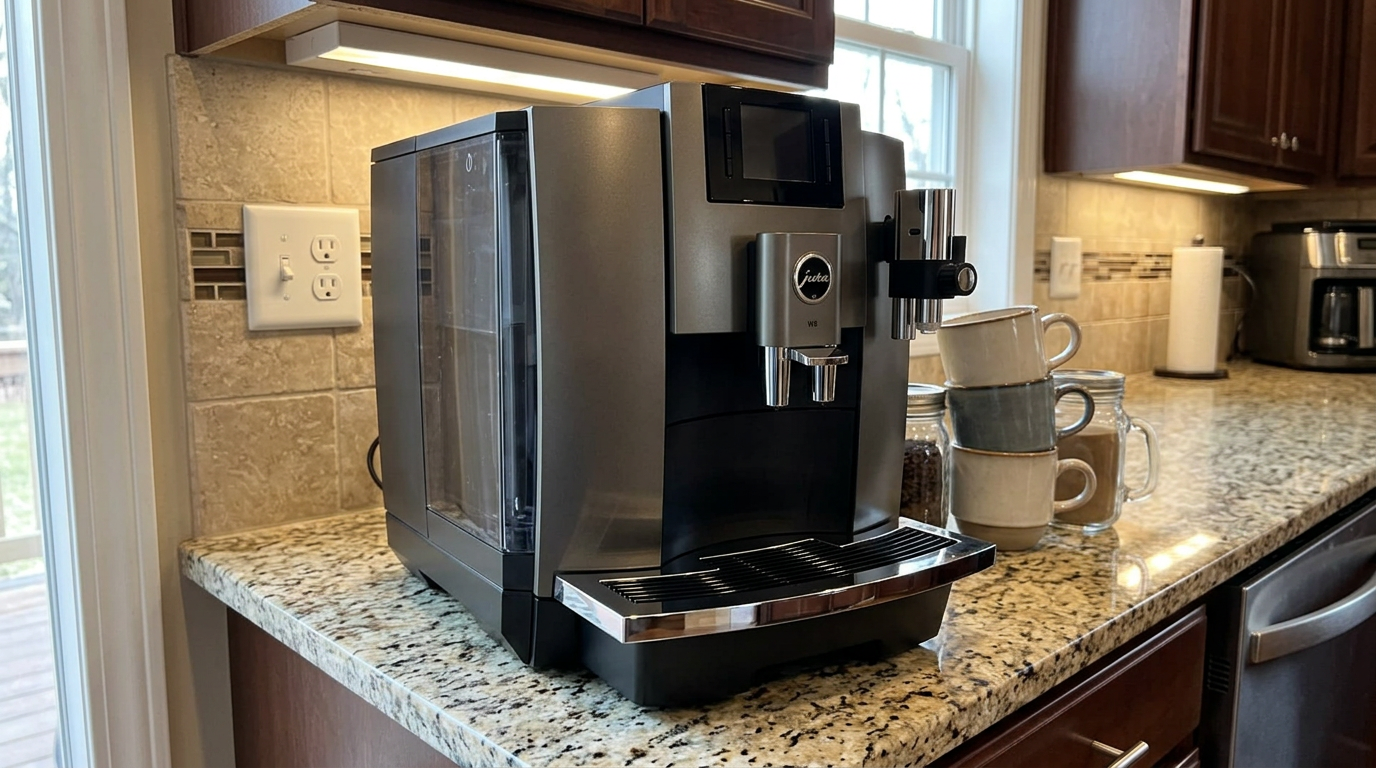
The W8 handled about 30 drinks a day for a 12-person team.
Setting up an office machine so it runs itself
The best office machine is one nobody has to think about. These steps made the biggest difference in my test.
- Choose three default drinks
Program espresso, americano and cappuccino exactly as you want them, then lock them if you can.
- Write a one-card guide
Show the three buttons and where milk goes. It cut questions by half.
- Create a cleaning rota
One person per day empties the bin and runs the milk clean at the end of the day.
- Keep spare supplies nearby
Beans, filters, cleaning tablets and milk cleaner within reach.
- Use a water filter
Offices often have hard water, and scale is the main cause of breakdowns.
| Job | How often | Time |
|---|---|---|
| Refill water and beans | Daily | 2 minutes |
| Empty grounds bin and drip tray | Daily | 2 minutes |
| Run milk system clean | Daily | 5 minutes, mostly automatic |
| Run coffee cleaning program | When prompted | 10 minutes, automatic |
| Change water filter | When prompted | 2 minutes |
Our tip: Stick the cleaning rota on the fridge, because shared jobs get skipped when nobody owns them.
Which one is right for you?
4 quick questionsAnswer four questions, and I’ll point you to the office machine that fits your team.
Or find your office below
Two cappuccinos at once and a 5-liter tank.
A 30-cup daily rating in a smaller body.
Two grinders and the best espresso here.
A milk jug that rinses in ten seconds.
Cold brew and cold foam on demand.
Decaf in the second grinder.
What to look for in an office espresso machine
These are the features that mattered most in a real office, in the order I’d check them.
Duty rating and team size
| Team size | Choose | My pick |
|---|---|---|
| Up to 5 | A home machine with easy cleaning | Philips 5500 |
| 5 to 10 | A machine rated for about 30 cups a day | Jura W8 |
| 10 to 20 | A machine rated for 80+ cups a day | Jura X10 |
| Small, coffee-focused | A two-grinder flagship | Jura GIGA 10 |
| Iced coffee team | Cold brew and cold foam | Eletta Explore |
Water tank and bin
Bigger is better in an office. A 2.5-liter tank or more and a large grounds bin mean fewer interruptions.
Our tip: Choose a tank at least twice as big as you think you need, because people rarely refill a machine they didn’t empty.
Speed and two at once
Making two drinks at once halves the morning queue. The X10 and GIGA 10 do it with milk drinks.
Simple controls
Large pictures beat small menus. The Philips 5500 and Jura X10 were the easiest for first-time users.
Lockable settings
Locking recipes keeps drinks consistent. It’s a feature home machines rarely have.
Milk cleaning
Automatic milk rinses are essential. Machines that rely on people remembering to clean get neglected.
Water connection
Some office machines can connect to a water line. For very busy offices, it removes refills entirely; check whether your chosen model supports it.
Home machines vs office machines
Many small offices start with a home machine. This is how they compared with machines built for office use.
| Home machine | Office machine | |
|---|---|---|
| Duty rating | Low | Rated for dozens to 100 cups |
| Water tank | 1.4–2 liters | 3–5 liters |
| Grounds bin | 10–16 pucks | Larger |
| Lockable settings | Rarely | Yes |
| Two milk drinks at once | Sometimes | Usually |
| Build | Lighter | Sturdier |
For five people, a good home machine like the Philips 5500 works well. Above about 10 people, a home machine runs at its limit every day, and I’d move to a W8 or X10.
Bean-to-cup vs pods or a coffee service
Offices usually weigh a bean-to-cup machine against pods or a coffee service. This is how they compared.
| Bean-to-cup machine | Pod machine | Coffee service | |
|---|---|---|---|
| Coffee quality | Fresh-ground, best | Consistent, average | Varies |
| Cost per cup | Low, beans | Higher, pods | Contract |
| Waste | Compostable grounds | Used pods | Varies |
| Milk drinks | One touch | Often separate | Varies |
| Who maintains it | You, with a rota | You | The provider |
For most small offices, a bean-to-cup machine gives the best coffee for the lowest running cost per cup. It does need a simple cleaning rota.
A rough comparison of ongoing costs per drink, not including the machine itself.
How to serve better coffee to the whole team
The machine is only half the story. These habits made the biggest difference to how my test team rated the coffee.
- Buy fresh beans every week or two
Large bags go stale before an office finishes them. Buy smaller bags more often.
- Choose a crowd-pleasing roast
Medium or medium-dark roasts suited the most people.
- Offer decaf
A second grinder or pre-ground chute keeps afternoon drinkers happy.
- Keep milk cold and fresh
Use a small fridge next to the machine and replace milk daily.
- Ask for feedback
A quick monthly poll on beans and defaults kept everyone happy.
What changed team ratings most during my test.
Our tip: Rotate beans every month or two, because a new coffee gives the team something to talk about.
Where to put an office espresso machine
Placement matters more in an office than at home. A badly placed machine causes queues, spills and complaints.
Space around the machine
Leave room on both sides for people to set down cups and for someone to lift out the tank. A small counter or cart works well.
| Need | Why | My recommendation |
|---|---|---|
| Counter space beside it | Cups, milk and sugar | At least 2 feet each side |
| A nearby sink | Rinsing milk parts and cups | Within a few steps |
| A small fridge | Milk stays cold and fresh | Right next to the machine |
| A power outlet | Office machines draw a lot of power | A dedicated outlet |
| Room to queue | The morning rush | Away from doorways |
Noise
Grinders are loud in a quiet office. The Eletta Explore was quietest; the bigger Jura machines were noticeable but short.
Our tip: Keep the machine away from meeting rooms and phone booths, because grinding interrupts calls.
A coffee station
A small cart with cups, a bin, cleaning supplies and spare beans turned the machine into a proper coffee station. It also kept the mess in one place.
Accessibility
Put the machine at a height everyone can reach comfortably, with the buttons and milk container easy to see.
Maintenance and running costs
Office machines work hard, so maintenance matters more than at home.
- Clean the milk system every evening
Run the machine’s milk clean at the end of each day.
- Empty the bin and tray daily
Before they’re full, so the machine never stops mid-queue.
- Run cleaning programs when asked
On busy machines, that can be every few days.
- Change the filter on time
Office water is often hard, and scale causes most breakdowns.
- Book a yearly service
For heavy-use machines, a professional service keeps them reliable.
| Consumable | How often in an office | Why |
|---|---|---|
| Water filter | Every 1–2 months | Heavy water use |
| Coffee cleaning tablets | Weekly or when prompted | Coffee oils build up fast |
| Milk system cleaner | Daily | Many milk drinks |
| Descaler | Only if no filter | Protects the heater |
Our tip: Buy beans and cleaning supplies on a subscription, because running out mid-week is the most common office coffee complaint.
Common mistakes to avoid
These caused the most problems in my office test.
| Mistake | What happens | Better habit |
|---|---|---|
| Buying a home machine for 15 people | Early wear and breakdowns | Match the duty rating |
| No cleaning rota | Sour milk smell | Assign a daily owner |
| Unlocked settings | Inconsistent drinks | Lock default recipes |
| No water filter | Scale and breakdowns | Fit and change it |
| Running out of beans | Unhappy team | Keep a spare bag |
| Machine in a doorway | Blocked queue | Give it its own space |
Other machines I tested for offices
These were all tested in the same workspace. Each was beaten by a pick that suits office life better.
For home use, see my guide to the best super-automatic espresso machines.
If your office is closer to five people than twenty, any of these home machines can work well, as long as you set up a cleaning rota and keep an eye on the tank.
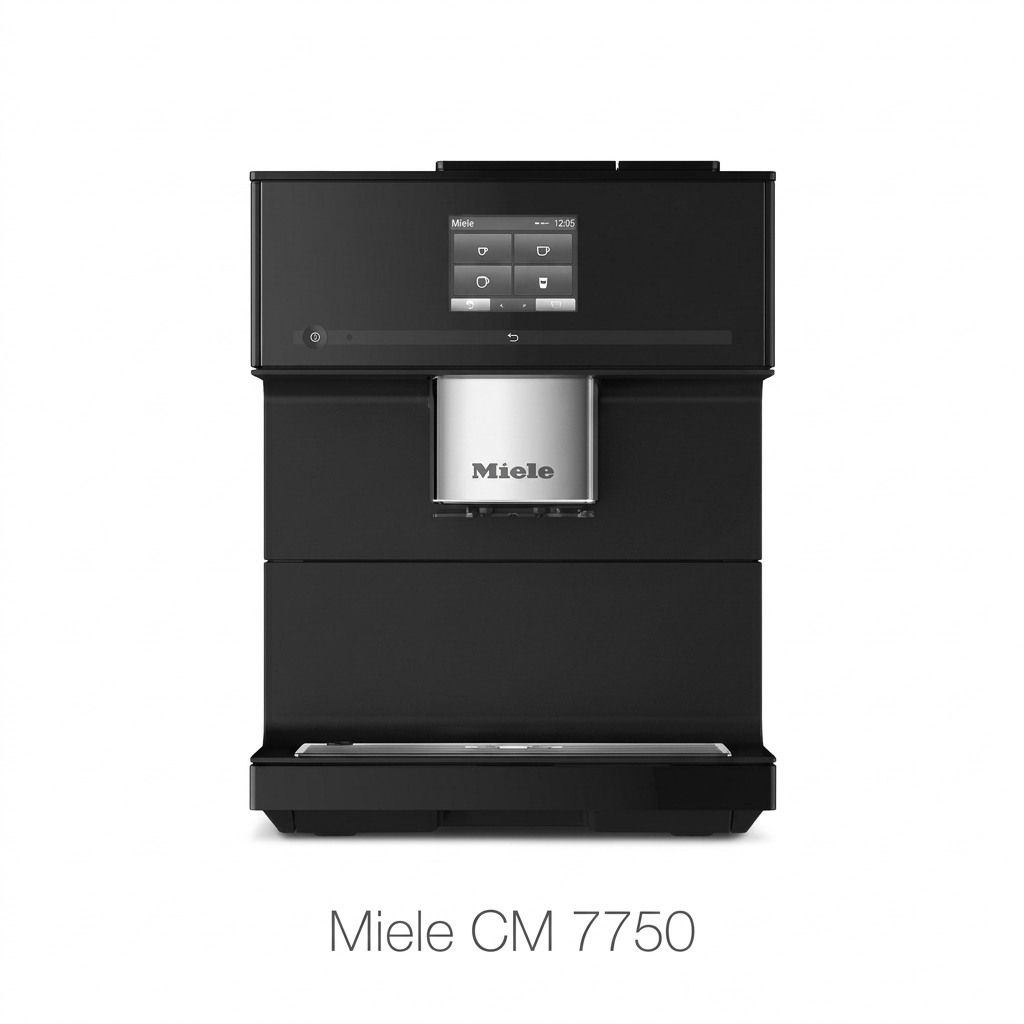
Excellent drinks and automatic descaling. Better for a large household than a busy office.
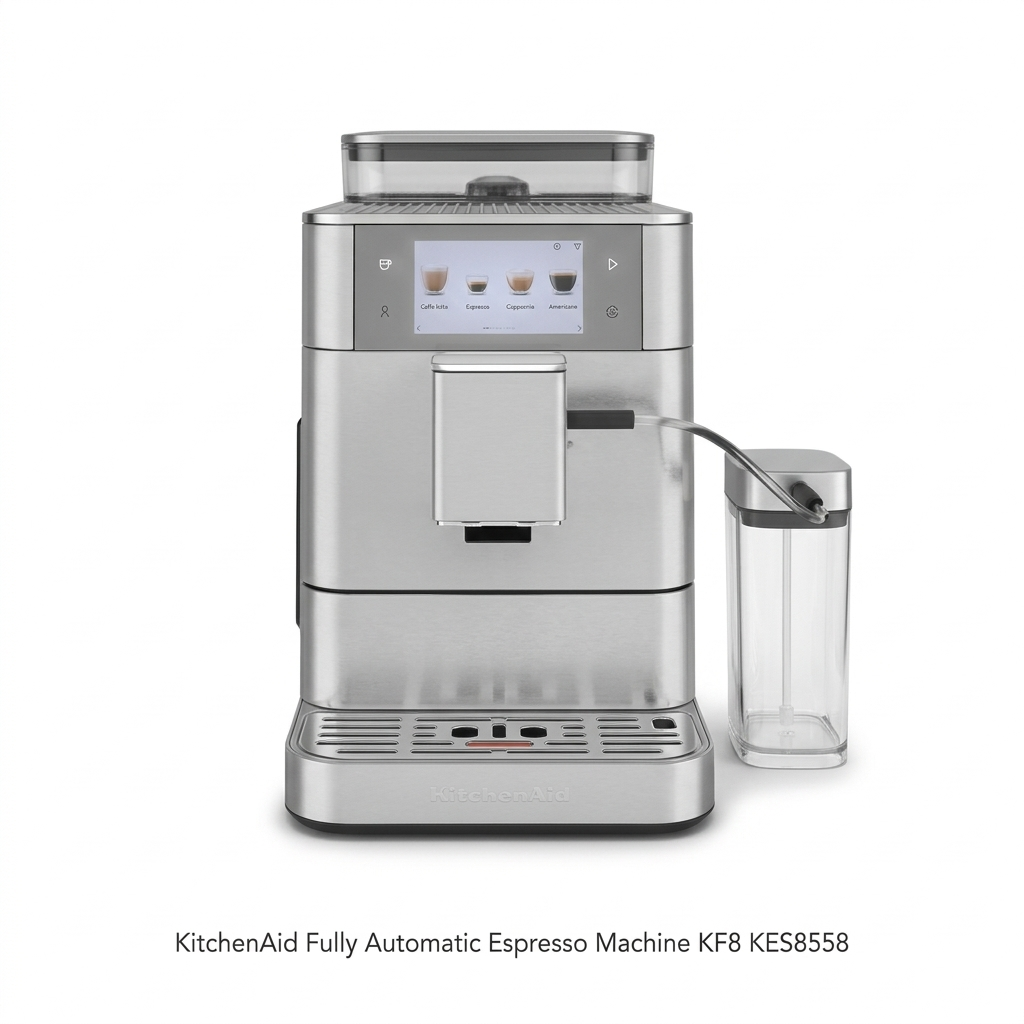
A great home machine that coped with a team of six.
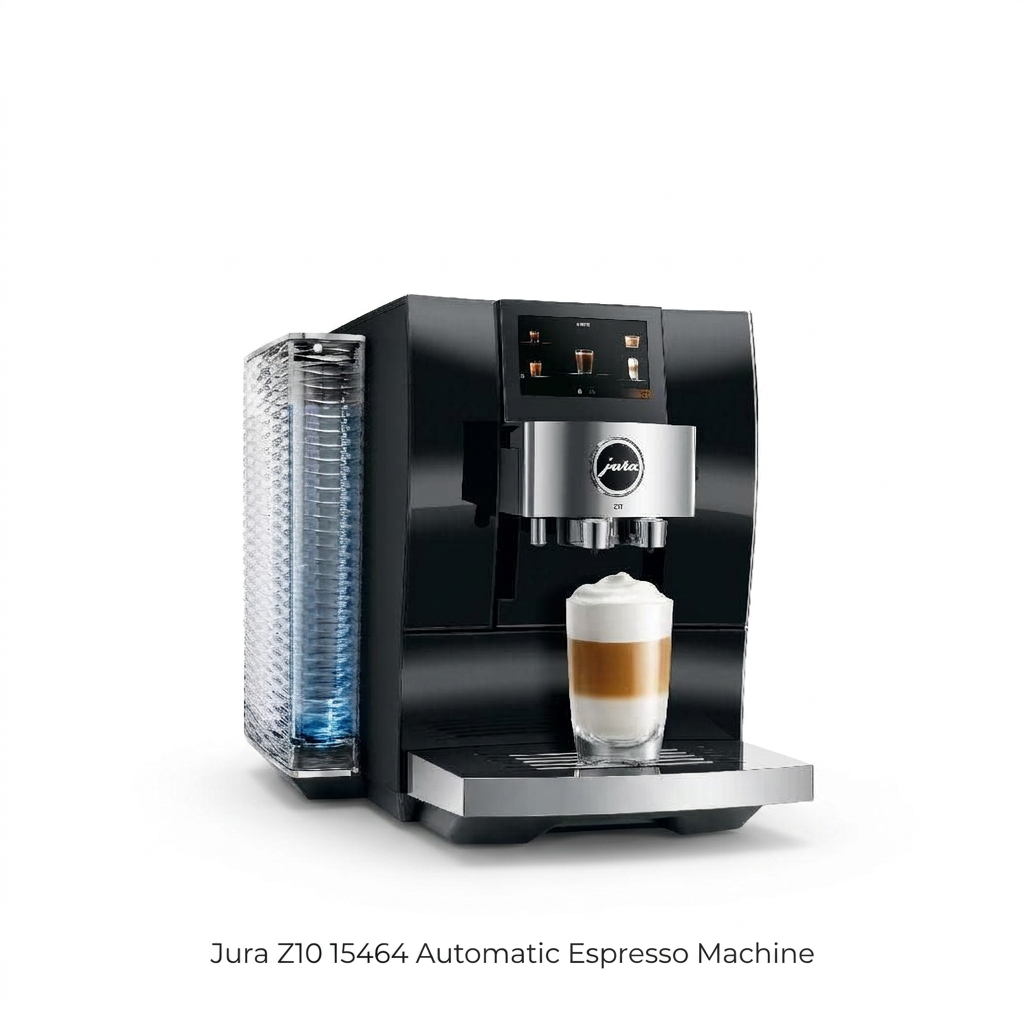
Superb drinks, but not rated for office volumes.
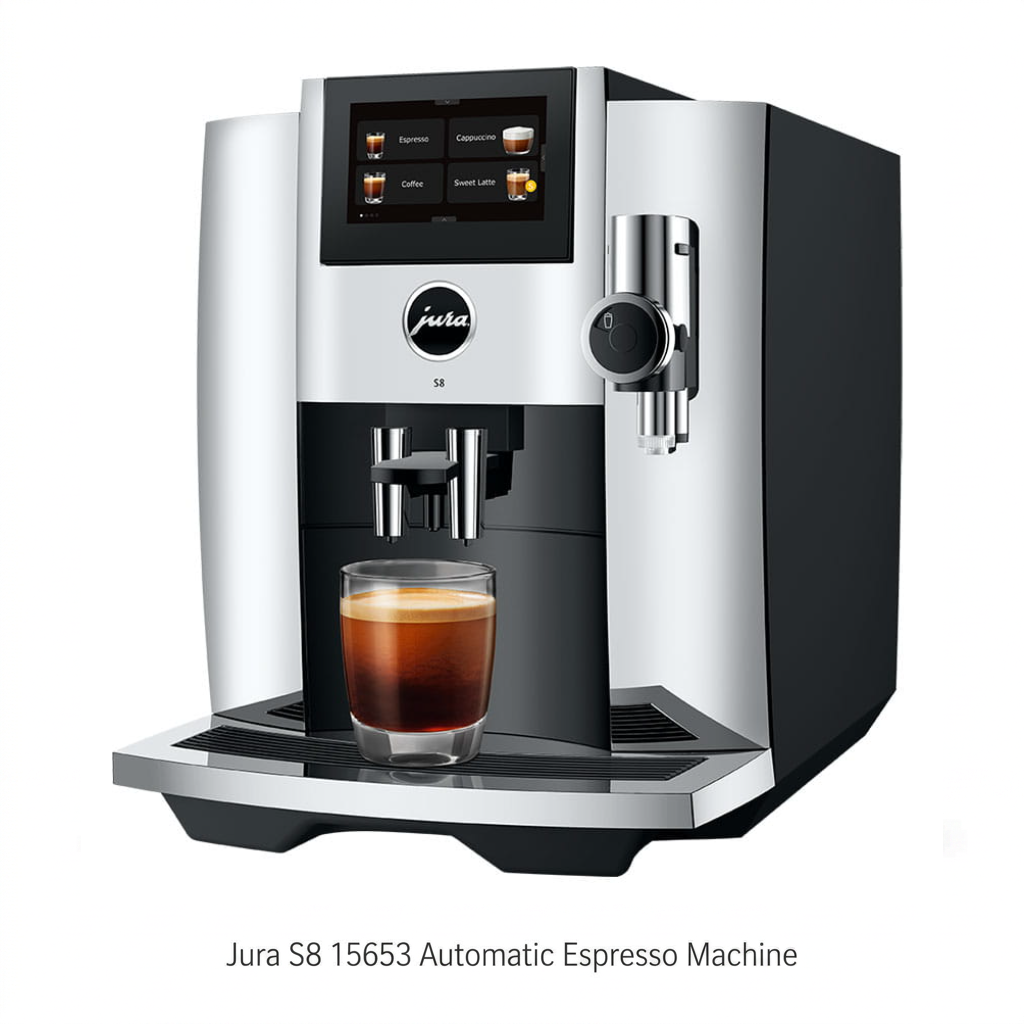
Easy for anyone to use, but its tank was small for a team.
Frequently asked questions
What is the best espresso machine for a small office?
For most offices of 10 to 20 people, the Jura X10. It’s rated for about 100 cups a day, has a 5-liter tank and makes two cappuccinos at once.
How many cups a day does an office of 10 drink?
In my test, about 20 to 30. Plan for two to three drinks per person per day.
Can I use a home espresso machine in an office?
For about five people, yes. Above 10, a machine rated for office use lasts longer and keeps up with the queue.
Which office machine is easiest to clean?
The Philips 5500, with a tubeless milk jug that rinses in seconds.
Which office machine makes the best coffee?
The Jura GIGA 10, which scored 9.2 for espresso and 9.1 for milk.
Should an office machine have lockable settings?
Yes, if many people use it. Locking recipes keeps drinks consistent.
Can an office machine make iced coffee?
The Jura X10, GIGA 10 and De’Longhi Eletta Explore make cold drinks.
How often should an office machine be cleaned?
Milk system daily, grounds bin and drip tray daily, and cleaning programs whenever the machine asks.
Is bean-to-cup cheaper than pods for an office?
Usually, yes. Beans cost far less per cup than pods.
Does an office machine need a water connection?
Not necessarily. A large tank works for most small offices; a water connection helps very busy ones.
Where should an office espresso machine go?
On a sturdy counter with space either side, near a sink and a small fridge, away from doorways and meeting rooms.
For most small offices, the best espresso machine is the Jura X10. It handles a 20-person morning rush, makes two cappuccinos at once and keeps every drink consistent with lockable settings.
Choose the Jura W8 for teams of 5 to 10, the Jura GIGA 10 for coffee-loving teams, the Philips 5500 for small teams on a budget, or the Eletta Explore for iced drinks.
Whichever you choose, match the duty rating to your real daily cups, set up a cleaning rota and fit a water filter.
Kitchen & coffee tester
Michael spent six years as a line cook in restaurants in Chicago and New York, and he has tested kitchen appliances for HouseholdMe since 2018, from air fryers to coffee makers. He holds an SCA certificate in barista skills and used 9 machines as his everyday coffee maker, 4 weeks each, for this guide.
- Four weeks of shared-workspace testing of each of 9 machines by HouseholdMe
- HouseholdMe reviews of the Jura X10, Jura W8, Jura GIGA 10, Philips 5500 and De’Longhi Eletta Explore
- Manufacturer specifications, duty ratings and owner documentation
- National Coffee Data Trends survey, 2025
- Buying guide published, based on shared-workspace testing of 9 machines with teams of 5 to 20 people.