Ninja AutoBarista vs Jura E8: can Ninja beat Swiss premium?
One is the newcomer that weighs its doses and dials in its own grind. The other is the Swiss benchmark that so many people picture when they think of a one-touch coffee machine. The Ninja AutoBarista pulls the bolder espresso and adds real drip coffee and cold brew, while the Jura E8 is smaller, simpler and makes 17 drinks without a milk jug in sight. I used both as my everyday machine for four weeks each, measured what matters and lined up the data to find out which one belongs on your counter.
We choose products independently. We may earn a commission through links on this page; your price stays the same. Affiliate policy
Jargon helpNew to espresso? Tap any dotted term to see what it means.
In this comparison
If you love strong espresso, drink a big mug of filter coffee in the morning or want iced coffee in summer, buy the Ninja AutoBarista. Its weighed doses gave me the fuller, sweeter shot of the two, its drip mode is the real thing and its milk comes out noticeably hotter. If you want a compact, polished machine that the whole family can use without a learning curve, the Jura E8 is still the easier one to live with: 17 one-touch drinks, milk straight from a carton and a filter it tracks on its own. Just pre-warm your cups, because its milk is on the cool side.
The two machines
Specs checked November 14, 2026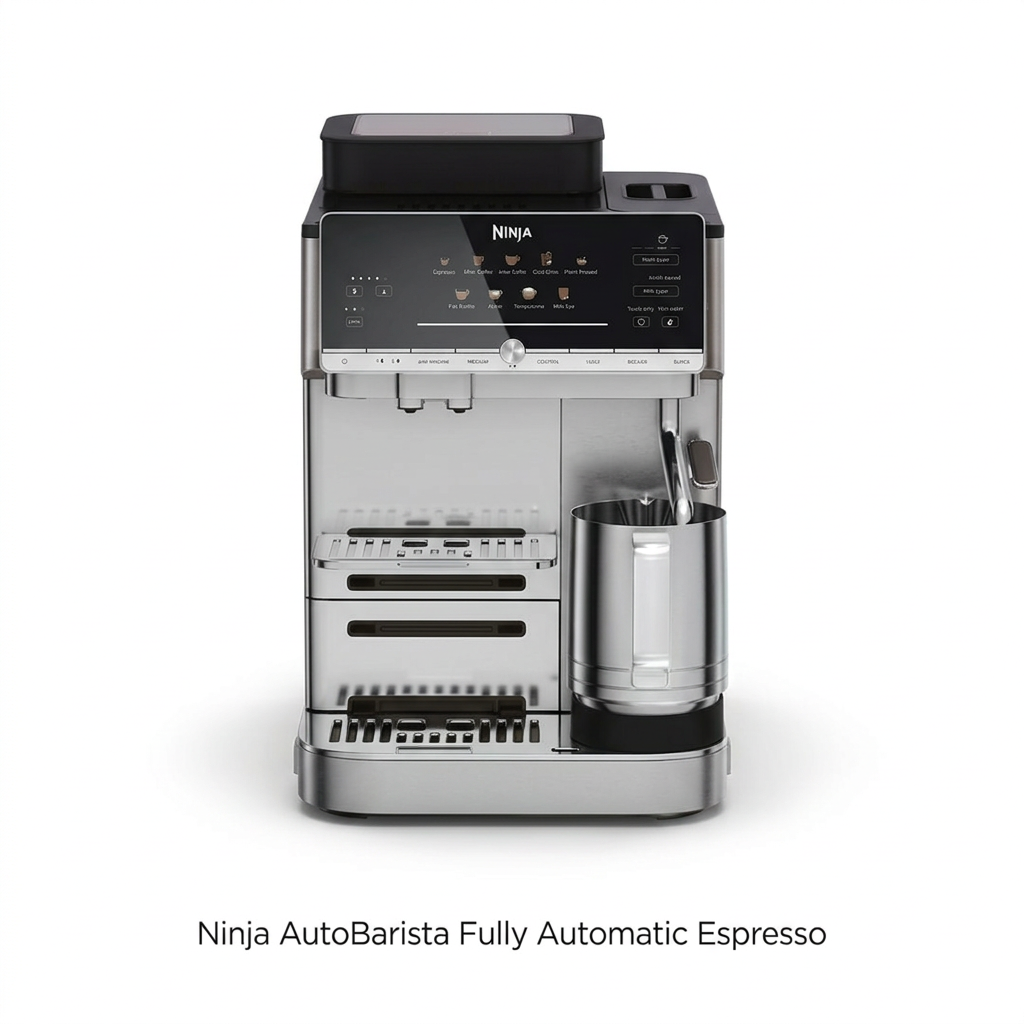
Grind IQ picks from 50 grind settings, every dose is weighed, and it adds true drip coffee, cold brew and a hands-free whisking steam wand.
Check price on Amazon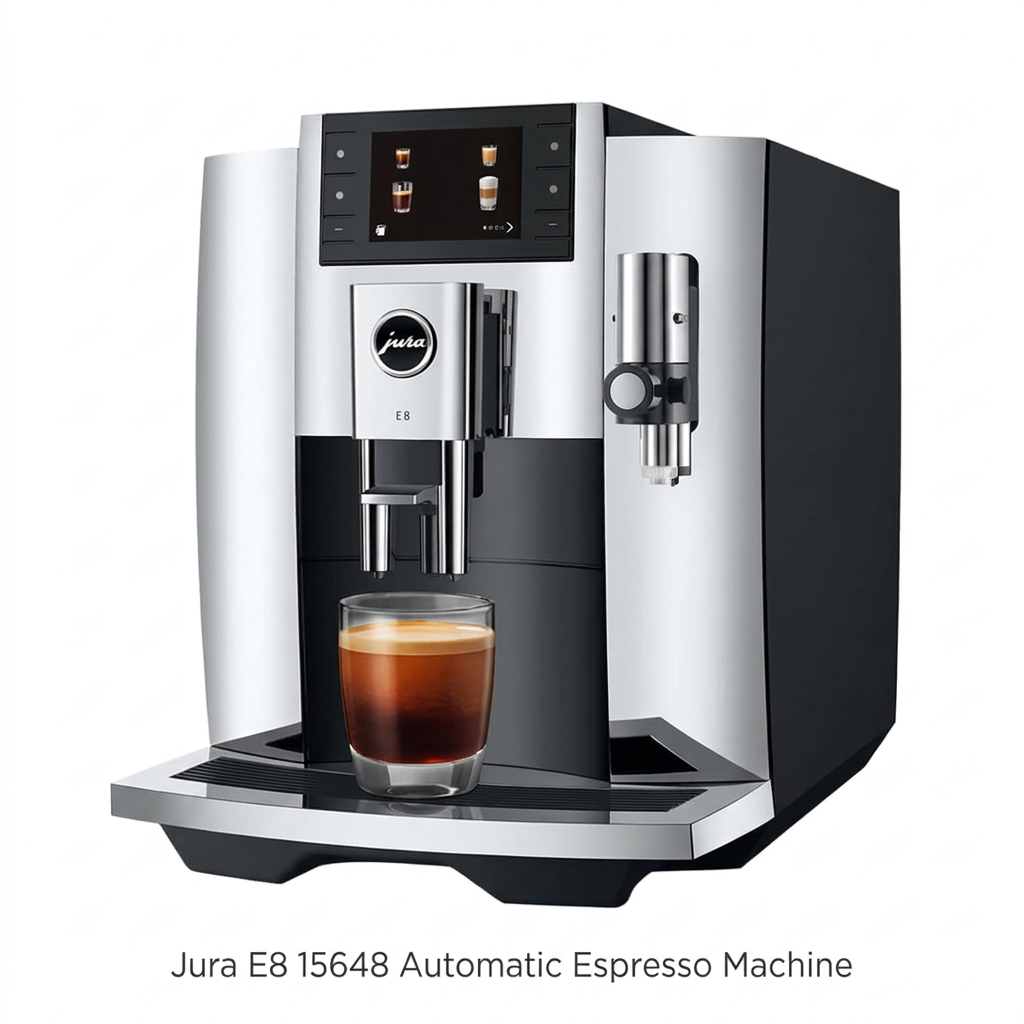
17 one-touch drinks, a 3.5-inch display, milk drawn straight from the carton, app control and automatic filter tracking in a compact Swiss body.
Reveal Today’s DealNinja AutoBarista vs Jura E8 at a glance
- Buy the AutoBarista if straight espresso, drip coffee or iced coffee are your daily drinks.
- Buy the E8 if you want a smaller, lighter machine with 17 drinks and no milk jug to wash.
- The AutoBarista makes the stronger shot because it uses more coffee and weighs it; the E8 grinds by time.
- The E8 is the more refined everyday machine, but the AutoBarista does more for considerably less money.
Head to head
The better result in each row is marked, based on my testing and the manufacturer specs. Rows where the two machines are effectively equal have no winner.
The tally is not my verdict. Some rows matter far more than others, and which ones matter depends on what you drink.
| Spec | Ninja AutoBarista | Jura E8 |
|---|---|---|
| Espresso bodymy tasting, same beans | Syrupy, thick crema ✓ Best | Smooth, a touch light |
| How the dose is set | Weighed to the gram ✓ Best | Ground by time, 5–16 g |
| Grind setup | Grind IQ dials itself in ✓ Best | Manual dial, set by you |
| One-touch drinks | 10 | 17 ✓ Best |
| Drip coffee mode | Yes, coarser grind, filter-style ✓ Best | No, long coffee only |
| Cold brew and iced drinks | Cold brew, cold-pressed, over ice ✓ Best | No |
| Milk system | Whisking wand in an XL jug | Hose straight from the carton ✓ Best |
| Milk temperaturecappuccino, default | About 145°F ✓ Best | About 122°F |
| Display and menu | LCD with coded settings | 3.5-inch color, plain words ✓ Best |
| App and filter tracking | No app | J.O.E. app, CLEARYL Smart+ detection ✓ Best |
| User profiles | 2 ✓ Best | App-based |
| Footprint (D × W × H) | 17.8 × 10.7 × 15.8 in | 17.6 × 11 × 13.8 in ✓ Best |
| Weight | About 36 lb | About 21 lb ✓ Best |
| Water tank / beans | About 70 oz / 8.8 oz | 64 oz / 10 oz |
| Rows won | 7 | 6 |
Ninja AutoBarista vs Jura E8 pros and cons
Ninja AutoBarista
- Fuller-bodied espresso from weighed single, double and triple doses
- Real drip coffee, cold brew and cold foam in one machine
- Grind IQ dials in new beans without guesswork
- Deep, heavy body for a single-hopper machine
- Settings menu uses number codes
- Milk jug to wash after every milk drink
Jura E8
- 17 one-touch drinks, including flat white and latte macchiato
- Compact, light and polished on the counter
- Automatic filter tracking, a clear dashboard and app control
- Milk comes out at about 122°F, which feels cool
- Espresso is slightly light in body
- No drip coffee, cold brew or iced drinks
Who should buy which machine?
- Espresso drinkers who want a café-style double
- Homes that want drip coffee or cold brew too
- Anyone who wants hotter milk drinks
- Families who want 17 drinks with no learning curve
- Kitchens with low cabinets or shallow counters
- People who never want to wash a milk jug
Design, size and build
These two machines could hardly look more different, and that difference says a lot about who each one is for.
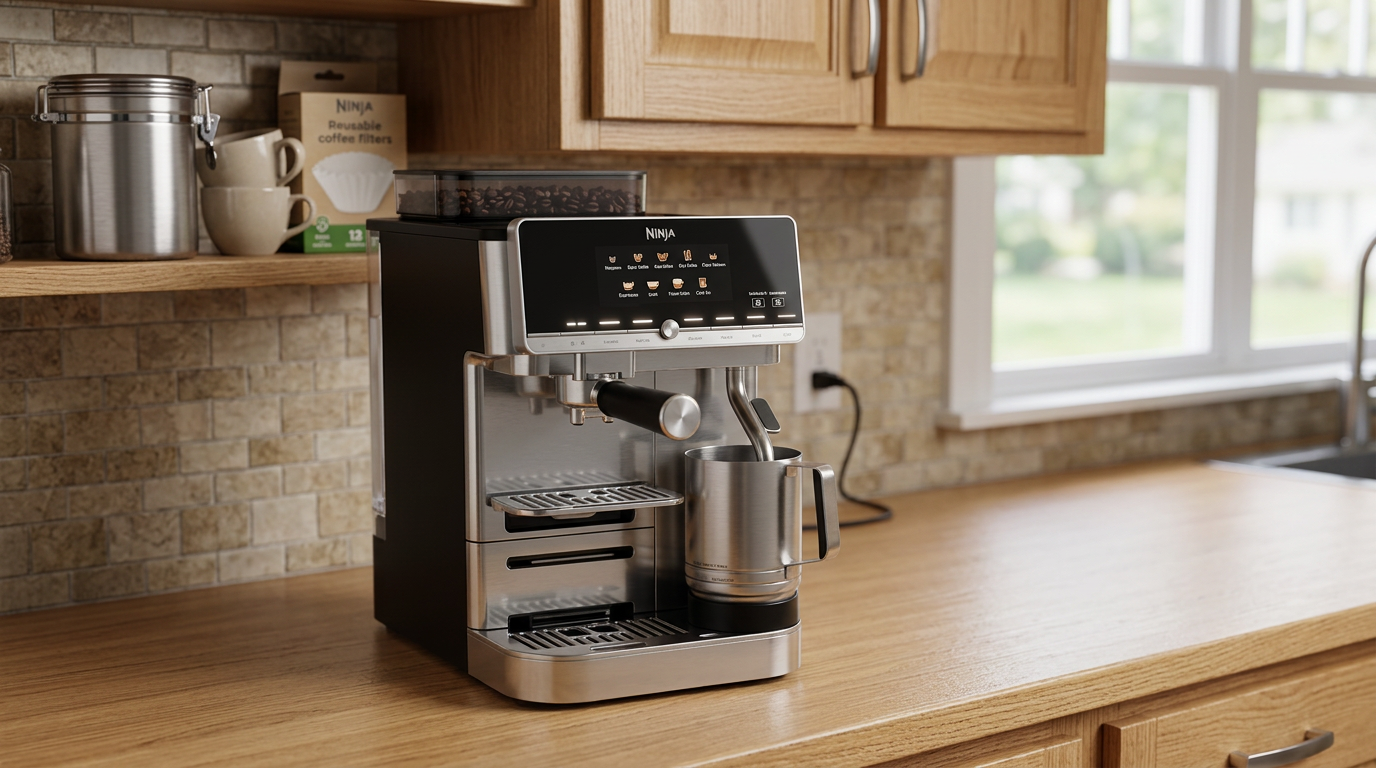
The Ninja AutoBarista looks like a manual espresso machine. It has brushed steel, a bean hopper on top, a steam wand on the side and a milk jug, but no portafilter to lock in and no tamper to hold.
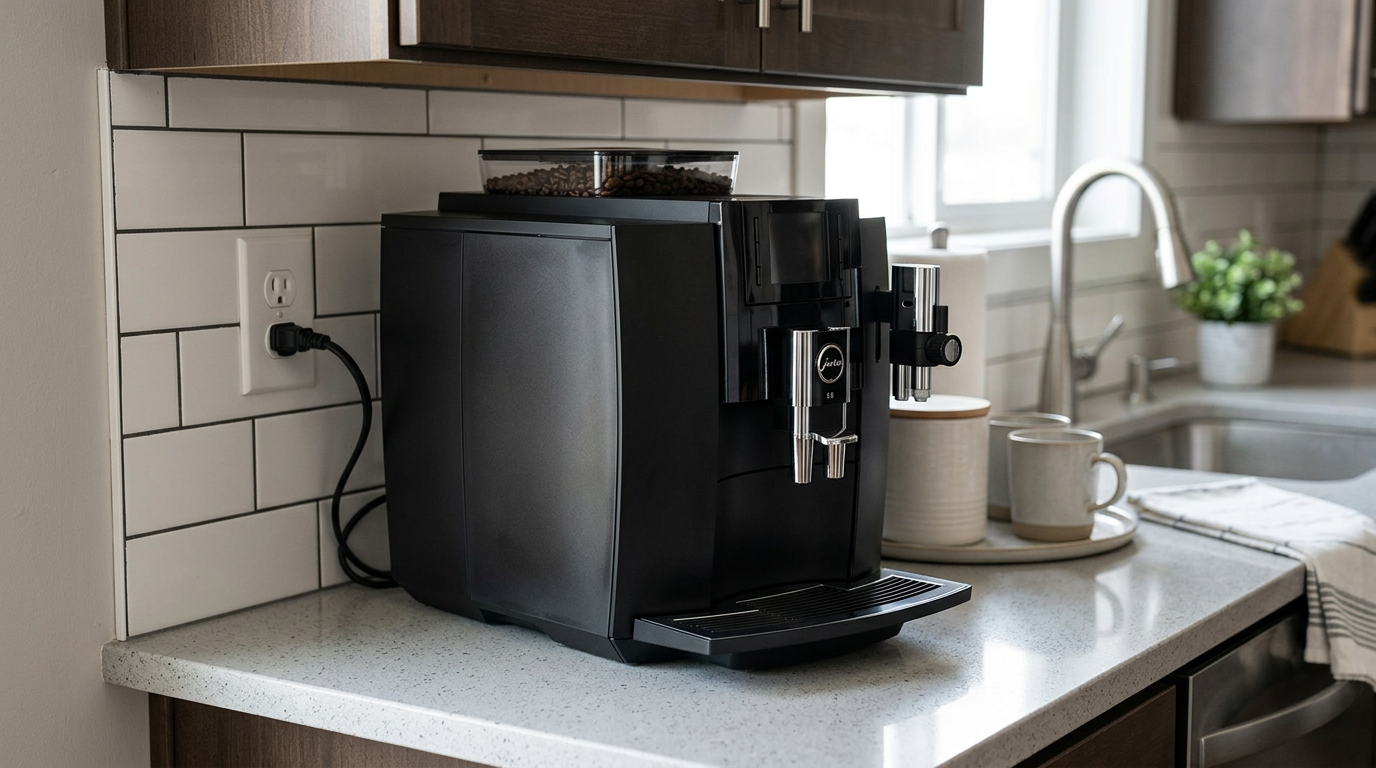
The Jura E8 looks like what it is: a sealed, one-touch coffee center. A chrome-look front panel, a 3.5-inch color display flanked by buttons and a single spout that handles coffee, milk and water.
Put them side by side and the Ninja is the bigger machine by some margin. It is about 2 inches taller, it is slightly deeper, and at around 36 pounds it weighs roughly 15 pounds more than the Jura.
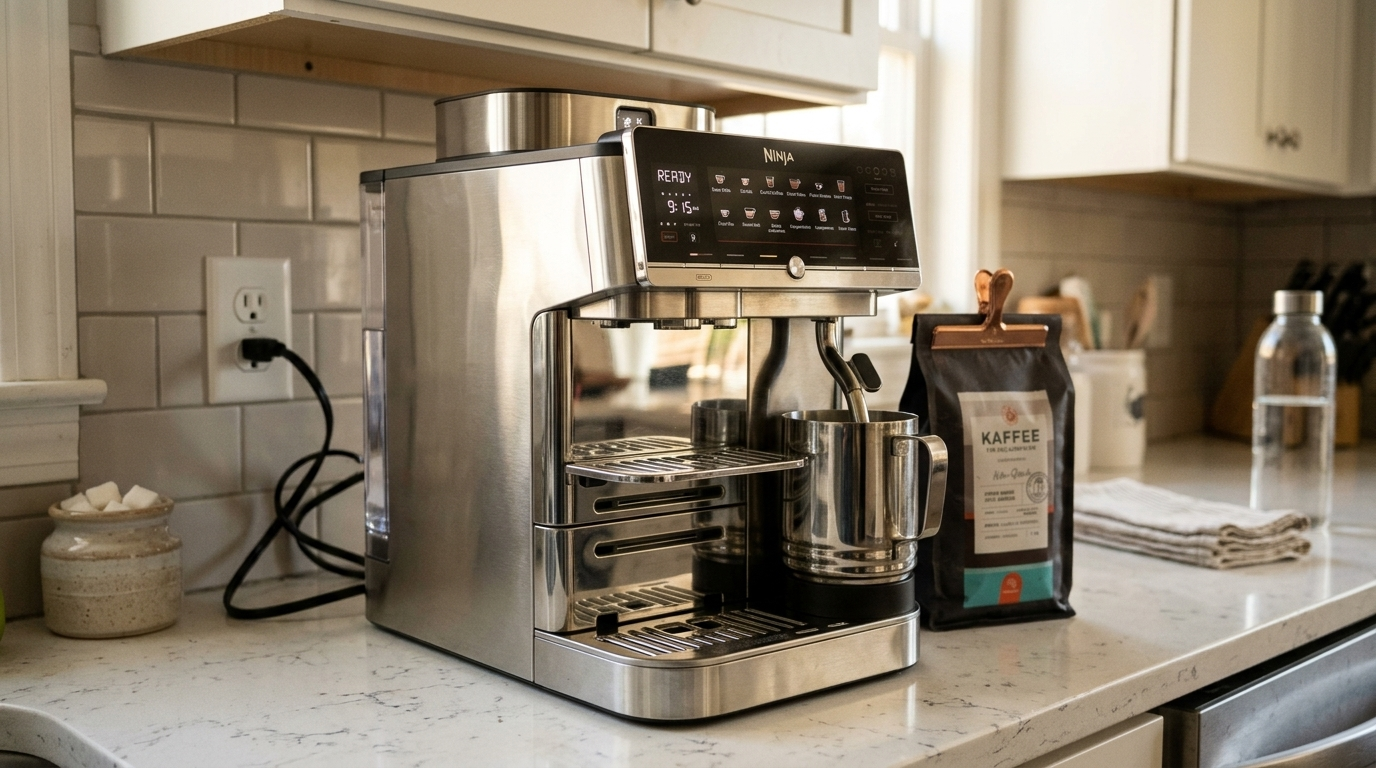
The AutoBarista looks like a semi-automatic machine, but it grinds, weighs, tamps and brews on its own.
That weight is not just bulk. The Ninja houses a built-in scale under the hopper, a brew group you can pull out from the side and a steam boiler strong enough to whisk a jug of milk.
The Jura E8 feels more refined in the hand. It is made in Portugal and engineered in Switzerland, and the panels felt solid with no flex.
Its one soft spot is the plastic drip tray grid, which felt less premium than the rest of the machine.
Height on the counter
Add a couple of inches above each for opening the bean hopper lid.
The height gap matters more than it looks. Standard wall cabinets sit about 18 inches above the counter, so the Ninja leaves you barely 2 inches to lift the hopper lid.
The Jura slid under my cabinets with room to spare and could be refilled without pulling it forward.
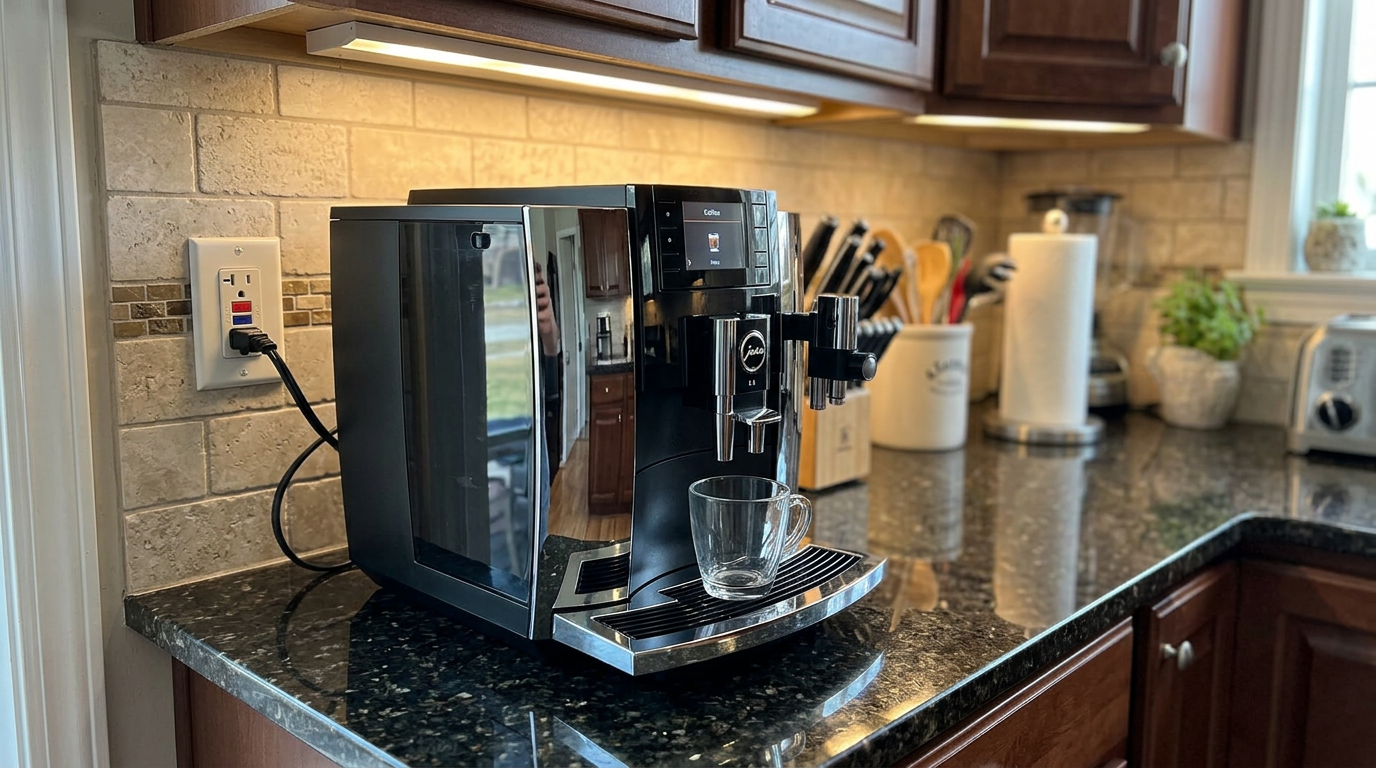
The E8’s chrome-look front and cup light make it the more polished machine on the counter.
Our tip: Measure the gap between your counter and wall cabinets before you order the Ninja, because its 15.8-inch height plus the hopper lid is a tight fit under standard cabinets.
Setup and the first week
Both start the same way. You test your water hardness with the included strip, enter it, fit the filter, fill the tank and the hopper and let the machine rinse.
Then they split in a way that tells you a lot about each brand.
Grind IQ on the Ninja
On the Ninja, the first real job is a Grind IQ cycle. I put a cup under the spout, pressed the Grind IQ✕Grind IQNinja’s automatic grind calibration. The machine pulls test shots, measures how fast the coffee flows and adjusts the grind until the shot lands in its target range, then saves that setting for your beans. button and let it work.
It pulled a first shot, went coarser, pulled a second, fine-tuned and saved. Ninja says a cycle can use up to 54 grams of beans and takes about five minutes, which matched my experience closely.
After that, my double ran at about 36 grams in about 30 seconds. I didn’t have to guess at a single grind number.
| Grind IQ attempt | What the machine did | What I saw |
|---|---|---|
| Shot 1 | Started from an estimated grind | Slow, dark and a little bitter |
| Shot 2 | Went coarser | More balanced |
| Shot 3 | Fine-tuned and saved | About 36 g in about 30 seconds |
Filter tracking on the Jura
The Jura E8 skips the calibration and goes straight to coffee. Its biggest setup advantage is the CLEARYL Smart+✕CLEARYL Smart+ filterJura’s water filter cartridge. It sits in the water tank and removes minerals and off-flavors, so the machine needs descaling far less often. The E8 detects it automatically. filter, which it recognizes automatically.
It tracks how long the cartridge has been in and how much water has passed through, then asks for a new one when it is used up. There is nothing to reset and nothing to remember.
The first three or four drinks on both machines were weaker than they should be, while the grinders cleared test coffee from the chute. I didn’t judge anything until the fifth cup.
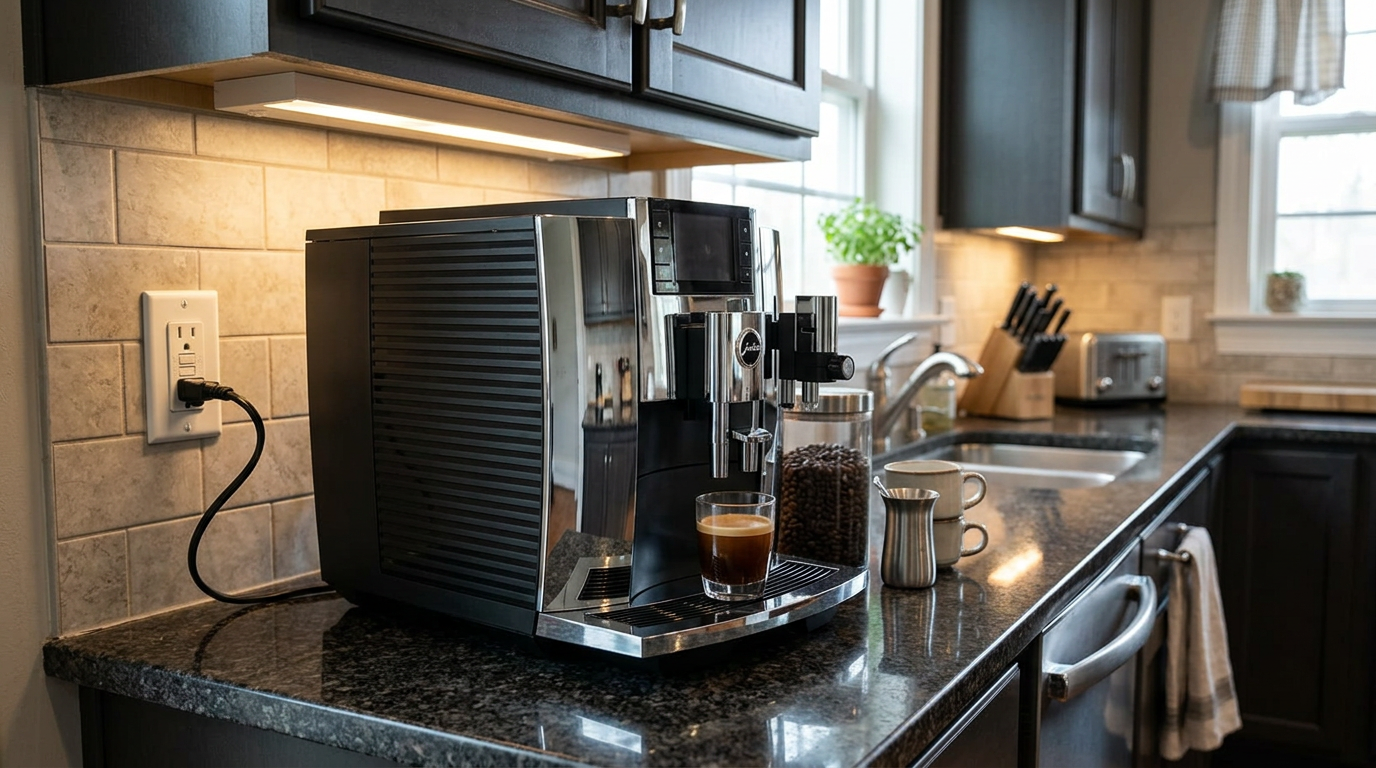
The E8’s side-mounted tank lifts out easily, and the machine spots its filter on its own.
| Setup step | Ninja AutoBarista | Jura E8 |
|---|---|---|
| Water hardness | Strip, entered in settings | Strip, entered on screen |
| Grind calibration | Grind IQ, about 5 minutes | None, set the dial yourself |
| Filter | Counted from hardness setting | Detected automatically |
| Time to a good first drink | About 10 minutes | A few minutes |
Our tip: Don’t stop a Grind IQ cycle halfway, because the machine only saves its setting once all the test shots are done.
Grinder and dose
This is the biggest technical difference between the two machines, and it explains most of what I tasted.
The Jura E8 uses Jura’s Professional Aroma Grinder with steel conical burrs✕Conical burrsTwo cone-shaped grinding parts, one inside the other. Beans are crushed between them, and the gap between the burrs sets how fine the coffee is.. It grinds for a set time and takes between 5 and 16 grams per brew.
The Ninja AutoBarista weighs every dose to the gram on a built-in scale before it brews. Its doses also run larger: about 15 grams for a single, about 20 for a double and about 30 for a triple.
Coffee per drink
Dose weights from my testing and published test data. The E8 grinds by time, so its dose drifts slightly as the hopper empties.
Why weighing matters
Most automatic machines grind for a fixed time. As beans age or the hopper runs low, the same grind time can give a slightly different amount of coffee, and that is a big reason automatic espresso drifts from day to day.
The Ninja measures the coffee itself, so a double is a double whether the hopper is full or nearly empty. My doubles landed within a gram or two of the same weight all week.
On-screen shot weight and time for the same Ninja double, same beans, across one week.
On the Jura, the grinder is fast. My 15-gram doses took about five seconds, which keeps friction heat low and the aromas intact.
But the finest setting still felt a touch coarse for a heavy espresso. Medium-dark beans were fine, while lighter roasts ran fast and tasted bright.
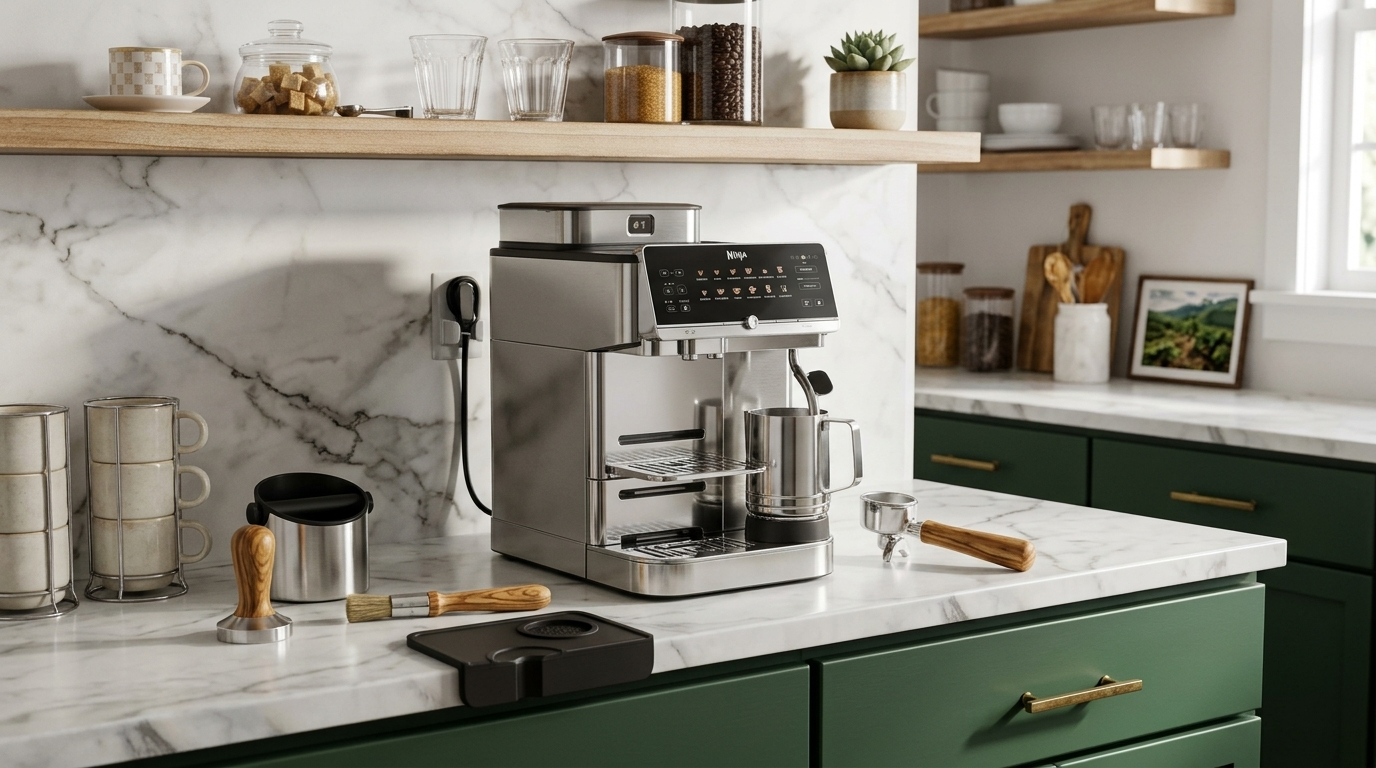
The Ninja’s built-in scale weighs every dose before it grinds.
| Grinder detail | Ninja AutoBarista | Jura E8 |
|---|---|---|
| Grind settings | 50, chosen by Grind IQ | Manual dial |
| Manual adjustment | −2 to +2 around the saved setting | Turn the dial while grinding |
| Dosing | Weighed to the gram | Timed, 5–16 g |
| Dose sizes | Single, double, triple | Up to 16 g per brew |
| Bean hopper | About 8.8 oz | About 10 oz |
| Pre-ground chute | Yes | Yes, removable with sensor |
Our tip: On the Jura, only turn the grind dial while the grinder is running, because turning it with the burrs stopped can jam beans and stress the gears.
Espresso quality
This is where the newcomer surprised me, and where the Swiss machine showed its one real weakness.
The Ninja brews at around 9 bar at the coffee, the classic espresso pressure, with pre-infusion✕Pre-infusionA short soak of the ground coffee before full pressure starts, so the water flows through the puck evenly. before every shot.
The Jura runs a 15-bar pump and its Pulse Extraction Process✕Pulse Extraction Process (P.E.P.)Instead of pushing water through the coffee in one steady stream, the machine sends it in short, rapid pulses. It helps short drinks like espresso extract more evenly., which sends water through the coffee in short bursts. On paper, that sounds like the more advanced system.
How they tasted
With a medium-dark blend, my Ninja double came out with a thick hazelnut crema✕CremaThe golden, foamy layer on top of a fresh espresso. It forms when pressure pushes oils and gases out of the coffee., a syrupy body and flavors of dark chocolate and caramel. The used pucks came out firm and whole.
On the Jura, I used a 15-gram dose and aimed for a classic 1:2 ratio. The cup weighed about 29 grams, with a smooth, even crema, mild chocolate and gentle acidity.
The Jura shot was clean and pleasant. But side by side, it was lighter in body, and the Ninja double tasted more like a café espresso.
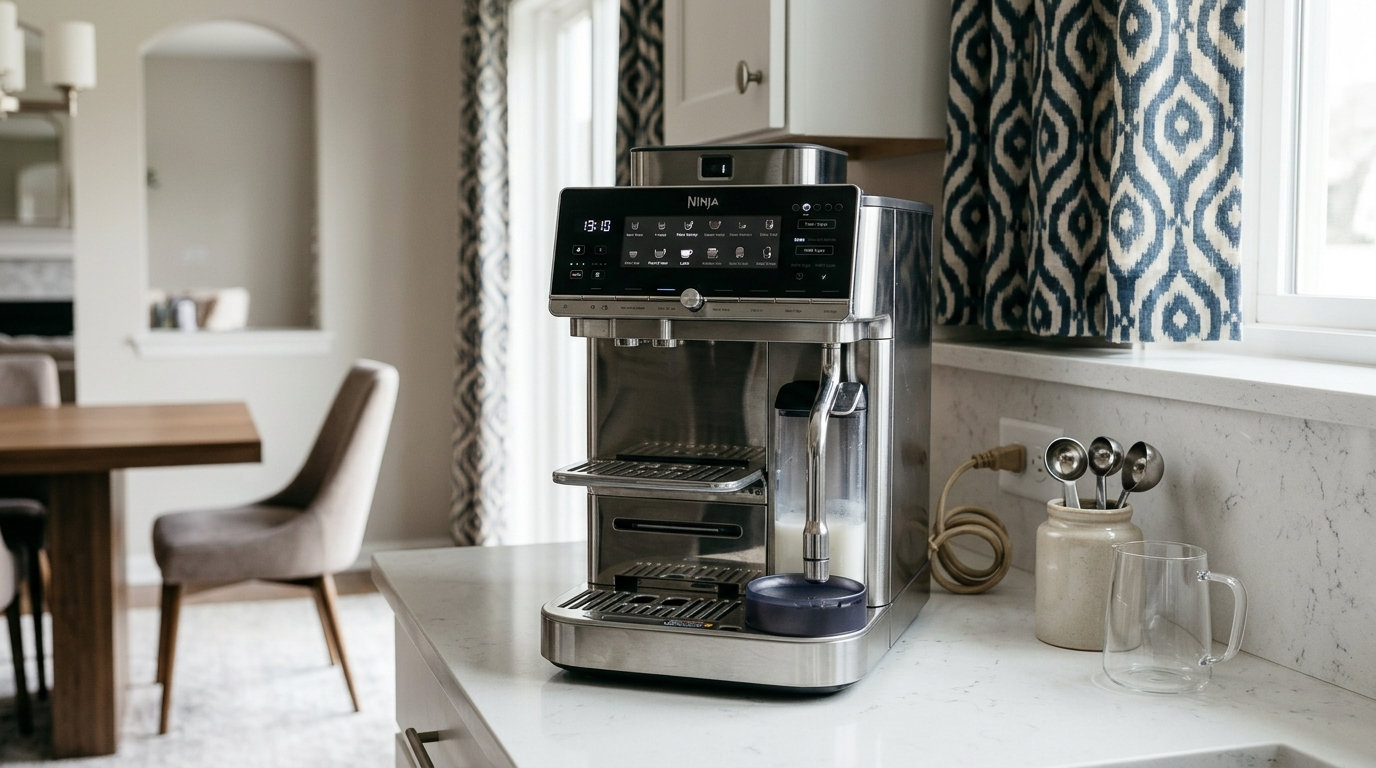
The Ninja double was the heavier, sweeter shot of the two with the same beans.
My espresso ratings
My scores out of 10 for body, crema, flavor and consistency.
One caveat cuts the other way. The Ninja’s single shot is small for the machine and tasted thin, so you have to use the double to see what it can do.
The Jura has no such trap. Every espresso size tasted like a sensible version of the same drink.
| What you taste | Likely cause | First fix on Ninja | First fix on Jura |
|---|---|---|---|
| Sour, thin, fast | Under-extraction✕Under-extractionWhen water does not pull enough flavor out of the coffee. The shot tastes sour, thin and watery. | Re-run Grind IQ or go −1 | Grind one step finer |
| Bitter, harsh | Over-extraction | Go +1 | Grind one step coarser |
| Watery | Small dose | Use the double | Raise the strength |
| Pale crema | Stale beans | Fresh beans, re-run Grind IQ | Use beans within a few weeks |
Drip coffee, long coffee and cold brew
If your day starts with a big mug rather than an espresso, this section matters more than any other.
The Ninja AutoBarista has a true drip coffee mode. Pick a size, and the machine switches to a coarser grind and a different, filter-style brewing process.
My 12-ounce mug came out at about 170°F and tasted like a clean, medium-bodied filter coffee. It replaced our old drip maker within a week.
The Jura E8 has no drip mode. Its long coffee pushes more water through the espresso puck, and Jura’s pulse extraction keeps it tasting balanced.
I set it to about 5 ounces at the highest temperature, and it was my most consistent mug of the month, with a dense crema and a soft, almond-like sweetness.
But a long coffee is not filter coffee. It is stronger and more espresso-like, and pushing a 12-ounce mug through one puck starts to taste thin and bitter.
Long drinks compared
My ratings out of 10 for flavor and balance in a mug.
The Specialty Coffee Association recommends brewing filter coffee with water between about 195 and 205°F and a ratio of roughly 55 grams per liter✕Golden cup ratioA guideline for filter coffee strength, roughly 55 grams of ground coffee per liter of water. Too little coffee tastes weak and bitter, too much tastes heavy.. The Ninja’s drip mode gets much closer to that kind of brew than any espresso machine’s long coffee can.
Cold brew and iced coffee
This is a category the Jura simply doesn’t play in. The Ninja has three cold settings: cold brew, cold-pressed and coffee over ice.
Cold brew was smooth and low in bitterness. Cold-pressed was brighter and cleaner, great black over ice, and over ice was the boldest of the three.
| Cold drink | Ninja AutoBarista | Jura E8 |
|---|---|---|
| Cold brew | Yes, smooth, low bitterness | No |
| Cold-pressed | Yes, bright and clean | No |
| Espresso over ice | Yes, one touch | By hand, pour over ice |
| Cold foam | Yes, dedicated preset | No |
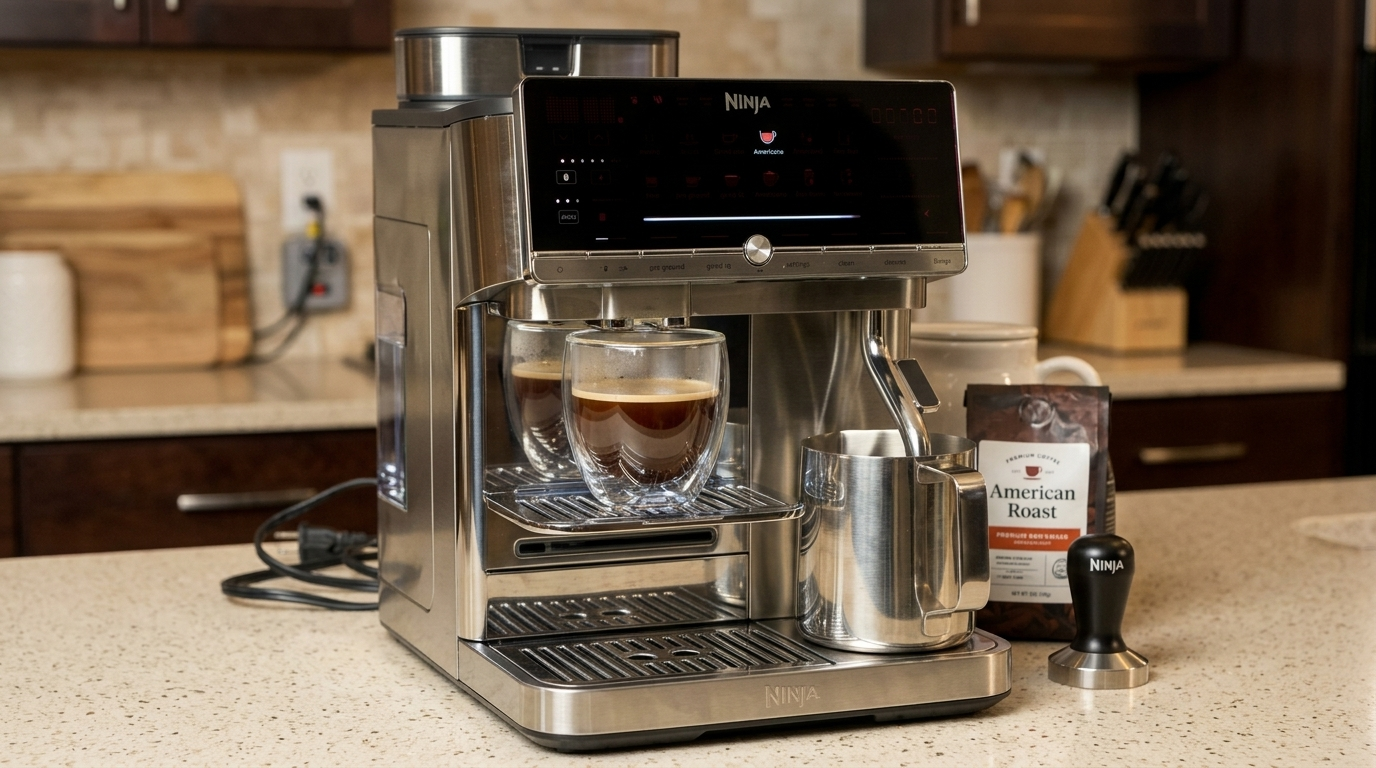
Cold brew topped with cold foam became my afternoon drink on the Ninja.
Our tip: Fill your glass to the top with large ice cubes before any iced drink on the Ninja, because big cubes melt slower and keep the coffee strong.
Find Out the Price TodayMilk drinks
The two machines handle milk in completely different ways, and this is the decision that splits most households.
The Jura E8 draws milk through a silicone hose straight from a carton or container. Inside the frothing head, steam creates suction through the Venturi effect✕Venturi effectWhen steam rushes through a narrow channel, it creates suction. Jura frothers use it to pull milk up the hose and mix in air., mixes in air and pours foam straight into the cup.
The Ninja AutoBarista uses a thick, rounded steam wand with a temperature probe and an XL jug. You pour milk to the line, set the jug under the wand, choose a froth preset and the machine does the rest.
Jura E8: silky foam, one touch
The E8’s foam was the best part of its milk system. It is dense, smooth microfoam✕MicrofoamMilk foam with bubbles so small you can barely see them. It feels silky and glossy, which is what a good flat white or cappuccino needs. with fine bubbles and a silky feel.
Cappuccino, flat white, latte macchiato and cortado are all one press away, and there is no jug to fill or wash. For a busy family, that is a big deal.
The catch is temperature. My frothed milk measured about 122°F, which is pleasant to sip straight away but cooler than many people expect.
Ninja AutoBarista: hotter, more choice
The Ninja has four froth presets: steamed milk, thin froth, thick froth and cold foam. A whisk inside the jug keeps stirring while the espresso finishes, so the foam doesn’t separate.
My default cappuccino came out at about 145°F, and raising the froth temperature one step took a latte to about 151°F. That is far closer to café temperature.
Milk temperatures I measured
Probe readings straight after brewing. Café milk is usually steamed to about 140 to 155°F.
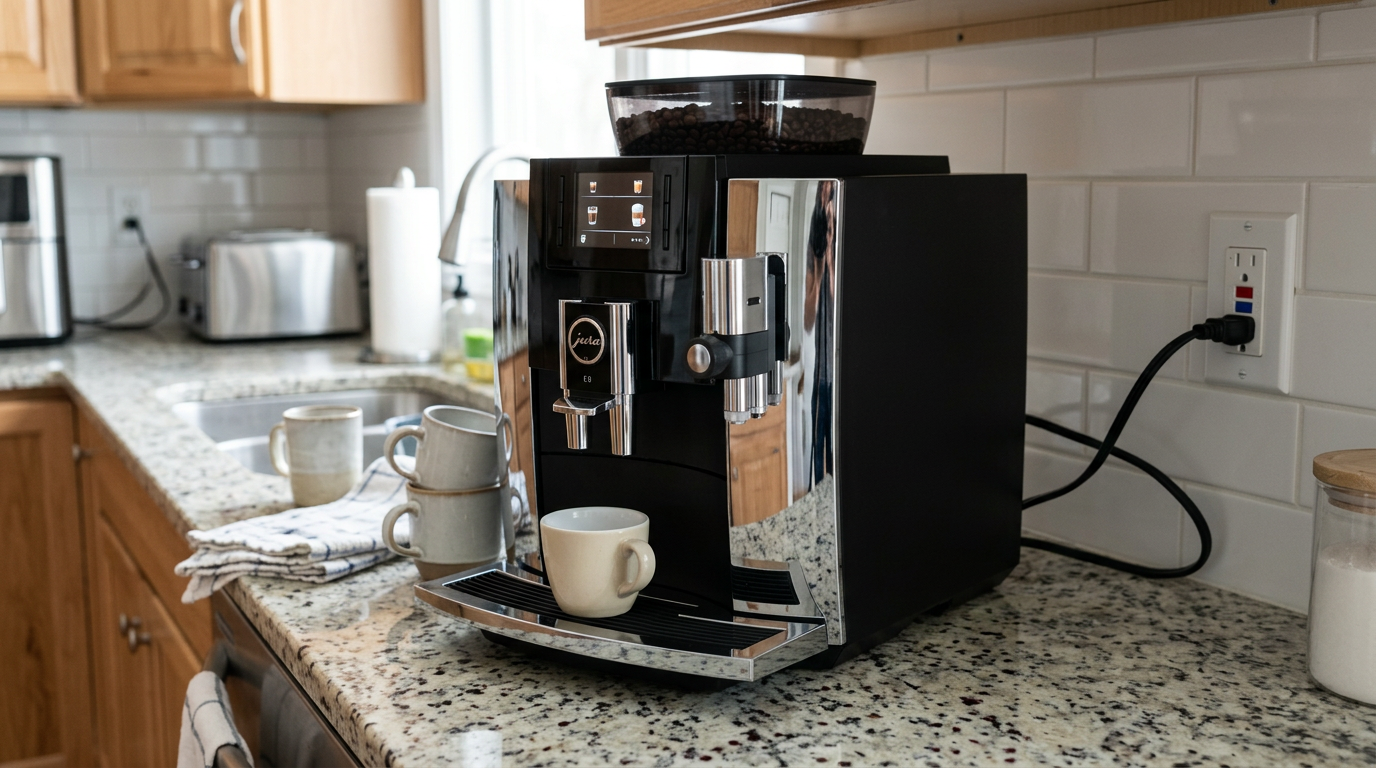
The E8 pours every milk drink from one spout, straight from the carton.
| Milk drink | Ninja AutoBarista | Jura E8 |
|---|---|---|
| Cappuccino | One touch, thick froth | One touch |
| Flat white | One touch, thin froth | One touch |
| Latte | One touch | Latte macchiato, one touch |
| Cortado | No | One touch |
| Iced latte with cold foam | Yes | No |
| Plant milk setting | Yes, dairy and plant modes | No dedicated setting |
| Latte art | Possible but the jug spout is blunt | No |
How each milk frothed
My ratings out of 10 for texture, stability and temperature.
Our tip: Use cold milk straight from the fridge on both machines, because warm milk makes big, loose bubbles that collapse quickly.
Menus, controls and smart features
Neither machine has a touchscreen. The Jura E8 uses a 3.5-inch color display flanked by physical buttons, and each button controls the drink or setting next to it.
It works with damp fingers, and nobody in my house needed instructions. You can also change strength and water amount while a drink is being made.
The Ninja AutoBarista uses a smaller display with drink buttons, a size selector, strength settings and a froth dial. Day-to-day drinks are easy, and the screen shows the weight and time of each espresso as it brews.
The settings menu is the weak spot. Many options show up as numbers rather than words, so changing water hardness or froth temperature meant reaching for the manual.
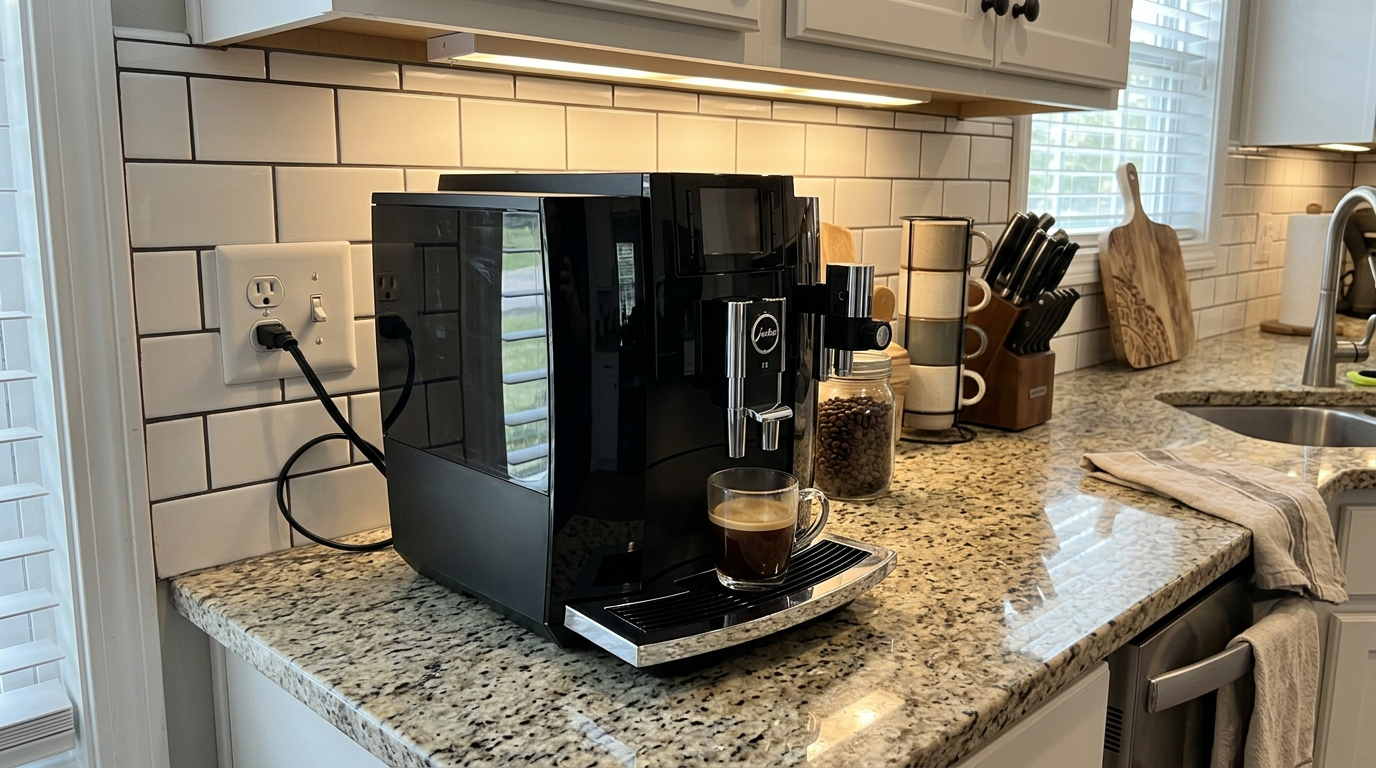
The E8’s display and buttons are the friendliest controls in this test.
| Feature | Ninja AutoBarista | Jura E8 |
|---|---|---|
| Display | LCD with weight and time | 3.5-inch color |
| Settings menu | Number codes | Plain words |
| Profiles | 2, saved with a long press | Through the app |
| App | No | J.O.E. app, remote start |
| Maintenance view | Prompts on screen | Full dashboard |
| Cup or spout light | Light behind the spout | Cup light |
The Jura’s app is a nice extra rather than a reason to buy. It shows maintenance as percentages, lets you tweak size, strength and temperature and started grinding within about a second of pressing start on my phone.
The Ninja’s two profiles are more useful than they sound. My partner saved a thick-froth cappuccino, and I saved a double espresso and a 12-ounce drip.
Our tip: Write the Ninja settings codes you use most on a sticky note inside a cupboard door, so you never need the manual to change froth temperature.
Cleaning and upkeep
On the coffee side, the Ninja AutoBarista has the advantage you can see. Its side panel comes off without tools and the brew group slides out for rinsing.
The Jura has no removable brew unit✕Brew unitThe part that compresses the ground coffee, holds it while water passes through and then ejects the used puck.. Instead, it asks for a cleaning cycle and you drop a cleaning tablet in when prompted.
Both rinse automatically on start-up and shutdown, and both tell you when to empty the grounds container.
The milk side
On the Jura, the milk hose and frothing head do the work. The head drops down from the side, and its parts come apart without tools for a daily rinse under warm water.
On the Ninja, the steam wand purges itself after frothing, but the jug and whisk need washing after every milk drink. It takes about a minute, and it is a step the Jura never asks for.
My daily hands-on cleaning time
My estimate of hands-on time per day, not counting automatic rinses.
| When | Ninja AutoBarista | Jura E8 |
|---|---|---|
| After milk drinks | Wand purges, wash the jug | Rinse frother parts |
| Daily | Empty tray and grounds bin | Empty tray and grounds |
| Weekly | Rinse brew group, grinder purge | Automatic milk clean, wash the chute |
| When prompted | Descale | Cleaning tablet, filter change |
| Every 3 months | — | Replace the milk hose |
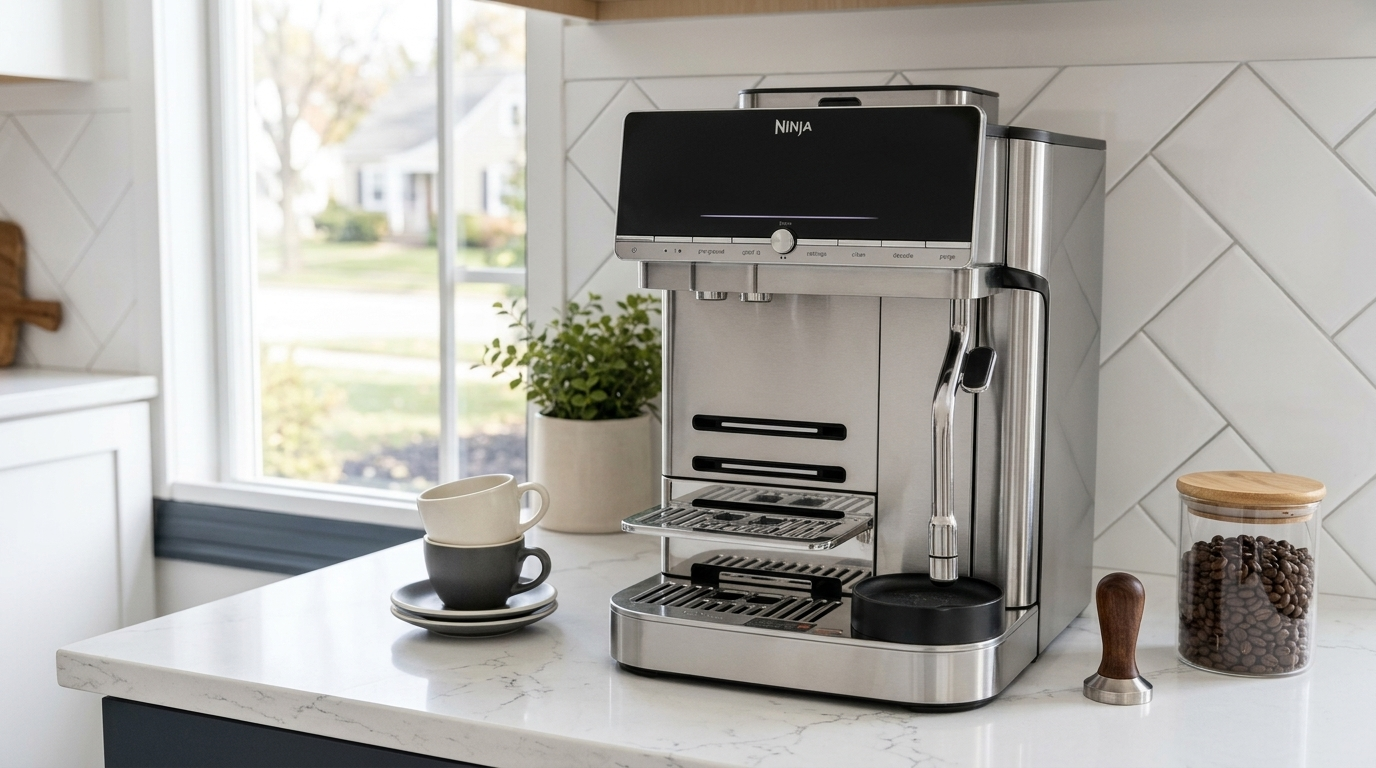
The Ninja’s brew group slides out from the side for a weekly rinse.
Our tip: Rinse the Ninja’s milk jug and whisk straight after use, because dried milk on the whisk takes three times as long to clean.
Noise and speed
The Ninja is not a quiet machine. Grinding peaked around 70 to 72 decibels on my meter at about 20 inches, with brewing around 60 decibels and steaming around 66.
The Jura E8 grinds quickly, so its grinding burst is short, but the gears that move its brew unit are fairly loud. You hear a mechanical clunk during preparation and again when the puck is ejected.
Overall, the Jura felt a little less intrusive at 6 a.m., simply because the noisy part is over faster.
Sound levels
Ninja readings from a phone sound meter at about 20 inches. Jura ranked by ear in the same kitchen.
| Drink | Ninja AutoBarista | Jura E8 |
|---|---|---|
| Double espresso | About 1 minute | About 45 seconds |
| Cappuccino | About 2 minutes | About 1.5 minutes |
| 12 oz mug | About 3 minutes, drip | About 2 minutes, long coffee |
The Ninja is slower because it weighs, grinds and compacts in stages, then heats steam for the jug. The Jura goes from button to cup with less ceremony.
Water, beans and supplies
Both machines want fresh whole beans and filtered water, but they consume them at different rates.
The Ninja’s bigger doses mean its 8.8-ounce hopper empties faster. It lasted about a week for two people in my house, while the Jura’s 10-ounce hopper went nearer ten days.
Drinks per full water tank
Rough maths allowing for rinse water. Your numbers depend on cup size.
| Bean type | Ninja AutoBarista | Jura E8 |
|---|---|---|
| Medium-dark blend | Excellent espresso | Best espresso, finest setting |
| Medium roast | Best drip and cold brew | Good long coffee |
| Light roast | Good after Grind IQ | Bright, extend the shot |
| Very dark, oily | Not recommended | Avoid |
Avoid very oily or flavored beans on either machine, because they can clog the grinder and chute over time.
Use beans within a few weeks of the roast date. Both grinders show off fresh coffee far better than stale.
The E8’s bigger hopper and smaller doses mean fewer refills.
Our tip: Re-run Grind IQ on the Ninja every time you open a bag of a different coffee, so the grind matches the new beans.
Real-life scenarios
Specs only go so far. These are the situations where one machine clearly pulled ahead during my testing.
Weighed 20-gram doubles gave the Ninja the heavier body and thicker crema. The Jura’s shot was smooth but lighter.
The Ninja’s drip mode makes real filter-style coffee at about 170°F. The Jura’s long coffee is good, but not the same drink.
Flat white, latte macchiato, espresso and long coffee, each one button away, with no jug to fill between drinks.
Cold brew topped with cold foam tasted like a café drink. The Jura has no cold drinks at all.
The Jura is 2 inches lower and about 15 pounds lighter, so it slides under cabinets and moves easily for cleaning.
Plain-language menus, a maintenance dashboard and automatic filter tracking. I never needed the manual.
For strong espresso and a big morning mug, the Ninja was the machine I reached for.
My scorecard
These are my own scores out of 10. The first four come from my single reviews of each machine, and I added drink range and counter fit because they decide this matchup.
Ninja AutoBarista
Jura E8
Overall, I rate the Ninja AutoBarista 8.4 and the Jura E8 8.1. The Ninja makes the better coffee and does more; the Jura is the smaller, smoother, more polished everyday machine.
See How Much You’ll SaveWhich one is right for you?
4 quick questionsWhich one should you buy?
It comes down to one question: do you want the best coffee for your money, or the most effortless machine? If none of these is quite right for you, my guide to the best Jura coffee machines covers the rest of the range I’ve tested.
If coffee in the cup comes first, the Ninja AutoBarista wins. If you want something compact that the whole family can use without a single question, the Jura E8 still earns its reputation.
If you’re still weighing options, my AutoBarista vs AutoBarista Pro comparison covers the dual-hopper model, and my Jura E6 vs E8 guide shows whether you need the E8’s extra drinks.
For shared kitchens and daily milk drinks, the E8 is the low-effort choice.
- You drink straight espresso or doubles most days
- Someone at home wants drip coffee or cold brew
- You want hotter milk drinks
- You’re happy to learn a few settings
- Your wall cabinets are low
- You never want to wash a milk jug
- You want app control
- Several people want different drinks
- You want a compact, lighter machine
- You never want to think about filters
- You like a big, clear display
- You like very hot lattes
- You want drip coffee or iced drinks
- You want the heaviest espresso
For most coffee lovers, my pick is the Ninja AutoBarista. Its weighed doses made the stronger, sweeter espresso, its drip mode replaced a second appliance and its milk came out at café temperature. It costs considerably less, and it is the one I reached for most.
The Jura E8 is the smarter buy if ease and size matter more than the last bit of flavor. It is lighter, lower, plain to use and makes 17 drinks without a jug. Pre-warm your cups and it fixes its biggest weakness.
Whichever you choose, buy fresh whole beans, use cold milk and keep up with the milk cleaning. Both machines reward a little care with years of good coffee.
Ninja AutoBarista vs Jura E8 specifications
From manufacturer specifications and my own testing.
| Ninja AutoBarista | Jura E8 | |
|---|---|---|
| Model | AE1001 | 15648 |
| Type | Fully automatic with hands-free frothing | Fully automatic with milk system |
| One-touch drinks | 10 | 17 |
| Brewing | About 9 bar at the coffee, pre-infusion | 15-bar pump, Pulse Extraction Process |
| Grinder | Grind IQ, 50 settings, −2 to +2 adjust | Professional Aroma Grinder |
| Dosing | Weighed; about 15, 20 and 30 g | Timed, 5–16 g |
| Drip coffee | Yes | No |
| Cold brew | Yes | No |
| Milk system | Whisking steam wand, XL jug, 4 presets | Hose from carton, fine-foam spout |
| Milk temperature measured | About 145–151°F | About 122°F |
| Display | LCD with buttons | 3.5-inch color with buttons |
| App | No | J.O.E. app |
| Profiles | 2 | Via app |
| Bean hopper | About 8.8 oz | About 10 oz |
| Water tank | About 70 fl oz | About 64 fl oz |
| Power | 1,650 W | 1,450 W |
| Dimensions (W × H × D) | 10.7 × 15.8 × 17.8 in | 11 × 13.8 × 17.6 in |
| Weight | About 36 lb | About 21.2 lb |
How I tested and compared them
I used each machine as my everyday coffee maker for four weeks, making espresso, americanos, long coffee, cappuccinos, flat whites and lattes, plus drip coffee and cold brew on the Ninja.
I weighed doses and yields, measured milk, coffee and hot water temperatures with a probe thermometer, logged shot times and ran Grind IQ on three different beans.
Michael Reynolds and a second HouseholdMe tester shared both machines and wrote the notes together, then compared them with the manufacturers’ specifications, owner documentation and published test data.
- Coffee: dose, crema, body and consistency.
- Milk: foam texture, temperature and drink range.
- Workflow: controls, menus, app and daily routine.
- Ownership: noise, cleaning, water care and footprint.
Ninja AutoBarista vs Jura E8 FAQ
Is the Ninja AutoBarista better than the Jura E8?
For coffee flavor, yes. In my testing the AutoBarista made the fuller-bodied espresso, has a true drip coffee mode and cold brew, and its milk came out hotter. The Jura E8 is smaller, lighter, easier for a whole family and makes 17 drinks without a milk jug.
Which makes stronger espresso?
The Ninja AutoBarista. It weighs every dose and uses about 20 grams for a double, while the Jura E8 grinds by time and tops out at 16 grams. The Ninja double had the heavier body and thicker crema.
Does the Jura E8 make drip coffee or cold brew?
No. The E8 makes long coffee by pushing more water through the espresso puck, which is good but not the same as filter coffee. It has no cold brew or iced drink settings.
How hot is the milk on each machine?
I measured about 145°F on a default Ninja cappuccino and about 151°F with the froth temperature raised. The Jura E8’s frothed milk measured about 122°F.
Which is easier to clean?
They are close. The Ninja has a removable brew group and a self-purging wand, but you wash the milk jug after every milk drink. The Jura cleans its sealed brew unit with tablets and its milk parts rinse in about a minute.
Will the Ninja AutoBarista fit under my cabinets?
Measure first. It is about 15.8 inches tall, so under standard 18-inch wall cabinets you have only about 2 inches to open the hopper lid. The Jura E8 is about 13.8 inches tall.
What is Grind IQ?
Ninja’s automatic grind calibration. The machine pulls up to three test shots, measures how they flow and adjusts its grind from 50 settings until the shot lands in range, then saves that setting.
Which one is quieter?
Neither is silent. The Ninja grinds at around 70 to 72 dB and takes longer per drink. The Jura’s grinding burst is shorter, but its brew unit gears make a noticeable clunk.
Can both use pre-ground coffee?
Yes. Both have a pre-ground chute for decaf. The Jura’s chute is fully removable for washing and has a sensor that cancels the drink if you forget the coffee.
Do both machines have an app?
Only the Jura E8, through the J.O.E. app. The Ninja AutoBarista is controlled from the machine and saves drinks to two profiles.

- Our hands-on Ninja AutoBarista review
- Our hands-on Jura E8 review
- Ninja and Jura product specifications and owner documentation
- Coffee standards, Specialty Coffee Association
- General espresso brewing and maintenance guidance