Ninja AutoBarista Pro vs De’Longhi Rivelia
Two fully automatic machines that both let you swap between two bean hoppers. The Ninja AutoBarista Pro chases strength and range with big 17 gram doubles, self-calibrating Grind IQ, drip coffee and cold brew, while the De’Longhi Rivelia chases ease with a color touchscreen, four profiles and a quiet grinder. I used both every day for four weeks to find out which suits your home.
We choose products independently. We may earn a commission through links on this page; your price stays the same. Affiliate policy
Jargon helpNew to espresso? Tap any dotted term to see what it means.
In this comparison
Buy the Ninja AutoBarista Pro if espresso strength and variety matter most. Its 53 mm brew group doses about 17 grams for a double, Grind IQ dials itself in, its two hoppers swap with almost no leftover beans, and it also brews real drip coffee and cold brew. Buy the De’Longhi Rivelia if you want the friendliest machine for a family: a color touchscreen, four profiles, a milk carafe that goes in the fridge and a quieter grinder, in a narrower and much lighter body.
The two machines
Specs checked November 24, 2026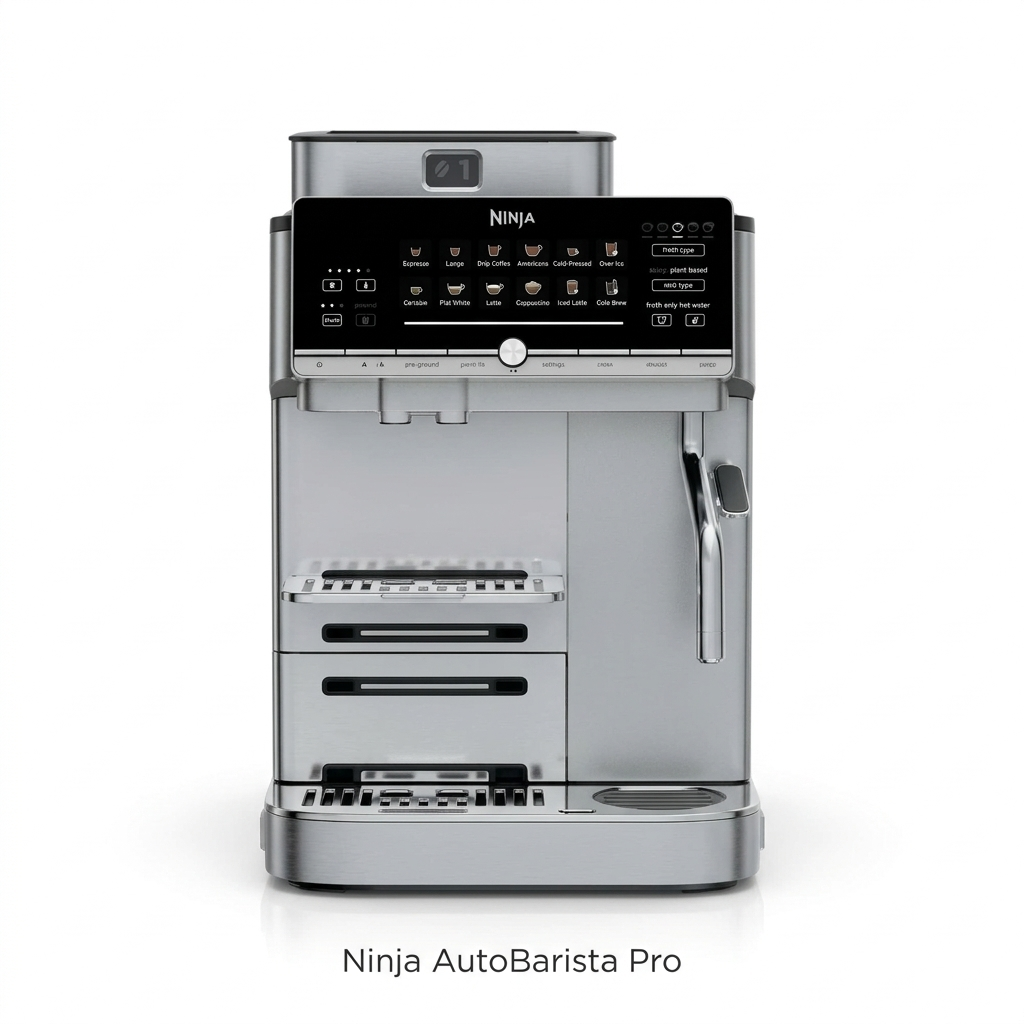
Big 17 g doubles, self-calibrating Grind IQ, two swappable hoppers, 13 drinks including drip coffee and cold brew.
Check price on Amazon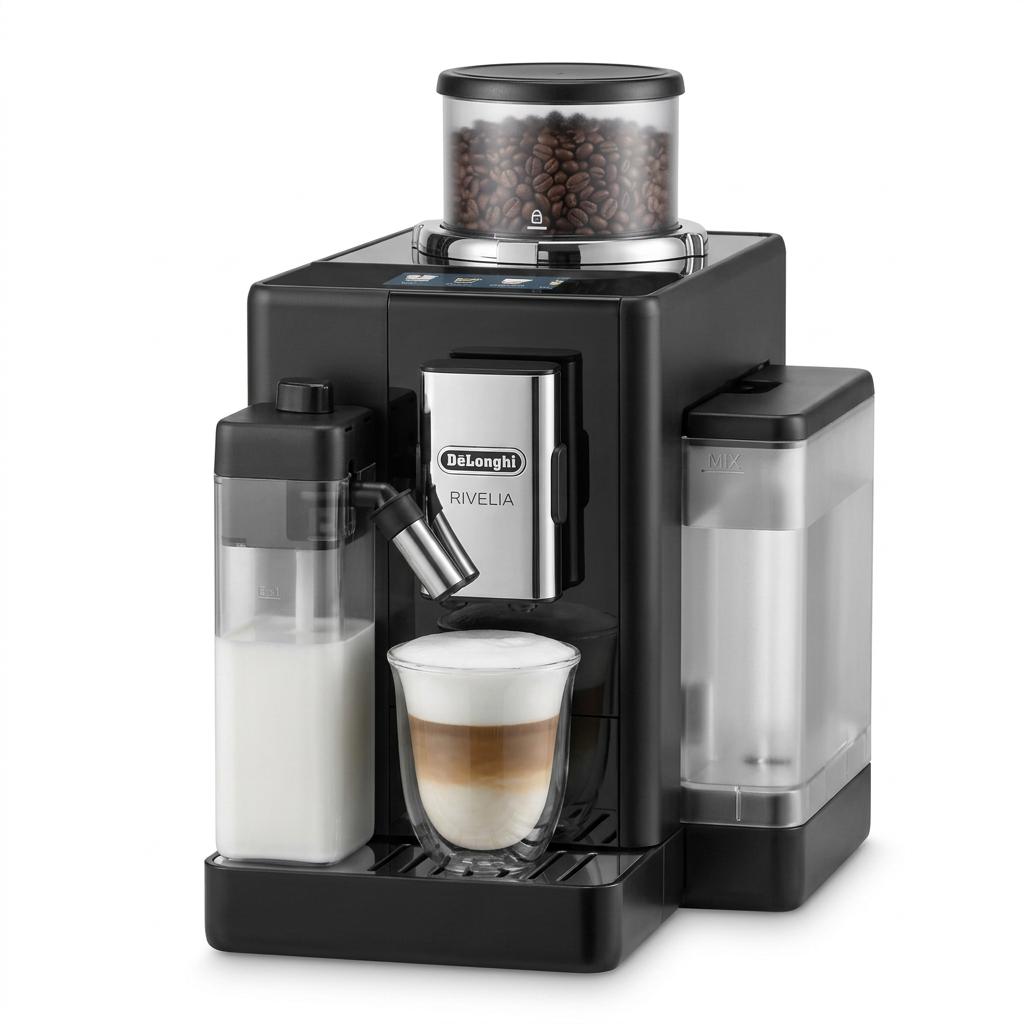
Two twist-on hoppers, Bean Adapt setup, 18 one-touch recipes, four profiles and a quiet grinder in a narrow body.
See Today’s PriceNinja AutoBarista Pro vs De’Longhi Rivelia at a glance
- Both are fully automatic machines with two swappable bean hoppers, which is rare and great for decaf households.
- The Ninja makes fuller espresso and does more: real drip coffee, cold brew and iced drinks.
- The Rivelia is simpler, quieter, narrower and better for families with its touchscreen and four profiles.
- Pick the Ninja for coffee quality and range; pick the Rivelia for ease and a smaller footprint.
Head to head
The better result in each row is marked, based on four weeks with each machine and the manufacturer specs. Rows where they are level have no winner.
The Ninja wins more rows on coffee, while the Rivelia wins the rows that decide how pleasant a machine is to live with.
| Spec | AutoBarista Pro | Rivelia |
|---|---|---|
| Espressomy tasting, same beans | Dense, sweet, full body ✓ Best | Intense, chocolatey, a little lighter |
| Dose per double | About 17 g, triple over 20 g ✓ Best | Up to about 15 g |
| Bean switch | Almost no leftover beans ✓ Best | About 10 g to purge or mix |
| Grind setup | Grind IQ, 3 test shots ✓ Best | Bean Adapt suggestion, 13 settings |
| Drip coffee and cold brew | Yes, both ✓ Best | No |
| Milk system | Auto wand with whisk, jug | Carafe, goes in the fridge |
| Screen and menu | Coded settings menu | 3.5 in color touchscreen ✓ Best |
| User profiles | 2 | 4 ✓ Best |
| Noise while grinding | About 70 to 72 dB | About 66 to 68 dB ✓ Best |
| Footprint | 10.7 W x 17.8 D in, 40 lb | 9.6 W x 16.9 D in, 21 lb ✓ Best |
| Water tank | About 80 oz ✓ Best | About 47 oz |
| Rows won | 6 | 4 |
Ninja AutoBarista Pro vs Rivelia pros and cons
Ninja AutoBarista Pro
- Big 17 g doubles for espresso with real body
- Two swappable hoppers with almost no leftover beans
- Real drip coffee and cold brew alongside espresso
- Settings menu uses numbered codes
- Deep and heavy at about 40 lb
- Milk jug isn’t shaped for latte art
De’Longhi Rivelia
- Color touchscreen, four profiles and Bean Adapt make it very easy
- Quiet grinder at about 66 to 68 dB
- Narrow, light body with a top-fill side tank
- Each hopper swap purges or mixes about 10 g of beans
- Flat top screen is hard to see from below
- No real cold brew or cold milk foam
Who should buy which machine?
- Espresso drinkers who want real body
- Homes that also drink drip coffee or cold brew
- People who switch beans several times a day
- Families who want four saved profiles
- Milk-drink fans who keep milk in the fridge
- Kitchens that need a narrower, lighter machine
Two hoppers, two very different machines
On paper, these two share the same headline feature: two bean hoppers you can swap in seconds.
That makes them the obvious shortlist for any home where one person drinks decaf, or where you like to keep a house blend next to something special.
In use, they are built around different priorities. The Ninja AutoBarista Pro is a coffee-first machine that happens to be automatic. The De’Longhi Rivelia is an ease-first machine that happens to make very good coffee.
| What it focuses on | Ninja AutoBarista Pro | De’Longhi Rivelia |
|---|---|---|
| Coffee strength | Big doses, 53 mm brew group | Generous 15 g dose for an automatic |
| Range of drinks | 13, from espresso to cold brew | 18 hot one-touch recipes |
| Ease of use | Good once you learn the codes | Excellent, guided touchscreen |
| Family use | 2 profiles | 4 profiles, learns routines |
| Size | Large, about 40 lb | Narrow, about 21 lb |
So the question isn’t which machine is better in general. It’s whether you value what’s in the cup or how easy the machine is for everyone at home.
Our tip: Write down how many times a day your home would swap beans before you choose, because that number decides how much the Rivelia’s 10 gram purge matters.
Design, size and build
Size is the first practical difference, and it’s a big one.
The AutoBarista Pro measures about 10.7 inches wide, 17.8 inches deep and 15.8 inches tall, and it weighs around 40 pounds. Integrated handles on the sides make it easier to move than that number suggests.
The Rivelia is about 9.6 inches wide, 16.9 inches deep and 15.2 inches tall, and it weighs about 21 pounds. It has no handles or finger recesses, so I hugged it with both hands to wipe underneath.
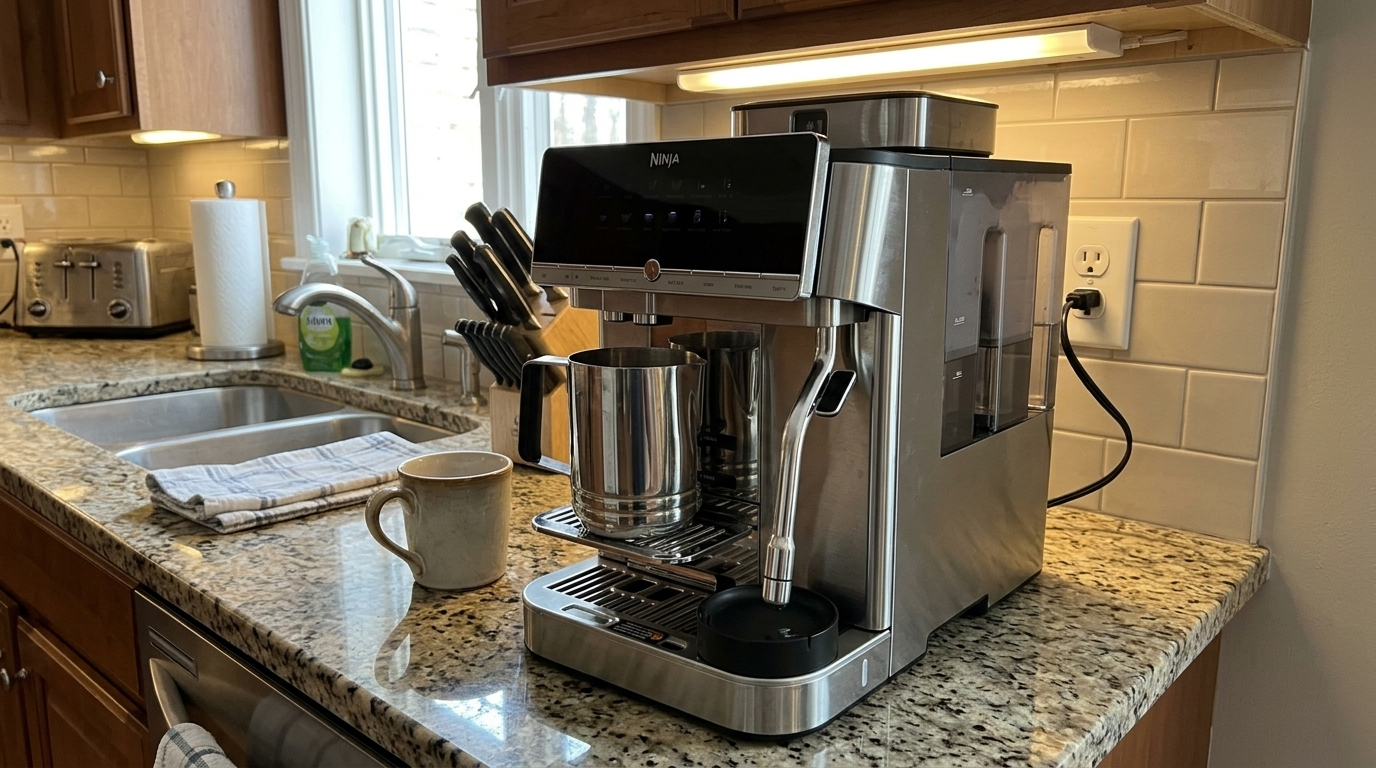
The AutoBarista Pro is deep and heavy, but its side handles make it easy to slide forward.
Water tanks
Both put the tank on the side, and both let you top up from above without removing it.
The Ninja’s tank holds about 80 ounces and has a level sensor that stops a drink before it starts if there isn’t enough water. The Rivelia’s holds about 47 ounces and drops into place from above.
Build quality
Both feel well made. The Ninja has a light behind the spout so you can watch the shot run, and a tool-free side panel that reveals the brew group.
The Rivelia has softer, rounded corners and looks less boxy, but its plastic hot water spout and a drip tray that drops at the front felt cheaper than the rest of the machine.
Our tip: Measure the depth of your counter and the gap under your cabinets before buying the Ninja, because it is about 18 inches deep and needs room above to lift a hopper off.
Setup and dialing in
Setup took about 15 minutes on each, but the first coffees went differently.
On the Ninja, I tested the water hardness, fitted the filter, filled a hopper and the tank, then ran Grind IQ✕Grind IQNinja’s automatic dial-in. The machine pulls up to three test shots, measures how each one flows and adjusts the grind until the shot lands in its target range.. It pulled three test shots, moved the grind between each, and saved a setting I only nudged once in four weeks.
On the Rivelia, the touchscreen walked me through language, water hardness, filter and rinse. Then Bean Adapt✕Bean AdaptDe’Longhi’s setup wizard. You tell it about your beans, such as roast level, and it suggests a grind setting and adjusts dose and temperature to match. asked about my beans and suggested a grind setting that was a sensible first guess.
| Setup step | AutoBarista Pro | Rivelia |
|---|---|---|
| Time to first drink | About 15 minutes plus Grind IQ | About 15 minutes |
| Water filter | Included | Included |
| Grind setup | Automatic, 3 test shots | Suggested, you fine-tune |
| Beans used to dial in | A fair amount for test shots | A few test espressos |
| Throwaway drinks | The Grind IQ shots | 2 or 3 to flush the system |
Grind IQ was the more impressive of the two. Bean Adapt was the friendlier, because it never asked me to pour away three shots before my first coffee.
Our tip: Run Grind IQ or Bean Adapt again every time you open a new bag of a different coffee, so the machine recalibrates to the new beans.
Screen, menu and profiles
The Rivelia wins this section clearly.
Its 3.5-inch color touchscreen splits drinks into a coffee menu and a milk menu. Each of four profiles keeps its own strength, size and milk settings, and the machine learns your habits through Coffee Routines, so my usual morning drink was waiting on the first screen within a week.
My one complaint is where it sits. The screen lies flat on top, so it’s easy to read standing over it, but my kids couldn’t see it well from below.
The Ninja’s display shows each espresso’s weight, flow and time as it brews, which turned every shot into a small lesson in extraction.
Its settings menu, though, speaks in numbered codes. I kept the manual nearby for the first two weeks.
It has two profiles. Adjust a drink, then press and hold its button to save it.
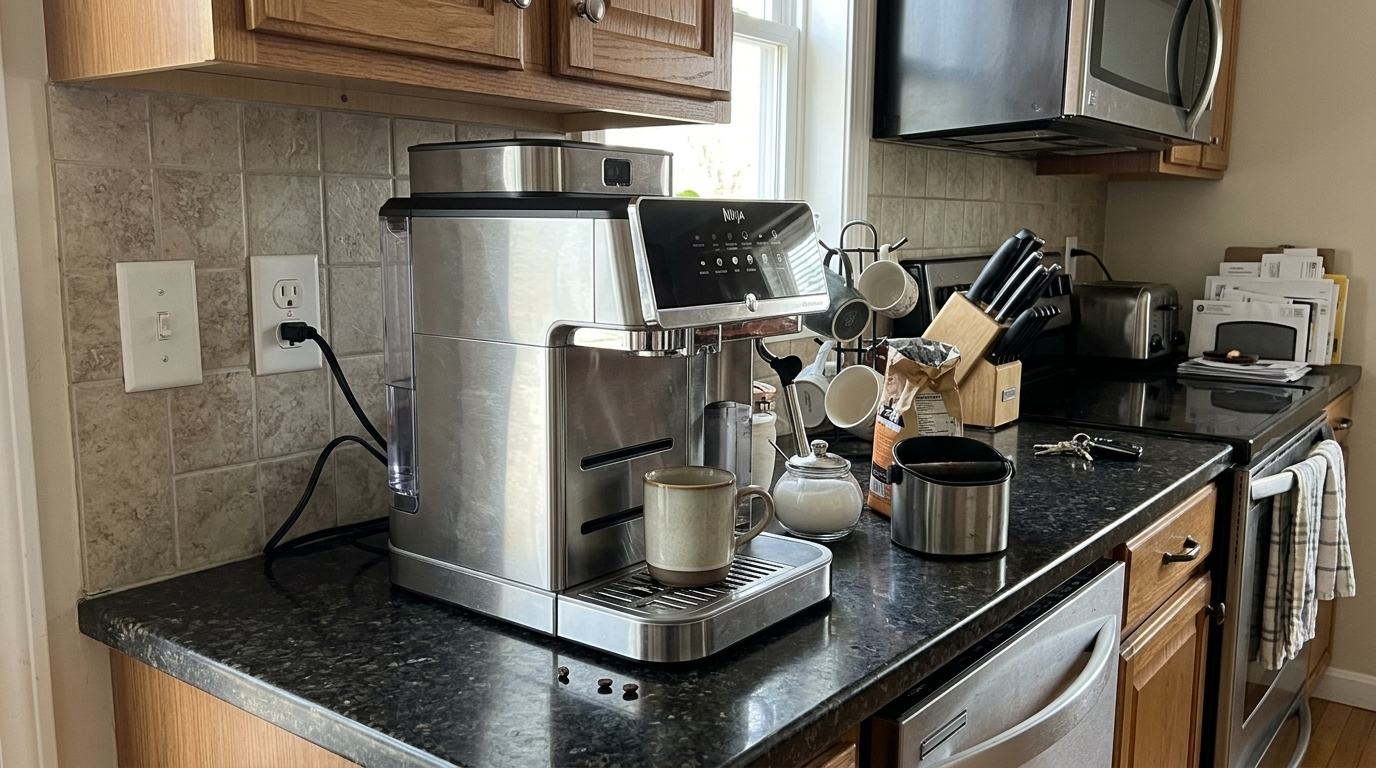
The Ninja shows weight, flow and time for every espresso as it runs.
| Interface | AutoBarista Pro | Rivelia |
|---|---|---|
| Display | Panel with shot data | 3.5 in color touchscreen, on top |
| Profiles | 2 | 4 |
| Learns your habits | No | Yes, Coffee Routines |
| Settings menu | Numbered codes | Plain words |
| Readable for kids | Yes, front facing | Hard from below |
Our tip: Save each person’s favorite drink to a profile on day one, because it turns both machines into true one-touch coffee for the whole house.
Grinder and dose
This is where the Ninja pulls ahead on taste.
The Ninja AutoBarista Pro has a 53 mm brew group, close to the size of a portafilter basket. A double uses about 17 grams of coffee, and a triple more than 20.
The De’Longhi Rivelia has a 44 mm brew chamber and grinds up to about 15 grams at its top intensity, which is already generous for a fully automatic machine.
Coffee per drink, measured
Approximate dry coffee per drink. More coffee means more body in the cup.
Both grinders are steel burrs. The Rivelia’s has 13 settings on a physical dial, and you should only turn it while it’s grinding.
The Ninja’s grind is set by Grind IQ, with a manual adjustment of minus two to plus two around the saved setting. Minus two nearly choked my shots; plus one helped with a very dark roast.
| Grinder detail | AutoBarista Pro | Rivelia |
|---|---|---|
| Burrs | Steel, built in | Stainless steel conical, 13 settings |
| Dial-in | Automatic Grind IQ | Bean Adapt suggestion |
| Manual adjust | −2 to +2 | Dial, turn while grinding |
| Brew group | 53 mm | 44 mm |
| Pre-ground chute | Yes | Yes, removable |
Espresso quality
With the same medium-dark blend, the Ninja made the best espresso I’ve had from a one-touch machine.
My calibrated double came out at about 37 grams in around 30 seconds, after a short pre-infusion✕Pre-infusionA short, gentle soak of the coffee before full pressure. It helps water flow evenly through the puck.. It was dense and sweet, with thick crema and a chocolate depth I usually only get from a manual machine.
The Rivelia’s espresso, about 15 grams in and 30 grams out at intensity 5, was intense and chocolate-forward with a thick hazelnut crema. It had a little less body, and lighter coffees’ fruit notes came through less clearly.
My espresso ratings
My scores out of 10 for body, crema and flavor with a medium-dark blend.
On the Ninja, the strength setting, one to five beans, controls how much water goes through the coffee rather than how much coffee is used. Five beans is the shortest, most concentrated shot.
On the Rivelia, intensity is effectively a dose control, from a mild long coffee up to about 15 grams.
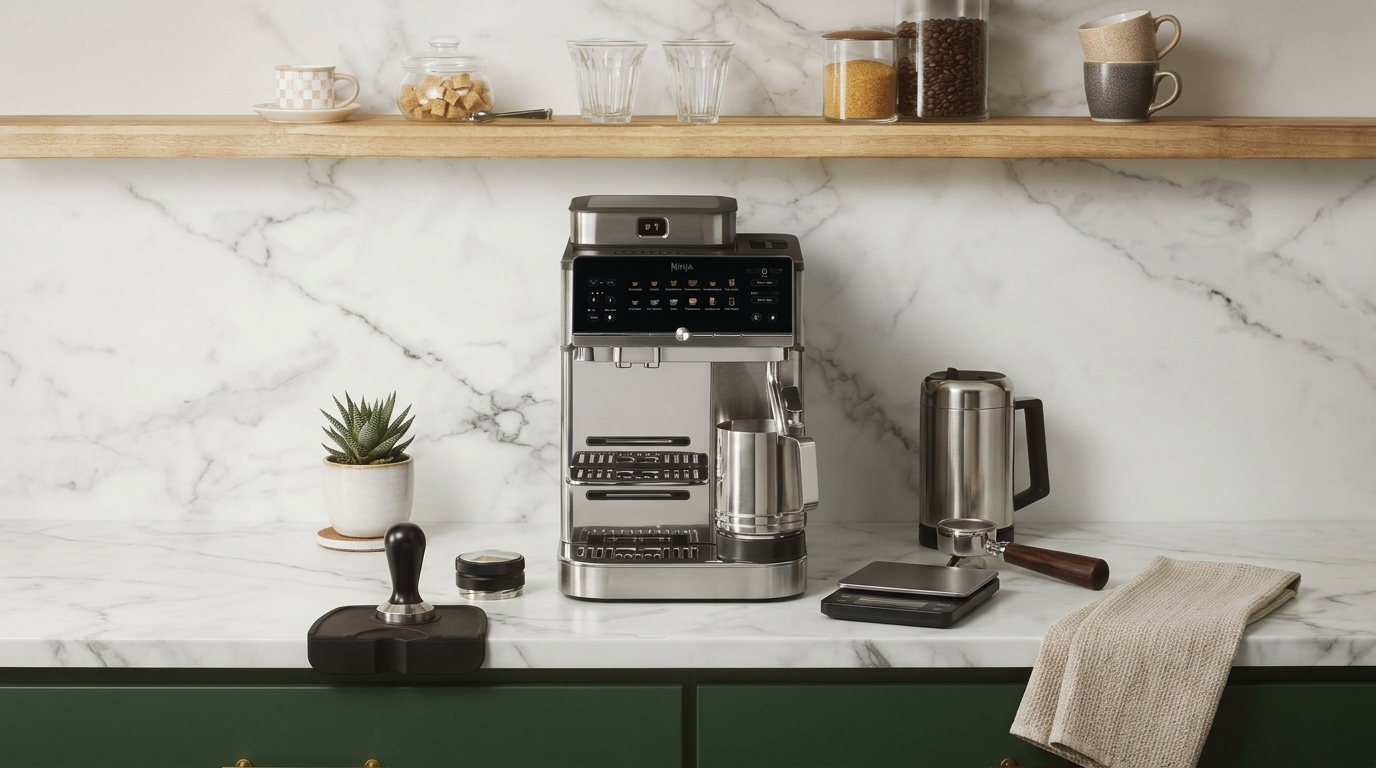
The Ninja’s 17 gram doubles gave its espresso real weight and texture.
| What you taste | Likely cause | First fix |
|---|---|---|
| Sour, thin, fast | Grind too coarse | Ninja: re-run Grind IQ. Rivelia: one step finer |
| Bitter, slow | Grind too fine | Ninja: +1. Rivelia: one step coarser |
| Watery | Small dose | Ninja: use the double. Rivelia: intensity 5 |
| Flat, little crema | Stale beans | Beans roasted within a few weeks |
The two-hopper systems compared
Both machines let you lift one hopper off and fit another in seconds. What happens next is very different.
The AutoBarista Pro meters beans out with small rubber fins and weighs each dose, so only what’s needed reaches the grinder. When I lifted out the regular hopper after a drink, the grinding chamber was almost empty, and my first decaf tasted like decaf.
The Rivelia leaves about 10 grams of coffee between the hopper and the burrs. It asks whether to grind and empty it, or use it in a transition drink that mixes old and new beans.
Beans lost per day by switching habit
Based on the roughly 10 g left in the Rivelia’s grinder after each swap.
For one swap a day, regular in the morning and decaf after lunch, the Rivelia’s purge is a fair trade.
If you switch three or four times a day, the Ninja is clearly better.
There’s one more limit on the Rivelia: it has one grind dial. It worked beautifully with two beans of a similar roast, but a pale light roast next to a smoky dark roast gave uneven results. Grind IQ on the Ninja recalibrates per bean, which handles that better.
| Hopper detail | AutoBarista Pro | Rivelia |
|---|---|---|
| Hopper size | About 340 g each | About 250 g each |
| Swap | Lever release | 90° twist, shutter closes |
| Leftover beans | Almost none | About 10 g |
| Very different roasts | Handled by Grind IQ | Grind compromise |
| Airtight storage | No, keep a few days’ worth | No, keep a few days’ worth |
Our tip: Label the two hoppers on both machines, so nobody makes a regular coffee from the decaf hopper by mistake.
Coffee, drip and big mugs
For a big mug of black coffee, the Ninja has a real advantage.
Its drip setting brews from about 6 to 28 ounces with a coarser grind and its own brewing process. My 12 ounce mug came out at about 170°F and tasted like a clean, medium-bodied filter coffee, not a stretched espresso.
The Rivelia’s coffee recipe, a longer drink with crema on top, became my favorite first cup on that machine. It is hot, smooth and far better than drip coffee made from the same beans, but it is still espresso-style coffee.
Long drinks compared
My ratings out of 10 for flavor and balance in a mug.
For two drinks back to back, the Ninja’s Brew Two runs a full cycle, ejects the puck and brews again. The Rivelia has a double-cup function, but I preferred two single drinks for strength.
Our tip: Save a drip coffee size in the Ninja’s second profile, so the drip drinker in your home gets their mug with one press.
Iced coffee and cold brew
This one is simple: only the Ninja makes real cold coffee.
The Ninja AutoBarista Pro has cold brew, cold-pressed coffee, coffee over ice and iced latte options. Its cold brew✕Cold brewCoffee extracted slowly at a low temperature. It tastes smoother and less bitter than hot coffee poured over ice. came out smoother and less bitter than espresso poured over ice, and it became our afternoon drink.
The De’Longhi Rivelia has iced coffee and espresso-over-ice icons, but they brew hot coffee onto ice you’ve put in the glass. It can’t make cold milk foam either, because its carafe froths hot milk only.
| Cold drink | AutoBarista Pro | Rivelia |
|---|---|---|
| Cold brew | Yes, true low-temperature brew | No |
| Coffee over ice | Yes | Yes, hot coffee onto ice |
| Iced latte | Yes, preset | Workaround, add cold milk by hand |
| Cold milk foam | Yes, cold foam setting | No |
Our tip: Fill the glass to the top with large ice cubes before brewing over ice on either machine, because hot coffee melts a few cubes faster than you’d think.
Milk drinks
Both make one-touch cappuccinos and lattes, and the milk was good on both. The systems are completely different, though.
Ninja AutoBarista Pro: steam wand with a whisk
You pour milk into the included jug and set it under a thick steam wand with a temperature probe and four steam holes.
Inside the jug, a whisk stirs the milk as it heats and keeps stirring every so often while the espresso finishes. That stopped the foam separating, and my milk stayed creamy until I poured it.
There are settings for steamed milk, thin, thick and extra-thick froth and cold foam, plus dairy and plant modes.
De’Longhi Rivelia: LatteCrema carafe
The carafe clips onto the left side and draws milk through a small tube. Choose a drink, and the machine froths the milk and adds the espresso in the right order.
The foam was smooth and stable, with fine bubbles, a little airier than the microfoam✕MicrofoamMilk foam with bubbles so small you can barely see them. It feels silky and glossy, which is what a flat white or latte needs. a barista makes by hand.
The best part: after the quick clean cycle, the carafe goes back into the fridge with milk still inside.
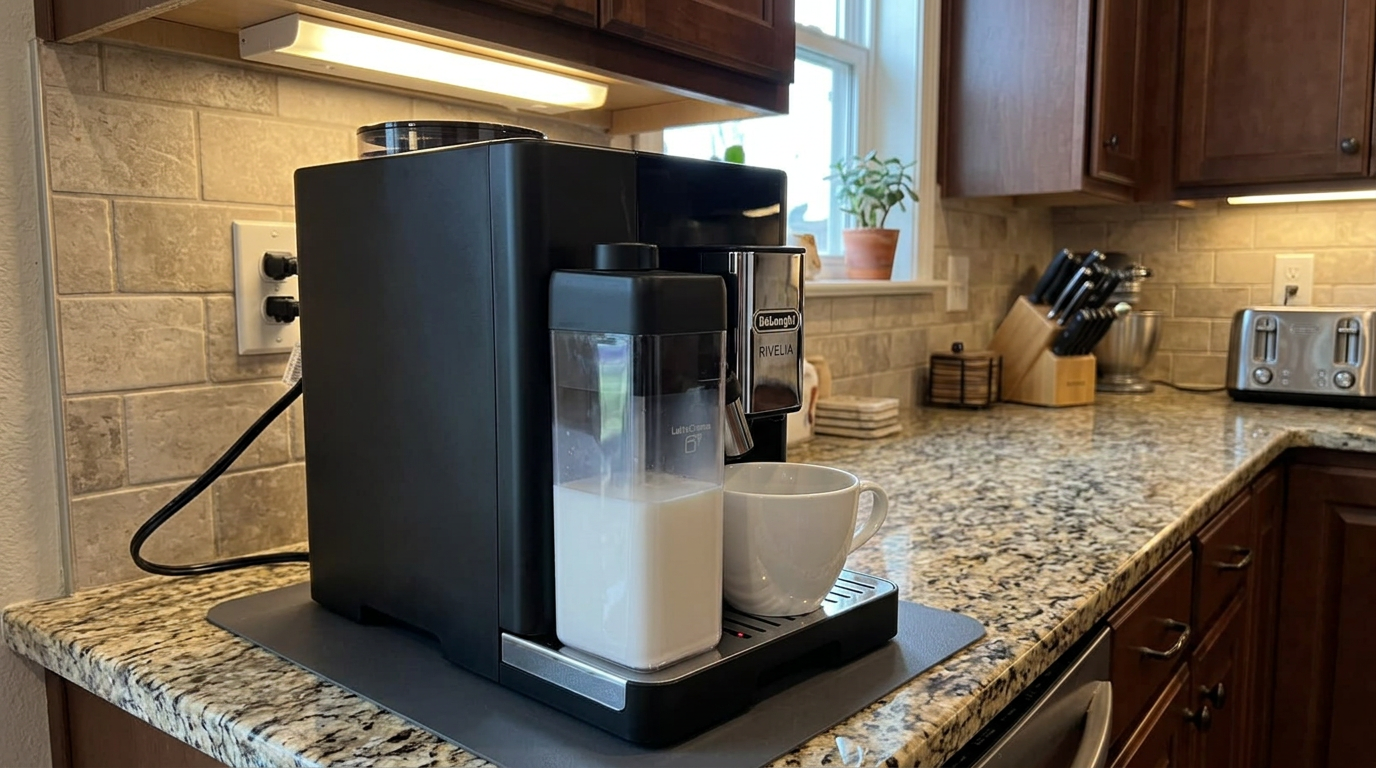
The Rivelia’s carafe clips to the side and goes back in the fridge after each drink.
Milk, my ratings
My scores out of 10 for texture, stability and temperature.
| Milk feature | AutoBarista Pro | Rivelia |
|---|---|---|
| System | Auto steam wand, whisking jug | Automatic carafe |
| Milk storage | Pour fresh each time | Carafe goes in the fridge |
| Froth styles | 5, including cold foam | Set per recipe |
| Milk temperature | About 63 to 66°C, adjustable | 140 to 149°F, about 60 to 65°C |
| Manual steaming | Yes, a little weak | No |
| Latte art | Jug not shaped for pouring | Not really |
Temperature and hot water
Both machines make drinks at a comfortable, drinkable heat rather than scalding hot.
On the Ninja, espresso measured about 70°C in a warmed cup, drip coffee about 77°C, and milk has its own temperature setting. I raised it one step because I like my lattes hot.
On the Rivelia, milk came out between 140 and 149°F, where it tastes sweetest. Hot water from the plug-in spout measured 194 to 203°F, hot enough for black tea.
Temperatures I measured
Probe readings straight after brewing or frothing.
Our tip: Raise the Ninja’s froth temperature one step and warm the Rivelia’s glass first if you like hot lattes, because both default to warm rather than hot milk.
Cleaning and upkeep
Both make daily cleaning easy, with different chores.
The Ninja’s wand purges itself after milk drinks, and Ninja includes a brush with a pick for the steam holes and a tub of lubricant with its own storage slot. The side panel and brew group come out without tools.
The Rivelia prompts a quick carafe clean after every milk drink: turn the dial and hot water and steam flush the milk path. The carafe needs a full strip-down once a week.
| When | AutoBarista Pro | Rivelia |
|---|---|---|
| After milk | Automatic wand purge, wipe | Carafe clean cycle |
| Daily | Empty tray and grounds, wash jug | Empty grounds every day or two |
| Weekly | Rinse brew group, grinder purge | Rinse brew unit, strip the carafe |
| Monthly | Lubricate brew group seals | Filter when prompted |
| When prompted | Descale | Descale |
My daily hands-on cleaning time
Estimated hands-on time per day with two or three milk drinks.
One quirk on the Rivelia: the drip tray and grounds container tend to drop at the front as they come free. Hold them with your other hand.
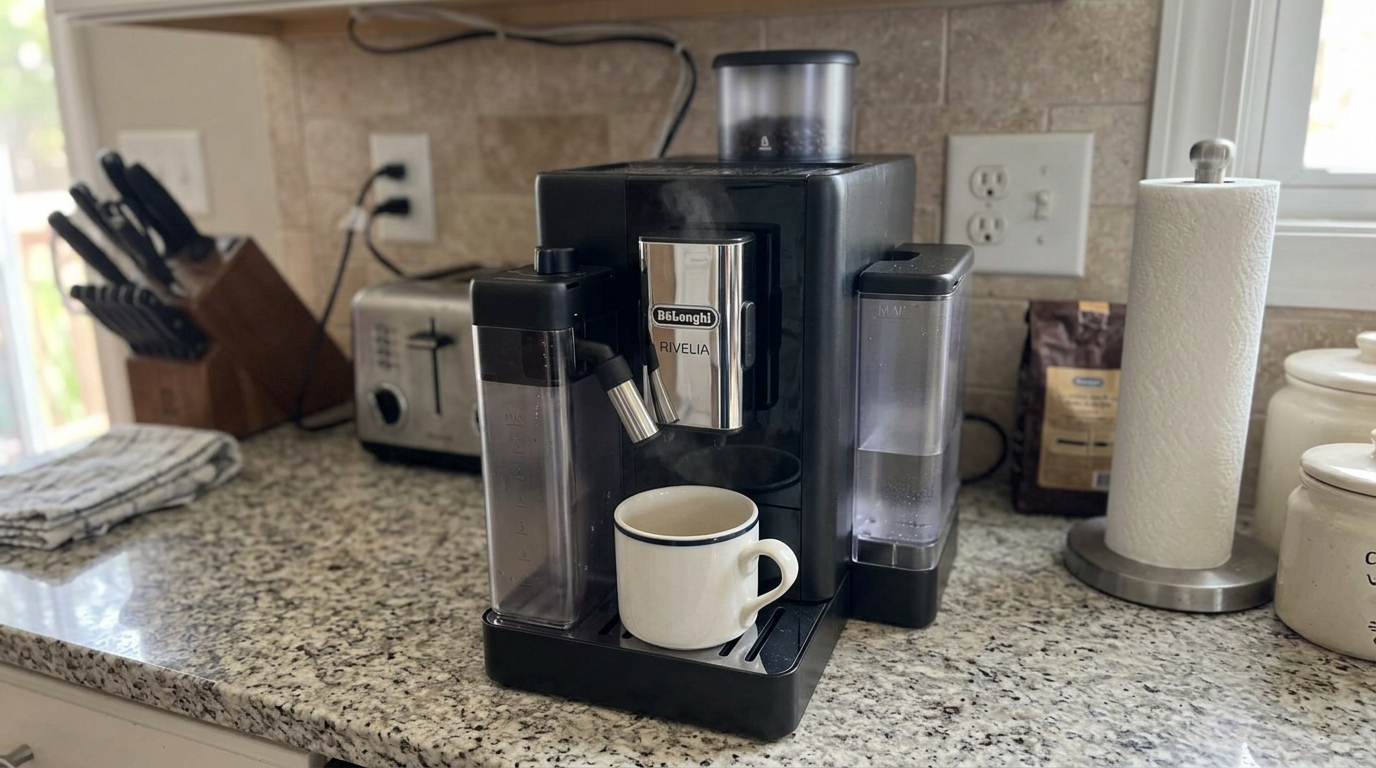
Empty the Rivelia’s grounds container early, because warm pucks can grow mold within days.
Our tip: Don’t wait for the full-container warning on either machine; empty the grounds every day or two so damp pucks never sit for long.
Noise
The Rivelia is the quieter machine.
I measured 66 to 68 dB while it ground and brewed, about the level of a normal conversation. Milk frothing added a soft hiss.
The Ninja peaked at about 70 to 72 dB while grinding, then dropped to about 60 dB while brewing and 66 dB while whisking. It also meters and grinds in stages, so each drink takes a little longer.
Sound levels I measured
Phone sound meter readings at about 50 cm.
Water, beans and long-term care
The Ninja’s 80 ounce tank lasted two to three days for two people, and each 340 gram hopper about a week and a half.
The Rivelia’s 47 ounce tank needed refilling roughly every day and a half with the same routine, though its top-fill design makes that painless.
Roughly how far one tank goes, two people
Two people, a mix of espresso, milk drinks and long coffees.
Both prefer fresh medium to medium-dark beans. Avoid very oily dark roasts on both, because oil coats the grinder path.
For long-term care, the Ninja asks you to lubricate the brew group seals monthly. The Rivelia asks you to let its brew unit air-dry fully before putting it back.
| Bean type | AutoBarista Pro | Rivelia |
|---|---|---|
| Medium-dark blend | Excellent espresso | Best for milk drinks |
| Medium roast | Best for drip and cold brew | Excellent all round |
| Light roast | Good after Grind IQ | Finer grind, uneven next to a dark roast |
| Very oily dark | Not recommended | Not recommended |
Our tip: Keep only a few days of beans in each hopper and the rest in a sealed canister, because neither machine’s hoppers are airtight.
Mistakes to avoid on both
A month with each taught me a few habits that matter.
Making a transition drink on the Rivelia when switching to decaf. It still contains caffeine. Choose grind and empty.
Judging the Ninja by its single shot. It’s too small for the brew group. Use the double.
Pairing very light and very dark beans in the Rivelia. One grind dial can’t suit both.
Pouring the Ninja’s milk too early. Wait for the whisk to finish.
| Problem | Fix |
|---|---|
| Decaf that isn’t decaf on the Rivelia | Grind and empty after each swap |
| Watery Ninja shots | Double dose, five beans |
| Sour or bitter after a bean change | Re-run Grind IQ or Bean Adapt |
| Clumpy foam on the Ninja | Let the whisk finish, then swirl |
| Mold in the grounds bin | Empty every day or two |
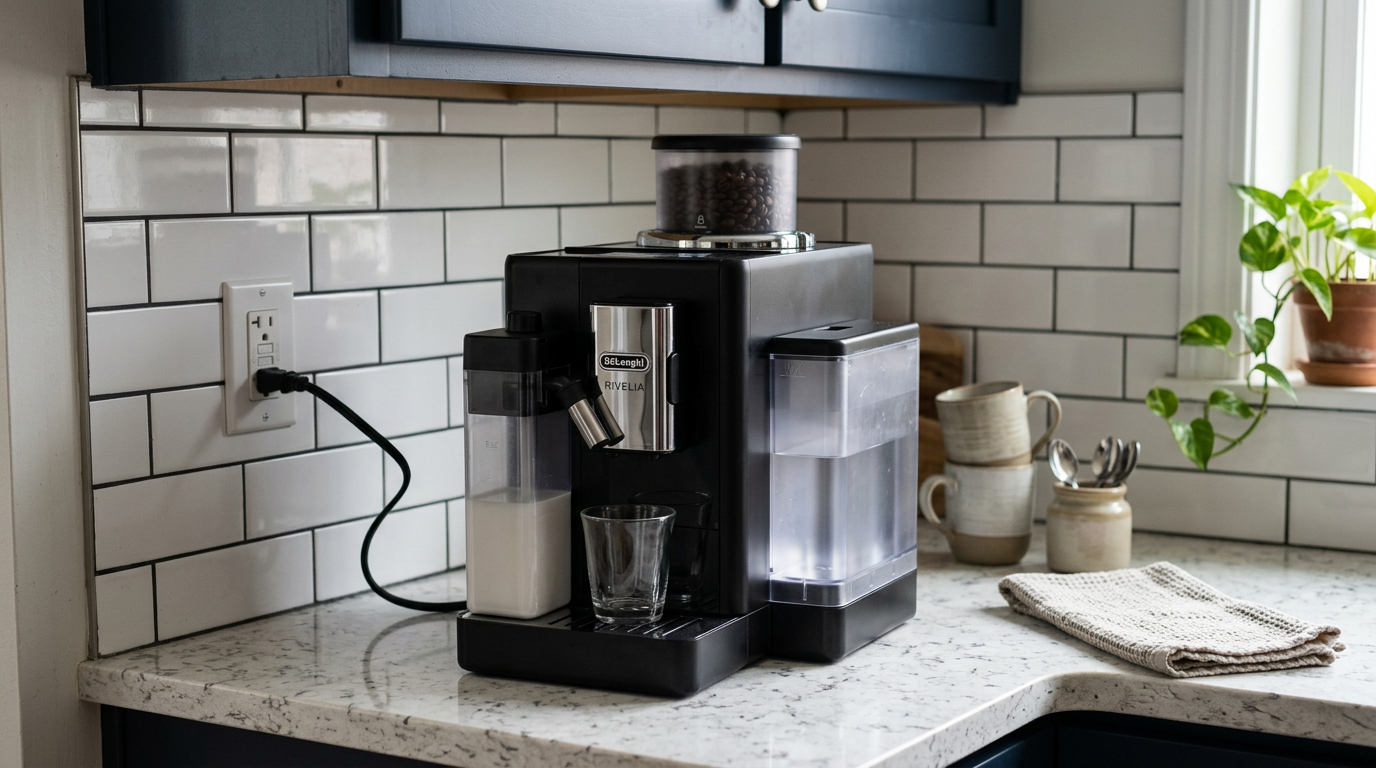
Pair beans with similar roast levels in the Rivelia’s two hoppers.
A typical day on each
This was our routine in week three on both machines: two people, regular coffee in the morning, decaf in the evening.
On the Ninja, I made a double espresso at five beans, then a thick-froth cappuccino from the second profile. Mid-morning brought a 12 ounce drip coffee, the afternoon a cold brew over ice, and the evening two decaf flat whites after a ten-second hopper swap.
On the Rivelia, I tapped my profile for a coffee crema, then a latte macchiato for my partner. After lunch I twisted on the decaf hopper, chose grind and empty, and made an afternoon decaf. The carafe lived in the fridge between drinks.
| Time | AutoBarista Pro | Rivelia |
|---|---|---|
| 7:00 | Double espresso, 5 beans | Coffee crema, intensity 5 |
| 7:15 | Cappuccino, thick froth | Latte macchiato from the carafe |
| 10:30 | 12 oz drip coffee | Long coffee |
| 15:00 | Cold brew over ice | Decaf coffee after a swap |
| 20:00 | Two decaf flat whites | Decaf cappuccino |
Time per drink, from my testing
From pressing the button to a finished drink.
Our tip: Swap the Rivelia’s hopper right before a drink you would make anyway, so the 10 gram purge happens once instead of twice.
Small extras and the deciding question
Neither machine needs much, but a few extras helped.
Spare water filters were the most useful for both. A good milk cleaning solution made the Rivelia’s weekly carafe wash easier, and a small sealed canister kept spare beans fresh for both.
| Extra | AutoBarista Pro | Rivelia |
|---|---|---|
| Water filters | Useful | Useful |
| Milk cleaning solution | Useful | Very useful |
| Airtight bean canister | Useful | Useful |
| Brew group lubricant | Included | Occasionally |
| Hopper labels | Very useful | Very useful |
Still torn between the two?
Ask yourself one question: is the coffee the point, or is ease the point?
If you want espresso that tastes closest to a manual machine, plus drip coffee and cold brew, buy the Ninja AutoBarista Pro.
If you want a machine everyone at home can use from the first day, with four profiles, a quiet grinder and milk that stays in the fridge, buy the De’Longhi Rivelia.
Then think about space. The Ninja is roughly twice the weight and nearly an inch deeper.
And think about how often you swap beans. Once a day, both are fine. Several times a day, the Ninja’s clean switch saves real coffee.
Either way, both are honest, well-designed machines, and both make a regular-and-decaf home far simpler.
Four weeks with each: our diary notes
These are the notes Michael and a second HouseholdMe tester kept as each machine settled into our routine.
Ninja AutoBarista Pro
Week 1: Grind IQ took three shots to settle. Learned the single dose is too small to judge the machine by.
Week 2: Double at five beans became the default, with the triple saved for flat whites.
Week 3: Decaf hopper every evening, drip coffee replaced our drip maker, cold brew in the afternoons.
Week 4: Thick froth for cappuccinos, thin for flat whites, first monthly lubrication.
De’Longhi Rivelia
Week 1: Bean Adapt got us close. Two small grind tweaks finished the job.
Week 2: Four profiles set up; Coffee Routines put our usual drinks on the first screen.
Week 3: Regular in the morning, decaf after lunch, carafe in the fridge.
Week 4: Tried a light and a dark roast together and saw the grind compromise.
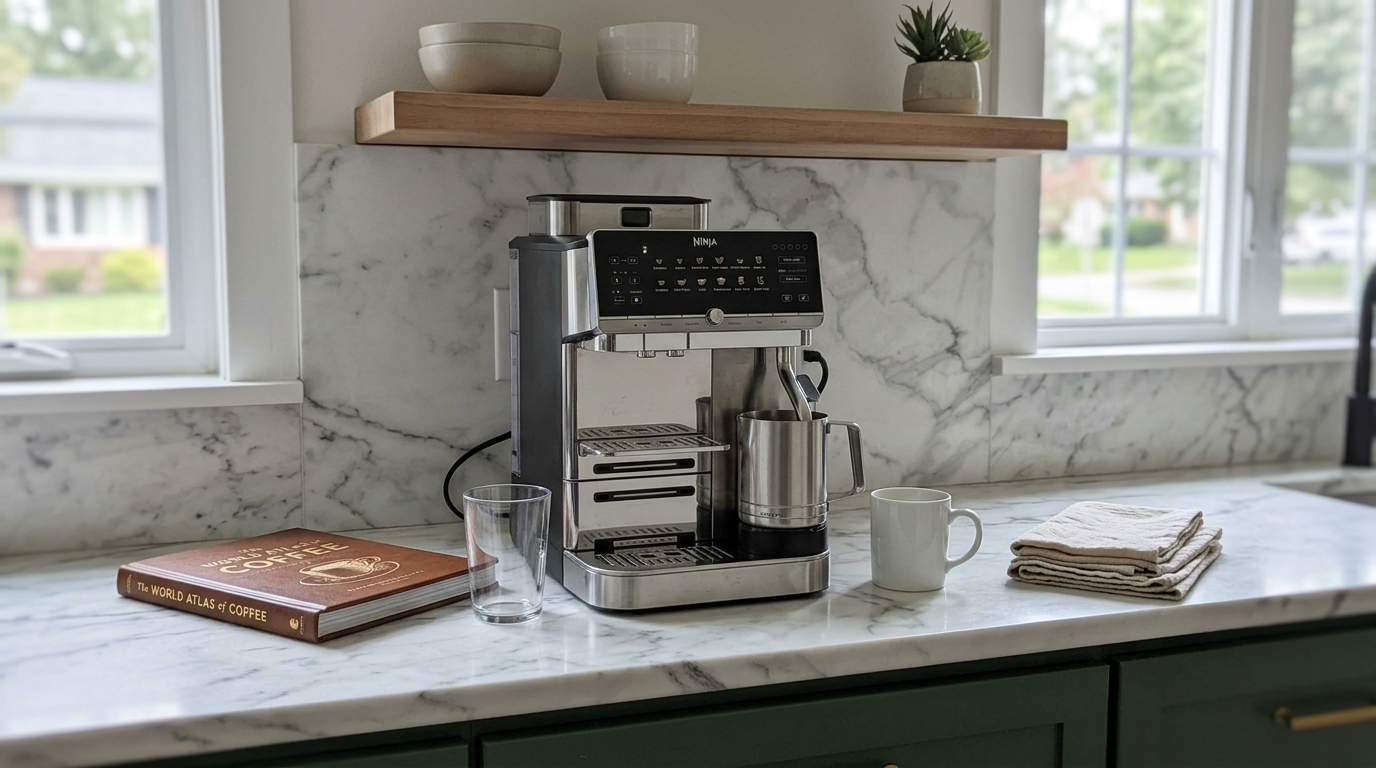
By week four, the Ninja had replaced both our espresso machine and our drip maker.
Real-life scenarios
These are the situations where one machine clearly pulled ahead.
17 g doubles give real body.
Four profiles and a touchscreen anyone can read standing up.
Almost no leftover beans when you swap.
Real cold brew and cold foam.
Quieter grinder at about 66 to 68 dB.
Narrower and about half the weight.
My scorecard
These are our scores out of 10 from the single reviews of each machine, plus versatility because it matters in this matchup.
Ninja AutoBarista Pro
Versatility covers drip coffee, cold brew and the hopper switch.
De’Longhi Rivelia
No cold brew or drip coffee, but a very easy daily routine.
Overall, I rate the AutoBarista Pro 8.7 and the Rivelia 8.4 in this comparison. The Ninja makes better coffee and more kinds of it; the Rivelia is the one I’d hand to a guest without explaining anything.
See How Much You’ll SaveWhich one is right for you?
4 quick questionsWhich one should you buy?
For most coffee lovers, the Ninja AutoBarista Pro. It makes fuller espresso, switches beans without waste and adds drip coffee and cold brew. For the wider picture, see my guide to the best Ninja espresso machines.
The De’Longhi Rivelia is the better buy for families and smaller kitchens. If you’re weighing the cheaper Ninja, my Ninja AutoBarista vs AutoBarista Pro comparison covers the single-hopper version, and my De’Longhi Rivelia vs Magnifica Evo comparison covers a simpler De’Longhi.
The AutoBarista Pro is the stronger coffee machine of the two.
- You want strong, full-bodied espresso
- You drink drip coffee or cold brew
- You switch beans several times a day
- You have the counter space
- You want a simple, plain-language menu
- Your counter is shallow
- You want to pour latte art
- Several people share the machine
- You want a quiet grinder
- You need a narrower, lighter machine
- You want real cold brew
- You swap very different roasts daily
- Low cabinets hide the top screen
My pick is the Ninja AutoBarista Pro. Its 53 mm brew group and 17 gram doubles make the most full-bodied espresso I’ve had from a one-touch machine, Grind IQ dials itself in, and its two hoppers switch with almost no leftover beans. Real drip coffee and cold brew are a big bonus.
The De’Longhi Rivelia is the better choice if ease comes first. Its touchscreen, four profiles and quiet grinder make it the friendliest machine for a family, and its carafe keeps milk in the fridge between drinks.
Whichever you choose, label the hoppers, use fresh beans and empty the grounds container every day or two.
Ninja AutoBarista Pro vs De’Longhi Rivelia specifications
From manufacturer specifications and our own testing.
| Ninja AutoBarista Pro | De’Longhi Rivelia | |
|---|---|---|
| Model | AE1051 | Rivelia |
| Type | Fully automatic with auto steam wand | Fully automatic with milk carafe |
| Drinks | 13 presets plus hot water | 18 one-touch recipes |
| Brew group | 53 mm | 44 mm, removable |
| Dose | About 17 g double, 20 g+ triple | Up to about 15 g |
| Grinder | Built in, Grind IQ, −2 to +2 | Stainless conical, 13 settings |
| Bean hoppers | 2 swappable, about 340 g each | 2 swappable, 250 g each |
| Drip coffee | Yes, 6 to 28 oz | No |
| Cold brew | Yes | No |
| Milk | Whisking steam wand, 5 froth styles | LatteCrema hot milk carafe |
| Profiles | 2 | 4 |
| Display | Panel with shot data | 3.5 in color touchscreen |
| Water tank | About 80 oz | About 47 oz |
| Pump | 9 bar brewing | 19 bar pump |
| Noise (measured) | 70 to 72 dB grinding | 66 to 68 dB |
| Power | 1,650 watts | 1,450 watts |
| Dimensions (W x D x H) | 10.7 x 17.8 x 15.8 in | 9.6 x 16.9 x 15.2 in |
| Weight | About 40 lb | About 21.4 lb |
How I tested and compared them
Michael Reynolds here. Each machine was our everyday coffee maker for four weeks, making espresso, long coffee, Americanos, cappuccinos, lattes, flat whites and iced drinks, plus drip coffee and cold brew on the Ninja. Michael and a second HouseholdMe tester shared each machine and wrote the notes together.
We swapped between a regular and a decaf hopper every day on both, weighed doses and the beans left after each swap, measured drink and water temperatures with a probe and noise with a sound meter, and tried similar and very different roasts in the two hoppers.
We followed every cleaning routine and compared our notes with Ninja’s and De’Longhi’s specifications and owner documentation.
- Coffee: dose, crema, body and consistency.
- Bean switching: speed, waste and roast flexibility.
- Milk: texture, temperature and ease.
- Ownership: screen, profiles, noise, cleaning and footprint.
Ninja AutoBarista Pro vs De’Longhi Rivelia FAQ
What is the difference between the Ninja AutoBarista Pro and the De’Longhi Rivelia?
Both are fully automatic machines with two swappable bean hoppers. The Ninja uses bigger doses, recalibrates itself with Grind IQ and also makes drip coffee and cold brew. The Rivelia is quieter, narrower and lighter, with a color touchscreen, four profiles and a milk carafe.
Which makes stronger espresso?
The Ninja. A double uses about 17 grams of coffee, compared with about 15 grams on the Rivelia at its highest intensity.
Which is better for switching to decaf?
The Ninja. Its hoppers meter and weigh each dose, so almost no beans are left behind. The Rivelia leaves about 10 grams to purge or mix after each swap.
Can the De’Longhi Rivelia make cold brew?
No. Its iced recipes pour hot coffee over ice. The Ninja AutoBarista Pro makes true cold brew.
Which is easier to use?
The Rivelia. Its touchscreen uses plain words and stores four profiles, while the Ninja’s settings menu uses numbered codes.
Which is quieter?
The Rivelia, at about 66 to 68 dB. The Ninja reached about 70 to 72 dB while grinding.
Which is smaller?
The Rivelia is narrower, slightly shallower and weighs about 21 pounds, roughly half the Ninja’s weight.
Does the Ninja AutoBarista Pro make drip coffee?
Yes, from about 6 to 28 ounces, with its own coarser grind and brewing process.
Can I keep milk in the fridge?
With the Rivelia, yes: the carafe goes back in the fridge after its clean cycle. The Ninja uses an open jug you fill each time.
How many profiles do they have?
Two on the Ninja AutoBarista Pro and four on the De’Longhi Rivelia.

- Our hands-on Ninja AutoBarista Pro review
- Our hands-on De’Longhi Rivelia review
- Ninja and De’Longhi product specifications and owner documentation
- General espresso brewing and milk frothing guidance