Miele vs De’Longhi coffee machines: is Miele worth it?
Miele brings German engineering, eight named profiles and some of the best automatic milk foam I have tested. De’Longhi answers with fuller doses, 19-bar pumps, big touchscreens and clever extras like a switchable second bean hopper. I tested four machines for four weeks each, the Miele CM 6160 and Miele CM 6360 against the De’Longhi Dinamica Plus and De’Longhi Rivelia, and lined up the data to find out whether Miele is worth it for you.
We choose products independently. We may earn a commission through links on this page; your price stays the same. Affiliate policy
Jargon helpNew to espresso? Tap any dotted term to see what it means.
In this comparison
If milk drinks are the heart of your household and several people share the machine, Miele is worth it. The Miele CM 6360 made the finest, densest automatic foam of the four, saves eight named profiles, makes tea with a timer and stays at conversation level. If espresso matters more, or you want a touchscreen that anyone can use, De’Longhi is the smarter buy. The De’Longhi Dinamica Plus pulled the densest shot of the test, and the De’Longhi Rivelia lets you switch between two bean hoppers in about three seconds.
The two brands
Specs checked November 14, 2026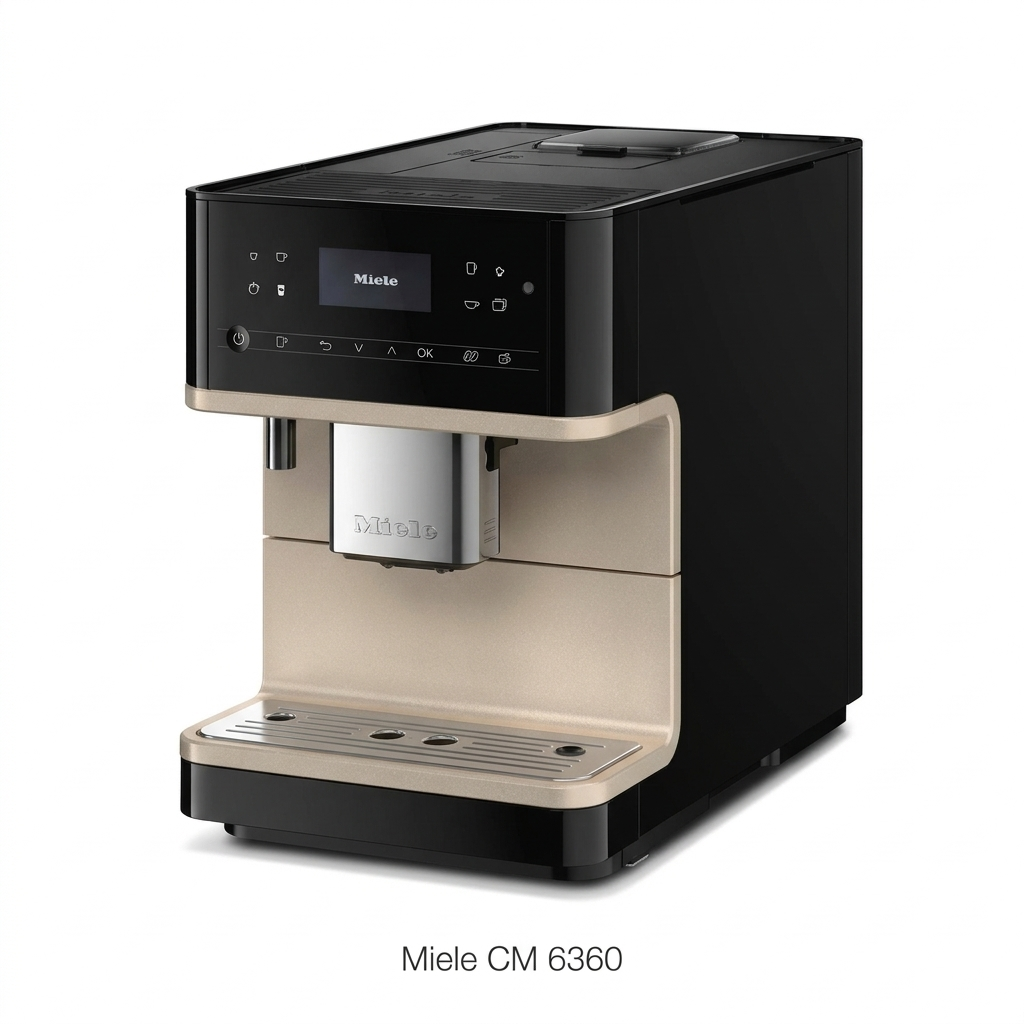
Dense, fine foam, up to eight named profiles, DoubleShot for strong mugs, six tea programs with a timer and a quiet, compact German build.
Check price on Amazon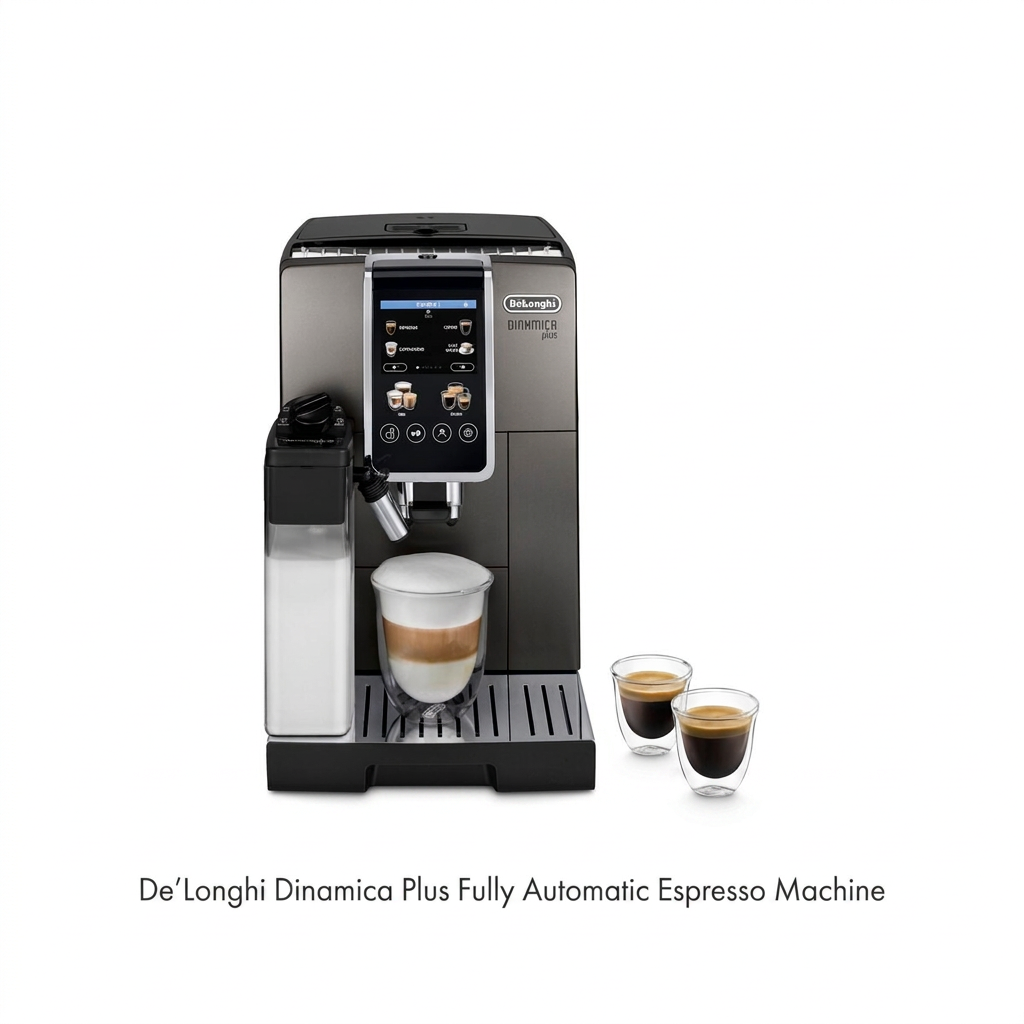
About 15 grams per dose, 19-bar pumps, 3.5-inch touchscreens, iced coffee and, on the Rivelia, two swappable bean hoppers.
Reveal Today’s DealMiele vs De’Longhi at a glance
- Buy a Miele if milk drinks, tea and lots of people sharing the machine are your priorities.
- Buy a De’Longhi if you want fuller espresso, an easy touchscreen or iced coffee.
- Miele machines were the quieter pair, grinding at about 60 to 63 dB at half a meter.
- De’Longhi carafes need more cleaning, while Miele uses a milk tube you keep in the carton.
Head to head
The better result in each row is marked, based on my testing and the manufacturer specs. Rows where the machines are level have no winner.
Keep in mind that the tally is not my verdict. Some rows matter far more than others, and which ones matter depends on what you drink.
| Spec | Miele | De’Longhi |
|---|---|---|
| Milk foammy ratings, whole milk | 9.3, dense and fine ✓ Best | 9.2 on the Dinamica Plus |
| Espresso bodymy tasting, same beans | Smooth, balanced | Dense, syrupy ✓ Best |
| Maximum dose | Not stated, DoubleShot for mugs | About 15 g ✓ Best |
| Pump | 15 bar | 19 bar |
| User profiles | 4 or 8 named ✓ Best | 3 plus guest or 4 |
| Tea programs | Six, with a timer ✓ Best | Hot water |
| Two drinks at once | OneTouch for Two, even milk drinks ✓ Best | Espresso and coffee |
| Iced coffee | No | Over Ice on the Dinamica Plus ✓ Best |
| Bean switching | No | Two hoppers on the Rivelia ✓ Best |
| Display | Buttons and text display | 3.5-inch touchscreen ✓ Best |
| Grinder noise | 60–63 dB at half a meter ✓ Best | 66–68 dB on the Rivelia |
| Milk clean-updaily, my estimate | About 3–3.5 min ✓ Best | About 4 min |
| Width | 9.9 in | 9.3–9.6 in ✓ Best |
| Rows won | 6 | 6 |
Miele vs De’Longhi pros and cons
Miele
- Dense, fine, consistent milk foam
- Up to eight named profiles, DoubleShot and OneTouch for Two
- Tea programs with a timer and quiet operation
- Espresso is smooth rather than intense
- Milk container sold separately on the CM 6160
- Modes and app features are hard to find
De’Longhi
- Dense, syrupy espresso from about 15-gram doses
- Clear 3.5-inch touchscreens and simple daily use
- Iced coffee and, on the Rivelia, two swappable bean hoppers
- Milk carafes need a daily or weekly strip-down
- Bluetooth app on the Dinamica Plus is slow
- Rivelia’s flat top screen is hard to read from below
Who should buy which machine?
- Households of three or more milk drinkers
- Tea drinkers who want the right water and a timer
- Light sleepers and open-plan homes
- Espresso and flat white lovers
- Homes with a decaf drinker, on the Rivelia
- Anyone who wants iced coffee or a simple touchscreen
The four machines I tested
To compare the brands fairly, I tested two machines from each at similar levels, as the everyday machine for my household for four weeks each.
From Miele, I used the Miele CM 6160, with 18 drinks and four profiles, and the Miele CM 6360, which adds eight named profiles, a heated cup warmer and a glass milk container in the box.
From De’Longhi, I used the De’Longhi Dinamica Plus, with 16 drinks and three profiles plus guest, and the De’Longhi Rivelia, with 18 recipes, four profiles and two swappable bean hoppers.
| Machine | Drinks | Profiles | Milk system | My score |
|---|---|---|---|---|
| Miele CM 6160 | 18 | 4 | Steel rod and tube, container sold separately | 8.6 |
| Miele CM 6360 | 18 | 8, named | Two-tube line, glass container | 8.7 |
| De’Longhi Dinamica Plus | 16 | 3 plus guest | Thermal LatteCrema carafe | 8.6 |
| De’Longhi Rivelia | 18 | 4 | Automatic carafe | 8.5 |
The scores are tight, from 8.5 to 8.7. What separates these brands is less about overall quality and more about which drinks and habits each one suits.
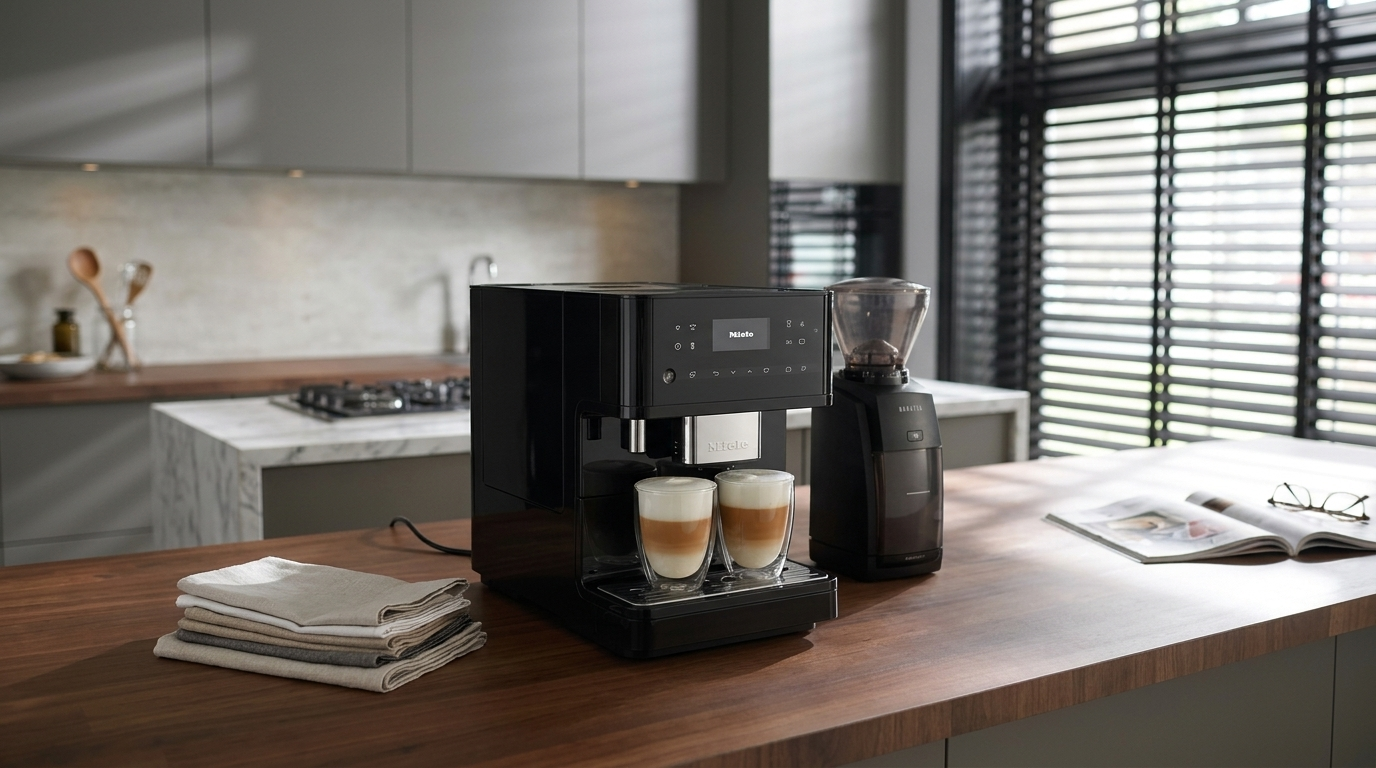
The Miele CM 6160 is compact, quiet and built around its milk system.
Design, size and build
The Miele machines are compact and solid. Both measure about 9.9 inches wide, 14.1 inches tall and 16.8 inches deep, and weigh about 22 lb.
The CM 6360 adds a heated cup warmer on top and comes in Lotus White or two Obsidian Black finishes. Its water tank is reached from the side.
The Dinamica Plus is about 9.3 by 14.2 by 17.3 inches and about 21 lb, with a titanium finish and a heavy brushed stainless tray cover.
The Rivelia is about 9.6 inches wide and 16.9 deep, but 15.2 inches tall, at about 21.4 lb. Under low wall cabinets, that height and its top hoppers need checking.
Height on the counter
Standard wall cabinets sit about 18 inches above the counter.
Our tip: Check that a coffee pot or tall glass fits under the Miele spout before you rely on it, because it tops out at about 5.5 inches.
Setup and the app
Setup took about 15 minutes on the Miele CM 6160, plus about 5 minutes for the app. The Rivelia also took about 15 minutes, guided on its touchscreen, including a water hardness test and a rinse.
The CM 6360 caught me out. I did the steps in the wrong order and needed three attempts, so finish the machine setup before you connect the app.
Both Miele machines use Wi-Fi with the Miele app and a Barista Assistant. Remote start works, but I only used it for black coffee.
The Dinamica Plus uses Coffee Link over Bluetooth only, which was slow to connect. The Rivelia’s Bean Adapt wizard suggested a starting grind that was close to my final setting.
| Setup and app | Miele | De’Longhi |
|---|---|---|
| Setup time | About 15 min, plus 5 for the app | About 15 min on the Rivelia |
| Connection | Wi-Fi, Miele app | Bluetooth on the Dinamica Plus |
| Bean help | Barista Assistant | Bean Adapt on the Rivelia |
| Remote start | Yes, best for black coffee | No |
Our tip: Finish the machine setup completely before you connect any app, because doing it the other way round cost me three attempts on the Miele.
Controls, profiles and modes
This is where the brands feel most different day to day.
The Miele machines use direct buttons with a text display. The CM 6360 has seven direct buttons, for espresso, coffee, long coffee, espresso macchiato, cappuccino, latte macchiato and tea water, plus DoubleShot, OneTouch for Two and an extra drinks menu.
Both Miele machines also have four operating modes: Eco, Barista, Latte and Party. Latte mode was handy on mornings when everyone wanted milk drinks, but the modes are tucked away and hard to find.
De’Longhi uses a bright 3.5-inch color touchscreen with picture-based icons on both machines. The Rivelia scored 9.1 for ease of use, the highest of the four, though its flat top screen was awkward to read for kids or anyone sitting down.
Profiles
The Miele CM 6360 stores eight named profiles, and that was the feature my family of four loved most. We set them up the first evening, and by breakfast everyone had their own drink.
The CM 6160 and the Rivelia save four profiles, and the Dinamica Plus three plus a guest mode. For a couple, any of the four is enough.
| Feature | Miele CM 6160 | Miele CM 6360 | Dinamica Plus | Rivelia |
|---|---|---|---|---|
| Display | Buttons, text display | Buttons, text display | 3.5-inch touchscreen | 3.5-inch touchscreen |
| Profiles | 4 | 8, named | 3 plus guest | 4 |
| Modes | Eco, Barista, Latte, Party | Eco, Barista, Latte, Party | Smart One Touch | Bean Adapt |
| App | Wi-Fi | Wi-Fi | Bluetooth | Bean setup wizard |
Grinder, dose and bean switching
All four use steel conical burrs✕Conical burrsTwo cone-shaped grinding parts, one inside the other. Beans are crushed between them, and the gap between the burrs sets how fine the coffee is.. The Miele machines brew in their AromaticSystem✕AromaticSystemMiele’s name for its brew chamber, which expands as water flows in so the coffee grounds swell and release more flavor. chamber, and the De’Longhi machines on 19-bar pumps.
The De’Longhi machines grind a lot of coffee. The Dinamica Plus made a dry puck of about 15 grams at its highest dose, and the Rivelia ground about 15 grams in roughly 10 seconds at intensity 5.
Miele gets strength another way. Its DoubleShot✕DoubleShotA Miele function that brews a long drink in two stages, with two separate doses of coffee, so a big mug stays full-bodied instead of watery. brews a long drink in two stages, and my DoubleShot long coffee on the CM 6360 was visibly darker and fuller than the standard long coffee.
The Rivelia’s two hoppers
The De’Longhi Rivelia has two interchangeable 250-gram hoppers, and switching took about 3 seconds. It was perfect for a regular and a decaf drinker in the same house.
The catch is waste. Each swap leaves about 10 grams of the old beans in the grinder, so one swap a day costs about 10 grams of coffee, and three swaps about 30.
Beans left in the grinder by swap habit on the Rivelia.
Espresso quality
De’Longhi wins the espresso round, and the Dinamica Plus in particular.
Shortened to about 0.7 ounces at Extra Strong and grind 3, the Dinamica Plus pulled a dense, syrupy shot with a thick, hazelnut-colored crema✕CremaThe golden, foamy layer on top of a fresh espresso. It forms when pressure pushes oils and gases out of the coffee. and heavy body. It brewed at a steady 190 to 200°F.
The Rivelia at intensity 5 with a 15-gram dose gave 30 grams out, a classic 1:2 ratio, or 22 grams for a ristretto-style shot.
The Miele espresso was smooth and balanced rather than intense. At factory settings, it scored only 7.4 to 7.7. With more coffee and long pre-brewing✕Pre-brewingA short soak of the ground coffee before full pressure starts, so the water flows through the puck evenly. Miele lets you set it off, short or long., the ristretto reached 8.7 to 8.8.
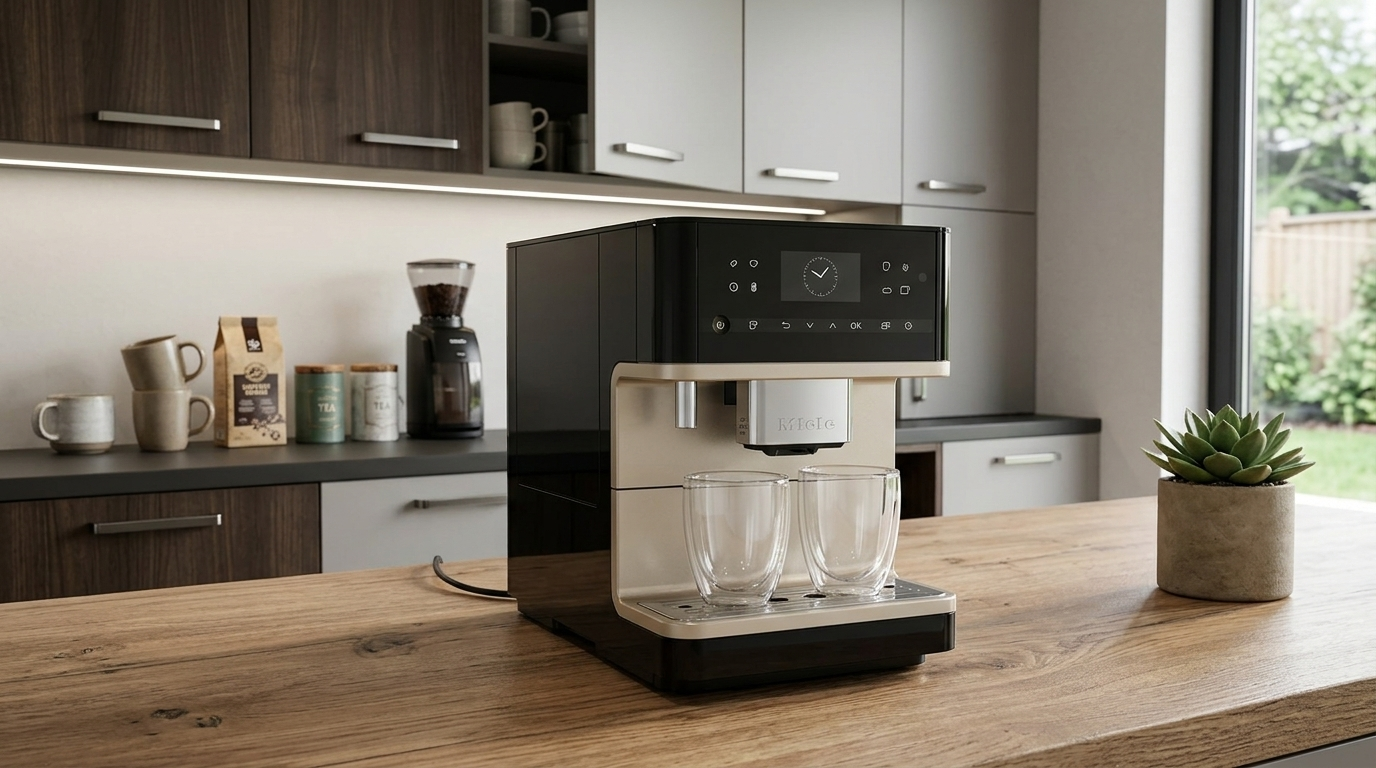
The Miele espresso is smooth and balanced, and much better once you shorten it.
Temperature favored the CM 6360’s heated cup warmer. Espresso from a warmed cup measured about 72°C, against about 66°C in a cold cup on both Miele machines.
My espresso ratings
My best-tuned espresso scores out of 10.
| What you taste | Likely cause | First fix |
|---|---|---|
| Thin, too long | Factory volume | Shorten to 1 to 1.5 oz, more coffee |
| Sour, thin, watery | Under-extraction✕Under-extractionWhen water does not pull enough flavor out of the coffee. The shot tastes sour, thin and watery. | Grind finer, long pre-brew on Miele |
| Bitter, harsh | Over-extraction | Grind one step coarser |
| Lukewarm | Cold cup | Use the Miele cup warmer or rinse with hot water |
Our tip: Keep espresso cups on the Miele CM 6360’s heated cup warmer, because a cold cup cost me about 5 degrees on a small drink.
Long coffee and big mugs
Big mugs of coffee are where Miele’s DoubleShot shines. On the CM 6360, a DoubleShot long coffee scored 8.8, against 7.4 with more coffee and only 6.0 at factory settings.
A single coffee run on the Miele tops out at about 8 ounces, so it is not a travel-mug machine. For any mug over 6 ounces, I used DoubleShot.
Miele also has a coffee pot program for 3 to 8 cups, about 30 ounces in total, which was useful when guests came for brunch.
On the Dinamica Plus, I tuned the Coffee drink to 3.4 to 3.9 ounces on Extra Strong, and the Rivelia’s long coffee gave 120 ml from a 13 to 15 gram dose.
My long coffee scores out of 10 on the Miele CM 6360.
Both brands avoid the bitter, drying notes of over-extraction once you use the right drink for big cups.
Our tip: Use DoubleShot for any mug over 6 ounces on a Miele, because brewing in two stages keeps a big coffee full instead of thin.
Milk drinks
This is Miele’s strongest round. Both machines made dense, fine, consistent microfoam✕MicrofoamMilk foam with bubbles so small you can barely see them. It feels silky and glossy, which is what a good flat white or cappuccino needs., and the CM 6360 scored 9.1 for milk drinks, the best of the four.
Miele uses a stainless steel rod and tube that sit in your milk container. The CM 6360 includes a glass container and a two-tube milk line, and the CM 6160’s container is sold separately.
OneTouch for Two made two cappuccinos side by side in a little over two minutes, which no De’Longhi here can do with milk drinks.
The De’Longhi machines use carafes that clip on. The Dinamica Plus’s thermal carafe has three foam levels and kept milk cold through six cappuccinos, and the Rivelia’s grinds first, textures the milk and then pours the espresso.
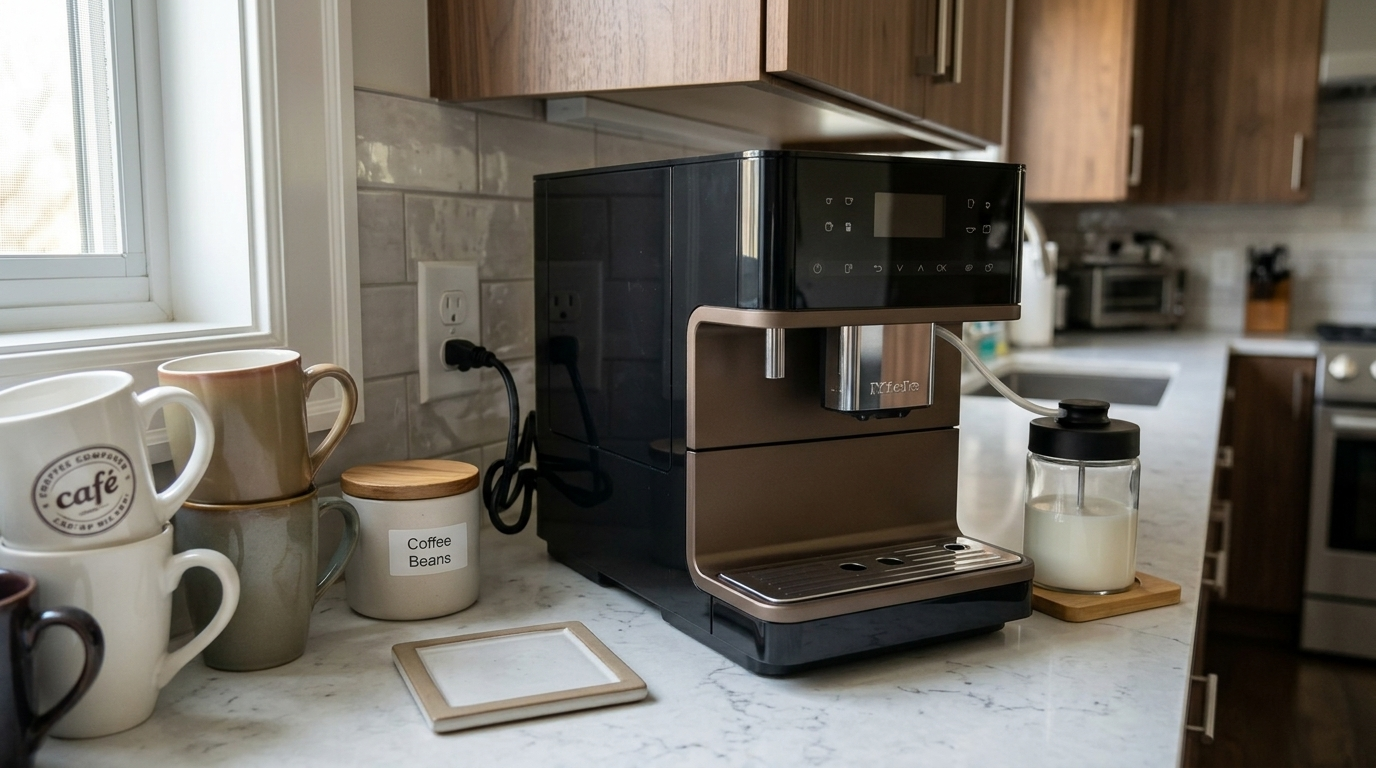
OneTouch for Two made two cappuccinos side by side in just over two minutes.
How each milk foamed
My ratings out of 10 for texture and stability.
Milk temperature was similar across the board. Miele milk drinks finished at 60 to 65°C, and the Rivelia’s frothed milk measured 140 to 149°F.
That band is the sweet spot. Research from the University of Camerino found the best foam structure in milk steamed to around 60°C.
| Milk drink | Miele | De’Longhi |
|---|---|---|
| Cappuccino | One touch, two at once | One touch |
| Latte macchiato | One touch | One touch, layered |
| Flat white | Via profiles and menu | One touch on the Dinamica Plus |
| Two milk drinks at once | Yes, OneTouch for Two | No |
| Cold milk foam | No | No |
| Milk container | Glass on the CM 6360, separate on the CM 6160 | Carafe included |
Iced coffee
Neither brand makes cold foam or true cold brew in this group. The Dinamica Plus is the only one with a dedicated iced drink, its Over Ice coffee, brewed concentrated at a lower temperature for a full glass of ice.
On the Miele machines, DoubleShot over ice worked well. On the Rivelia, I filled the glass with ice before brewing, which kept the coffee from watering down.
Our tip: Fill the glass with ice before you brew any iced coffee, because ice added afterwards melts unevenly.
Tea and hot water
Miele is the tea drinker’s brand. Both machines have six tea programs, for black, fruit, herbal, green, white and Japanese tea, each at its own temperature, plus a timer.
The timer stopped me over-steeping my daily green tea, and it was useful even for black tea.
The De’Longhi machines simply have hot water. The Rivelia’s measured 194 to 203°F, which is good for black and herbal tea, and the Dinamica Plus needs a separate spout swapped in.
| Tea type | Ideal water | Miele | De’Longhi |
|---|---|---|---|
| Green tea | 158–176°F | Green program, timer | Too hot, let it cool |
| White tea | 167–185°F | White program, timer | Too hot, let it cool |
| Herbal tea | 194–212°F | Herbal program | Yes |
| Black tea | 203–212°F | Black program, hottest | Yes |
Our tip: Use the Miele tea timer even for black tea, because it stops the bitterness that comes from leaving the bag in too long.
Cleaning and upkeep
Both Miele machines rinse the milk pipework automatically after milk drinks. Each day I emptied the drip tray and grounds container and, on the CM 6360, washed the glass container, and each week I rinsed the brew unit by hand.
The De’Longhi carafes need more hands-on work. The Dinamica Plus runs a 15-second Clean cycle through its Venturi✕Venturi pieceThe small part in the carafe lid where steam rushing through a narrow channel creates suction, pulling milk up and mixing in air. lid after each drink, and I washed its lid parts every day, while the Rivelia’s carafe came apart for a full wash once a week.
The Miele CM 6360’s two-tube milk line didn’t fit its storage spot, so it lived coiled beside the machine. That was my biggest daily annoyance with Miele.
My estimate of hands-on time per day with milk drinks, not counting automatic rinses.
| When | Miele | De’Longhi |
|---|---|---|
| After milk drinks | Automatic pipework rinse | Carafe Clean cycle |
| Daily | Empty tray and grounds, wash glass container | Empty tray and grounds, wash lid parts (Dinamica Plus) |
| Weekly | Rinse brew unit by hand | Rinse brew unit, strip carafe (Rivelia) |
| When prompted | Clean milk pipework, degrease brew unit, descale | Descale or change the filter |
The grounds containers on the Miele machines filled after about 10 pucks, so with three or four of us I emptied them every day or two.
Our tip: Empty the grounds container every morning on a Miele in a busy home, because it fills after only about 10 pucks.
Noise
Miele is the quieter brand. On a phone meter at about half a meter, both Miele machines measured 60 to 63 dB while grinding, about 55 dB while brewing and about 60 dB while frothing.
That is roughly the level of normal conversation. On the CM 6360 I also turned down the display brightness and button volume for early mornings.
The Rivelia measured 66 to 68 dB during grinding and brewing. The Dinamica Plus makes a short, firm grinder burst that is noticeable but not harsh.
Measured with a phone meter at about half a meter. About 60 dB is normal conversation.
Water, beans and supplies
The Miele machines and the Dinamica Plus have a 1.8-liter tank. The Rivelia’s is smaller, at 1.4 liters, and side-mounted.
On the Miele machines, one tank gave me about 35 espressos, about 19 cappuccinos or about 10 mugs of coffee, allowing for rinses. The Dinamica Plus managed about 40 espressos or 25 cappuccinos.
Rough maths from my testing. Your numbers depend on cup size.
The Miele’s 300-gram hopper lasted about five days for four people on the CM 6360 and about a week for three on the CM 6160.
Fresh beans mattered on every machine. The Rivelia tasted best with beans about 3 to 5 weeks after roasting, and very oily dark roasts are best avoided on all four. Your used grounds can go in the compost.
| Bean type | Miele | De’Longhi |
|---|---|---|
| Medium-dark blend | Best espresso and milk drinks | Thick crema, heavy body |
| Medium roast | Balanced long coffee | Brighter and sweet |
| Light roast | Weak at factory grind, scored 6.4 | Can taste sour, grind finer |
| Very dark, oily | Avoid | Avoid |
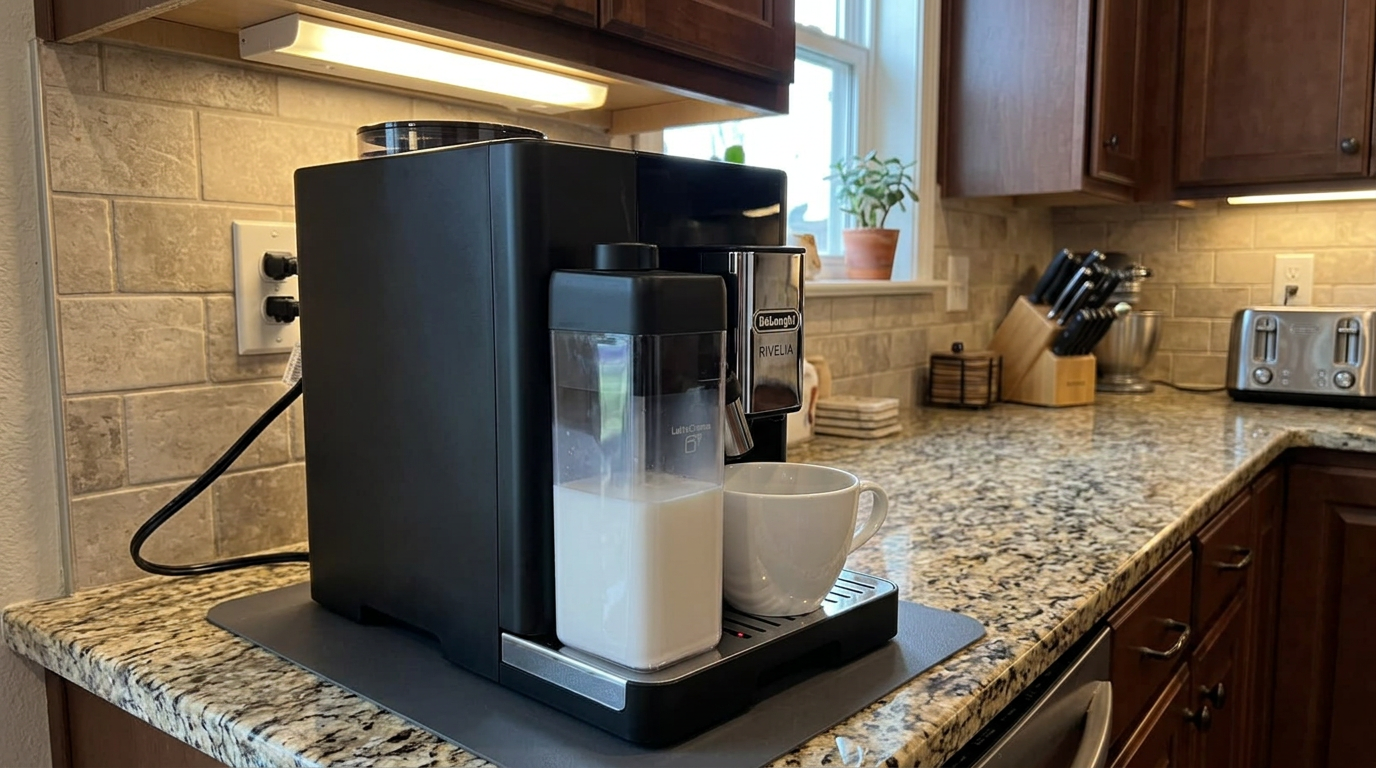
The Rivelia’s second hopper makes it easy to keep decaf on hand.
Our tip: Keep backup beans in a sealed canister, because the hoppers on all four machines are not airtight enough to store a whole bag.
Real-life scenarios
Specs only go so far. These are the situations where one brand clearly pulled ahead during my testing.
Eight named profiles, and two cappuccinos at once with OneTouch for Two.
About 15 grams, Extra Strong and a short volume gave the densest shot of the test.
A dedicated green tea program with a timer that stops over-steeping.
Swap hoppers in about 3 seconds, just before the drink.
Grinding at about 60 to 63 dB, with a dimmed display and quiet buttons.
Its Over Ice drink brews a concentrate for a full glass of ice.
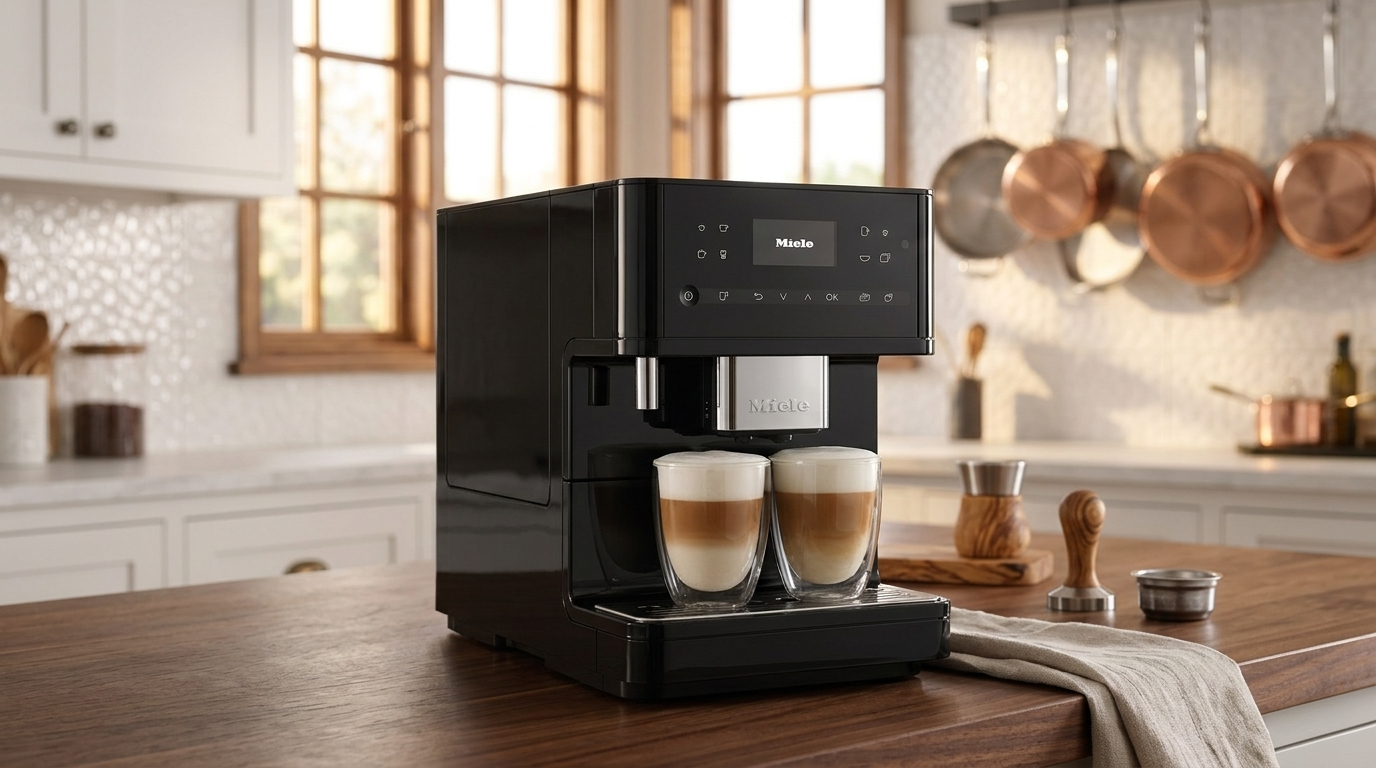
For milk-drink households that share a machine, Miele earns its place.
My scorecard
These are my own scores out of 10 from my single reviews of each machine.
Miele
De’Longhi
Overall, I rate the CM 6360 8.7, the CM 6160 and Dinamica Plus 8.6 each and the Rivelia 8.5. Miele wins on milk, tea and quiet, and De’Longhi wins on espresso and ease.
See How Much You’ll SaveWhich one is right for you?
4 quick questionsWhich one should you buy?
It comes down to one question: is your household built around milk drinks and tea, or around espresso? Miele is worth it for the first. De’Longhi is the better fit for the second. For the wider picture beyond this matchup, see my guide to the best De’Longhi espresso machines.
For more detail, read my Miele CM 6360 review, Miele CM 6160 review, De’Longhi Dinamica Plus review and De’Longhi Rivelia review, or see my guide to the best Miele coffee machines.
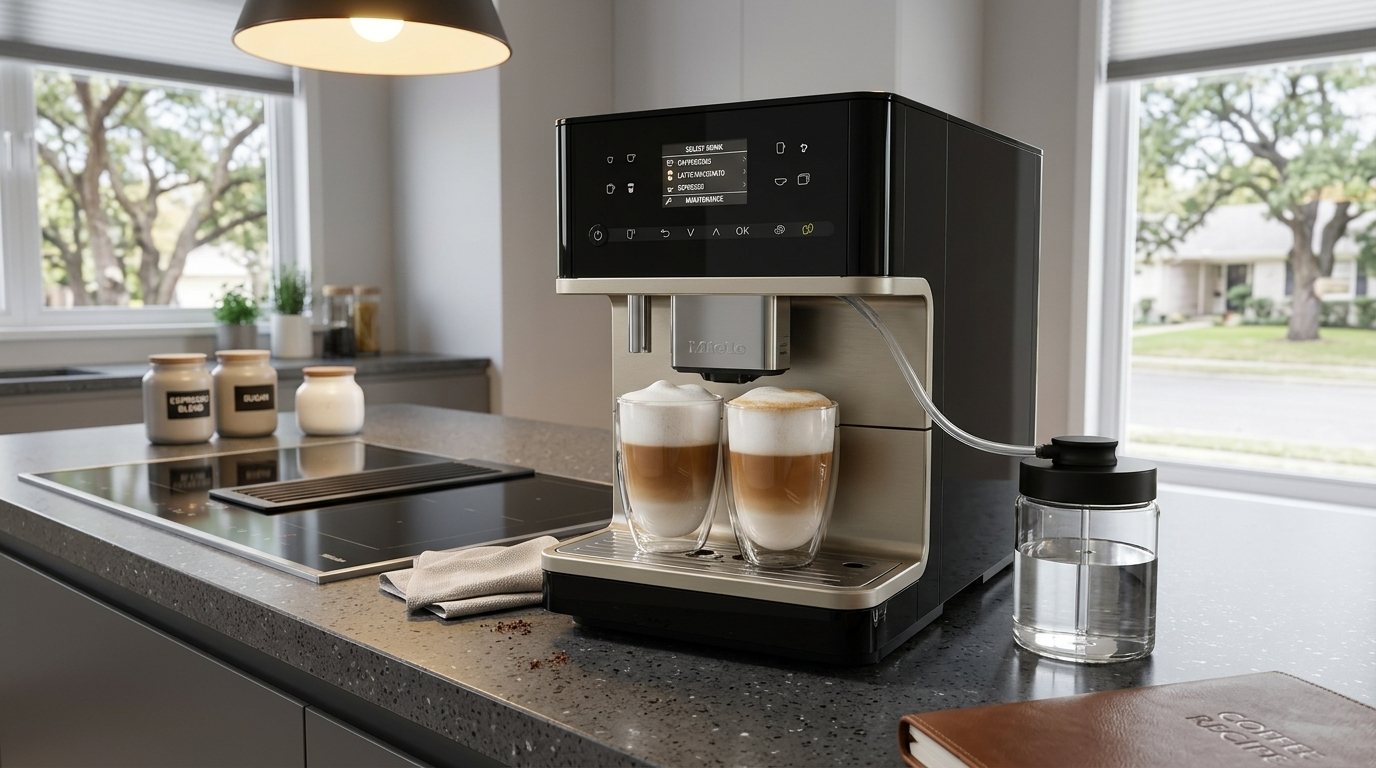
For milk drinks and shared kitchens, Miele is worth the step up.
- Milk drinks are your daily habit
- Three or more people share the machine
- Someone drinks tea every day
- You want a quiet machine
- You want intense espresso
- You want a big touchscreen
- You want iced coffee at one touch
- Espresso and flat whites matter most
- You want an easy touchscreen
- You want iced coffee or a decaf hopper
- Your counter is narrow
- You make lots of milk drinks for many people
- You hate washing carafe parts
- You drink a lot of green tea
For households built around milk drinks, Miele is worth it, and my pick is the Miele CM 6360. The finest automatic foam of the test, eight named profiles, OneTouch for Two, a tea timer and quiet operation made it the machine my family of four reached for most. The Miele CM 6160 does nearly the same with four profiles.
If espresso matters more, De’Longhi is the smarter buy. The De’Longhi Dinamica Plus pulled the densest shot I tasted in this test, and the De’Longhi Rivelia is the easiest machine of the four to use, with two swappable bean hoppers.
Whichever you choose, shorten the factory espresso, use fresh beans and keep the milk cold. All four reward a little care with years of good coffee.
Miele vs De’Longhi specifications
From manufacturer specifications and my own testing.
| Miele CM 6160 | Miele CM 6360 | De’Longhi Dinamica Plus | De’Longhi Rivelia | |
|---|---|---|---|---|
| Drinks | 18 | 18 | 16 | 18 |
| Profiles | 4 | 8, named | 3 plus guest | 4 |
| Pump | 15 bar | 15 bar | 19 bar | 19 bar |
| Grinder | Steel conical | Steel conical | Steel conical, 13 settings | Steel conical, 13 settings |
| Max dose | DoubleShot | DoubleShot | About 15 g | About 15 g |
| Milk system | Rod and tube, container separate | Two-tube line, glass container | Thermal carafe | Automatic carafe |
| Tea programs | Yes, with timer | 6, with timer | No | No |
| Display | Buttons, text | Buttons, text | 3.5-inch touchscreen | 3.5-inch touchscreen |
| App | Wi-Fi | Wi-Fi | Bluetooth | No |
| Water tank | 1.8 L | 1.8 L, side | About 1.8 L | 1.4 L, side |
| Bean hopper | 300 g | 300 g | Single | 2 x 250 g |
| Noise grinding | 60–63 dB | 60–63 dB | Not measured | 66–68 dB |
| Dimensions (W x H x D) | 9.9 x 14.1 x 16.8 in | 9.9 x 14.1 x 16.8 in | 9.3 x 14.2 x 17.3 in | 9.6 x 15.2 x 16.9 in |
| Weight | About 21.8 lb | About 22 lb | About 21 lb | About 21.4 lb |
| My score | 8.6 | 8.7 | 8.6 | 8.5 |
How I tested and compared them
I used four machines as the everyday coffee maker for my household for four weeks each: the Miele CM 6160 and CM 6360 and the De’Longhi Dinamica Plus and Rivelia, with three to four people and a second HouseholdMe tester.
I measured temperatures with a probe thermometer and noise with a phone meter at about half a meter, weighed doses and yields, timed drinks and cleaning, and set up profiles for each person.
I foamed whole, 2%, 1%, skim and barista oat milk, tested tea programs, apps and bean switching, ran every cleaning routine and compared my notes with each brand’s specifications and owner documentation.
- Coffee: dose, crema, body and consistency.
- Milk: foam texture, temperature and drink range.
- Workflow: controls, menus and daily routine.
- Ownership: noise, cleaning, water care and footprint.
Miele vs De’Longhi FAQ
Is Miele worth it over De’Longhi?
Yes, if milk drinks, tea and several users are your priorities. Miele made the finest foam, saves up to eight named profiles and is quieter. If espresso matters most, De’Longhi pulled the fuller shot.
Which brand makes better espresso?
De’Longhi. The Dinamica Plus doses about 15 grams and, shortened to about 0.7 ounces, pulled a dense, syrupy shot. Miele espresso is smooth and balanced, and much better with more coffee and long pre-brewing.
Which brand makes better milk foam?
Miele. Both Miele machines scored 9.3 for whole milk foam, dense and fine. The Dinamica Plus was close behind at 9.2.
Can a Miele make two cappuccinos at once?
Yes. OneTouch for Two made two cappuccinos side by side in just over two minutes.
Does the Miele CM 6160 come with a milk container?
No, it is sold separately. The CM 6360 includes a glass milk container.
Which is better for tea?
Miele. It has six tea programs at different temperatures plus a timer. The De’Longhi machines have hot water only.
Which brand is quieter?
Miele. Both measured 60 to 63 dB while grinding at half a meter. The Rivelia measured 66 to 68 dB.
What is special about the De’Longhi Rivelia?
It has two interchangeable bean hoppers you can swap in about 3 seconds, ideal for regular and decaf. Each swap leaves about 10 grams of beans in the grinder.
Do these machines make iced coffee?
The Dinamica Plus has an Over Ice drink. On the Miele and the Rivelia, brew over a glass already full of ice.

- Our hands-on Miele CM 6160 review
- Our hands-on Miele CM 6360 review
- Our hands-on De’Longhi Dinamica Plus review
- Our hands-on De’Longhi Rivelia review
- Miele and De’Longhi product specifications and owner documentation
- Effect of milk processing and steam frothing conditions on microfoam formation, University of Camerino
- A living lexicon for brewed coffee, University of Oregon
- Composting and Coffee Grounds, Cornell University