KitchenAid KF7 vs KF8: is the KF8 worth the extra?
undefined
We choose products independently. We may earn a commission through links on this page; your price stays the same. Affiliate policy
Jargon helpNew to espresso? Tap any dotted term to see what it means.
In this comparison
Buy the KitchenAid KF8. It is the clearly better machine: smoother, better-made espresso, the best milk drinks in KitchenAid’s range, a plant-milk mode that genuinely helps oat milk, six profiles and a bigger 84.5 oz tank. The KitchenAid KF7 shares the same handsome body, quiet operation and easy cleaning, and its milk drinks are good, but its straight espresso often tasted thin and bitter in my testing. If you only ever drink lattes and cappuccinos, the KF7 is fine. If anyone in your house drinks espresso, the KF8 is worth the step up.
The two machines
Specs checked November 14, 2026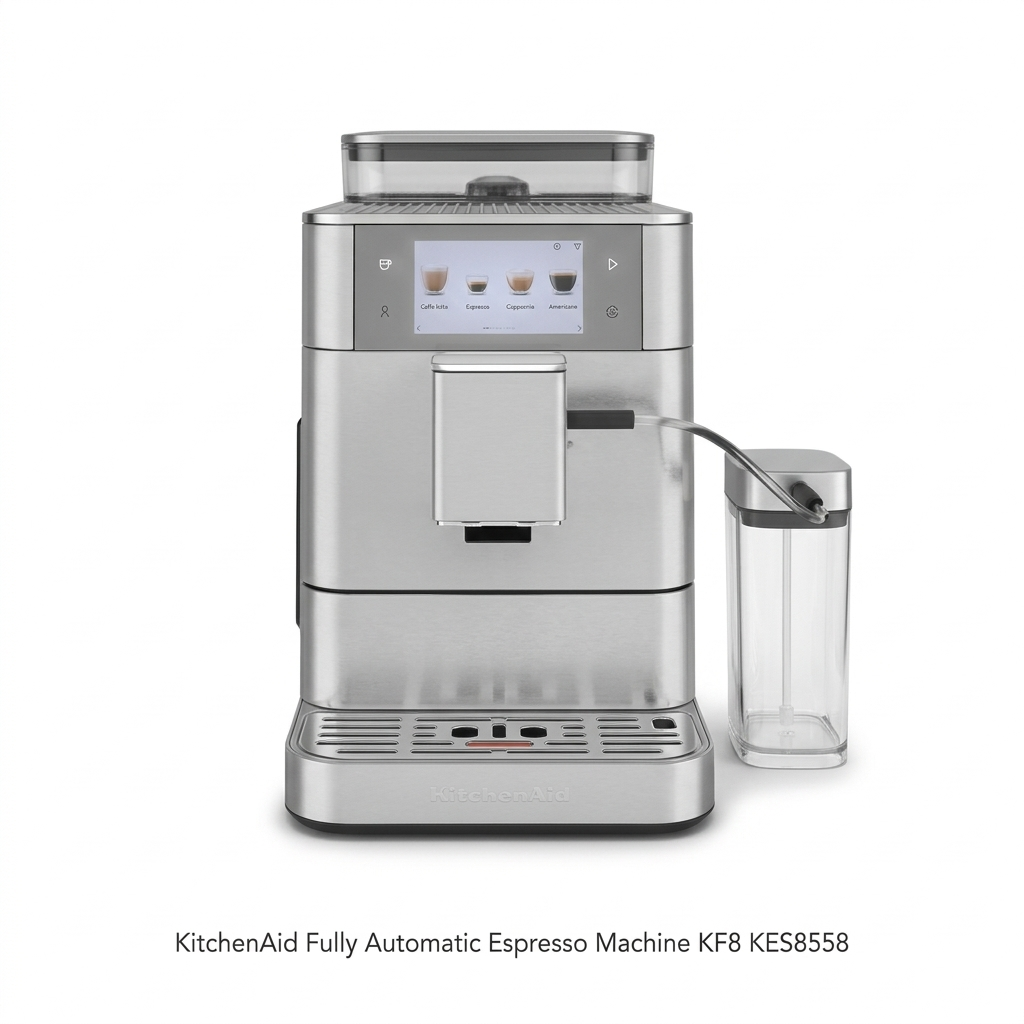
40-plus recipes, the best milk in KitchenAid’s range, a plant-milk mode, six user profiles, two-cup milk drinks and an 84.5 oz tank.
Check price on Amazon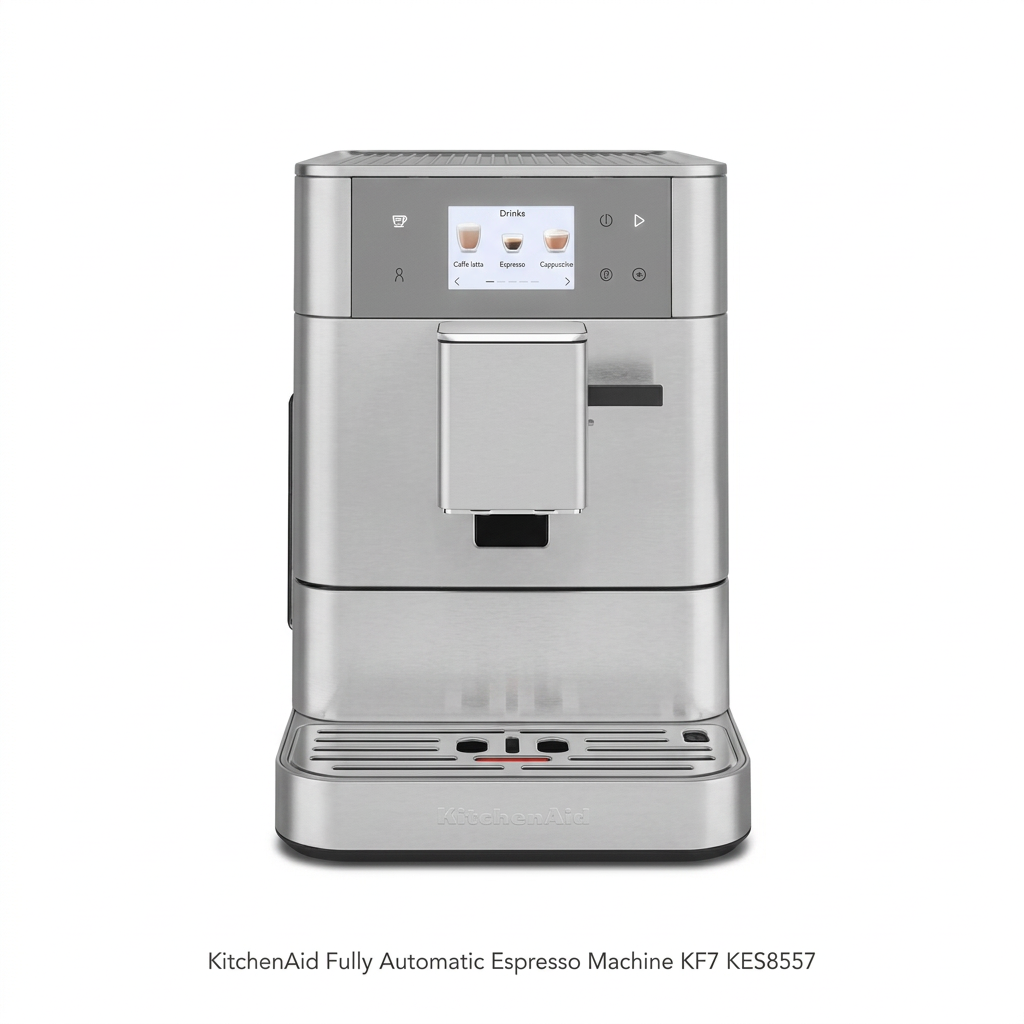
20-plus recipes including cortado, four user profiles, a 3.5-inch color touchscreen, a 27 oz milk container and quiet, easy cleaning.
Reveal Today’s DealKitchenAid KF7 vs KF8 at a glance
- Buy the KF8 if anyone in your home drinks espresso or oat milk drinks.
- The KF7 is fine for latte and cappuccino drinkers who value a quiet, easy routine.
- Both share the same size, steel grinder, hopper and premium build.
- The KF8’s bigger tank, extra profiles and two-cup milk drinks make it the better family machine.
Head to head
The better result in each row is marked, based on four weeks with each machine and the manufacturer specs. Rows where the two are identical have no winner.
The tally is not my verdict, but in this matchup it points the same way.
| Spec | KitchenAid KF7 | KitchenAid KF8 |
|---|---|---|
| Espressomy tasting, same beans | Thin, often bitter | Smooth and well made ✓ Best |
| Milk drinks | Good | Best in the range ✓ Best |
| Plant-milk mode | No | Yes ✓ Best |
| Recipes | 20+ | 40+ ✓ Best |
| User profiles | 4 | 6 ✓ Best |
| Two-cup milk drinks | Two cups for coffee | Espresso, coffee and milk drinks ✓ Best |
| Water tank | About 74 oz, slides out sideways | About 84.5 oz, fills from the top ✓ Best |
| Grinder | Steel conical, 7 settings | Steel conical, 7 settings, insulated ✓ Best |
| Swappable hopper | Lifts off | Lifts off, easy to swap for decaf |
| Daily cleaning | Easiest ✓ Best | A few minutes for milk |
| Overhead clearance | Normal ✓ Best | Needs room to fill the tank |
| Footprint | 14.3 x 10.2 x 18.6 in | 14.3 x 10.2 x 18.6 in |
| Rows won | 2 | 8 |
KitchenAid KF7 vs KF8 pros and cons
KitchenAid KF8
- Smooth espresso and the best milk drinks in KitchenAid’s range
- Plant-milk mode that really helps oat milk
- Six profiles, 40-plus recipes and two-cup milk drinks
- Needs a big counter and overhead clearance
- Two-cup milk drinks split the milk volume
- Milk system needs daily attention
KitchenAid KF7
- Quiet, handsome and pleasant to use
- Good milk drinks with a big 27 oz container
- Easiest cleaning of the two
- Espresso can taste thin and bitter
- Settings changes did little for flavor
- Drip tray is bulky to carry
Who should buy which machine?
- Households with three or more coffee drinkers
- Oat and plant milk drinkers
- Anyone who drinks espresso straight
- Latte and cappuccino-only households
- People who value a quiet, easy routine
- Couples who need four profiles at most
How KitchenAid’s KF range works
KitchenAid’s fully automatic✕Fully automatic (bean-to-cup)A machine that grinds, doses, tamps, brews and ejects the used coffee on its own. You press a button and it does the whole job inside the machine. machines run from the compact KF2 and KF3 up to the KF6, KF7 and KF8. The higher the number, the more drinks, profiles and milk features you get.
The KF7 and KF8 sit at the top. They share the same body, grinder style and hopper, so the choice between them is not about size or looks. It is about what happens inside the cup. Below them, the KF6 is a simpler step for people who want fewer drinks.
In my testing, the jump from KF7 to KF8 was bigger than the spec sheet suggests. The extra recipes and profiles are nice, but the better espresso and plant-milk mode are what you notice every single day.
| Model | Recipes | Profiles | Standout |
|---|---|---|---|
| KF6 | Fewer | Fewer | Simplest of the top three |
| KF7 | 20+ | 4 | Quiet, easy, good milk |
| KF8 | 40+ | 6 | Best espresso and milk, plant mode |
What KitchenAid does well across the whole range is design and calm. These are some of the best-looking fully automatic machines I have tested, and they are among the quietest. The touchscreens are bright and simple, and the milk containers sit neatly beside the machine.
Where the range has been weaker is espresso intensity. Even the KF8, which made genuinely good espresso, was smooth rather than punchy. If you want the most concentrated shot possible, that is worth knowing before you buy any KitchenAid.
For most households, though, that smoothness is a feature. It makes lattes and cappuccinos taste sweet and easy, and it means nobody gets an aggressively bitter cup first thing in the morning.
The KF8 simply takes everything that is good about the range and fixes the part that held the KF7 back.
Design, size and build
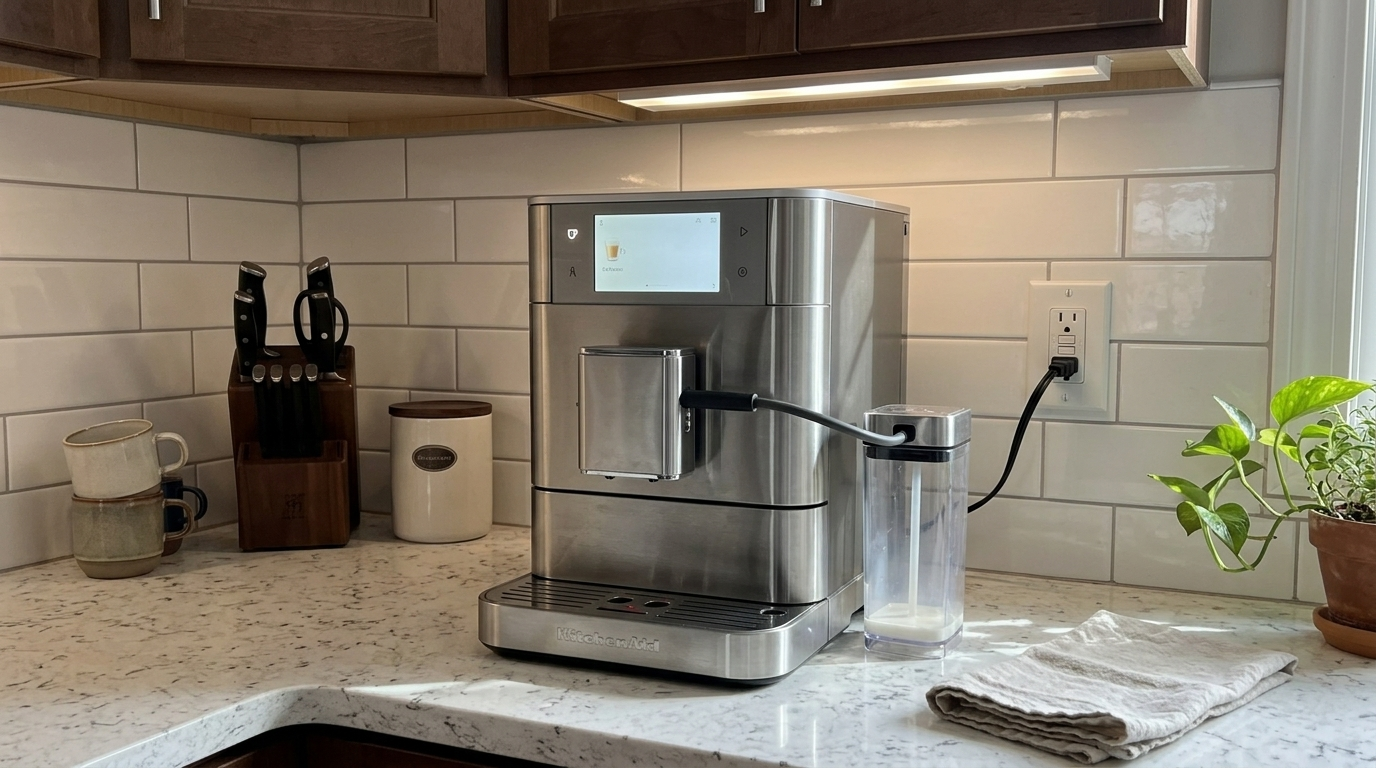
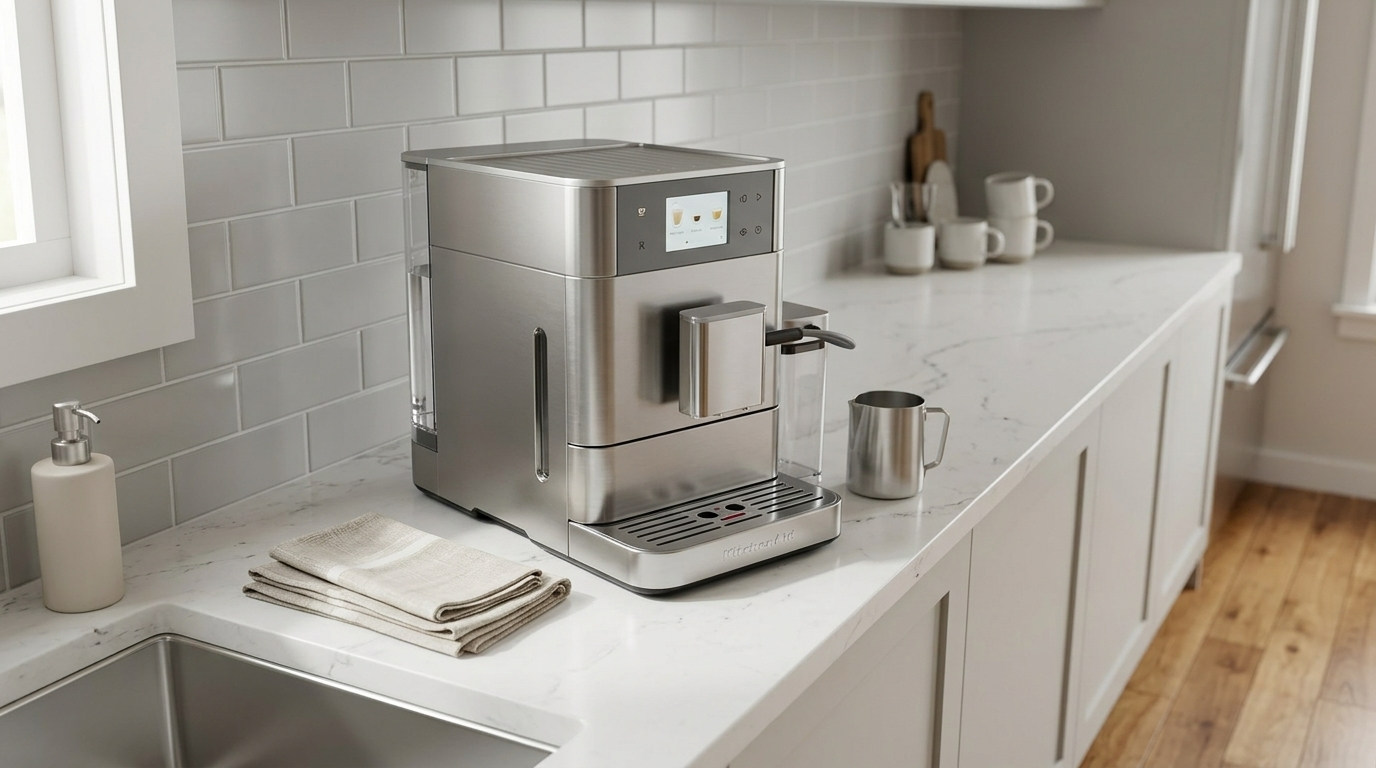
From across the room, you would not tell these two apart. Both measure about 14.3 inches tall, 10.2 inches wide and 18.6 inches deep, with the same rounded, retro-modern KitchenAid styling.
They are heavy, solid machines. The KF7 weighs about 28 lb and the KF8 about 29 lb, and neither flexed or rattled during my month with each.
The practical difference is the water tank. The KF7’s 74 oz tank slides out sideways. The KF8’s bigger 84.5 oz tank fills from the top, so you need a little overhead clearance or room to slide the machine forward.
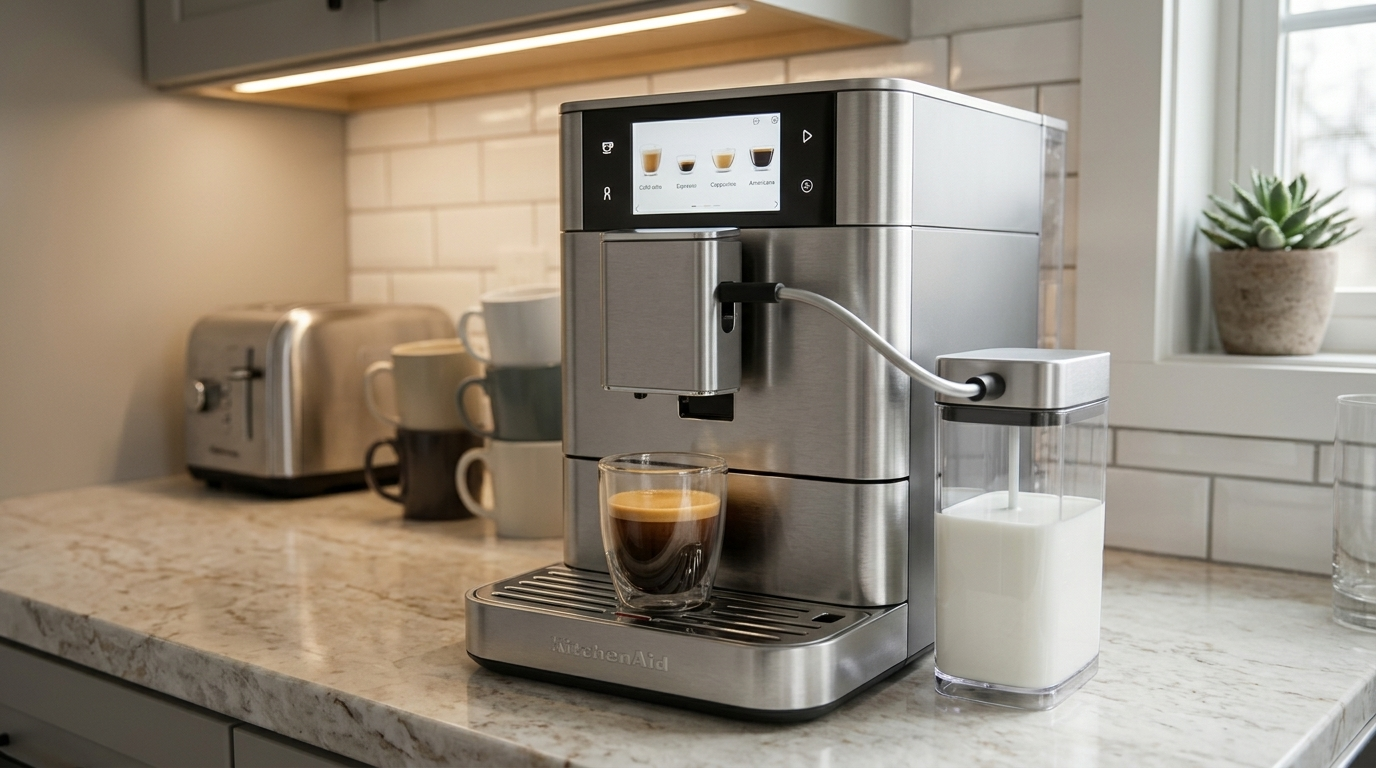
The KF8 looks almost identical to the KF7, with the same premium body.
Water tank size
The KF8’s extra 10.5 oz saved me about one refill a week.
Both are deep machines at 18.6 inches, so check that your counter has room for the milk container beside them as well.
Our tip: Measure the space above the KF8 before you buy, because its top-fill tank needs a few inches of clearance unless you slide the machine forward each time.
Setup and the first week
Setup was the same on both and took me about 15 minutes. You test the water, set the hardness, fill the tank and hopper, and run a first rinse.
Both machines walked me through each step on the touchscreen. The KF8 was ready to brew in under 40 seconds from a cold start, and the KF7 felt just as quick.
The first few drinks on both needed the grinder to clear factory test coffee, so I did not judge anything until the fourth cup.
| Setup step | KitchenAid KF7 | KitchenAid KF8 |
|---|---|---|
| Time to first drink | About 15 minutes | About 15 minutes |
| Heat-up | Quick | Under 40 seconds |
| Profiles to set up | Up to 4 | Up to 6 |
| Milk type setting | No | Dairy or plant |
Our tip: Set up every person’s profile in the first week on either machine, because saved drinks are what make these big menus fast to use.
Touchscreen and profiles
Both machines use a color touchscreen with clear drink pictures, and both were easy for everyone in my house.
The KF7’s 3.5-inch screen holds 20-plus recipes and four user profiles. You can adjust strength, body, temperature and the order of milk and coffee for supported drinks.
The KF8’s screen manages 40-plus recipes and six profiles, plus a milk-type setting for dairy or plant milk. Its menus felt a little quicker to navigate.
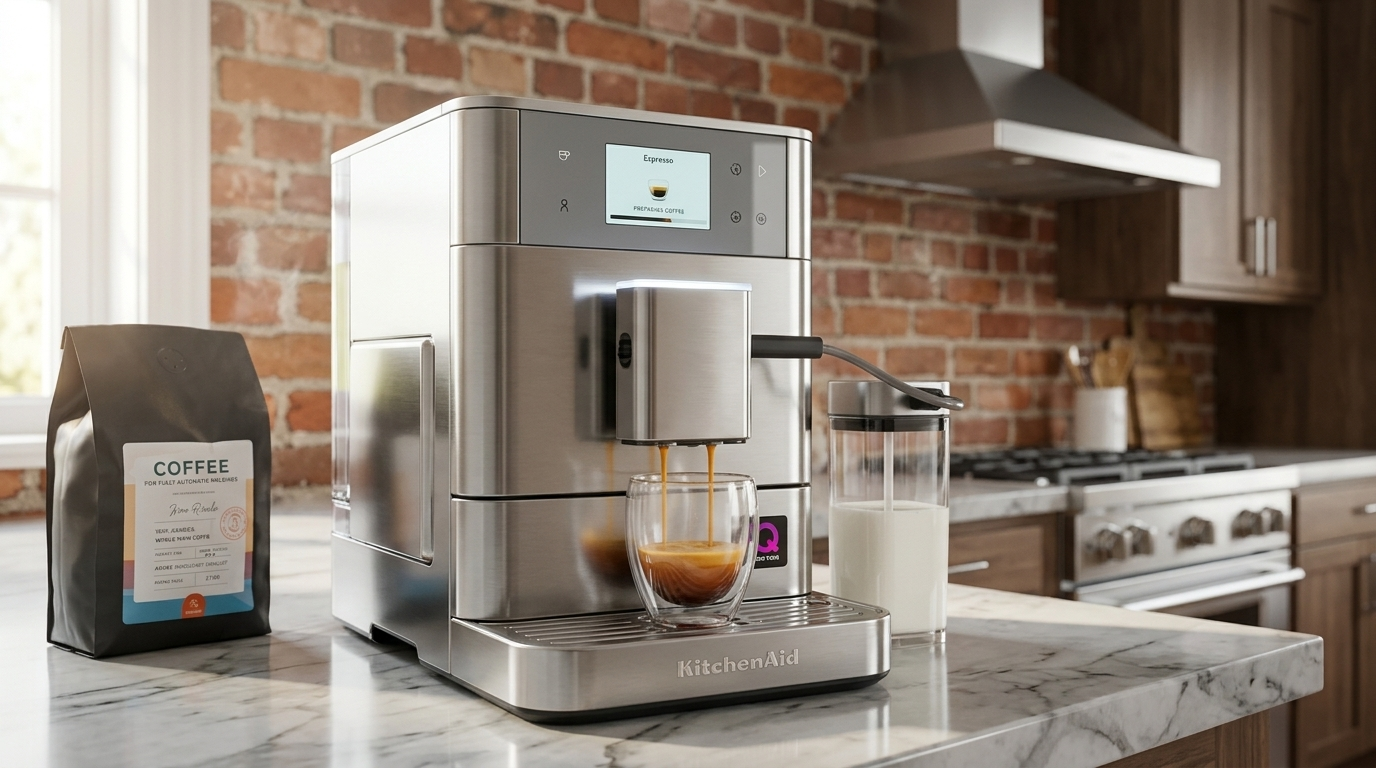
The KF7’s 3.5-inch touchscreen is clear and easy, with four profiles.
| Feature | KitchenAid KF7 | KitchenAid KF8 |
|---|---|---|
| Screen | 3.5-inch color touchscreen | Color touchscreen |
| Recipes | 20+ | 40+ |
| User profiles | 4 | 6 |
| Strength and body | Adjustable | Adjustable per drink |
| Milk and coffee order | Adjustable | Adjustable |
| Milk type | No | Dairy or plant |
For a couple, four profiles on the KF7 are plenty. For a family of five or six, the KF8’s extra profiles stop people from overwriting each other’s favorites.
The drink menu: 20-plus vs 40-plus
The KF7’s menu covers the essentials well: espresso, lungo, americano, cappuccino, latte macchiato, flat white-style drinks and a cortado.
The KF8 doubles the list, adding a ristretto, more milk variations, hot milk and more coffee styles. In daily use, most people stick to three or four drinks, so the extra recipes matter most in a busy, varied household.
Recipes on each machine
From each machine’s menu.
| Drink | KitchenAid KF7 | KitchenAid KF8 |
|---|---|---|
| Espresso and lungo | Yes | Yes |
| Ristretto | No | Yes |
| Americano | Yes | Yes |
| Cappuccino and latte macchiato | Yes | Yes |
| Flat white | Yes | Yes |
| Cortado | Yes | Yes |
| Hot milk | Yes | Yes |
| Plant-milk tuning | No | Yes |
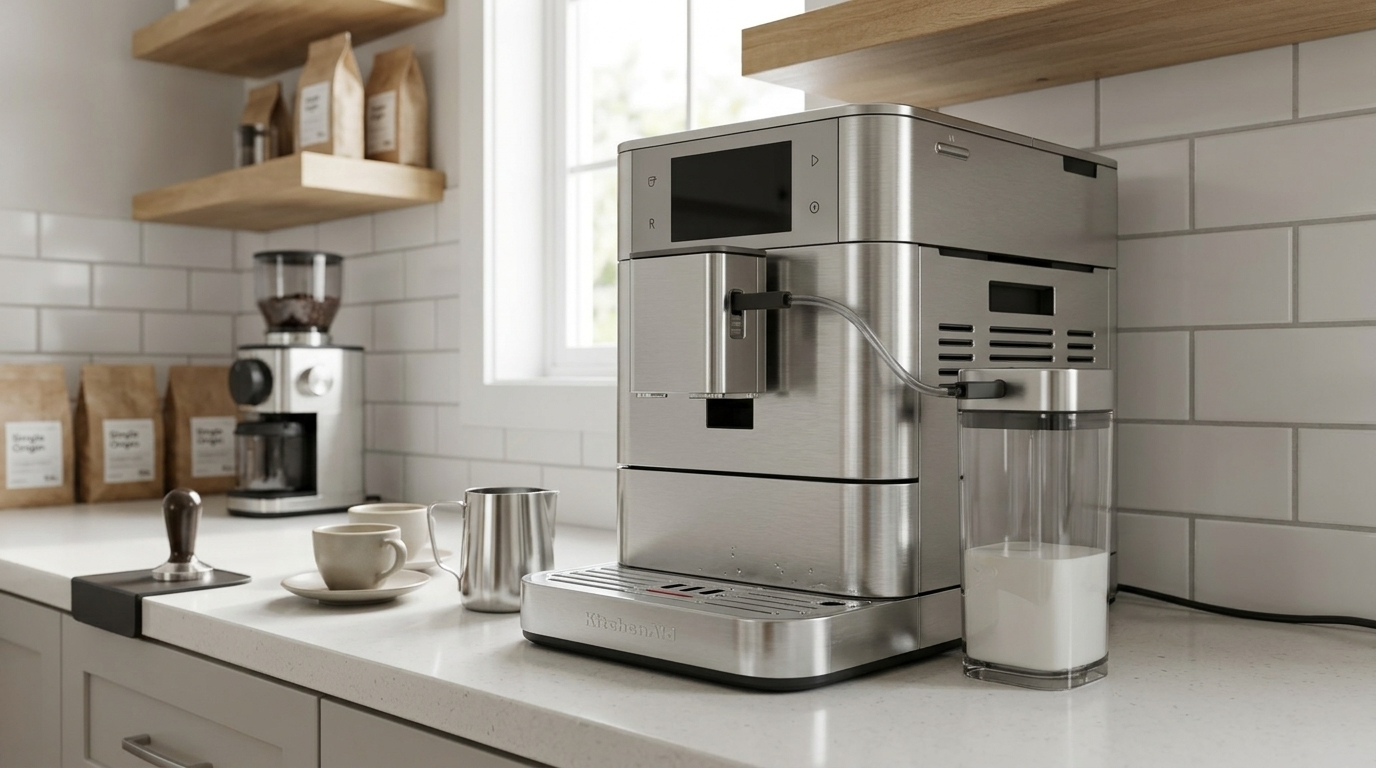
The KF8’s 40-plus recipes made it the easier machine for a varied household.
Find Out the Price TodayGrinder and hopper
Both use steel conical burrs✕Conical burrsTwo cone-shaped grinding parts, one inside the other. Beans are crushed between them, and the gap between the burrs sets how fine the coffee is. with seven settings and a 270 g hopper that lifts off the top. The KF8’s grinder is insulated, which made it noticeably quieter.
Seven settings is not many. On the KF7, moving between them changed the flavor less than I hoped, and its espresso stayed thin even on the finest setting.
The KF8 handled the same beans better. Its finest setting gave a smoother, more complete shot.
The removable hopper is a nice touch on both. On the KF8, I bought a second hopper for decaf. Swapping took less than a minute, and a short purge kept the first cup from being a mix of the two.
| Grinder detail | KitchenAid KF7 | KitchenAid KF8 |
|---|---|---|
| Burrs | Steel conical | Steel conical, insulated |
| Settings | 7 | 7 |
| Hopper | About 270 g, lifts off | About 270 g, lifts off |
| Pre-ground chute | Yes | Yes |
| Noise | Quiet | Quieter |
Our tip: Change the grind only while the grinder is running on both machines, because adjusting it with the burrs stopped can jam beans between them.
Espresso quality
This is the biggest reason I recommend the KF8.
With the same medium-dark blend, the KF7’s espresso often lacked richness. The body was thin, the crema✕CremaThe golden, foamy layer on top of a fresh espresso. It forms when pressure pushes oils and gases out of the coffee. faded quickly and the finish turned bitter. Changing strength, body and grind helped less than I expected.
The KF8’s espresso was smooth and well made, with a rounder body and a clean, chocolatey finish. It was not the most concentrated espresso I have tasted, but it was balanced and consistent.
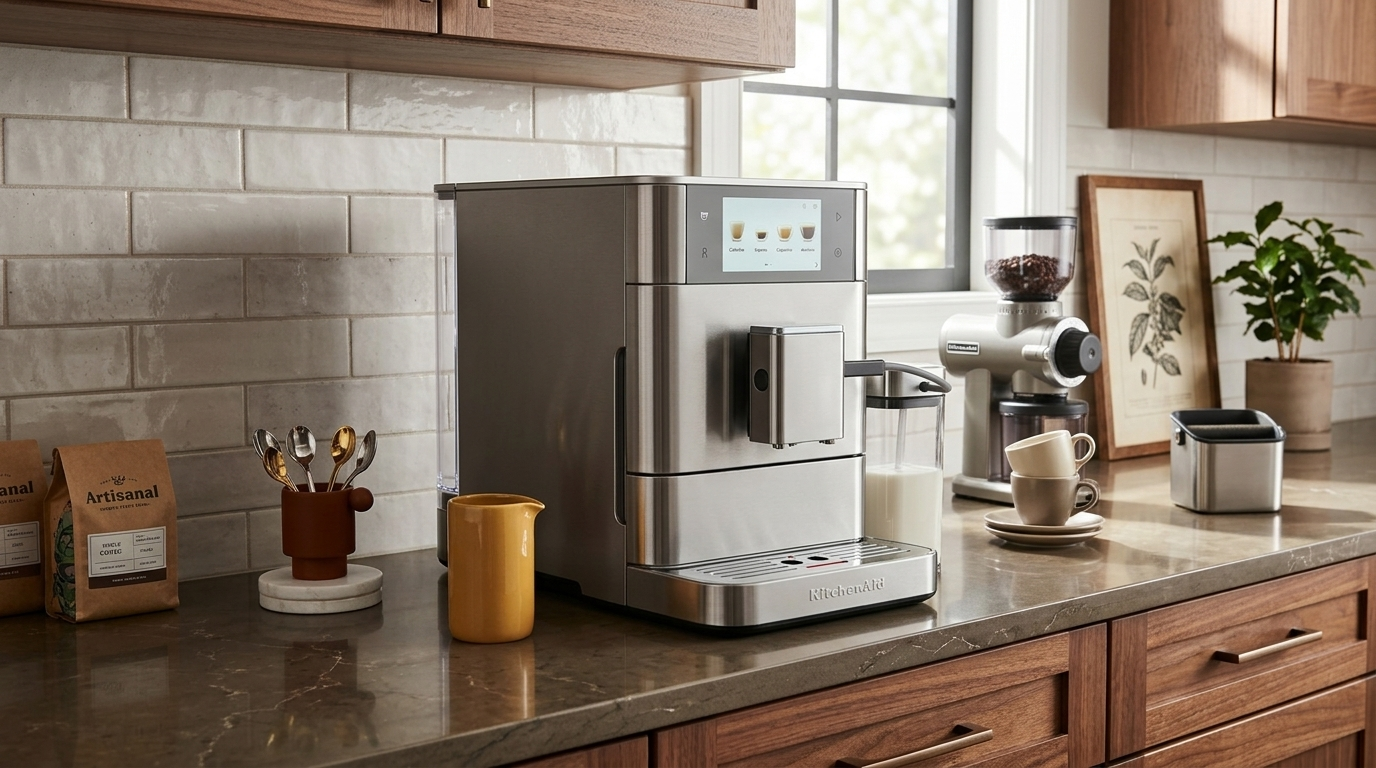
The KF8’s espresso was smoother and better balanced than the KF7’s.
My espresso ratings
My single-review scores out of 10.
| What you taste | Likely cause | First fix on both |
|---|---|---|
| Sour, thin, watery | Under-extracted✕Under-extractionWhen water does not pull enough flavor out of the coffee. The shot tastes sour, thin and watery. | Finest grind, strongest setting |
| Bitter, harsh, drying | Over-extraction | Grind coarser, shorten the shot |
| Thin and bitter at once | Uneven extraction | Fresher beans, medium-dark roast |
| Lukewarm shot | Cold cup | Warm the cup first |
Drink temperature
Both machines have adjustable coffee temperature. On the KF8’s high setting, my espresso measured about 163°F in a warmed cup and about 154°F in a cold one.
Milk drinks were comfortably hot on both. My finished lattes on the KF8 landed around 149°F, which is hot enough for most people without tasting cooked.
| Drink | KitchenAid KF7 | KitchenAid KF8 |
|---|---|---|
| Espresso, high, warmed cup | Similar range | About 163°F |
| Espresso, high, cold cup | Cooler | About 154°F |
| Latte, finished | Comfortably hot | About 149°F |
| Temperature settings | Adjustable | Low, medium, high |
Our tip: Warm your cup with hot water before espresso on both machines, because a cold cup took about 9°F off my shot.
Coffee and americano
Both make a proper americano✕AmericanoEspresso topped up with hot water. Because the water is added afterwards instead of being pushed through the coffee, it keeps more sweetness and less bitterness. with hot water added after the espresso.
On the KF7, the americano was more pleasant than its espresso, because the added water softened the bitterness. On the KF8, it was smooth and round, and it became my morning mug.
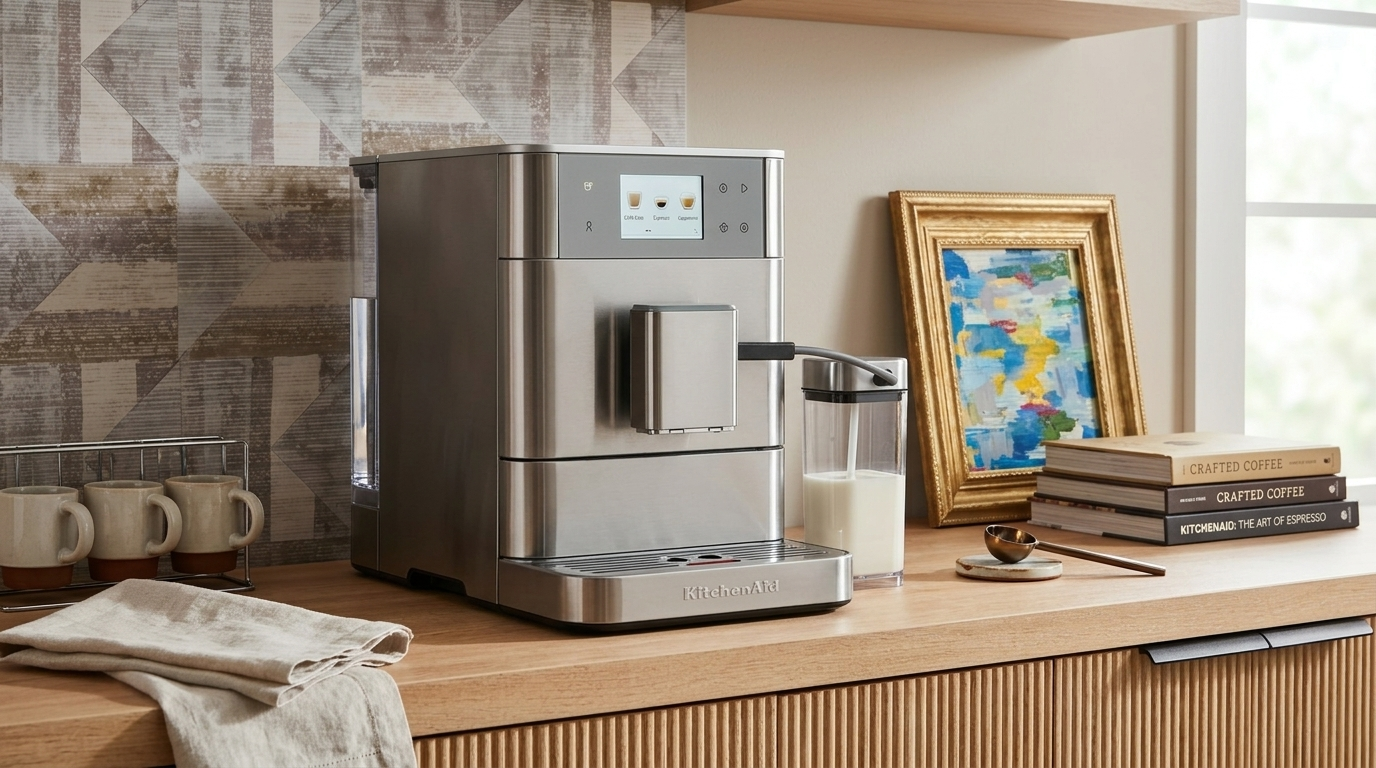
The KF7’s americano was more enjoyable than its straight espresso.
Milk drinks
Both machines come with a milk container, and both make good milk drinks. The KF8 is better.
The KF7’s 27 oz container sits beside the machine and connects with a short tube. Its foam was creamy and consistent, and its cappuccinos and lattes were the drinks I enjoyed most on it.
The KF8’s milk system made the best milk drinks in KitchenAid’s range. Its foam was finer and more stable, and its plant-milk mode really helped oat milk, giving a silky microfoam✕MicrofoamMilk foam with bubbles so small you can barely see them. It feels silky and glossy, which is what a good flat white or latte needs. instead of big, loose bubbles.
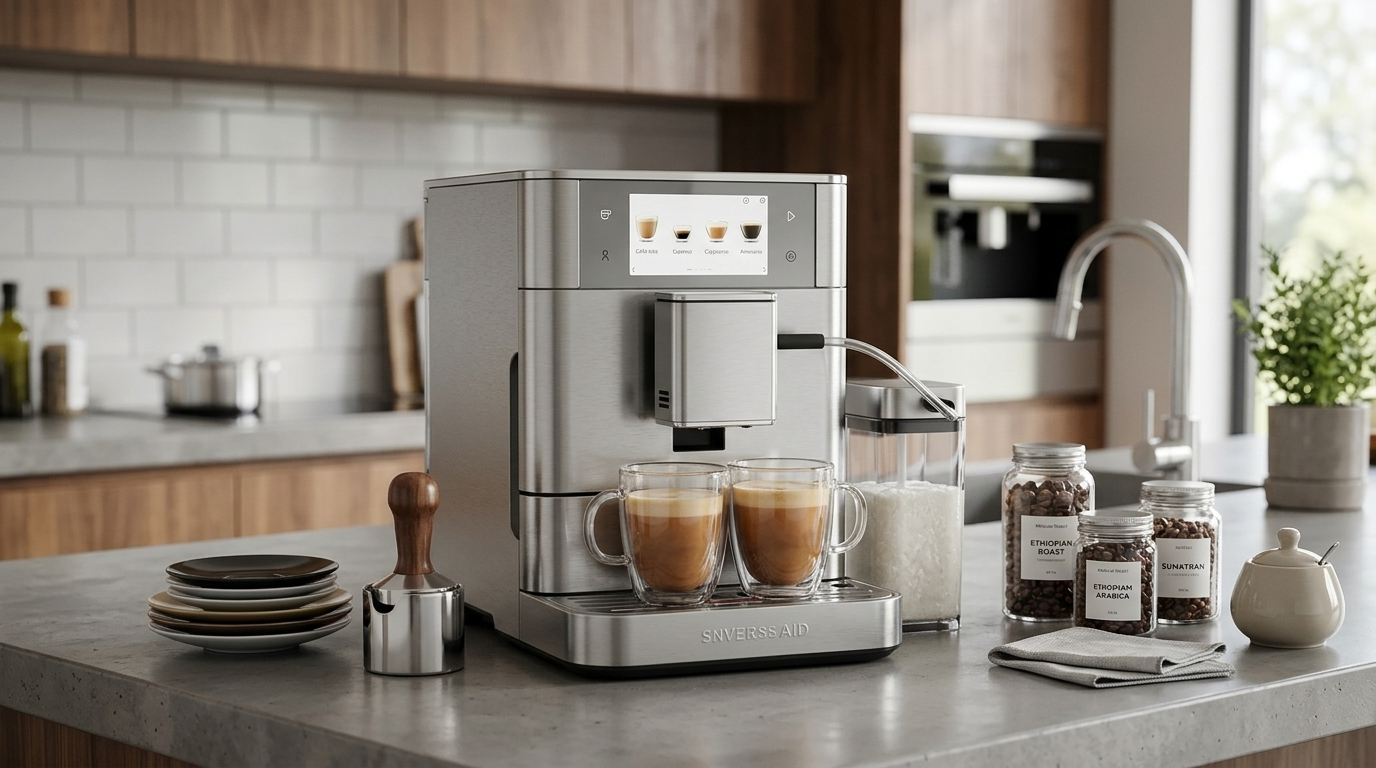
The KF8 made the best milk drinks in KitchenAid’s range, especially with oat milk.
Milk foam, my ratings
My ratings out of 10 for texture and stability.
| Milk feature | KitchenAid KF7 | KitchenAid KF8 |
|---|---|---|
| Milk container | About 27 oz, included | Included |
| Plant-milk mode | No | Yes |
| Milk and coffee order | Adjustable | Adjustable |
| Two-cup milk drinks | No | Yes |
| Daily care | Rinse tube and container | Rinse tube and container |
Our tip: Use cold milk straight from the fridge and switch on plant mode for oat milk on the KF8, because together they gave the silkiest foam of my test.
Two-cup drinks
Both machines can brew two espressos or coffees at once through the height-adjustable spout.
The KF8 goes further and makes two milk drinks at once. It is handy for a couple on a busy morning, but the milk volume is split between the cups, so each drink was a little smaller and lighter than a single.
| Two-cup option | KitchenAid KF7 | KitchenAid KF8 |
|---|---|---|
| Two espressos | Yes | Yes |
| Two coffees | Yes | Yes |
| Two milk drinks | No | Yes, milk is split |
Our tip: Make two milk drinks one after another on the KF8 when you want full-size lattes, and save the two-cup button for rushed mornings.
Cleaning and upkeep
Both machines are easy to keep clean. Each has a removable brew unit✕Brew unitThe part inside a super-automatic that compresses the ground coffee, holds it while water passes through and then ejects the used puck. that I rinsed under the tap once a week, and both run rinse cycles automatically.
The KF7 was the easier of the two day to day, with a simpler milk routine. Its one annoyance was the bulky drip tray, which was awkward to carry to the sink when full.
The KF8’s milk system needs daily attention: rinse the tube and container, and run the milk clean when prompted. It took me a few minutes each day.
My daily hands-on cleaning time
With two milk drinks a day, not counting automatic rinses.
| When | KitchenAid KF7 | KitchenAid KF8 |
|---|---|---|
| After milk drinks | Rinse the tube | Rinse the tube, run milk clean |
| Daily | Empty tray and grounds | Empty tray and grounds, wash container |
| Weekly | Rinse the brew unit | Rinse the brew unit |
| When prompted | Descale | Descale |
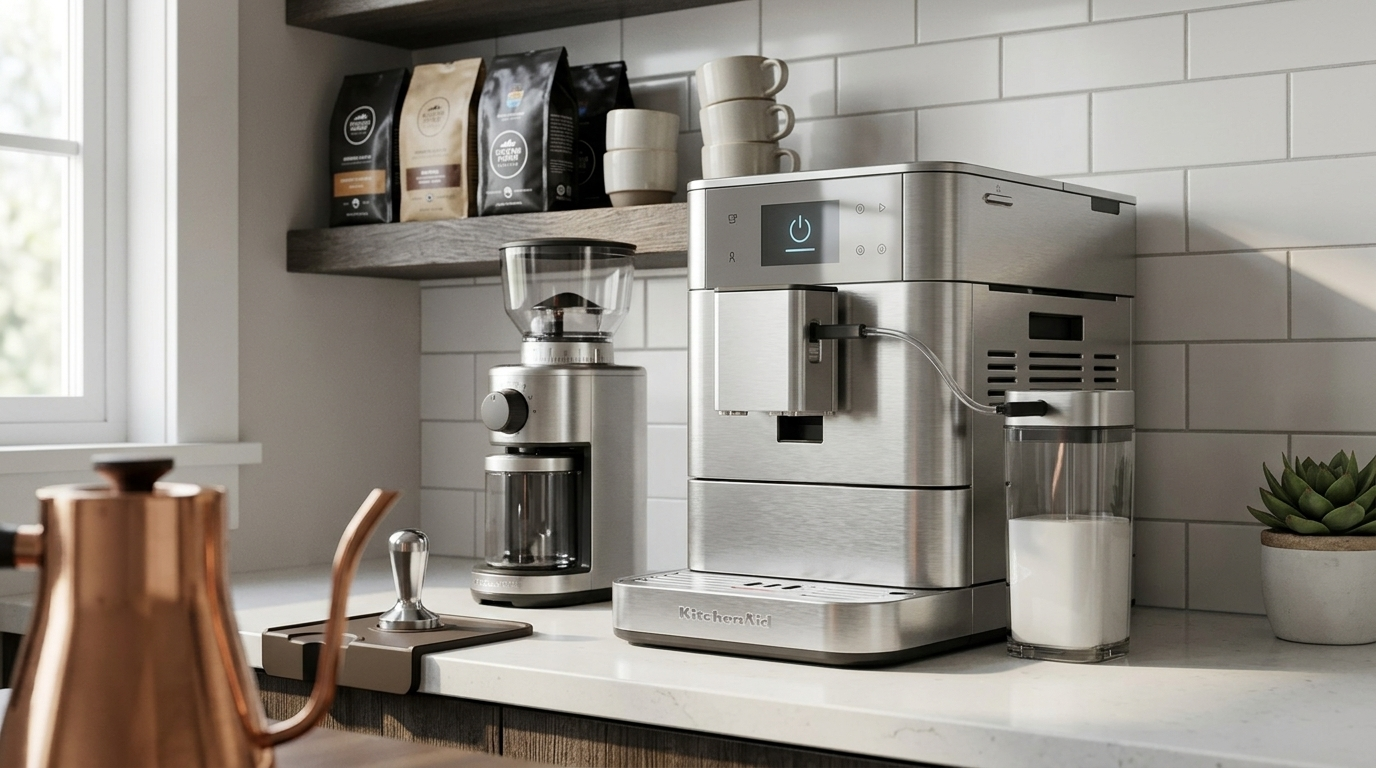
The KF7 is easy to keep clean, though its drip tray is bulky to carry.
Noise
Both are quiet machines for fully automatics, which is one of KitchenAid’s real strengths.
The KF8 was the quieter of the two, thanks to its insulated grinder. The KF7’s grinder was still softer than most machines I have tested.
How loud each felt, my ranking
Relative loudness from side-by-side use. Shorter bars are quieter.
Mistakes to avoid on both machines
Over two months with these KitchenAids, I made most of the common mistakes at least once. These are the ones worth avoiding.
Leaving milk in the tube. If you skip the rinse after a milk drink, dried milk builds up in the tube and the next foam comes out thinner. On both machines, the rinse takes seconds when you do it straight away.
Using very dark, oily beans. They tasted fine for a week, then the grinder started to sound strained and the shots ran unevenly. Medium-dark beans worked best on both.
Ignoring the profiles. Before I set up profiles, people kept changing the default strength and size, and every drink was a surprise. Profiles fixed that on both machines.
Filling the KF8 under a low cabinet. Its top-fill tank needs room above. I spilled water twice before I started sliding the machine forward to refill it.
Expecting the KF7 to make café espresso. It is a lovely milk-drink machine, but chasing a richer espresso through the settings mostly led to frustration. Play to its strengths.
Forgetting plant mode on the KF8. Oat milk in dairy mode made bigger, looser bubbles. Switching to plant mode made a visible difference within one drink.
| Problem | Likely cause | Fix |
|---|---|---|
| Thin, bubbly foam | Milk residue in the tube or warm milk | Rinse after each drink, use cold milk |
| Oat milk foams poorly | Dairy mode on the KF8 | Switch to plant mode |
| Bitter, thin espresso | Grind too coarse or stale beans | Finest grind, fresh medium-dark beans |
| Watery americano | Too much water | Reduce the water volume |
| Grinder sounds strained | Oily beans | Switch beans, clean the chute |
Rinsing the milk tube right after each drink kept foam at its best on both machines.
Water, beans and long-term care
With two coffee drinkers, I refilled the KF7’s 74 oz tank about every three days and the KF8’s 84.5 oz tank about every four.
Both prefer fresh medium to medium-dark roasts. Very oily dark beans can stick in the grinder and chute, so I would avoid them on both, and both show off fresh beans far better than stale ones.
Use a water filter if your water is moderately hard. It keeps scale away from the heater and pushes descaling prompts further out.
Drinks per full water tank, rough maths
Allowing for rinse water. Your numbers depend on cup size.
| Bean type | KitchenAid KF7 | KitchenAid KF8 |
|---|---|---|
| Medium-dark blend | Best, still a bit thin | Best overall |
| Medium roast | Bright and thin | Smooth |
| Light roast | Sour | Bright but balanced |
| Very oily beans | Avoid | Avoid |
Our tip: Buy a bag of beans you can finish within two or three weeks, because both grinders show off fresh coffee far better than stale.
A typical morning on each
To make the difference concrete, this was my real weekday routine on each machine during week three.
On the KF7, I tapped my profile, made an americano for myself and a cappuccino for my partner, rinsed the milk tube and emptied the drip tray every second day. It took about four minutes in total, and the machine was quiet enough not to wake anyone.
On the KF8, I tapped my profile for a double espresso, then two lattes with the two-cup button for the kids’ weekend treat or one oat latte in plant mode on weekdays. The milk clean ran at the end, and I washed the container after breakfast. It took about five minutes.
Both routines were easy. The difference was that on the KF8 everyone was happy with their drink, while on the KF7 I quietly avoided straight espresso.
Time per morning, two people
Including brewing, milk cleaning and emptying the tray.
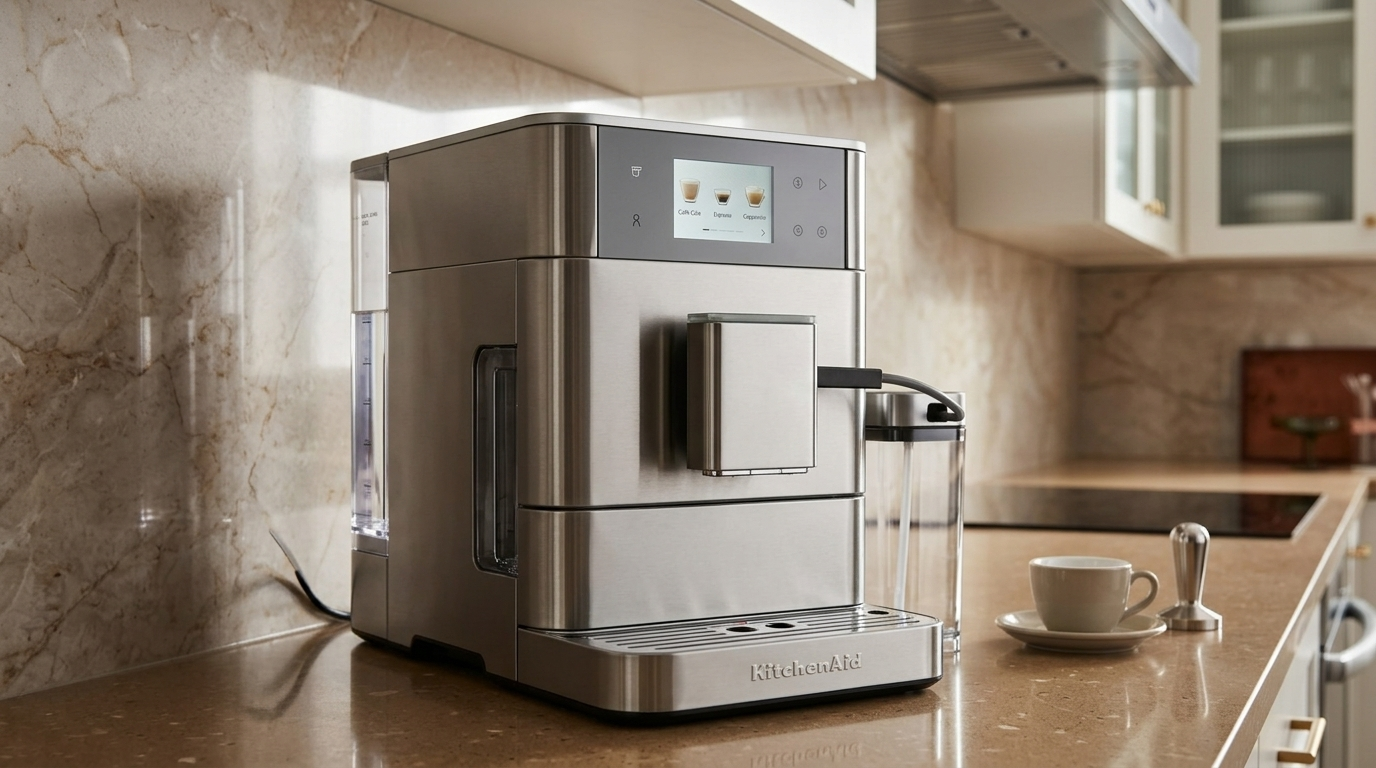
A cappuccino was the KF7’s best drink in my daily routine.
Small details I noticed
Both machines have a height-adjustable spout that fits espresso cups and taller mugs, and both put the milk container beside the machine rather than in front, which kept the front clear.
The KF8’s menus felt slightly faster, and its plant-milk toggle is right there when you choose a drink, so you do not have to dig through settings.
The KF7’s sideways tank was easier under low cabinets. The KF8’s top-fill tank needs a little overhead space, which is worth checking before you buy.
Weekends told the same story. On Saturday mornings, with guests or the whole family at the table, the KF8’s six profiles and two-cup milk drinks kept the queue moving. On the KF7, I found myself making two rounds of drinks and fielding requests to tweak strength.
Neither machine ever needed help or threw an error during my month with each, which says a lot about how well KitchenAid has thought through the daily routine.
If I had to sum up the month in one line: the KF7 is a good latte machine, and the KF8 is a good coffee machine, full stop.
Our tip: Keep the milk container in the fridge between breakfasts on both machines, because cold milk foams far better and stays fresh longer.
Four weeks with each: my diary notes
These are the notes I kept as each KitchenAid settled into my real routine.
KitchenAid KF7
Week 1: The design won everyone over, and the touchscreen was easy from the first cup.
Week 2: I spent the week chasing a better espresso through strength, body and grind, with little change.
Week 3: I switched to cappuccinos and americanos, which suited it much better.
Week 4: A quiet, pleasant latte machine, but not one for espresso lovers.
KitchenAid KF8
Week 1: Six profiles meant everyone in the house had a saved drink by the weekend.
Week 2: Plant mode turned my partner’s oat lattes from loose and bubbly to silky.
Week 3: I bought a second hopper for decaf, and evening coffee became a habit.
Week 4: The machine the whole family wanted to keep.
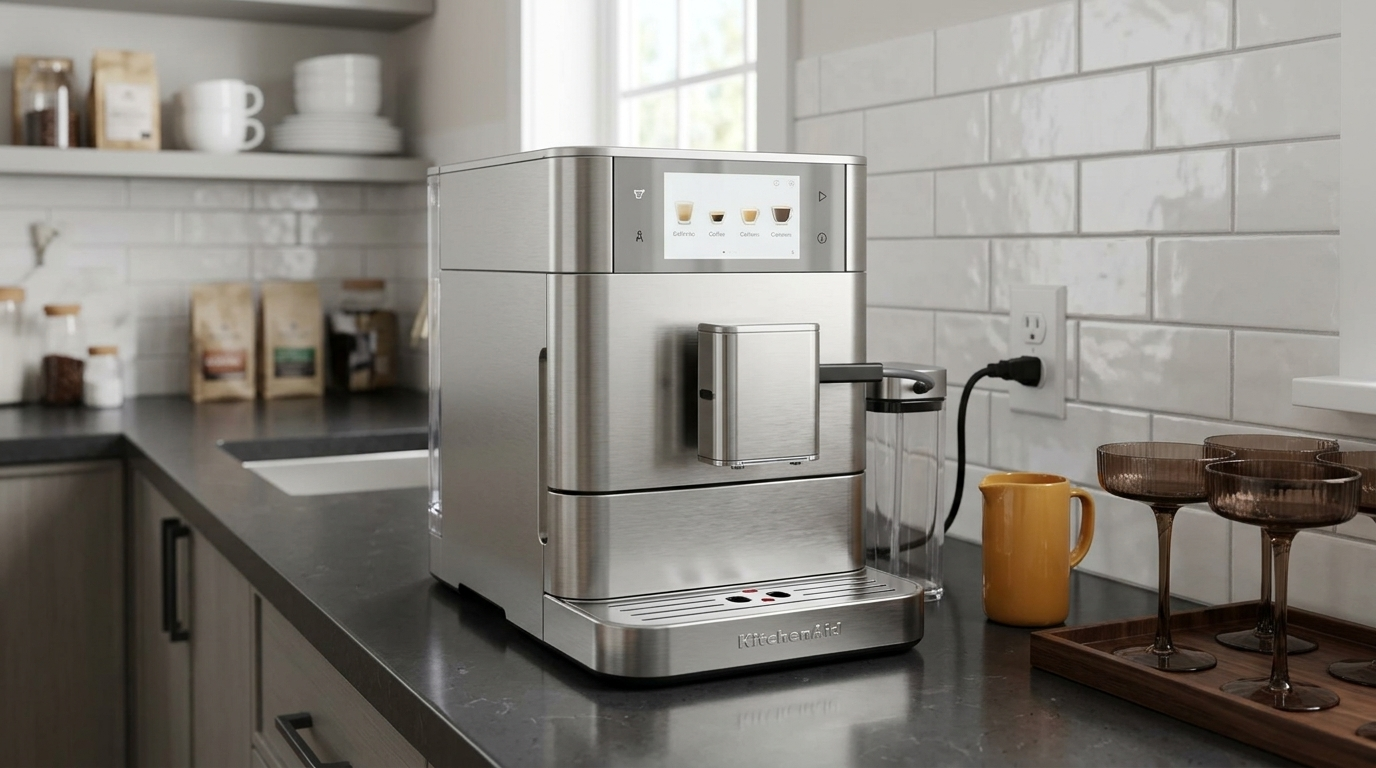
By the end of the month, the KF8 was the KitchenAid my household wanted to keep.
Real-life scenarios
These are the situations where one machine clearly pulled ahead during my testing.
Smooth and balanced, where the KF7’s tasted thin and bitter.
Plant mode made silky foam instead of big, loose bubbles.
Six profiles and 40-plus recipes keep everyone happy.
Good milk drinks, four profiles and the easier cleanup.
A second hopper swaps in under a minute.
Its insulated grinder was the softest of the two.
For latte-only households, the KF7 is a pleasant, quiet machine.
My scorecard
These are my own scores out of 10, from my single reviews of each machine, plus drink range because it decides this matchup.
KitchenAid KF8
KitchenAid KF7
Overall, I rate the KF8 8.7 and the KF7 7.6. They look the same, but the KF8 is the far better coffee machine.
See How Much You’ll SaveWhich one is right for you?
4 quick questionsWhich one should you buy?
For most people, the KF8. It made far better espresso, better milk drinks and is easier to share. The KF7 only makes sense if every drink in your house contains milk and you value the simplest cleaning. Still weighing other options? I rank every model I’ve tested in my guide to the best super-automatic espresso machines.
To see the whole range, read my KitchenAid KF6 vs KF8 comparison, which covers the KF6, and my KF8 review and KF7 review.
The KF8 is the KitchenAid I would buy for almost any household.
- Anyone in your home drinks espresso
- You drink oat or plant milk
- You have a big household
- You want the quietest grinder
- You have little overhead clearance
- You want the least daily cleaning
- You only drink lattes
- Every drink in your home has milk in it
- You want the simplest cleaning
- You need four profiles or fewer
- You drink espresso straight
- You use oat milk
- You want two-cup milk drinks
My pick is the KitchenAid KF8. It made smooth, well-made espresso and the best milk drinks in KitchenAid’s range, its plant-milk mode genuinely helps oat milk, and its six profiles and bigger tank make it the better family machine.
The KitchenAid KF7 is a pleasant, quiet machine for households that only drink lattes and cappuccinos. Its espresso was the weak link in my testing, so I would not recommend it to anyone who drinks espresso straight.
Whichever you choose, use fresh beans, rinse the milk system daily and the brew unit weekly.
KitchenAid KF7 vs KF8 specifications
From manufacturer specifications and my own testing.
| KitchenAid KF7 | KitchenAid KF8 | |
|---|---|---|
| Model | KES8557 | KES8558 |
| Type | Fully automatic with milk container | Fully automatic with milk container |
| Recipes | 20+ | 40+ |
| Pump pressure | 15 bar | 15 bar |
| Power | 1,450 watts | 1,450 watts |
| Grinder | Steel conical, 7 settings | Steel conical, 7 settings, insulated |
| Strength and body | Adjustable | Adjustable per drink |
| Temperature | Adjustable | Low, medium, high |
| Milk type setting | No | Dairy or plant |
| Two-cup drinks | Espresso and coffee | Espresso, coffee and milk drinks |
| User profiles | 4 | 6 |
| Display | 3.5-inch color touchscreen | Color touchscreen |
| Bean hopper | About 270 g, removable | About 270 g, removable |
| Pre-ground chute | Yes | Yes |
| Water tank | About 74 oz, slides out | About 84.5 oz, top-fill |
| Dimensions (H x W x D) | 14.3 x 10.2 x 18.6 in | 14.3 x 10.2 x 18.6 in |
| Weight | About 28 lb | About 29 lb |
| Warranty | 2 years limited | 2 years limited |
How I tested and compared them
Michael Reynolds here. I used each machine as my everyday coffee maker for four weeks, making espresso, americanos, cappuccinos, lattes, flat whites and cortados, and kept notes every week.
I weighed doses, measured espresso and latte temperatures with a probe thermometer, worked through all seven grind settings and every strength and body option, and foamed whole, semi-skimmed and oat milk.
I rinsed every brew unit weekly, ran each milk clean and descaling prompt, and compared my notes with KitchenAid’s specifications and owner documentation.
- Coffee: body, crema, balance and consistency.
- Milk: foam texture, temperature and plant milk.
- Workflow: touchscreen, profiles and two-cup drinks.
- Ownership: noise, cleaning, tank and footprint.
KitchenAid KF7 vs KF8 FAQ
Is the KitchenAid KF8 worth it over the KF7?
Yes, for most people. The KF8 made much better espresso in my testing, better milk drinks, has a plant-milk mode, six profiles instead of four, 40-plus recipes and a bigger tank.
What is the difference between the KitchenAid KF7 and KF8?
They share the same body, grinder type and hopper. The KF8 adds 40-plus recipes, six profiles, a plant-milk mode, two-cup milk drinks, an insulated grinder and an 84.5 oz top-fill tank.
Why does the KF7 espresso taste bitter?
In my testing, the KF7’s espresso often tasted thin and bitter, and changing strength, body and grind helped less than expected. It tasted best inside milk drinks.
Which is better for oat milk?
The KF8. Its plant-milk mode gave oat milk a silky texture instead of big, loose bubbles.
Are the KF7 and KF8 the same size?
Yes. Both are about 14.3 inches tall, 10.2 inches wide and 18.6 inches deep. The KF8 needs some overhead clearance to fill its tank.
How many user profiles do they have?
The KF7 has four and the KF8 has six.
Can the KF8 make two lattes at once?
Yes. It makes two milk drinks at once, but the milk volume is split between the cups.
Which is quieter?
The KF8, thanks to its insulated grinder. Both are quiet for fully automatic machines.
Do both have a removable brew unit?
Yes. I rinsed each under the tap once a week.
Can you use decaf in the KitchenAid KF8?
Yes. Use the pre-ground chute for one scoop, or swap in a second hopper of decaf beans, which took me under a minute.

- Our hands-on KitchenAid KF7 review
- Our hands-on KitchenAid KF8 review
- KitchenAid product specifications and owner documentation
- General espresso brewing and milk frothing guidance