KitchenAid KF6 vs KF8: which fully automatic KitchenAid should you buy?
The KitchenAid KF6 and KitchenAid KF8 share a heavy, metal-clad body, a steel conical grinder, swappable bean hoppers and a reputation for being very quiet. Then they aim at different people. The KF6 puts its effort into the espresso, with the most concentrated shots I have measured from a one-touch machine. The KF8 puts its effort into everyone else in the house, with more than 40 drinks, six profiles, a plant-milk setting and two milk drinks in one go. I used each one for four weeks and measured strength, temperature and noise to find out which one fits your kitchen.
We choose products independently. We may earn a commission through links on this page; your price stays the same. Affiliate policy
Jargon helpNew to espresso? Tap any dotted term to see what it means.
In this comparison
If several people share the machine and milk drinks are a daily habit, buy the KitchenAid KF8. It has the best milk drinks in KitchenAid's range, a plant-milk mode that genuinely helps oat milk, six profiles and a touchscreen that keeps 40-plus drinks easy to manage. If espresso is your main drink, the KitchenAid KF6 is the better coffee maker. It doses 12 to 14 grams, pulled shots as strong as 6 to 7% TDS and keeps four profiles, though you'll need your own milk container.
The two machines
Specs checked November 14, 2026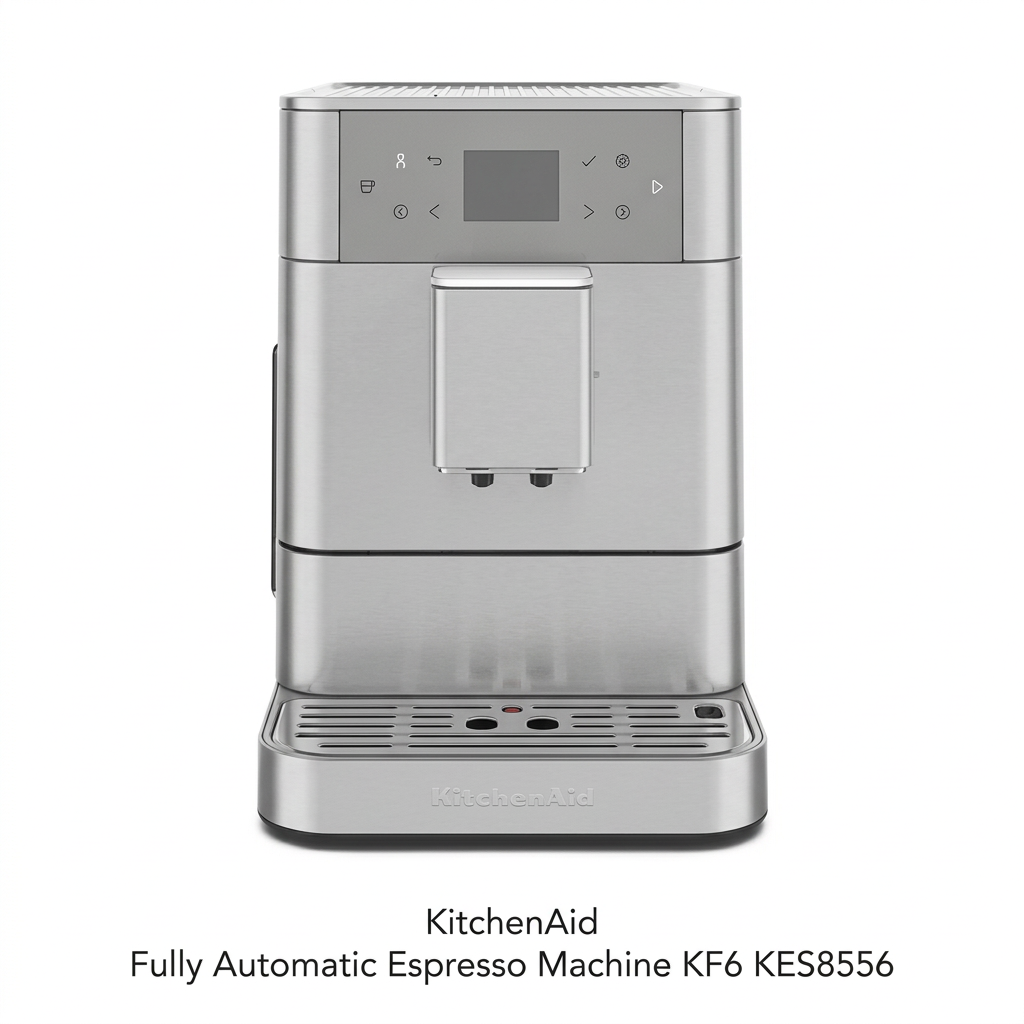
Some of the most concentrated espresso I have measured, a metal-clad body, four profiles and a whisper-quiet grinder.
Check price on Amazon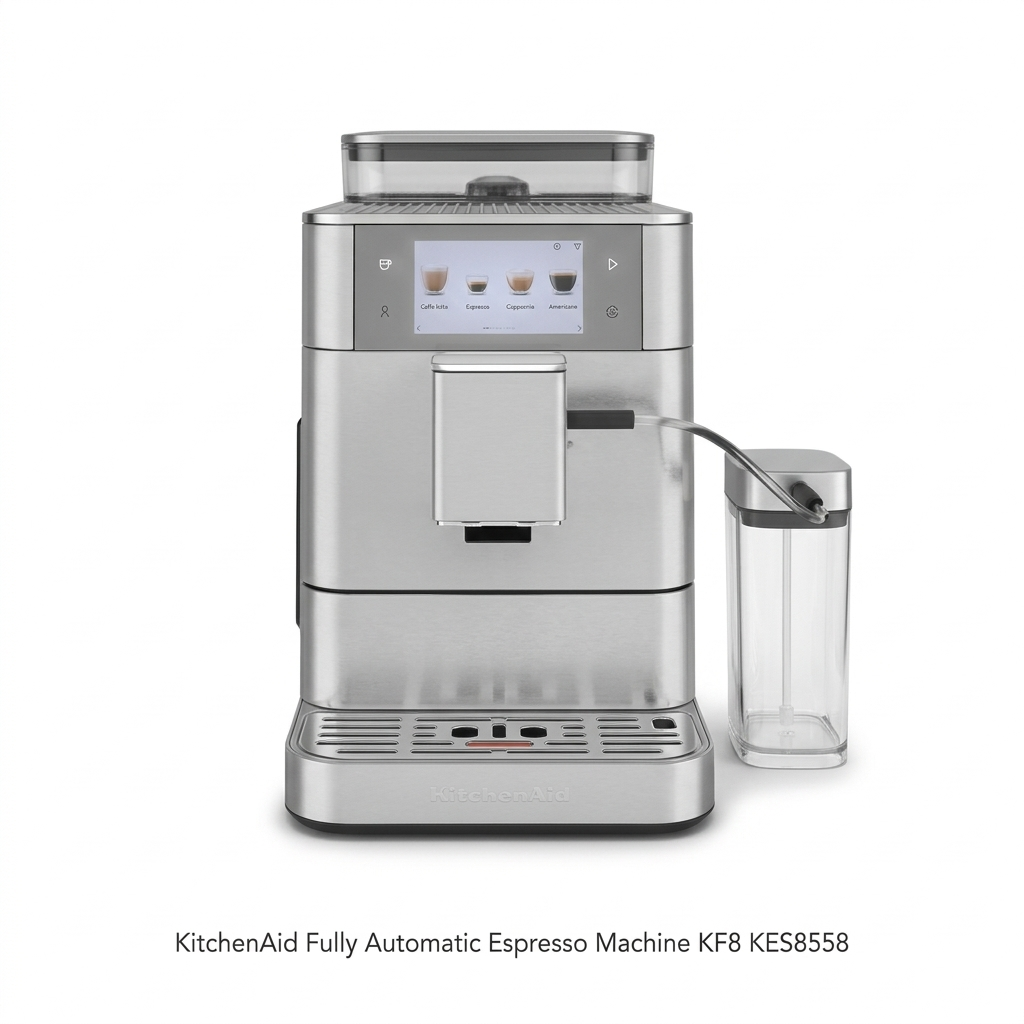
40-plus drinks, six profiles, a plant-milk mode, two milk drinks at once and a touchscreen, from a near-silent machine.
Reveal Today’s DealKitchenAid KF6 vs KF8 at a glance
- Buy the KF8 if several people share the machine and you want great milk drinks, including oat milk.
- Buy the KF6 if espresso is your main drink and you want the strongest shot in KitchenAid’s range.
- Both share the same metal-clad 10.2-inch-wide body, steel burrs, swappable hoppers and Quiet Mark-level noise.
- The KF8 adds a touchscreen, a bigger 2.5 L tank, plant-milk mode and two-cup milk drinks.
Head to head
The better result in each row is marked, based on my testing and KitchenAid's specifications. Rows where the two machines are identical have no winner.
Keep in mind that the tally is not my verdict. One row, espresso, matters most to the KF6 buyer; several rows about sharing matter most to the KF8 buyer.
| Spec | KitchenAid KF6 | KitchenAid KF8 |
|---|---|---|
| Espressomy tasting, same beans | Concentrated, heavy body ✓ Best | Smooth, balanced |
| Espresso strengthrefractometer | 5.5% TDS standard, 6–7% short ✓ Best | Smooth at strong body |
| Coffee doseweighed | 12–14 g | Similar range |
| Drinks | 15 | 40-plus ✓ Best |
| User profiles | 4 | 6 ✓ Best |
| Display | 2.4-inch color, buttons | Color touchscreen ✓ Best |
| Milk system | Hose into your own container | Milk container, plant-milk mode ✓ Best |
| Two milk drinks at once | No | Yes ✓ Best |
| Milk or coffee first | Milk first | Your choice ✓ Best |
| Espresso temperaturehigh, warm cup | About 167–170°F ✓ Best | About 161–165°F |
| Noisemy readings | 61 dB grinding, 55–56 brewing | About 44 dB average ✓ Best |
| Water tank | 2.2 L, slides out sideways ✓ Best | 2.5 L, lifts from the top |
| Body and footprint | Metal-clad, 10.2 x 18.6 in ✓ Best | Metal-clad, 10.2 x 18.6 in plus milk container |
| Rows won | 5 | 7 |
KitchenAid KF6 vs KF8 pros and cons
KitchenAid KF6
- Some of the most concentrated one-touch espresso I have measured
- Heavy metal-clad body and a whisper-quiet grinder
- Four profiles that save strength, temperature and body
- Milk container sold separately
- Screen is not a touchscreen
- Only 15 drinks and milk always goes first
KitchenAid KF8
- Best milk drinks in KitchenAid’s range, including oat milk
- 40-plus drinks, six profiles and two lattes at once
- One of the quietest machines I have tested
- Needs a big counter once the milk container is fitted
- Milk system needs regular cleaning
- Espresso is smooth rather than intense
Who should buy which machine?
- Espresso and ristretto lovers
- Couples who drink mostly black coffee
- Anyone who wants a quiet, solid machine
- Families with different favorites
- Oat and plant milk drinkers
- Anyone who makes two lattes at once
Design, size and build
These two share the same body, and it's the most premium-feeling one in this price class. Both are clad in metal, and at roughly 28 pounds the KF6 feels like a proper appliance rather than a plastic shell.
Both measure about 10.2 inches wide, 14.3 inches tall and 18.6 inches deep. That depth is the number to check first, because it's deeper than most fully automatic machines.
The KF8 adds a milk container on the side, so it needs a little more width once it's fitted. The KF6 uses a hose that goes into your own glass or jug instead.
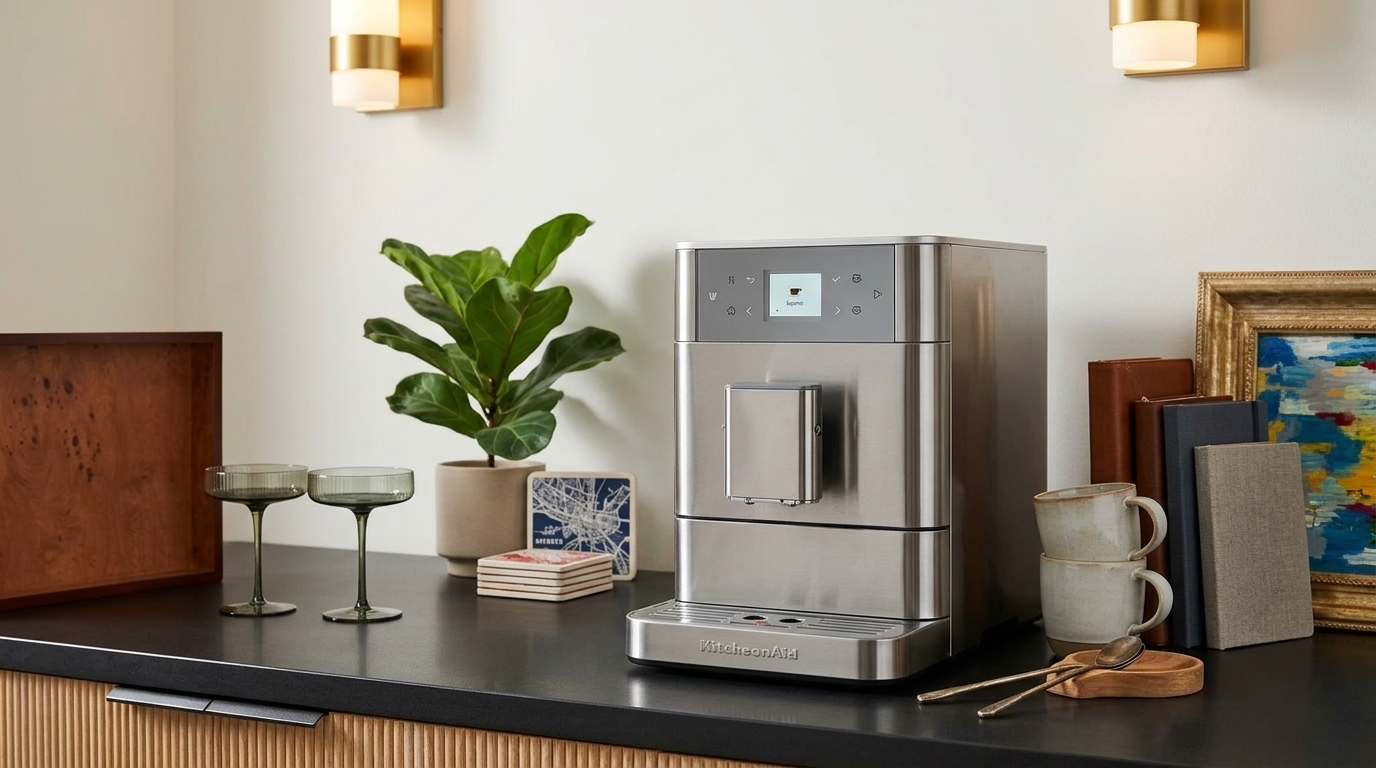
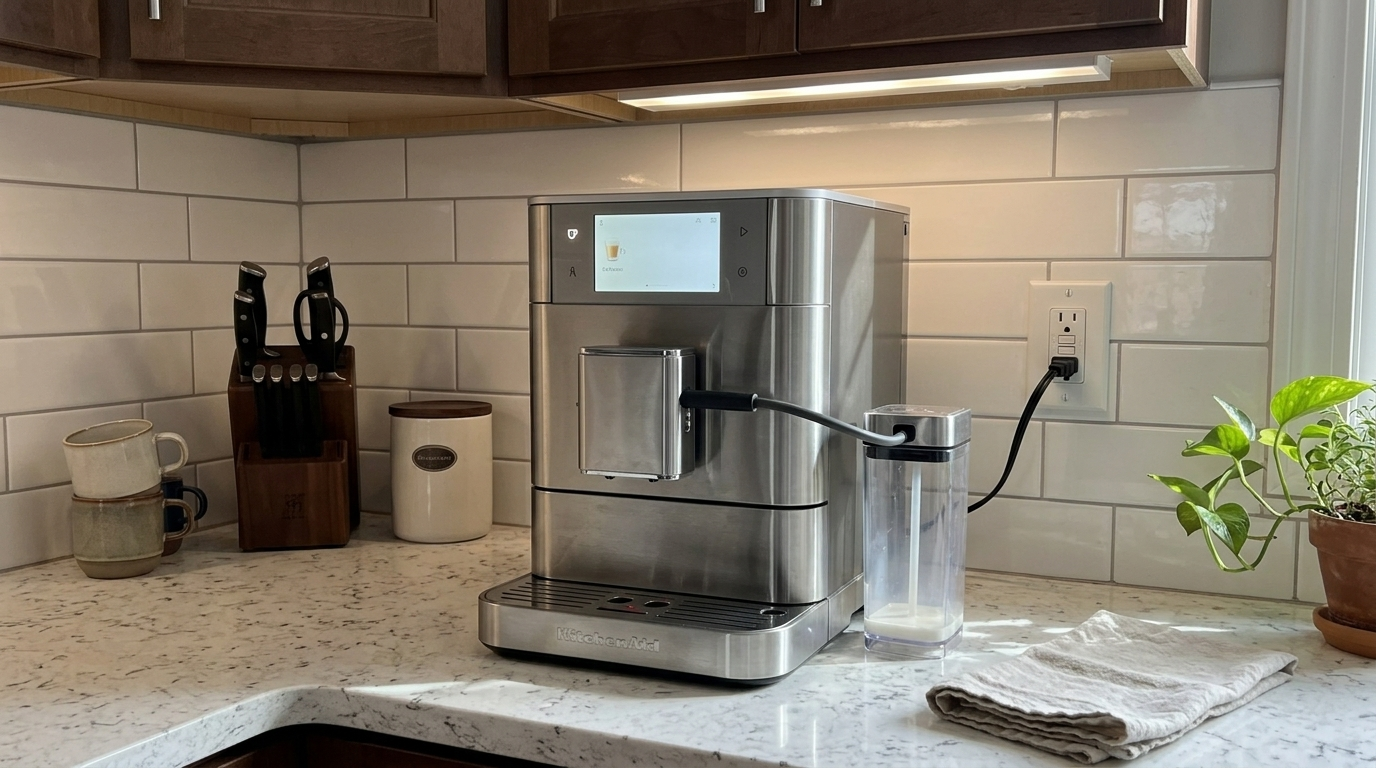
The KF6's metal body looks at home in a modern kitchen.
The tanks are where they differ. The KF6's 2.2-liter tank slides out sideways, so you don't need to move the machine under a low cabinet. The KF8's 2.5-liter tank lifts out from the top on the left.
That makes the KF6 the easier machine to refill under cabinets, and the KF8 the one that needs refilling less often.
Water tank size
The KF8's tank lasted about a day and a half for four people; the KF6's lasted two or three days for two.
Our tip: If your cabinets are low, pick the KF6 or leave room above the KF8, because the KF8's tank lifts out from the top while the KF6's slides out sideways.
Setup, screens and profiles
Setup took about 15 minutes on both. You fill the tank, set water hardness, add beans and let the machine rinse.
The controls are the first real difference. The KF6 has a 2.4-inch color screen, but you don't touch it; you navigate with buttons around it. The KF8 has a clear color touchscreen.
With 15 recipes, the KF6's button navigation was fine. With more than 40 drinks, the KF8 needs that touchscreen to stay manageable.
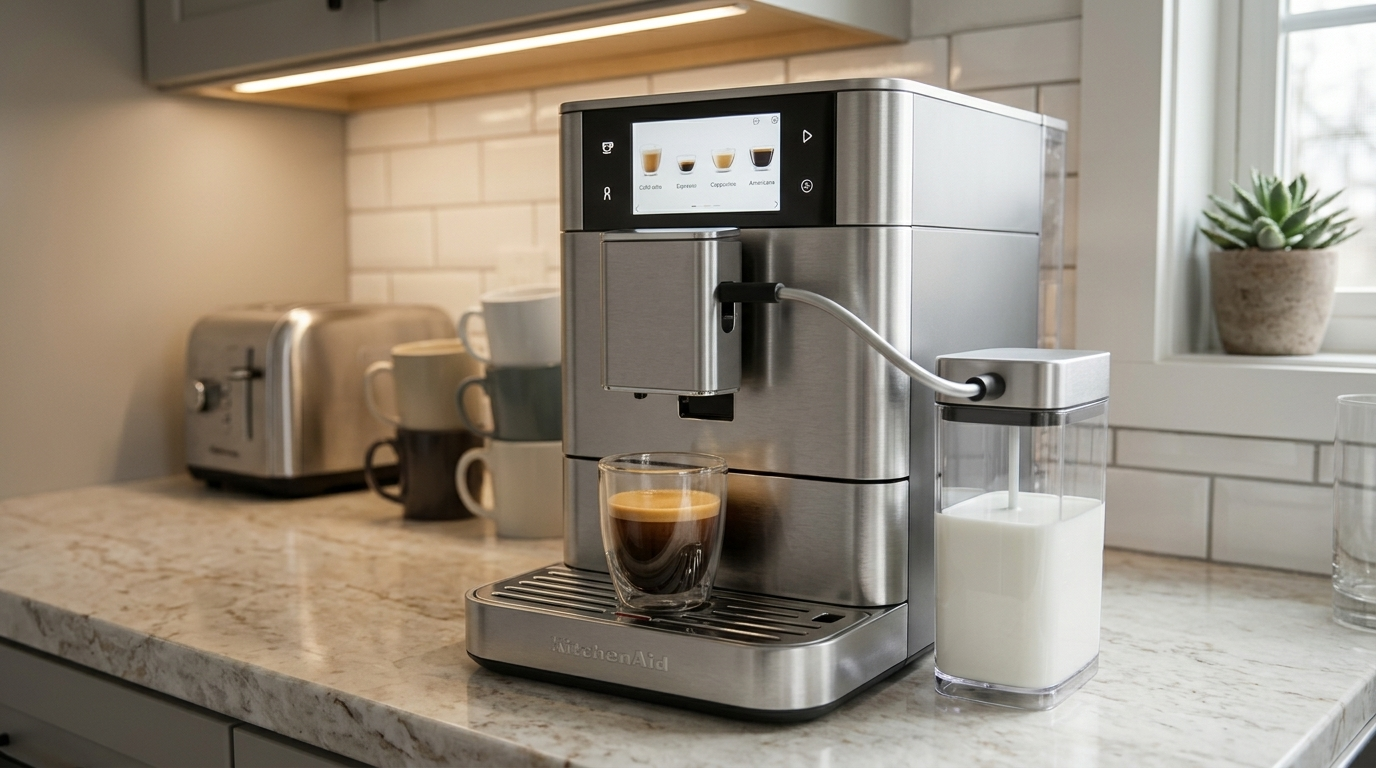
The KF8's touchscreen keeps 40-plus drinks easy to find.
Profiles matter even more. The KF6 keeps four, and the KF8 keeps six plus a guest profile with four popular drinks, so visitors didn't have to scroll through 40.
Each profile saves the details that matter. On both, I could set strength, temperature, volume and body, which changes the pre-infusion✕Pre-infusionA short soak of the ground coffee before full pressure starts, so water flows through the puck evenly. Longer pre-infusion gives a fuller body. length.
| Saved per drink | KF6 | KF8 |
|---|---|---|
| Strength | Coffee dose | Coffee dose |
| Temperature | Low, medium or high | Low, medium or high |
| Volume | Coffee and milk amounts | Coffee, milk and water separately |
| Body | Pre-infusion length | Pre-infusion length |
| Profiles | 4 | 6 plus guest |
| Milk order | Milk first | Milk or coffee first |
Our tip: Pin only your four or five real favorites to each KF8 profile, because it saves scrolling past 40 drinks every morning.
The drink menu: 15 vs 40-plus
The KF6 has 15 recipes on its screen, covering espresso, ristretto, lungo, Americano, long coffee, cappuccino, latte, flat white and hot water. For a black coffee drinker, that's everything.
The KF8 lists more than 40 programmed drinks. The extras are mostly variations on milk drinks, plus coffee-first and milk-first versions and two-cup options.
In practice, my household of four used about a dozen drinks on the KF8. The bigger menu mattered not because anyone needed 40 drinks, but because four people each wanted different ones saved.
Drinks on each menu
Counted from each machine's screen. Two-cup versions on the KF8 are included.
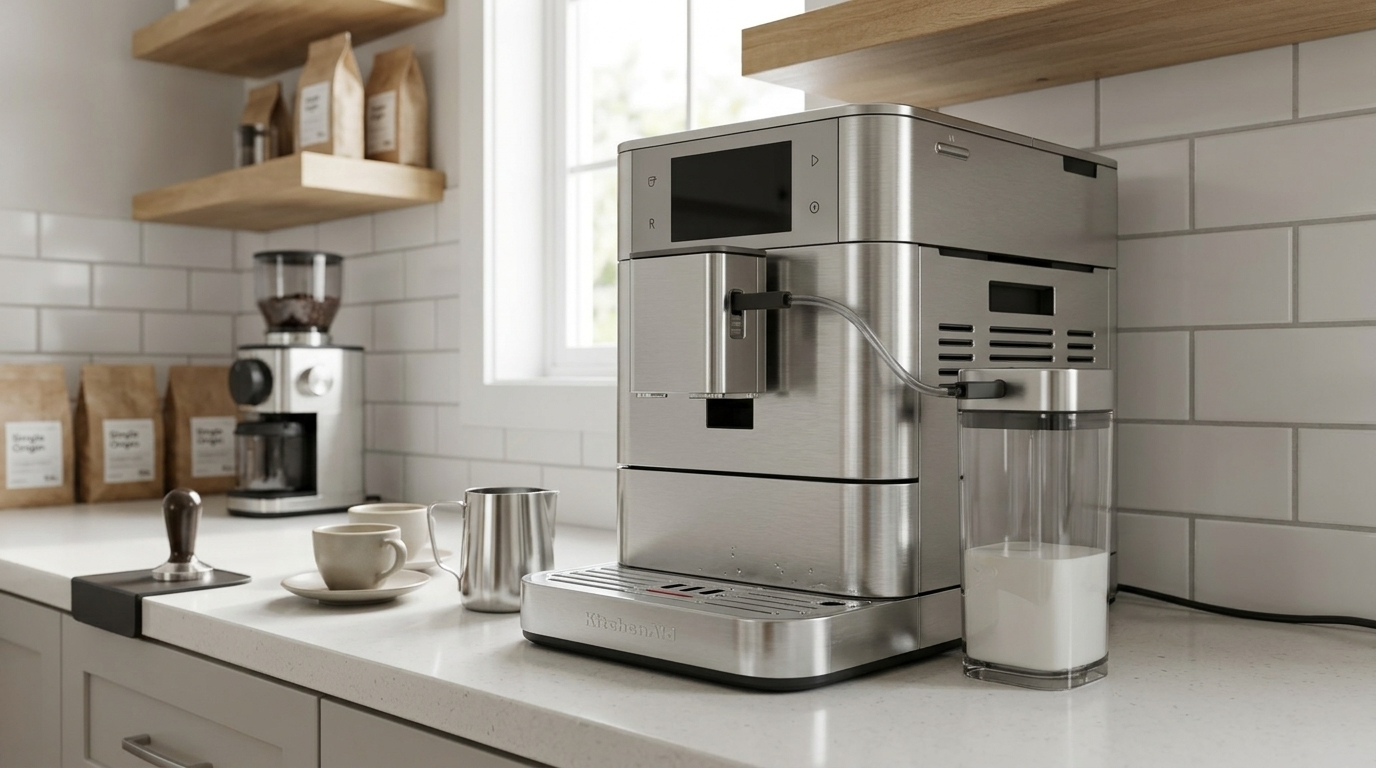
Four people each found their own favorites on the KF8's menu.
Our tip: Use the KF8's guest profile for visitors, because it shows four popular drinks instead of the full list of 40.
Grinder, dose and bean hoppers
Both grind with steel conical burrs✕Conical burrsTwo cone-shaped grinding parts, one inside the other. Beans are crushed between them, and the gap sets how fine the coffee is. and both have swappable bean hoppers. The hopper twists and lifts off, so you can swap in a second hopper of decaf.
Both have a pre-ground chute too. On the KF8, the hopper releases with a side button.
On the KF6, the brew unit took about 12 to 14 grams per shot at the higher strength settings. That's a generous dose for a one-touch machine, and it's why its espresso is so concentrated.
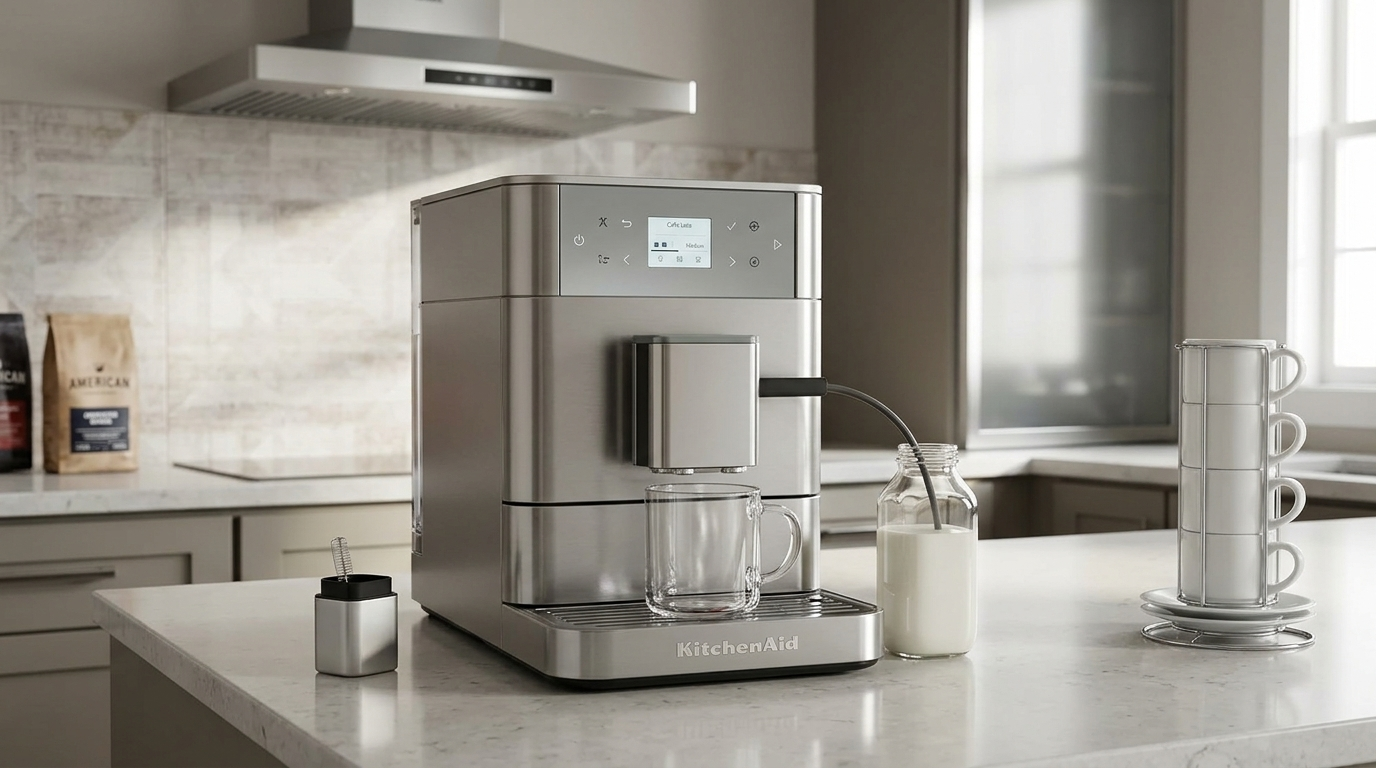
Both machines have a hopper that twists and lifts off for swapping beans.
The KF6 has seven grind settings. In practice, I set it once for my medium-dark blend and left it there.
Hopper life with my household
Both hoppers hold about 270 g.
Espresso quality
This is where the KF6 earns its place. It pulled some of the most concentrated espresso I've measured from a one-touch machine.
I used a refractometer to measure TDS✕Total dissolved solids (TDS)The share of the drink that is dissolved coffee. A higher number means a stronger, more concentrated shot.. On the KF6, a standard 1.4-ounce shot read about 5.5%, and shorter shots reached 6 to 7%.
KF6 espresso concentration I measured
Refractometer readings with a medium-dark blend at a high strength setting.
The KF8's espresso was smooth, balanced and nicely made, but less intense. Its ristretto at high strength was the standout, and I rated it 8.7.
My KF8 espresso ratings by drink
Ratings out of 10 for body, crema and flavor with the same medium-dark beans.
Temperature was close. On high with a warm cup, the KF6 poured about 167 to 170°F, and the KF8 about 161 to 165°F. A cold ceramic cup cost about 5 degrees on both.
The KF8's ristretto at high strength was its best straight shot.
| What you taste | Likely cause | First fix on either machine |
|---|---|---|
| Sour, thin | Under-extracted✕Under-extractionWhen water does not pull enough flavor out of the coffee. The shot tastes sour, thin and watery. | Raise strength or body |
| Bitter, harsh | Over-extracted | Shorter volume or lower temperature |
| Lukewarm | Cold cup | Warm the cup first |
| Flat and pale | Stale beans | Use beans within a few weeks of roasting |
Our tip: Set body to strong and volume short on either machine for espresso, because the longer pre-infusion and smaller cup gave the fullest shots I made.
Americano and long coffee
Both make a proper Americano, adding hot water to a short shot instead of pushing a mug of water through the grounds. That matters, because long extractions tend to taste bitter.
The KF8 goes further. It lets you set the coffee and the added water separately, so you change strength without changing the cup size.
My favorite KF8 Americano was maximum strength, medium temperature, medium body, 2 ounces of coffee and 4.8 ounces of hot water.
| KF8 Americano ratio | What it tasted like |
|---|---|
| 2 oz coffee + 4.8 oz water | Strong, my pick |
| 1.6 oz coffee + 6 oz water | Balanced mug |
| 1.2 oz coffee + 7 oz water | Mild, easy |
On the KF6, I drank plenty of long coffee too. Thanks to its bigger dose, its Americano had more body at the same size.
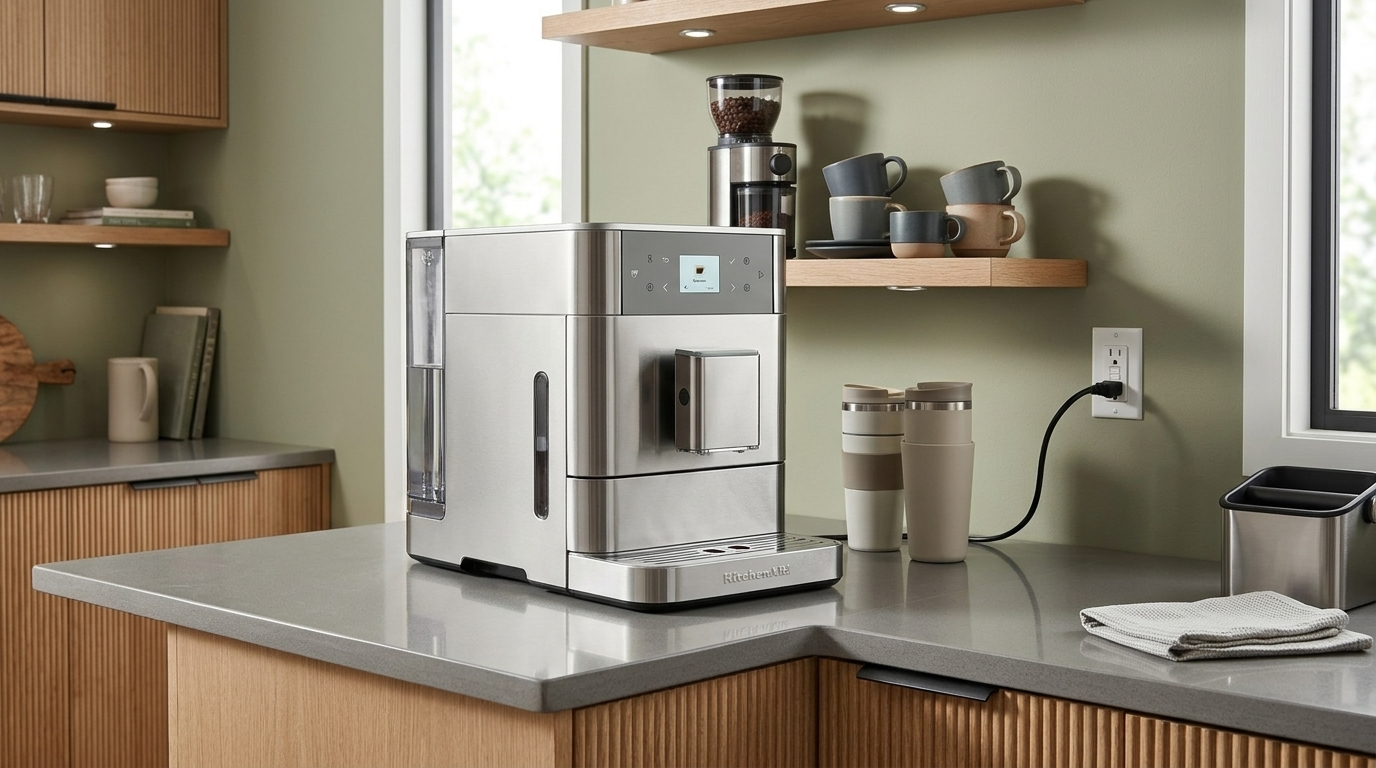
The KF6's bigger dose gave its Americano more body.
Our tip: Change the coffee amount, not the water, when an Americano tastes weak on the KF8, because the separate settings let you keep the same mug size.
See Today’s PriceMilk drinks and plant milk
This is where the KF8 pulls clearly ahead.
The KF6's milk system is a flexible hose that drops into your own milk container, which is sold separately. It makes silky microfoam✕MicrofoamMilk foam with bubbles so small you can barely see them. It feels silky and glossy, which suits flat whites and lattes. rather than stiff foam, so it shines in drinks that want smooth, pourable milk.
On the KF6, milk always goes first. For a cappuccino, it pours the milk and then the espresso.
How each milk foamed on the KF6
My ratings out of 10 for texture, stability and temperature.
The KF8 has the best milk drinks in KitchenAid's range. You choose milk first or coffee first, and lattes came out comfortably hot at about 147 to 151°F.
Its standout is the plant-milk setting. Oat milk foamed noticeably better with it on, holding its texture instead of collapsing.
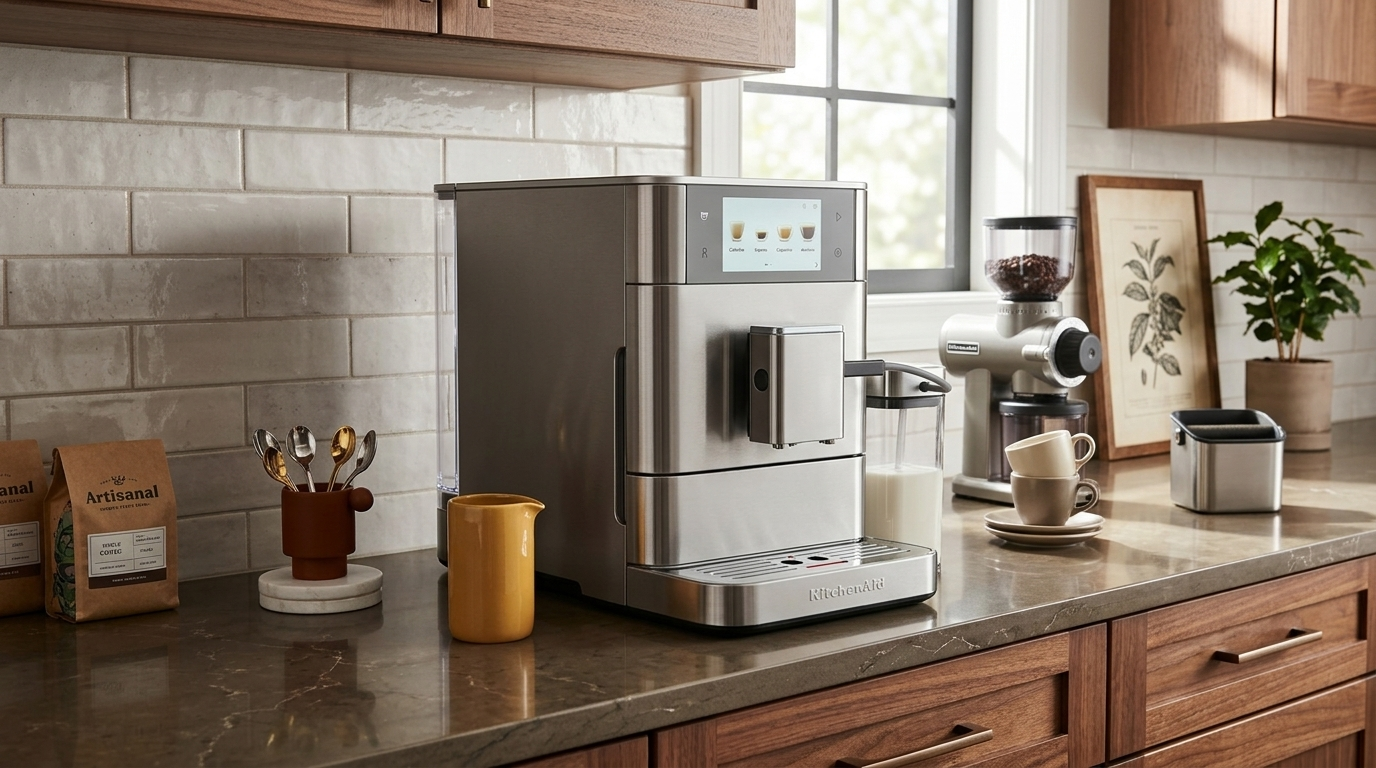
The KF8 can make two full milk drinks in one cycle.
The KF8 can also make two full milk drinks at once. When I set about 4 ounces of milk and pressed the two-cup option, each cup got roughly half.
| Milk feature | KF6 | KF8 |
|---|---|---|
| Milk container | Sold separately, hose into your own | Included |
| Milk or coffee first | Milk first | Your choice |
| Plant-milk setting | No | Yes |
| Two milk drinks at once | No | Yes |
| Foam style | Silky, pourable | Silky to dense |
| My milk score | 8.0 | 8.9 |
Our tip: Keep the KF6's milk hose in a cold glass of milk from the fridge, because warm milk makes loose foam and the hose pulls from whatever you give it.
Hot water and tea
Both machines dispense hot water from the menu, so they double as a tea station for one or two cups.
On the KF8, the separate water setting for Americanos also made it easy to save a hot water drink at a set volume. I saved a mug-sized hot water button to my profile and used it every afternoon for tea.
On the KF6, hot water is a menu option you size with the buttons. It's one more press, but it works just as well.
| Tea type | Ideal water | KF6 | KF8 |
|---|---|---|---|
| Green tea | 158–176°F | Let it cool briefly | Let it cool briefly |
| White tea | 167–185°F | Good | Good |
| Herbal tea | 194–212°F | Good | Good |
| Black tea | 203–212°F | Good, warm the mug | Good, warm the mug |
Neither replaces a kettle for a big teapot. Each pour is cup-sized, so a large pot means a few presses.
Our tip: Save a mug-sized hot water drink to your KF8 profile, because it turns afternoon tea into a single tap.
Build quality and long-term ownership
The metal cladding on both machines is more than a looks upgrade. The panels didn't flex when I pressed them, the drip tray slid in and out cleanly, and nothing rattled during grinding.
That solidity is also part of why they're so quiet. A heavy body absorbs vibration that a plastic shell would pass straight to the counter.
Both machines ran without a single error or leak during my four weeks each. Drinks on day 28 tasted the same as in week two, and the maintenance prompts arrived at sensible intervals.
The real long-term question is how your household drinks coffee. If the machine is mostly yours and mostly espresso, the KF6's strength will keep impressing you. If the house grows, or oat milk lattes become the norm, the KF8's extra drinks and profiles will feel worth it every morning.
The metal body is a big part of why both KitchenAids are so quiet.
Cleaning and upkeep
Maintenance runs from the screen on both machines, with prompts when something is due. Both guide you through descaling, and a full cycle took about 45 minutes, mostly hands-off.
The milk side is where your time goes. The KF6's hose is simple to rinse, while the KF8's milk system has more parts and more drinks running through it.
A machine with this many milk drinks needs a routine, and the KF8 makes it straightforward with on-screen prompts.
My daily hands-on cleaning time
My estimate for a mix of milk drinks and black coffee.
| When | KF6 | KF8 |
|---|---|---|
| After milk drinks | Rinse the hose when prompted | Run the milk rinse when prompted |
| Daily | Empty drip tray and grounds | Empty drip tray and grounds |
| Weekly | Clean the brew unit | Clean the brew unit and milk parts |
| When prompted | Descale, about 45 minutes | Descale, about 45 minutes |
Both machines prompt each maintenance job on screen.
Our tip: Run the milk rinse as soon as the KF8 asks, because milk left in the system for an hour takes far longer to clean.
Noise
Both machines are unusually quiet, and that's one of the best reasons to buy either one.
The KF6 is Quiet Mark certified, and my phone meter agreed. Grinding peaked just over 60 dB, and brewing sat around 55 to 56 dB.
The KF8 was quieter still. Across a whole drink, my meter averaged in the mid-40s, with short peaks while grinding. I pressed start on an espresso at 6 a.m., and the loudest sound in the kitchen was the fridge.
Sound levels I measured
Phone sound meter readings at about 50 cm. Every 10 dB sounds roughly twice as loud.
On the KF8, the grinder is so quiet that the brew unit is the loudest part.
Speed and daily use
Both are quick. The KF6 had a coffee ready about 40 seconds after I pressed the button, and the KF8 heats up in under 40 seconds.
The KF6's top surface warms cups too. After about 20 minutes, my infrared thermometer read 97 to 99°F on top.
In a household of four, the KF8's six profiles, guest drinks and two-cup milk option saved real time. Two lattes in one cycle meant breakfast for four took about half as long as making them one by one.
Drinks per full tank
Rough maths allowing for rinse water.
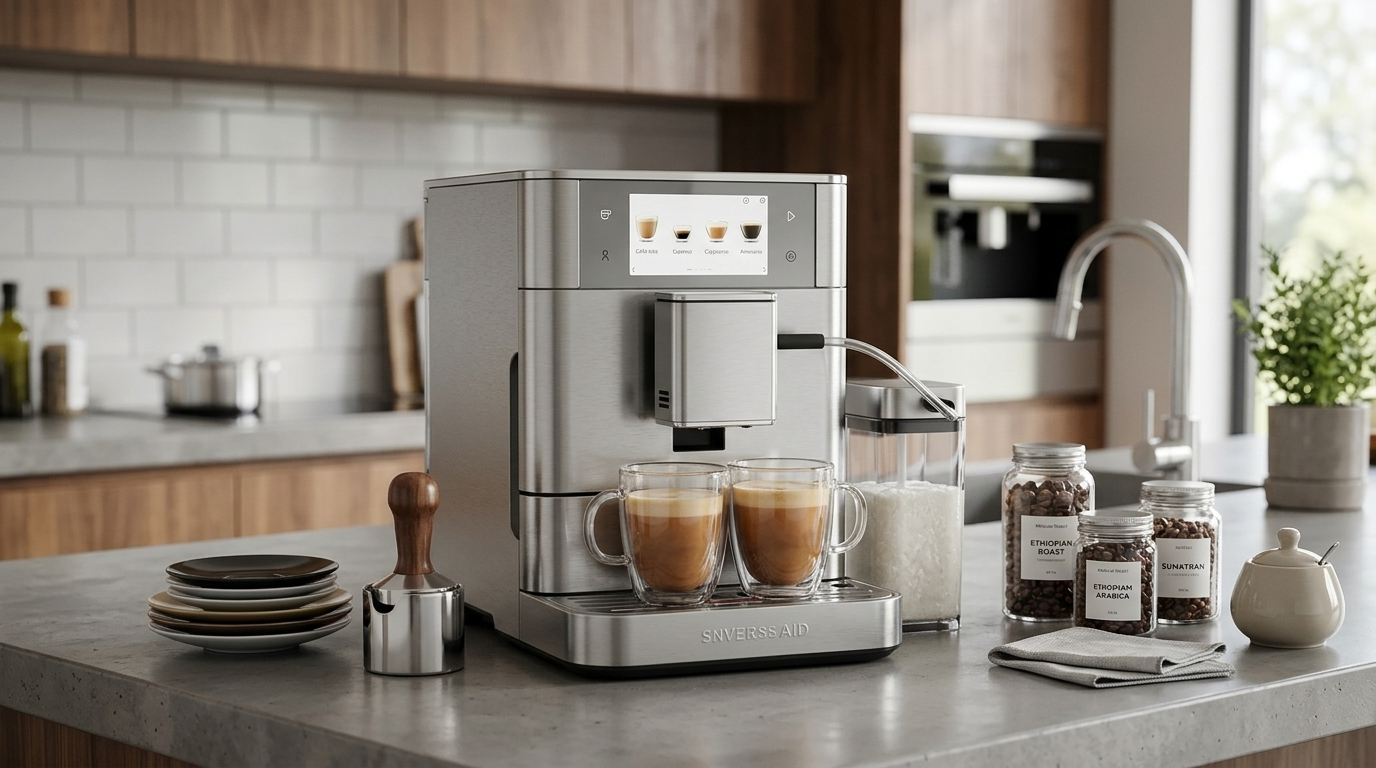
For four people, the KF8's profiles and two-cup milk drinks saved real time.
Our tip: Put a cup on the KF6's top surface while it warms up, because after about 20 minutes it reaches 97 to 99°F and keeps your espresso hotter.
Water, beans and supplies
Both use KitchenAid's water filter, descaler and cleaning tablets, so supplies cost the same.
With two of us, the KF6's 2.2-liter tank lasted two or three days, and its 270-gram hopper about a week and a half. With four of us, the KF8's 2.5-liter tank lasted about a day and a half, and its hopper about six days.
Use fresh whole beans within a few weeks of the roast date. Medium-dark blends suited the KF6's concentrated style, and medium roasts made the KF8's Americanos sing.
| Bean type | KF6 | KF8 |
|---|---|---|
| Medium-dark blend | Best espresso and ristretto | Best ristretto |
| Medium roast | Lovely Americano | Best Americano |
| Decaf | Second hopper | Second hopper |
| Very oily, dark | Avoid | Avoid |
Spent coffee pucks from either machine make a useful addition to a compost pile in small amounts.
Medium-dark blends suited the KF6's concentrated espresso best.
Real-life scenarios
Specs only go so far. These are the situations where one machine clearly pulled ahead during my testing.
Up to 6 to 7% TDS on short shots. The most concentrated one-touch espresso I measured.
The plant-milk setting kept oat milk glossy instead of bubbly.
Six profiles and two lattes in one cycle.
Stronger espresso, four profiles and a tank that slides out sideways.
About 44 dB across a drink. Quieter than my fridge.
The guest profile showed four easy drinks.
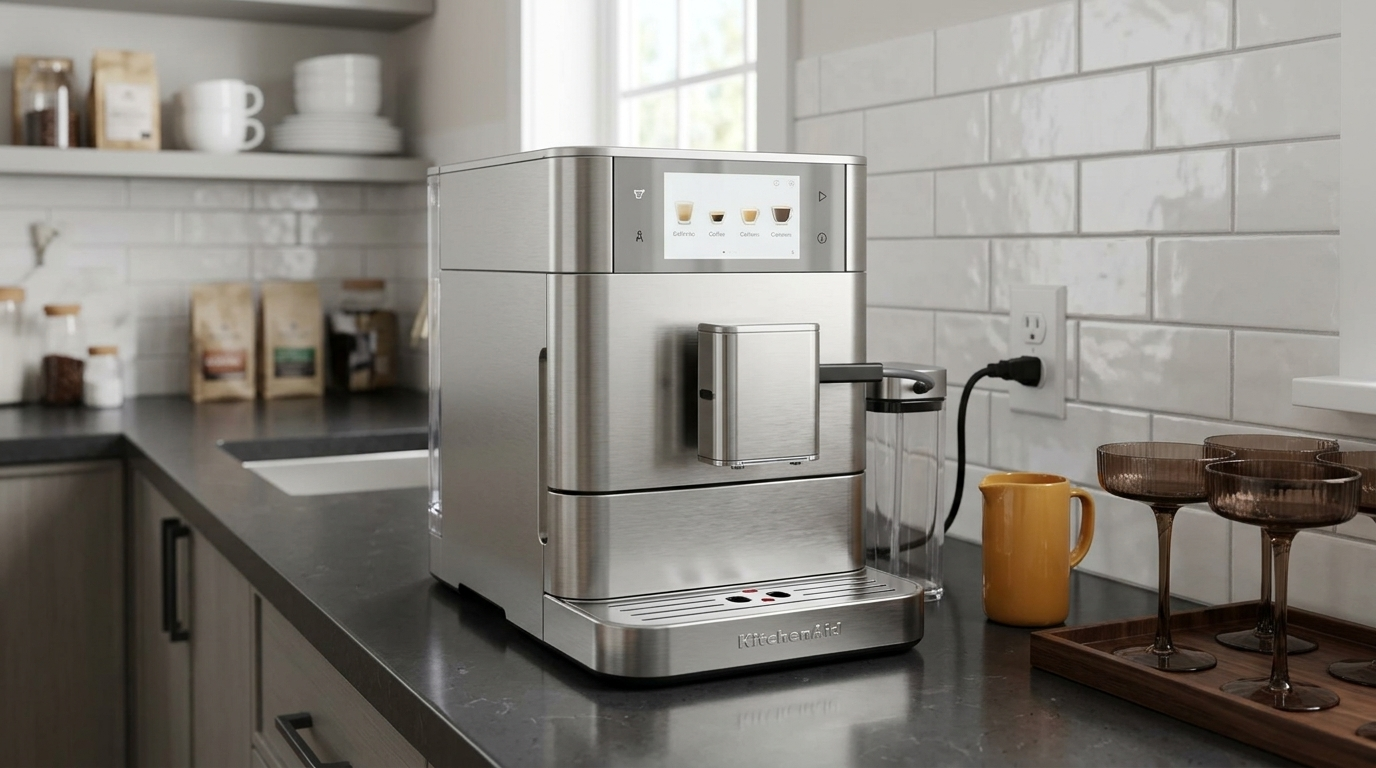
For shared kitchens, the KF8 was the machine nobody needed help with.
My scorecard
These are my own scores out of 10. The first four come from my single reviews of each machine, and I added sharing and quietness because they decide this matchup.
KitchenAid KF6
KitchenAid KF8
Overall, I rate the KF6 8.5 and the KF8 8.7. The KF6 is the better espresso machine; the KF8 is the better machine for a whole household.
See How Much You’ll SaveWhich one is right for you?
4 quick questionsWhich one should you buy?
It comes down to one question: is this machine mainly for espresso, or for everyone's milk drinks? Answer that and the choice makes itself. If none of these is quite right for you, my guide to the best super-automatic espresso machines covers the rest of the range I’ve tested.
If you're weighing the middle model too, my KitchenAid KF7 review covers the step between them.
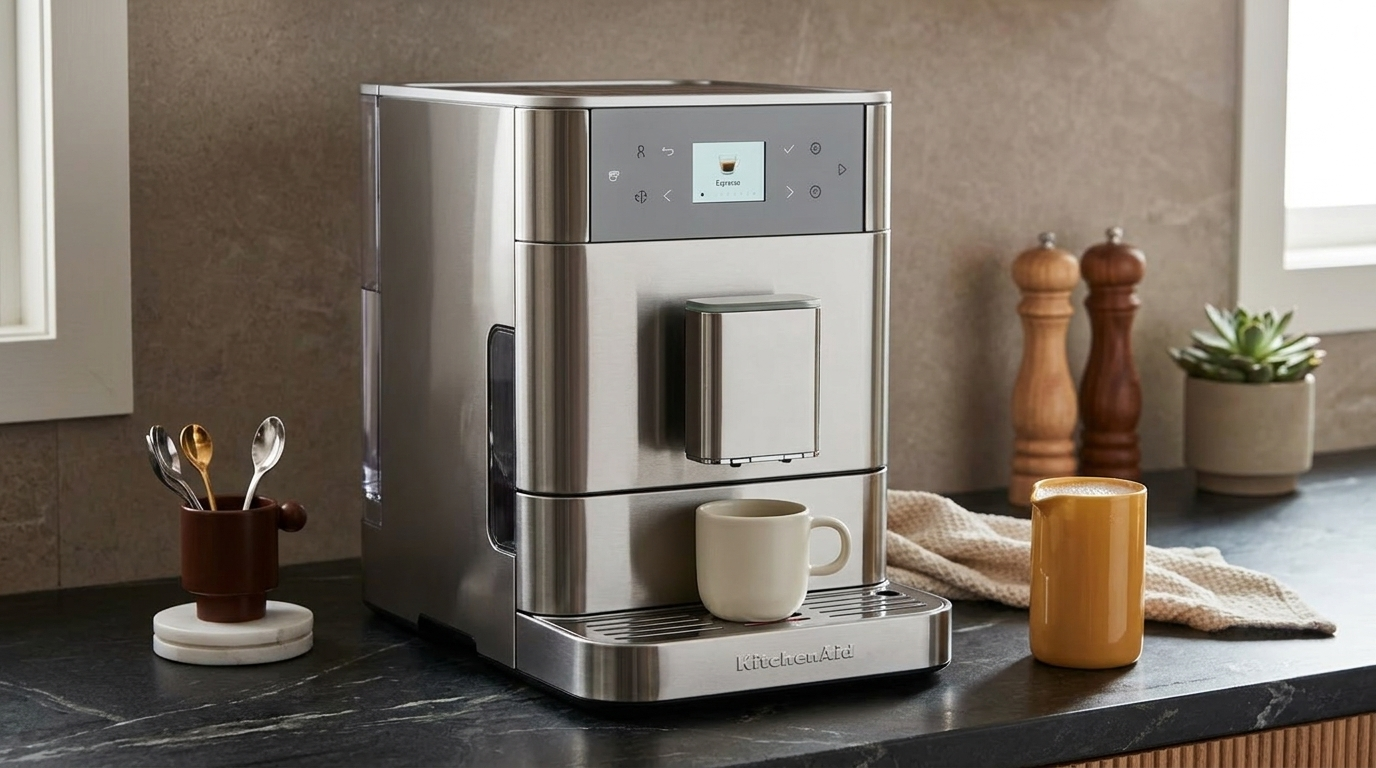
For espresso lovers, the KF6 earns its place.
- Espresso is your main drink
- One or two people use it
- You want a sideways-sliding tank
- You like physical buttons
- You want a milk container included
- You want plant-milk mode
- You need more than four profiles
- Several people share the machine
- You drink oat or plant milk
- You want two lattes at once
- You want a touchscreen
- You want the most intense espresso
- Your counter is tight at the sides
- You drink only black coffee
For most households, my pick is the KitchenAid KF8. It has the best milk drinks in KitchenAid's range, a plant-milk mode that genuinely helps oat milk, six profiles and two lattes at once, and it's one of the quietest machines I've tested.
The KitchenAid KF6 is the better buy if espresso is your main drink. It pulled some of the most concentrated one-touch shots I've measured, keeps four profiles and is just as solid and quiet. Budget for a milk container if you want milk drinks.
Whichever you choose, use fresh beans, keep the cups warm and run the milk rinse when prompted. Both machines are built to last years with that little bit of care.
KitchenAid KF6 vs KF8 specifications
From manufacturer specifications and my own testing.
| KitchenAid KF6 | KitchenAid KF8 | |
|---|---|---|
| Model | KitchenAid KF6 KES8556 | KitchenAid KF8 KES8558 |
| Type | Fully automatic with milk hose | Fully automatic with milk container |
| Drinks | 15 | 40-plus |
| Heating | Thermocoil | Fast heat-up, under 40 s |
| Pump | 15 bar | 15 bar |
| Grinder | Steel conical burrs, 7 settings | Steel conical burrs |
| Dose | 12–14 g | Similar |
| Bean hopper | About 270 g, swappable | About 270 g, swappable |
| Display | 2.4-inch color, buttons | Color touchscreen |
| Profiles | 4 | 6 plus guest |
| Milk system | Hose, container sold separately | Container, plant-milk mode |
| Two milk drinks at once | No | Yes |
| Water tank | 2.2 L, slides out sideways | 2.5 L, lifts out from top |
| Noise | About 61 dB grinding | About 44 dB average |
| Dimensions (W x D x H) | About 10.2 x 18.6 x 14.3 in | About 10.2 x 18.6 x 14.3 in, plus milk container |
| Weight | About 28 lb | About 28 lb |
How I tested and compared them
I used each machine as my everyday coffee maker for four weeks, making espresso, ristretto, Americanos, long coffee, cappuccinos, lattes and flat whites, with plant milk on the KF8.
I weighed doses, measured espresso concentration with a refractometer, took drink temperatures with a probe thermometer, recorded sound levels at about 50 cm and tracked how long tanks and hoppers lasted.
I ran every cleaning and descaling routine and compared my notes with KitchenAid's specifications and owner documentation. Michael Reynolds wrote up the notes from both test periods.
- Coffee: dose, TDS, crema, body and consistency.
- Milk: foam texture, temperature and plant milk.
- Workflow: screens, profiles and drink menus.
- Ownership: noise, cleaning, water care and footprint.
KitchenAid KF6 vs KF8 FAQ
Is the KitchenAid KF8 worth it over the KF6?
If several people share the machine or you drink milk drinks daily, yes. The KF8 adds 40-plus drinks, six profiles, a plant-milk mode and two lattes at once. If espresso is your main drink, the KF6 makes the stronger shot.
What is the main difference between the KF6 and KF8?
The KF6 focuses on espresso, with 15 drinks, four profiles and a button-controlled screen. The KF8 adds a touchscreen, 40-plus drinks, six profiles, plant-milk mode and two-cup milk drinks.
Which makes stronger espresso?
The KF6. It doses 12 to 14 grams and my standard shots read about 5.5% TDS, with short shots at 6 to 7%.
Does the KF6 come with a milk container?
No. Its milk hose goes into your own container, which is sold separately.
Is the KF8 good with oat milk?
Yes. Its plant-milk setting kept barista-style oat milk glossy instead of bubbly.
Can the KF8 make two lattes at once?
Yes. With about 4 ounces of milk and the two-cup option, each cup got roughly half.
Which one is quieter?
The KF8, at about 44 dB averaged across a drink. The KF6 is Quiet Mark certified, peaking just over 60 dB while grinding.
Are they the same size?
Yes, about 10.2 x 18.6 x 14.3 inches and around 28 pounds. The KF8 adds a milk container on the side.
How big are the water tanks?
2.2 liters on the KF6, sliding out sideways, and 2.5 liters on the KF8, lifting out from the top.
Do both have swappable bean hoppers?
Yes. Both hoppers twist and lift off, and both have a pre-ground chute.

- Our hands-on KitchenAid KF6 review
- Our hands-on KitchenAid KF8 review
- KitchenAid product specifications and owner documentation
- General espresso brewing and maintenance guidance
- Composting and Coffee Grounds, Cornell University
- A living lexicon for brewed coffee, University of Oregon