Jura vs Miele vs De’Longhi: which premium super-automatic is best?
Swiss simplicity, German solidity or Italian value? I compared the three brands through three of their best-selling machines: the Jura E8, the Miele CM 6360 and the De’Longhi Dinamica Plus. I used each one every day for four weeks, measured milk temperatures and noise, and lined up the data to find out which brand belongs in your kitchen.
We choose products independently. We may earn a commission through links on this page; your price stays the same. Affiliate policy
Jargon helpNew to espresso? Tap any dotted term to see what it means.
In this comparison
For most premium buyers, I’d pick the Miele CM 6360. It made the best milk foam of the three, keeps eight named profiles, warms your cups and makes a properly strong mug with DoubleShot. If you want the easiest machine to hand to anyone and never think about filters, the Jura E8 is the one, as long as you warm your cups. If you want premium-level espresso and foam for noticeably less, the De’Longhi Dinamica Plus made the densest espresso of the three.
The three machines
Specs checked November 14, 2026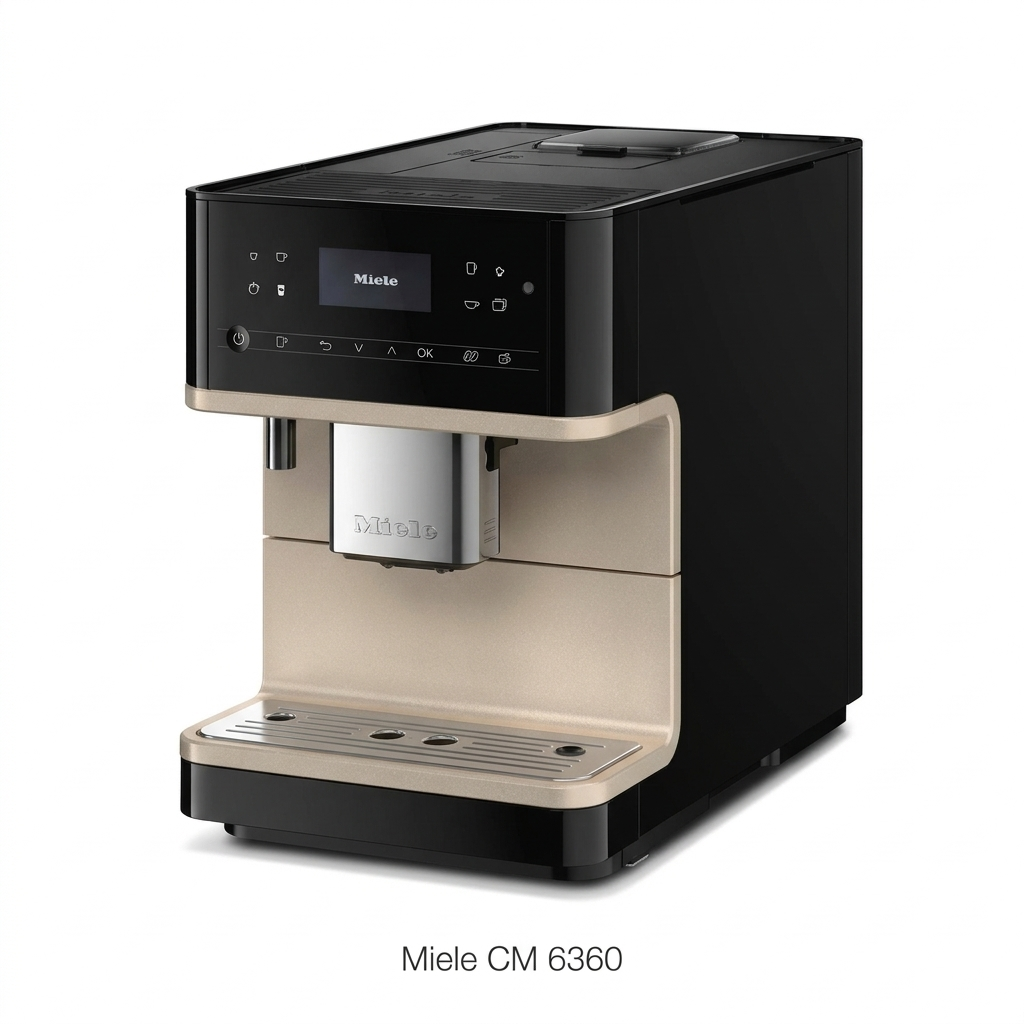
Eight named profiles, a glass milk container, a heated cup warmer, six tea programs and DoubleShot for strong mugs.
Check price on Amazon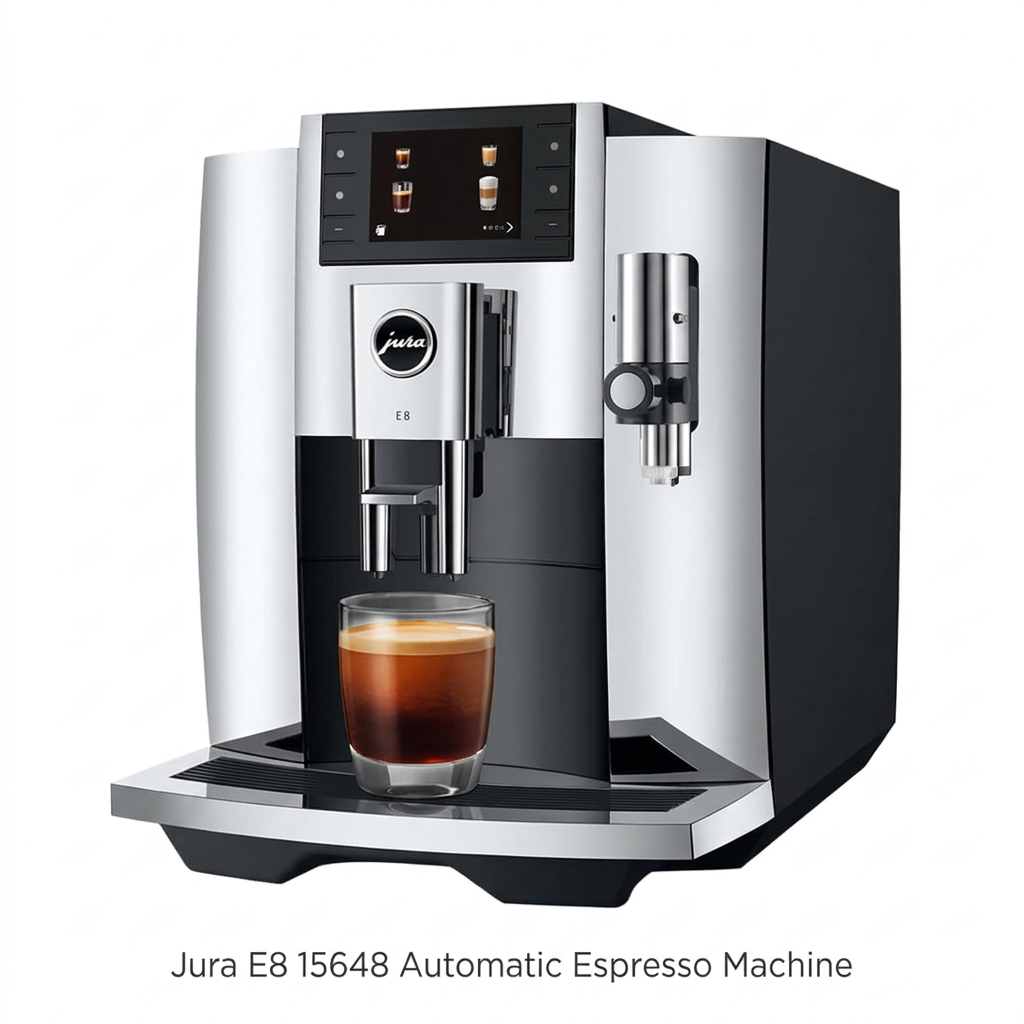
17 one-touch drinks, clear button controls, automatic filter tracking and dense, silky microfoam.
Reveal Today’s Deal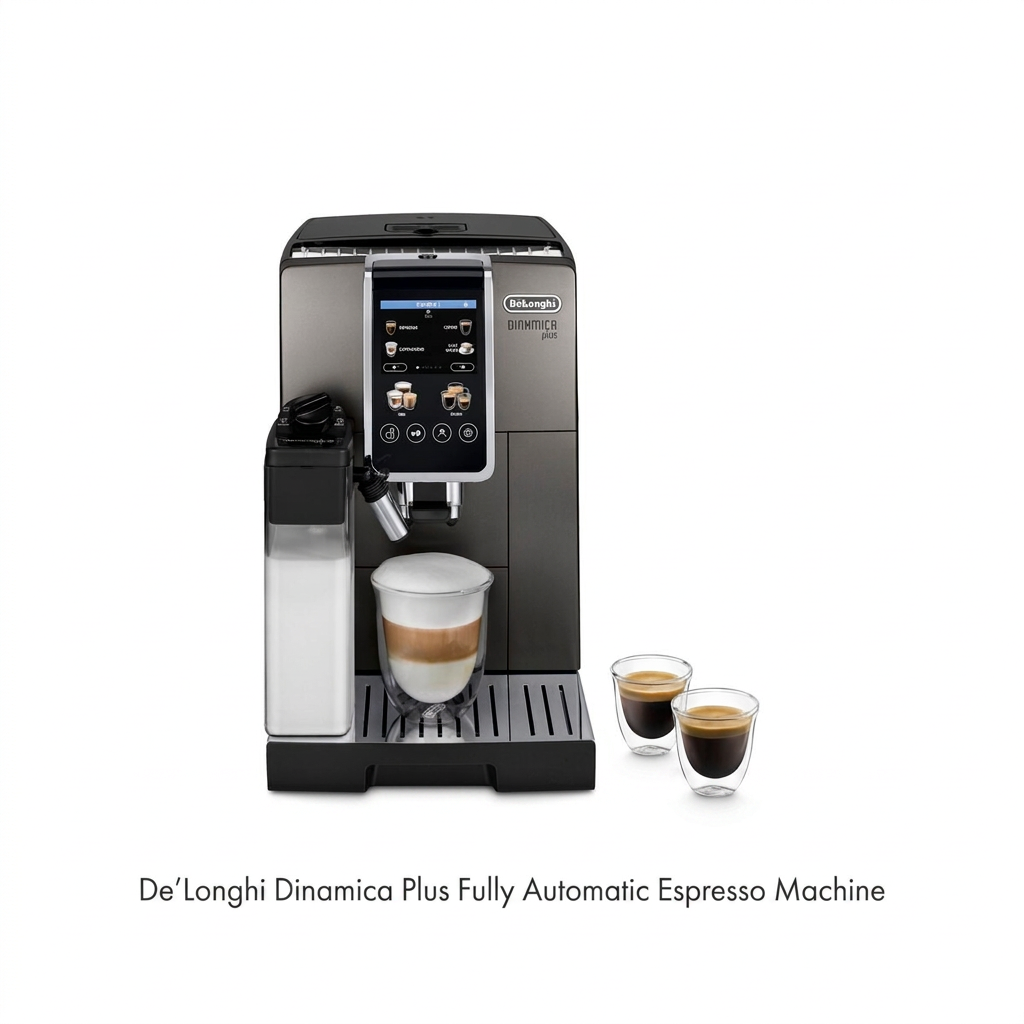
Dense, chocolatey espresso, a thermal LatteCrema carafe, three profiles and a 3.5-inch touchscreen.
See Today’s PriceJura vs Miele vs De’Longhi at a glance
- Buy the Miele if several people share the machine and milk drinks matter most.
- Buy the Jura if you want the simplest controls and automatic maintenance tracking.
- Buy the De’Longhi if you want premium-level coffee and foam for less.
- Only the Miele and De’Longhi have a brew unit you can remove and rinse.
Head to head
I compared the brands through three of their most popular models: the Jura E8, the Miele CM 6360 and the De’Longhi Dinamica Plus. The best result in each row is marked, based on my four weeks with each.
The tally is not my verdict. Some rows, like milk temperature, will matter far more to you than others.
| Spec | Jura E8 | Miele CM 6360 | Dinamica Plus |
|---|---|---|---|
| Espressomy scores | 8.0 | 8.5 | 8.8 ✓ Best |
| Milk drinksmy scores | 7.8 | 9.1 ✓ Best | 8.9 |
| Ease of usemy scores | 8.9 ✓ Best | 8.7 | 8.3 |
| Cleaningmy scores | 8.0 | 8.4 ✓ Best | 7.9 |
| Profiles | None | 8 named ✓ Best | 3 plus guest |
| Milk temperature | About 50°C | 60–65°C ✓ Best | Hot, adjustable |
| Removable brew unit | No, sealed | Yes | Yes |
| Filter tracking | Automatic ✓ Best | Prompted | Prompted |
| Cup warmer | No | Yes, heated ✓ Best | Not heated |
| Strong mug of coffee | Long coffee, hot | DoubleShot ✓ Best | Coffee, Extra Strong |
| Tea programs | Hot water | 6 programs ✓ Best | Hot water |
| Grinding noise | Fairly loud mechanism | 60–63 dB ✓ Best | Moderate |
| Width | 11 in | 9.9 in | 9.3 in ✓ Best |
| Rows won | 2 | 8 | 2 |
Jura vs Miele vs De’Longhi pros and cons
Jura E8
- Very easy controls and a clear maintenance dashboard
- Dense, silky microfoam for cappuccinos and flat whites
- Automatic filter tracking and a removable pre-ground chute
- Milk comes out at about 50°C, which feels cool
- Hot water is too cool for strong black tea
- Brew unit is sealed and the mechanism is fairly loud
Miele CM 6360
- Excellent, fine milk foam with a glass container in the box
- Eight named profiles for a whole household
- DoubleShot makes strong long coffee
- Wi-Fi and app setup take patience
- Two-tube milk line doesn’t fit its storage spot
- Factory espresso is too long for purists
De’Longhi Dinamica Plus
- Dense, syrupy espresso once volumes are shortened
- Thermal LatteCrema carafe makes rich, stable foam
- Three profiles plus guest mode on a clear touchscreen
- Bluetooth app is slow and only works nearby
- Brew unit sits behind the water tank
- Carafe needs a clean cycle and daily wash
Who should buy which machine?
Jura E8
- Families who want lots of drink choices
- People who never want to track filters
- Anyone who prefers buttons to touchscreens
- People who like very hot lattes
- Strong black tea drinkers
- Anyone who wants to rinse the brew unit
Miele CM 6360
- Households of three or more
- Cappuccino and flat white lovers
- Tea drinkers and strong-mug fans
- Anyone who fills huge travel mugs daily
- People who want the simplest setup
- Espresso purists who hate tweaking defaults
De’Longhi Dinamica Plus
- Espresso lovers who like a dense shot
- Families who want premium foam for less
- Slim counters
- People who want an app that just works
- Anyone who hates daily carafe washing
- Tea drinkers who want programs
Three brands, three philosophies
Before the machines, it helps to know what each brand optimizes for, because it shows up in every cup.
Jura is Swiss-engineered and built around simplicity. Its machines use a sealed brew unit✕Brew unitThe part that presses the ground coffee, holds it while water passes through and then ejects the used puck. that you never touch, clean themselves with tablets on a schedule and track their own filters. The trade-off is less control and, on the E8, cooler milk.
Miele is German and built like its dishwashers: solid, quiet and designed for a whole household. Its brew units come out for rinsing, its profiles are named, and its milk foam is the finest I tested.
De’Longhi is Italian and built around value and range. The Dinamica Plus packs a touchscreen, profiles and a thermal carafe into a slim body for less than the other two.
| Brand trait | Jura | Miele | De’Longhi |
|---|---|---|---|
| Built in | Engineered in Switzerland | Germany | Italy-designed |
| Brew unit | Sealed, cleaned by tablet | Removable | Removable |
| Controls | Buttons and display | Touch display | Touchscreen |
| Milk system | Hose, fine-foam spout | Hose with glass container | LatteCrema carafe |
| Profiles | None on the E8 | 8 named | 3 plus guest |
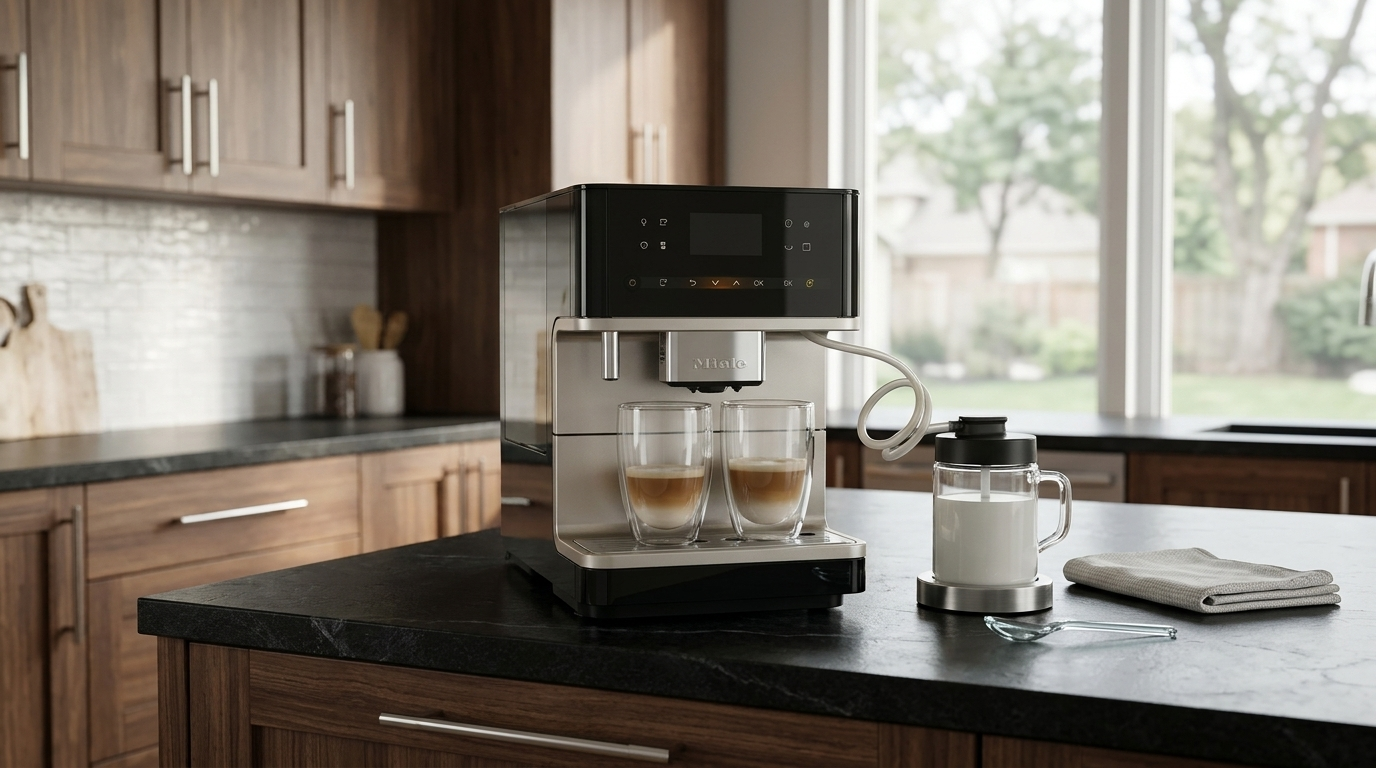
The Miele is built for busy households, with eight named profiles.
Our tip: Decide first whether you want to rinse the brew unit yourself, because that single difference splits Jura from Miele and De’Longhi.
Design, size and build
The Jura E8 is the widest at about 11 inches, with a 3.5-inch color display flanked by real buttons and a chrome-look front. A small light switches on above the cup grille whenever a drink starts.
The Miele CM 6360 is about 9.9 inches wide and about 16.8 inches deep, with a front touch display and a heated cup warmer on top. It looks quietly premium rather than flashy.
The De’Longhi Dinamica Plus is the slimmest at about 9.3 inches wide and about 17.3 inches deep, with a 3.5-inch touchscreen and a stainless thermal milk carafe.
Width on the counter
From manufacturer specs and my tape measure.
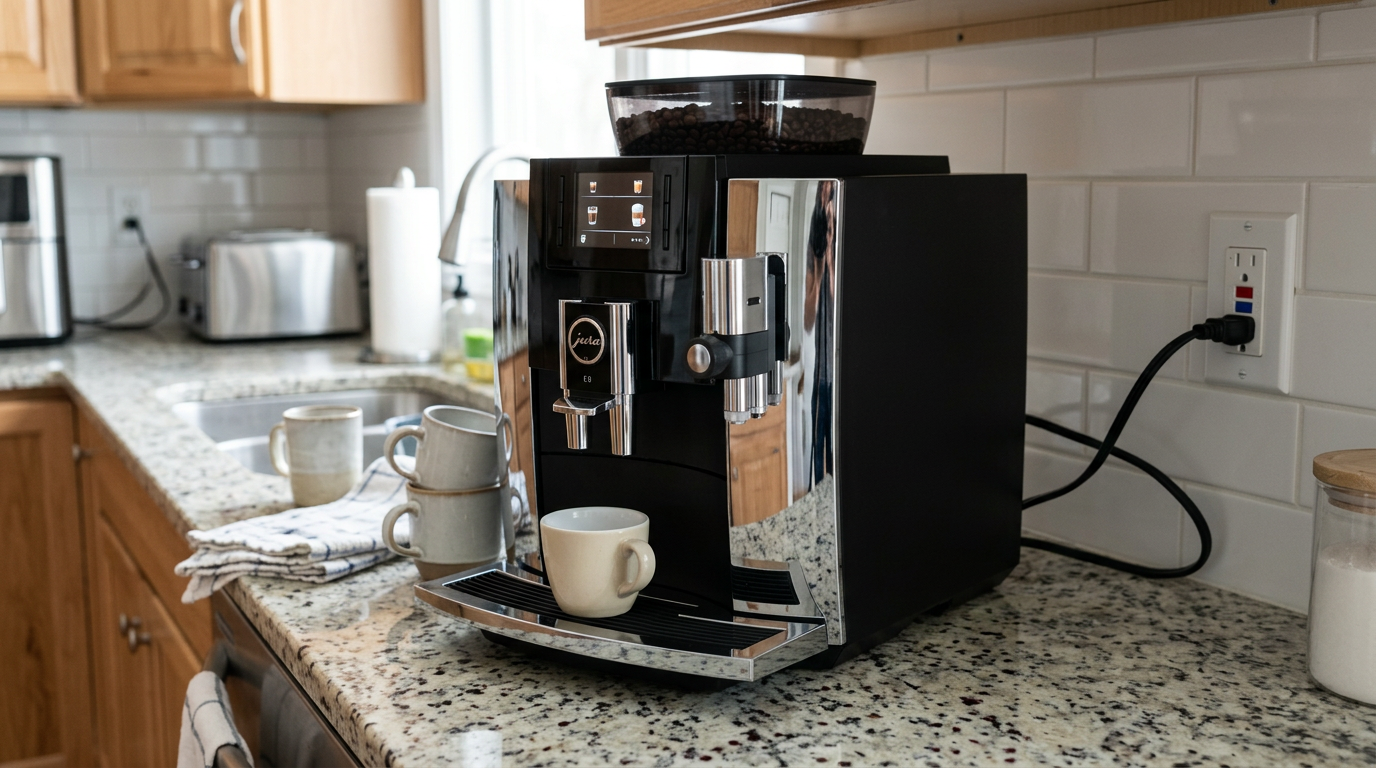
The Jura E8 is the widest of the three, with buttons around a 3.5-inch display.
Setup and the first week
All three took about 15 minutes to set up, and all three start with a water hardness test strip.
The Jura was the quickest to its first drink. I entered the hardness, fitted the filter, which it recognized automatically, and let it rinse. By day two, I had found my favorite drinks and saved my long coffee at 150 milliliters.
The Miele asked the most of me, because of its profiles and Wi-Fi. Creating eight named profiles is quick on the display, but connecting the app took patience and two attempts.
The De’Longhi was simple to start, but its defaults needed tuning. Its espresso volume is long out of the box, so I spent the first week cutting volumes and saving them to my profile.
| Setup step | Jura E8 | Miele CM 6360 | De’Longhi Dinamica Plus |
|---|---|---|---|
| Water hardness | Strip, on screen | Strip, on screen | Strip, on screen |
| Filter | Detected automatically | Fitted, prompted | Fitted, prompted |
| Profiles to set up | None | Up to 8 | 3 plus guest |
| App | Optional | Wi-Fi, fiddly | Bluetooth, slow |
| Tuning needed | Little | Shorten espresso | Shorten volumes, grind 3 |
Grinder and dose
All three use conical burrs✕Conical burrsTwo cone-shaped grinding parts, one inside the other. The gap between them sets how fine the coffee is., and all three dose by grinding for a set time based on the strength you choose.
The Jura takes between 5 and 16 grams per brew, and its grinder is fast: about five seconds for a 15-gram dose✕DoseThe weight of dry ground coffee used for one drink. A café double espresso usually uses 14 to 18 grams., which limits heat. Its finest setting still felt a touch coarse for a really heavy espresso.
The De’Longhi’s highest dose was about 15 grams, and its Doppio+ runs a longer grind for a bigger double. With 13 settings, grind 3 was my sweet spot.
The Miele’s DoubleShot sidesteps the dose limit for big drinks by grinding and brewing twice. For a single espresso, the Miele’s “more coffee” setting and a long pre-brew made the biggest difference.
Maximum dose per brew
From specs and my scale. DoubleShot grinds twice for long drinks.
Our tip: Only turn the grind dial while the grinder is running on any of these machines, because turning it with the burrs stopped can jam beans.
Espresso quality
With the same medium-dark beans, the De’Longhi surprised me by making the densest espresso. On Extra Strong with the grinder at 3 and the volume cut to about 0.7 fluid ounces, it was syrupy and chocolatey with a thick crema✕CremaThe golden, foamy layer on a fresh espresso. It forms when pressure pushes oils and gases out of the coffee..
The Miele came second once I shortened its factory espresso to about 1.2 ounces. On its highest temperature, my espresso measured about 72°C in a cup from the heated warmer and about 66°C in a cold cup.
The Jura uses its Pulse Extraction Process✕Pulse Extraction Process (P.E.P.)Jura’s method of pushing water through the coffee in short, rapid pulses instead of one steady stream, to help short drinks extract evenly.. With a 15-gram dose, my cup weighed about 29 grams, smooth with an even crema, but a touch light in body because its finest grind didn’t go quite fine enough.
My espresso ratings
My scores out of 10 for body, crema, flavor and consistency.
For big mugs, the ranking changes. The Miele’s DoubleShot✕DoubleShotMiele’s strong-coffee setting. It brews a large drink in two separate grinds and brews, so a big mug doesn’t taste thin. brews a long coffee in two grinds, and it scored 8.8 in my notes against 6.0 for its factory long coffee. The Jura’s long coffee at 150 ml and the highest temperature was hot, sweet and topped with a lasting crema.
Miele espresso and coffee by setting
My scores out of 10. The defaults matter on the Miele.
See Today’s PriceLong coffee and Americano
If you drink big mugs of black coffee, the brands handle it in different ways.
The Jura’s long coffee was one of its best drinks. Set to 150 milliliters at the highest temperature, it delivered about 140 grams, hot and sweet with a lasting crema. It was my most consistent mug of the month.
The Miele’s factory long coffee tasted thin, scoring just 6.0 in my notes. With DoubleShot, the same mug scored 8.8, full and rich. Its coffee pot function also fills a carafe with about 30 ounces for a weekend breakfast.
The De’Longhi’s Coffee on Extra Strong, set between 3.4 and 3.9 fluid ounces, made a strong short mug, and its Over Ice drink was the best iced coffee of the three.
| Black coffee | Jura E8 | Miele CM 6360 | De’Longhi Dinamica Plus |
|---|---|---|---|
| Best mug | Long coffee, 150 ml, hottest | Long coffee with DoubleShot | Coffee, Extra Strong |
| Americano | Yes | Yes | Yes |
| Large carafe | No | Coffee pot, about 30 oz | No |
| Iced coffee | By hand | By hand | Over Ice drink |
Milk drinks
This is where the three brands differ most, and where the Miele pulls ahead.
The Miele draws milk through a hose from a glass container that comes in the box. Its foam was the finest I tested, and finished drinks came out at about 60 to 65°C, hot without tasting scalded. Whole milk scored 9.3 and 2% milk 9.1 in my notes.
The De’Longhi’s thermal LatteCrema✕LatteCremaDe’Longhi’s automatic milk carafe system. It draws milk from the carafe, mixes in air and steam, and pours foam straight into your cup. carafe made rich, stable foam at all three dial settings. Whole milk scored 9.2, and its thermal walls kept the milk cold between drinks.
The Jura made dense, silky microfoam✕MicrofoamMilk foam with bubbles so small you can barely see them. It feels silky and glossy, which is what a good flat white needs., but my frothed milk measured about 50°C, or 122°F. That’s pleasant to sip straight away but cooler than most people expect.
Whole-milk foam scores
My scores out of 10; the Jura’s score reflects its cooler milk.
Milk drink temperature
Measured with a probe thermometer.
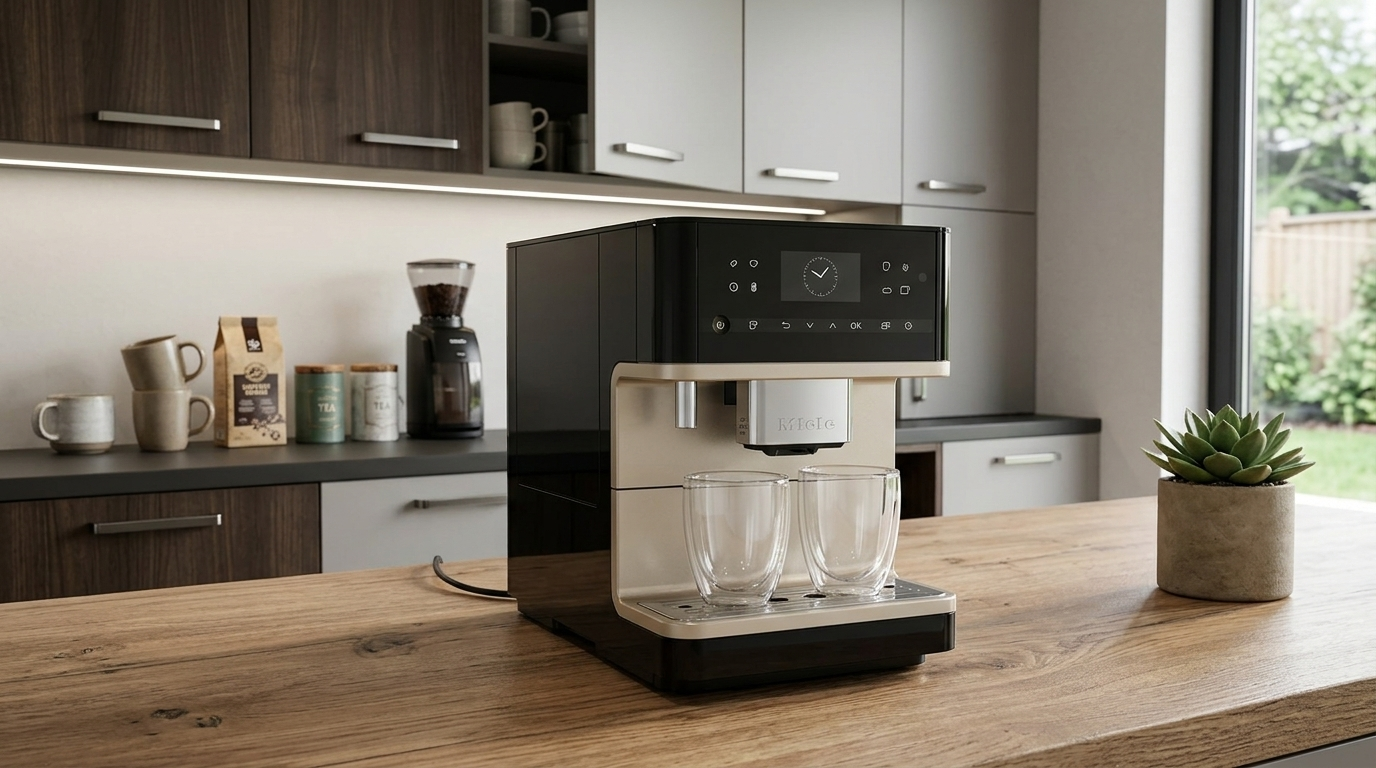
The Miele’s glass milk container comes in the box and made the finest foam of the three.
Controls, profiles and apps
The Jura E8 has no profiles, but its buttons are the clearest of the three. Each button controls the drink next to it, they work with damp fingers, and nobody in my house needed instructions. Its J.O.E. app adds remote start and maintenance countdowns.
The Miele CM 6360 has eight named profiles and greeted me by name every morning. Its app setup over Wi-Fi took patience, but once connected, it worked well.
The De’Longhi Dinamica Plus has three profiles plus guest mode on a bright 3.5-inch touchscreen. Its Bluetooth app was slow and only connected nearby.
Saved profiles
Profiles keep each person’s strength, size and temperature.
| Feature | Jura E8 | Miele CM 6360 | De’Longhi Dinamica Plus |
|---|---|---|---|
| Controls | Buttons and 3.5 in display | Touch display | 3.5 in touchscreen |
| Profiles | None | 8 named | 3 plus guest |
| App | J.O.E., remote start | Wi-Fi, fiddly setup | Bluetooth, slow |
| Change drinks on the fly | Yes | Yes | Yes |
| Coffee pot function | No | Yes, about 30 oz | No |
Our tip: Name each Miele profile after the person, not the drink, because people change drinks but rarely change their strength and temperature.
Hot water and tea
If anyone in your house drinks tea, the Miele is the clear winner. It has six tea programs: black, fruit, herbal, green, white and Japanese, each at its own temperature and with a timer.
The Jura’s hot water at its highest setting measured about 80 to 85°C. That’s fine for green and white tea, but too cool for strong black tea. The De’Longhi’s hot water was hot enough for black tea and Americanos.
| Tea type | Ideal water | Jura E8 | Miele CM 6360 | De’Longhi |
|---|---|---|---|---|
| Green tea | 70–80°C | Yes | Yes, program | Yes |
| White tea | 75–85°C | Yes | Yes, program | Yes |
| Herbal tea | 90–100°C | Fair | Yes, program | Good |
| Black tea | 95–100°C | A bit cool | Yes, hottest program | Good |
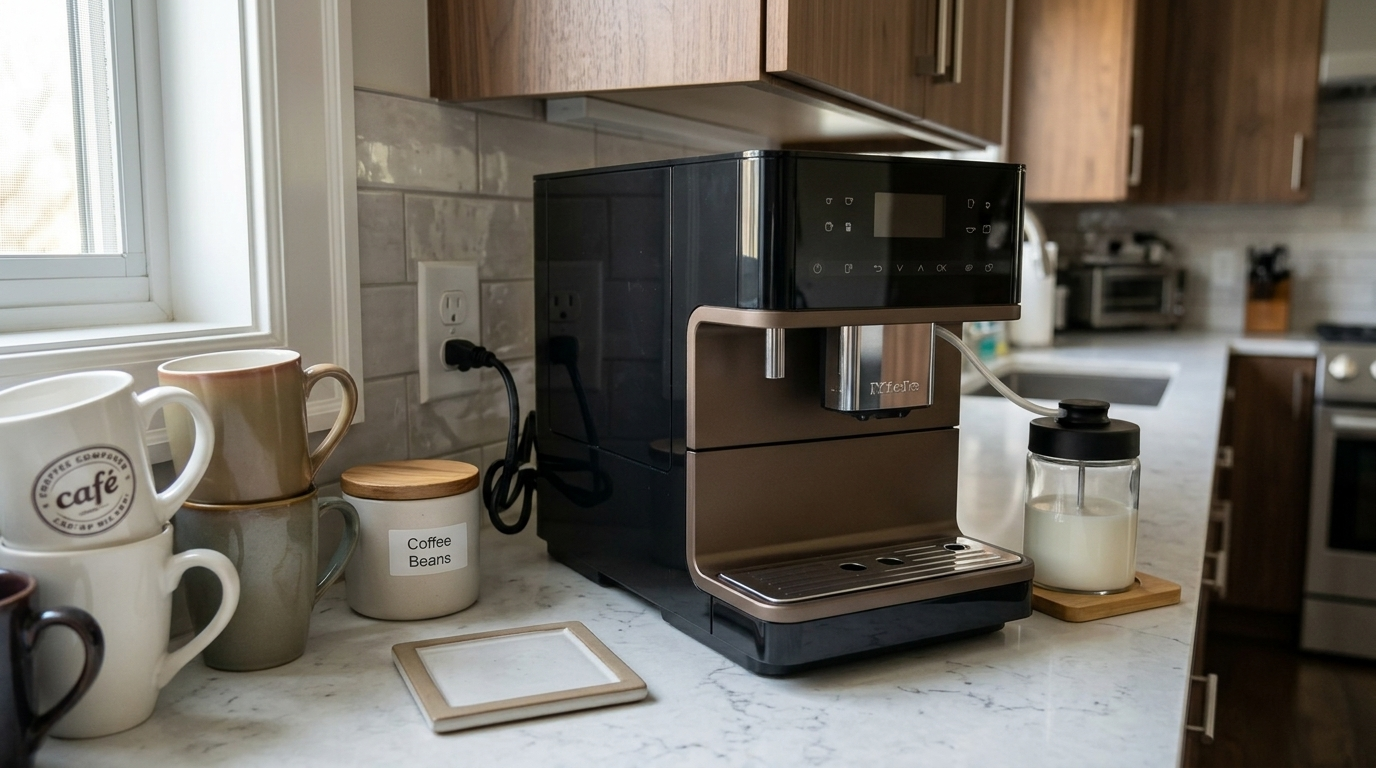
The Miele’s six tea programs make it a real tea station.
Cleaning and upkeep
The Jura asks the least of you day to day. It tracks its CLEARYL Smart+✕CLEARYL Smart+ filterJura’s water filter cartridge. The E8 recognizes it automatically and tracks how much water has passed through it. filter automatically, shows every task on a dashboard and cleans its sealed brew unit with a tablet when prompted. You can’t rinse the brew unit by hand, which some owners dislike.
The Miele’s brew unit slides out for rinsing, and its milk line runs automatic rinses. My only frustration was its new two-tube milk line, which didn’t fit neatly into its storage spot.
The De’Longhi needs the most daily attention. Its carafe runs a 15-second clean cycle after milk drinks and needs a daily wash, and its brew unit sits behind the water tank.
Cleaning scores
My scores out of 10 from my single reviews.
| When | Jura E8 | Miele CM 6360 | De’Longhi Dinamica Plus |
|---|---|---|---|
| After milk | Rinse frother parts | Automatic rinse | 15-second clean cycle |
| Daily | Empty tray and grounds | Empty tray and grounds | Wash carafe parts |
| Weekly | Wash pre-ground chute | Rinse brew unit | Rinse brew unit |
| When prompted | Tablet clean, filter | Clean, descaling✕DescalingRunning a mild acid through the machine to dissolve the mineral scale that hard water leaves in the heater and pipes. | Descale |
Our tip: Leave milk parts to dry on a clean towel overnight on any of these machines, because damp parts are where milk residue builds up.
Noise and speed
The Miele was the quietest. I measured about 60 to 63 dB while grinding and about 55 dB while brewing, close to the level of a normal conversation.
The Jura’s grinder is quick, taking about five seconds for a 15-gram dose, but the gears that move its brew unit are fairly loud. You hear a mechanical clunk during preparation and again when the puck is ejected.
The De’Longhi sat in between. Its start-up rinse of about 30 seconds was the main delay on a cold morning.
How loud each felt, my ranking
Relative loudness from my side-by-side use. Shorter bars are quieter.
For speed, the Jura was fastest to a black coffee and the Miele fastest to two milk drinks in a row, thanks to its automatic rinses. The De’Longhi needed its carafe clean between sessions.
In an open-plan home, those differences add up. The Miele never woke anyone in my house, even at 6 a.m. The Jura’s clunk was noticeable from the next room, and the De’Longhi’s grinder was audible but short.
None of the three is loud enough to be a real problem in a closed kitchen, but if you share a small apartment with a light sleeper, the Miele is the safe choice.
Water, beans and supplies
Here is roughly how far a full tank went on each machine in my testing.
Drinks per full tank
Rough maths allowing for rinse water. The Miele’s automatic milk rinses use more water.
All three worked best with fresh medium and medium-dark beans. Medium-dark blends especially suited the Jura’s grinder, which runs lighter roasts a little fast.
The Miele’s 300-gram hopper lasted me about five days, and its single coffee tops out at around 8 ounces per run, so huge travel mugs need DoubleShot or two runs.
| Bean type | Jura E8 | Miele CM 6360 | De’Longhi |
|---|---|---|---|
| Medium-dark blend | Best espresso | Excellent | Excellent, setting 3 |
| Light roast | Runs fast, bright | Needs finer grind | Bright, finer grind |
| Very dark, oily | Avoid | Avoid | Avoid |
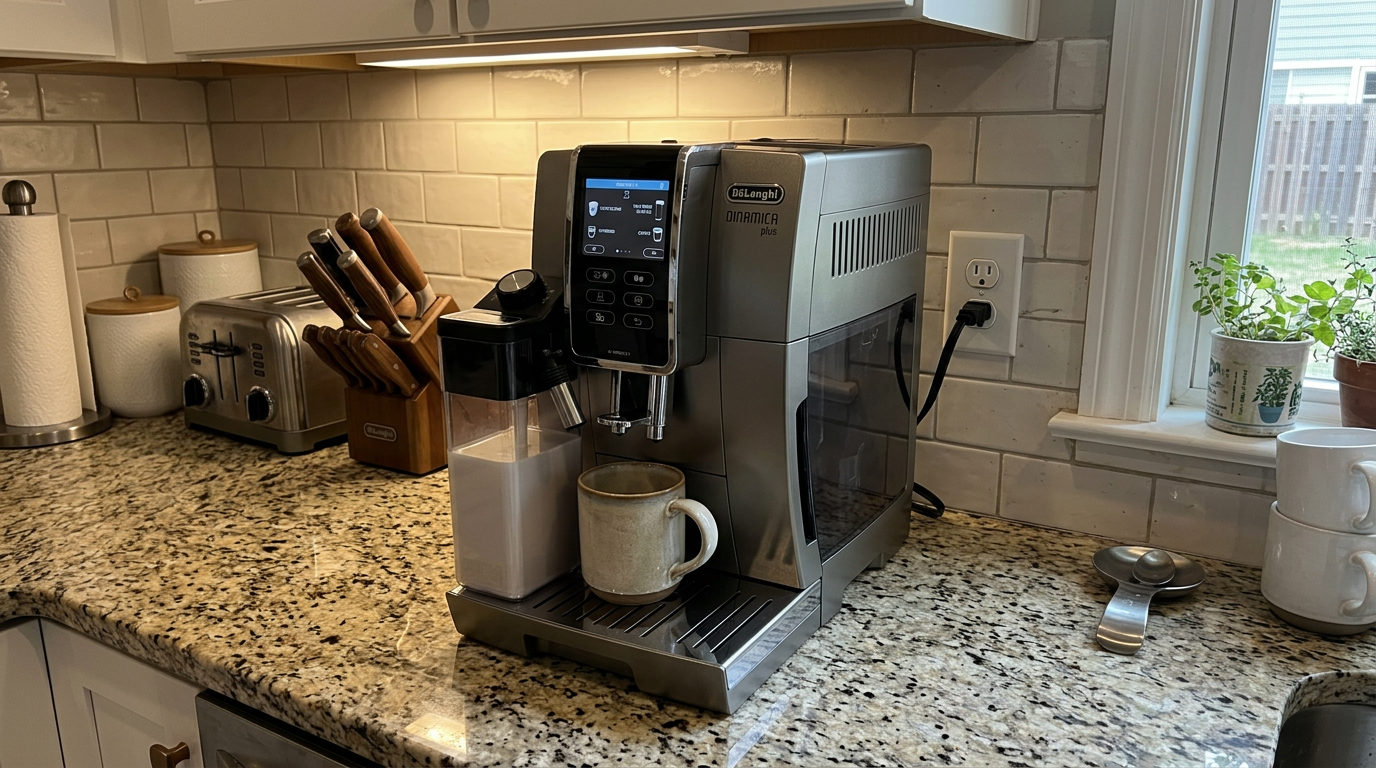
The De’Longhi worked best with medium-dark blends at grind setting 3.
Four weeks with each, week by week
These were my notes as each machine became part of the routine.
| Week | Jura E8 | Miele CM 6360 | De’Longhi Dinamica Plus |
|---|---|---|---|
| Week 1 | Found favorites by day two | Profiles and app setup | Tuning volumes and grind |
| Week 2 | Long coffee every morning | Glass container in the fridge | Espresso dialed in |
| Week 3 | Pre-warming cups for milk | Green tea program daily | Thermal carafe for guests |
| Week 4 | Most-used, nobody needed help | Invisible in the best way | Best espresso of the month |
By week four, the Jura had become the most-used machine in the house, mostly because no one needed help with it. The cool milk was the one thing everyone mentioned.
The Miele became invisible in the best way. It greeted each of us by name, warmed our cups and made each person’s drink exactly as saved.
The De’Longhi rewarded my tuning in week one with the best espresso of the three, and its thermal carafe made it the best host for guests.
Our tip: Shorten the factory espresso on the Miele and De’Longhi to about 1 to 1.5 ounces, because both default shots are too long for a rich espresso.
Three households, three picks
After a month with each, I could picture exactly who each brand is for.
The busy family of four: Miele
Four people, four different drinks before 8 a.m., a teenager who drinks green tea and a parent who wants a strong travel mug. The Miele’s named profiles, tea programs and DoubleShot cover every one of them.
It’s also the machine I’d recommend if one person in the house is particular about hot milk.
The household that just wants it to work: Jura
People who want to press a button, get a good drink and never read a manual. The Jura’s buttons, cup light and automatic filter tracking make it the most hands-off machine here.
It suits black coffee and long coffee drinkers best, and milk drinkers who don’t mind warming their cups.
The espresso lover on a budget: De’Longhi
One or two people who care most about the shot itself and enjoy tuning settings once. The De’Longhi rewards a little effort with the best espresso of the three and foam that rivals the Miele.
It asks for more daily carafe care, which is the trade for its lower price.
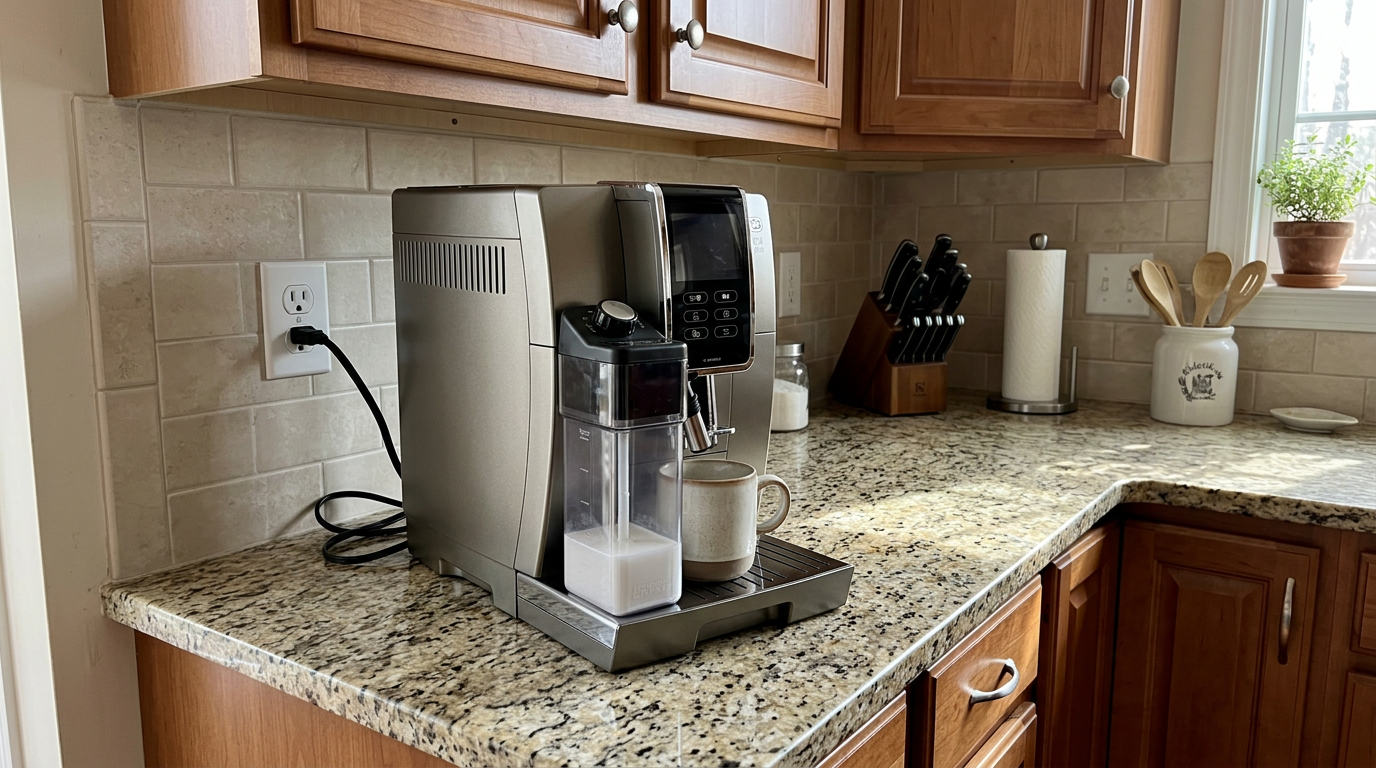
For espresso lovers, the De’Longhi delivered the most coffee flavor of the three.
Common mistakes to avoid
Most of the disappointing drinks I made across the three brands came from the same few habits.
| Mistake | What happens | Fix |
|---|---|---|
| Keeping factory espresso volumes | Thin, long shot | Shorten to about 1 to 1.5 oz |
| Cold cups on the Jura | Lukewarm milk drinks | Pre-warm the cup |
| Long coffee without DoubleShot on the Miele | Thin mug | Use DoubleShot above about 6 oz |
| Skipping the De’Longhi carafe clean | Foam gets worse over days | Run the 15-second clean |
| Using oily beans | Clogged grinder and chute | Choose medium-dark, not oily |
The biggest flavor gains came from the first fix. On the Miele and De’Longhi especially, a shorter espresso transformed the drink.
What I’d change on each one
On the Jura E8, I’d raise the milk temperature. At about 50°C, it’s the one thing every person in my house mentioned, and a few more degrees would fix its biggest weakness.
On the Miele CM 6360, I’d fix the milk-tube storage and simplify the Wi-Fi setup. Both are small annoyances on an otherwise excellent machine.
On the De’Longhi Dinamica Plus, I’d replace the Bluetooth app and move the brew unit forward. Reaching it behind the water tank turned a simple rinse into a small chore.
Our tip: Store the milk container or carafe in the fridge between drinks on all three, because cold milk foams better and stays fresh longer.
Real-life scenarios
These are the moments where one machine clearly pulled ahead in my kitchen.
Eight named profiles meant everyone’s drink was one tap away.
The shortened Extra Strong shot was dense, syrupy and chocolatey.
Clear buttons and a cup light made it obvious.
DoubleShot made a long coffee that didn’t taste thin.
A dedicated program at the right temperature.
Automatic filter tracking and a dashboard that shows every task.
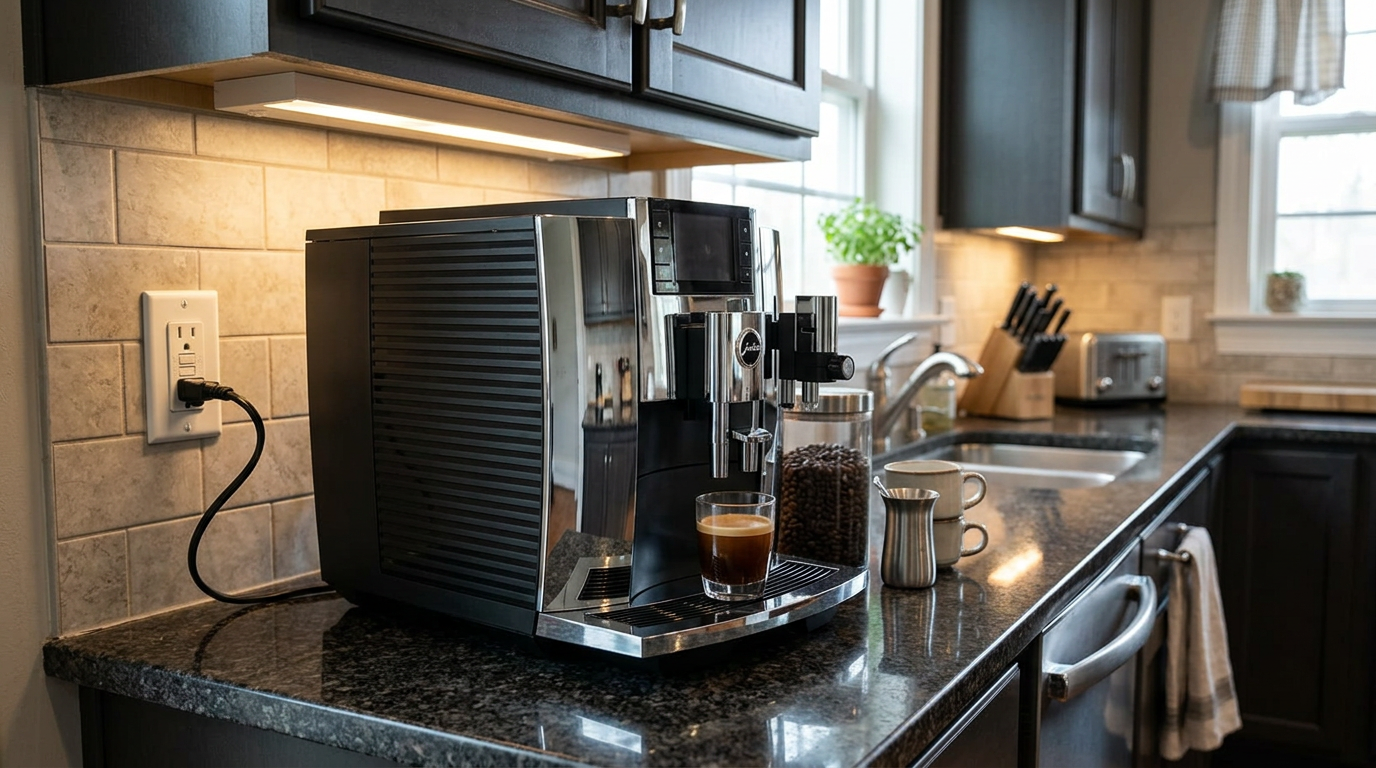
The Jura was the machine nobody in my house needed help with.
My scorecard
These are my scores out of 10 from my single reviews of each machine.
Jura E8
Overall: 8.1
Miele CM 6360
Overall: 8.7
De’Longhi Dinamica Plus
Overall: 8.6
The Miele wins overall by being very good at everything. The De’Longhi comes remarkably close for less, and the Jura trades some milk heat for the simplest ownership.
See How Much You’ll SaveWhich one is right for you?
4 quick questionsWhich one should you buy?
Start with the number of people. For three or more, the Miele’s eight profiles make it the easiest to share. For guests and mixed tastes, the Jura’s buttons are the simplest. For one or two coffee lovers who want the best shot for less, the De’Longhi wins. For the wider picture beyond this matchup, see my guide to cheaper Jura alternatives.
Then think about milk temperature. If you like hot lattes, the Jura E8 will disappoint you unless you pre-warm cups. The Miele and De’Longhi both serve properly hot milk drinks.
For a two-brand look, see my Jura vs Miele comparison, and for the full Jura range, my top five Jura picks.
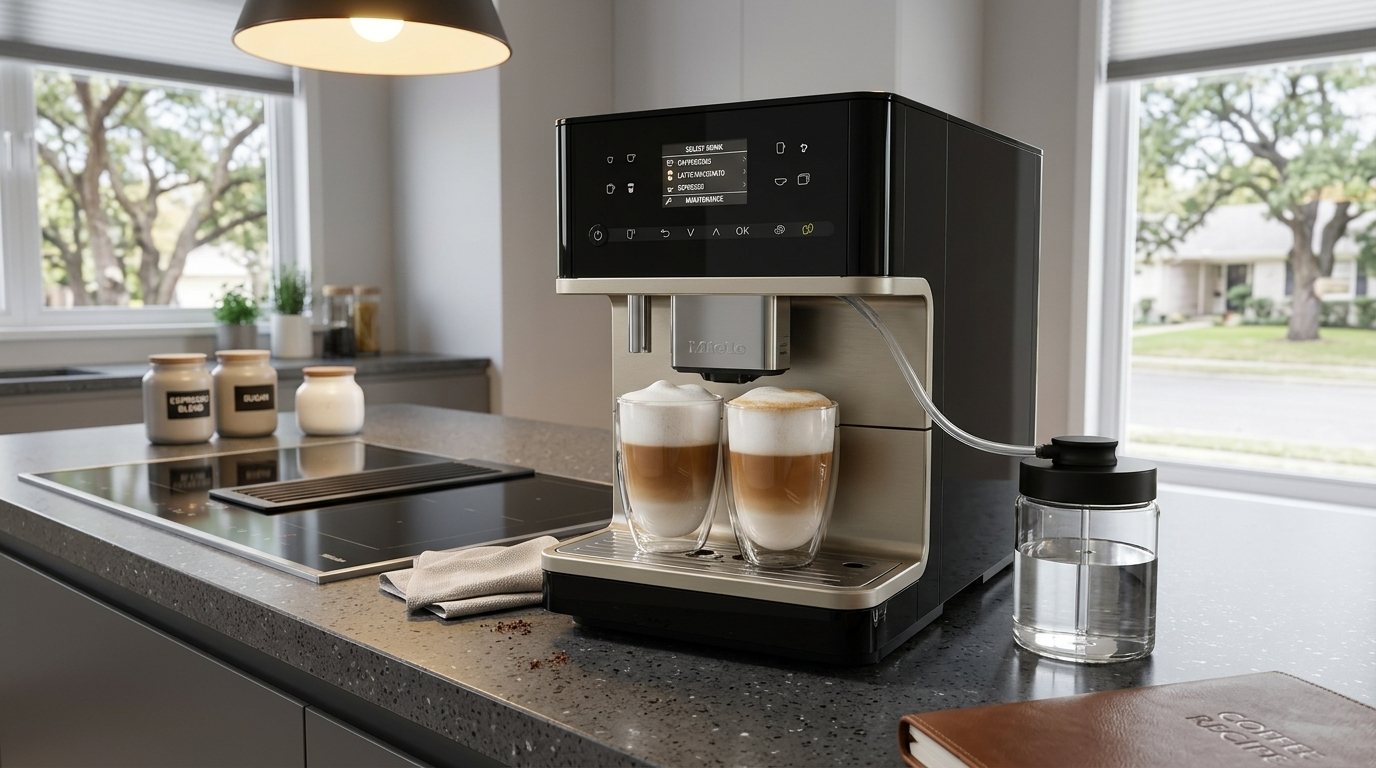
For busy households, the Miele earns its place on the counter.
- Three or more people share it
- Milk drinks and tea are daily habits
- You want hot milk and warm cups
- You fill huge travel mugs daily
- You want the simplest setup
- You won’t adjust factory settings
- You want simple buttons for everyone
- You never want to track filters
- You drink long coffee every morning
- You like very hot lattes
- You drink strong black tea
- You want to rinse the brew unit
- You want the densest espresso
- You want rich foam for less
- You have a slim gap on the counter
- You want a reliable app
- You hate daily carafe cleaning
- You need tea programs
For most premium buyers, my pick is the Miele CM 6360. It made the finest foam, serves properly hot milk drinks, keeps eight named profiles and handles tea better than any machine I’ve tested.
Choose the Jura E8 if simplicity matters most: clear buttons, 17 drinks and automatic filter tracking. Just warm your cups. Choose the De’Longhi Dinamica Plus if you want premium-level espresso and foam for noticeably less.
Whichever brand you choose, shorten the default espresso, use cold milk and keep up with the milk cleaning.
Jura vs Miele vs De’Longhi specifications
From manufacturer specifications and my own testing.
| Jura E8 | Miele CM 6360 | De’Longhi Dinamica Plus | |
|---|---|---|---|
| Type | Fully automatic | Fully automatic | Fully automatic |
| One-touch drinks | 17 | Large menu plus tea programs | Large hot menu plus Over Ice |
| Pump | 15 bar | 15 bar class | 19 bar |
| Grinder | Conical, 5–16 g dose | Conical, about 300 g hopper | Steel conical, 13 settings |
| Milk system | Hose, fine-foam spout | Hose, glass container | Thermal LatteCrema carafe |
| Frothed milk | About 50°C | 60–65°C finished drinks | Hot, adjustable |
| Profiles | None | 8 named | 3 plus guest |
| Brew unit | Sealed | Removable | Removable |
| Cup warmer | No | Heated | No |
| App | J.O.E. | Wi-Fi app | Bluetooth app |
| Water tank | About 64 oz | Large | About 60 oz |
| Size (W x D x H) | 11 x 17.6 x 13.8 in | 9.9 x 16.8 x 14.1 in | 9.3 x 17.3 x 14.2 in |
How I tested and compared them
I used each machine as my everyday coffee maker for four weeks, making espresso, long coffee, Americanos, cappuccinos, flat whites and latte macchiatos, plus tea on all three.
I weighed doses and shots, measured espresso, milk and water temperatures with a probe thermometer and noise with a phone meter at about 50 cm, and foamed whole, 2%, skim and barista oat milk.
I ran every rinse, cleaning and descaling program, then compared my notes with Jura, Miele and De’Longhi specifications, owner documentation and published test data.
- Coffee: dose, crema, body and consistency.
- Milk: foam texture, temperature and drink range.
- Workflow: controls, profiles, apps and tea.
- Ownership: cleaning, noise, capacity and footprint.
Jura vs Miele vs De’Longhi FAQ
Which is better, Jura, Miele or De’Longhi?
In my testing, the Miele CM 6360 was the best all-rounder, with the finest foam, hot milk drinks and eight profiles. The Jura E8 was the easiest to use, and the De’Longhi Dinamica Plus made the densest espresso for less.
Which makes the best espresso?
The De’Longhi Dinamica Plus, with its volume cut to about 0.7 to 1 ounce on Extra Strong. The Miele was close once shortened.
Why is the milk cooler on the Jura?
The Jura E8 froths milk to about 50°C, or 122°F. Pre-warming the cup with hot water makes a noticeable difference.
Can you remove the brew unit?
On the Miele and De’Longhi, yes. The Jura’s brew unit is sealed and cleaned with tablets when the machine asks.
Which is best for tea?
The Miele, with six tea programs. The Jura’s hot water tops out around 80 to 85°C.
Which has the most profiles?
The Miele CM 6360, with eight named profiles. The De’Longhi has three plus guest, and the Jura E8 has none.
Which is quietest?
The Miele, at about 60 to 63 dB while grinding and 55 dB while brewing.
Which is easiest to clean?
The Miele scored highest for cleaning in my testing, thanks to automatic milk rinses and a removable brew unit. The Jura tracks its maintenance automatically.
Which is the best value?
The De’Longhi Dinamica Plus, which matched the premium machines for espresso and foam.
Which fits a narrow counter?
The De’Longhi, at about 9.3 inches wide. The Jura E8 is the widest at about 11 inches.

- Our hands-on Jura E8 review
- Our hands-on Miele CM 6360 review
- Our hands-on De’Longhi Dinamica Plus review
- Jura, Miele and De’Longhi product specifications and owner documentation
- General espresso brewing and maintenance guidance