Jura C3 vs E4: entry Jura machines compared
These are two of the most affordable ways into a Jura, and both are black coffee machines with no milk system. They are easy to confuse in listings, but they are not the same. The Jura C3 is compact, with a full-size 16-gram brew unit, three temperature levels and outstanding espresso. The Jura E4 is full-size, with a bigger 64-ounce tank, a 10-ounce hopper and a separate hot water spout for true americanos and tea. I lived with both to help you pick the right entry-level Jura.
We choose products independently. We may earn a commission through links on this page; your price stays the same. Affiliate policy
Jargon helpNew to espresso? Tap any dotted term to see what it means.
In this comparison
For most black coffee drinkers, my pick is the Jura E4. Its separate hot water spout gives you true americanos and tea, and its bigger tank and hopper mean fewer refills. Buy the Jura C3 if you drink mostly espresso and want the smaller machine: it pulled the best espresso I have tasted from an entry Jura and fits kitchens the E4 will not.
The two machines
Specs checked November 12, 2026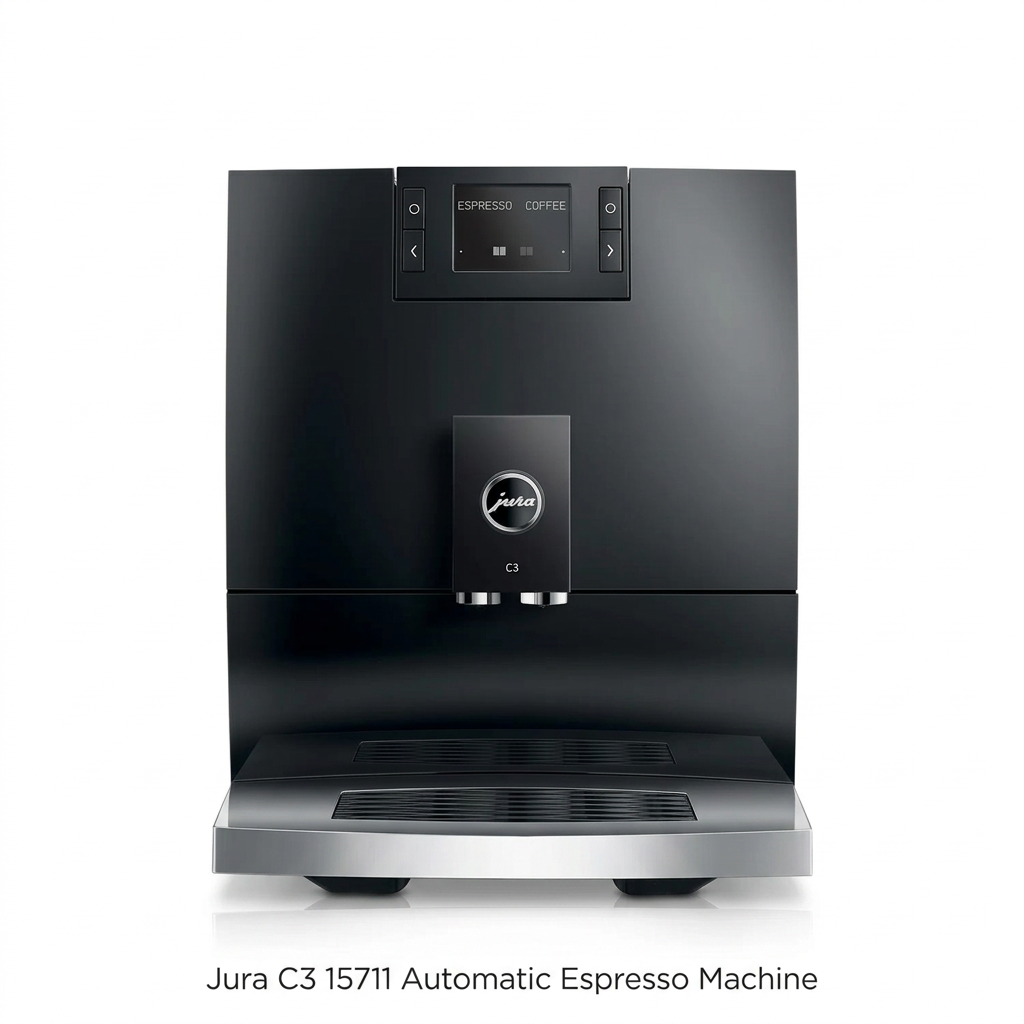
A full-size 16 g brew unit, rich espresso with thick, long-lasting crema, three temperature levels and simple buttons, in a compact body.
Check price on Amazon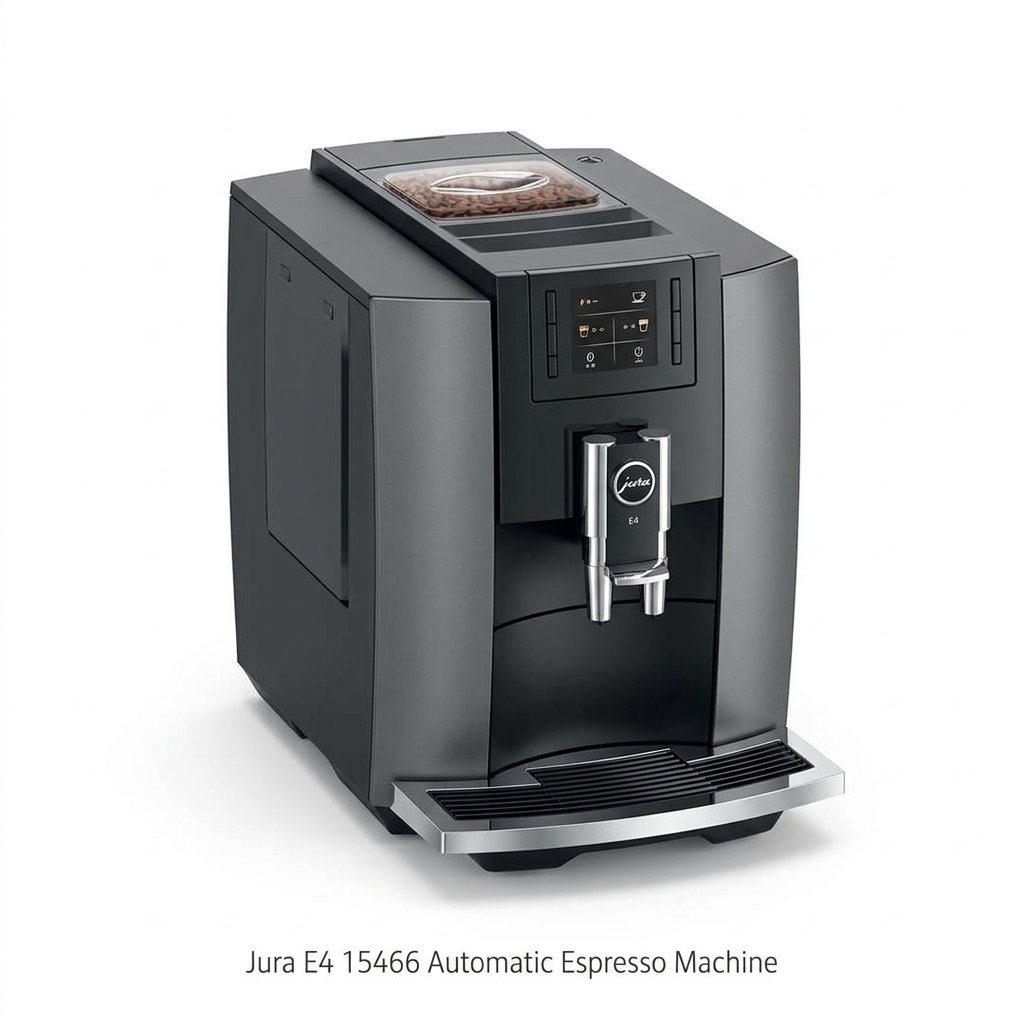
A full-size 16 g brew unit, thick-crema espresso, a separate hot water spout for americanos and tea and a 64 oz tank, with almost no cleaning.
Reveal Today’s DealC3 vs E4 at a glance
- Buy the E4 if you want true americanos, tea water and fewer refills.
- Buy the C3 if you mostly drink espresso and want the smaller machine.
- Both take a full 16 g dose and neither has a milk system.
- The C3 adds three temperature levels; the E4 adds a hot water spout.
Head to head
The better result in each row is marked, based on my testing and the manufacturer specs. Rows where the two machines are level have no winner.
Keep in mind that the tally is not my verdict. Some rows matter far more than others, and which ones matter depends on what you drink.
| Spec | Jura C3 | Jura E4 |
|---|---|---|
| Espressomy tasting, same beans | Rich, thick, long-lasting crema ✓ Best | Thick, sweet crema |
| Long coffee | Softer than a drip mug | Softer, one pass |
| Hot water | None | Separate spout, manual switch ✓ Best |
| Americano | Kettle needed | Espresso plus hot water ✓ Best |
| Temperature levels | Three ✓ Best | Programmed |
| Dose | 5–16 g | 5–16 g |
| Water tank | 54 oz | 64 oz ✓ Best |
| Bean hopper | 7 oz | 10 oz ✓ Best |
| Grounds bin | About 16 pucks | About 16 pucks |
| Footprint (W x H) | 10.2 x 12.8 in ✓ Best | 11 x 13.8 in |
| Weight | About 19.4 lb ✓ Best | About 22 lb |
| App | Optional module ✓ Best | No |
| Rows won | 5 | 4 |
C3 vs E4 pros and cons
Jura C3
- Rich espresso with thick, long-lasting crema
- Full-size brew unit doses up to 16 grams
- Simple buttons and very little daily cleaning
- No milk frothing of any kind
- No hot water for tea or a true americano
- Long coffee is softer than a drip-style mug
Jura E4
- Rich espresso with a thick, stable crema
- Separate hot water spout for true americanos and tea
- Simple buttons and very little daily cleaning
- No milk frothing at all
- Hot water needs a manual twist of a switch
- No display, so settings live in your memory
Who should buy which machine?
- Espresso lovers who drink their coffee black
- Small kitchens that still want a full-size brew unit
- Anyone tired of cleaning
- Americano and long coffee drinkers
- Homes with a tea drinker
- Households that want fewer refills
Design, size and build
The Jura C3 is the more compact machine: about 10.2 inches wide, 12.8 inches tall and 17.2 inches deep, at about 19.4 lb.
The Jura E4 is a classic full-size Jura: about 11 inches wide, 13.8 inches tall and 17.6 inches deep, at about 22 lb, with a separate hot water spout to one side.
Under my lowest wall cabinet, the C3 slid in with room to lift the hopper lid. The E4 needed a short pull forward.
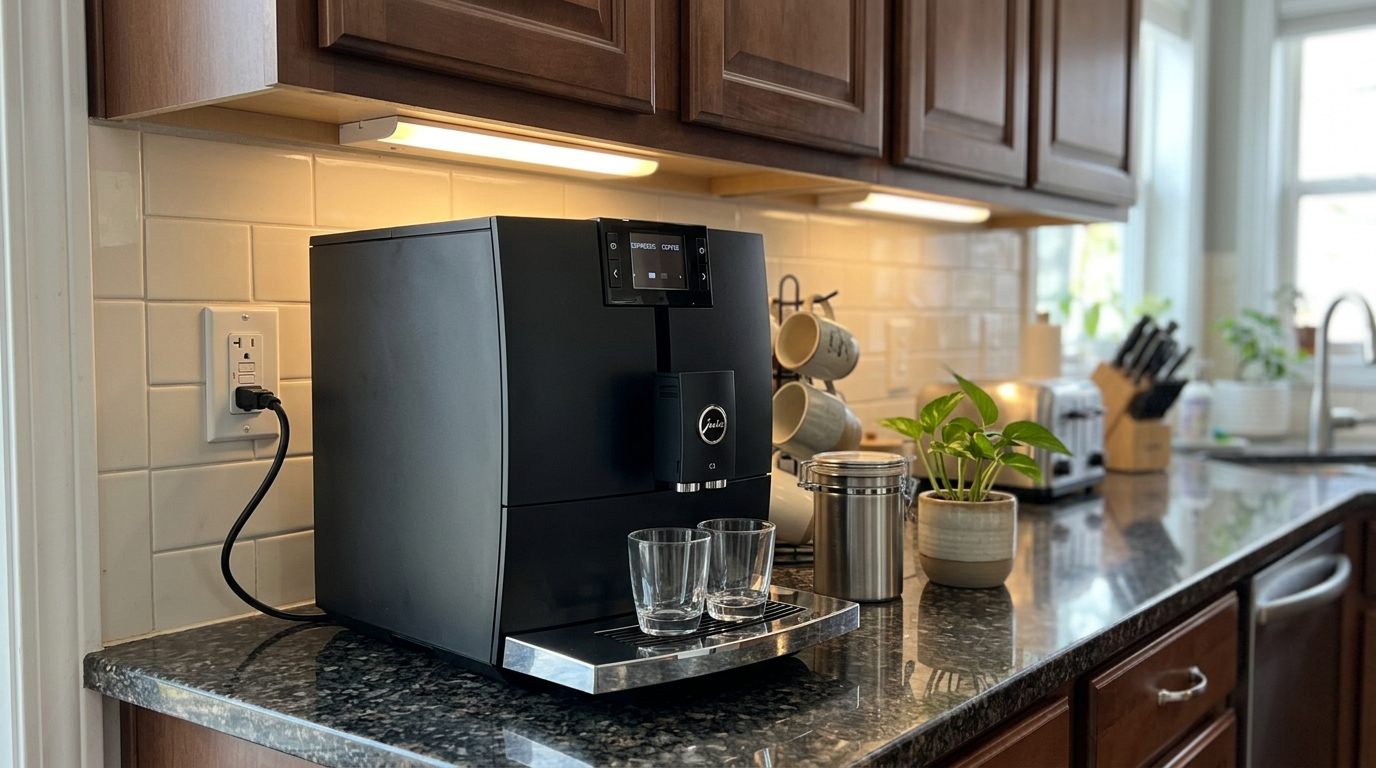
The C3 is narrower and lower than the E4, with the same full-size brew unit inside.
Height on the counter. Lower is easier under wall cabinets.
Both housings feel solid and wipe clean easily. Neither has a screen, so both look simple and uncluttered.
Both tanks sit on the side, so both need a few inches of free space to lift them out.
Our tip: Measure the gap under your wall cabinets, because the C3 fits about an inch lower than the E4.
In a narrow gap between a kettle and a wall, the C3’s slimmer body made a real difference. The E4 needed the kettle moved.
In a dark kitchen, the E4’s lit icons are easy to find. The C3’s buttons are simple and clearly labeled too.
Buttons and settings
Neither machine has a display, and that is part of the appeal.
The Jura C3 uses simple buttons for espresso, coffee and their doubles, with three temperature levels you can set. The Jura E4 uses lit icons for the same drinks, plus a twist switch for hot water.
On both, strength and volume are programmed by holding buttons, and then the machine repeats the drink perfectly every time.
The C3 can connect to Jura’s app with an optional connectivity module. The E4 has no app.
For one person with one routine, both are perfect. For a household, settings living in your memory can cause the odd mix-up.
| Feature | Jura C3 | Jura E4 |
|---|---|---|
| Display | None, buttons | None, lit icons |
| Temperature levels | Three | Programmed |
| Hot water control | None | Twist switch |
| App | Optional module | No |
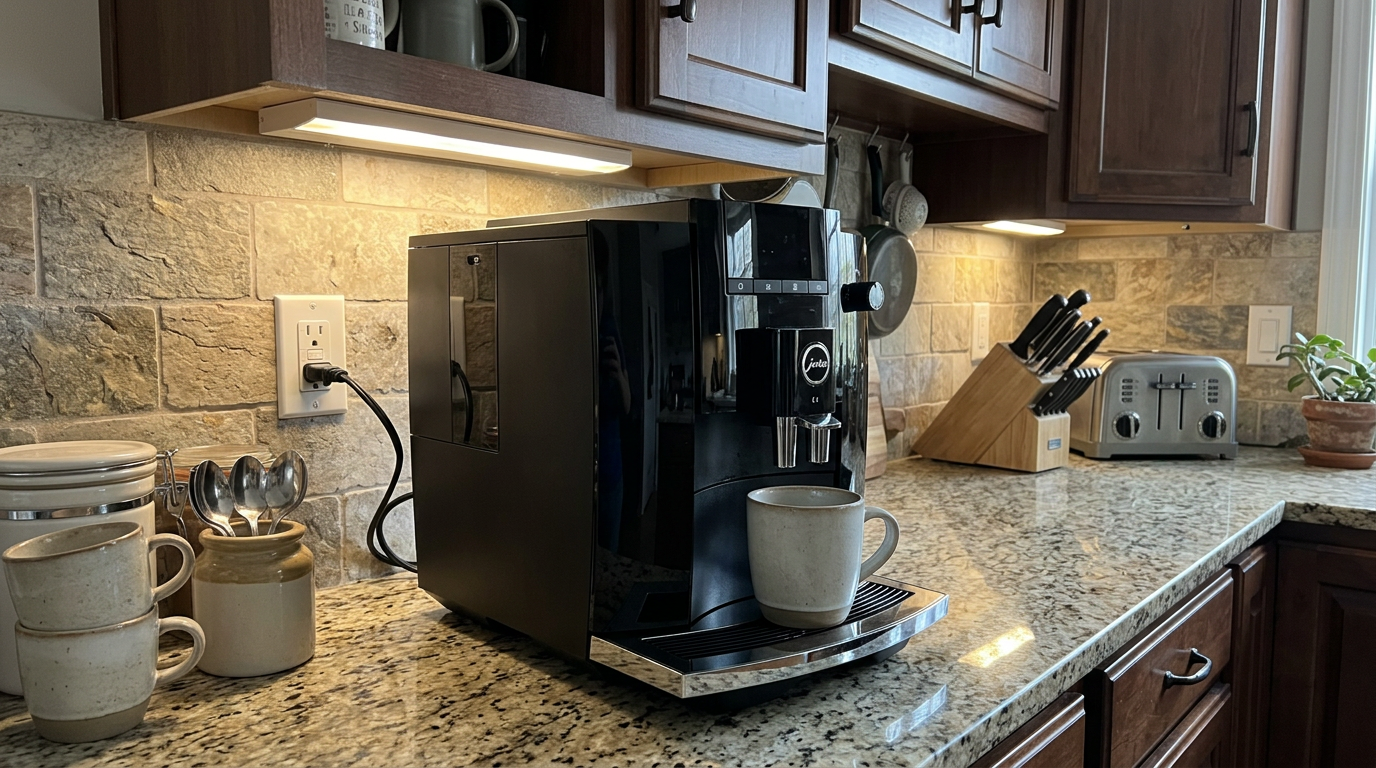
The E4’s lit icons and hot water spout keep its front simple and practical.
Our tip: Write your programmed volumes on a sticky note inside a cupboard door, so nobody has to remember them.
Both show lit symbols when the filter needs changing or the machine wants a cleaning cycle, so nothing ever catches you by surprise.
Guests found both easy once shown, though the E4’s front icons are a little more obvious than the C3’s buttons.
Water tank and hopper
The E4 holds more. Its tank holds about 64 ounces and its hopper about 10 ounces. The C3’s tank holds about 54 ounces and its hopper about 7 ounces.
In a two-person home, the C3 needed water every couple of days and beans a little more often. The E4 went a day or so longer between refills.
Both grounds bins hold about 16 pucks, so emptying them came around at the same pace.
Manufacturer figures, rounded.
| Drinks per full tank, rough maths | Jura C3 | Jura E4 |
|---|---|---|
| Espressos | About 34 | About 40 |
| Long coffees | About 11 | About 13 |
| Americanos | Not possible | About 15 |
Our tip: Refill the C3’s tank every couple of evenings, so its smaller capacity never catches you out in the morning.
A practical tip if you choose the C3: keep a jug of filtered water beside it, so refills take seconds.
Grinder, dose and noise
Both use Jura’s Professional Aroma Grinder with steel conical burrs, and both grind quickly, which limits heat and keeps the aromas intact.
Both take a full 5 to 16 grams per brew. That is the single most important thing these two share, because it means both make doubles and big mugs in one pass, with real body.
In the cup, the C3’s espresso felt slightly more intense. I put that down to its temperature control and tuning rather than a different grinder.
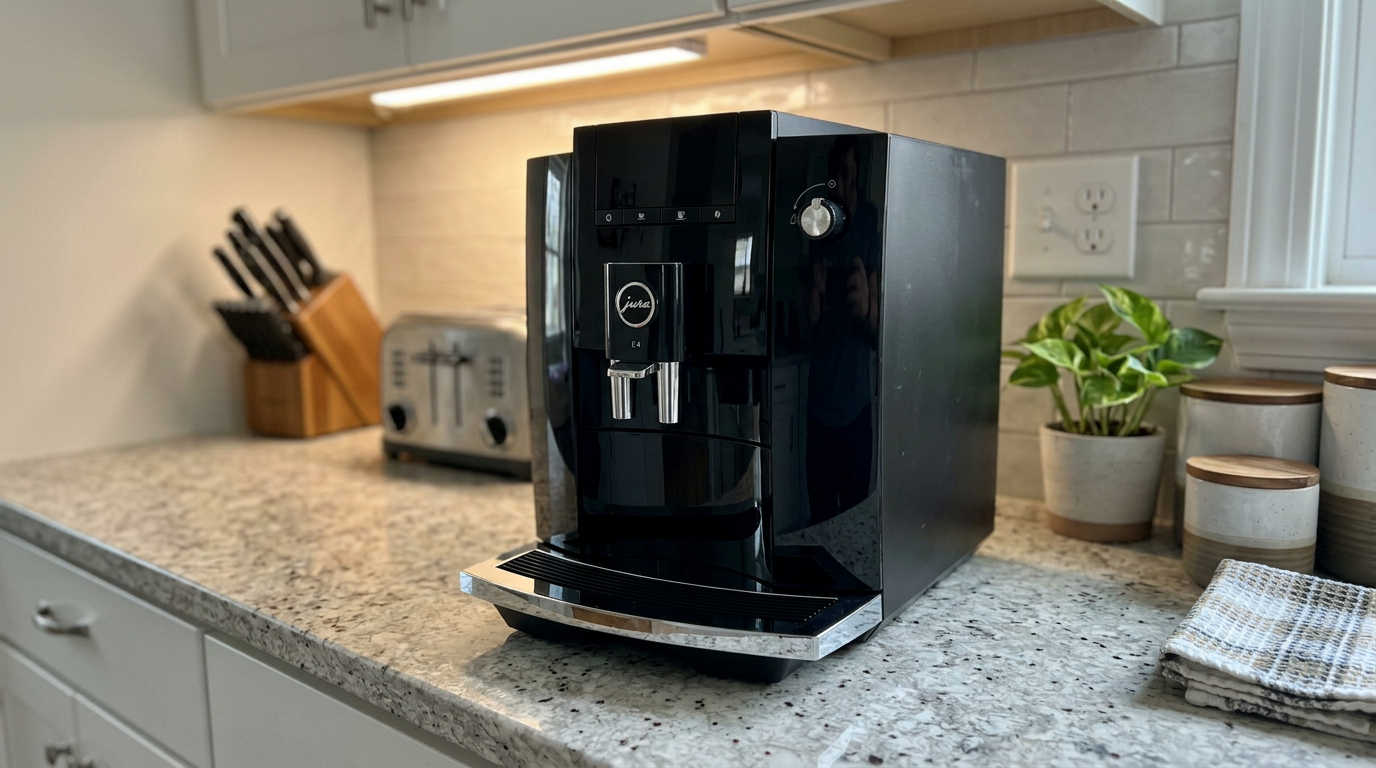
Both machines share a full-size 16-gram brew unit, the heart of a great black coffee.
Maximum dose per brew on both.
Both are quiet. Neither woke anyone early in the morning, and both made a short, low burst rather than a whine.
Our tip: Only change the grind while the grinder is running on either machine, so beans never jam the burrs.
Neither machine needed grind changes after the first week. Once set, both repeated the same shot every morning.
Espresso quality
Both make outstanding espresso for entry machines, and the C3 edged it.
The Jura C3 pulled espresso with real body and a thick, long-lasting crema✕CremaThe golden, foamy layer on top of a fresh espresso. It forms when pressure pushes oils and gases out of the coffee.. With a medium-dark blend, I tasted dark chocolate and caramel, and the crema held for minutes.
The Jura E4 pulled thick, sweet espresso with a dense, stable crema too, just a touch less intense side by side.
My espresso scores
My scores out of 10 for body, crema, flavor and consistency.
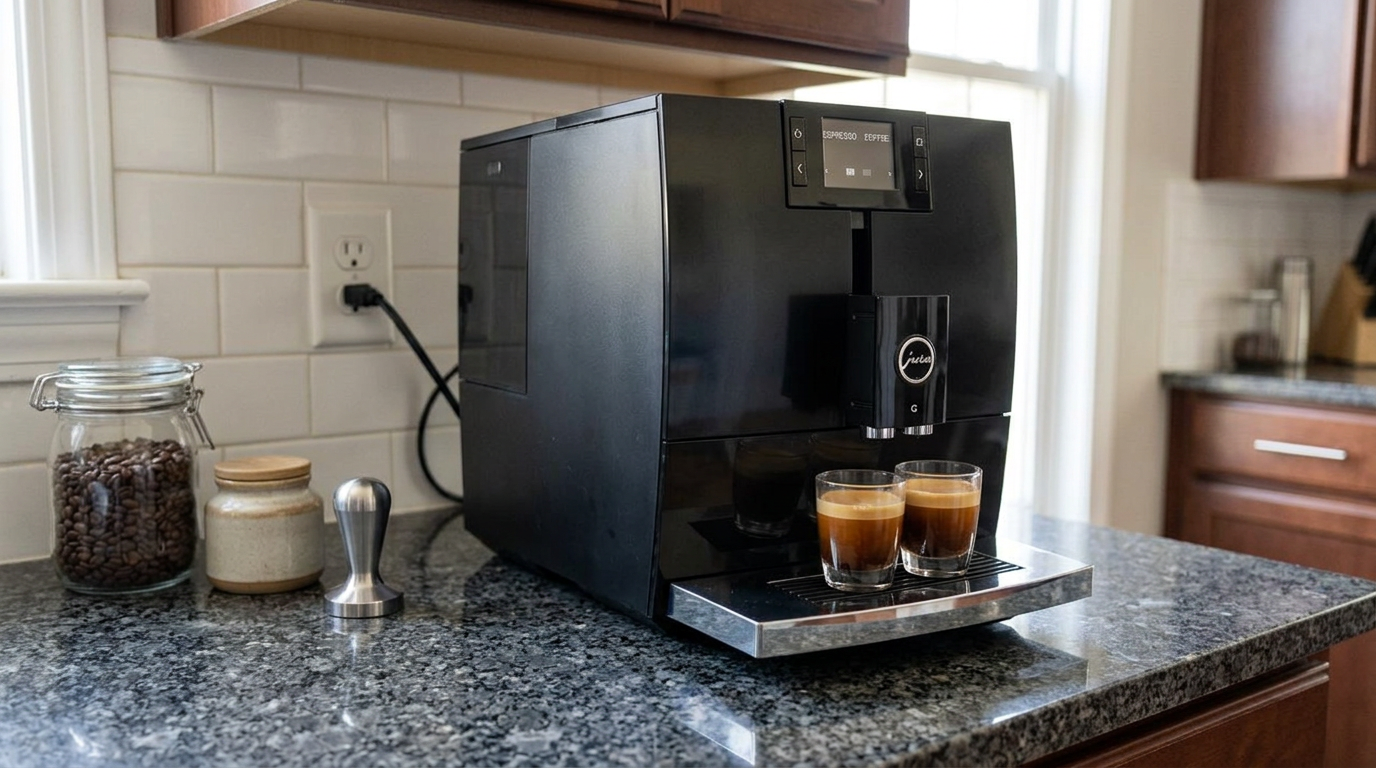
The C3 pulled the best espresso I have tasted from an entry-level Jura.
| What you taste | Likely cause | First fix |
|---|---|---|
| Sour, thin | under-extracted✕Under-extractionWhen water does not pull enough flavor out of the coffee. The shot tastes sour, thin and watery. | Grind finer or raise strength |
| Bitter, harsh | Over-extraction | Grind one step coarser |
| Pale crema | Stale beans | Use fresher beans |
| Lukewarm shot | Cold cup | Warm the cup first |
With lighter roasts, both kept their sweetness on a finer setting. The C3’s shots were a little more intense, the E4’s a little rounder.
Americano and long coffee
This is where the E4 pulls clearly ahead.
A proper americano✕AmericanoEspresso topped up with hot water. Done properly, the water is added separately instead of pushed through the coffee. is espresso plus hot water added separately. On the E4, you pull an espresso, then twist a switch to release hot water from the separate spout, up to about 10 ounces.
The C3 has no hot water, so an americano means a kettle. Its long coffee, pushed through the grounds, was softer than a drip-style mug.
Both make a big mug in one pass thanks to their full 16-gram dose. For a big black coffee every morning, the E4’s americano was the more satisfying drink.
| Black coffee | Jura C3 | Jura E4 |
|---|---|---|
| Americano | Kettle needed | Espresso plus hot water spout |
| Long coffee | Softer, one pass | Softer, one pass |
| Doubles | One button | One button |
If a big mug of coffee is your daily habit, the E4’s americano is the drink I would choose every time. It kept more flavor than a long coffee pushed through the grounds.
Hot water and tea
The E4 has a separate hot water spout that gives a clean stream, never touching the coffee path.
The C3 has no hot water function. Tea drinkers will need a kettle beside it, which takes back some of the space it saves.
In my house, that made the E4 the more complete machine. My partner’s afternoon tea came from the same machine as my espresso.
| Tea type | Ideal water | Jura C3 | Jura E4 |
|---|---|---|---|
| Green tea | 158–176°F | Kettle needed | Good |
| Herbal tea | 194–212°F | Kettle needed | Good |
| Black tea | 203–212°F | Kettle needed | Good |
For a household with a daily tea drinker, the E4 can retire the kettle for most teas. With the C3, the kettle stays.
Neither is ideal for very delicate green tea at full heat. On the E4, I let the water cool for a minute before steeping.
Cleaning and upkeep
Both are among the easiest Jura machines to keep clean, because neither has a milk system.
Both rinse their coffee paths on switching on and off, both have fixed brew units cleaned with a tablet when prompted and both use the CLEARYL Smart+✕CLEARYL Smart+ filterJura’s water filter cartridge. It sits in the tank and removes minerals and off-flavors, so the machine needs descaling far less often., stretching the descaling✕DescalingRunning a mild acid through the machine to dissolve the mineral scale that hard water leaves in the heater and pipes. interval.
My weekly routine on both was the same: empty the tray and grounds, rinse the tray parts and wipe the front.
My cleaning scores out of 10.
| When | Jura C3 | Jura E4 |
|---|---|---|
| Daily | Empty tray when full | Empty tray when full |
| Every few days | Empty grounds | Empty grounds |
| Weekly | Rinse tray parts | Rinse tray parts |
| When prompted | Brew unit tablet, filter | Brew unit tablet, filter |
Our tip: Empty the grounds bin every evening on either machine, even if it is not full, so coffee never sits overnight.
Over a month, total cleaning time was tiny on both, a few minutes a week beyond emptying the tray and grounds.
Daily use and noise
Both settled into a quick rhythm: switch on, let it rinse, press a button. From button to cup took about a minute.
The C3 suited my espresso mornings perfectly. The E4 suited a household routine better, with americanos and tea from one machine.
Both were quiet. Neither woke anyone early in the morning, and both heated up quickly from cold.
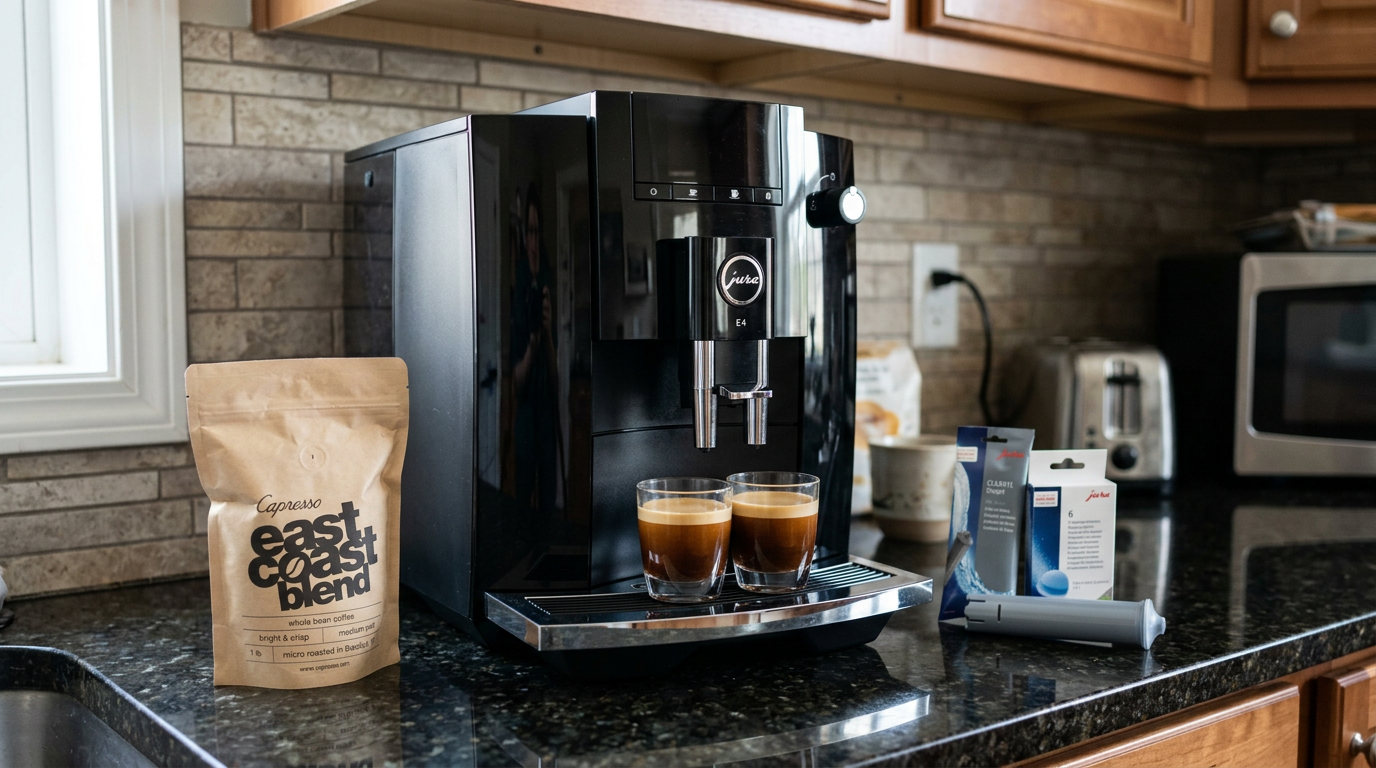
For a household with a tea drinker, the E4 is the more complete entry machine.
One habit I picked up on the C3: refilling the tank every other evening. With that routine, its smaller capacity never caught me out.
On the E4, I refilled the tank twice a week and the beans once a week, which felt almost effortless.
Which suits which household
| Household | Their drinks | Jura C3 | Jura E4 |
|---|---|---|---|
| Solo espresso drinker | Espresso | Ideal | Very good |
| Americano drinker | Americano | Kettle needed | Ideal |
| Tea drinker in the house | Tea | Kettle needed | Ideal |
| Small kitchen | Any | Ideal | Check height |
The rule is simple. If espresso is all you drink and space is tight, the C3. If americanos or tea are part of your day, the E4.
Guests are another clue. On the E4, visitors could make their own tea. On the C3, I had to boil the kettle for them.
For a solo espresso drinker, both are excellent. The choice is really about whether anyone else in the home wants tea or americanos.
Why people confuse the C3 and E4
Both are entry-level, black-coffee-only Juras with the same full-size brew unit, so they often appear side by side with similar descriptions.
The C3 is often sold through specific retailers, which makes it easy to assume it is simply an E4 under another name.
It is not. The C3 is smaller, adds temperature levels and pulls a slightly more intense espresso. The E4 is bigger and adds a hot water spout.
| Question buyers ask | Jura C3 | Jura E4 |
|---|---|---|
| Same brew unit size? | Yes, 5–16 g | Yes, 5–16 g |
| Milk system? | No | No |
| Hot water? | No | Yes |
| Same size? | No, smaller | No, bigger |
| Same tank? | No, 54 oz | No, 64 oz |
When comparing listings, look for the hot water spout and the tank size. Those two details tell the machines apart instantly.
In short: same heart, different bodies. Once you have used both, the hot water spout makes them impossible to mix up.
What a full day of drinks looked like
I logged every drink each machine made on an ordinary Saturday with two adults at home.
The C3 made six drinks: four espressos and two long coffees. Tea came from the kettle. It needed no refill.
The E4 made eight drinks: four espressos, two americanos and two teas. It needed no refill either.
One Saturday, two adults, each machine on a different weekend.
The E4 did not make better coffee. It made two extra drinks possible without a kettle.
On a solo espresso weekday, the C3 was the more enjoyable machine: hotter, more intense shots and nothing else to think about.
Temperature control: the C3’s quiet advantage
The C3’s three temperature levels are easy to overlook on a spec sheet, but I noticed them every day.
Short drinks like espresso lose heat fast. On the C3’s highest level, with a pre-warmed cup, my espresso stayed hot to the last sip. On a lower level, long coffees were easier to drink straight away.
The E4’s temperature is programmed rather than chosen per drink. It was hot enough for me, but the C3 gave me more control.
My impression of espresso temperature with a pre-warmed cup.
If you like your espresso very hot, this is a small but real reason to choose the C3.
On the E4, pre-warming the cup with water from its own spout closed most of the gap, which is a neat advantage of having hot water on tap.
Which gives you more for your money?
In my reviews, the E4 scored 8.5 and the C3 8.4. The scores are close because both are excellent black coffee machines.
The E4 gives you hot water, americanos, tea and more capacity. The C3 gives you slightly better espresso, temperature levels and a smaller body.
If you drink tea or americanos, the E4 is clearly the better value. If you drink only espresso in a small kitchen, the C3 is.
My scores out of 10 from my single reviews.
Think about the next few years too. If a tea drinker moves in, the C3 cannot grow with you.
Find Out the Price TodayIf you can only choose one, ask whether you would ever use hot water. A yes points to the E4; a no points to the C3.
Making either work in a small kitchen
Many entry-level buyers are fitting a machine into a small space, so here is what I learned.
The C3 is about an inch narrower and lower, which helps under low cabinets and in narrow gaps. But without hot water, it often means keeping a kettle on the counter too.
The E4 takes a little more space, but it can replace the kettle for tea and americanos. In a tea-drinking home, that can make it the more space-efficient choice overall.
Counter clutter for a black coffee and tea household.
If you drink only espresso, the C3 is the tidier choice. If you also drink tea or americanos, the E4 may save you space after all.
Both look good on a counter, so you are not trading style for space either way.
What I would change on each
On the Jura C3, I would add a hot water spout. That one change would make it close to perfect.
On the Jura E4, I would replace the manual hot water switch with a button and add temperature levels like the C3’s.
Both left me satisfied after a month. These are refinements, not reasons to avoid either one.
Neither left me wishing I had bought something else for black coffee. Both are excellent entry machines.
My four weeks with both machines
Living with each machine for a month showed things a quick test never does.
Week one: setup
Both were ready in minutes. Programming volumes took a few minutes with the manual, and then I never touched them again.
Week two: espresso
The C3’s espresso was the more intense from day three, especially on its highest temperature.
Week three: americanos and tea
My partner wanted americanos and tea. The E4 handled both; the C3 brought the kettle back to the counter.
Week four: routine
Both asked for almost nothing beyond emptying the tray and grounds.
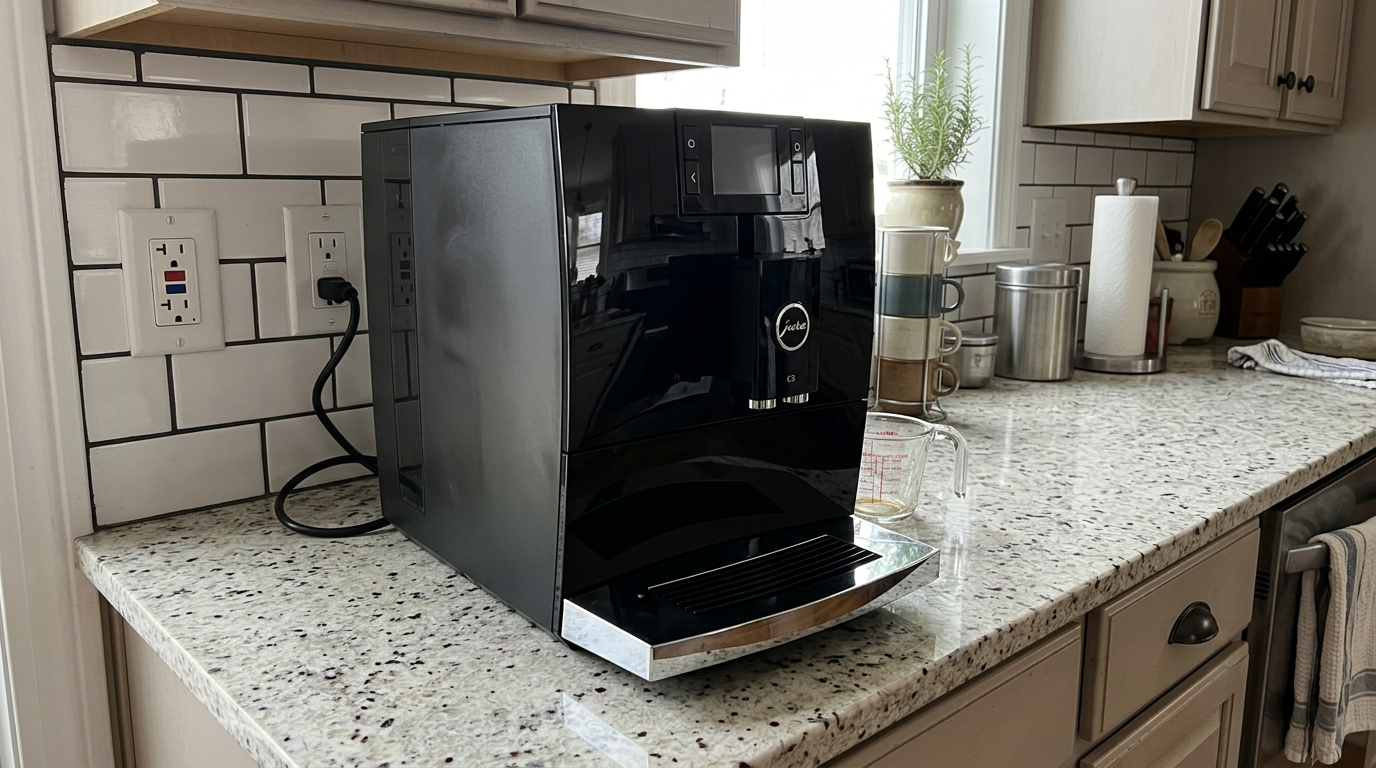
By week four, the C3 was still my favorite machine for a straight espresso.
By the end of the month, the pattern was clear: the C3 for espresso lovers in small kitchens, the E4 for black coffee households with tea drinkers.
Beans, water and supplies
Both reward fresh whole beans used within a few weeks of roasting. Avoid very oily or flavored beans, which can clog the grinder.
Medium and medium-dark roasts worked best on both. Lighter roasts did well on a finer setting.
Fill the tanks with fresh, cold water daily, use the filter if your water is moderately hard and skip distilled water. Check what is included where you buy, because filters and cleaning tablets vary between bundles.
| Bean type | Jura C3 | Jura E4 |
|---|---|---|
| Medium-dark blend | Thick, long-lasting crema | Thick crema |
| Light roast | Good, finer setting | Good, finer setting |
| Very dark, oily | Avoid | Avoid |
Our tip: Buy beans you can finish within three weeks, because both grinders show off fresh coffee far better than stale.
Both use Jura cleaning tablets, so supplies are simple either way.
Common mistakes to avoid
| Mistake | What happens | Better habit |
|---|---|---|
| Forgetting the E4 hot water switch | Overfilled cup | Stay with the cup |
| Low temperature for C3 espresso | Cooler shot | Use the highest level |
| Long coffee for a big mug | Softer, flatter cup | Make an americano on the E4 |
| Turning the grind setting while stopped | Beans jam the burrs | Adjust only while grinding |
| Letting the bin fill up | Brewing stops | Empty it every evening |
All of these become habits within a week.
None of these are reasons to choose one machine over the other. They are simply the habits that keep both running well.
Real-life scenarios
Specs only go so far. These are the situations where one machine clearly pulled ahead during my testing.
Thick, long-lasting crema and real body.
Espresso plus hot water from the separate spout.
Hot water from the same machine, no kettle.
About an inch lower than the E4.
A bigger tank and hopper meant fewer refills.
Three temperature levels.
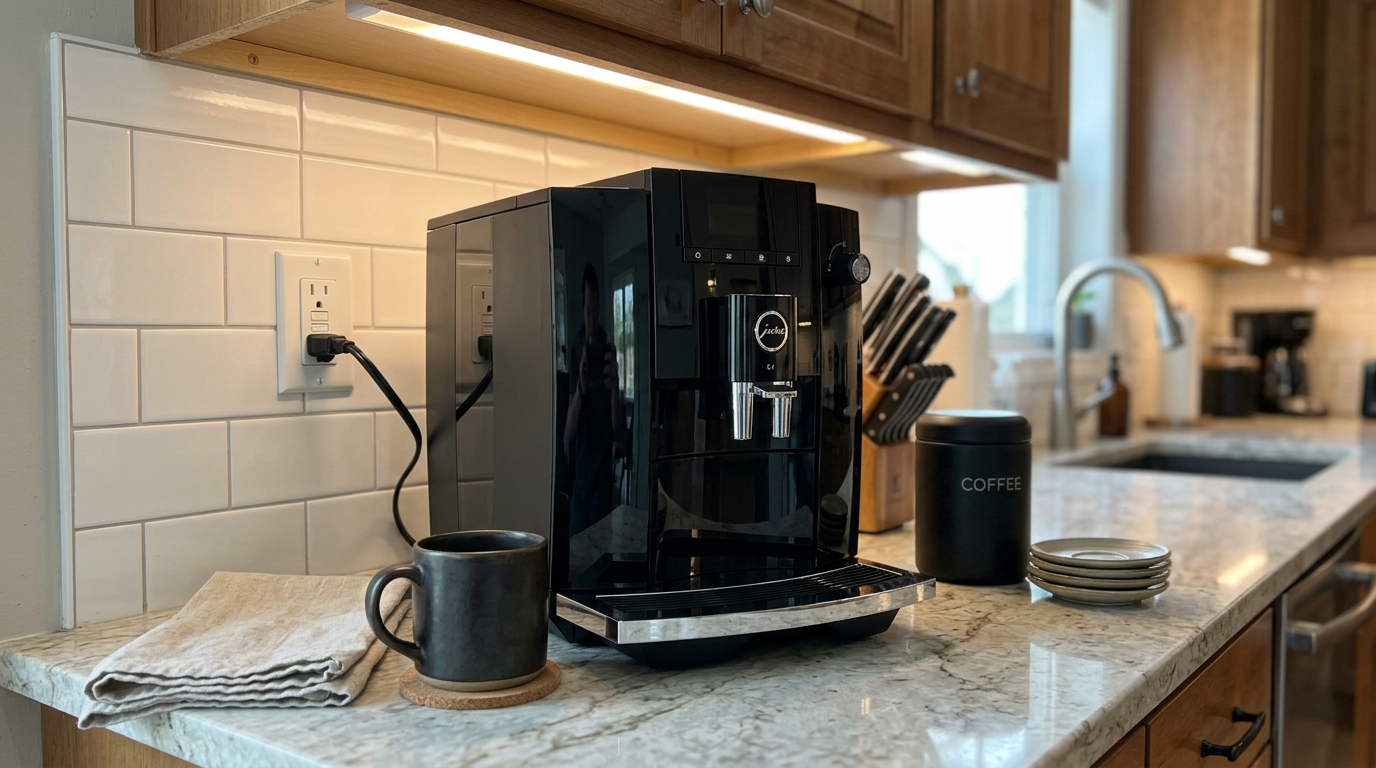
Lived with side by side, the E4 was the household machine and the C3 the espresso specialist.
My scorecard
These are my own scores out of 10. The first four come from my single reviews of each machine, and I added two rows that decide this matchup.
Jura C3
Jura E4
Overall, I rate the C3 8.4 and the E4 8.5. The C3 makes the better espresso; the E4 is the more complete black coffee machine.
See How Much You’ll SaveWhich one is right for you?
4 quick questionsWhich one should you buy?
It comes down to hot water and space. Americanos and tea point to the E4; espresso in a small kitchen points to the C3.
For most black coffee households, the E4 is the more complete entry Jura.
- You drink mostly espresso
- Your kitchen is small
- You want temperature control
- You want the least clutter
- You drink americanos or tea
- You want fewer refills
- You want a hot water spout
- You drink americanos or long coffee
- Someone drinks tea
- You want fewer refills
- You want a hot water spout
- Your cabinets are very low
- You want temperature levels
- You want app control
For most black coffee drinkers, my pick is the Jura E4. Its separate hot water spout gives you true americanos and tea, and its bigger tank and hopper mean fewer refills.
The Jura C3 is the better choice for espresso lovers in small kitchens. It pulled the best espresso I have tasted from an entry Jura and fits where the E4 will not.
Whichever you choose, buy fresh whole beans and empty the grounds bin regularly.
Jura C3 vs E4 specifications
From manufacturer specifications and my own testing.
| Jura C3 | Jura E4 | |
|---|---|---|
| Model | Jura C3, 15711 | Jura E4, 15466 |
| Drinks | Espresso, coffee, doubles | Espresso, coffee, doubles, hot water |
| Pump pressure | 15 bar | 15 bar |
| Extraction | Pulse Extraction Process | Pulse Extraction Process |
| Grinder | Professional Aroma Grinder, steel conical burrs | Professional Aroma Grinder, steel conical burrs |
| Dose | 5–16 g | 5–16 g |
| Temperature levels | Three | Programmed |
| Milk system | None | None |
| Hot water | None | Separate spout, manual switch |
| App | Optional module | No |
| Water filter | CLEARYL Smart+ included | CLEARYL Smart+, auto recognition |
| Water tank | About 54 fl oz | About 64 fl oz |
| Bean hopper | About 7 oz | About 10 oz |
| Grounds container | About 16 servings | About 16 servings |
| Dimensions (W x H x D) | 10.2 x 12.8 x 17.2 in | 11 x 13.8 x 17.6 in |
| Weight | About 19.4 lb | About 22 lb |
How I tested and compared them
I used each machine as my everyday coffee maker for four weeks, making espresso, long coffee, doubles and, on the E4, americanos and tea water.
I tested every temperature and strength setting, counted refills and timed my daily cleaning.
I then compared my notes with Jura’s specifications, owner documentation and published test data.
- Coffee: dose, crema, body and consistency.
- Milk: foam texture, temperature and drink range.
- Workflow: controls, menus and daily routine.
- Ownership: noise, cleaning, water care and footprint.
C3 vs E4 FAQ
What is the difference between the Jura C3 and E4?
The E4 adds a separate hot water spout and a bigger tank and hopper. The C3 is smaller, adds three temperature levels and pulls slightly more intense espresso. Both have a full 16 g brew unit and no milk system.
Does the C3 have hot water?
No. You will need a kettle for tea or americanos.
Which makes better espresso?
The C3, by a small margin. I scored it 9.0 against 8.8 for the E4.
Do either have a milk system?
No. Both are black coffee machines.
Which is smaller?
The C3, at about 10.2 x 12.8 x 17.2 inches.
Which has the bigger tank?
The E4, at about 64 ounces against 54 on the C3.
Do both make doubles in one pass?
Yes. Both take a full 5 to 16 g dose.
Which is easier to clean?
Both are very easy, with no milk system.
Does either have an app?
The C3 can connect with an optional module. The E4 has no app.
Which should I buy?
The E4 for americanos, tea and fewer refills; the C3 for espresso in small kitchens.

- Our hands-on Jura C3 review
- Our hands-on Jura E4 review
- Jura product specifications and owner documentation
- General espresso brewing and maintenance guidance