Breville Oracle Jet vs Meraki Espresso Machine: which all-in-one should you buy?
One grinds, doses and tamps for you, then textures your milk at the touch of a screen. The other weighs every dose and every shot, and runs on two real boilers and a rotary pump. I compared the shot data, the specs and the long-term test results to find out which one belongs on your counter.
We choose products independently. We may earn a commission through links on this page; your price stays the same. Affiliate policy
In this comparison
If you care most about what ends up in the cup, I would pick the Meraki Espresso Machine. Grinding and brewing by weight, two boilers and a rotary pump gave it the sweeter, thicker shot and the better steam. The Breville Oracle Jet is the one I would buy for a busy household, because it tamps for you, heats up in seconds and adds cold drinks the Meraki cannot make. Be aware that the Meraki asks for about a minute of hands-on puck prep, and that the Oracle Jet locks you into fixed doses.
The two machines
Specs checked November 9, 2026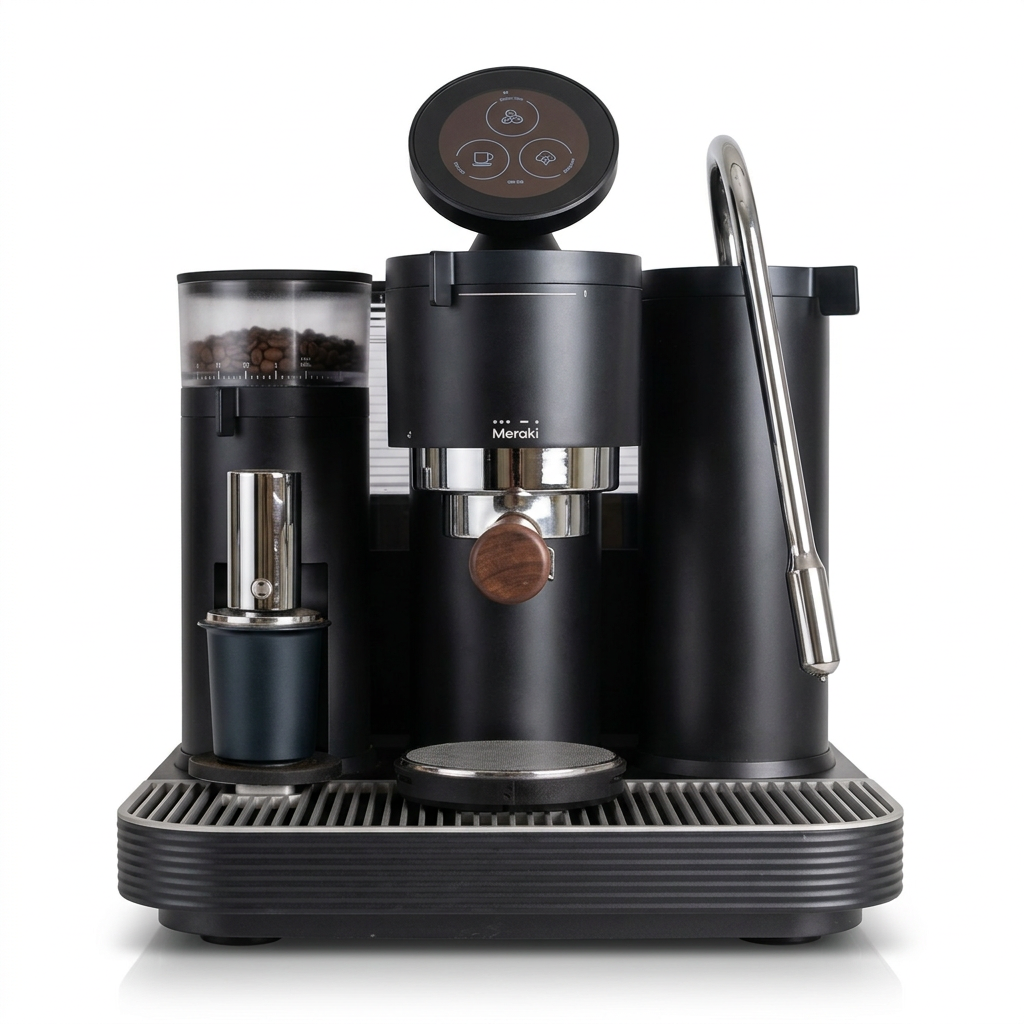
Dual boilers, a rotary pump and two built-in scales, so both the dose and the shot are measured in grams.
See Today’s Price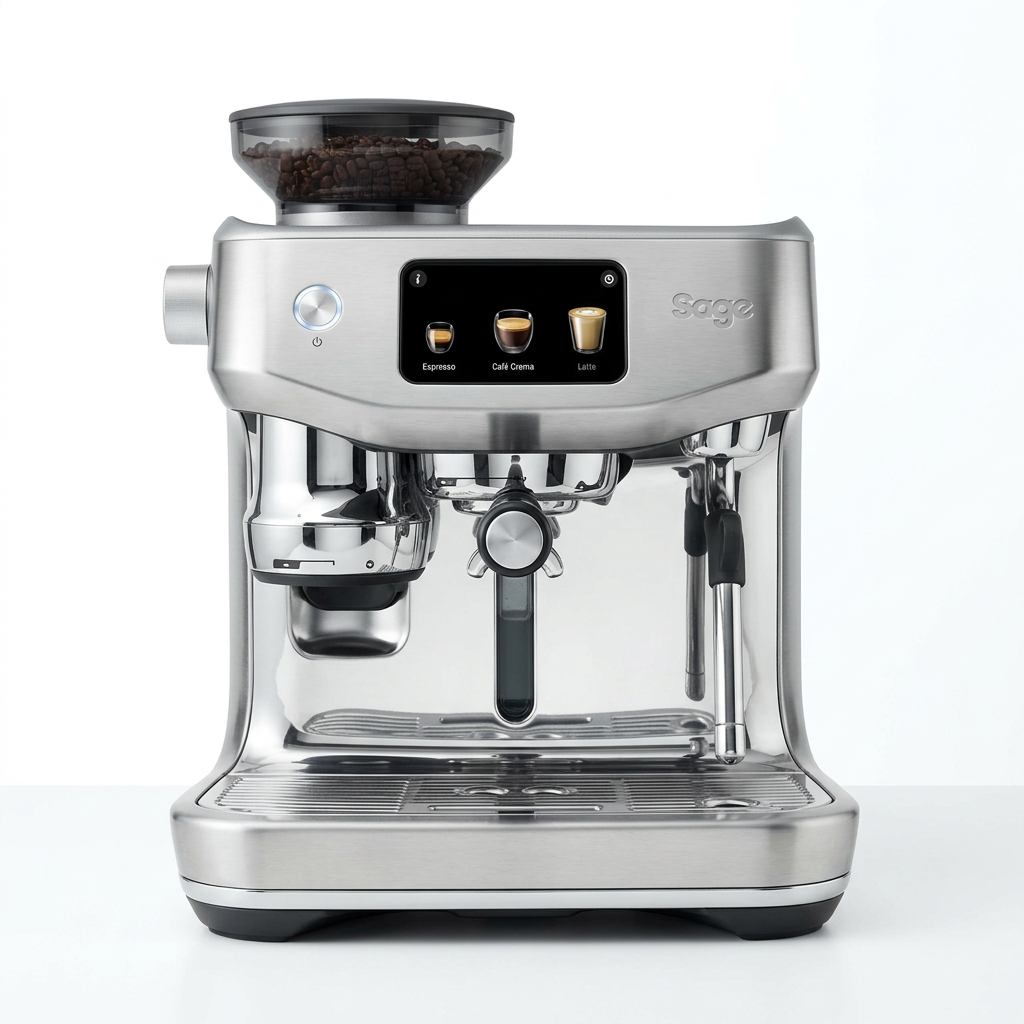
Automatic grinding, dosing and tamping, hands-free milk and cold extraction, all run from a 5-inch touchscreen.
Reveal Today’s DealOracle Jet vs Meraki at a glance
- Buy the Meraki if you want repeatable recipes. It stops the grinder and the shot by weight, which takes most of the guesswork out of dialing in.
- Buy the Oracle Jet if nobody in your home wants to tamp. You lock in the portafilter, choose a drink and let the machine do most of the rest.
- The Meraki can brew and steam at the same time. The Oracle Jet runs them one after the other, which slows down a round of drinks.
- The Oracle Jet is the only one with cold brew and cold espresso, and it comes from a far more established brand.
Head to head
The better result in each row is marked, and rows without a mark are a tie or a matter of taste. Figures come from the manufacturers and published measurements unless noted.
Note that the tally is not my verdict. Several of the Oracle Jet wins are about convenience, while the Meraki wins sit closer to the coffee itself.
| Spec | Meraki | Oracle Jet |
|---|---|---|
| Heating | Dual stainless boilers, heated group ✓ Best | Two ThermoJet heaters |
| Warm-upfrom cold | About 3 minutes | About 3 seconds claimed ✓ Best |
| Pump | Rotary ✓ Best | Vibratory |
| Brew and steam together | Yes ✓ Best | Queued, one after the other |
| Dose control | Grind by weight ✓ Best | Volumetric, resistance based |
| Dose options | Any weight you set ✓ Best | 22 g or 12 g baskets |
| Shot control | Stops by weight ✓ Best | Volume or time |
| Steam powermanual | Very strong, very dry ✓ Best | Strong, 4-hole tip |
| Puck prep | Manual distribute and tamp | Automatic ✓ Best |
| Milk presets | Temperature and strength | Dairy, oat, almond, soy ✓ Best |
| Cold extraction | No | Cold brew, cold espresso ✓ Best |
| Drink menu | Espresso, water, steam | 10+ recipes, customizable ✓ Best |
| Bean hopper | About 4.4 oz (125 g) | About 12 oz ✓ Best |
| Water tank | About 67 oz (2 L) | About 77 oz (2.3 L) ✓ Best |
| Brand track record | Young, direct-to-consumer roots | Long established ✓ Best |
| Grind adjustment | Stepless, 45 reference points | Stepless, 45 reference points |
| Portafilter | 58 mm | 58 mm |
| Warranty | 2 years | 2 years |
| Rows won | 7 | 8 |
Oracle Jet vs Meraki pros and cons
Meraki Espresso Machine
- Grinds and stops every shot by weight
- True dual boilers with a quiet rotary pump
- The strongest, driest steam of the two
- You still distribute and tamp by hand
- No cold extraction and no drink menu
- Young brand with unproven long-term reliability
Breville Oracle Jet
- Grinds, doses and tamps automatically
- Ready to brew within seconds
- Cold brew, cold espresso and a big customizable menu
- Fixed 22 g or 12 g doses, with shifting real-world weights
- Cannot brew and steam at the same time
- Louder vibratory pump and mixed auto-milk reports
Who should buy which machine?
- People who want to dial in recipes down to the gram
- Milk-drink lovers who want to learn latte art
- Coffee fans who switch between dark and lighter roasts
- Households where several people make their own drinks
- Anyone who wants no tamping and very little mess
- Iced coffee and espresso martini fans
Design, size and build
These two machines take up nearly the same space, yet they look nothing alike. The Oracle Jet is a broad stainless steel box with a large screen in the middle, and it looks the way you expect a flagship espresso machine to look.
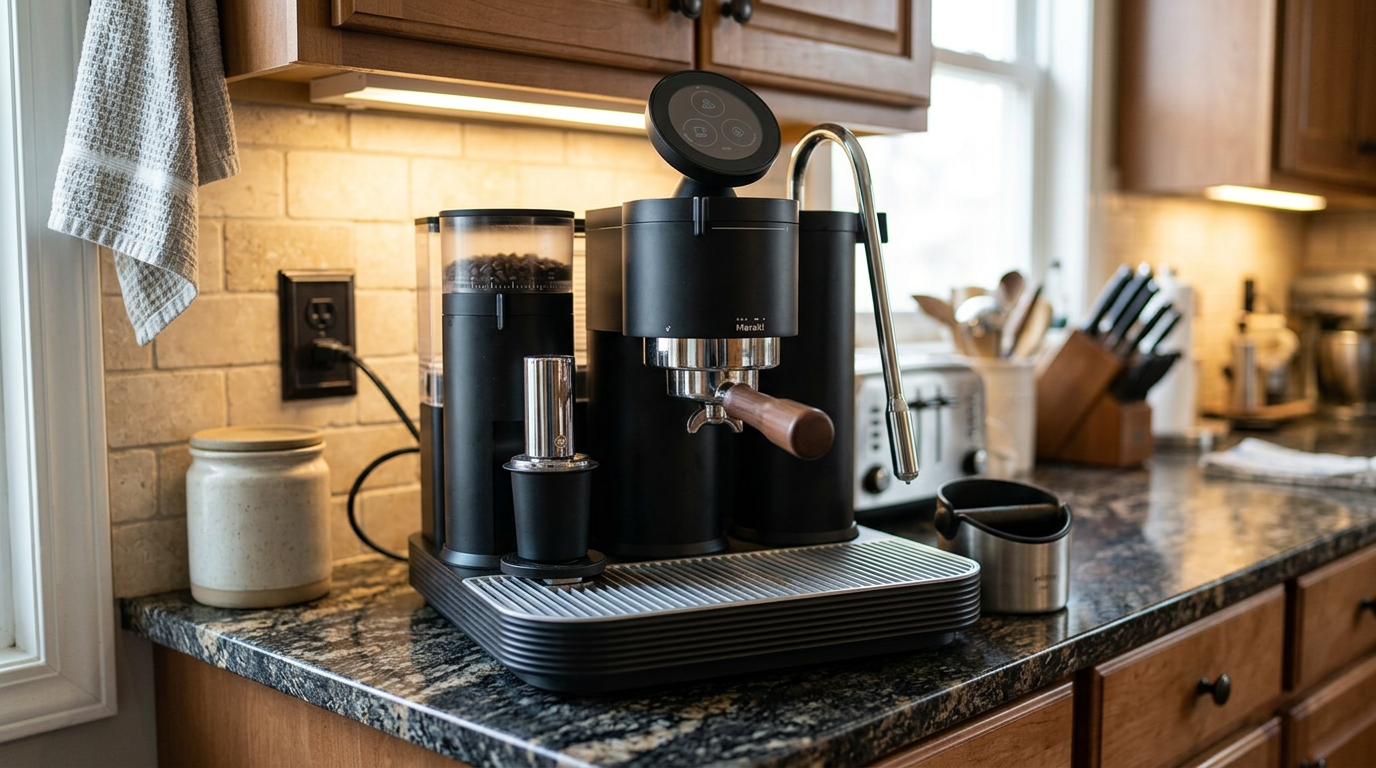
The Meraki is built around three round towers. The grinder sits on the left, the brew group in the middle and the steam boiler on the right, with a small circular touchscreen mounted on top of the group.
I like that layout for one practical reason. The grinder sits in its own column away from the boilers, so the beans in the hopper are not being warmed all day.
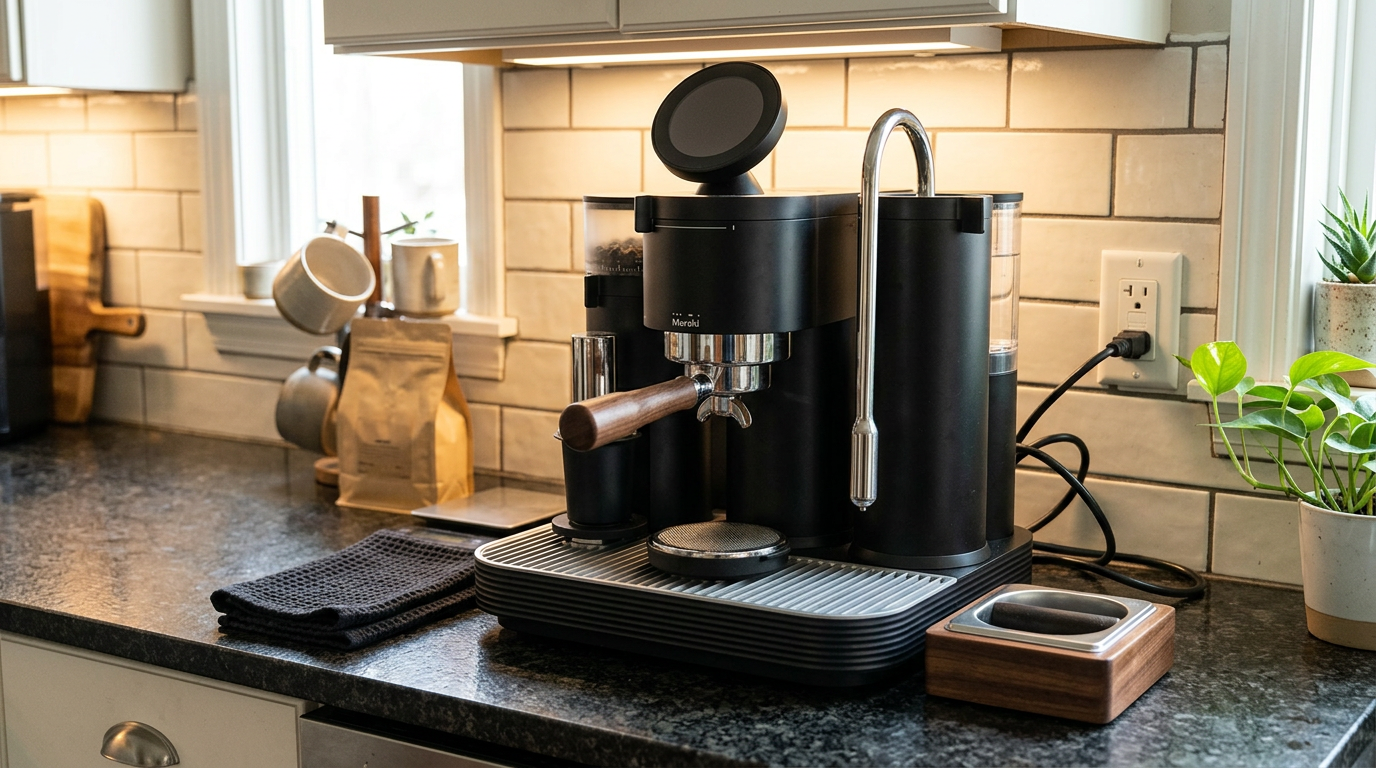
The Meraki keeps its grinder in a separate tower, away from the heat of the boilers.
On materials the Oracle Jet has the edge in how it feels. Its outer casing is stainless steel, while the Meraki mixes stainless steel and anodized aluminum with ABS plastic on parts of the body and the base.
The important internals on the Meraki are still metal. Both boilers, the brew group, the portafilter and the steam wand are stainless steel, and the drip tray is die-cast aluminum.
Check your cabinets before you order either one. The Oracle Jet stands about 16.7 inches tall and the Meraki about 16.3 inches, and you will want extra room above both to fill the hopper.
The Oracle Jet also has wheels hidden underneath, which makes it far easier to pull forward for cleaning. Dimmable LEDs light up the cup and the milk jug, and that is a small detail you will appreciate on dark winter mornings.
Cup clearance is the one spot where the Meraki feels cramped. Tall travel mugs are a tight fit under the group, especially if you attach the double spout.
Our tip: Measure the height under your wall cabinets before you buy, since both machines need several inches of extra room to refill the hopper.
Heating system and warm-up
This is the biggest engineering difference between the two. The Meraki has a dedicated stainless steel brew boiler of about 12 ounces and a steam boiler of about 19 ounces, with separate PID control over each boiler and the group.
The Oracle Jet has no boiler holding hot water at all. Its ThermoJet heater flash-heats water as it passes through, and a second small heater above the shower screen helps warm the brew group.
In daily use, that means the Oracle Jet is ready almost as soon as you tap the screen. Breville claims about three seconds, and it says the system is up to 32% more energy efficient than a standard thermoblock.
Time to brew from cold
The Meraki needs around three minutes, which is quick for a dual boiler. You can also schedule it to warm up before you get out of bed, so the wait mostly disappears on normal mornings.
The payoff is thermal stability. All that hot mass helps keep the temperature consistent through back-to-back shots, and the machine has the capacity to steam at the same moment it brews.
An instant heater has to work harder early in the shot, because the water is moving quickly and the metal around it may still be cool. Reviewers who have used the Oracle Jet for months say its shots improve once the portafilter and water path are fully hot.
Our tip: Run a blank shot through the Oracle Jet with the portafilter locked in before your first drink of the day, so the group and basket are properly hot.
Temperature control is good on both. The Oracle Jet lets you adjust brew temperature from about 187°F to 205°F, and the Meraki has an adjustable PID that makes it just as easy to go hotter for lighter beans.
Grinder and dosing
Built-in grinders used to be the weak link in machines like these. That is not the case here, and both of these grinders are good enough that you will not feel forced to buy a separate one.
The Meraki uses a 37 mm, 5-blade conical burr set designed with a specialist grinder maker. It sits on a built-in scale, so you enter a target such as 18.0 or 22.0 grams and the grinder stops when it gets there.
Meraki rates its scales at ±0.2 grams, and the side-by-side dosing data landed within about 0.4 grams of target. In practice that is close enough that you can stop weighing your beans altogether.
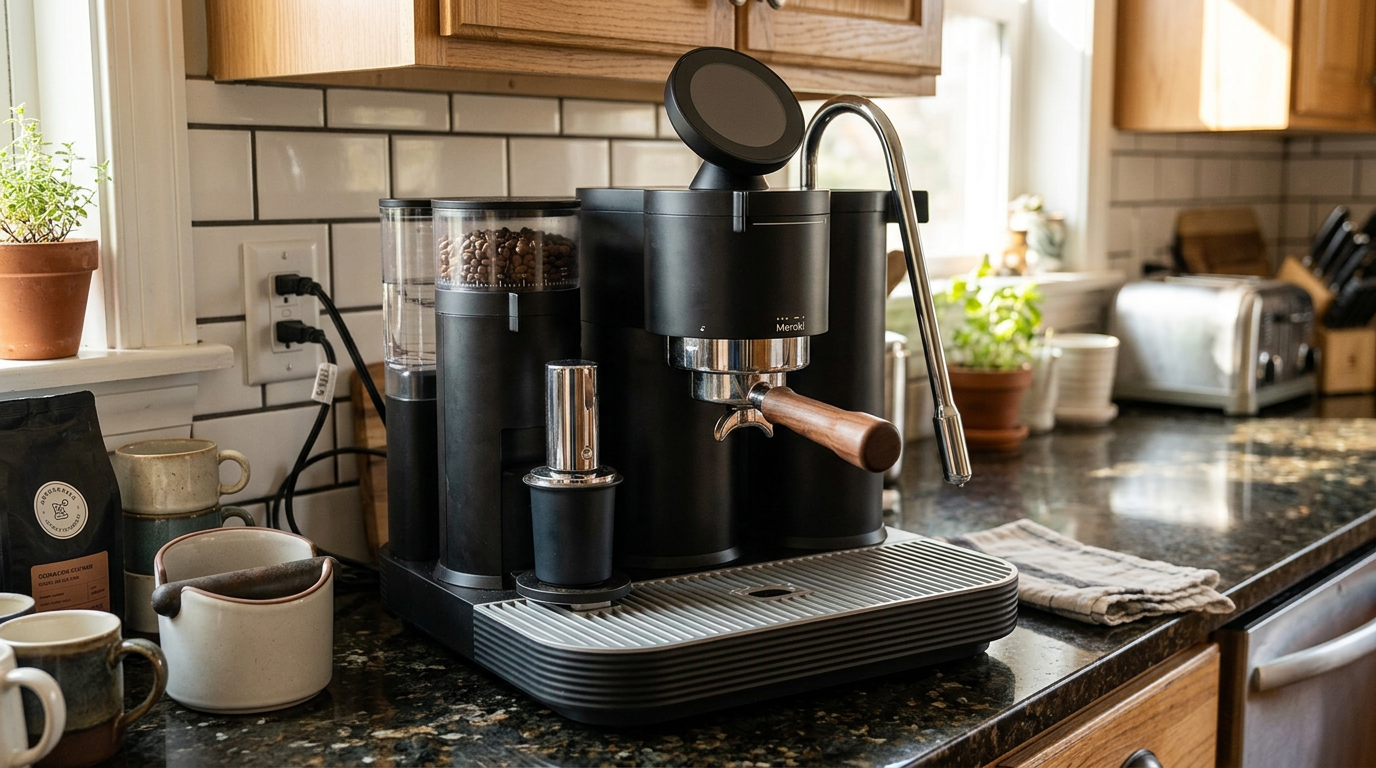
Every Meraki dose is weighed as it is ground, so the number on the screen is the number in the basket.
There is also an active anti-static device in the chute, and it does its job. The grounds come out fluffy, with very little clinging to the cup, at a rate of about 1.5 grams per second.
The Oracle Jet uses a 6-blade conical burr set and a completely different approach. Grounds spin out into the basket until they meet the tamping fan, and once the resistance is high enough, the grinder stops, levels the bed and tamps it.
It is a clever system and a joy to watch, but it fills the basket by volume rather than weight. Since different beans have different densities, doses moved between 19 and 23 grams across consecutive cycles.
Dose spread across consecutive grinds
Four grams is a lot in espresso. On a 22-gram recipe it can change how fast the shot runs, and you might not know why your coffee tastes different today.
You are also limited on dose size. The two baskets are designed for 22 and 12 grams, and going lower means adjusting the tamping fan, which is fiddly work and something I would not attempt on a machine under warranty.
On grind range, the two are level on paper. Each is stepless with 45 reference points, though the Meraki reached that number with its second generation, when it also gained a finer range for dense beans.
Both machines are happiest with medium-dark to dark beans. The current Meraki is the better bet for lighter roasts, while its grinder still prefers not to be pushed with the very densest coffees.
One weakness to watch on the Meraki is drift. Long-term testers have seen the grind setting creep by about a full step between days, so glance at the number before you start.
Our tip: Keep only a few days of beans in either hopper and store the rest in an airtight container, because stale beans force you to keep changing the grind.
Daily workflow
This is where your decision will really be made. Espresso quality matters, but you will live with the routine every single morning.
On the Oracle Jet, you lock the portafilter under the grinder and the machine grinds, distributes and tamps in one continuous cycle. You then move it across to the group, place your milk jug under the wand and press start.
The Meraki asks for a little more of you. You grind into a magnetic dosing cup, tip it into the portafilter, use the leveler and then tamp on the wooden station.
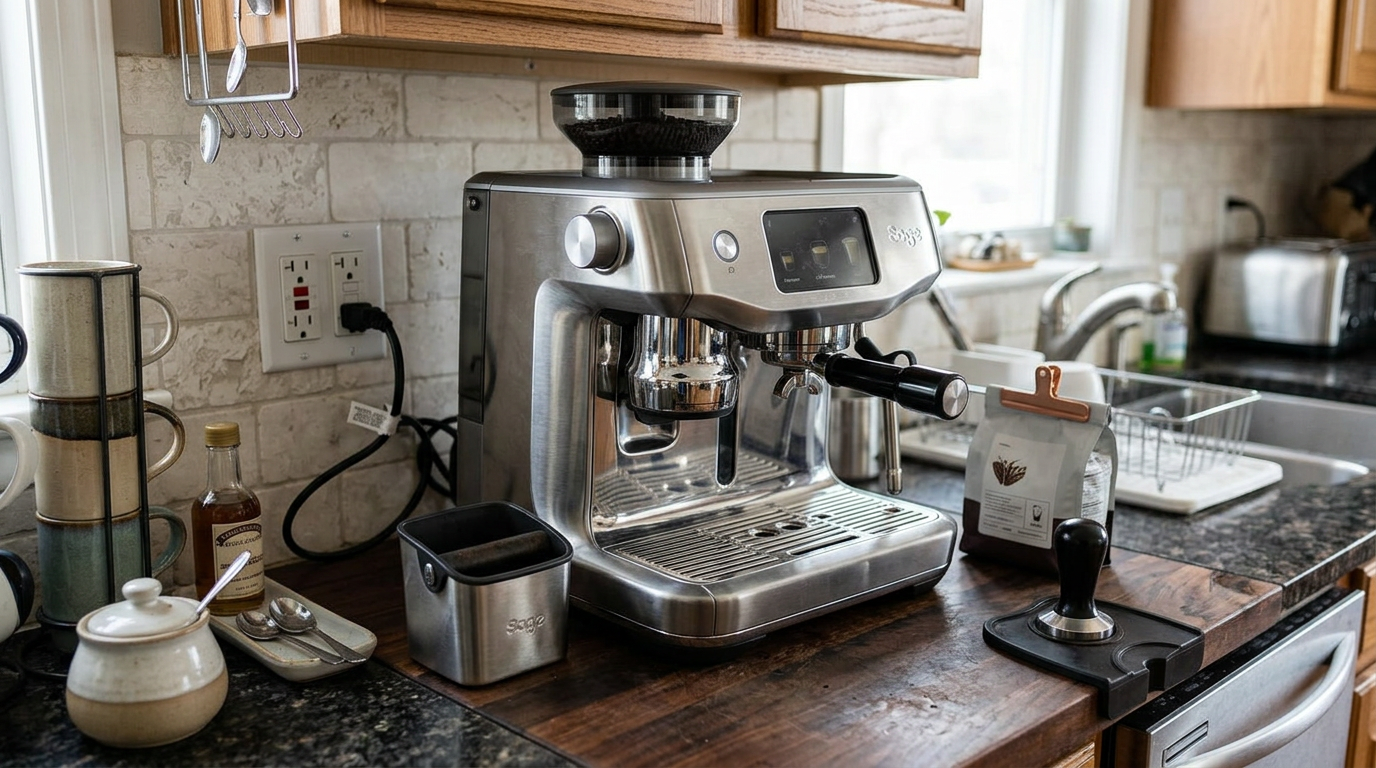
The Oracle Jet handles the grinding, dosing and tamping in one continuous cycle.
| Step for one latte | Meraki | Oracle Jet |
|---|---|---|
| Grind and dose | Automatic, stops by weight | Automatic, stops by resistance |
| Transfer grounds | By hand from dosing cup | Not needed |
| Distribute and tamp | By hand | Automatic |
| Stop the shot | Automatic by weight | Automatic by volume or time |
| Texture milk | Automatic or manual | Automatic or manual |
| Brew and steam together | Yes | Queued automatically |
| Wipe-down mess | Moderate | Low |
The Oracle Jet is the tidier of the two, because grounds go straight into the basket. Puck transfer on the Meraki leaves a few stray grounds around the tamping station, so expect to wipe down the area more often.
The Meraki is faster when you make several milk drinks in a row, because it can brew and steam at the same time. The single screen does get in the way a little, since you may need to step back through the menus to see your shot timer while the milk is running.
The Oracle Jet queues the shot and the milk so you can walk away. A round of four drinks takes a while though, as each pair needs a fresh puck and the two jobs run one after the other.
Help for beginners is good on both, but it works differently. The Oracle Jet watches the extraction and suggests a grind change after each shot, and that guidance has proven very accurate.
The Meraki helps by locking your ratio, so grind size is the main thing left to adjust. It also reads CoffeeSense tags to load recipes, though only a small number of roasters support that so far.
Our tip: Set the Meraki grinder first and leave dose and yield alone while dialing in, because changing one thing at a time gets you to a good shot much faster.
Espresso quality
For the head-to-head shot data, both machines were given the same medium-dark blend of 80% Arabica and 20% Robusta. The target was a classic 1:2 ratio, with 22 grams in and 44 grams out.
The Meraki took about 37 seconds to reach 44 grams. The shot had clear cocoa and dark chocolate notes, more natural sweetness and a creamy, syrupy body.
The Oracle Jet produced a very pleasant, balanced shot dominated by sweet dark chocolate. It was clean and enjoyable, but the texture and sweetness were a little lighter than the Meraki.
I would not call that a huge gap, and most people would be delighted with either cup. If you put the two side by side, though, I think the Meraki is the one you would reach for twice.
The reasons make sense when you look at the hardware. A saturated, heated group holds temperature well, the rotary pump builds pressure smoothly and a weight-based stop removes shot-to-shot variation.
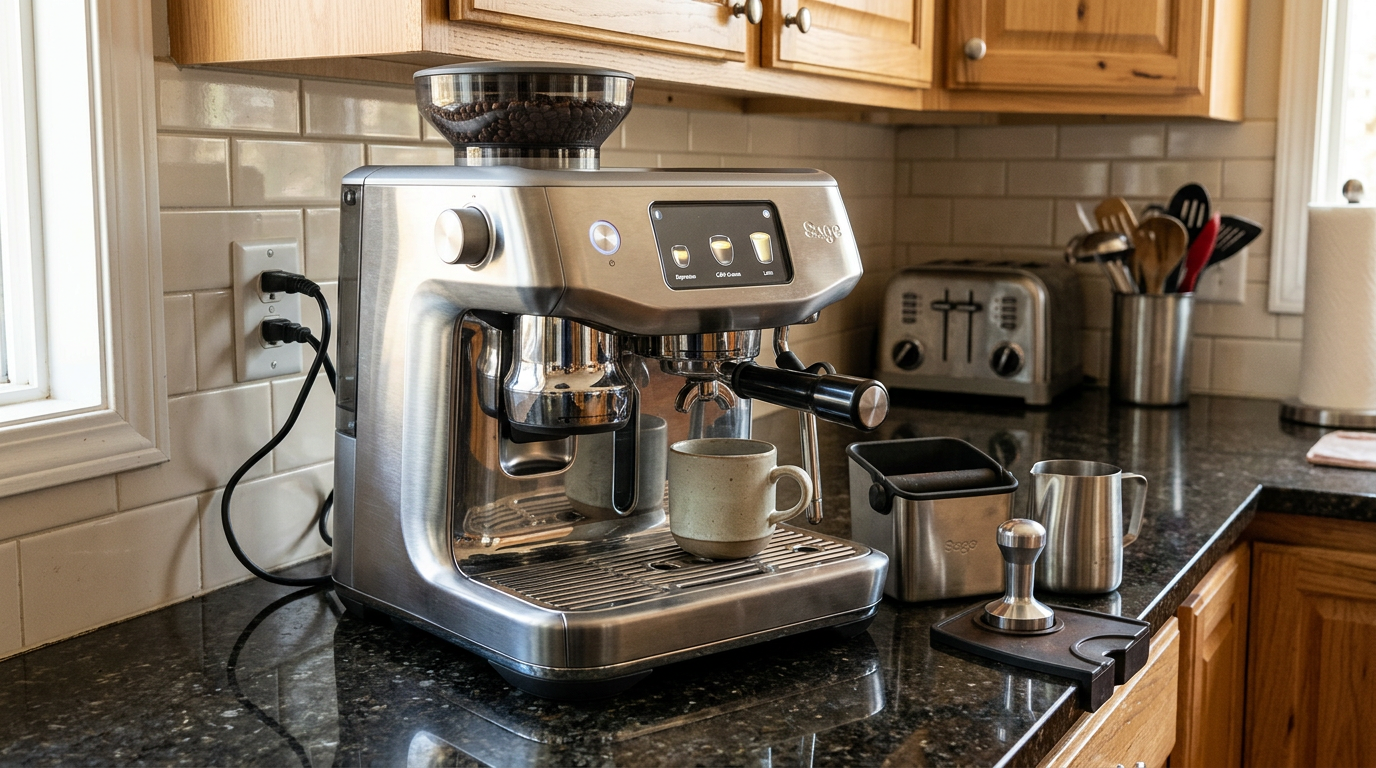
Once it is fully hot, the Oracle Jet makes a balanced and very drinkable shot.
The Oracle Jet has its own strengths here. Its pre-infusion and automatic puck prep make good shots very repeatable for a beginner, because nobody can tamp badly on it.
The Meraki also offers adjustable low-pressure pre-infusion, but it does not offer flow control or a live pressure reading. If you enjoy deep shot profiling, that is a limit worth knowing about.
The Meraki originally used a tight, fairly proprietary fit at the group. The current version has a 58 mm group that accepts standard E61-style portafilters, along with a redesigned shower screen that spreads water more evenly over the puck.
Our tip: Use beans roasted roughly 10 to 14 days ago on either machine, since very fresh or very old coffee will make a good machine look bad.
Find Out the Price TodayMilk and steam
Both machines put a temperature sensor in the tip of the steam wand, and both will stop automatically at the temperature you pick. How they get there is very different.
The Oracle Jet uses Auto MilQ, with an internal air pump that injects a precise amount of air early in the cycle. You get six foam levels and presets for dairy, oat, almond and soy.
It took about 1 minute and 7 seconds to texture 7 ounces of cold milk in the shot data I used. Firmware updates have also improved the results over time, and oat milk now does especially well.
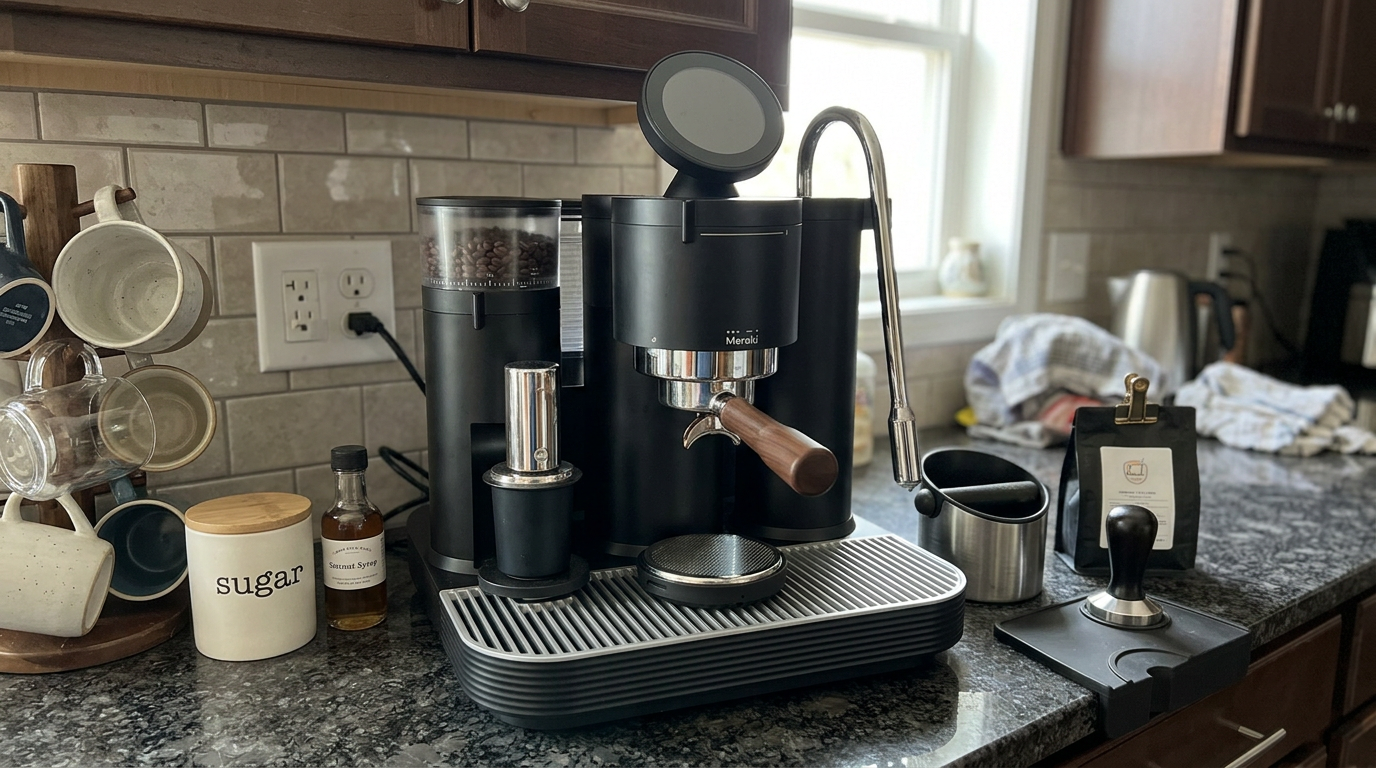
The long Meraki steam wand delivers very dry steam and shuts off at your target temperature.
Reports on Auto MilQ are not all glowing, so I would keep expectations in check. Some long-term users get excellent foam with whole milk and oat milk, while others have struggled to get true microfoam from the automatic mode.
The good news is that the wand is strong in manual mode. A four-hole tip gets the milk spinning quickly without overwhelming a beginner.
The Meraki wand is on another level. It is a long gooseneck with three holes and dry, powerful steam that produces glossy microfoam suited to latte art.
Drier steam means less water in your milk, and you can taste that as a richer drink. At full power the wand can heat a small jug remarkably fast, so I would start beginners on the medium setting.
Its hands-free mode works best with about 6 ounces of milk or more in the included jug. In practice, it may stop a few degrees short of your target, so set it slightly higher if you like your drinks hot.
For everyday lattes, either will please you. For the very best milk texture with a little practice, the Meraki wins this round clearly.
Our tip: Purge the wand for a second or two and wipe it the moment you finish steaming, because dried milk is much harder to remove and can affect the next drink.
Cold drinks and the drink menu
If you drink iced coffee all summer, this section may settle things for you. The Oracle Jet can bypass its heater and run cool water through the puck, which is something the Meraki and its boilers cannot do.
Cold Brew comes out in under three minutes, and Cold Espresso with a layer of crema takes just over a minute. It is not true cold brew, which needs many hours of steeping, but it is smooth and low in acidity and very convenient.
Oracle Jet cold extraction time
The drink menu is also much bigger on the Oracle Jet. It started with ten presets, including flat white, latte, cappuccino, long black, babyccino, hot chocolate and tea, and Wi-Fi updates have since added recipes like the shakerato and espresso martini.
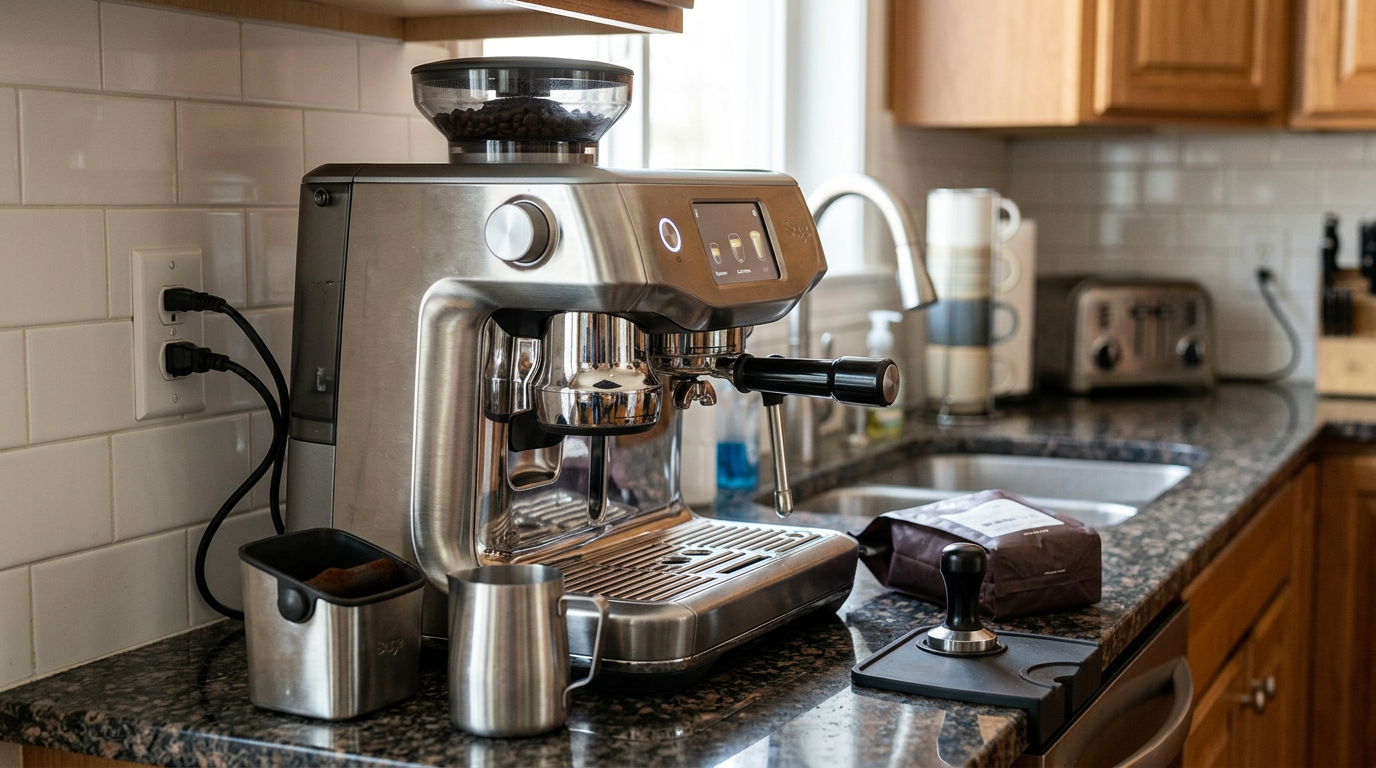
Swipe-and-select recipes make the Oracle Jet easy for the whole household.
You can save custom versions too, so everyone in the house can keep their own latte. That is a small feature that matters a lot if two people like very different coffee.
The Meraki keeps things simple. It makes espresso, gives you hot water and steams milk, and it is up to you to turn those into drinks.
Noise
The Meraki is the quieter machine during extraction. Its rotary pump is close to silent next to a vibratory pump, and it gives the machine a more refined feel in the morning.
The Oracle Jet uses a vibratory pump, so you will clearly hear it during pre-infusion and as the shot builds. It is not unusually loud for its type, but you will notice it if someone is sleeping in the next room.
The grinders also favor the Meraki, which testers describe as notably quiet. If you make coffee before the rest of the house is awake, that is worth something every single day.
Cleaning and upkeep
Neither machine cleans itself in the way a bean-to-cup super-automatic does. You will knock out pucks, rinse the portafilter and wipe the wand on both.
The Oracle Jet is the easier one to keep looking good. Its flat stainless surfaces wipe down quickly, the wand has a non-stick coating, and the screen walks you through descaling, which takes about 20 minutes.
The curves on the Meraki look beautiful but take more effort. Getting a cloth between the three towers is fiddly, and if you use the bottomless portafilter while dialing in, expect some coffee spray on the machine.
The three towers look great, but the gaps between them take some patience to clean.
Milk can also build up under the metal drip tray insert on the Meraki after purging the wand. It is not a serious flaw, but you will want to lift that tray out and rinse it often.
Water quality matters for both, particularly the Meraki. Its boilers hold water all the time, and at least some buyers report no filter in the box, so check your water hardness and plan accordingly.
Reliability and support
This is the strongest argument for buying the Oracle Jet. Breville has sold espresso machines for many years, has a large service network, and its Oracle line has a good record for lasting.
Meraki started on crowdfunding and only recently reached mainstream retailers. Its machine earned strong early praise and two design awards, but nobody can yet say how it will hold up after five or more years.
Both machines carry a two-year warranty. Early Meraki units had some portafilter fit problems, including water leaking from the top of the portafilter, and the current model addresses that with its redesigned group.
The software story is good on both. Wi-Fi updates keep adding features to the Oracle Jet automatically, while Meraki owners have to go and check for updates themselves.
If a long, proven support history matters most to you, choose the Oracle Jet. If you are comfortable backing a newer brand for better hardware, the Meraki is a reasonable risk.
Users repeatedly single out weight-based grinding and brewing as the thing that makes dialing in far less confusing.
The steam wand gets called the best feature of the machine, even by people who have used many other home models.
Splashes and the gaps between the towers are the most common gripes from people who have used it for months.
Owners love the screen and the fact that anyone in the home can make a good drink without training.
Brewing and steaming one after the other makes bigger batches of drinks drag on.
Coffee enthusiasts who prefer an 18-gram dose find the fixed baskets frustrating.
Real-life scenarios: which machine fits your home?
Spec sheets only get you so far, so I find it helps to picture a normal week with each machine. These are the situations where I think the choice becomes obvious.
With the scheduled warm-up, the machine is hot when you walk in, and your recipe is already saved. A minute of puck prep buys you the better cup.
Each person can save a custom drink and tap it on the screen, with no need to remember grind, dose or milk settings.
Brewing and steaming at the same time keeps the line moving, and the dry steam stays strong from one drink to the next.
If the machine has been off all day, you will be drinking coffee while the Meraki is still heating up.
Weight-based dosing and yield leave you with one variable to chase, and that makes every new coffee quicker to dial in.
Cold espresso over ice in just over a minute is something the Meraki simply cannot match.
Notice that neither machine wins every morning. The right choice depends on which of those situations looks most like your own life.
What each machine asks of you
Think about skill as well as time. The Oracle Jet asks you to learn where to place the portafilter and how to follow its grind suggestions, and most people will be comfortable within a day or two.
The Meraki has a longer learning curve, but it is still much shorter than on a traditional machine with a separate grinder and scale. Once you can distribute and tamp evenly, the numbers on the screen do most of the teaching.
Steaming is where you will spend the most practice time on the Meraki. The hands-free mode gives you good milk from the first day, but mastering the wand on full power takes patience.
There is also the question of who else will use it. If a partner or teenager wants a latte without a tutorial, the Oracle Jet will generate far fewer questions and far less cleanup.
My scorecard
These are my own scores out of 10, based on all of the data above. They are a judgment call rather than a lab measurement, but they show clearly where each machine pulls ahead.
Meraki
Oracle Jet
Which one should you buy?
It comes down to one question: do you want to take part in making your espresso? If a minute of tamping sounds enjoyable, the Meraki rewards you with the better cup.
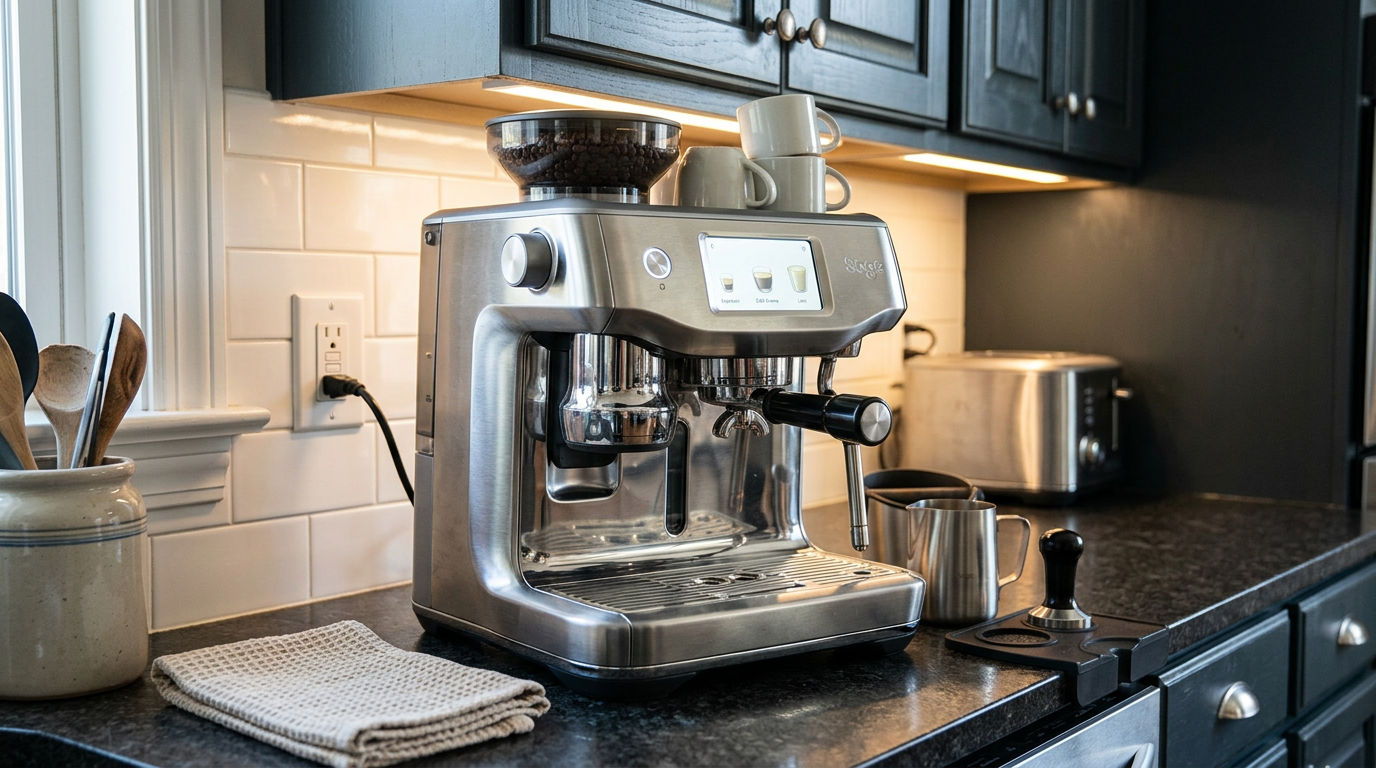
For busy mornings and mixed households, the Oracle Jet is the easier machine to live with.
- You want exact control over dose and yield
- You often brew and steam back to back
- You want a quiet machine
- You enjoy the craft of making espresso
- You never want to touch a tamper
- You want cold brew or a drink menu
- You want the safety of a long-established brand
- You want good drinks with very little effort
- Several people will use the machine
- You like iced drinks
- You want coffee within seconds of turning it on
- You like to control the exact dose
- You often make four or more drinks at once
- You are chasing the best possible milk texture
Pick the Meraki for precision, a better shot and outstanding steam. Pick the Oracle Jet for speed, automation and cold drinks from a proven brand.
My pick is the Meraki Espresso Machine. It pulls a sweeter, fuller shot, weighs everything for you and has the best steam wand here, with the quiet of a rotary pump on top.
The Breville Oracle Jet is still the smarter buy for many homes. It is faster, tidier and easier for the whole family, and it brings cold drinks and a proven brand behind it.
Whichever you choose, buy fresh beans, pay attention to your water and clean the wand after every drink.
Breville Oracle Jet vs Meraki specifications
From manufacturer specifications and published measurements. Checked November 9, 2026.
| Meraki | Breville Oracle Jet | |
|---|---|---|
| Type | Semi-automatic with grinder | Semi-automatic with auto puck prep |
| Heating | Dual stainless boilers, heated group | ThermoJet plus group ThermoJet |
| Boiler capacity | About 12 oz brew, 19 oz steam | No boiler |
| Temperature control | PID on brew, steam and group | PID, about 187 to 205°F |
| Warm-up | About 3 minutes | About 3 seconds claimed |
| Pump | Rotary | Vibratory |
| Grinder | 37 mm conical, 5-blade, anti-static | Conical, 6-blade |
| Grind adjustment | Stepless, 45 reference points | Stepless, 45 reference points |
| Dosing | By weight, ±0.2 g rated scale | By volume and resistance |
| Tamping | Manual | Automatic |
| Portafilter | 58 mm, E61 compatible | 58 mm |
| Shot stop | By weight | By volume or time |
| Steam wand | 3-hole gooseneck, tip probe | 4-hole, tip probe, air pump |
| Cold extraction | No | Cold brew, cold espresso |
| Screen | Small circular touchscreen | 5-inch touchscreen |
| Water tank | About 67 oz | About 77 oz |
| Bean hopper | About 4.4 oz | About 12 oz |
| Wi-Fi updates | Yes, manual check | Yes |
| Dimensions | 14.6 x 14.6 x 16.3 in | 15 x 14.5 x 16.7 in |
| Weight | About 32 lb | About 26.7 lb |
| Warranty | 2 years | 2 years |
How I researched and compared them
This comparison is built on side-by-side shot and milk data from both machines, combined with manufacturer specifications and published long-term test reports. Where sources disagreed, I went with the manufacturer spec for hardware and the measured result for performance.
I treat single owner complaints as warning signs rather than proof. I also compare the current version of the Meraki, because its second generation fixed several early problems.
- Coffee: flavor, body, sweetness and repeatability.
- Milk: steam quality, automatic modes and speed.
- Workflow: warm-up, puck prep, mess and multi-drink speed.
- Ownership: noise, cleaning, updates and support.
Oracle Jet vs Meraki FAQ
Is the Meraki better than the Breville Oracle Jet?
For shot quality, precision and steam, I think so. The Oracle Jet is better for automation, speed from cold and cold drinks.
Does the Meraki tamp automatically?
No. It grinds by weight automatically, but you distribute and tamp by hand using the included tools.
Can the Oracle Jet grind by weight?
No. It doses by volume and resistance against the tamping fan, so the actual dose can move with bean density.
Can the Meraki make cold brew?
No. Its boilers keep water hot, so it has no cold extraction mode. The Oracle Jet does offer one.
Can both machines steam and brew at the same time?
The Meraki can, thanks to its two boilers. The Oracle Jet runs the two tasks one after the other, but it can queue them for you.
Which is quieter?
The Meraki, because of its rotary pump. The Oracle Jet uses a louder vibratory pump.
Do both use a 58 mm portafilter?
Yes. The current Meraki also accepts standard E61-style portafilters, which gives you more accessory choice.
Which is better for oat milk?
The Oracle Jet has a dedicated oat setting that makes it easy. The Meraki can texture oat milk very well too, but you will set strength and temperature yourself.
Which is better for beginners?
The Oracle Jet is easier on day one. The Meraki is still approachable, as its scales and on-screen guidance remove a lot of the usual guesswork.
Are they good with light roasts?
Both prefer medium-dark to dark beans. The current Meraki has the wider grind range for lighter coffee, and the Oracle Jet does well when you raise the temperature.

- Manufacturer specifications for the Meraki Espresso Machine
- Manufacturer specifications for the Breville Oracle Jet (BES985)
- Side-by-side shot and milk data for both machines
- Published long-term test reports on both machines
- Verified owner feedback on both models
- Comparison published.