Best Window Cleaning Robots for Shower Glass and Mirrors (2026)
Bathroom glass is the most cleaned and least loved glass in the house. I tested three compact and dual-pad robots on a frameless shower screen, a framed shower door, a large bathroom mirror and a wardrobe mirror, and my top pick is the ECOVACS WINBOT MINI 2: small enough for any bathroom, with corner brushes that clean right to the frame.

Emily Carter
Buying Guide
3 models · 3 picks
4 weeks per robot
I choose products independently. If you buy through my links, HouseholdMe may earn a commission at no extra cost to you. Affiliate policy
Jargon helpNew to window robots? Tap or hover over any dotted term to see what it means.
In this guide
The short answer
- Best for showers and mirrors: the WINBOT MINI 2. Four corner brushes, an ultra-fine 10-micron mist and a body small enough for any bathroom.
- Best for soap scum and big panels: the HIXZAP X1 PRO. Two spinning pads scrub harder on soap film, and its big tank covers large panels.
- Best budget compact: the WINBOT MINI. The original compact Winbot, fine for small mirrors and regular cleans.
Our picks at a glance
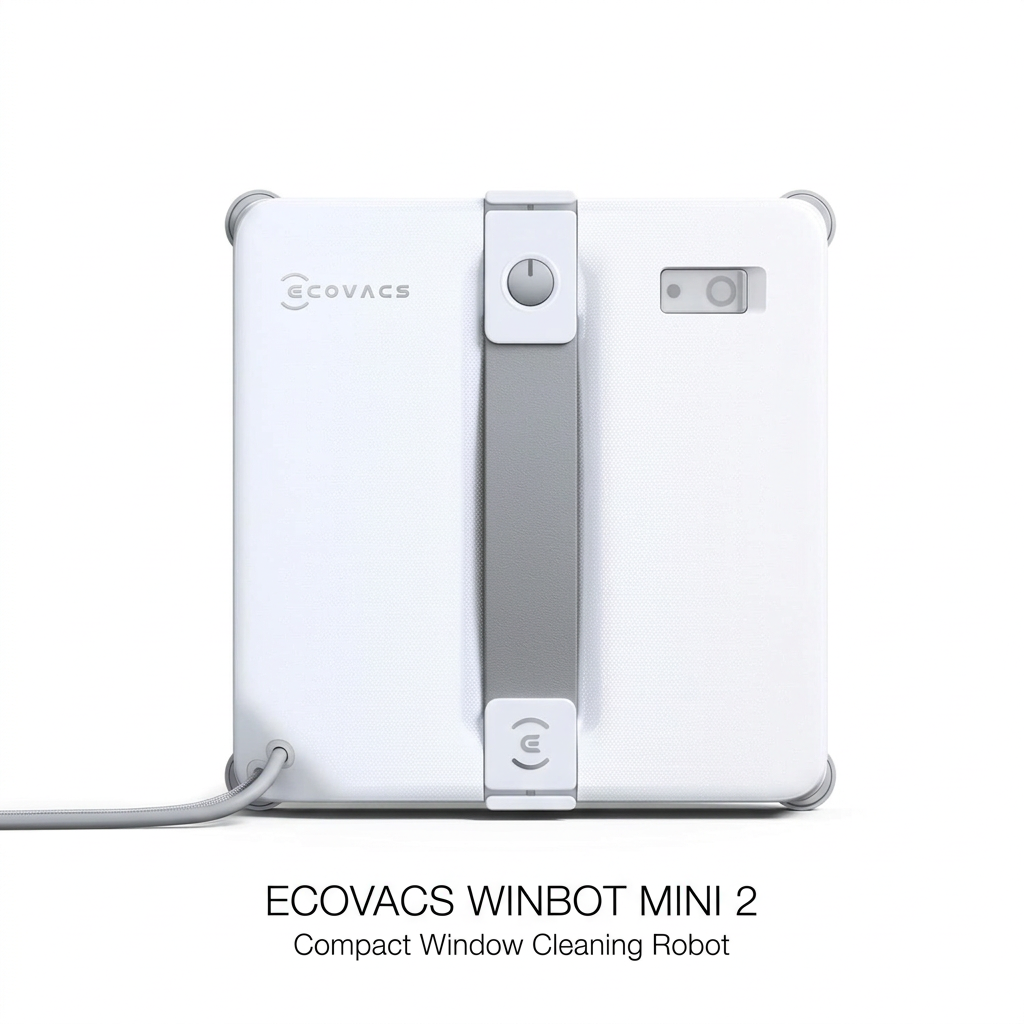
ECOVACS WINBOT MINI 2
Small enough for any bathroom, with four corner brushes, an ultra-fine mist and 8,000 Pa. The clearest mirrors and shower screens in my test.
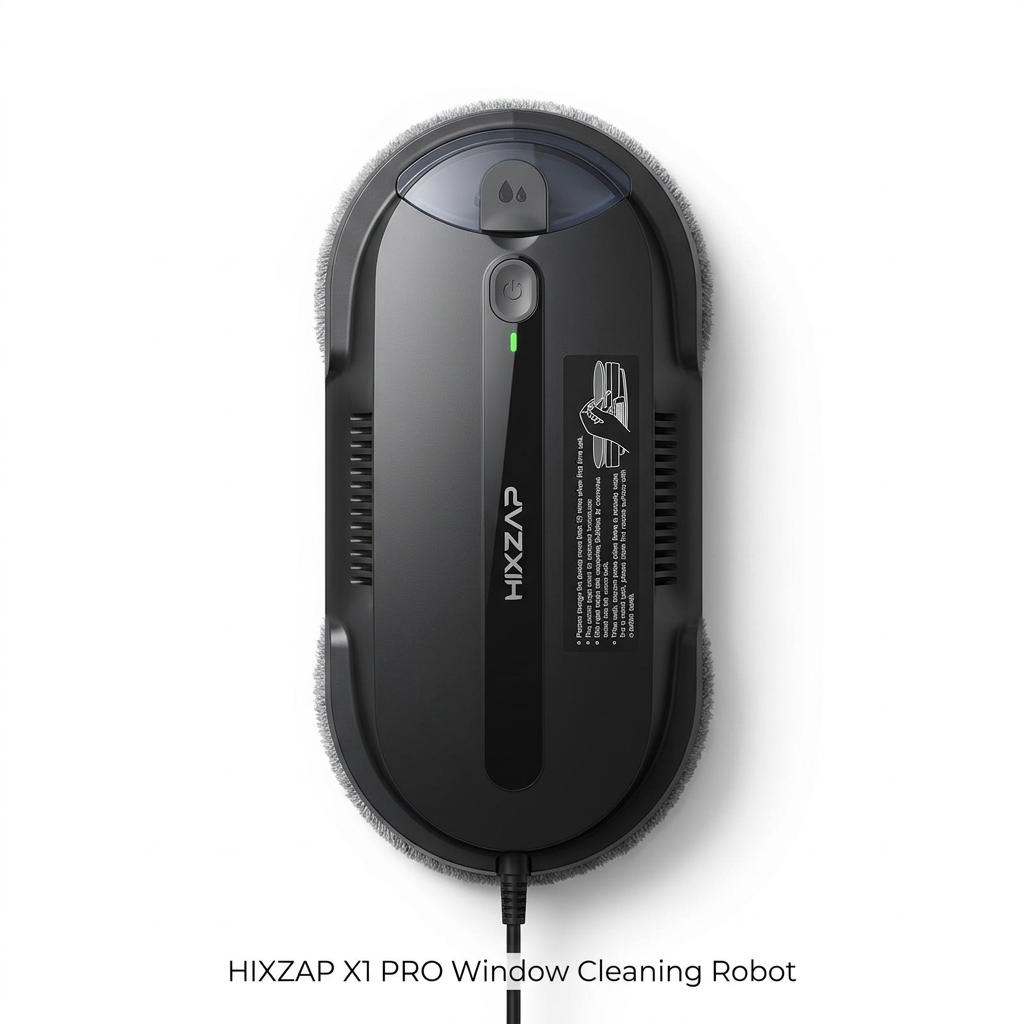
HIXZAP X1 PRO
Two spinning pads scrub harder than a flat pad, which helped on soap film. A big 85 ml tank, 20 pads and a simple remote.
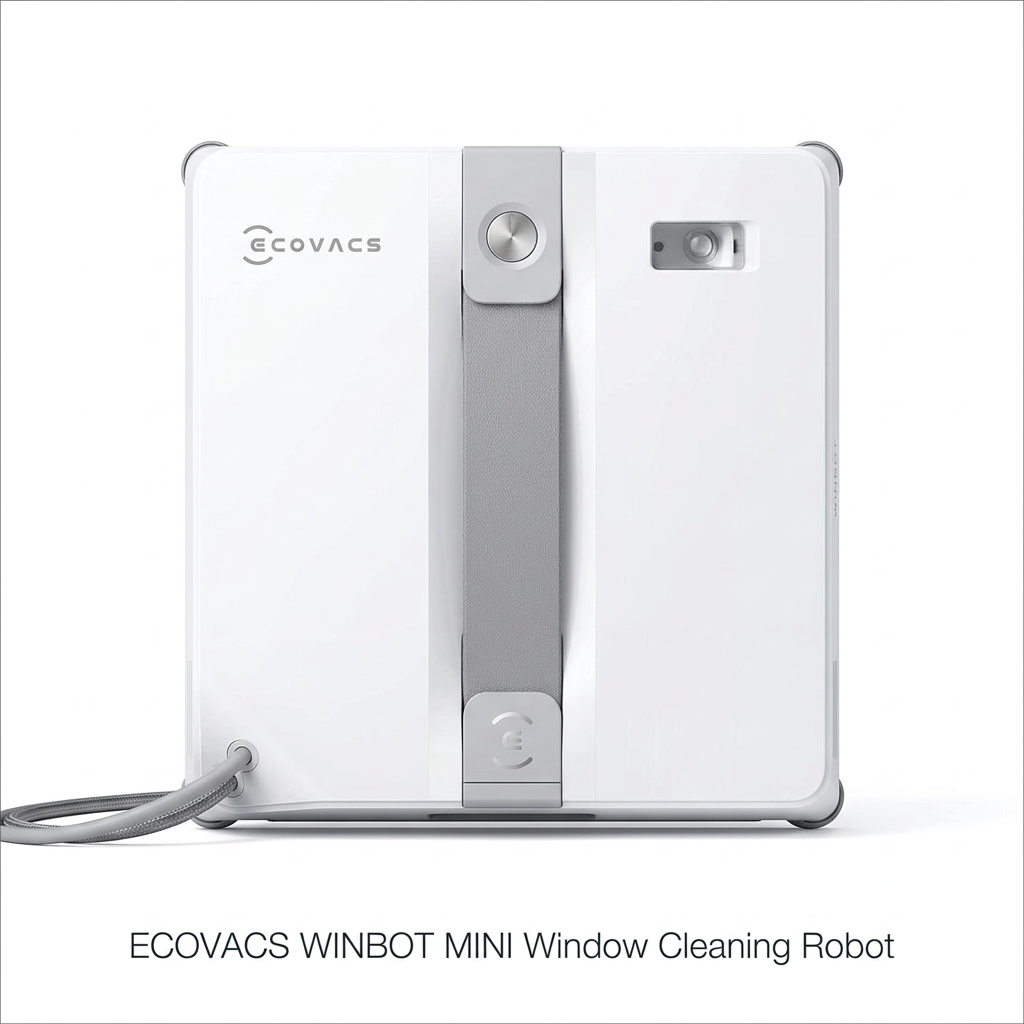
ECOVACS WINBOT MINI
The original compact Winbot: 7,500 Pa, a 30-minute backup and three cleaning modes in a robot about 21.5 cm across.
Availability and deals change often. Check the current offer on Amazon before you buy.
Compare the best robots for shower glass and mirrors
I scored these robots on bathroom glass only: a frameless shower screen, a framed shower door, a large bathroom mirror and a full-length wardrobe mirror.
| 3 picks compared | Best overall | Soap scum | Budget compact |
|---|---|---|---|
| My bathroom scores | |||
| Overall score | 8.4 | 7.8 | 7.6 |
| Streak-free finish | 8.6 | 7.4 | 7.6 |
| Soap scum | 7.8 | 8.2 | 7.2 |
| Edges and corners | 8.4 | 7.0 | 7.2 |
| Ease of use | 8.7 | 8.1 | 8.3 |
| Hardware | |||
| Size | About 21.5 cm square | Larger dual-pad body | About 21.5 cm square |
| Max suction | 8,000 Pa | 7,200 Pa | 7,500 Pa |
| Edge tech | Four corner brushes | None, round pads | Edge detection |
| Power-loss backup | 30+ min | 25 min | 30 min |
| Water tank | Small | 85 ml | About 60 ml |
| Control | App | Remote | App |
| Best for | Most bathrooms, mirrors and showers | Big panels and soap film | Small mirrors on a budget |
My bathroom test scores
All three robots cleaned the same bathroom glass twice a week for four weeks. I judged each result in the harsh light of a bathroom vanity lamp, which shows every streak.
For this guide, I scored streak-free finish and soap scum separately, because they pull in opposite directions: a gentle fine mist wins on streaks, while hard scrubbing wins on soap film.
| Robot | Overall | Streaks | Soap scum | Edges | Ease of use |
|---|---|---|---|---|---|
| WINBOT MINI 2 | 8.4 | 8.6 | 7.8 | 8.4 | 8.7 |
| HIXZAP X1 PRO | 7.8 | 7.4 | 8.2 | 7.0 | 8.1 |
| WINBOT MINI | 7.6 | 7.6 | 7.2 | 7.2 | 8.3 |
Editorial scores judged under a vanity lamp after each clean.
The MINI 2 won clearly on mirrors and on the frameless shower screen. Its fine mist and corner brushes left the cleanest result, and it was the easiest to place on small glass.
The X1 PRO was the best scrubber. On a shower door with a week of soap film, its spinning pads cut through faster, though it left curved patches in the corners.
Our tip: Clean shower glass while it is still warm and damp after a shower, because soap film lifts far more easily before it dries.
How I tested
I have tested home appliances professionally since 2016 and run HouseholdMe’s cleaning tests since 2021, with a background in industrial design.
For this guide I used three robots for four weeks each on bathroom glass only: a frameless walk-in shower screen, a framed shower door, a large mirror above a double vanity and a full-length wardrobe mirror in the bedroom.
I cleaned twice a week, judged every result under a vanity lamp and checked the frames, corners and the area around the robot’s start point, where small robots often leave a mark.
Why bathroom glass is different
A window collects dust and rain. Bathroom glass collects soap, shampoo, body oils, toothpaste spots and the minerals from every drop of shower water that dries on it.
It also gets dirty fast. My shower screen needed cleaning twice a week to stay clear, which is exactly why a robot appeals here: it is the most repetitive glass job in the house.
| Bathroom dirt | What it is | How hard to remove |
|---|---|---|
| Water spots | Minerals left as drops dry | Easy when fresh, hard when old |
| Soap scum | Soap mixed with hard-water minerals | Medium, needs scrubbing |
| Toothpaste and splashes | Dried paste and droplets on mirrors | Easy |
| Hairspray and product haze | A sticky film on mirrors | Medium |
| Limescale | Thick mineral crust | Hard, often needs a descaler first |
There is also the space problem. Bathrooms are small, shower screens can be narrow and mirrors are often surrounded by tiles, cabinets and lights. A big window robot simply does not fit.
How a robot cleans a mirror or shower screen
A robot holds itself on the glass with suction measured in Pascals (Pa)✕Pascals (Pa)the unit used for suction. Higher numbers press the robot harder onto the glass and the pad harder against the dirt.. Mirrors and shower glass are smooth and clean-backed, so all three robots here gripped well on them.
It then sprays a mist and wipes. The finer the mist, the less water runs down the glass, which matters on a mirror because every drip line shows.
Fine mist vs scrubbing
The MINI 2 uses an ultrasonic spray✕Ultrasonic spraya nozzle that vibrates the solution into a very fine mist. Smaller droplets spread evenly and dry without drips. with droplets as small as 10 microns, and a flat pad that presses down at about 14 N. That combination is gentle and leaves very few streaks.
The X1 PRO uses dual spinning pads✕Dual spinning padstwo round pads that spin against the glass, scrubbing the dirt and moving the robot at the same time. They scrub hard but cannot reach into square corners. instead. They scrub harder, which helps on soap film, but two round pads always leave a curved patch in each corner.
Edges on bathroom glass
Shower screens and mirrors have edges that matter: a metal channel on a framed door, a silicone seal on a screen or the bevel of a mirror. The MINI 2’s four corner brushes and side wings, which guide the pad to within about a millimeter of the edge, made the biggest difference here.
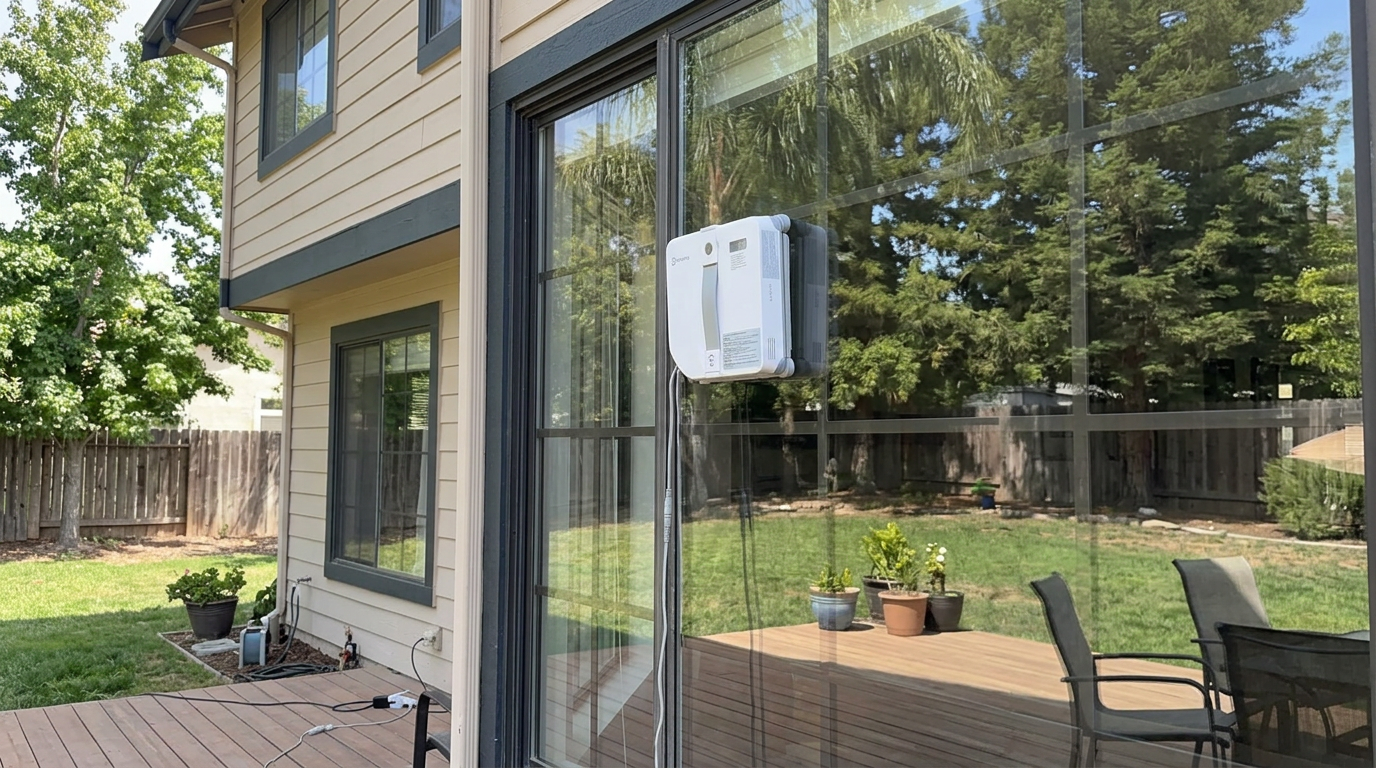
Small robots like the MINI 2 fit bathroom mirrors that full-size window robots cannot.
Our picks in depth
1. ECOVACS WINBOT MINI 2
The WINBOT MINI 2 is the robot I would put in any bathroom. At about 21.5 cm across and 5.5 cm thick, it fits small mirrors and narrow shower panels, and it stores in a bathroom drawer with its cable and tether.
More importantly, it cleans bathroom glass properly. It scored highest of the three on streaks, edges and ease of use.
A mist made for mirrors
Its ultrasonic spray makes droplets as small as 10 microns, and its microfiber pad holds up to about 15 g of moisture. On my vanity mirror, under a harsh lamp, it left no drip lines and almost no streaks.
That fine mist also matters on frameless shower glass, where water running down the edge leaves a visible line once it dries.
Corner brushes for frames and seals
Four rotating brushes, one at each corner, spin at up to 84 RPM along the frame, while side wings guide the pad to within about a millimeter of the edge. On my framed shower door, it cleaned into the metal channel better than either other robot.
On the frameless screen, its edge sensing stopped it cleanly at the free edge every time.
Soap scum
On fresh soap film, cleaned twice a week, it kept the screen clear without trouble. On a week-old build-up, it needed two passes, and the X1 PRO’s spinning pads were quicker.
If you clean regularly, that never becomes an issue. If you let it build up, a descaler first and the robot afterwards worked best.
Safety and storage
It grips at 8,000 Pa and keeps its suction for more than 30 minutes on its internal battery if the cord comes out. I tested that over the bathroom sink, with the tether clipped to the tap, and it held on and beeped until I lifted it off.
After use, the whole kit went back in a drawer, which mattered in a bathroom with no spare floor space.
Setup in a small bathroom
Setup in my small bathroom took under a minute. I plugged the adapter into the outlet by the door, ran the cable over the top of the mirror and clipped the tether to the towel rail, which is screwed into the wall.
Four weeks with it
I ran it on the mirror twice a week while I brushed my teeth, and on the shower screen after evening showers. By the second week, it had become as routine as switching on the extractor fan.
In four weeks it never slipped, never needed rescuing from a corner and never left a streak I could see without looking for it.
What to know before you buy
It needs an outlet within cable reach, which in a bathroom means planning the cable away from water. It is also slower than full-size robots on big glass, so on a full-length wardrobe mirror it took a while.
Compared with the original WINBOT MINI, the corner brushes and finer mist are well worth the step up.
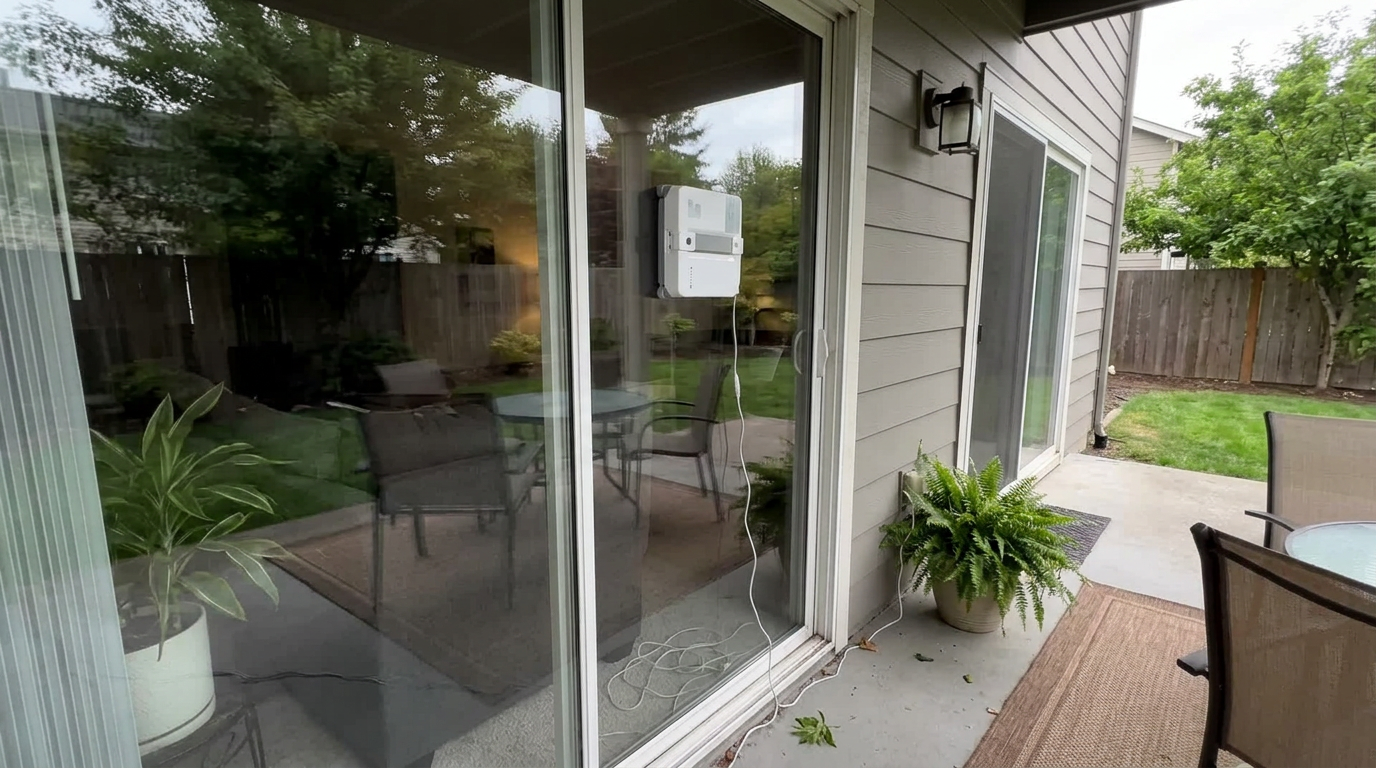
The MINI 2’s corner brushes cleaned into the shower door channel better than either other robot.
- Best streak-free finish on mirrors
- Four corner brushes clean into frames and channels
- Ultra-fine 10-micron mist, no drip lines
- Small enough to store in a bathroom drawer
- Needs an outlet within cable reach
- Week-old soap scum needs two passes
- Slower on full-length mirrors
- Most bathrooms with mirrors and shower screens
- Anyone who notices streaks under bright lights
- Small bathrooms with little storage
- Bathrooms with no safe outlet nearby
- Heavy limescale that needs descaling first
- Anyone who wants the fastest clean on huge mirrors
Choose this if you want clear, streak-free mirrors and shower glass with the least effort. Read my full WINBOT MINI 2 review.
2. HIXZAP X1 PRO
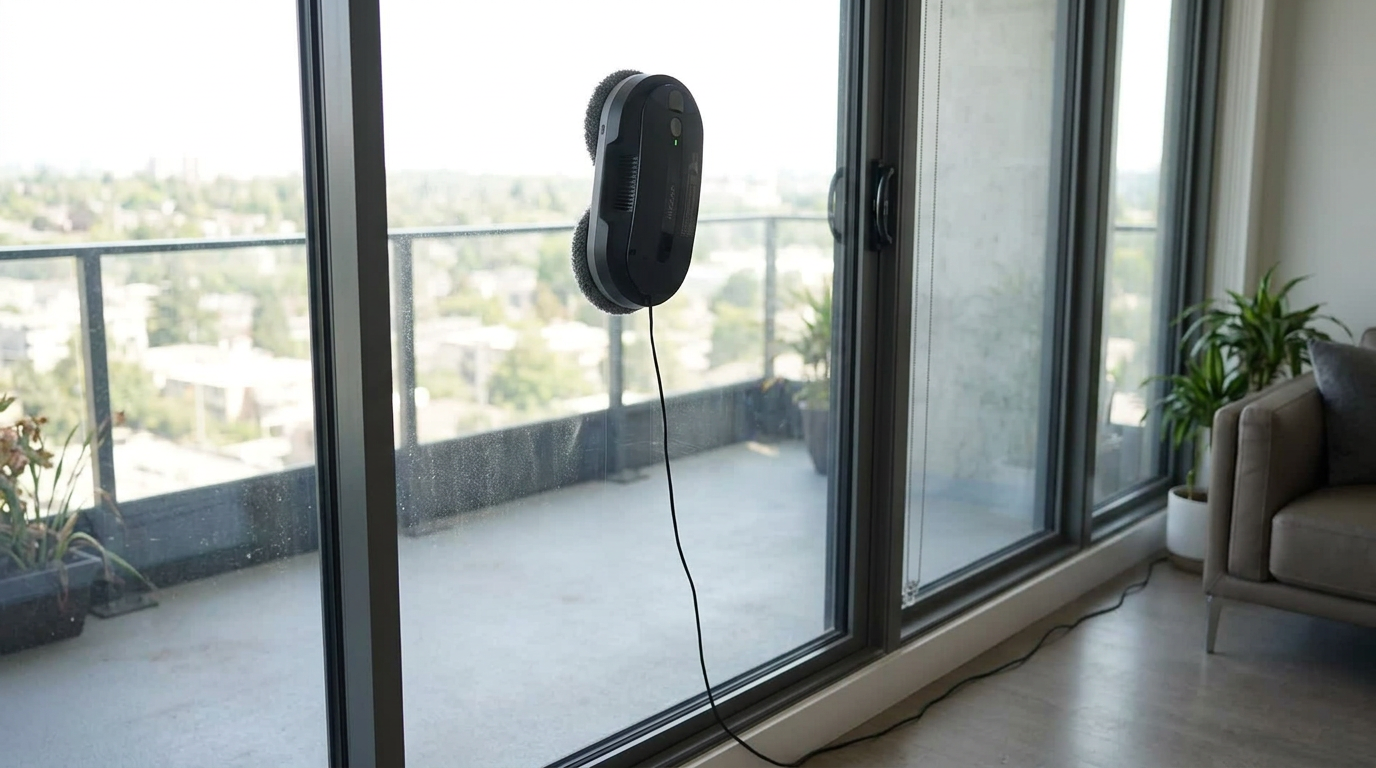
The HIXZAP X1 PRO is a different kind of robot. Instead of a flat pad, it uses two spinning round pads that scrub and move it at the same time, and in the bathroom that made it the best soap-scum remover of the three.
It is also a larger robot, which suited my big shower panel and the full-length wardrobe mirror more than the small bathroom mirror.
Scrubbing power
On a shower door with a week of soap film, the spinning pads cut through it in a single pass where the MINI 2 needed two. The friction of a spinning pad simply works harder on sticky film than a sliding one.
Its 7,200 Pa of suction kept the pads pressed firmly, and its dual ultrasonic spray wets the glass just ahead of each pad.
Big tank, lots of pads
The 85 ml see-through tank covered the shower panel and the wardrobe mirror without a refill. With 20 pads in the box, I could swap to a fresh pad for every surface, which kept results consistent.
Everything runs from a remote: spray strength, modes and manual steering. I used the steering to send it back over a toothpaste spot it had missed.
Our tip: Turn the X1 PRO’s spray down on mirrors and up on shower glass, because mirrors need far less water and streak when they get too much.
Where it falls short in the bathroom
Two round pads cannot reach square corners, so it leaves a small curved patch in each one. On a framed shower door, that meant wiping all four corners by hand after every clean.
It is also noisier than the Winbots, which echoes in a tiled bathroom, and on mirrors its finish was not as streak-free as the MINI 2.
Setup in a small bathroom
Setup took a little longer because of its size. On the shower panel, I clipped the tether to the shower mixer bar and ran the cord over the top of the glass from an outlet outside the bathroom.
Four weeks with it
I used it mostly on the big walk-in shower panel and the wardrobe mirror, where its size and tank made sense. On the small vanity mirror I preferred the MINI 2.
The remote turned out to be handy in the bathroom: I could start, steer and stop it without picking up my phone with wet hands.
What to know before you buy
It needs an outlet within cord reach and has no app. It is a good choice if soap film is your main problem and your panels are large; for everyday mirrors, the MINI 2 is better.
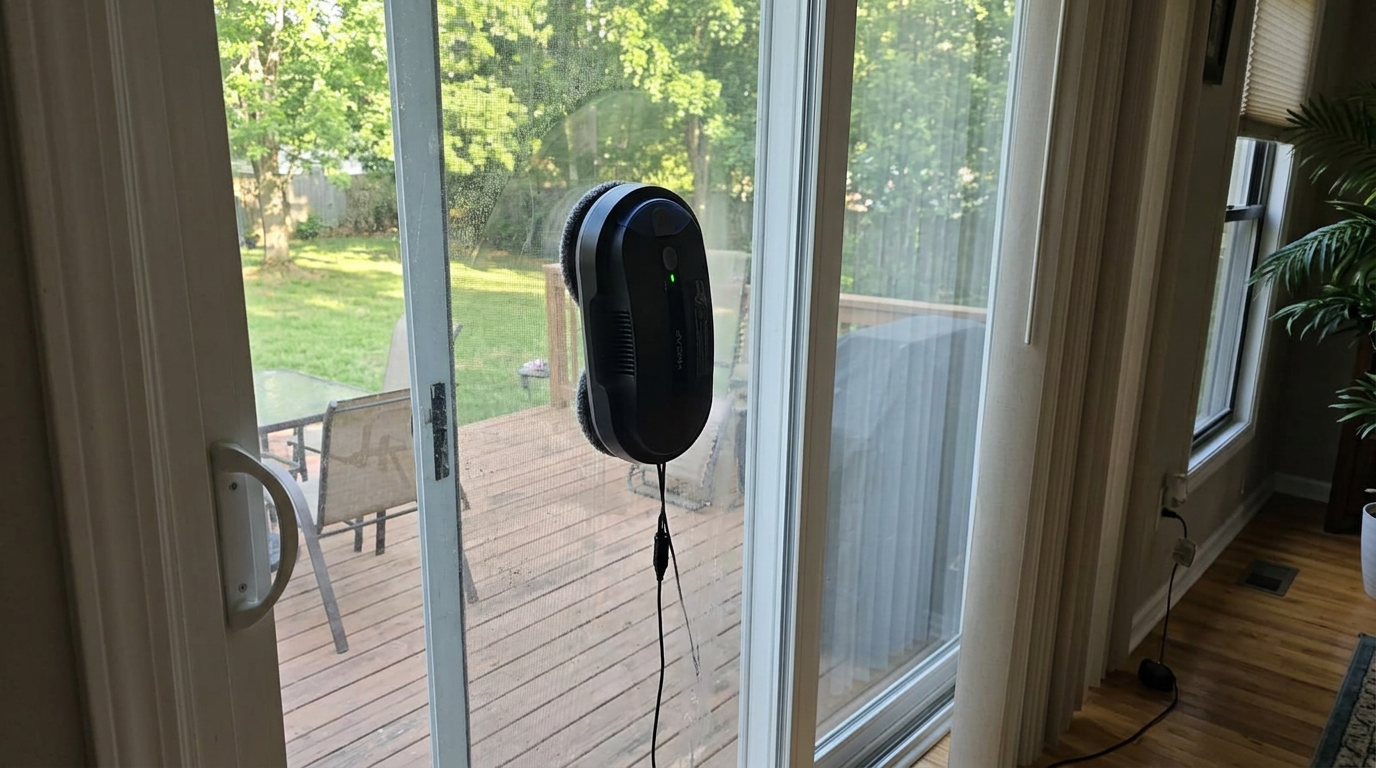
The X1 PRO’s two spinning pads scrubbed soap film faster than flat-pad robots.
- Best soap-scum removal of the three
- 85 ml tank covers big panels in one go
- 20 pads in the box
- Simple remote with spray control and steering
- Round pads leave curved patches in corners
- Noisier, which echoes in a tiled bathroom
- Less streak-free on mirrors
- Large shower panels with soap film
- Full-length wardrobe mirrors
- People who prefer a remote to an app
- Small bathroom mirrors
- Framed doors where corners matter
- Anyone sensitive to noise
Choose this if soap film is your main problem and your panels are large. Read my full HIXZAP X1 PRO review.
3. ECOVACS WINBOT MINI
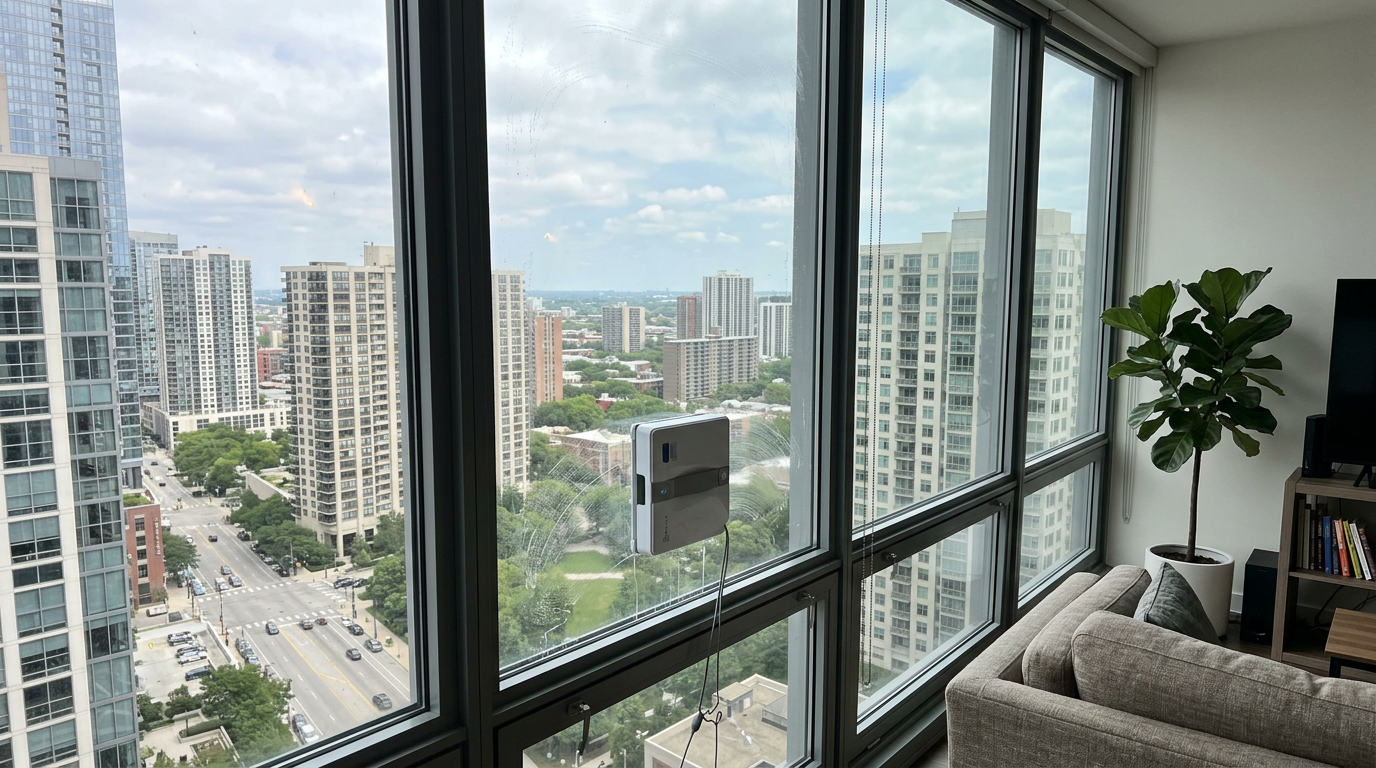
The WINBOT MINI was ECOVACS’ first truly compact window robot, and it still works well on small bathroom glass. It is about 21.5 cm square and 5.5 cm thick, weighs around 1.3 kg and grips at 7,500 Pa.
It has three cleaning modes: fast for light dirt, deep for stubborn marks and spot for individual stains.
Solid on small mirrors
On my bathroom mirror, cleaned twice a week, it did a tidy job. Its automatic air-pressure compensation, which ECOVACS says reacts to leaks in 0.04 seconds, kept it firmly on the glass even near the mirror edge.
Its dual-nozzle ultrasonic spray wets the glass evenly, though its mist is not as fine as the MINI 2’s and I saw a few more drip lines.
The edges
This is where it falls behind. Without corner brushes, it left a thin line along the frame of my shower door and in the corners of the mirror.
For a frameless mirror with no frame to clean against, that mattered less.
Our tip: Use the WINBOT MINI’s spot mode on toothpaste splashes, because a short focused run clears them without a full clean of the mirror.
Small tank
Its tank holds about 60 ml, so on the large wardrobe mirror I refilled it once. On a bathroom mirror, one fill was plenty.
Setup in a small bathroom
Setup was the same as the MINI 2: adapter by the door, cable over the top, tether to a solid towel rail. In the guest bathroom, it stayed plugged in under the basin between cleans.
Four weeks with it
I kept it for the guest bathroom, whose frameless mirror only needs a clean every week or so. There it did everything I asked of it.
On my own framed shower door, though, I found myself reaching for a cloth after every run, which is exactly what a robot should save you from.
What to know before you buy
It needs an outlet, it is slower on big glass and its edges are the weakest here. It makes sense on a tight budget or a good deal, but the MINI 2 is the better bathroom robot.
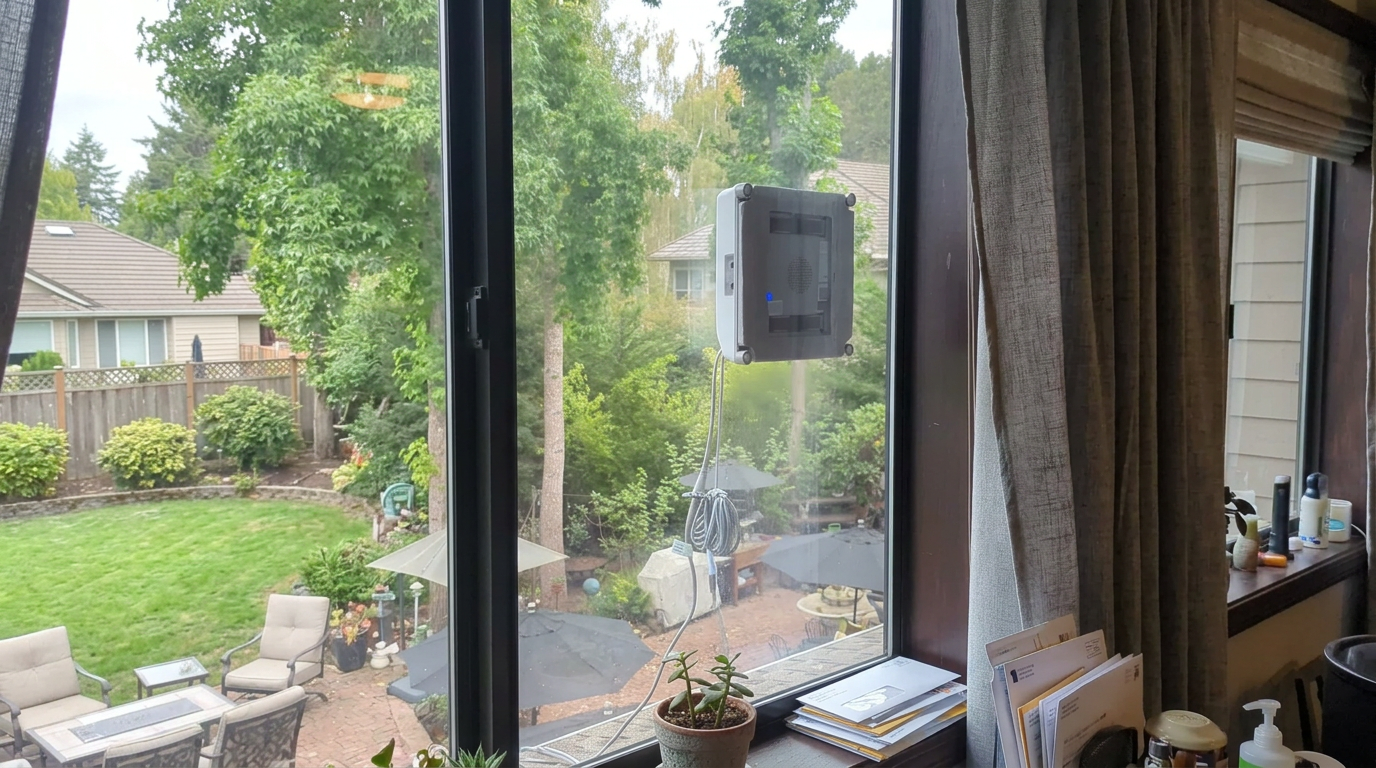
The original WINBOT MINI is compact and capable on small bathroom mirrors.
- Compact, about 21.5 cm square
- 7,500 Pa with a 30-minute backup
- Fast, deep and spot modes
- Nine layers of safety protection
- No corner brushes, weaker edges
- Small tank for big mirrors
- Mist not as fine as the MINI 2
- Small frameless mirrors
- Tight budgets or good deals
- People who clean little and often
- Framed shower doors
- Large wardrobe mirrors
- Anyone who wants the clearest edges
Choose this if you want a compact robot for small mirrors and the price is right.
My bathroom test data
These are the numbers I recorded over four weeks of twice-weekly bathroom cleaning with each robot.
Time per surface
| Surface | MINI 2 | X1 PRO | MINI |
|---|---|---|---|
| Bathroom mirror, about 120 × 80 cm | ~4 min | ~4.5 min | ~4.5 min |
| Frameless shower screen, about 90 × 200 cm | ~7 min | ~7 min | ~8 min |
| Framed shower door | ~6 min | ~6 min | ~7 min |
| Full-length wardrobe mirror | ~6 min | ~5.5 min | ~7 min |
Passes needed on a week of soap film
On my shower door after a week without cleaning. Fewer passes is better.
Hand-finishing after each clean
My estimate of how much I wiped by hand after each run on the framed shower door.
Subjective ratings. Every window robot is fairly loud because of its suction fan.
The first clean of a cloudy shower screen
Most people buy a robot when their shower glass is already cloudy. A robot keeps glass clear brilliantly, but it is not a descaler, so the first clean needs a different approach.
- Check what you are dealing with
Wipe a small area with a damp cloth. If it clears, it is soap film; if a white haze stays, it is limescale.
- Descale limescale by hand
Use a bathroom descaler or a vinegar solution on a cloth, following the glass maker’s advice, then rinse thoroughly.
- Let the glass dry
Robots slip on wet glass and leave smears.
- Run the robot twice
The first pass lifts the residue; the second leaves the glass clear.
- Then keep it up twice a week
From now on, a single pass is enough.
On my neighbor’s shower, cloudy after a year without a proper clean, this routine took about 20 minutes the first time. Two weeks later, the MINI 2 was keeping it clear in seven minutes, hands-free.
Our tip: Never put vinegar or descaler in the robot’s tank, because acids can damage the pump and nozzles; use them on a cloth before the robot runs.
Soap scum, limescale and hard water
The white haze on shower glass is usually a mix of two things: soap scum and hard-water minerals. Soap reacts with the calcium and magnesium in hard water and forms a sticky film that bonds to glass.
The US Geological Survey estimates that about 85 percent of American homes have hard water. That is why shower glass gets cloudy so fast in most homes, and why the same glass stays clear in soft-water areas.
| Problem | What a robot can do | What you need first |
|---|---|---|
| Fresh water spots | Remove them easily | Nothing |
| Light soap film | Remove it in one or two passes | Nothing |
| Week-old soap scum | Remove it with scrubbing pads or two passes | Warm, damp glass helps |
| Thick limescale | Very little | A descaler and a cloth |
| Etched glass | Nothing | It is permanent damage |
The trick is frequency. In my test, cleaning the shower screen twice a week with a robot kept it clearer than a deep clean every fortnight by hand, because the film never had time to bond.
If your glass already has a thick crust, descale it by hand once, rinse well and let the robot keep it clean from then on.
Our tip: Fill the robot with distilled water for bathroom glass, because it reads close to 0 ppm and does not add new minerals to the glass it is cleaning.
How much each habit kept my shower screen clear, from four weeks of tests.
Shower screens, doors and mirrors: what works
Not every bathroom surface suits a robot. This is what I found on the glass in my home and in my neighbors’ bathrooms.
| Surface | Robot friendly? | Notes |
|---|---|---|
| Frameless shower screen | Yes | Needs reliable edge sensing at the free edge |
| Framed shower door | Yes | Corners and channels favor the MINI 2 |
| Sliding shower doors | Yes, one panel at a time | Clean each panel separately |
| Large vanity mirror | Yes | Ideal surface |
| Mirror cabinet doors | Usually | Small doors may be too small for any robot |
| Full-length wardrobe mirror | Yes | Bigger robots are faster here |
| Frosted or patterned shower glass | No | Suction cannot seal on textured glass |
| Mirrored tiles | No | Joints between tiles stop the robot |
Two warnings from my test. First, mirror edges can be damaged by moisture, so avoid soaking the edges of an old mirror; a fine mist and a well-wrung pad are safer.
Second, check that the glass is thick enough. Most robots need glass at least 3 mm thick, which almost all shower glass and most mirrors exceed.
Easy-clean coatings✕Easy-clean coatingsa factory or aftermarket coating on some shower glass that makes water bead up and slide off. Abrasive pads and harsh cleaners can wear it away.
If your shower glass has a coating, use plain distilled water and a soft microfiber pad. The X1 PRO’s spinning pads were fine on my coated screen, but I would avoid scrubbing hard on a new coating.
Will a robot fit your mirror or shower?
Small glass is the main reason people return window robots. A robot needs a surface larger than itself, with room to turn and an edge it can detect.
| Robot | Robot size | Smallest glass I would use it on |
|---|---|---|
| WINBOT MINI 2 | About 21.5 cm square | Around 25 × 30 cm |
| WINBOT MINI | About 21.5 cm square | Around 22 × 25 cm, as rated |
| HIXZAP X1 PRO | Larger dual-pad body | Around 40 × 50 cm |
Measure the glass itself, not the frame or the cabinet around it. Mirror cabinet doors, narrow side panels next to a shower door and small powder-room mirrors were all too small for the X1 PRO in my test.
The compact Winbots fitted everything except one tiny cabinet door, which I cleaned with a cloth in ten seconds.
Our tip: Measure the narrowest panel of your shower before you buy, because fixed side panels are often much narrower than the door.
Which one is right for you?
4 quick questionsAnswer four questions and I will match you with the right robot for your bathroom glass. My single reviews go deeper, starting with the MINI 2 review.
Or find your bathroom below
Small, streak-free and with corner brushes for frames.
Spinning pads scrub film off in one pass.
Compact and capable on small glass.
The corner brushes reach into the channel.
How I judged streaks
Bathroom lighting is brutal. A mirror that looks clean in daylight shows every smear under a vanity lamp at night, so I judged every clean in the worst light I had.
After each run, I switched off the main light, switched on the vanity lamp and looked at the mirror from an angle, which is how streaks show up most. I scored the result from 1 to 10 and noted where any streaks were.
| Where streaks appeared | Usual cause | Robot most affected |
|---|---|---|
| Bottom edge | Water running down | X1 PRO on high spray |
| Corners | Pad could not reach | X1 PRO |
| Start point | Pad mark where the robot sat | All, briefly |
| Along frames | Missed strip | WINBOT MINI |
The start-point mark is worth knowing about. Every robot leaves a faint pad mark where it sits before and after a clean, which I wiped off with a dry cloth in two seconds.
Steam, humidity and suction
Steam is the hidden enemy of bathroom robots. A mirror covered in condensation is wet glass, and wet glass breaks the suction seal and turns the pad into a squeegee that smears.
In my test, every robot slipped or stalled at least once when I started it on a steamed-up mirror. Waiting five minutes with the extractor fan on solved it every time.
How well the robots ran on the mirror after a shower, from my test log.
A weekly bathroom glass routine with a robot
After four weeks, this is the routine that kept my bathroom glass clearest with the least effort.
| When | What | Time |
|---|---|---|
| After each shower | Quick squeegee of the screen, if you have one | 30 seconds |
| Twice a week | Robot on the shower screen while it is warm | About 7 minutes, hands-free |
| Twice a week | Robot on the bathroom mirror | About 4 minutes, hands-free |
| Weekly | Wash the pads | In the machine with towels |
| Monthly | Robot on wardrobe and hallway mirrors | About 6 minutes each |
| Every few months | Descale the shower screen by hand if needed | 10 minutes |
The biggest difference was psychological. Starting a robot on the mirror while I brushed my teeth took less effort than finding a cloth, so the glass simply stayed clean.
Our tip: Keep the robot, tether and a spare pad in one bathroom drawer, because a robot that is out of sight in another room rarely gets used.
Robot vs squeegee, cloth and daily spray
A robot is not the only way to keep bathroom glass clear, so I compared it with the methods most people already use.
| Method | Effort | Finish | Best for |
|---|---|---|---|
| Window robot | Low, hands-free | Very good to excellent | Twice-weekly cleans of mirrors and screens |
| Squeegee after each shower | Low, but daily | Good | Preventing water spots |
| Microfiber cloth and spray | Medium | Good, can streak | Quick touch-ups |
| Daily shower spray | Very low | Fair | Slowing soap scum build-up |
| Descaler and scrubbing | High | Excellent | Removing thick limescale |
The best results came from combining two: a quick squeegee after showers to stop water spots, and the robot twice a week for a proper clean. The squeegee does prevention; the robot does the cleaning.
On mirrors, the robot beat my cloth every time. A cloth pushes toothpaste and product haze around, while the robot’s mist and pad lifted it evenly across the whole surface.
My ratings of the same mirror after each method.
What to look for in a robot for showers and mirrors
| Feature | Why it matters in a bathroom | Best here |
|---|---|---|
| Small size | Fits small mirrors and narrow panels | MINI 2, MINI |
| Fine mist | Fewer drip lines on mirrors | MINI 2 |
| Edge cleaning | Frames, channels and seals | MINI 2 |
| Scrubbing power | Soap film | X1 PRO |
| Backup battery | Holds on if the cord is pulled near water | All three |
| Easy storage | Bathrooms have no spare space | MINI 2, MINI |
Size and mist quality matter more here than suction. All three robots gripped mirrors and shower glass firmly, because bathroom glass is smooth and clean-backed.
If you are choosing between a compact robot and a bigger dual-pad one, think about the smallest piece of glass you want cleaned. If it is a bathroom mirror, go compact.
Caring for mirrors while you clean them
Mirrors are glass with a reflective coating on the back, protected by paint. Moisture that creeps behind the edges over years can cause dark spots, usually called desilvering✕Desilveringdark patches that appear when moisture damages the reflective coating on the back of a mirror, usually starting at the edges. It cannot be repaired..
That makes the way you clean them matter. A dripping cloth or a robot set to heavy spray can run water down to the edge every time.
- Use the finest mist setting
On the MINI 2 and MINI, the default mist is fine; on the X1 PRO, turn the spray down.
- Wring the pad well
A damp pad cleans; a wet one leaves water at the bottom edge.
- Wipe the bottom edge dry
After a clean, run a dry cloth along the bottom of the mirror where any moisture collects.
- Ventilate the bathroom
Steam is harder on mirrors than any cleaning, so run the fan.
None of the robots harmed my mirrors over four weeks, and their fine mists used far less water than my old spray-and-cloth routine.
Safety in the bathroom
A robot that slips off a bathroom mirror will not fall far, but it can crack a ceramic sink, chip tiles or land in a basin of water. Use the tether indoors just as you would outdoors.
Electricity and water need care too. Every robot here runs from a power adapter, so keep the cable and adapter well away from the shower and basin, and never run a robot inside a running shower.
- Anchor the tether
Clip it to a solid towel rail, a tap or a heavy fixture, never to a shower curtain rail.
- Route the cable away from water
Run it from an outlet outside the wet area if you can, over the top of the glass.
- Run it on glass, not in the shower
Wait until the water is off and the steam has cleared.
- Use the backup battery as a safety net
If the cord is pulled, the robot stays on for 25 to 30 minutes while you lift it off.
Our tip: Never plug a window robot into an outlet inside the shower area, and keep the power adapter on a dry shelf outside the splash zone.
Beyond the bathroom
A compact robot bought for the bathroom quickly finds other jobs. These are the other surfaces I used them on during the test.
| Surface | Worked well? | Best robot |
|---|---|---|
| Wardrobe mirror doors | Yes | X1 PRO or MINI 2 |
| Glass front door panel | Yes, if large enough | MINI 2 |
| Narrow kitchen window | Yes | MINI 2 |
| Glass splashback | Yes, on smooth glass | MINI 2 |
| Glass display cabinet doors | Usually too small | None |
| Patio doors | Yes, but slowly | X1 PRO |
If you want one robot for the bathroom and a few small windows, the MINI 2 covers it all. If your house also has big doors and windows, a full-size robot for those and a compact one for the bathroom is the combination that worked best for me.
Maintenance for bathroom use
- Wash pads often
Soap residue builds up in pads fast; wash them weekly in warm water without fabric softener.
- Rinse the tank
Soap and minerals can clog nozzles, so empty and rinse after use.
- Dry the robot
Wipe it dry before storing it in a damp bathroom.
- Clean the corner brushes
On the MINI 2, pull hair from the brushes every few runs.
| Item | How often in a bathroom |
|---|---|
| Pads | Replace every 1–2 months |
| Corner brushes (MINI 2) | Clean weekly, replace yearly |
| Tether | Inspect every few months |
Five myths about robots on bathroom glass
- “They are only for windows.”
Mirrors and shower glass are the smoothest, easiest glass in the house for a robot. In my test, they were where the compact robots performed best.
- “More suction cleans better.”
Not in a bathroom. All three robots gripped mirrors firmly; mist quality and edge cleaning decided the results.
- “A robot will remove limescale.”
It will keep glass from scaling if you clean often, but thick limescale needs a descaler first.
- “You need a special cleaning solution.”
Distilled water gave me the clearest mirrors. I only used the maker’s solution on very greasy, product-covered glass.
- “They are too loud for daily use.”
They are loud, roughly like a small vacuum, but a four-minute mirror clean is over before it becomes annoying.
The one thing robots genuinely cannot do in a bathroom is clean small, fiddly glass: tiny cabinet doors, narrow strips and anything textured. For those, a cloth is still the right tool.
For everything else, a compact robot turned bathroom glass from a weekly chore into something I barely had to think about.
Common mistakes with bathroom glass
| Mistake | What happens | Fix |
|---|---|---|
| Running it on steamy glass | The robot slips and smears | Wait for the steam to clear |
| Soaking old mirror edges | Moisture can damage the backing | Use a fine mist and a wrung-out pad |
| Using bathroom cleaners in the tank | Foam clogs nozzles and streaks | Distilled water or the maker’s solution |
| Starting at the very edge | The robot misjudges small glass | Start near the middle |
| Skipping the tether | A slip can crack a sink | Clip it every time |
Frequently asked questions
What is the best window robot for shower glass?
The ECOVACS WINBOT MINI 2. It is small enough for shower screens, its corner brushes clean frames and channels and its fine mist leaves few streaks.
Can a window cleaning robot clean a mirror?
Yes. Mirrors are smooth, flat glass and ideal for robots. Compact robots fit bathroom mirrors best.
Will a robot remove soap scum?
Fresh and light soap film, yes. The HIXZAP X1 PRO’s spinning pads were best on week-old film. Thick limescale needs a descaler first.
Can I use a window robot inside the shower?
Only on the glass, with the water off and the steam cleared. Keep the cable and adapter away from water.
Is it safe to use a window robot on mirrors?
Yes, with the tether attached to something solid. A slip could crack a sink or tiles below.
What water should I use on bathroom glass?
Distilled water. It adds no new minerals, which is what causes the white haze on shower glass.
Will a window robot work on frosted shower glass?
No. Textured or frosted glass breaks the suction seal.
How often should I clean shower glass with a robot?
Twice a week kept my screen clear with a single pass each time.
Is the original WINBOT MINI still worth it?
On a good deal, for small frameless mirrors. The MINI 2 is clearly better on frames and streaks.
Can these robots clean windows too?
Yes. All three also clean ordinary windows, though full-size robots are faster on big glass.
Do window robots work on mirror cabinet doors?
Only if the door is large enough. Compact robots need glass of roughly 25 × 30 cm or more, so very small cabinet doors are faster to clean by hand.
Can I leave the robot plugged in in the bathroom?
I would store it unplugged in a drawer or cupboard and keep the adapter away from water. Plug it in only when you use it.
For shower glass and mirrors, my pick is the ECOVACS WINBOT MINI 2. It fits any bathroom, its fine mist leaves the fewest streaks and its corner brushes clean right into frames and channels.
Choose the HIXZAP X1 PRO if soap film on big shower panels is your main problem, and the WINBOT MINI for small mirrors on a tight budget.
Whichever you buy, clean little and often, use distilled water and keep the cable away from water. That routine kept my bathroom glass clearer than any deep clean ever did.
Senior home appliance tester
Emily has tested home appliances for a living since 2016, including five years as a test coordinator at a national consumer advocacy group, and has run HouseholdMe’s cleaning tests since 2021. She has a degree in industrial design, and for this guide she used three robots for four weeks each on a frameless shower screen, a framed shower door, a large vanity mirror and a full-length wardrobe mirror.
- Four weeks of hands-on bathroom testing per robot
- HouseholdMe single reviews of the WINBOT MINI 2 and HIXZAP X1 PRO
- ECOVACS and HIXZAP specifications and user manuals
- US Geological Survey data on hard water
- Buying guide published, based on hands-on testing of 3 robots on shower glass and mirrors.